
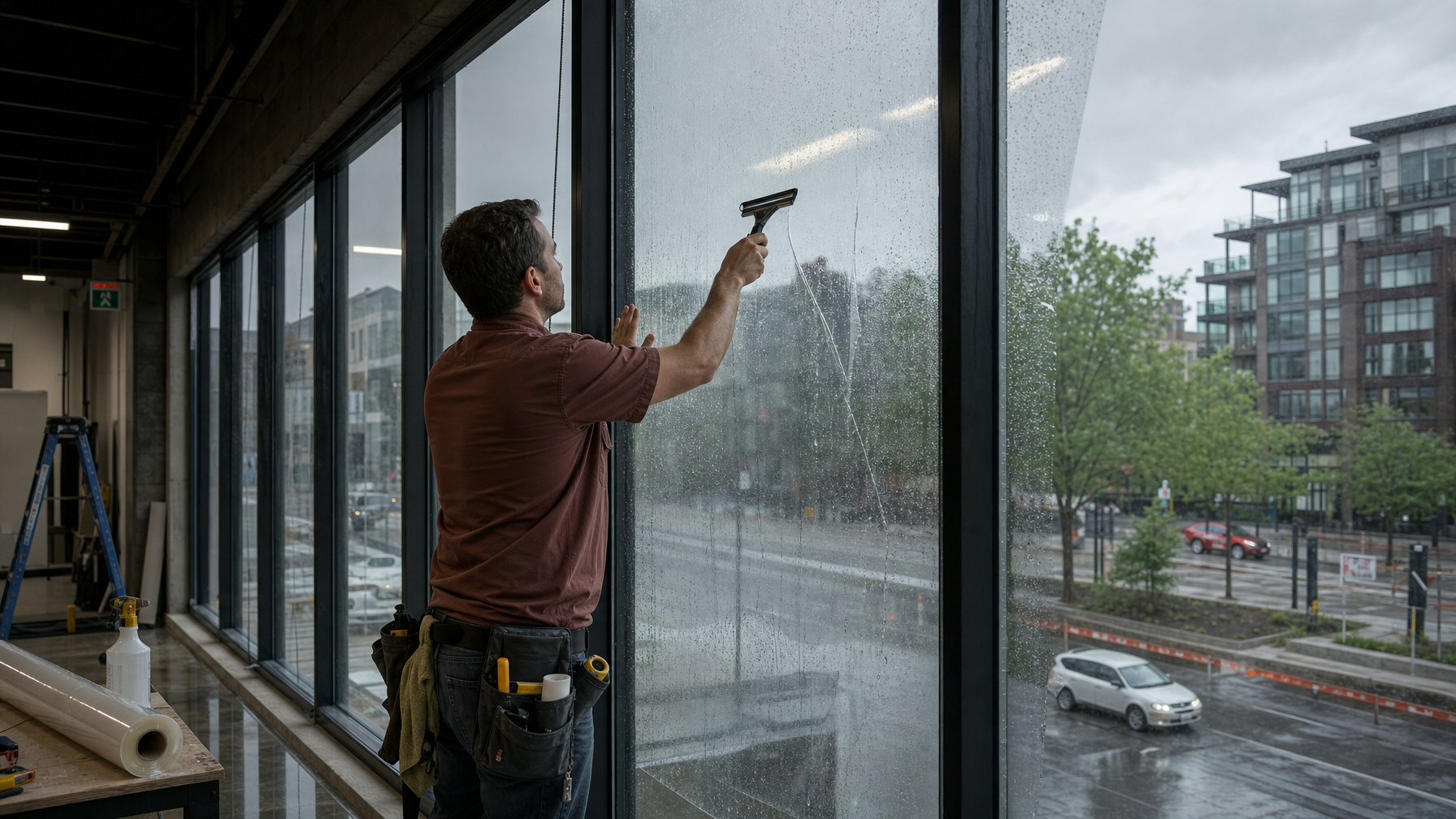
BC schools, colleges, and universities operate buildings with specific glazing challenges that standard HVAC upgrades never fully solve: south-facing classrooms that overheat by June, ground-floor entrance windows that are security vulnerabilities, and heritage campus buildings where full glazing replacement is either cost-prohibitive or restricted.
Window film addresses all three, without replacing glass, shutting down classrooms, or triggering a major capital project. Ecovision Window Films installs LLumar and Vista certified window film across school districts, post-secondary campuses, and independent schools throughout Metro Vancouver and the Lower Mainland. Professionally installed film reduces solar heat gain by up to 78%, blocks 99% of UV radiation, and, in safety-grade specifications, holds glass fragments together on impact. Installation costs range from $9, $20 per square foot depending on film type and building access.
What Is Window Film for Schools and Universities?
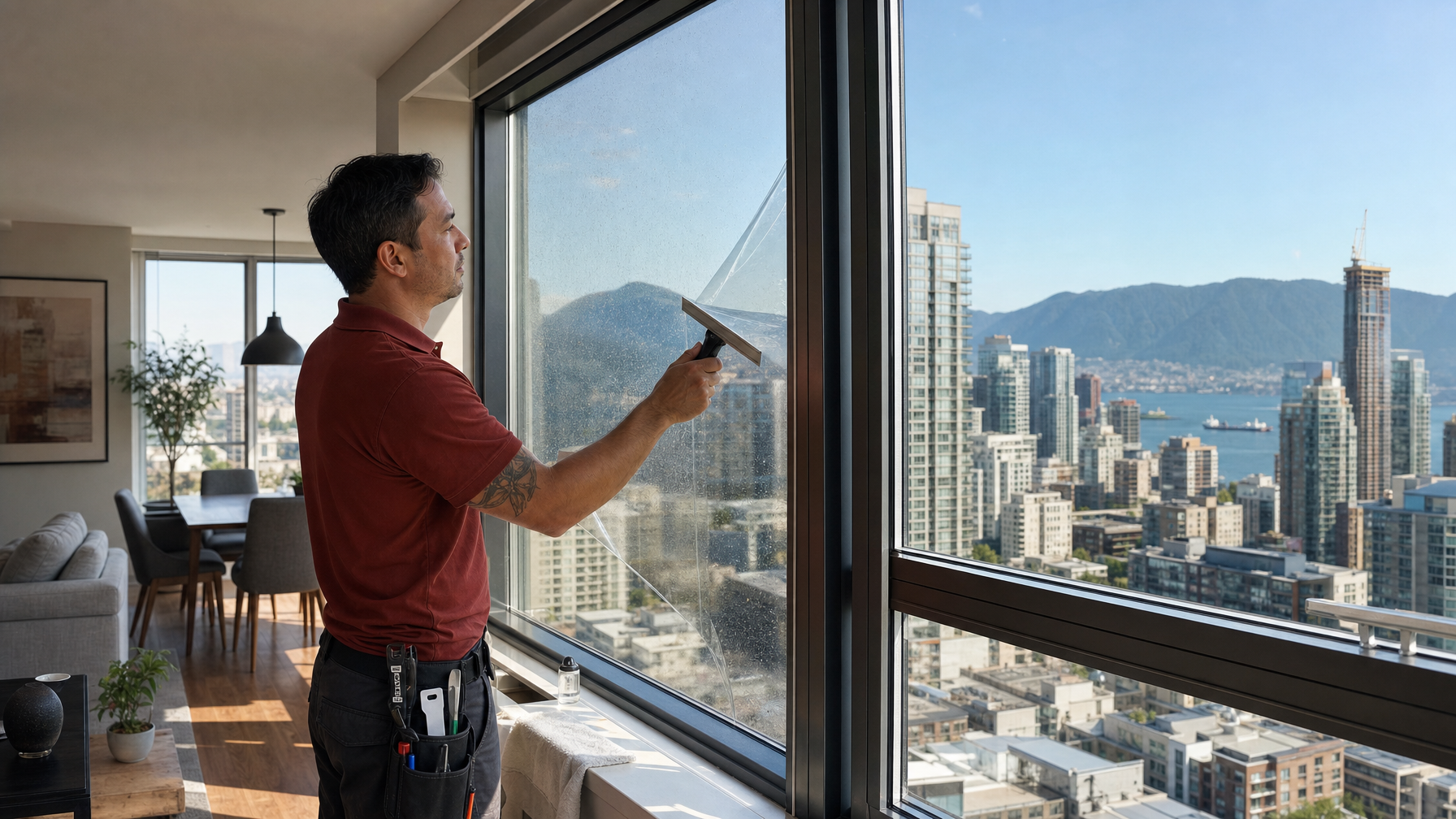
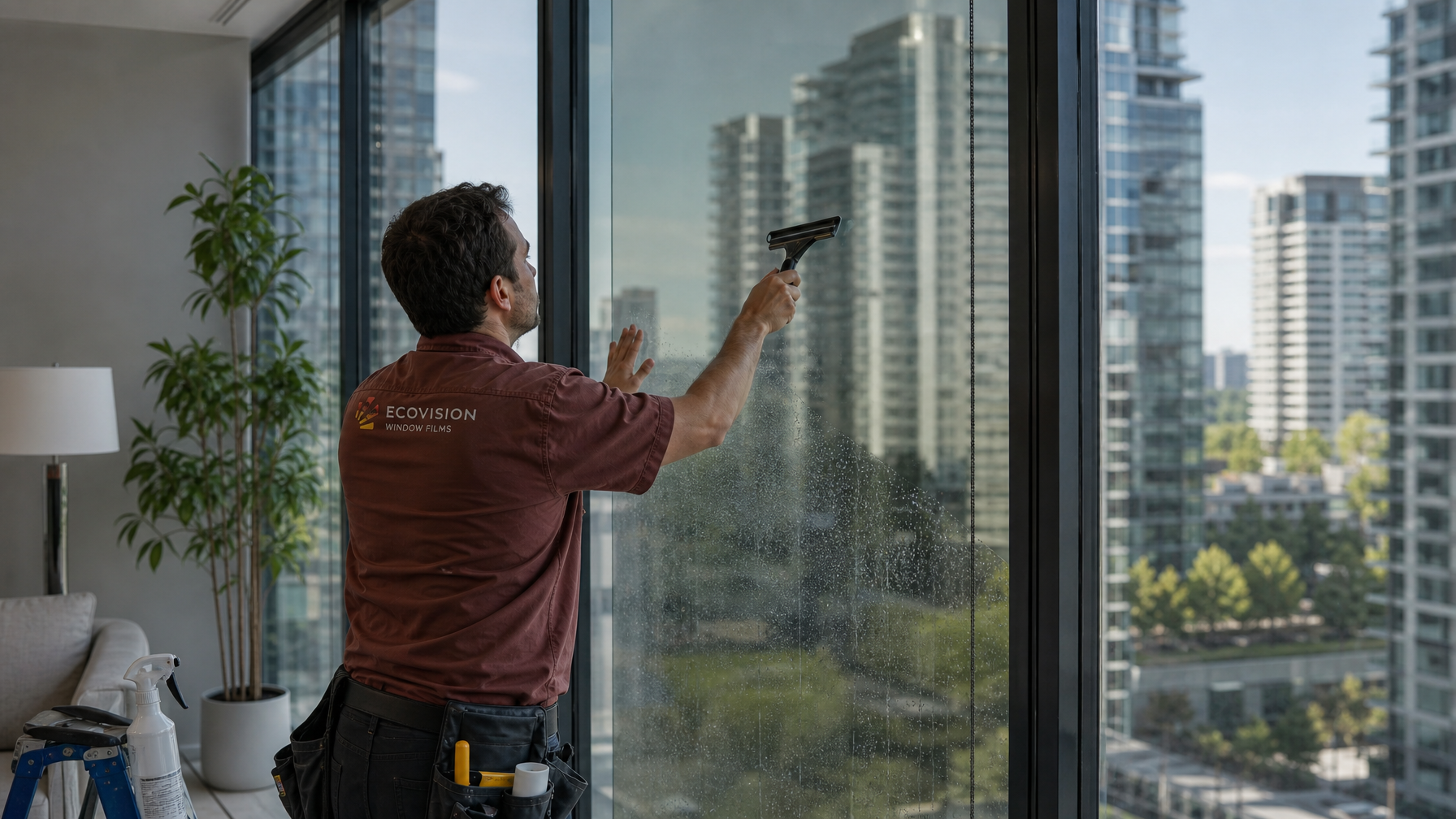
Window film for schools and universities in BC is a professionally installed polyester laminate applied to existing glass that controls solar heat gain, blocks UV radiation, and improves safety, without replacing glazing. Depending on specification, it reduces indoor temperatures by 5, 10°C in south-facing classrooms, blocks up to 99% of UV-A and UV-B radiation, and can delay forced entry through ground-floor glass by 30, 90 seconds. Certified installers apply film to existing single or double-pane windows in occupied buildings, typically completing a standard classroom in under two hours.
Why Do BC Schools and Universities Need Window Film?
Educational buildings in British Columbia face a specific combination of solar, safety, and energy pressures. The Lower Mainland averages 28 days above 25°C annually, concentrated between May and September, the final stretch of the school year and summer session months. South and west-facing classrooms built before 2000, when low-e glazing became standard, experience solar heat gain that pushes indoor temperatures above 30°C and triggers complaints from staff and students that HVAC alone cannot resolve cost-effectively.
Research from the Heschong Mahone Group, cited in the NRCAN Commercial Buildings Energy Consumption report, found a direct positive correlation between daylight quality and student test performance, but uncontrolled direct sunlight is a different matter. Glare from unshaded south-facing windows reduces screen readability and visual comfort, particularly in technology-equipped classrooms where the majority of instructional time now involves displays or projectors. Solar control film reduces visible light transmission by 20, 60% while eliminating glare, without blocking views or reducing natural light to darkness.
BC school districts and post-secondary institutions also face growing accountability under the province’s CleanBC plan, which targets a 15% reduction in K, 12 facility energy use intensity by 2030 relative to 2007 baselines. Window film qualifies as a documented glazing improvement under BC Energy Step Code energy modelling, reducing Solar Heat Gain Coefficient (SHGC) on existing windows at a fraction of glazing replacement cost.
What Types of Window Film Work Best for Educational Buildings?
The right film specification depends on the application: comfort and energy savings in occupied classrooms require a different product than safety film for entrance lobbies or privacy film for counselling offices. The table below outlines the five main categories used in BC educational facilities.
| Film Type | Key Benefit | Best Application in Schools | Installed Cost Range (per sq ft) |
|---|---|---|---|
| Solar control (ceramic) | Rejects up to 78% solar heat | South/west classrooms, computer labs | $12, $18 |
| Safety/security (4-mil or 8-mil) | Holds glass on impact; delays forced entry | Ground-floor windows, entrance glazing, gym walls | $12, $16 |
| Bird-safe patterned | UV-reflective dot pattern deters bird strikes | Buildings adjacent to parks, ravines, tree corridors | $14, $20 |
| Frosted/privacy | Blocks sightlines without eliminating light | Counselling offices, admin areas, washroom glazing | $9, $14 |
| Anti-graffiti (sacrificial) | Protects glass surface from etching and tagging | Covered walkways, lower-level glazing, bus shelters | $9, $13 |
Does Window Film Save Energy in BC School Buildings?
Solar control commercial window film reduces the solar heat entering through glass by limiting infrared and visible energy transmission. In standard double-pane windows with no coating, up to 75% of solar energy passes through as heat. Ceramic solar film reduces this to approximately 22%, cutting the cooling load on air handling units significantly.
For a typical 200-student elementary school in Metro Vancouver with 400 square metres of south-facing classroom glazing, solar film reduces annual cooling energy consumption by an estimated 18,000, 24,000 kWh. At BC’s commercial electricity rate of approximately $0.10, $0.12 per kWh, that translates to $1,800, $2,900 in annual utility savings. For a post-secondary faculty building with 2,000 square metres of south and west curtain wall, annual savings from solar film typically reach $9,000, $15,000, with payback periods of 3, 6 years on the installation.
Window film also reduces UV fading of classroom furnishings, instructional materials, and equipment. UV-A and UV-B radiation is responsible for approximately 40% of colour fading in interior surfaces. Blocking 99% of UV extends replacement cycles for classroom chairs, carpet tiles, and instructional displays, a durable cost saving that compounds over a 10, 15 year product lifespan.
Under the BC Energy Step Code and CleanBC guidelines, school districts and post-secondary institutions undertaking major retrofits are expected to model glazing performance as part of their energy compliance pathway. Window film with a documented SHGC reduction qualifies as a glazing upgrade and can contribute to Step Code compliance modelling when supported by manufacturer performance data, which LLumar and Vista both supply in standardised format.
How Does Window Film Improve Safety on BC School Campuses?
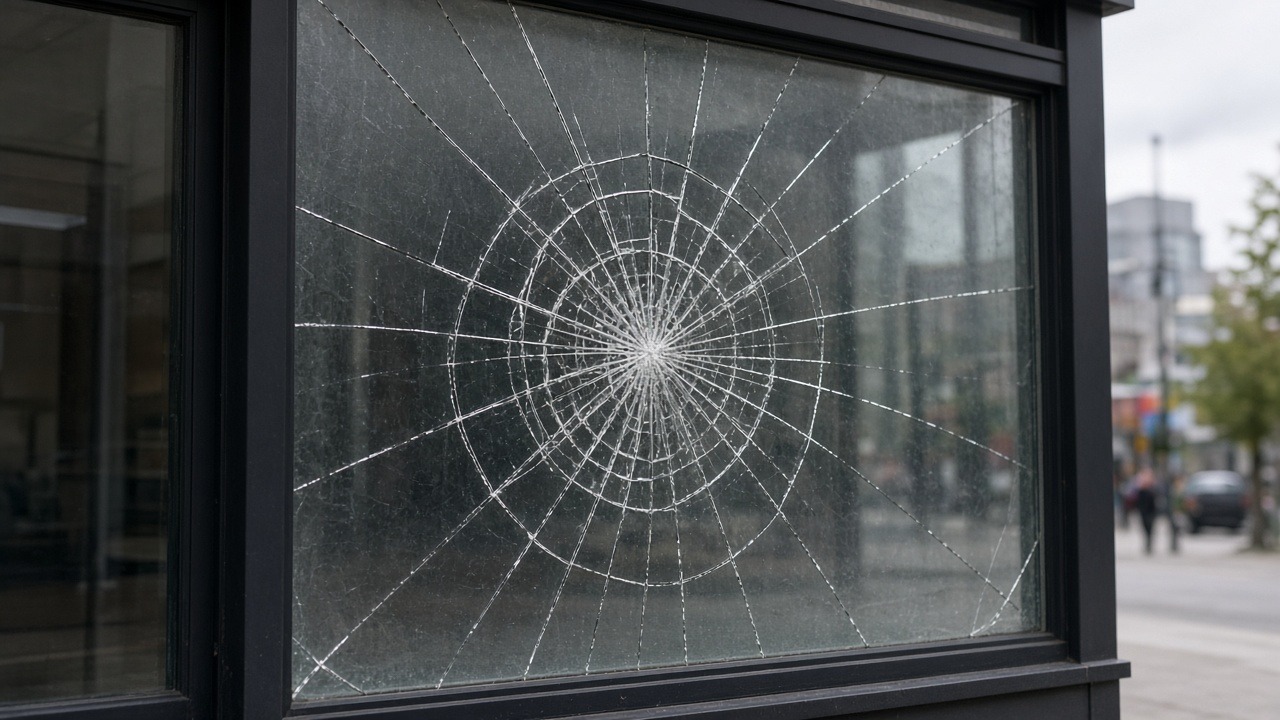
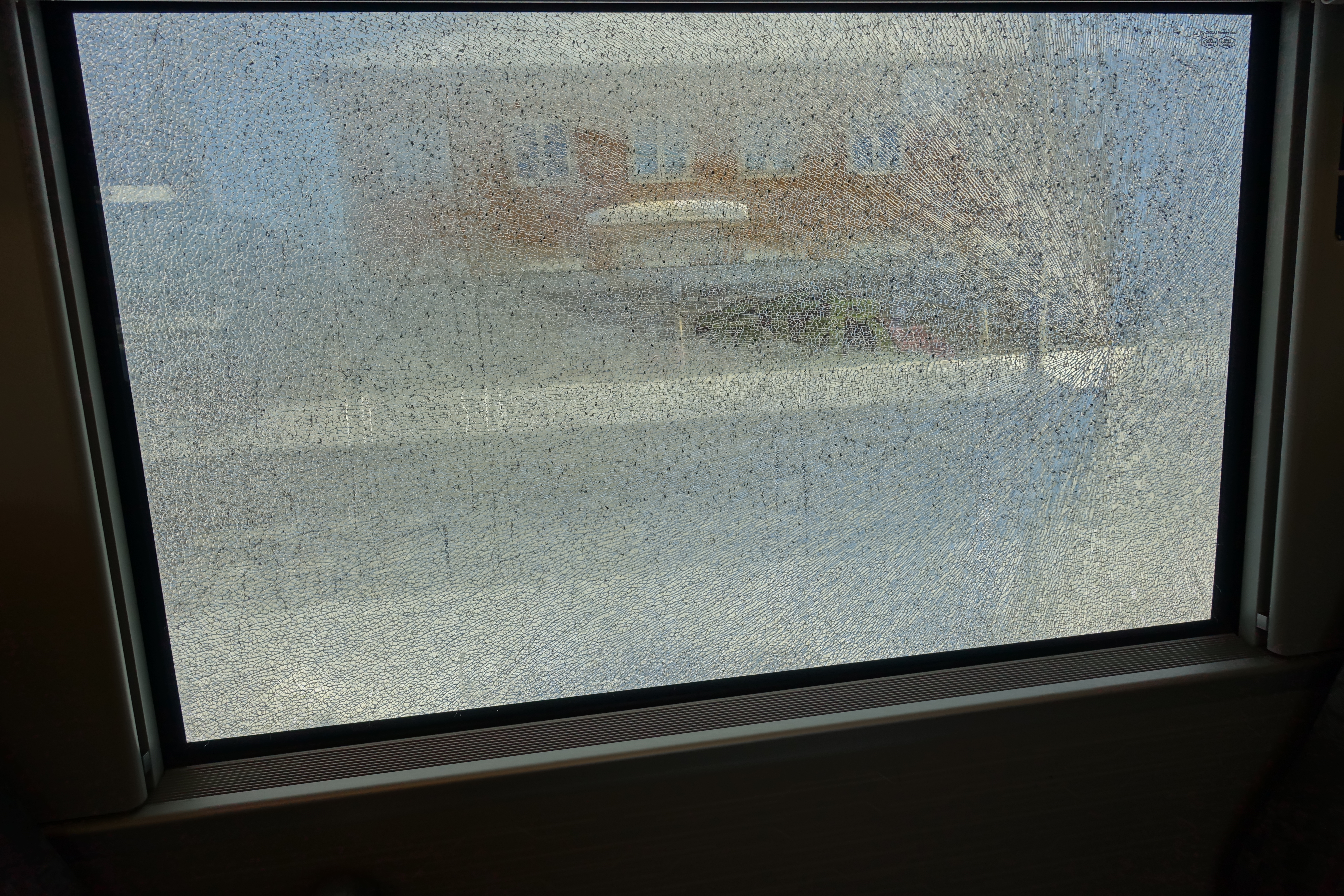
Standard float glass, the glazing type in most BC school buildings constructed before 2005, shatters into sharp laceration-risk shards on impact. Safety window film holds fragments in place against the film substrate, dramatically reducing injury risk in accidents and containing glass in forced entry attempts.
4-mil safety film meets ANSI Z97.1 safety glazing standards and suits interior partition glass, classroom door lites, and sidelites. For ground-floor perimeter windows and entrance lobbies, the highest-risk access points in a school security scenario, 8-mil or laminate security window film is the appropriate specification. Independent forced-entry testing shows 8-mil film delays a smash-and-grab entry by 30, 90 seconds compared to unprotected glass, providing critical time for lockdown protocols to activate.
WorkSafeBC guidelines for educational facilities identify glazing as a documented safety risk in violent incident scenarios, and classify glass breakage as a preventable hazard under Section 4.3 of the Occupational Health and Safety Regulation. Upgrading to safety film is an auditable risk mitigation measure that satisfies WorkSafeBC’s expectation that employers assess and control glass-related hazards. Ecovision Window Films has installed 8-mil security film at institutional facilities across the Lower Mainland, including at Bentall 4, Vancouver’s 36-storey commercial tower, using the same film specification appropriate for school administration buildings and main entrances.
Does Bird-Safe Film Apply to BC School Buildings?
Urban BC school campuses adjacent to parks, tree corridors, and ravines are frequent bird collision sites. Birds cannot distinguish reflected sky and vegetation in glass from the real environment, and collisions at ground-floor and lower-storey glazing are common at educational buildings with large transparent facades or corner glazing. The City of Vancouver’s Bird-Friendly Design Guidelines, adopted in 2022, require bird collision deterrence on new and substantially renovated buildings with more than 10 square metres of uninterrupted transparent or reflective glazing in the first 12 metres of height.
Many existing school and university buildings in Metro Vancouver do not yet comply. Bird-safe film with UV-reflective dot patterns spaced at 2-inch horizontal by 4-inch vertical intervals (the “2×4 rule” in the Bird-Friendly Design Guidelines) can be applied to existing glazing without replacement. For school campuses pursuing sustainability certification or responding to district sustainability plans, bird-safe film is one of the lowest-cost compliance pathways available.
What Does Window Film Cost for a BC School or University?
Installation cost for window film in BC educational facilities depends on film type, floor access complexity, and total glazed area. Large-area contracts, school district-wide programs covering multiple buildings, typically qualify for volume pricing, reducing per-square-foot cost by 10, 20%.
For a typical 20-classroom elementary school with approximately 600 square metres of total glazing, a combined solar control and safety film program covering south-facing classrooms and ground-floor perimeter windows runs $28,000, $48,000 installed. At projected annual energy and maintenance savings of $4,000, $7,000, the payback window is 5, 8 years, well within the 15-year rated lifespan of LLumar and Vista film products. Post-secondary institutions with multi-building campuses frequently phase film installation across a 2, 3 year capital program to spread cost across budget cycles.
To request a site assessment and budget estimate for your school or university, contact Ecovision Window Films at (236) 862-0052 or visit ecovisioncanada.com/contact. On-site assessments are free for institutional clients in Metro Vancouver and the Fraser Valley.
Related Articles
- Commercial Window Tinting in Vancouver: What Businesses Need to Know
- Window Film for Healthcare Facilities in BC: UV Protection, Privacy and Comfort for Patients and Staff
- Government Building Window Film in BC
- Commercial Window Film ROI: What BC Property Managers Need to Know
- Energy Efficient Window Film in Vancouver: What It Saves, What It Costs, and What to Install
About the Author: This article was written by the Ecovision Window Films team, led by Xander, Co-Founder and Director of Operations at Ecovision. Xander brings over 10 years of hands-on installation experience, backed by a family with over 50 years in the installation trades, including window film. His military background reinforces the precision and discipline Ecovision applies to every project. Ecovision is a certified installer for leading film brands with completed projects for healthcare facilities, government buildings, and commercial properties throughout the Lower Mainland. For a free site assessment, call (236) 862-0052 or visit ecovisioncanada.com/contact/.