
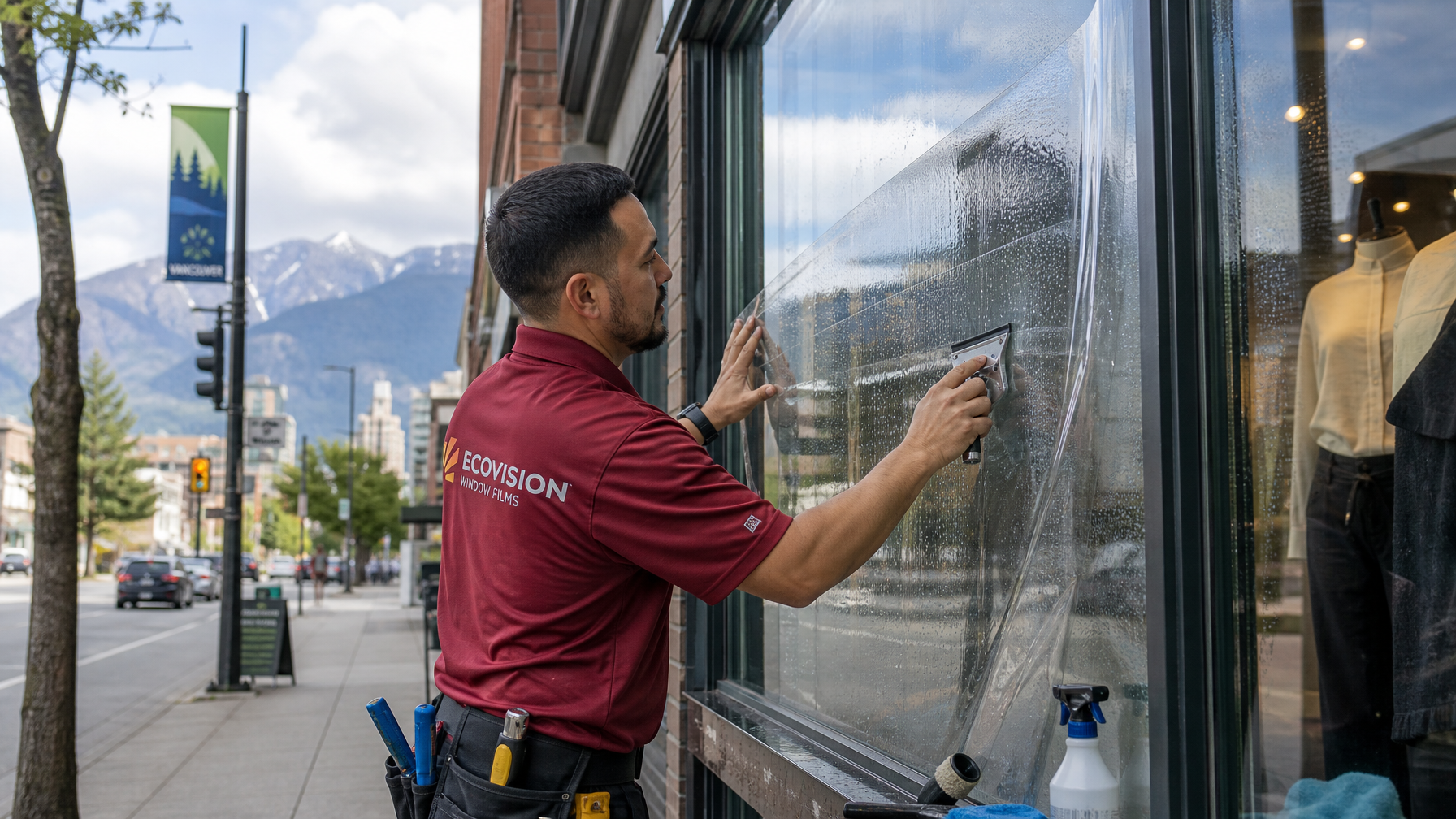
Window film does not last forever. Professionally installed LLumar or Vista architectural film applied to BC homes and commercial buildings typically performs reliably for 15 to 25 years. But lower-grade film, improper installation, or south-facing glass exposed to Metro Vancouver’s intense summer sun can cause failure in as few as 7 to 10 years. Knowing the signs your window film needs replacing helps you act before peeling film damages your glass or drives up your energy costs.
Ecovision Window Films. Certified LLumar and Vista installers serving Vancouver, Burnaby, Surrey, Richmond, and the wider Lower Mainland. Assesses old and failing film as part of every free site evaluation. Call (236) 862-0052 to book yours.
What Are the Most Common Signs Window Film Needs Replacing?
The five most reliable signs that window film has reached end of life are: visible bubbling or lifting at edges, purple or brown discolouration, a hazy or milky appearance that reduces visibility, noticeably higher indoor temperatures despite the film being present, and peeling or cracking along seams. Any one of these signals that the adhesive bond has broken down and the film is no longer performing to specification.
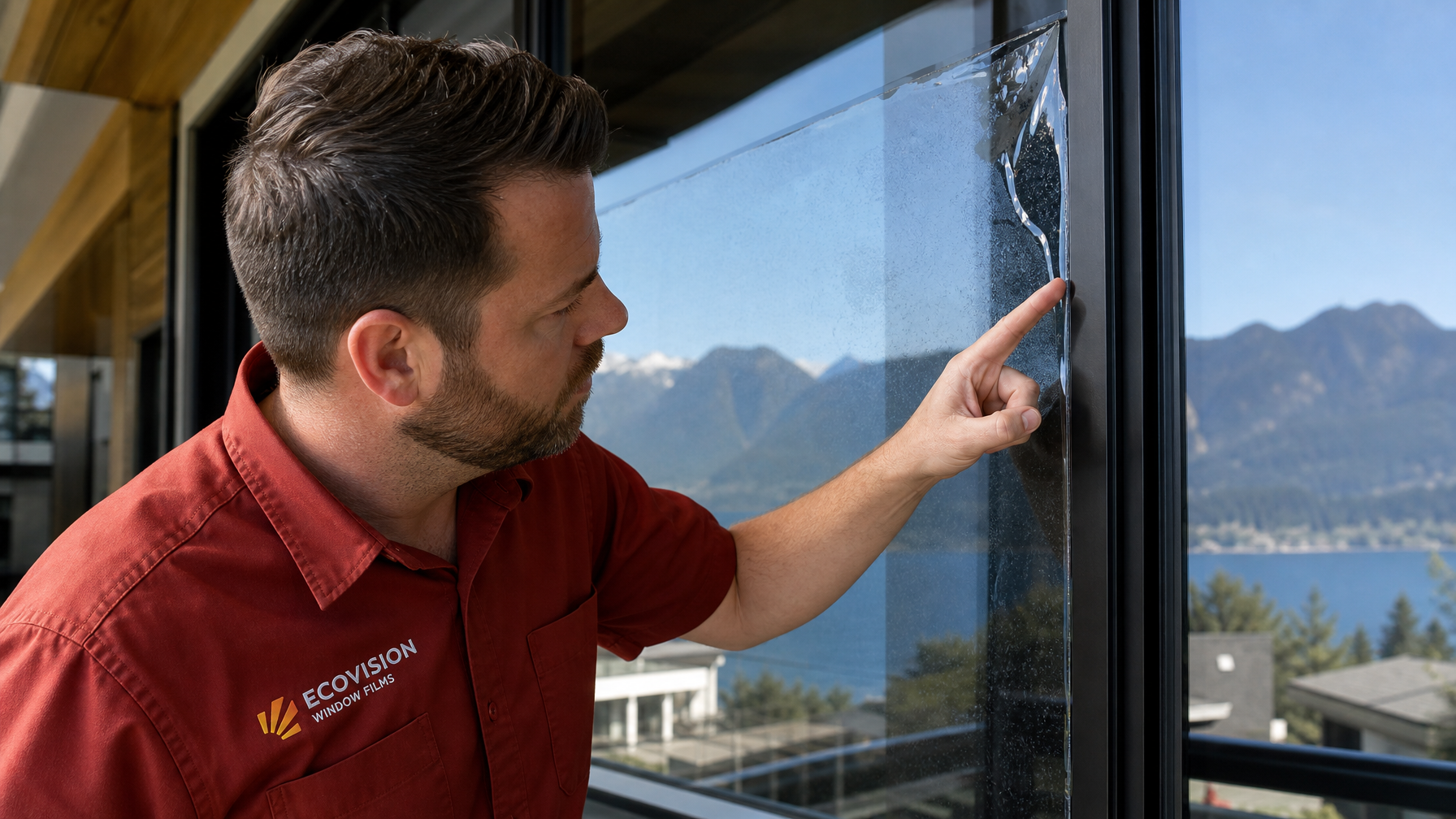
1. Bubbling and Edge Lifting
Small air pockets or water blisters during the first 30 to 60 days after installation are normal. This is part of the adhesive cure process and not a defect. Bubbles that appear on film older than 60 days, however, indicate adhesive failure. Once the bond between the film and glass breaks, moisture enters and accelerates delamination across the entire pane. In Ecovision’s experience at buildings like Bentall 4 in downtown Vancouver, film that bubbles on south-facing glass after 10 or more years in service has typically reached end of life and benefits from full replacement rather than spot repair.
2. Purple, Brown, or Yellow Discolouration
Colour shift is the most visible sign of UV degrader breakdown inside older dyed or metallised films. Original dyed films turn purple or brown as the organic dyes degrade under UV exposure. A process that can begin as early as 5 to 7 years on sun-intensive south or west-facing glass. Ceramic and carbon films from LLumar and Vista are engineered to resist this shift and typically maintain their appearance throughout their 15 to 25 year rated lifespan. If your film looks noticeably different from when it was installed, the UV-blocking and heat-rejection performance will have degraded proportionally.
3. Hazy, Scratched, or Milky Appearance
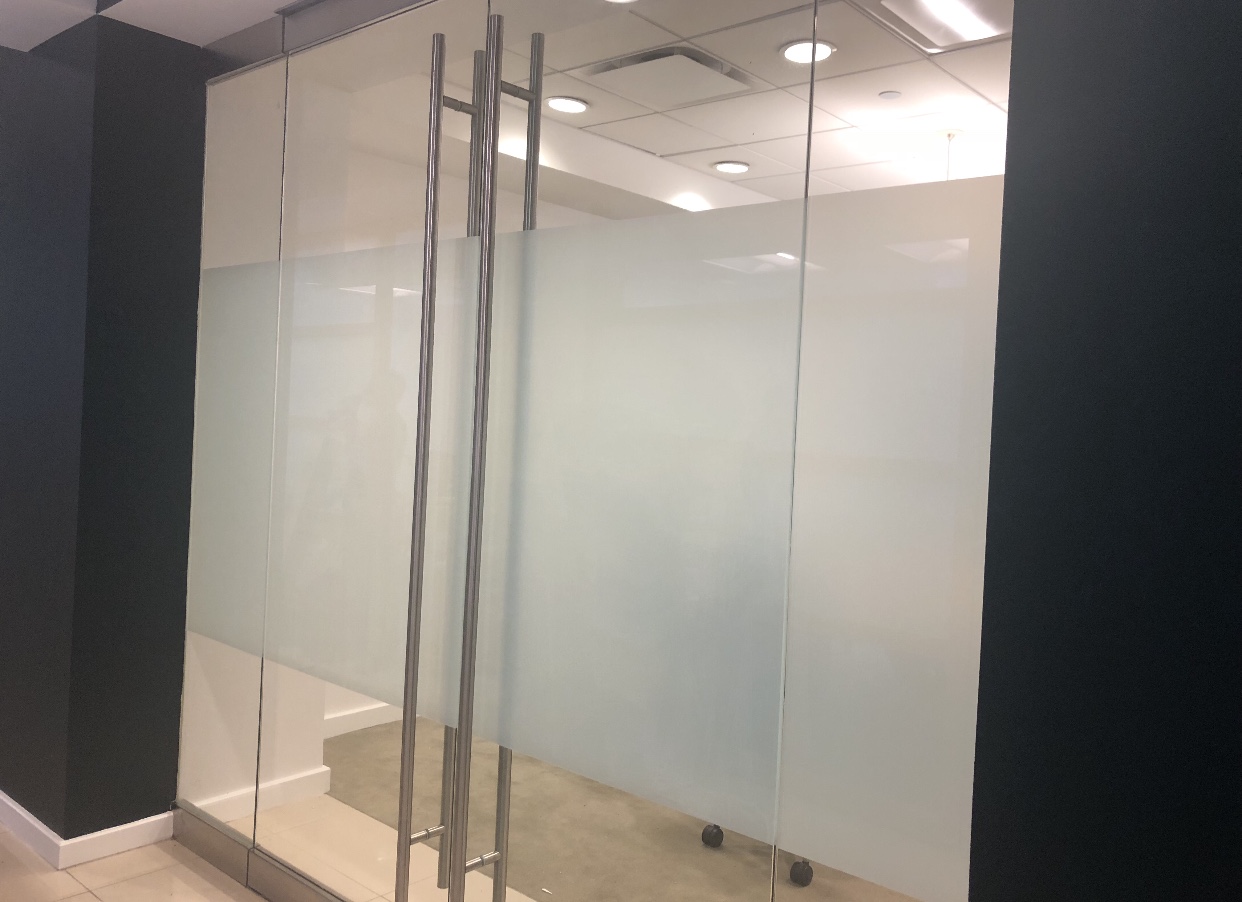
Surface hazing occurs when the film’s protective hard coat wears through. Typically caused by abrasive cleaning products, improper window washing technique, or simple age. A milky appearance that cannot be cleaned away indicates internal delamination: the multiple layers of the film are separating. At the Rosemary Heights Seniors Village in South Surrey, Ecovision has replaced aged film on west-facing common room windows where decades of sun exposure had produced exactly this clouding effect. Once hazing is internal rather than surface-level, replacement is the only option. The film cannot be polished or restored.
4. Rising Indoor Temperatures or Increased Glare
If rooms that used to stay comfortable in summer are now noticeably hotter, or if glare that was previously controlled has returned, your film’s solar heat rejection performance has degraded. A new LLumar VS60 film on 6 mm dual-pane glass provides approximately 50% total solar energy rejection. Film that has degraded to 20 to 30% rejection. Common in 15-year-old metallised film. Will feel dramatically less effective. Metro Vancouver averages 28 days above 25°C annually between May and September, so the performance gap between new and aged film is measurable in both comfort and cooling costs.
| Film Type | Expected Lifespan (BC Climate) | First Signs of Failure |
|---|---|---|
| Basic dyed film | 5 – 10 years | Purple discolouration, bubbling |
| Metallised film | 10 – 15 years | Edge lifting, haze, reduced rejection |
| Ceramic / carbon film (LLumar, Vista) | 15 – 25 years | Edge peeling after 15+ years |
| Safety / security film (8 – 14 mil) | 15 – 20 years | Delamination, yellowing at edges |
5. Peeling Edges and Cracking Seams
Edge peeling typically starts at the bottom corners of a pane where moisture from condensation accumulates. Once peeling reaches beyond 2 to 3 cm from the edge, the delamination accelerates inward and the film cannot be re-adhered. Cracking along seams between film panels. Common on large commercial glazing. Exposes the bare glass and eliminates the UV and heat performance entirely in those zones. Property managers at strata buildings and commercial offices should include window film inspection in their annual building envelope review. The BC Energy Step Code increasingly factors fenestration performance into building compliance assessments, making aging film a compliance consideration as well as a comfort one.
How Long Does Window Film Last Before It Needs Replacing?
Professionally installed LLumar or Vista architectural film carries a manufacturer warranty of 10 to 15 years for residential applications and up to 10 years for commercial applications. In practice, ceramic and carbon films routinely exceed their warranty period by 5 to 10 years when properly installed and maintained. The full lifespan guide for BC-installed window film breaks down expected performance by film grade and glass type. Key factors that accelerate aging in BC include: direct south or west sun exposure, coastal humidity in areas like West Vancouver or Richmond, and thermal stress on older single-pane glass.
Does Old Window Film Damage Glass?
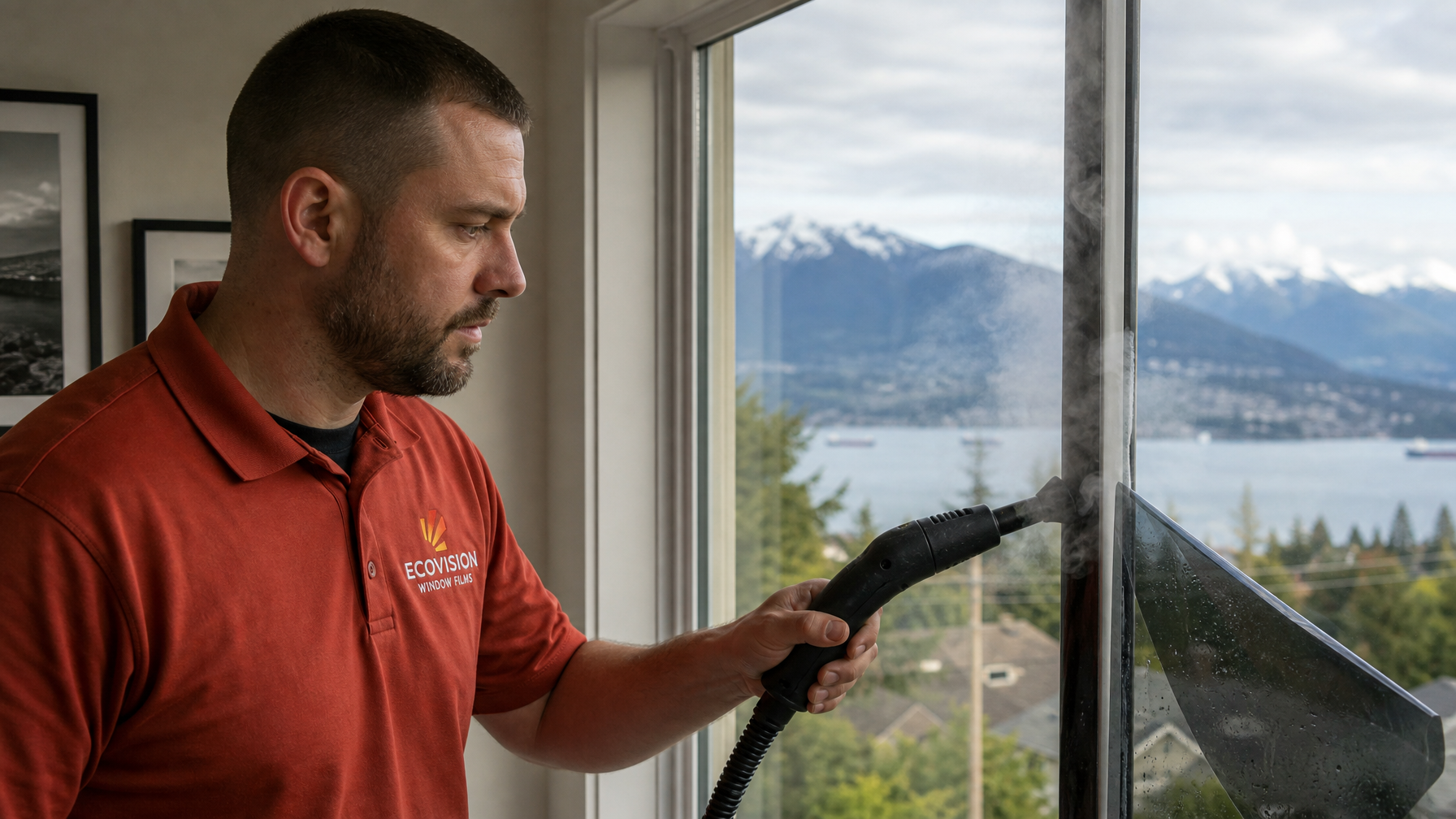
Film left on glass past its useful life can cause problems beyond aesthetics. Delaminating adhesive is difficult to remove cleanly and may require professional removal to avoid scratching the glass surface. On dual-pane insulated glass units (IGUs), thermal stress from degraded film can contribute to seal failure. An expensive problem that requires full glass unit replacement at $300 to $800 per pane. Ecovision’s removal technicians use steam and professional-grade solvents to lift old film without damaging low-e coatings or glass surfaces. The complete guide to removing window film without damaging glass covers what to expect from a professional removal.
What Does Window Film Replacement Cost in BC?
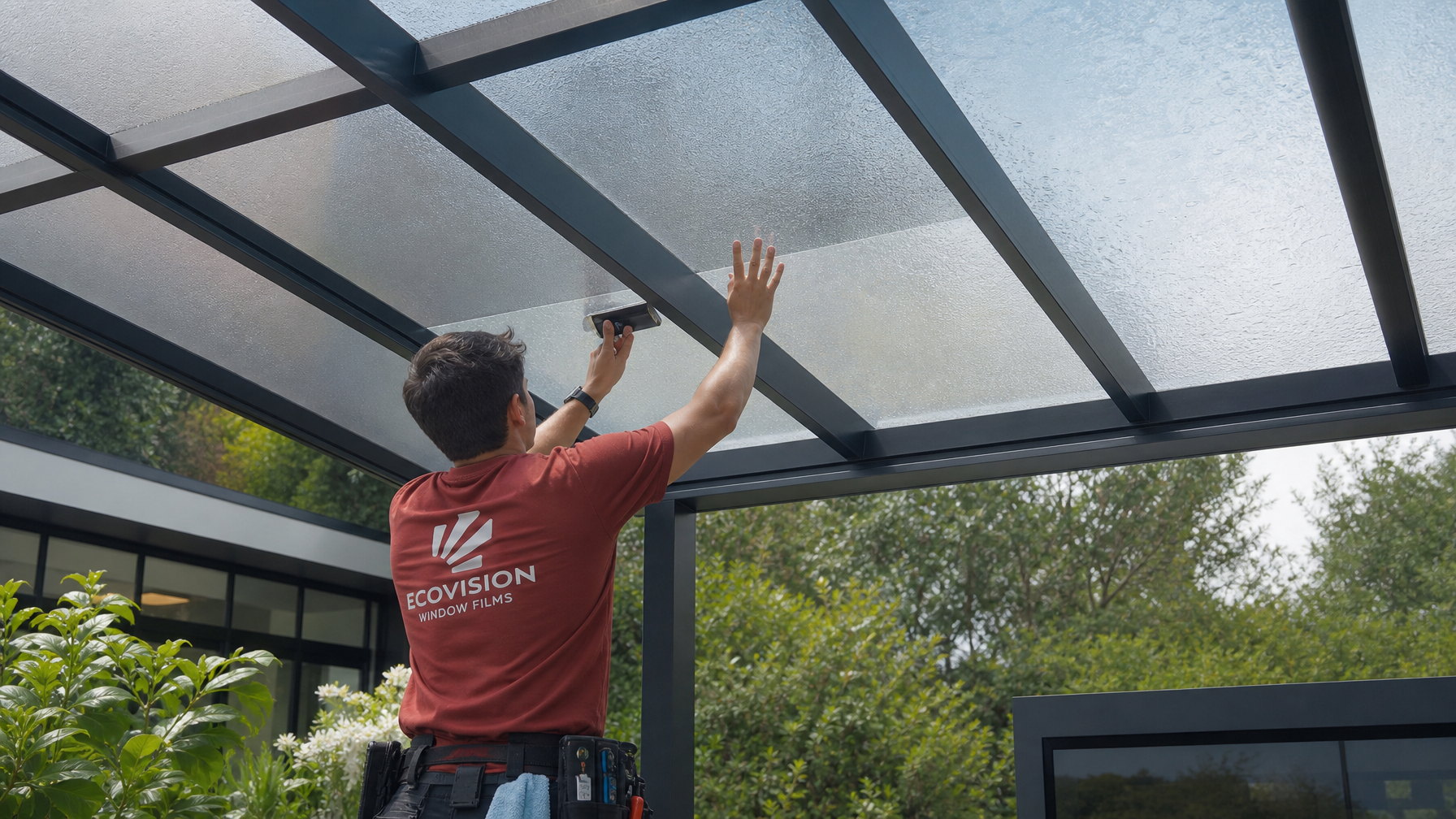
Replacement involves removing the old film and installing new film in the same visit. In BC, professionally installed replacement film ranges from $9 – $22 per square foot installed, depending on film type and building access. Residential solar control replacement (LLumar VS60 or VS70) typically runs $10 – $18 per square foot. Safety or security film replacement runs $16 – $22 per square foot. The removal step adds approximately $2 – $4 per square foot to the total, depending on how difficult the old film is to extract. For a typical 1,000 sq ft residential project covering 15 to 20 windows, total replacement cost including removal generally falls between $12,000 and $22,000 installed.
Is It Worth Replacing Window Film, or Should I Replace the Windows Instead?
In most BC cases, film replacement is significantly more cost-effective than window replacement. New double-pane windows in the Lower Mainland run $800 to $2,500 per unit installed, and a full window replacement project on a typical Vancouver home costs $15,000 to $40,000. Film replacement on the same home typically costs $5,000 to $15,000 and restores solar, UV, and privacy performance to like-new levels without disrupting the building envelope. The window film vs window replacement comparison for BC homes covers the financial case in detail. Film replacement is generally the right call unless the glass itself is cracked, the IGU seal has failed, or the frames have structural problems.
Related Articles
- How Long Does Professionally Installed Window Film Last in BC?
- How to Remove Window Film Without Damaging Your Windows
- Window Film vs. Window Replacement in BC: Which Is the Better Investment?
- How Much Does Window Film Cost in BC? (2026 Pricing Guide)
- Can Window Film Be Removed and Reapplied? What BC Property Owners Need to Know
Frequently Asked Questions
About the Author: This article was written by the Ecovision Window Films team. Edward, Director at Ecovision, brings a distinctive perspective to the window film industry, with over a decade in real estate development, including roles as Executive Director at a real estate development firm and Director of Strategic Partnerships, before joining Ecovision. That background gives the company a sharp edge in serving BC property managers and building owners. Ecovision is a certified installer for leading film brands with completed projects for healthcare facilities, government buildings, and commercial properties throughout the Lower Mainland. For a free site assessment, call (236) 862-0052 or visit ecovisioncanada.com/contact/.