
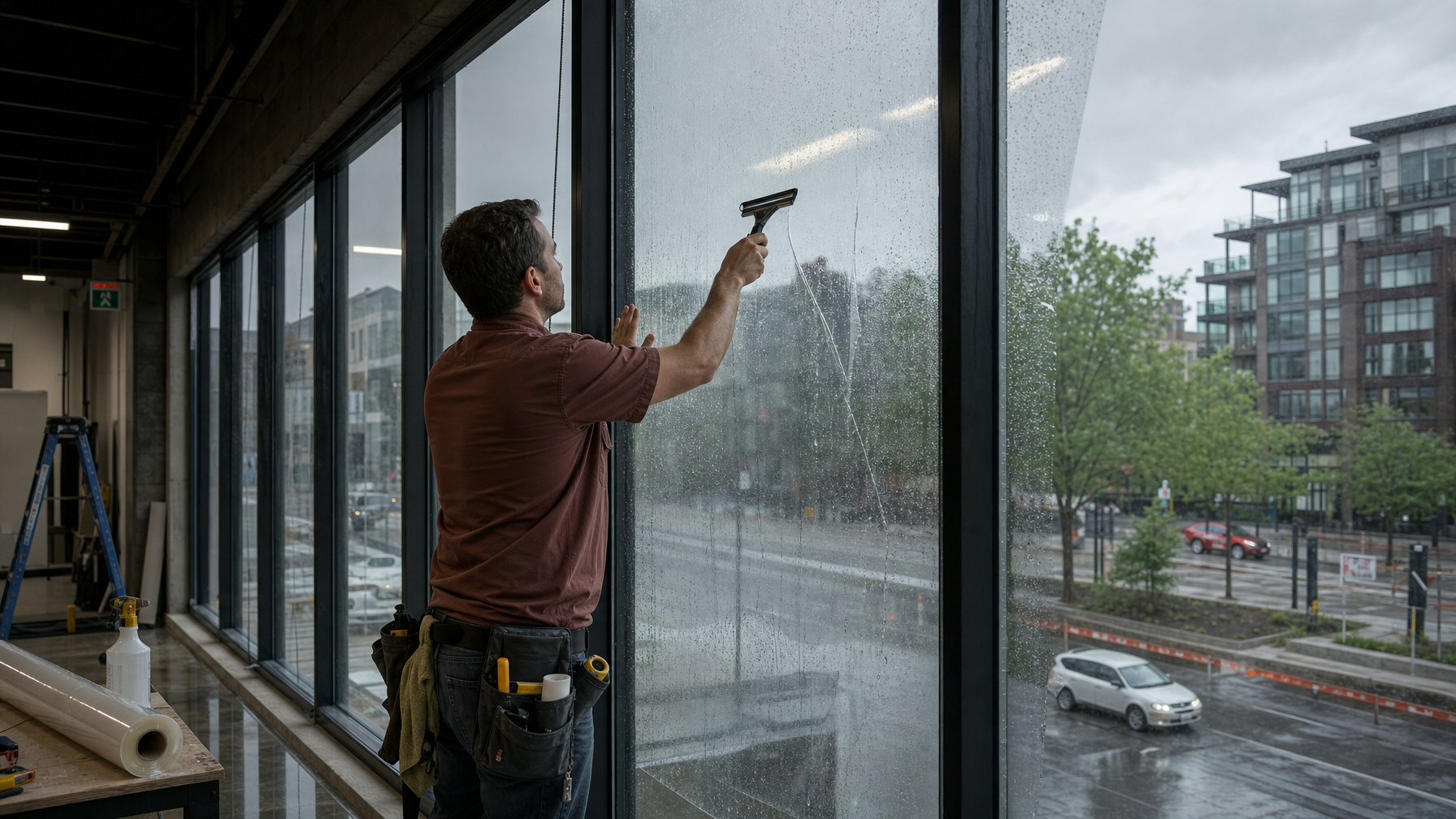
BC provincial offices, courthouses, municipal halls, and transit facilities face security and energy demands that standard glazing cannot meet on its own. Government building window film closes that gap, adding ballistic-rated protection, privacy control, solar heat management, and bird-safe compliance to existing glass without the cost or disruption of full window replacement.
Quick answer: Government building window film in BC typically costs $8 – $22 per square foot installed, depending on film type, building height, and glass access. Security films certified to UL 972 and ANSI Z97.1 are the most common requirement on public facilities. Ecovision Window Films is a LLumar and Vista certified installer serving Vancouver, BC and the Lower Mainland, with completed projects in healthcare, commercial, and institutional buildings across the region. Call (236) 862-0052 to schedule a free on-site assessment.
What Types of Window Film Do BC Government Buildings Use?
Government buildings require different film specifications depending on the facility type. A provincial courthouse prioritises forced-entry resistance; a municipal energy office prioritises CleanBC-aligned solar control; a transit authority building may need anti-graffiti protection in addition to both. The four most common film categories on BC government properties are:
- Security and anti-intrusion film. Holds glass fragments together under impact, meeting UL 972 Burglary Resistant Glazing Material standards. Applied to ground-floor windows, entry vestibules, and interview rooms. Delays forced entry by 30, 60 seconds compared to unprotected glass.
- Solar control film. Blocks 40, 80% of solar heat gain, reducing mechanical cooling loads in government buildings subject to BC Energy Step Code requirements. High-performance ceramic films can lower SHGC from 0.86 to as low as 0.22.
- Privacy and one-way film. Used in meeting rooms, interview rooms, and server access corridors where visual privacy is required without sacrificing natural light. One-way film maintains outward visibility during daylight hours.
- Bird-safe UV-patterned film. Required on new and retrofitted government buildings within the City of Vancouver’s Bird-Friendly Design Guidelines jurisdiction. Ecovision’s UV-dot and line-pattern films are an approved compliance method.
Ecovision’s government building window film services cover all four categories, with film selections from LLumar and Vista, the two certified brands Ecovision installs across BC.
Why Does Security Window Film Matter for Government Facilities?
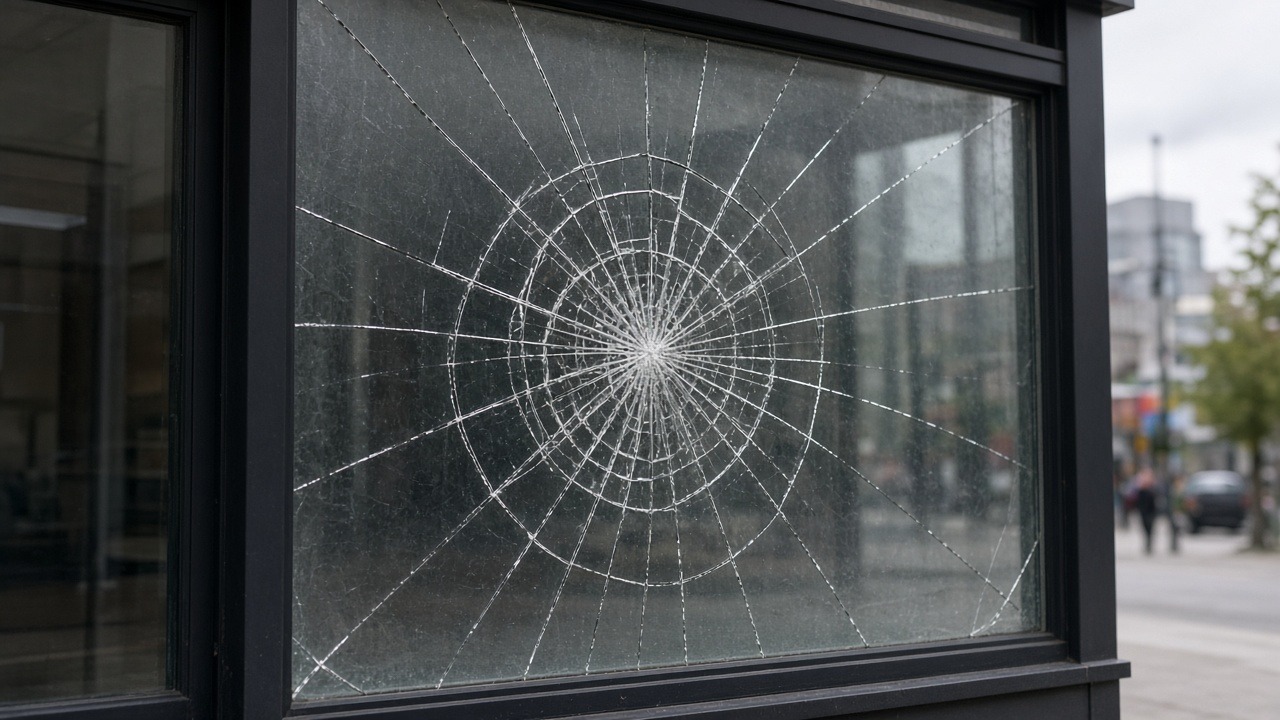
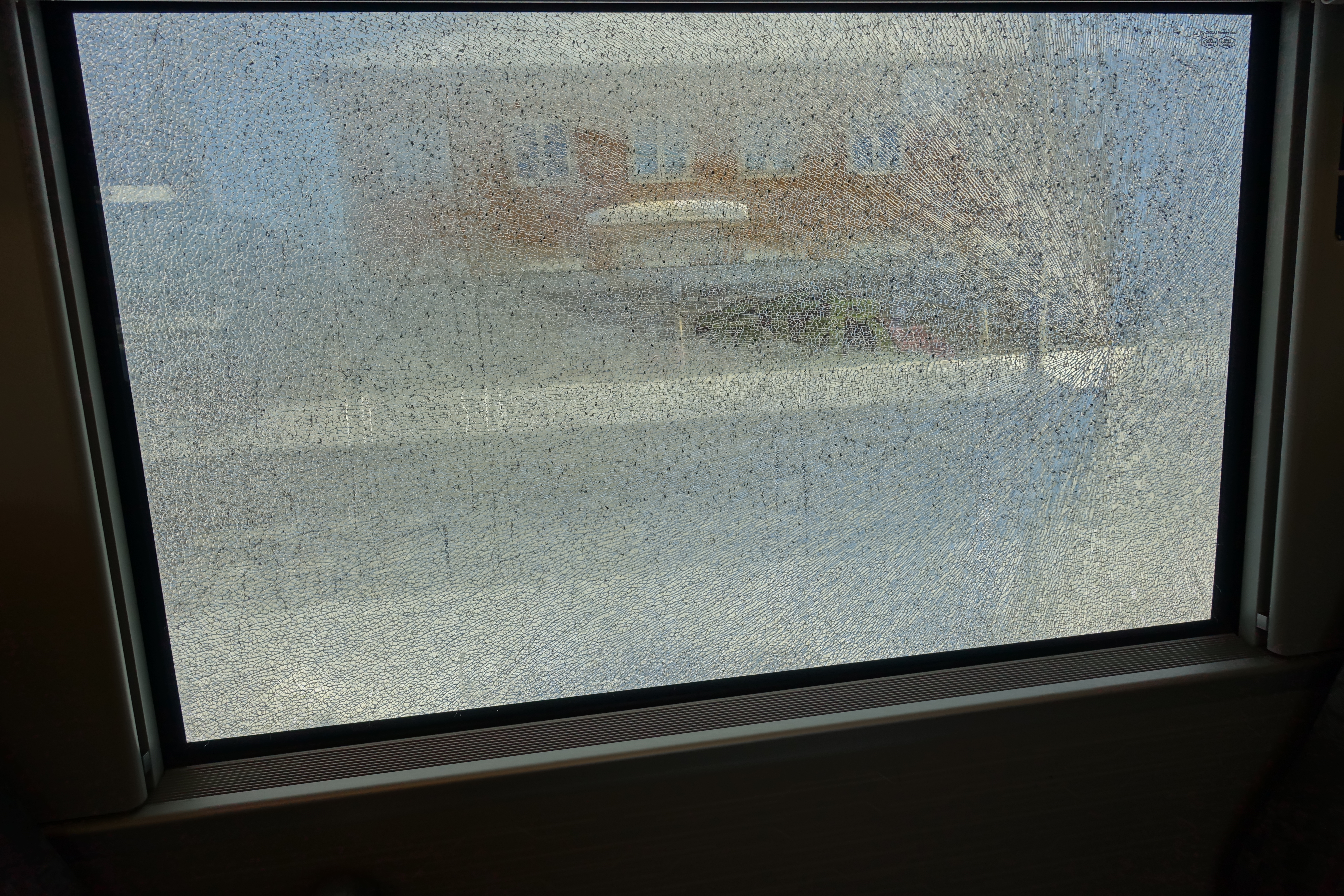
Unprotected glass is the primary structural vulnerability on most government building facades. A standard 6mm annealed pane fails at approximately 150 psi of impact pressure, well within the range of a forced-entry attempt or a windborne projectile during a severe weather event. Security window film changes that failure mode entirely. Rather than shattering into sharp fragments, filmed glass fractures but holds together, maintaining a barrier that delays intrusion and reduces laceration risk for occupants and the public.
WorkSafeBC guidelines on glass hazards in public occupancies recommend lamination or filmed glass wherever employees regularly interact with the public through glazed partitions. Security film achieves that standard at a fraction of the cost of laminated glass replacement. For a typical 10,000 sq ft provincial office, security film installation runs $130,000, $180,000 fully installed, versus $400,000, $600,000 for a full laminated glass retrofit of the same area.
Beyond forced entry, security film also addresses blast-wave fragmentation. UL 752 Level 1, 3 blast-rated films from LLumar are specified on federal and utility buildings in BC where the consequence of glass failure is life-safety critical. These films are anchored to the window frame with an attachment system that keeps the glazing in place even after the glass has fractured.
For procurement teams and property managers navigating glazing certification terminology, our guide on is shatter resistant film the same as safety film explains the key distinction between ANSI Z97.1-certified safety film and generic shatter-resistant products, a critical difference for BC Building Code compliance documentation.
For a full breakdown of film grades, certifications, and building-type recommendations, see our guide to security window film in Vancouver, BC.
Does Window Film Help Government Buildings Meet BC Energy Codes?
Yes, and this is increasingly a primary procurement driver for BC public facilities. The BC Energy Step Code requires progressively higher energy performance targets for new and substantially renovated buildings, with Step 4 and Step 5 thresholds taking effect across most municipal jurisdictions between 2025 and 2032. CleanBC also sets GHG reduction benchmarks for provincially owned and operated buildings through the CleanBC Buildings Roadmap.
Solar control window film directly reduces a building’s Solar Heat Gain Coefficient (SHGC), the measure of how much solar energy passes through the glass envelope into conditioned space. High-performance ceramic films from LLumar and Vista can reduce SHGC from a typical clear-glass value of 0.86 down to 0.22, 0.35, cutting cooling loads by 25, 40% across BC’s May, September solar season. That reduction translates to measurable kWh savings that contribute toward Step Code compliance modelling under Part 10 of the BC Building Code.
Unlike window replacement, film installation does not trigger a full building permit in most BC jurisdictions, it is classified as a maintenance upgrade, not a structural alteration. This means energy improvements can proceed without the 6, 18 month permitting timelines that accompany glazing replacement on heritage or institutional buildings. For government buildings operating on fixed fiscal-year capital budgets, that difference in delivery speed is often decisive. Property managers overseeing commercial buildings alongside government portfolios can also explore film options through our commercial window film services in Vancouver page.
Which BC Government Building Types Need Window Film Most?
Not every government building has the same priority. Based on Ecovision’s experience with Lower Mainland institutional projects, here is how different facility types typically rank their film requirements:
- Courthouses and correctional facilities. Security film (UL 972, ANSI Z97.1) is the first priority on all public-facing glass and interview room partitions. Privacy film is standard in consultation rooms.
- Provincial and municipal offices. Solar control film drives the business case (energy cost reduction, occupant comfort), with security film added on ground-floor glazing.
- Health authorities and community health centres. Privacy film in patient-facing areas; security film on reception glazing; solar film on south and west facades. Ecovision has completed similar scopes at healthcare facilities across the Lower Mainland including seniors care settings.
- Libraries and community centres. Bird-safe UV-patterned film is the most common requirement under City of Vancouver guidelines; solar control is secondary.
- Transit authority buildings. Anti-graffiti film on low-level public-facing glass, combined with solar control on upper floors.
- Schools and universities. Security film on all ground-floor glass is standard on new construction and major retrofits; bird-safe film required within City of Vancouver jurisdiction.
How Much Does Government Building Window Film Cost in BC?
Cost depends on film type, building access complexity, and total square footage. Government buildings tend to have higher access costs than standard commercial projects due to high ceilings, security clearances for the work crew, and strict work-hour restrictions. Here is a realistic cost range for BC government facility projects:
| Film Type | Installed Cost (per sq ft) | Primary Use in Government Buildings |
|---|---|---|
| Entry-level solar control | $9 – $11 | General office windows, perimeter glazing |
| Ceramic solar control | $12 – $16 | South/west facades, energy compliance projects |
| Security film (UL 972) | $13 – $18 | Ground-floor, vestibules, interview rooms |
| Security + solar combo | $15 – $20 | Full-facade institutional retrofits |
| Blast-mitigation / high-security | $18 – $22 | Courthouses, federal facilities, utilities |
| Bird-safe UV-patterned film | $10 – $15 | Bird-friendly bylaw compliance, City of Vancouver |
| Anti-graffiti film | $8 – $14 | Transit buildings, low-level public-facing glass |
Most mid-size BC government building projects, 5,000, 15,000 sq ft of glass, run $60,000, $200,000 fully installed, depending on the film specification and access requirements. Ecovision provides free on-site assessments and detailed written quotes; call (236) 862-0052 or visit our government buildings services page to get started. Property managers and strata councils coordinating similar building-wide film projects will find cost comparisons and an approval workflow specific to BC strata buildings in the guide to window film for strata buildings in Vancouver.
What Does the Installation Process Look Like for a Government Building?
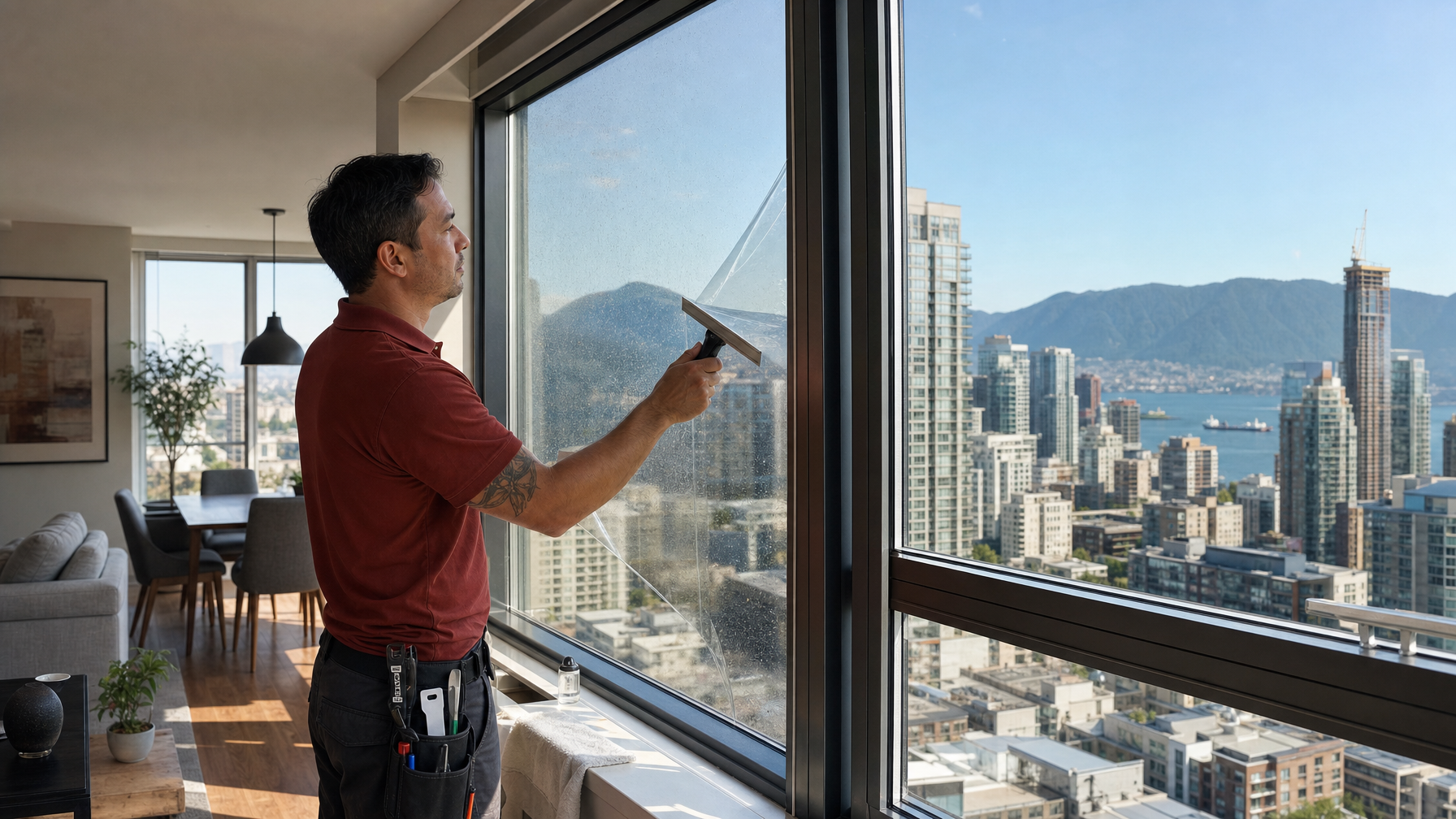
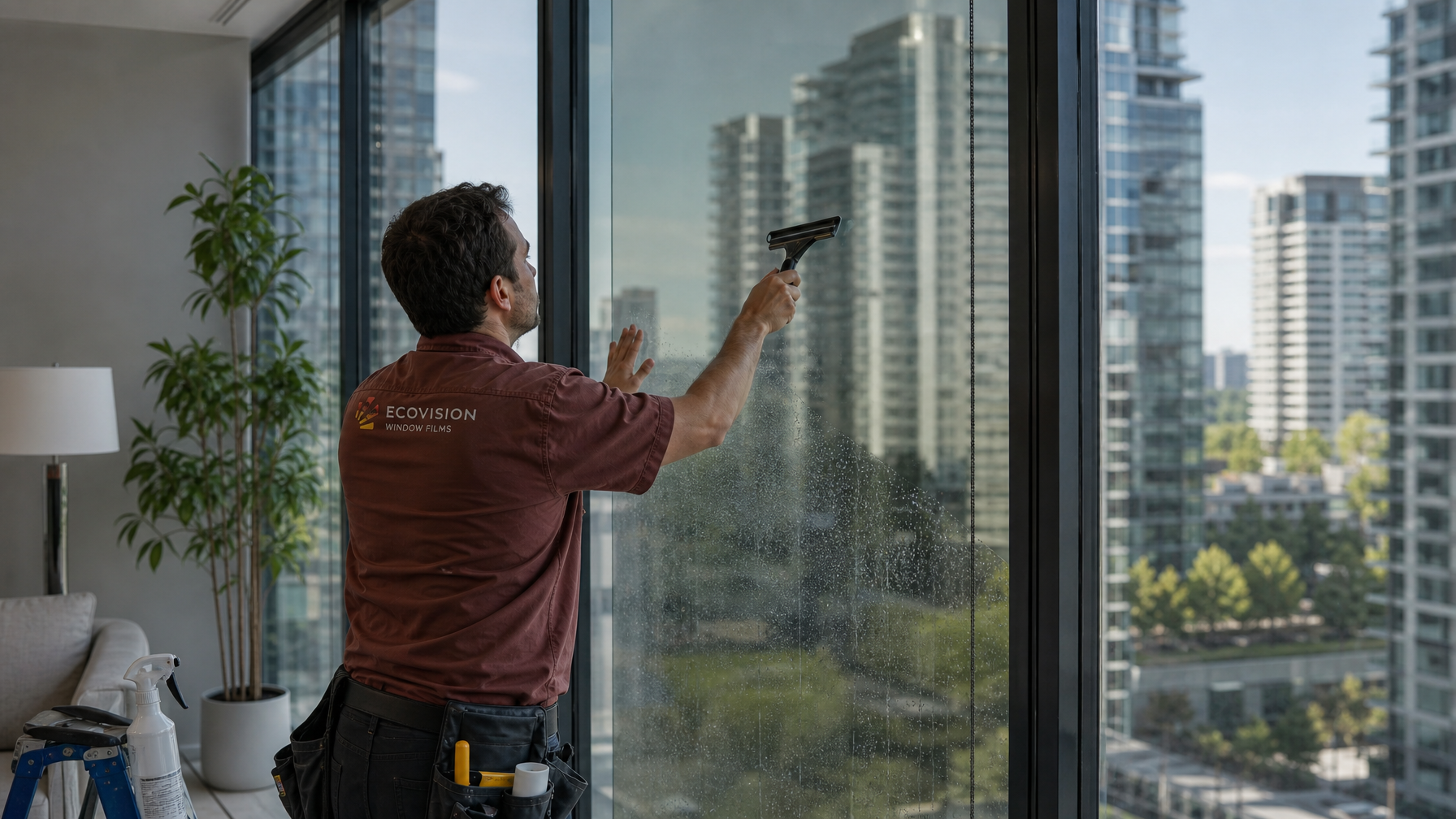
Government building installations require more pre-installation coordination than a standard commercial job. Ecovision’s typical process for a BC government facility project:
- Site assessment (free). Measure all glass surfaces, identify access constraints, document any existing film or lamination, and assess security clearance requirements for the work crew. Most government sites require personnel background checks 2, 4 weeks in advance.
- Film specification and zoning. Recommend the right film grades for each zone of the building (entry vs. office vs. interview room vs. exterior facade), with written justification against the facility’s performance targets and applicable codes.
- Procurement and tender support. Ecovision can provide full product data sheets, manufacturer certifications, and compliance documentation required for formal RFQ and public tender processes.
- Scheduling around operations. Government buildings cannot close for film installation. Ecovision phases installations section-by-section across evenings and weekends where required, minimising disruption to staff and public services. Individual panes are accessible and usable within 24 hours of installation.
- Installation and cure time. Each pane requires 24, 72 hours of curing time before the film reaches full adhesion strength. Ecovision uses low-odour, solvent-free application solutions approved for occupied facilities.
- Documentation and warranty registration. LLumar and Vista films on government projects carry manufacturer warranties of 10, 15 years. Ecovision provides a post-installation report with film certification numbers, warranty registration, and care instructions for the facility’s records.
On a recent Lower Mainland institutional project, a multi-wing building serving both healthcare and government services, Ecovision completed 8,400 sq ft of security and solar film installation across five working days without closing a single public-facing service window. That scheduling discipline is the standard Ecovision brings to every institutional engagement.
Does BC Law Require Window Film Standards on Government Buildings?
There is no single BC statute that mandates window film on government buildings, but several codes and guidelines create practical performance requirements that film directly addresses:
- City of Vancouver Bird-Friendly Design Guidelines. Require bird collision deterrents on all new buildings and major renovations within the City. UV-patterned window film is an approved compliance method under the guideline’s Threat Factor scoring system.
- BC Energy Step Code (Part 10, BC Building Code). Sets performance targets that include solar heat gain control. Solar film retrofits can contribute to compliance modelling for existing buildings undergoing Step Code upgrades.
- WorkSafeBC Glass Hazard Guidelines. Recommend filmed or laminated glass in public-facing work environments where glass breakage creates a laceration hazard for workers or the public. Security film is the lowest-cost path to compliance.
- CleanBC Buildings Roadmap. Sets GHG intensity targets for provincially owned buildings that are driving solar film adoption as a low-cost, high-return energy retrofit across BC government properties.
- ANSI Z97.1 / UL 972 / UL 752. These ANSI and UL standards define the minimum performance thresholds for safety, burglary-resistant, and blast-resistant glazing. LLumar and Vista films Ecovision installs are certified against all three. Note that “shatter resistant” is a marketing term, only films certified to ANSI Z97.1 satisfy BC Building Code safety glazing requirements.
For government procurement teams, Ecovision provides full compliance documentation showing how specified films meet each applicable standard, a routine requirement on formal RFQ and public tender processes across BC.
Related Articles
- Commercial Window Tinting in Vancouver: What Businesses Need to Know
- Security Window Film in Vancouver, BC: Types, Costs, and What Buildings Need It Most
- Window Film for Office Buildings: 7 Questions Property Managers Ask
- Glare Reduction Window Film for BC Offices: How It Works, What to Expect, and What It Costs
- Window Film for Senior Care Homes and Assisted Living Facilities in BC
Frequently Asked Questions
About the Author: This article was written by the Ecovision Window Films team. Edward, Director at Ecovision, brings a distinctive perspective to the window film industry, with over a decade in real estate development, including roles as Executive Director at a real estate development firm and Director of Strategic Partnerships, before joining Ecovision. That background gives the company a sharp edge in serving BC property managers and building owners. Ecovision is a certified installer for leading film brands with completed projects for healthcare facilities, government buildings, and commercial properties throughout the Lower Mainland. For a free site assessment, call (236) 862-0052 or visit ecovisioncanada.com/contact/.