

Yes, a steamer can help remove window film. But only when used correctly on the right type of glass. Steam softens the adhesive layer that bonds film to glass, making it easier to lift and peel without leaving behind thick residue. The wrong technique, however, risks cracking thermally stressed glass, blowing the seals on insulated glass units (IGUs), or warping PVC window frames. Ecovision Window Films, certified LLumar and Vista installers serving Vancouver, Burnaby, Surrey, and the Lower Mainland, assesses old film as part of every free site evaluation. Call (236) 862-0052 to book yours.
Can You Use a Steamer to Remove Window Film?
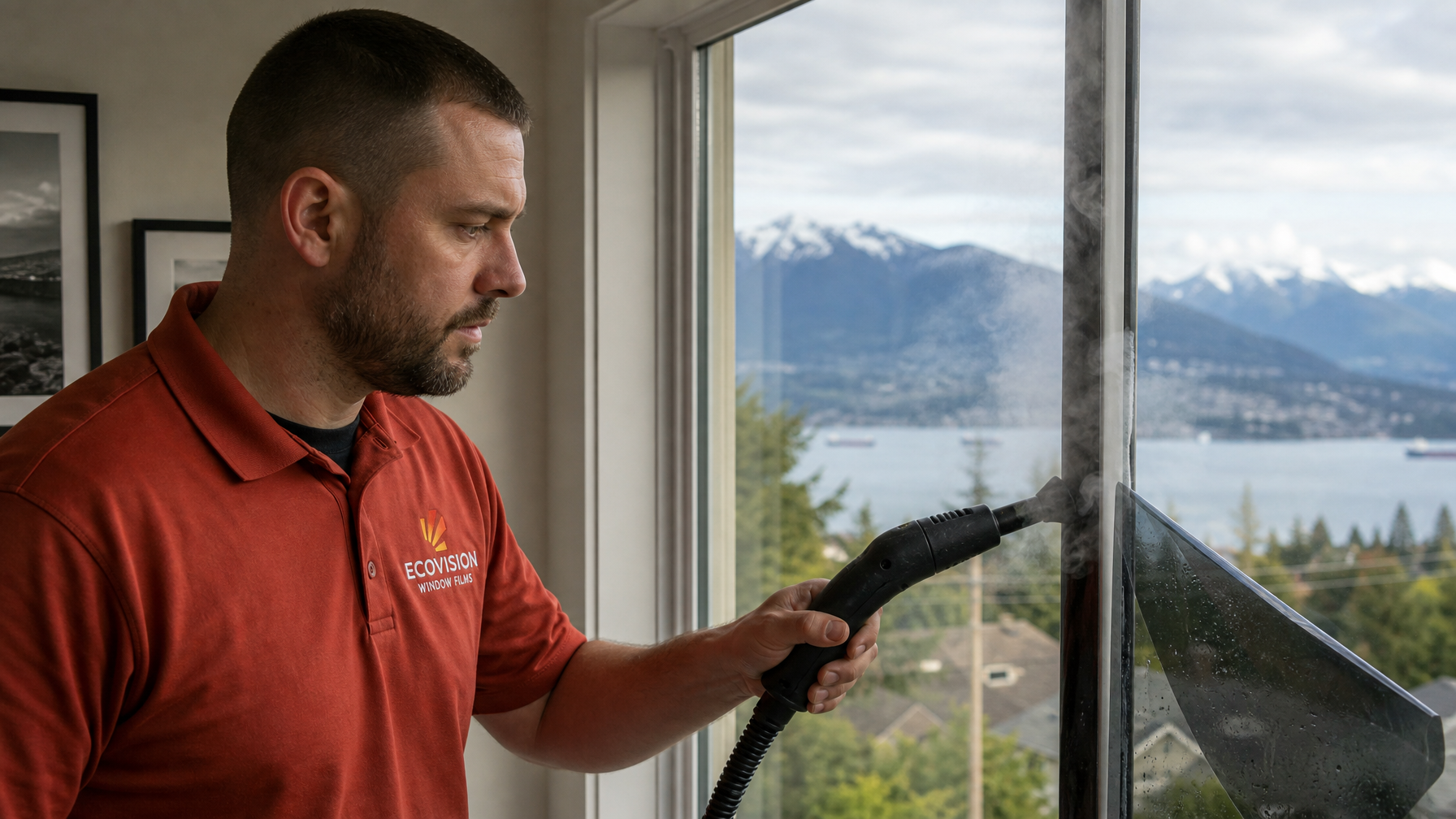
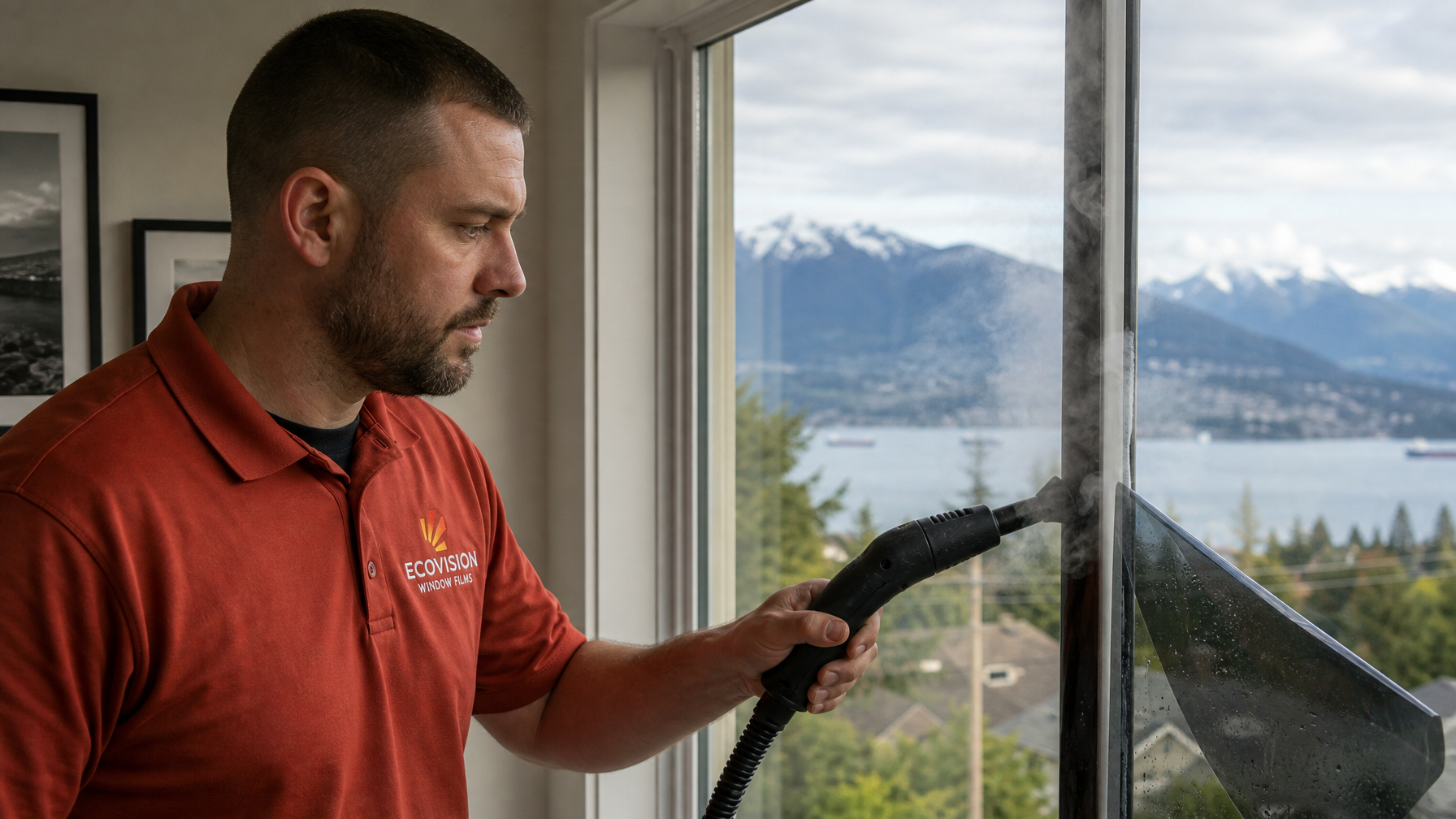
Yes. Handheld steamers are a legitimate professional tool for window film removal when the glass type is appropriate. Steam works by penetrating beneath the film’s edge, heating the pressure-sensitive adhesive to between 60°C and 80°C, which reduces its bond strength and allows the film to peel cleanly. On single-pane glass and well-sealed IGUs, a low-pressure steamer applied correctly is safe and effective. On older double-pane windows with failing seals, steam can accelerate seal failure and cause condensation between panes. A permanent and costly problem.
How Does Steam Help Remove Window Film Adhesive?
Window film adhesive is a pressure-sensitive acrylic compound. At room temperature, it maintains a strong molecular bond with the glass surface. Steam raises the adhesive temperature rapidly, reducing its viscosity and allowing the film to peel away in larger sections rather than tearing into small fragments. This is the key advantage of steam over dry methods: it reduces the chance of adhesive residue being left on the glass and minimises the need for prolonged scraping with a razor blade. Professionals typically use a handheld garment-style steamer or a dedicated tile and grout steamer operating below 3 bar of pressure. High-pressure steam cleaners. The type used for industrial cleaning. Should never be used on glass, as they can cause thermal shock fractures.
| Removal Method | Adhesive Residue Risk | Glass Safety | Best For |
|---|---|---|---|
| Low-pressure steam + scraper | Low | Safe on most glass | Professionally installed film, aged film |
| Ammonia and plastic sheeting | Medium | Safe on glass; avoid frames | DIY removal of light film |
| Heat gun | Low – Medium | Risk on IGUs if overheated | Spot treatment only |
| Dry peel (no heat) | High | Safe | New film under 1 year old |
| High-pressure steam | Low | High fracture risk | Not recommended |
Is Steam Safe on Different Glass Types and Window Seals?
This is the critical question for BC homeowners and property managers. Steam safety depends on the glass type and the condition of the existing seals. Single-pane glass handles steam well. There is no sealed air space to compromise. Standard double-pane IGUs in good condition are generally safe when steam is applied to the interior surface only and kept moving (never focused on one spot for more than 3 to 5 seconds). Older IGUs with visible fogging between panes already have compromised seals. Steam applied to these windows will almost certainly accelerate failure. Low-E glass and tempered glass are safe for steam at normal handheld pressures, but toughened or heat-strengthened glass with existing micro-fractures can crack under rapid thermal change. At buildings like Bentall 4 in downtown Vancouver, Ecovision’s crews assess glass type before any removal work begins. A step that prevents costly glazing damage.
What Are the Risks of Using a Steamer on BC Windows?
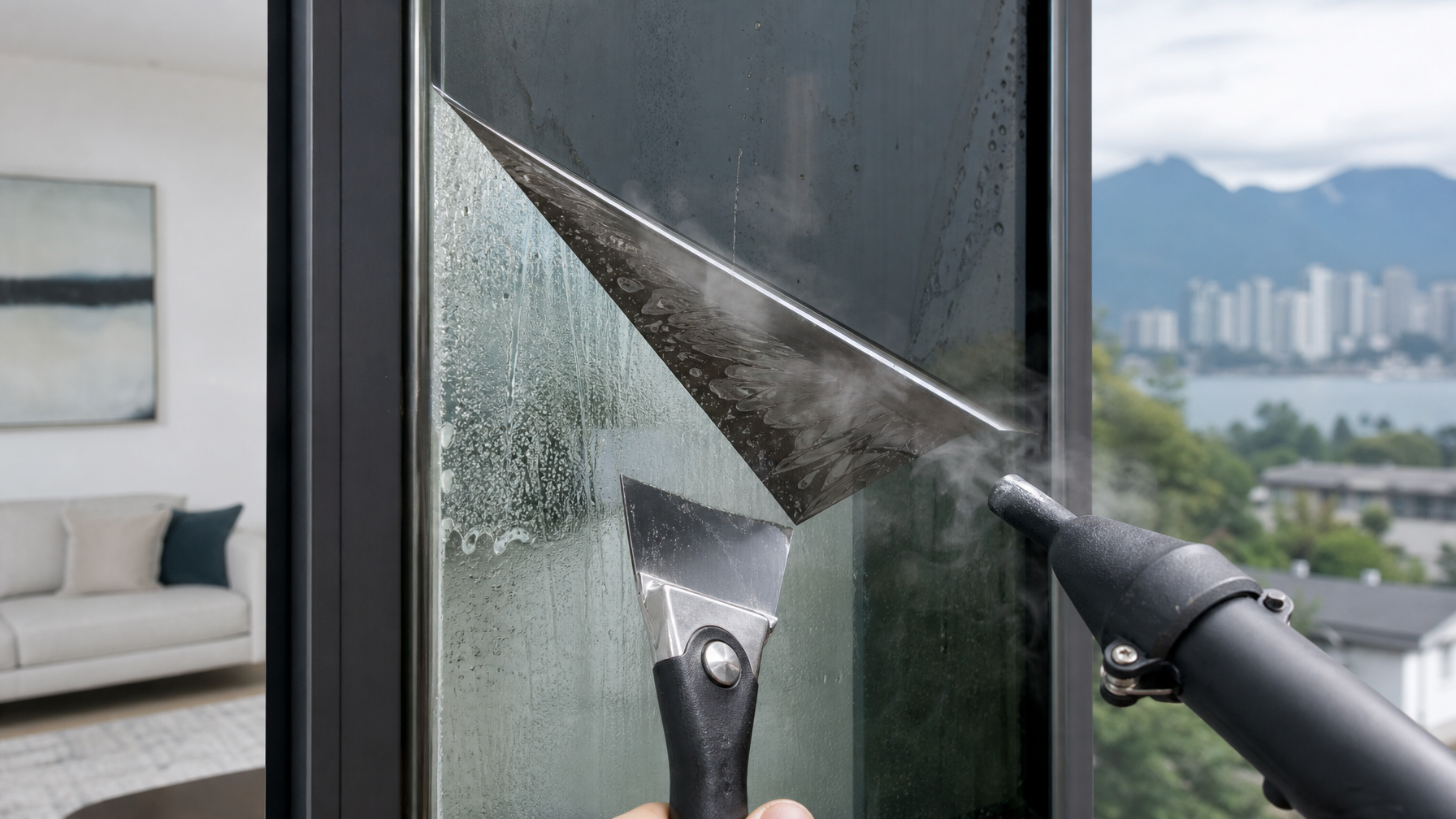
There are four specific risks BC property owners should know before starting steam removal. First, insulated glass unit seal damage: steam that penetrates through gaps in the frame or sill can reach the edge seals of IGUs, softening the butyl and silicone compounds that maintain the argon or krypton gas fill. Once the seal fails, the IGU must be replaced. A cost of $200 to $600 or more per pane in Metro Vancouver. Second, frame warping: PVC frames expand unevenly under concentrated heat. Third, thermal shock cracking: rapid temperature differential across a pane, especially on south-facing glass already warm from sun exposure, can trigger cracking along existing stress points. Fourth, adhesive smearing: if the film is not peeled immediately after steam application, the softened adhesive re-bonds and becomes harder to remove than before. The complete window film removal guide covers each of these risks in detail.
What Tools Do You Actually Need to Remove Window Film?
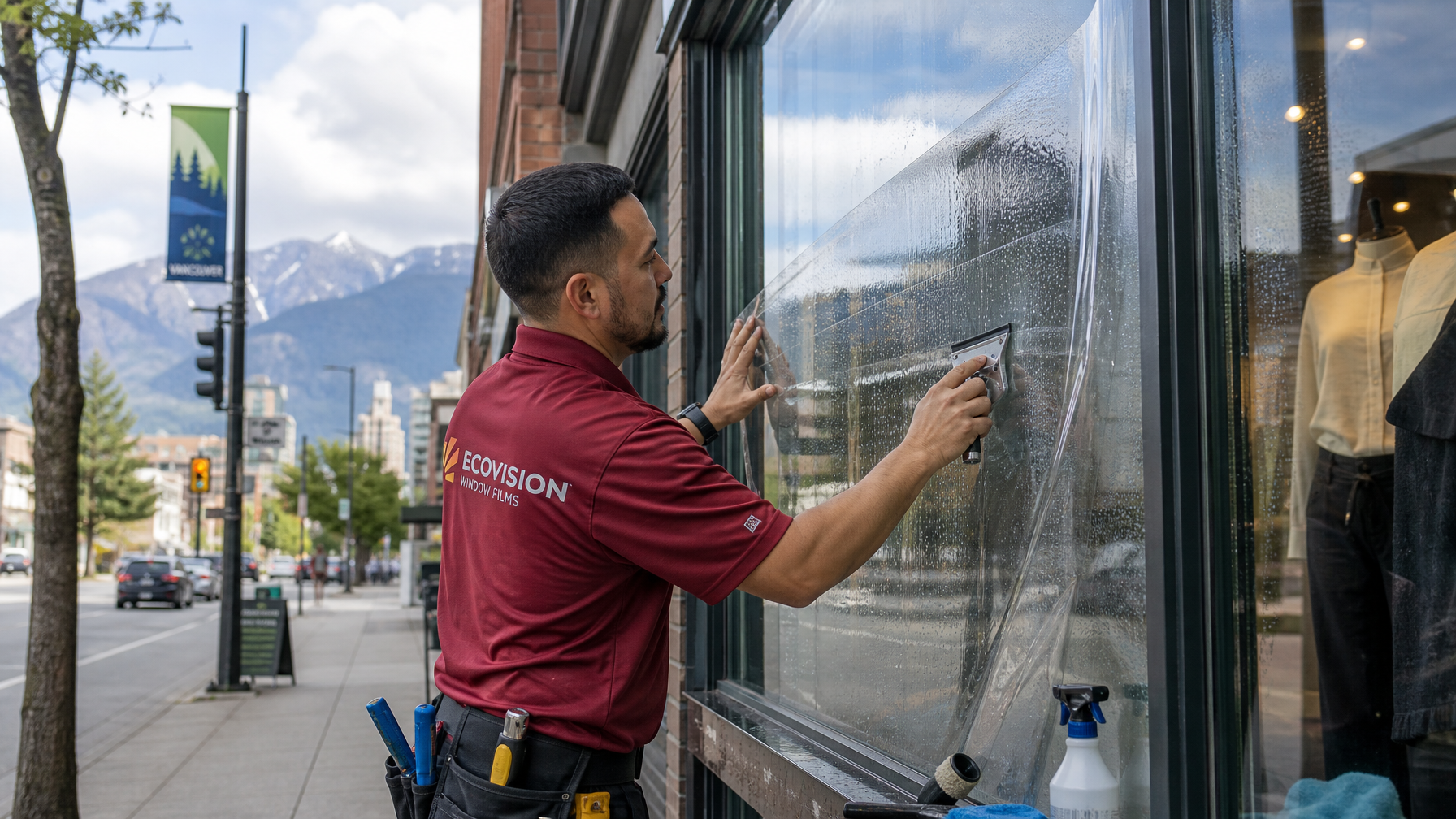
For a complete steam-assisted removal job, you need: a low-pressure handheld steamer (available at most hardware stores for $40 to $80), a plastic squeegee or non-scratch scraper to lift the film edge, a long-handled razor blade scraper for adhesive residue, isopropyl alcohol or an adhesive remover spray (Goo Gone or equivalent), and microfibre cloths for the final glass clean. The process: apply steam to the corner edge of the film for 3 to 5 seconds, lift the edge with the plastic squeegee, maintain steady tension while re-applying steam ahead of the peel line, and work in strips. Remove adhesive residue with the scraper and solvent. At Rosemary Heights Seniors Village in South Surrey, Ecovision used this exact process to remove 15-year-old metallised film from common room windows ahead of a full LLumar VS60 solar film replacement. A project that required careful adhesive cleanup to ensure the new film bonded cleanly. The full adhesive removal process is covered in the window film adhesive removal guide.

When Should You Call a Professional Instead of DIY?
DIY steam removal is reasonable for small sections of film on single-pane windows or modern double-pane units in good condition. It becomes inadvisable in six situations: (1) the building has more than two floors and windows are not safely accessible from inside, (2) the IGUs are more than 15 years old and may have compromised seals, (3) the film is 8 to 14 mil security-grade or safety film, which is significantly thicker and more difficult to remove cleanly, (4) the film covers heritage or specialty glass (lead-glazed, art glass, or laminated glass), (5) the property is a strata building where any window damage would affect the building envelope warranty, or (6) you need the film replaced immediately after removal. Improper DIY removal often leaves adhesive residue that prevents new film from bonding. Ecovision provides professional removal as part of a re-film project at no additional charge. For standalone removal, contact Ecovision at (236) 862-0052 for a site assessment. Professionally installed LLumar or Vista film in good condition may be removed and reapplied in some circumstances. Check that guide before committing to full replacement.
Related Articles
- How to Remove Window Film Without Damaging Your Windows
- How to Remove Privacy Window Film: What BC Property Owners Need to Know
- How to Remove Window Film Adhesive: What Works, What Doesn’t
- Can Window Film Be Removed and Reapplied? What BC Property Owners Need to Know
- 5 Signs Your Window Film Needs Replacing: What BC Homeowners Need to Know
About the Author: This article was written by the Ecovision Window Films team, led by Xander, Co-Founder and Director of Operations at Ecovision. Xander brings over 10 years of hands-on installation experience, backed by a family with over 50 years in the installation trades, including window film. His military background reinforces the precision and discipline Ecovision applies to every project. Ecovision is a certified installer for leading film brands with completed projects for healthcare facilities, government buildings, and commercial properties throughout the Lower Mainland. For a free site assessment, call (236) 862-0052 or visit ecovisioncanada.com/contact/.