
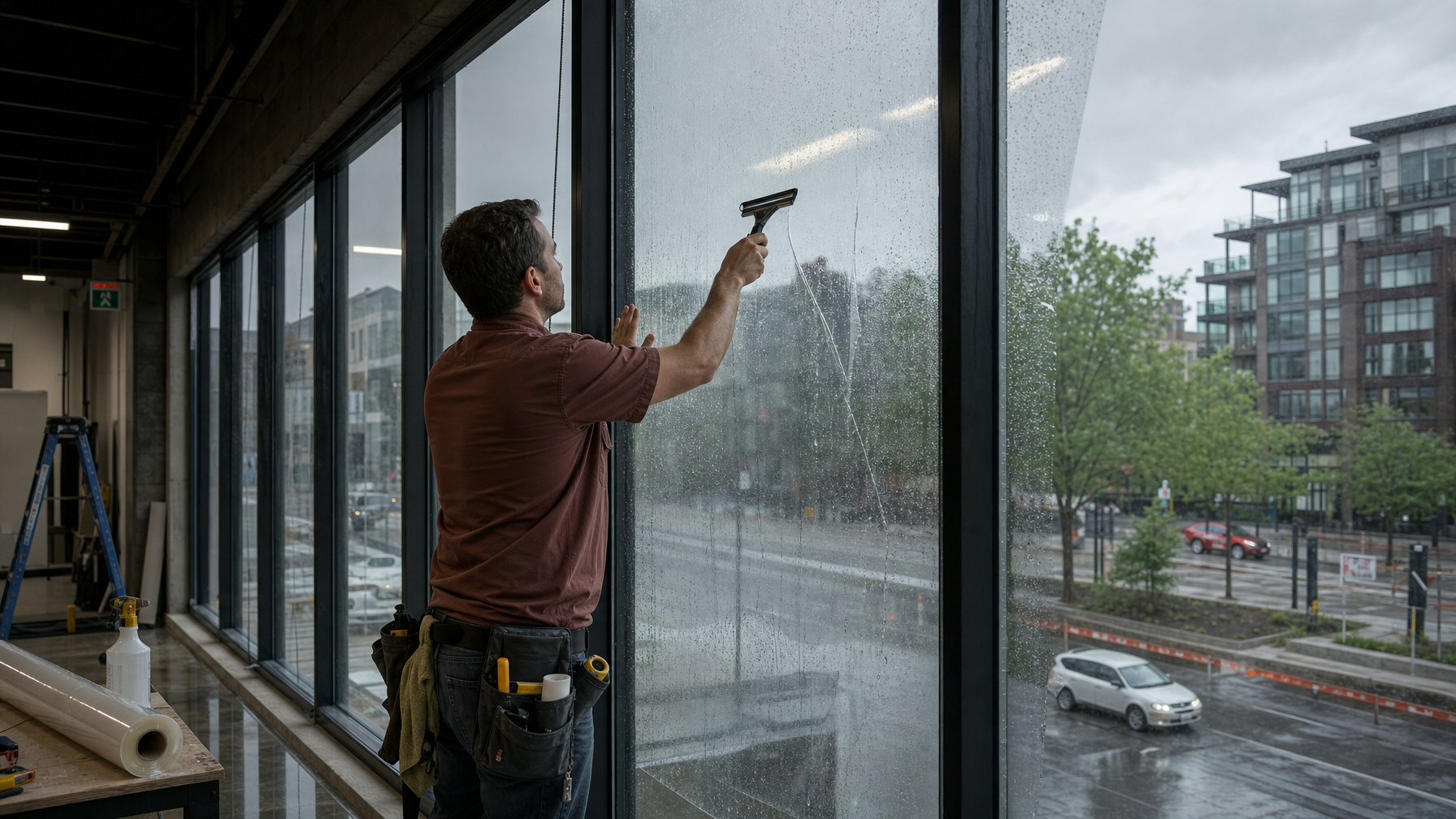
Commercial window tinting in Vancouver typically costs $9 – $22 per square foot installed, depending on film type, building height, glass area, and access requirements. Ecovision Window Films is a LLumar- and Vista-certified commercial installer serving offices, strata towers, retail storefronts, and government buildings across Vancouver and the Lower Mainland, most single-floor projects are completed within one business day.
What Is Commercial Window Tinting and Why Do Vancouver Businesses Use It?
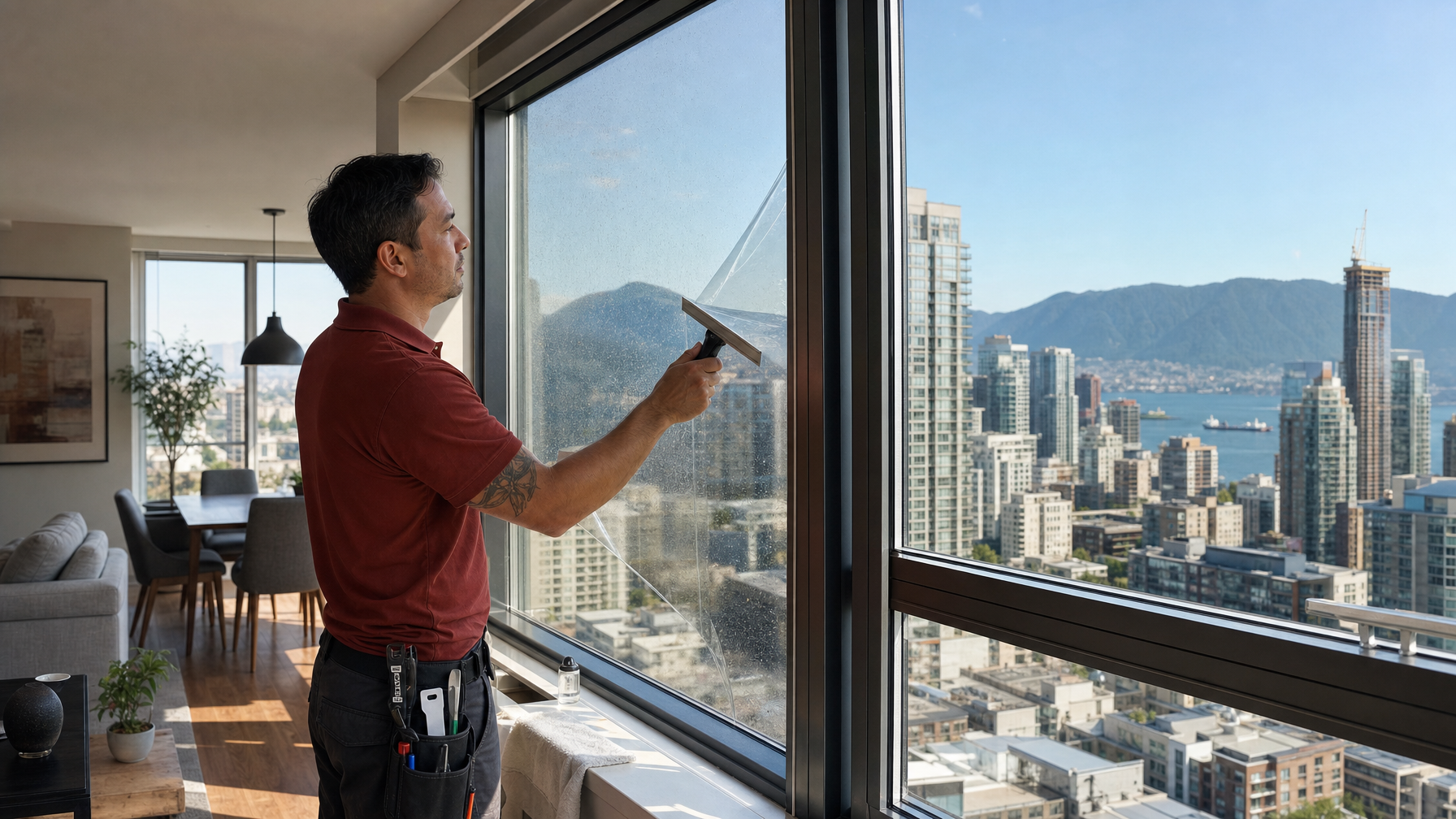
Commercial window tinting is the professional installation of a multi-layer polyester film onto existing glass surfaces in offices, retail buildings, strata towers, healthcare facilities, and industrial properties. The film bonds directly to the interior glass surface and is near-invisible after installation, or intentionally visible as a privacy or decorative finish depending on the film selected.
Vancouver’s commercial building stock has three conditions that make window film a practical retrofit. First, post-2010 towers in the Burrard Corridor, False Creek Flats, and Broadway Plan area routinely have glazed facades exceeding 70% of wall area, far more glass exposure than pre-2000 construction. Second, Metro Vancouver averages more than 28 days above 25°C between May and September, creating sustained cooling demand on south and west-facing office floors. Third, BC’s CleanBC program and the BC Energy Step Code have made building operators more accountable for energy performance, and window film is a recognised passive measure that contributes to a building’s post-construction thermal performance without structural changes.
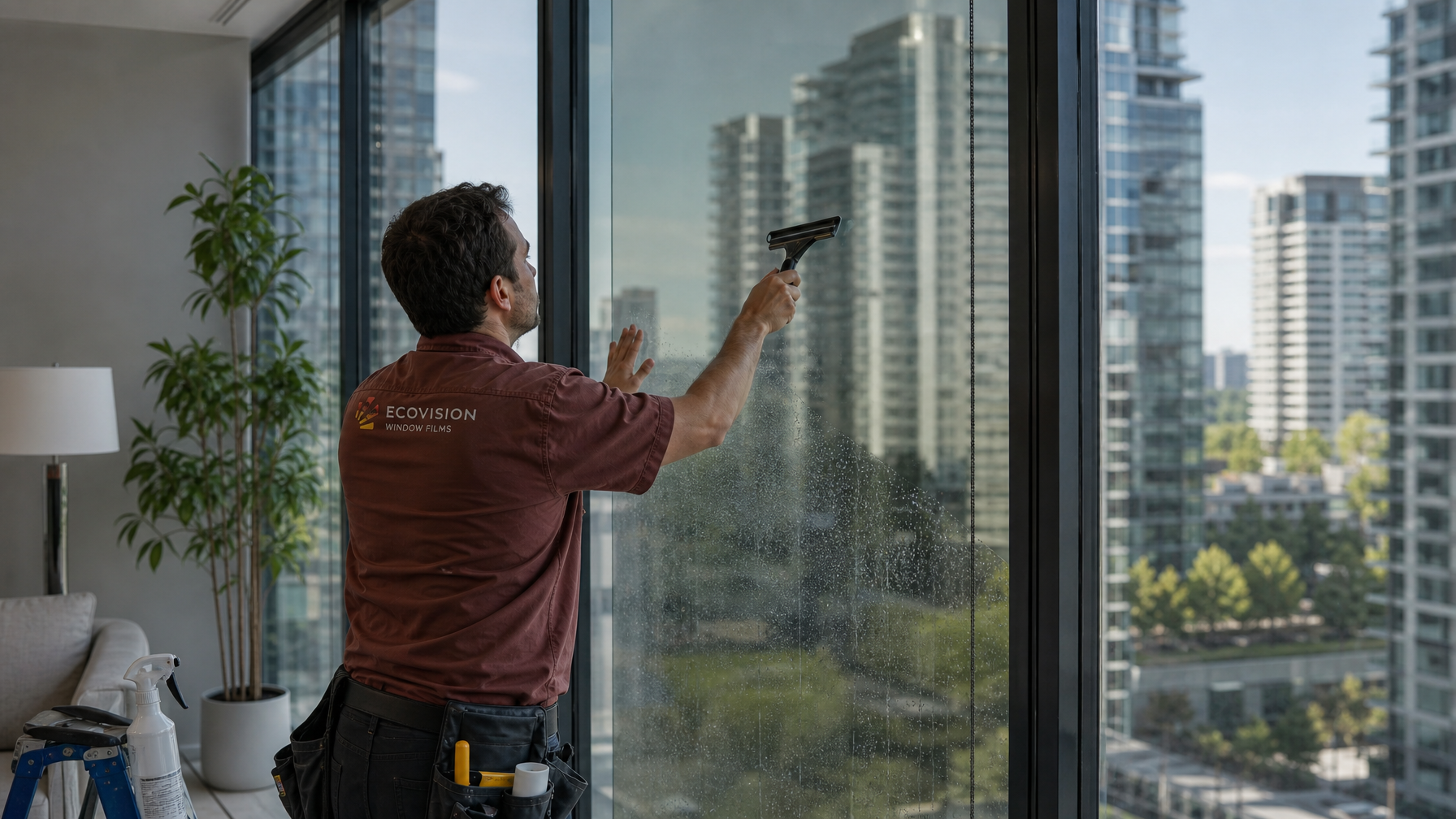
At Bentall 4, one of Vancouver’s premier Class A office towers, Ecovision Window Films completed a multi-floor solar film installation addressing persistent heat and glare complaints from open-plan tenant floors. The project was scheduled around occupancy requirements and completed without disruption to building operations, a workflow that has become standard across Ecovision’s commercial portfolio throughout the Lower Mainland.
The four most common commercial window film applications in Vancouver are: solar heat rejection (blocking 40, 80% of solar heat depending on film grade), glare reduction for screen-based work environments, daytime one-way privacy, and safety and security film for glass containment in high-traffic public areas. Provincial offices, courthouses, and municipal facilities have additional compliance requirements beyond standard commercial buildings, for a full breakdown of security, privacy, and energy standards specific to public facilities, see our guide to government building window film in BC.
What Types of Window Film Work Best for Commercial Buildings in Vancouver?
Film selection depends on the building’s primary problem, heat, glare, privacy, security, or aesthetics. The five main commercial film categories each perform differently. The table below summarises key performance attributes and installed cost ranges for Vancouver commercial projects.
| Film Type | Solar Heat Rejection | Glare Reduction | Daytime Privacy | Security Rating | Installed Cost (BC) |
|---|---|---|---|---|---|
| Reflective / Solar | Up to 78% | High | Moderate (mirror effect) | None | $9 – $12/sq ft |
| Ceramic Solar | Up to 80% | Moderate, High | Low (near-neutral look) | None | $12 – $18/sq ft |
| Privacy / Frosted | 15, 30% | Moderate | Very High | None | $9 – $14/sq ft |
| Safety / Security | Low, Moderate | Low | Low | ANSI Z97.1 / UL 972 | $14 – $22/sq ft |
| Decorative | Low | Low, Moderate | Variable | None | $10 – $18/sq ft |
Solar reflective film is the most cost-effective entry point for buildings with significant heat and glare exposure. It creates a one-way mirror effect from the exterior, something many commercial tenants specifically request for daytime privacy window film benefits, and it performs well on west-facing floors on Vancouver’s Burrard and Hornby corridors during the spring and summer months.
Ceramic solar film achieves comparable heat rejection without the reflective appearance, making it the preferred specification for heritage buildings with design guidelines, strata buildings with exterior appearance bylaws, or tenants who want outward views preserved. LLumar’s commercial ceramic film carries a 10-year manufacturer warranty and is installed by Ecovision under factory-certified procedures.
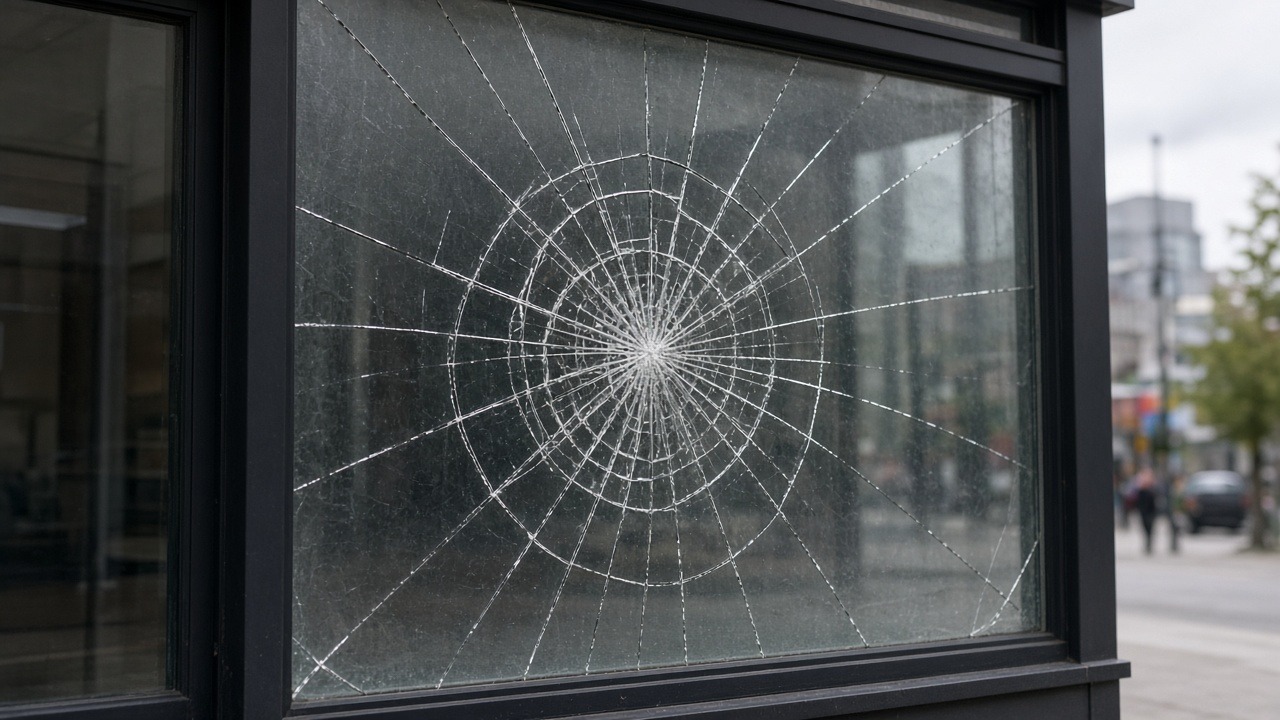
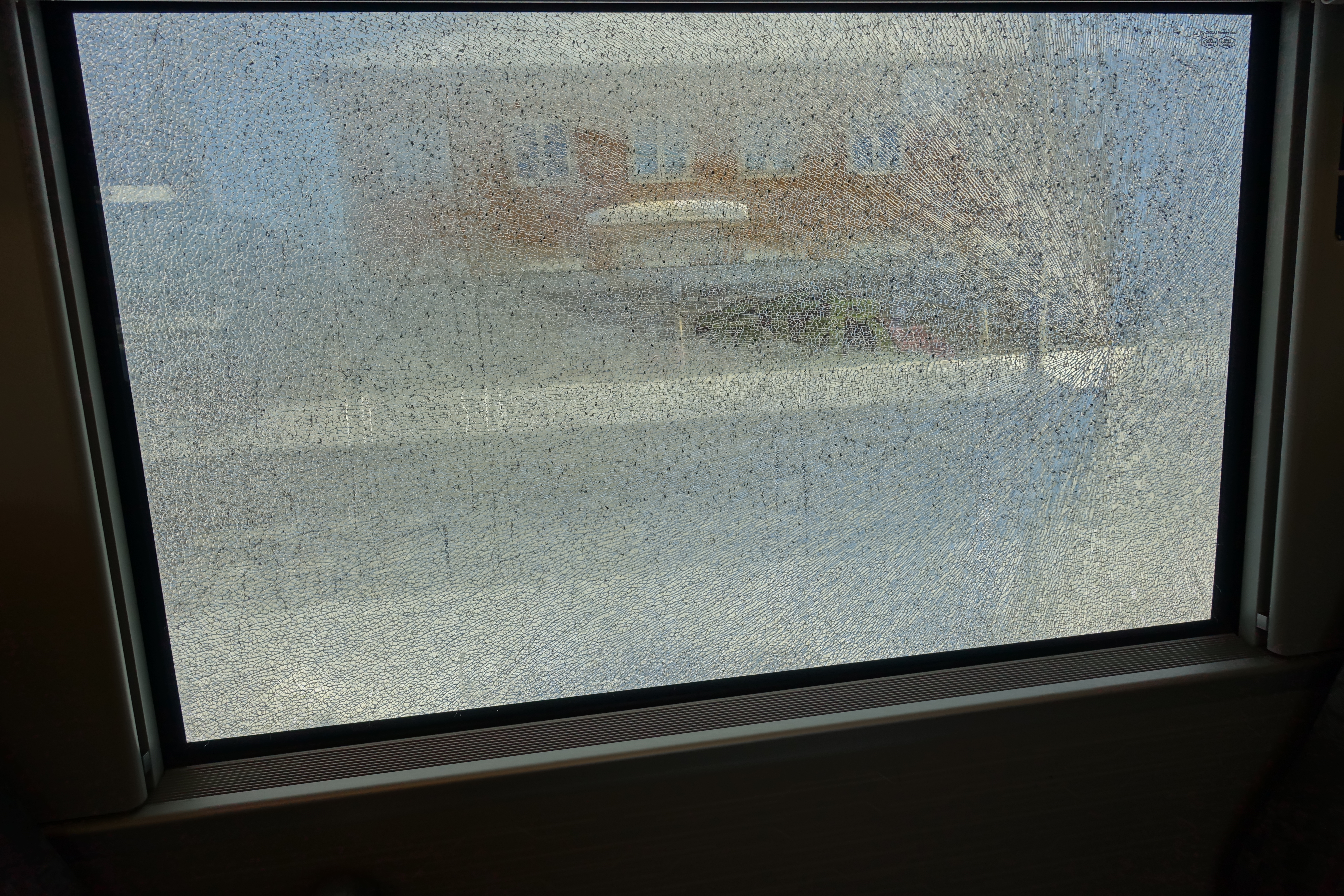
Safety and security film is increasingly specified in Vancouver’s commercial market following updated WorkSafeBC guidance on glazing in public-access areas. Security film meeting UL 972 or ANSI Z97.1 holds glass fragments together on impact, substantially reducing laceration risk. Any Vancouver commercial building completing a WorkSafeBC or insurance audit where original glazing is annealed rather than tempered should consider security film as a direct compliance measure.
How Much Does Commercial Window Tinting Cost in Vancouver?
Professional commercial window tinting in Vancouver ranges from $9 to $22 per square foot installed. The total project cost is driven by four variables: film grade, total glass area, building access (ground level vs. multi-floor requiring lift or scaffold), and glass type (standard annealed vs. insulated glass units).
As a practical guide: a 200-square-foot ground-floor retail storefront runs $1,800, $4,400 with solar or ceramic film. A 1,000-square-foot open-plan office floor with floor-to-ceiling south and west glazing, typical of a newer Burrard Street, Granville, or Olympic Village commercial building, typically runs $9,000, $18,000 depending on film specification and whether high-access equipment is required. Security film installations are priced at the upper end of the range because the film is heavier and edge-sealing requires additional labour.
For a complete breakdown by project type, see Ecovision’s commercial window film services page. Free on-site estimates are available for all commercial projects across the Lower Mainland.
Does Commercial Window Film Meet BC Building Code and WorkSafeBC Standards?
Standard commercial window film retrofit installations do not require a building permit in BC. Window film applied to the interior glass surface is classified as a surface modification, the same legal category as interior paint or cladding, rather than a structural or mechanical change.
Three compliance areas apply depending on project type:
- BC Energy Step Code: Window film is a recognised passive energy measure for commercial buildings. Properties undergoing a post-construction energy performance review can document window film as a solar heat gain coefficient improvement, relevant for buildings targeting Step Code compliance under renovation permit conditions.
- WorkSafeBC OHS Regulation Part 4: Security and safety film meeting ANSI Z97.1 is accepted as a compliant retrofit for annealed glass in public-access commercial spaces. For any Vancouver commercial building completing a WorkSafeBC or insurance occupancy audit, documenting the film grade and installation date on record is recommended.
- City of Vancouver Bird-Friendly Design Guidelines (2022): New commercial construction and major renovations in Vancouver must achieve a threat factor of 30 or less on exterior glazing. Ecovision installs patterned bird-safe film that meets this threshold, a requirement that came up directly in our work with a government building client in the Lower Mainland whose renewal permit triggered a bird-safe review under the 2022 guidelines.
Strata buildings and multi-tenant commercial properties also require written approval from the strata council or building management before any exterior-visible film is installed. Ecovision includes a documentation checklist in every commercial proposal to confirm this before the project start date, no surprises mid-installation. Strata corporations evaluating a coordinated building-wide film retrofit will find the full approval process and 2026 cost ranges in the dedicated guide to window film for strata buildings in Vancouver.
How Long Does Commercial Window Film Last on a Vancouver Building?
Professionally installed commercial window film from LLumar or Vista lasts 10, 20 years in Vancouver’s climate, depending on film type, glass orientation, and maintenance practices. Interior-applied film, the standard for all Ecovision commercial projects, is protected from exterior weathering and UV degradation that would accelerate failure on an exterior-applied installation.
South and west-facing installations receive the highest UV load in Metro Vancouver and typically reach the lower end of the lifespan range (10, 12 years) when standard solar film is used. North-facing glass with minimal direct sun exposure can see film last 15, 20 years without adhesive failure or colour shift. Ceramic film outlasts reflective and dyed film by 20, 30% in high-UV installations because the ceramic particles are significantly more UV-stable than metalised layers.
LLumar’s commercial warranty covers adhesive failure, delamination, bubbling, and colour shift from the installation date. Ecovision registers every commercial project under this warranty at time of installation. Maintenance is minimal: avoid ammonia-based cleaners and do not clean film within 30 days of installation while the adhesive cures. Annual inspection of film edges is recommended for large-format installations where edge lift can develop over time.
What Should BC Property Managers Ask Before Booking a Window Film Installation?
Property managers across Vancouver’s commercial real estate market ask the same questions before approving a window film project. Here is what the honest answers look like.
- Will the film void our glass manufacturer warranty? Interior-applied film from a certified LLumar or Vista installer typically does not void the glass warranty, provided the film’s heat load complies with the IGU thermal stress specification. Ecovision provides thermal stress calculations for all IGU projects on request prior to installation.
- Does Vancouver’s rain affect installation scheduling? No. Film is installed on the interior glass surface, rain, humidity, and cold temperatures have no effect on the installation process or outcome. Ecovision installs year-round across the Lower Mainland.
- Do we need strata or landlord approval? For any building where exterior appearance is governed by a strata bylaw or lease covenant, written approval is required before installation. Ecovision’s commercial proposal process includes a pre-installation documentation checklist that covers this step automatically.
- Can film be removed if tenants change? Yes. Film is removable with a heat gun, razor blade, and adhesive remover without damaging the glass. Removal takes approximately the same labour time as installation. Landlords can specify removable film options in tenant improvement documentation.
- How disruptive is the installation to occupied floors? For most open-plan commercial floors, film is installed in sections during business hours while the majority of the floor remains accessible. Multi-floor or high-rise exterior access projects may require after-hours scheduling, which Ecovision accommodates on request.
For a free on-site assessment of your commercial property’s glazing, contact Ecovision Window Films at (236) 862-0052 or visit the contact page. Ecovision serves Vancouver, Burnaby, Surrey, Richmond, Coquitlam, Langley, and the broader Lower Mainland.
Related Articles
- Glare Reduction Window Film for BC Offices: How It Works, What to Expect, and What It Costs
- Window Film for Office Buildings: 7 Questions Property Managers Ask
- Security Window Film in Vancouver, BC: Types, Costs, and What Buildings Need It Most
- UV Window Film for BC Homes and Buildings: What It Blocks, What It Costs, and What to Expect
- How Does One-Way Glass Work? The Science Behind Privacy Glass
About the Author: This article was written by the Ecovision Window Films team. Edward, Director at Ecovision, brings a distinctive perspective to the window film industry, with over a decade in real estate development, including roles as Executive Director at a real estate development firm and Director of Strategic Partnerships, before joining Ecovision. That background gives the company a sharp edge in serving BC property managers and building owners. Ecovision is a certified installer for leading film brands with completed projects for healthcare facilities, government buildings, and commercial properties throughout the Lower Mainland. For a free site assessment, call (236) 862-0052 or visit ecovisioncanada.com/contact/.