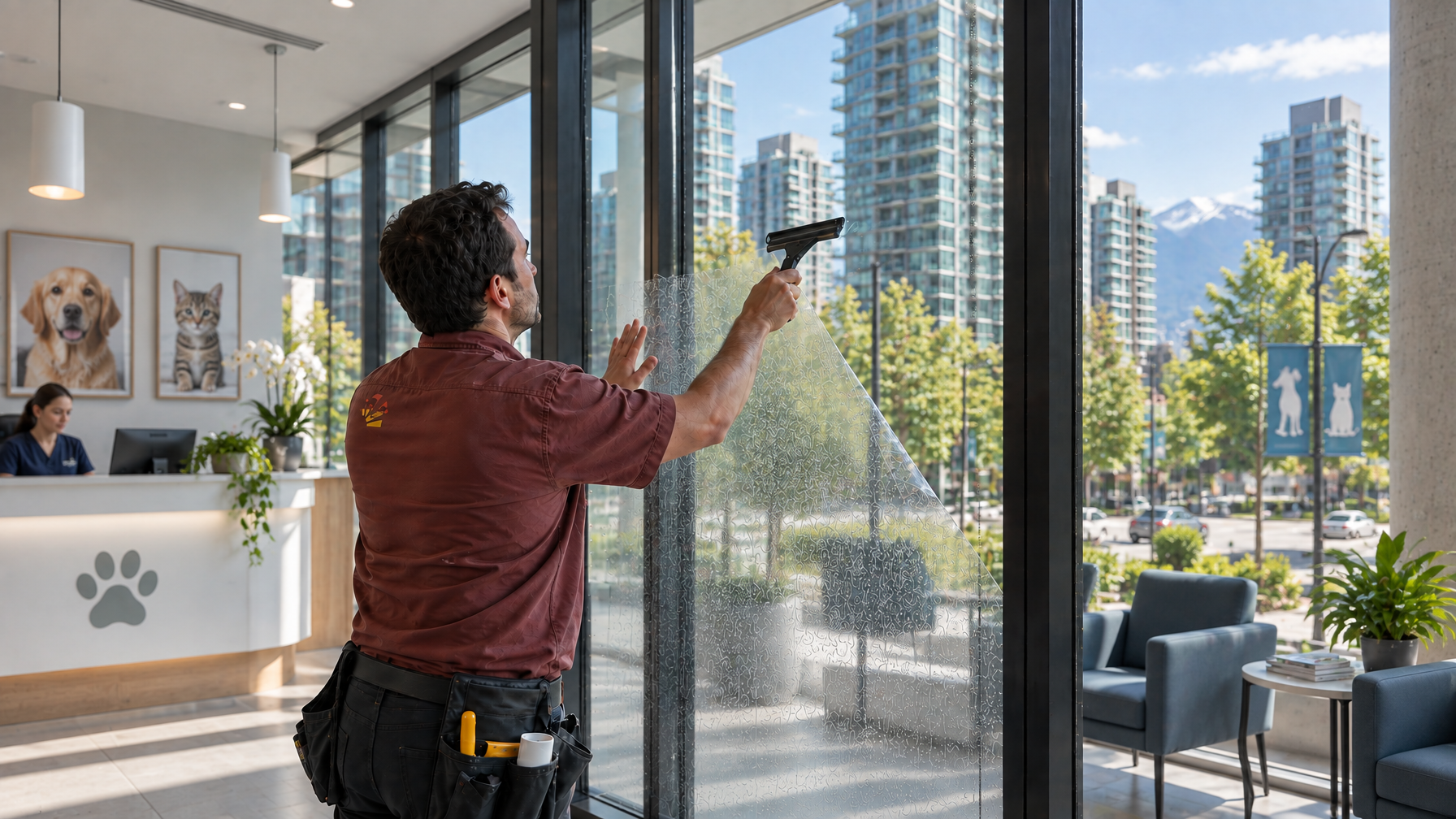
Window Film for Veterinary Clinics in BC: Heat, Privacy, and Security
Window film for veterinary clinics in BC: price depends on film and glass.

Window film for veterinary clinics in BC: price depends on film and glass.
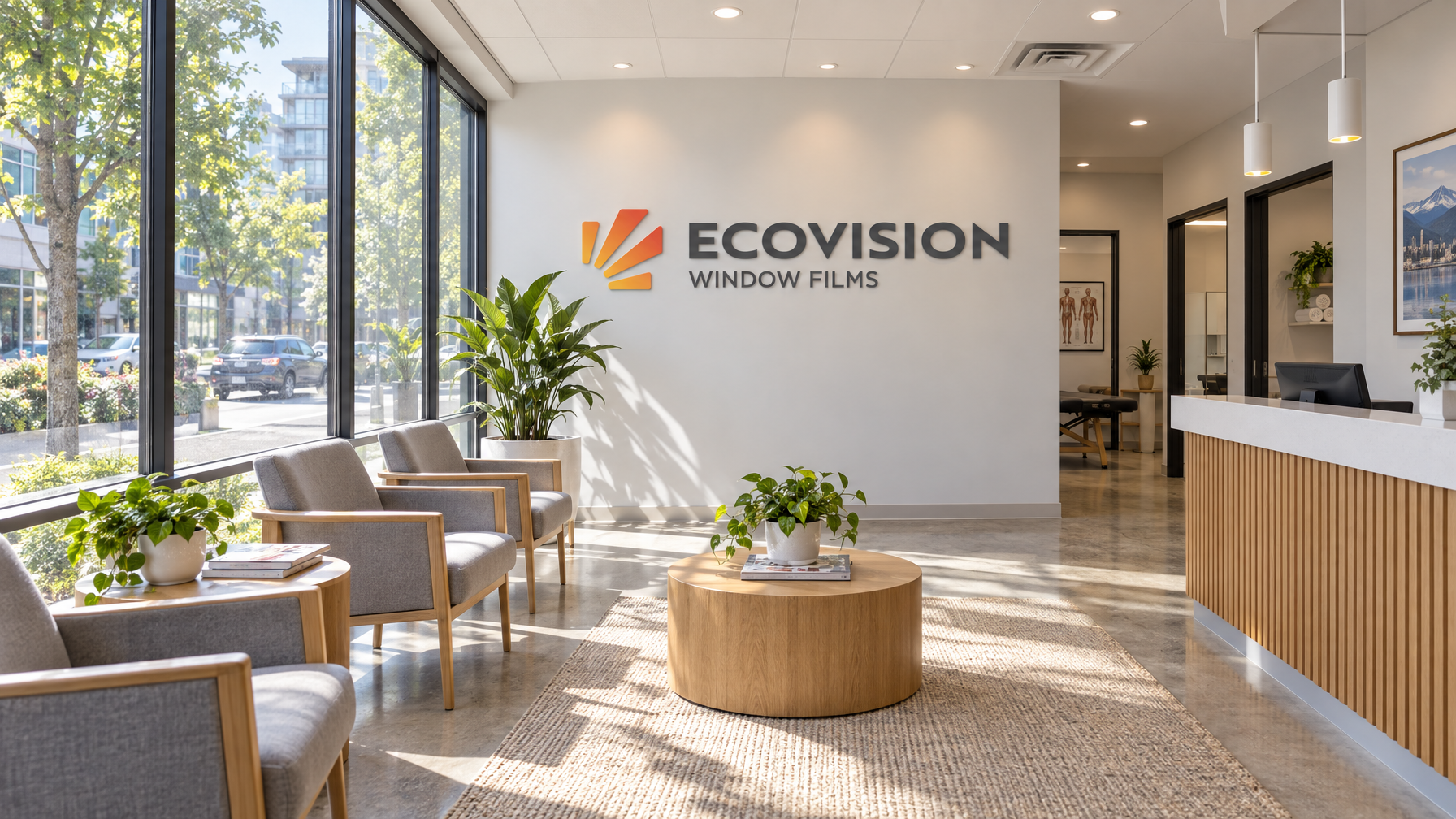
Window film for physiotherapy clinics in BC: price depends on film and glass.
Window film for dental offices in BC: price depends on film and glass.
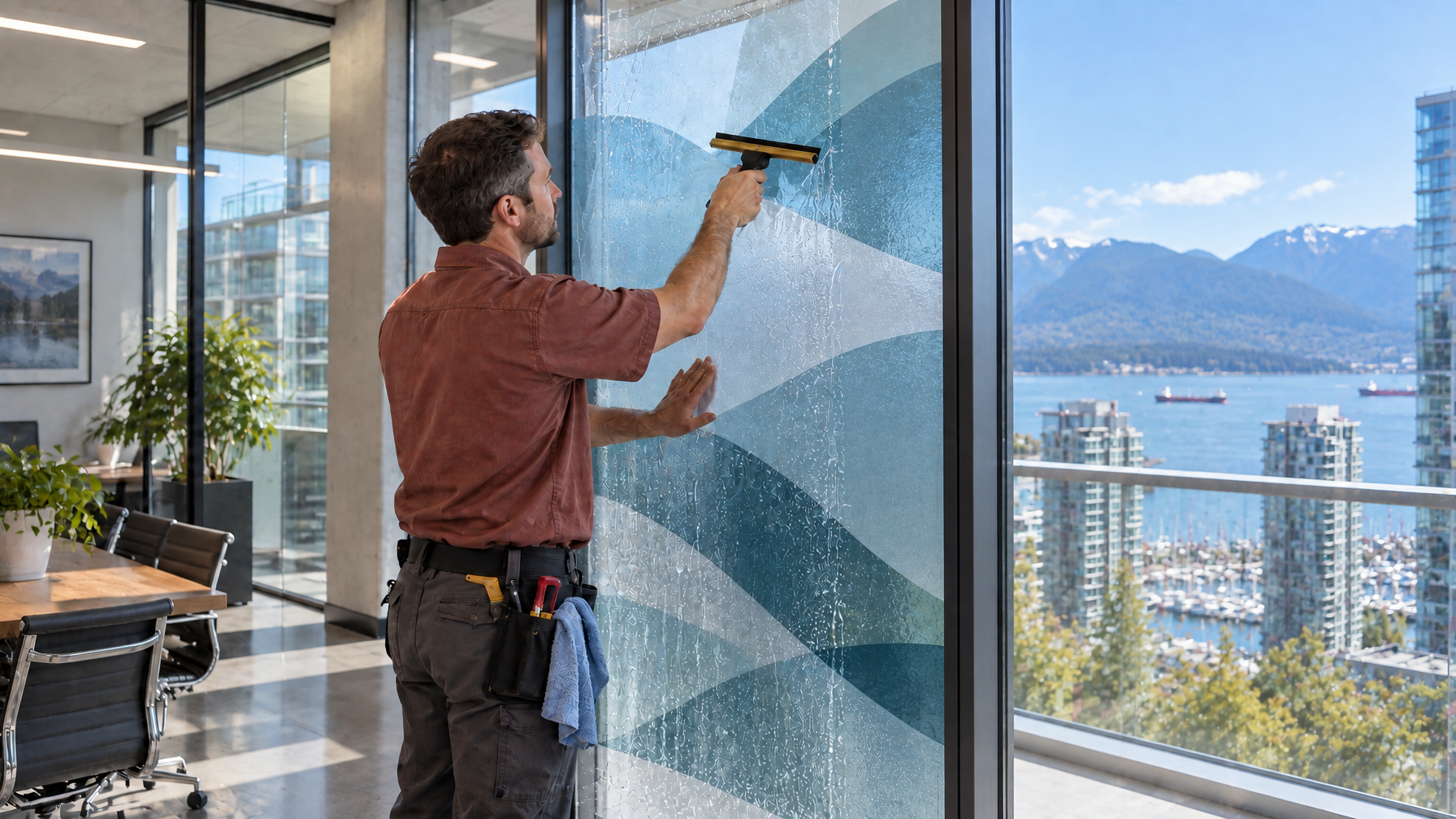
Coloured window film in BC: price depends on film and glass.
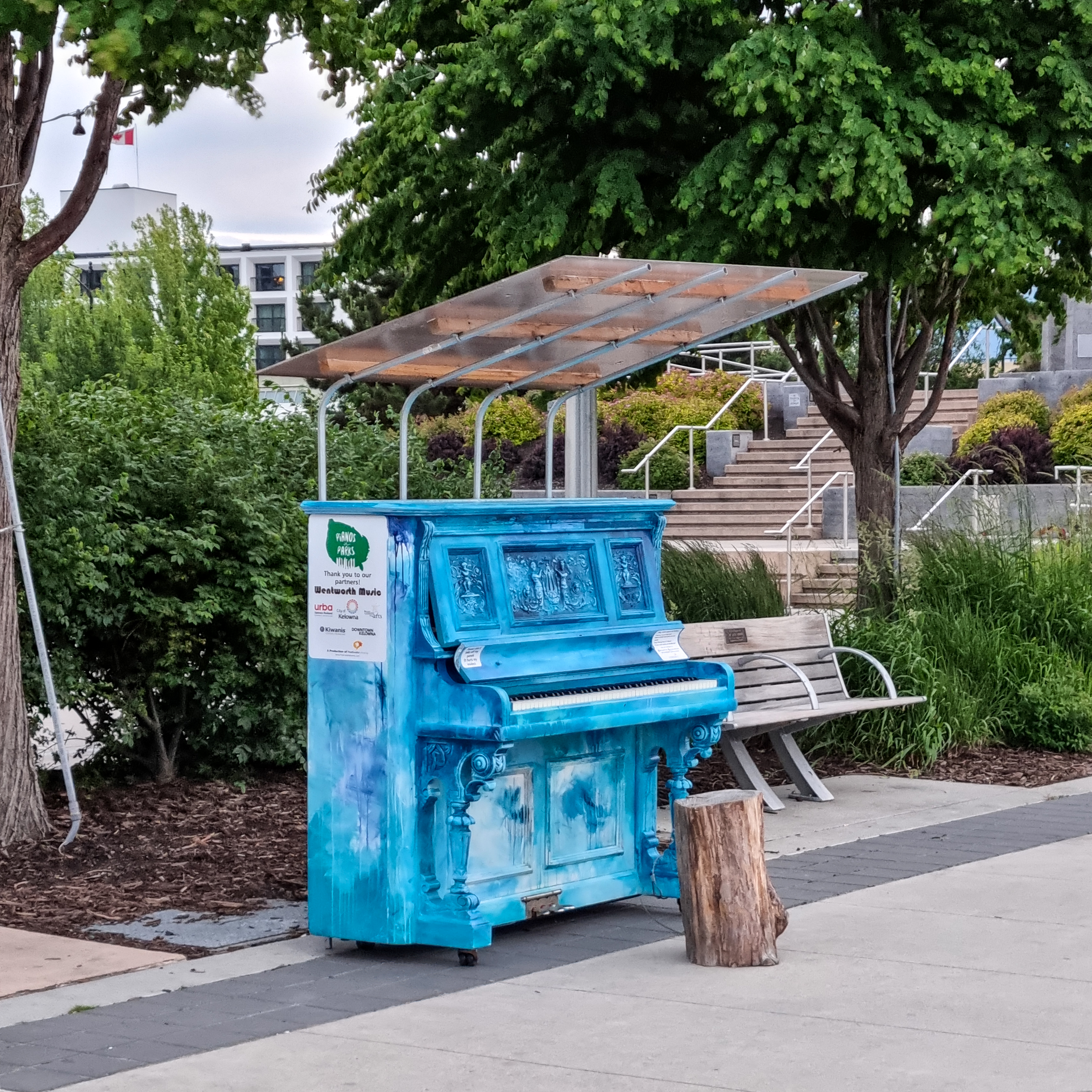
Window film in Kelowna, BC: price depends on film and glass.
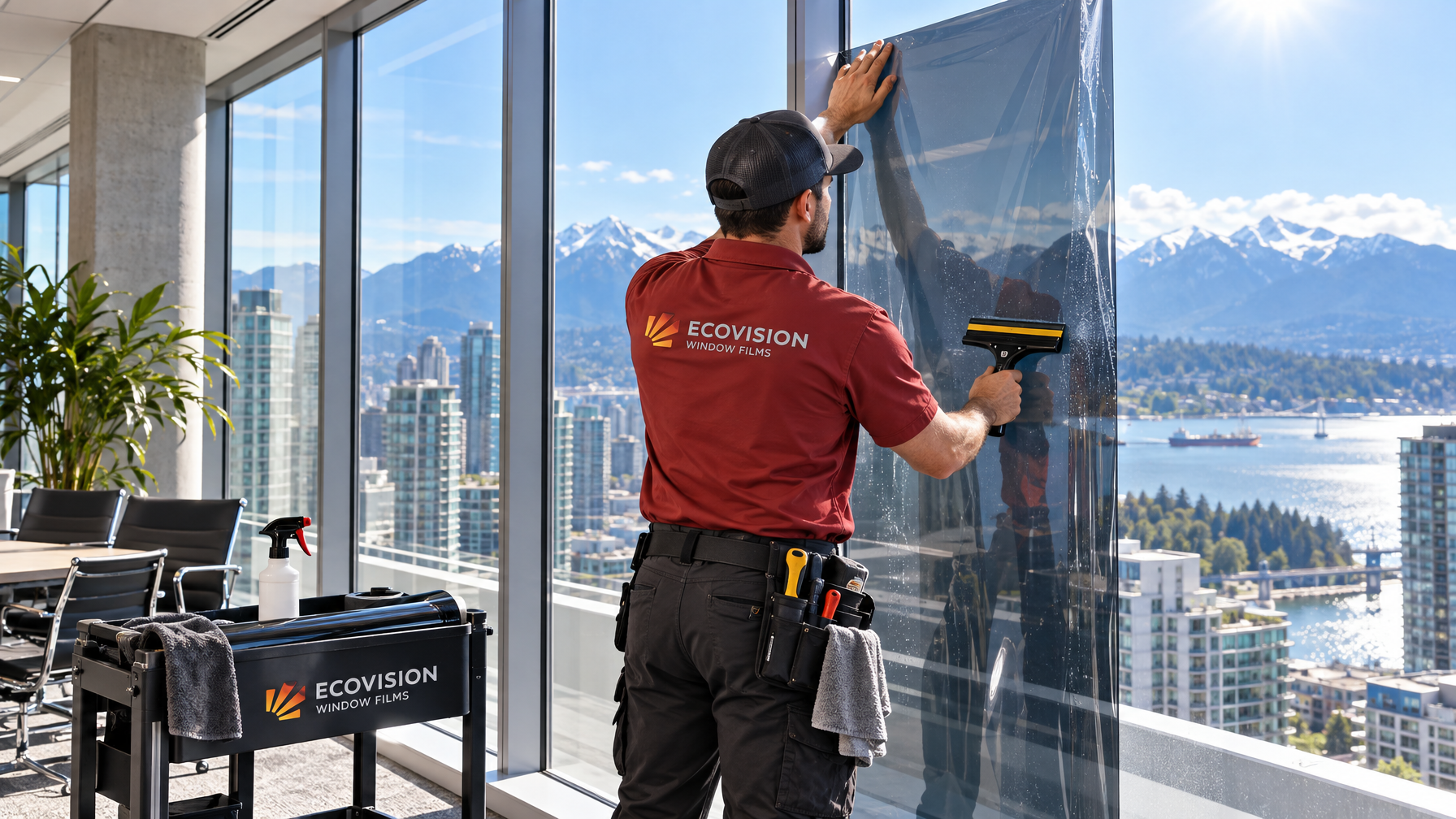
Does Window Film Block UVA Rays? What BC Property Owners Need to Know Ecovision Window Films installs solar and UV-protective film across Vancouver, Burnaby, Surrey, and the broader Lower Mainland. A question that comes up often in client consultations, particularly from strata managers, healthcare facilities, and homeowners near south-facing glass, is whether window film actually blocks UV radiation. The short answer is yes, but the more useful answer starts with understanding what type of UV you're dealing with. Does window film block UVA rays? Yes. Quality architectural window film blocks the majority of UVA radiation that passes through ordinary glass. Standard clear glass already filters most UVB, but it transmits significant UVA, particularly the longer UVA1 band (340-400 nm) responsible for photoaging and oxidative skin damage. Window film closes that gap. Products like LLumar VS60 and VS70, which Ecovision installs across residential and commercial buildings in BC, achieve greater than 99% rejection across the full UV spectrum when applied to standard clear glass. What Is the Difference Between UVA and UVB Rays? Ultraviolet radiation is not one uniform thing. The sun emits a spectrum, and UVA and UVB occupy different bands within that spectrum with meaningfully different biological effects. Radiation Wavelength Penetration Primary Biological Effect UVB 280-315 nm Superficial (epidermis) Sunburn, direct DNA damage, elevated skin cancer risk UVA2 315-340 nm Epidermis DNA and oxidative damage UVA1 340-400 nm Deeper (into dermis) Photoaging, oxidative stress, carcinogenic Visible blue 400-500 nm Varies Pigmentation effects, reactive oxygen species, not equivalent to UV cancer risk UVB photons carry more energy and directly damage DNA, which is why UVB is strongly associated with sunburn and skin cancer. UVA photons carry less energy individually but penetrate deeper into skin tissue and cause damage primarily through oxidative mechanisms. The American Cancer Society notes that both UVA and UVB contribute to skin cancer risk, and the Skin Cancer Foundation confirms that UVA passes through ordinary window glass at meaningful levels. The distinction between these two bands is exactly what makes window film relevant indoors. Does Ordinary Glass Already Block UV Rays? Yes, but only part of the UV spectrum. Standard silicate architectural glass absorbs strongly at shorter UV wavelengths. The American Cancer Society describes typical home and office windows as blocking most UVB while allowing meaningful UVA transmission. This is an important starting point for understanding what window film actually adds. Here is a simplified picture of what happens at a standard clear glass window: Radiation Ordinary Glass With UV Film UVB (280-315 nm) Mostly blocked Blocked (>99%) UVA (315-400 nm) Significant transmission Blocked (>99%) Visible light (400-700 nm) High transmission Dependent on film VLT The person sitting beside an untreated window in a Vancouver office building or strata unit is not receiving the same solar spectrum as someone standing outdoors. Glass has already altered the spectrum. But the UVA that does come through accumulates over hours each day, week after week, and that cumulative UVA exposure is where indoor UV risk is concentrated. This is why Ecovision's site assessments focus on south and southwest-facing glass in particular: prolonged direct sun exposure through untreated windows in Metro Vancouver's May-to-September season represents the highest indoor UV accumulation for most property types. Does Window Film Block UVA Specifically? Quality architectural window film blocks UVA across the full 315-400 nm band. The film achieves this through UV-absorbing compounds embedded in its polymer layers, these absorb UV photons before they transmit through the glass system into the interior. Importantly, UV rejection is not the same as visible light transmission (VLT). A film can be optically clear, appearing nearly invisible on the glass, while still blocking greater than 99% of UV radiation. LLumar VS60, for example, carries approximately 59% VLT with greater than 99% UV rejection on standard clear glass. VS70 achieves similar UV performance at approximately 62% VLT. Both are strata-friendly options in BC buildings where appearance rules restrict darker films. This also explains why the spectral transmission data from Eastman's 2026 performance workbook is more revealing than a single marketing headline. The AU85 film, measured on 3 mm clear glass, transmits approximately 26% at 400 nm but rises steeply to 88% at 450 nm, illustrating that UV rejection performance is measured across a specific wavelength range, not a uniform wall that cuts off everything below a single line. What Does ">99% UV Rejection" Actually Mean? The ">99% UV rejection" figure that appears on most quality window film specifications refers to the film's rejection of UV radiation across the defined ultraviolet wavelength band, typically 280-380 nm or 280-400 nm depending on the test method and standard applied. It does not mean the film blocks 99% of all photobiologically active radiation. Here is why that distinction matters: At approximately 400 nm, the spectrum transitions from long-wave UVA into visible violet and blue light. Film performance across this boundary varies by product. A film achieving >99% UV rejection may simultaneously transmit a substantial portion of visible light above 400 nm, which is, in fact, the desired outcome for most architectural applications, where occupant comfort and daylighting are priorities alongside UV control. The practical implication: when evaluating a film's UV protection for a specific application, such as a healthcare facility treating photosensitive patients, or a strata building with south-facing common areas, it is more useful to ask for spectral transmission data across the 300-500 nm range than to rely on a single summary figure. Ecovision's team can provide film-specific spectral performance data from Eastman's certified product workbook for any project in the Lower Mainland. Does Window Film Protect Against Blue Light? Solar-control films do reduce a portion of visible blue light (approximately 400-500 nm) depending on the product's spectral characteristics. However, it is important not to conflate blue light reduction with UV skin cancer protection. They are different biological questions. Research published in peer-reviewed photobiology journals confirms that visible blue light can influence reactive oxygen species production, pigmentation, and inflammatory signaling in skin tissue, with effects that differ meaningfully by skin phototype. That

Window film in Nanaimo, BC: price depends on film and glass.

Window film in Victoria, BC: price depends on film and glass.
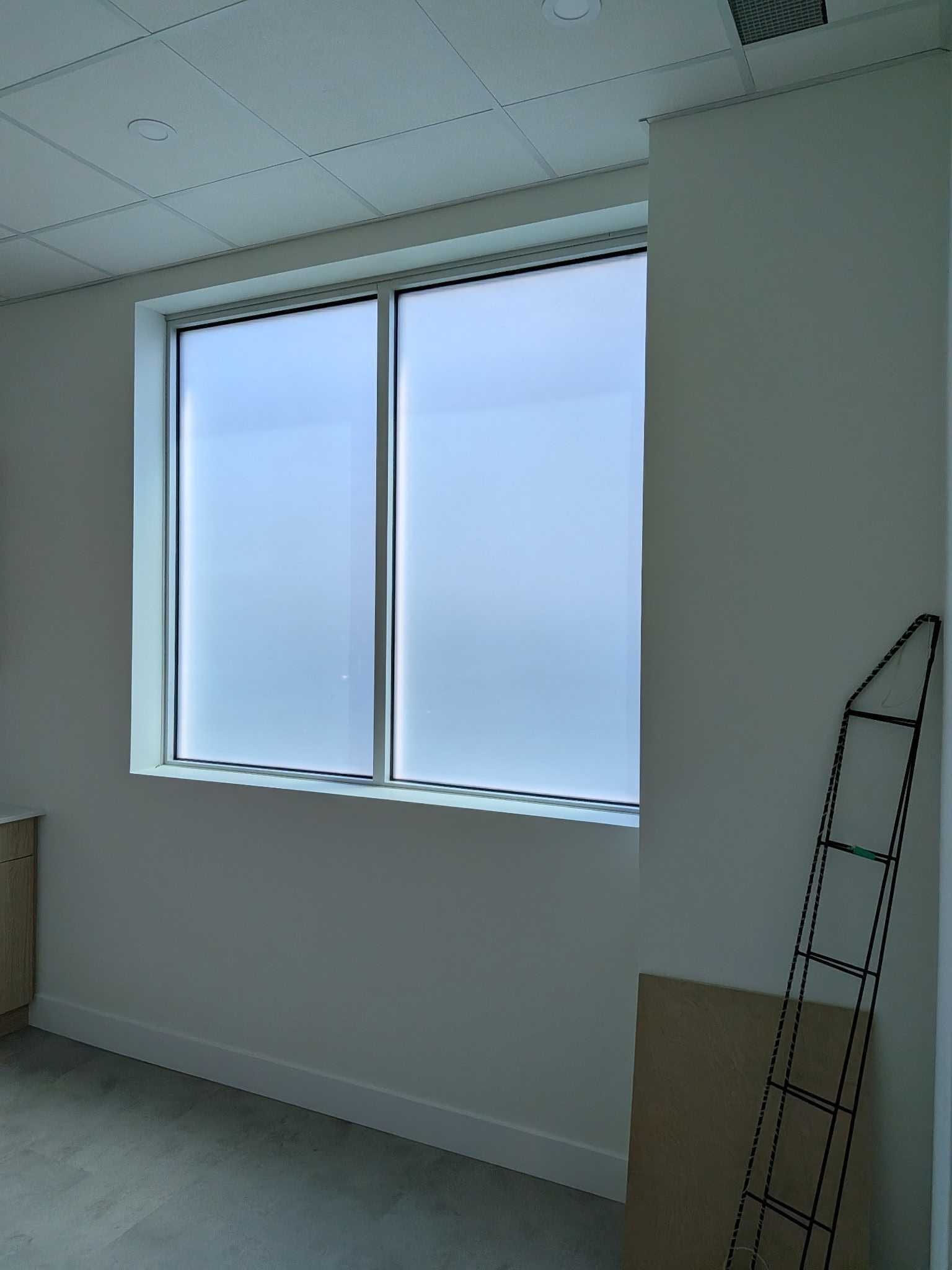
Peel frosted film with low heat, a 30 to 45 degree pull, then wet-scrape adhesive. Ecovision covers IGU risks, BC costs, and when to call a crew.