
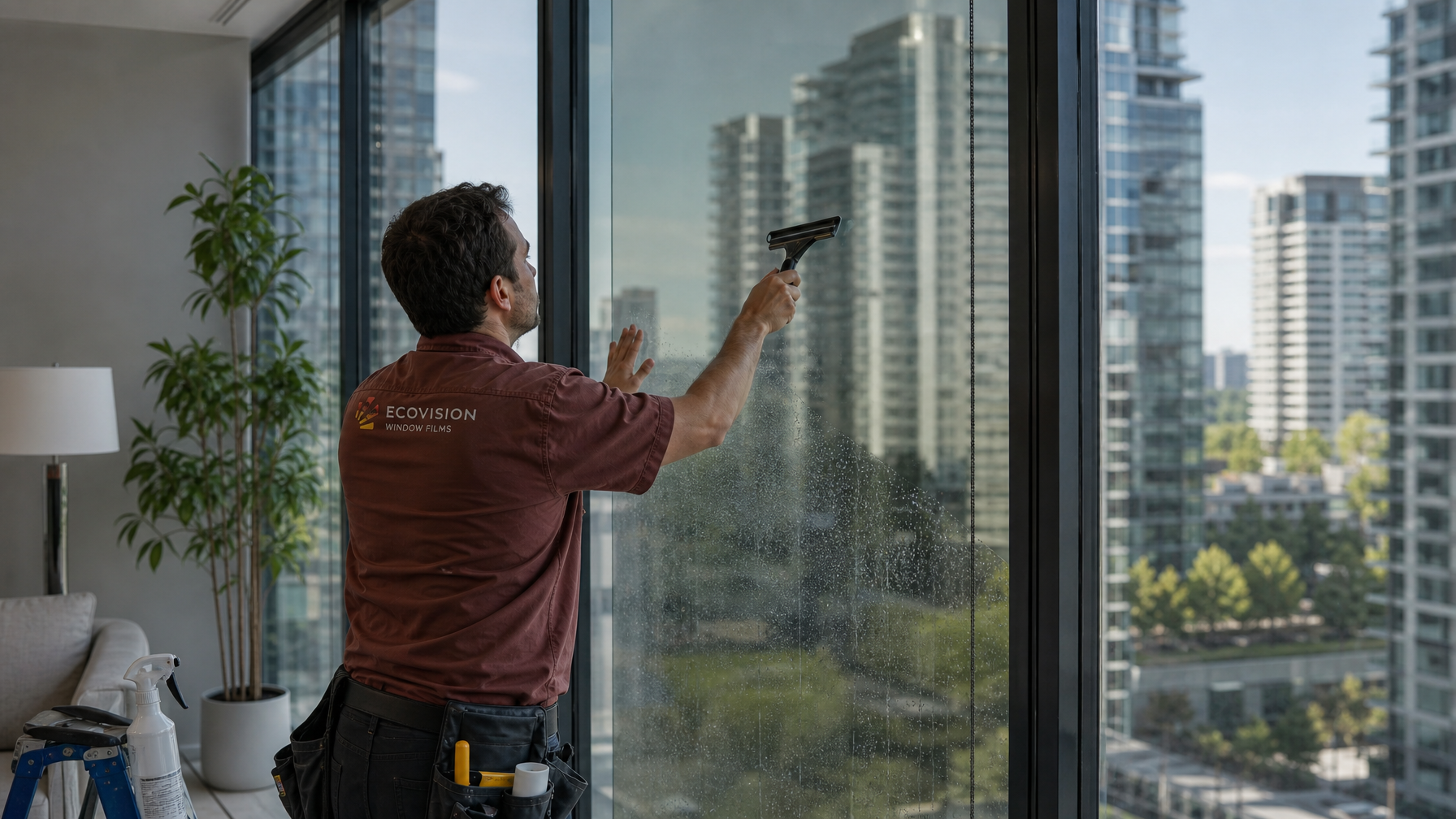
Healthcare facilities and senior homes in BC face a window problem most commercial buildings don’t: the people nearest the glass are often the most vulnerable to what comes through it. Elderly residents accumulate UV exposure sitting by windows. Patients in recovery need glare-free rest. Dementia wards require glass that won’t shatter dangerously if struck. Ground-floor consultation rooms need privacy without sacrificing natural light. Window film for healthcare facilities addresses all four, in most cases in a single retrofit that takes days, not weeks, and doesn’t require moving patients.
Why Healthcare Facilities Are a Distinct Window Film Application
Standard commercial window film projects optimize for energy cost and occupant comfort. Healthcare projects add three requirements those projects rarely face:
Occupant vulnerability. Elderly residents in senior homes spend 8, 12 hours per day near windows. Cumulative UVA exposure through untreated glass contributes to skin damage and accelerated aging, the Skin Cancer Foundation documents this risk for people with prolonged indoor window exposure. In care homes, this is a resident health issue that solar film addresses at the glass rather than relying on residents to manage sun exposure themselves.
Safety glazing standards. Under the BC Building Code, certain glazing locations in healthcare facilities, particularly low-level glass accessible to patients, must meet safety glazing requirements. Safety film (4, 8 mil) holding glass together on breakage satisfies this requirement as a retrofit where replacing glass isn’t feasible. It’s the same approach used across Ecovision’s institutional projects.
Operational continuity. Hospitals and care homes can’t shut down for retrofits. Film installation must work ward-by-ward, room-by-room, around patient care schedules. Ecovision’s healthcare installations are planned with facility managers to create a phased schedule that doesn’t disrupt clinical operations.
UV Protection: The Overlooked Resident Health Issue
Standard float glass blocks UVB almost entirely but transmits roughly 75% of UVA. UVA is the longer-wavelength radiation associated with cumulative skin damage, premature aging, and, at sufficient exposure levels, melanoma risk. For residents in sun-facing rooms who spend significant parts of their day near windows, this isn’t theoretical.
LLumar and Vista solar films block 99% of both UVA and UVB as a baseline, regardless of how much visible light they transmit. A nearly clear low-e film, allowing 70% visible light transmission, still delivers 99% UV rejection. This matters in senior home environments where natural light is clinically important for circadian rhythm and mood: the goal is to preserve light while eliminating the UV component, not to darken rooms.
Ecovision installed UV-blocking film at Windermere Care Centre and Guildford Seniors Village specifically to reduce resident UV exposure in south- and west-facing resident rooms, while maintaining the bright, open feel staff and residents preferred.
Solar Heat and Glare: Patient Comfort and Clinical Function
Overheating in patient rooms and resident bedrooms is a recurring complaint in BC’s increasingly warm summers. South- and west-facing rooms in modern care homes, which typically feature large windows to maximize natural light, can gain significant solar heat during afternoon hours, overwhelming standard HVAC and creating uncomfortable conditions for residents who cannot easily relocate.
High-performance solar control film rejects up to 86% of solar heat at the glass surface before it enters the room. In a west-facing resident room, that translates to a measurable reduction in peak afternoon temperature, typically 4, 8°C in direct sun conditions, without adding shading that reduces visible light during morning and midday hours.
Glare is a separate but related issue. On nursing stations with computer monitors, in physiotherapy rooms with equipment screens, and in dining areas with west-facing glass, afternoon glare creates operational problems. Film reduces glare without the visual disruption of closing blinds across an entire south or west elevation.
Privacy Film for Patient-Facing Spaces
Ground-floor consultation rooms, therapy spaces, and patient-visible corridors in BC healthcare facilities face a consistent privacy challenge: the clinical need for natural light conflicts with patient privacy and dignity when rooms are visible from exterior walkways or adjacent spaces.
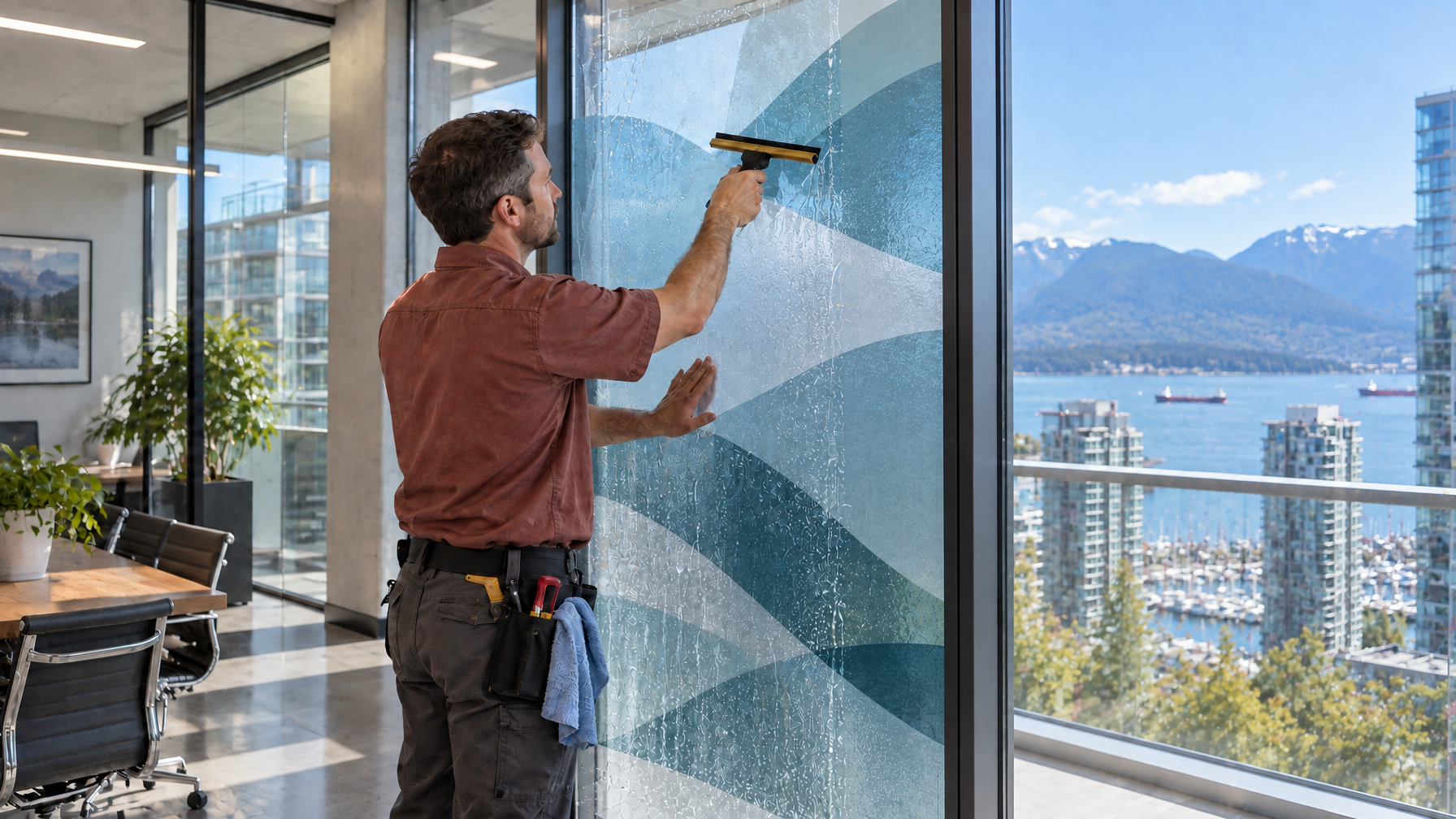
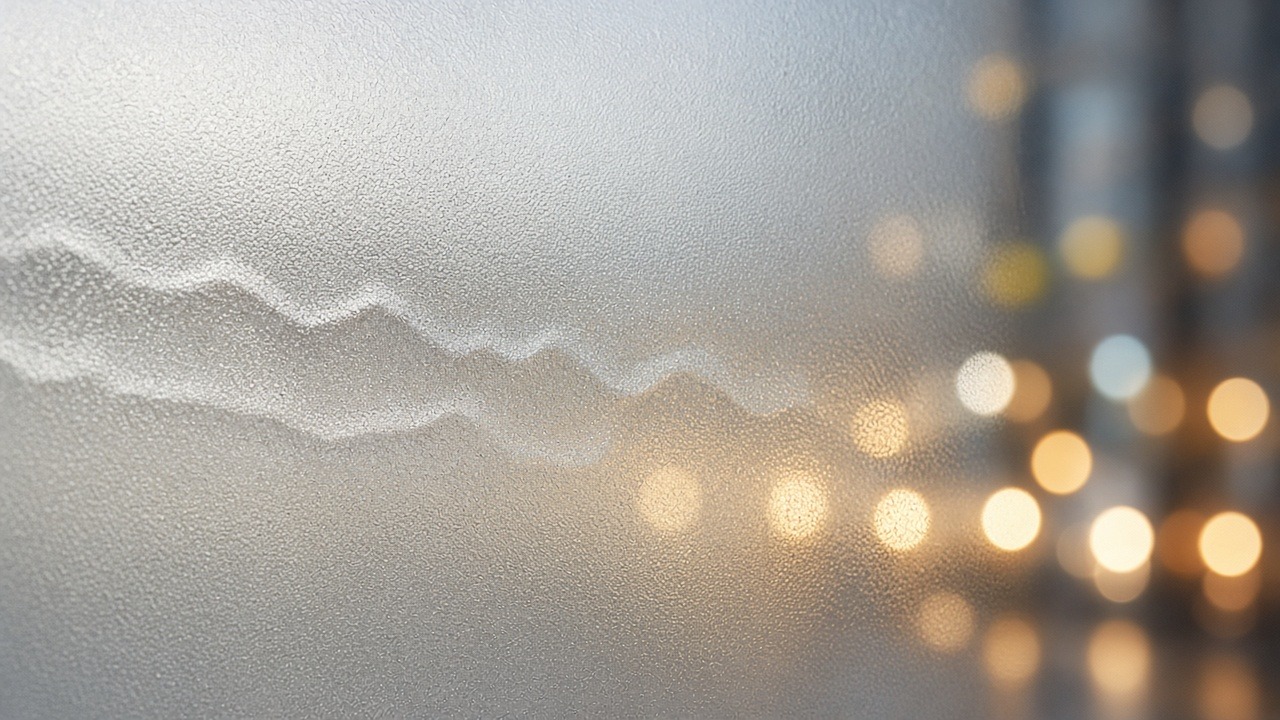
Frosted and decorative privacy film addresses this without eliminating daylight. Applied to the lower portion of windows or across full panes in consultation rooms, it diffuses the view from outside while maintaining soft, even light transmission. Unlike curtains or blinds, it requires no management by patients or staff and provides consistent privacy at all hours.
For interior glass walls, nursing stations visible from corridors, consultation rooms with glass partitions, the same film applied internally creates visual separation without closing off the spatial openness that modern healthcare design prioritizes.
Safety Film for High-Risk Areas
Dementia care wards, paediatric units, and areas with behavioural health populations share a common glazing risk: glass that shatters on impact creates immediate laceration hazard for patients and staff. Safety film (4, 8 mil polyester) bonds to the glass surface and holds shattered panes together on breakage, containing fragments and preventing the spray of glass shards that makes untreated breakage dangerous.
Safety film meeting AS/NZS 2208 standards satisfies BC Building Code safety glazing requirements as a retrofit solution in locations where replacing existing glass with laminated safety glass isn’t practical or cost-effective. It is clear, optically neutral, and undetectable after installation, the window looks and functions identically to an untreated pane.
What a Healthcare Window Film Project Looks Like
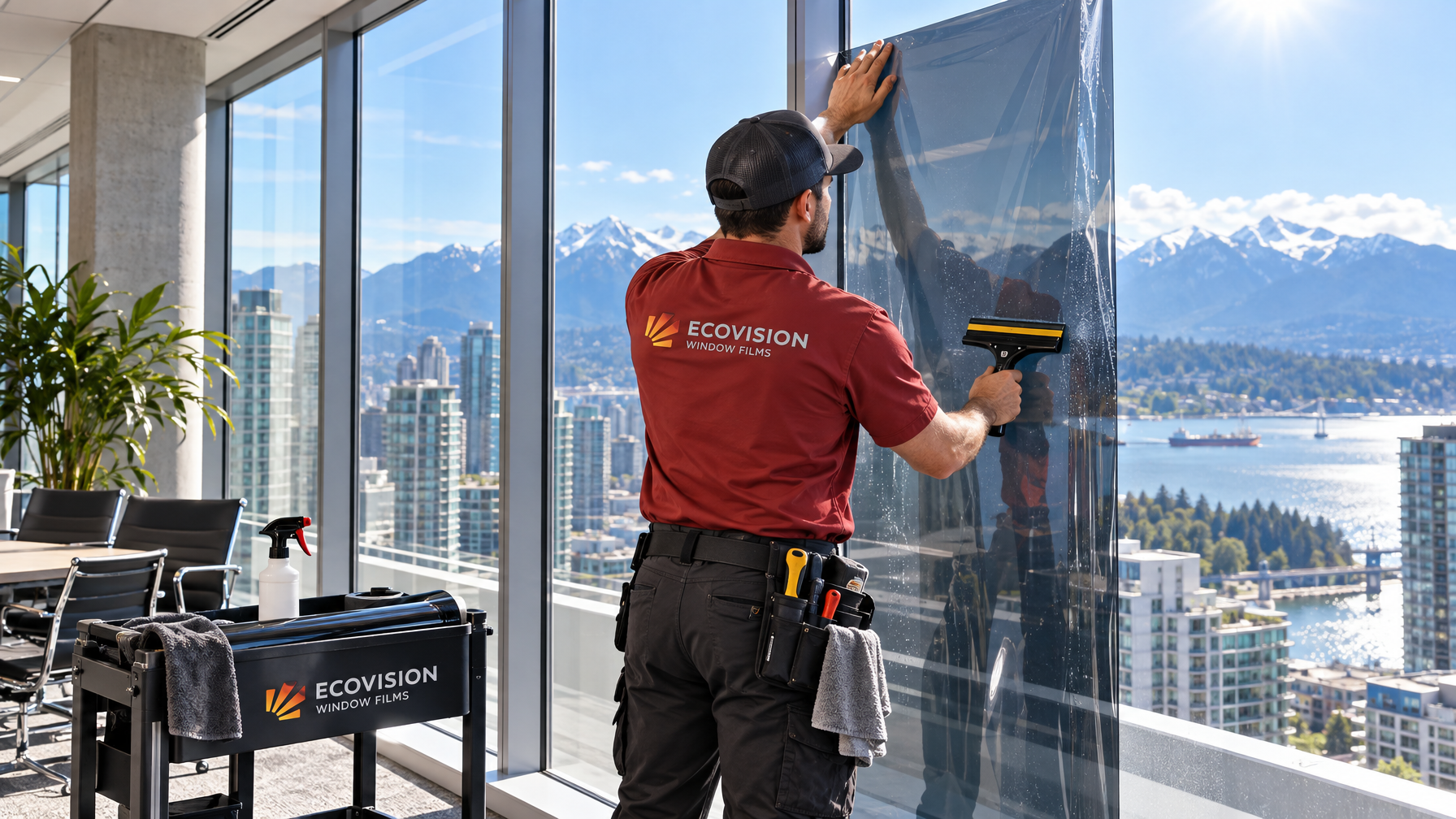
Ecovision approaches healthcare facility projects differently from standard commercial work. The process begins with a site assessment conducted with the facility manager and, where relevant, the infection control team, covering window orientation, glazing type, ward function, and patient population. Film specifications are matched to each zone rather than applying a single product across the building.
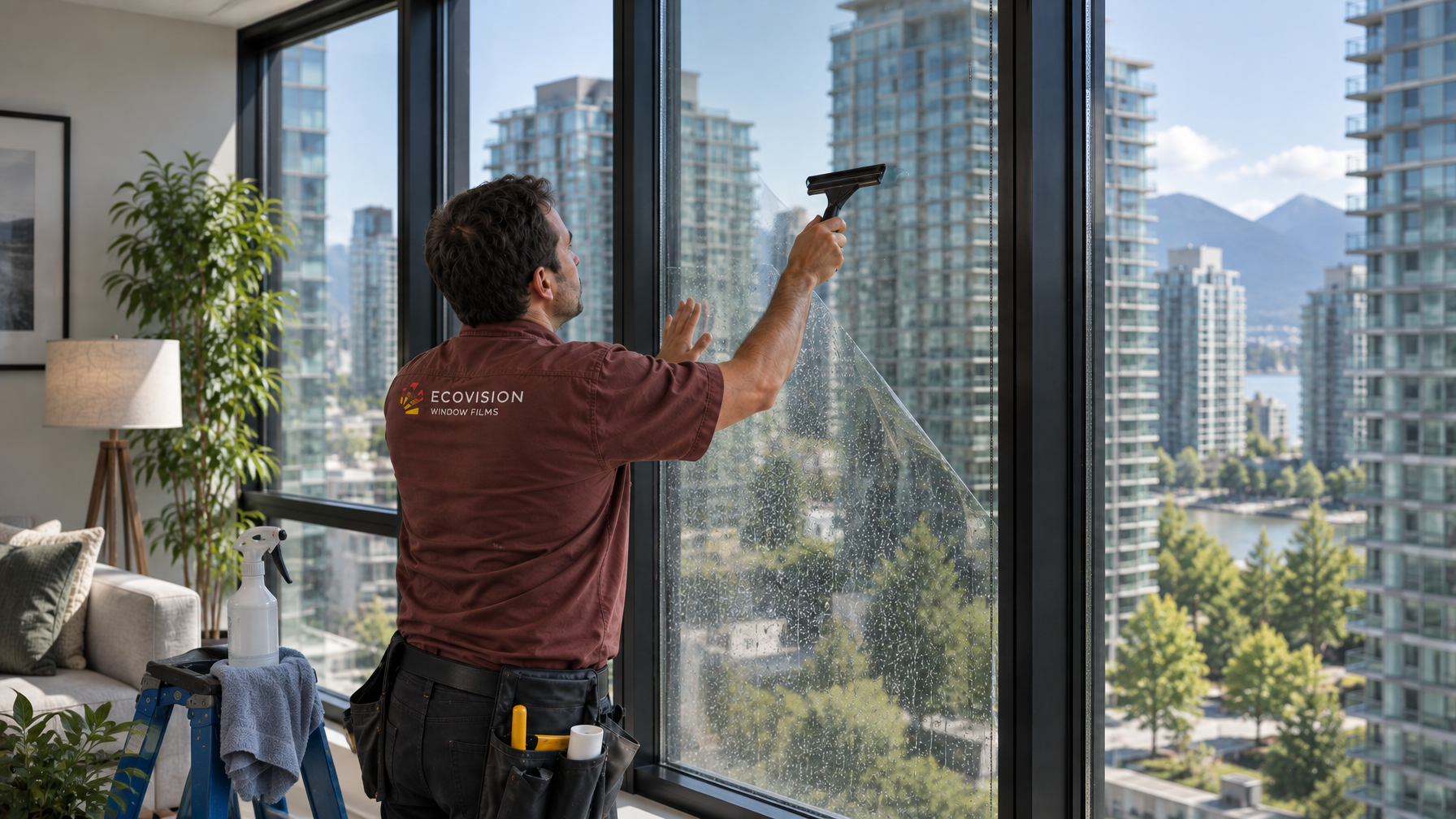
Installation is phased around the facility’s operational schedule. A typical senior home project of 80, 120 windows is completed over 3, 5 days, working two to four rooms at a time, with each room ready for re-occupancy within 2, 4 hours of installation. There is no odour, no wet process, and no requirement to remove furnishings.
Post-installation, Ecovision provides a care and maintenance guide specific to healthcare cleaning protocols, confirming compatibility of the film adhesive with the disinfectants used in the facility.
For facilities exploring window film as part of a broader energy or wellness retrofit, more detail on Ecovision’s healthcare and institutional work is available at ecovisioncanada.com/healthcare-senior-homes/. Property managers and facilities teams overseeing commercial buildings can find details on available film systems through our commercial window film services in Vancouver page.