
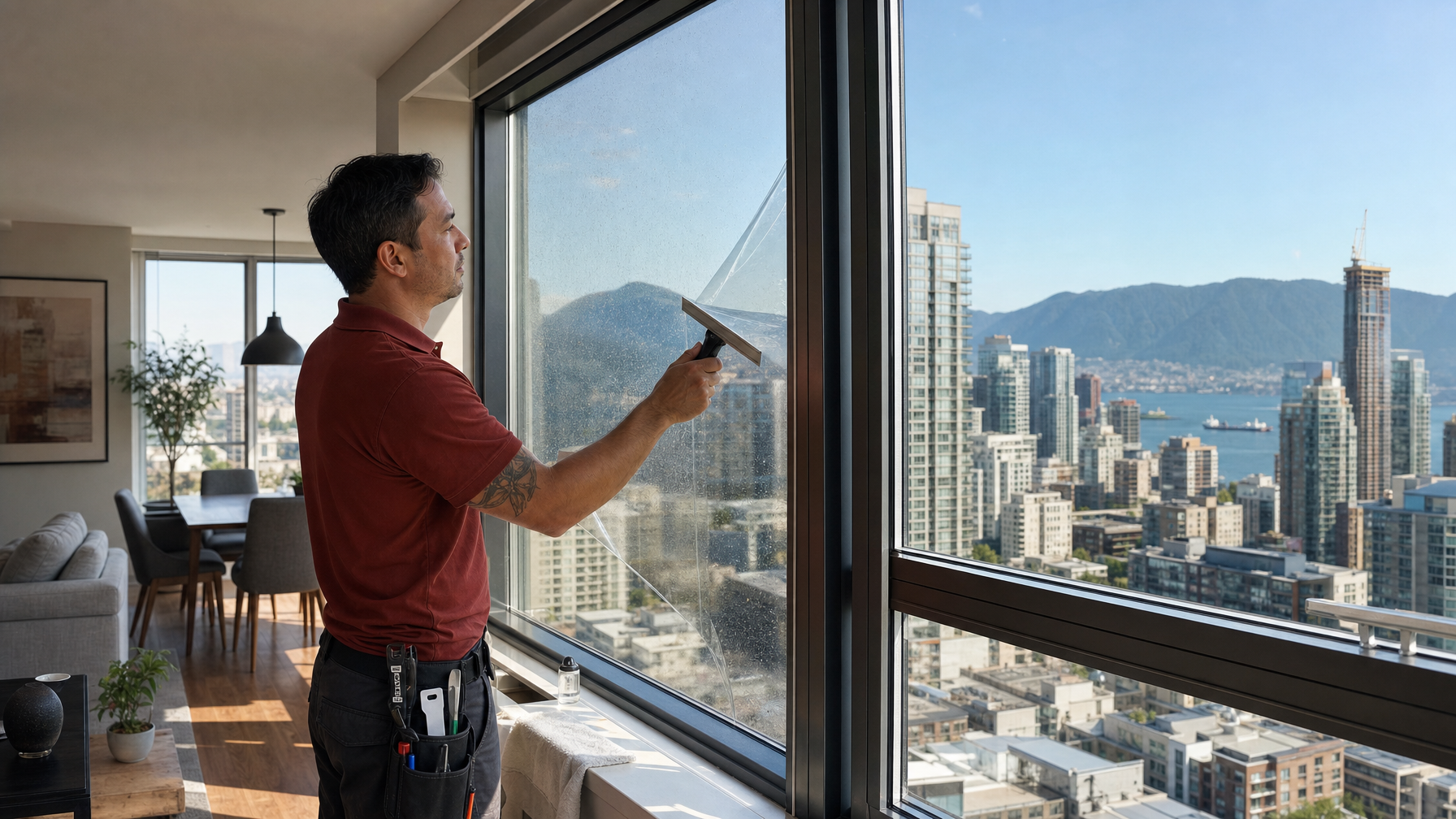
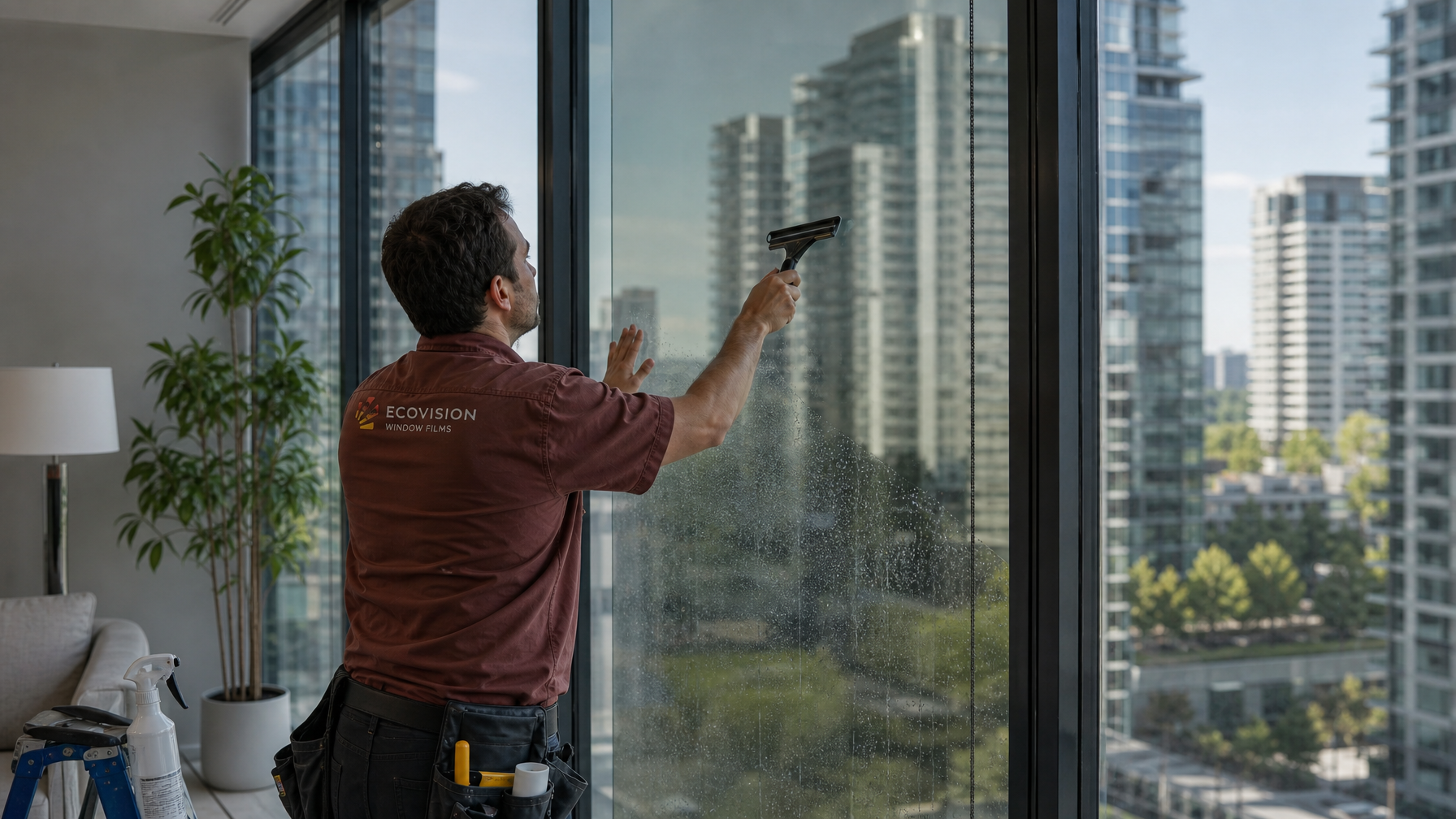
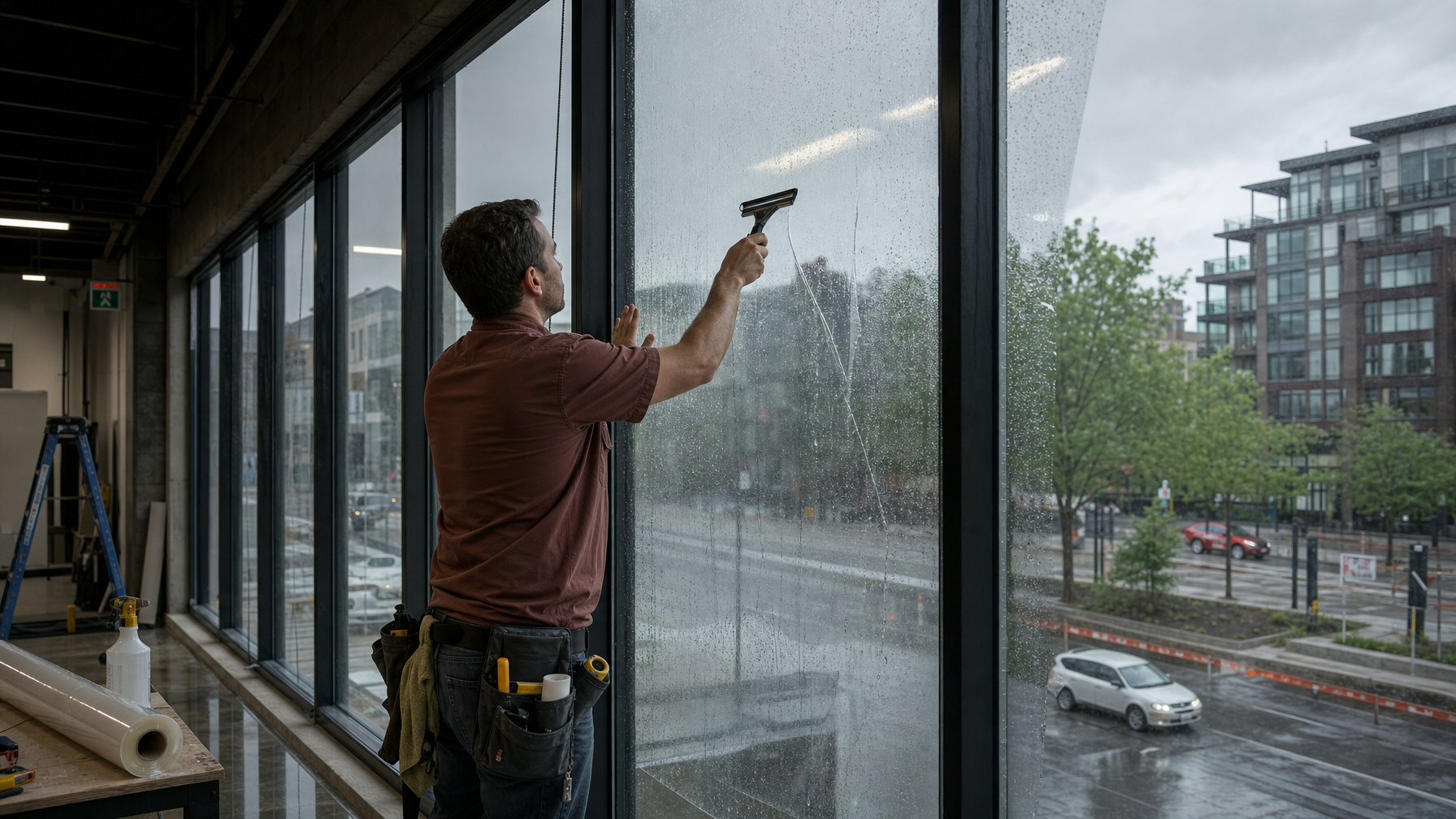
UV window film is a thin polyester film applied directly to glass that blocks up to 99.9% of ultraviolet rays. Standard glass already stops most UV-B, but allows up to 75% of UV-A to pass through, the wavelength responsible for furniture fading and cumulative skin damage. A professionally installed UV film stops both, with clear options available that maintain natural light and unobstructed views.
What UV Rays Does Standard Glass Already Block?
Most homeowners assume their windows provide meaningful UV protection. They do, partially. Standard clear glass blocks the majority of UV-B rays (the type that causes sunburn) but allows up to 75% of UV-A radiation through.
UV-A is longer-wavelength radiation that penetrates deeper into materials and skin. The Skin Cancer Foundation confirms that UV-A rays pass through standard window glass and reach building occupants, contributing to premature skin aging and elevated skin cancer risk, particularly for people who spend extended hours near south- or west-facing windows.
UV-A also drives interior fading. Research from the International Window Film Association breaks down what causes fabrics, flooring, and furniture to fade:
| Cause | Contribution to Fading |
|---|---|
| UV radiation | ~40% |
| Solar heat / infrared | ~25% |
| Visible light | ~25% |
| Humidity, artificial light, other | ~10% |
This means even if you address heat and glare, you still need dedicated UV protection to get meaningful control over fading. Low-E double-pane glass helps with heat loss but does not reliably filter UV-A the way a purpose-built UV window film does.
What Does UV Window Film Actually Block?
Quality UV window film, including films from LLumar and Vista, both certified brands installed by Ecovision Window Films in Vancouver, BC, blocks up to 99.9% of UV-A and UV-B radiation. The film works by incorporating UV-absorbing compounds into its polyester layers, which trap the radiation before it reaches interior surfaces or occupants.
The key difference from standard glass is consistency and longevity. Older single-pane glass and even some coated double-pane units can degrade in their UV filtering properties over time. A professionally installed UV film provides a uniform, measurable barrier with a manufacturer-backed performance warranty.
It is also worth being clear about what UV film does not do: it does not fully stop fading on its own. Visible light accounts for roughly 25% of the fading equation. For maximum protection, a combined solar control film that addresses UV radiation, heat, and visible light performs better than a UV-only clear film. An Ecovision assessment will determine which specification fits your windows and goals. When older UV film has yellowed or begun to show performance degradation, our guide on how to remove window film without damaging your windows covers the safe process for DIY and professional removal before a new film goes on.
What Are the Main Benefits of UV Window Film in BC?
BC’s Lower Mainland sees significant UV exposure from March through October. UV-A penetrates cloud cover, which means south- and west-facing windows face UV exposure across most of the year, not just on clear summer days.
The primary benefits clients report after UV film installation:
- Interior surface protection: Hardwood floors, upholstered furniture, artwork, and window-adjacent fabrics typically begin showing visible fading within three to five years of unprotected sun exposure. UV film eliminates the largest single contributor to that degradation.
- Reduced occupant UV exposure: Building occupants who spend extended time near large windows, office workers, residents in west-facing suites, patients in healthcare common areas, experience meaningfully lower UV-A exposure after film is installed. This is a documented benefit the Skin Cancer Foundation specifically recommends.
- Heat rejection (film-dependent): Many UV films carry solar heat rejection properties alongside UV blocking. Clear UV-only films reject less heat than tinted or reflective solar films, but combined UV-and-heat-rejection films from LLumar and Vista can cut solar heat gain by 40, 80% depending on the product selected.
- No sacrifice of natural light or views: Unlike blinds or curtains, UV window film does not require occupants to choose between protection and the ability to see outside. The glass remains clear.
Is There a Clear UV Window Film That Doesn’t Change How Windows Look?
Yes. Clear or near-clear UV films are among the most frequently requested products for residential window film installations. These films are virtually invisible once applied, distinguishable only under close inspection.
The trade-off is performance depth. Clear UV films block ultraviolet radiation effectively but reject significantly less solar heat than darker or reflective solar control films. For a client whose priority is fading protection and UV-A reduction without altering window appearance, a clear UV film is the right specification. For a client dealing with significant summer heat gain alongside UV concerns, a solar control film that combines UV blocking with visible light management will deliver better overall results.
In practice, Ecovision often recommends a mild solar control film for south-facing residential windows rather than a clear UV-only product, because heat gain, visible light, and UV together drive the full fading equation.
How Much Does UV Window Film Cost in BC?
In BC, professionally installed window film for UV protection typically costs $10, $18 per square foot, depending on film specification, window count, and site access. Clear UV-only films sit at the lower end; combined solar control and UV films with high heat rejection ratings sit higher.
For a typical Lower Mainland home with 10, 15 windows, total installed cost commonly falls between $1,500 and $4,000. Commercial projects are quoted per square foot, with larger window areas typically bringing the per-unit rate down.
These figures reflect professional supply and installation using certified films, not retail peel-and-stick films applied without professional tools, which frequently bubble, peel, and degrade within two to three years of installation.
Where Does UV Window Film Make the Most Difference in BC?
Based on Ecovision’s installation history across the Lower Mainland, UV film has the highest impact in these situations:
- Residential homes: South- and west-facing living rooms, bedrooms, and dining areas with hardwood floors or quality upholstered furniture within two metres of the glass
- Healthcare facilities: Patient lounges, therapy rooms, and common areas where occupants spend extended time near large windows
- Commercial offices: Open-plan floors with glass facades where staff sit adjacent to the building envelope all day
- Strata and condo buildings: West-facing suites that experience intense afternoon sun from May through September
- Retail spaces: Storefronts where displayed merchandise and interior fittings face direct south-facing sun
In each of these settings, the combination of UV blocking and partial heat rejection translates to lower maintenance costs, better occupant comfort, and protection for interior investments that would otherwise degrade faster than they should.
Get UV Window Film Professionally Installed in Vancouver, BC
Ecovision Window Films is a certified installer for LLumar and Vista window films, serving residential, commercial, healthcare, and government properties across the Lower Mainland. If your floors are fading, your interior is overheating, or you want a clear solution that protects without changing your views, Ecovision can help.
Call (236) 862-0052 or visit ecovisioncanada.com/contact/ to book a free site assessment.
Related Articles
- How Long Does Professionally Installed Window Film Last in BC?
- How to Remove Window Film Without Damaging Your Windows
- Energy Efficient Window Film in Vancouver: What It Saves, What It Costs, and What to Install
- Window Film for Senior Care Homes and Assisted Living Facilities in BC
- Glare Reduction Window Film for BC Offices: How It Works, What to Expect, and What It Costs
About the Author: This article was written by the Ecovision Window Films team. Edward, Director at Ecovision, brings a distinctive perspective to the window film industry, with over a decade in real estate development, including roles as Executive Director at a real estate development firm and Director of Strategic Partnerships, before joining Ecovision. That background gives the company a sharp edge in serving BC property managers and building owners. Ecovision is a certified installer for leading film brands with completed projects for healthcare facilities, government buildings, and commercial properties throughout the Lower Mainland. For a free site assessment, call (236) 862-0052 or visit ecovisioncanada.com/contact/.