
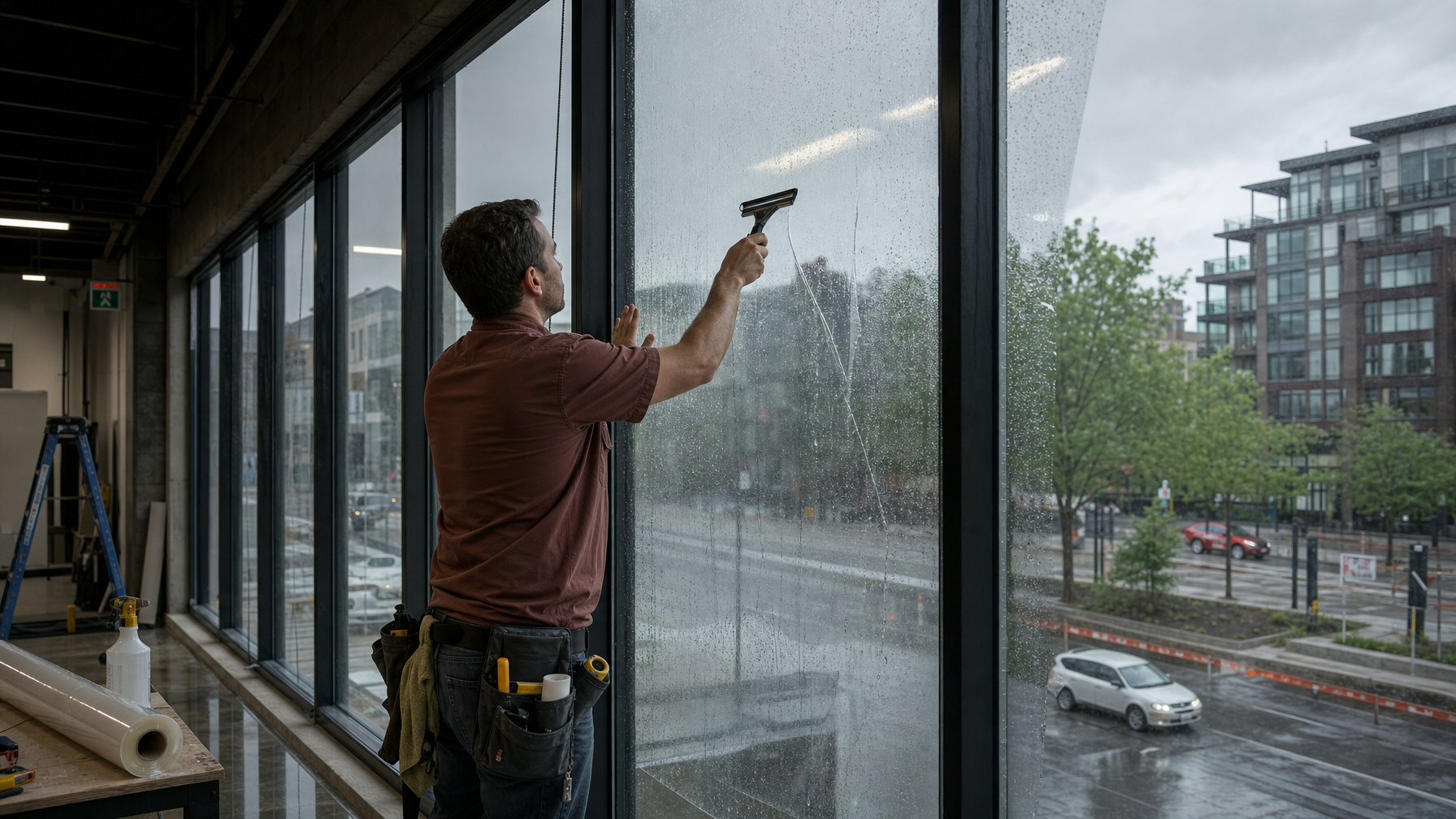
Anti-glare film for computer screens and office windows is a specialized window treatment that reduces reflected light and harsh glare without significantly dimming a space. In Vancouver and across BC, where natural light is a premium marketing feature in modern office buildings, anti-glare window film helps tenants and occupants keep blinds open while maintaining visual comfort and screen visibility. This guide covers the types of anti-glare film available, how they differ from solar control film, and which commercial and residential properties benefit most from this upgrade.
What Is Anti-Glare Window Film?
Anti-glare film is a thin optical coating applied to interior or exterior glass that scatters and diffuses reflected light. Unlike solar control film, which absorbs or reflects solar radiation to reduce heat, anti-glare film is primarily a light management solution. The film works by:
- Diffusing direct sunlight so that harsh rays hitting computer screens are broken up and scattered rather than creating a bright reflection
- Reducing specular reflection (mirror-like glare) without significantly reducing visible light transmission
- Maintaining view and transparency so occupants retain sightlines to outdoor scenery and natural light cues
Anti-glare film typically has 70–90% visible light transmission, meaning it is nearly invisible to the eye while still delivering glare reduction of 40–60% depending on the product and angle of incidence.
How Does Anti-Glare Film Differ from Solar Control Film?
The two films serve different purposes and are often used in combination on large office buildings in Metro Vancouver.
Solar control film is primarily a heat management tool. It absorbs or reflects 40–80% of solar radiation (infrared and visible), reducing solar heat gain and lowering cooling loads. This makes it ideal for south- and west-facing windows where the goal is to reduce HVAC load. Solar control film typically has a slight tint (grey, bronze, or green) and reduces visible light transmission to 40–70%, depending on the grade. It solves the heat problem but can darken a space if applied aggressively.
Anti-glare film is a light management tool focused on visual comfort. It maintains high visible light transmission (70–90%) while diffusing glare. It does not significantly reduce solar heat gain, so it is not an energy retrofit on its own. However, by allowing occupants to keep blinds open (rather than closing them to manage glare), anti-glare film can actually reduce overall cooling loads because more of the building interior is exposed to natural light, reducing reliance on electric lighting and the heat load it generates.
Many commercial retrofits in Vancouver apply solar control film to south- and west-facing windows (for heat reduction) and anti-glare film to interior windows and east-facing glass (for visual comfort without thermal concerns). This layered approach maximizes energy efficiency and occupant satisfaction.
What Types of Anti-Glare Film Are Available?
Matte anti-glare films have a frosted surface that diffuses light. They reduce glare by 50–60% and also provide privacy (you cannot see in from outside, and outdoor views are slightly obscured from inside). Visible light transmission is typically 60–75%. These work well on interior partition glass and south-facing windows where the goal is both glare and privacy management.
Clear anti-glare films use microscopic optical coatings to scatter light while maintaining optical clarity. Glare reduction is 30–40% and visible light transmission remains 85–95%, making them nearly invisible. These are ideal for spaces where the priority is glare control with minimal impact on views. They cost more than matte films but deliver superior transparency.
Ceramic and spectrally selective anti-glare films combine anti-glare properties with modest solar heat reduction (20–30%). These are used when a building wants to address both glare and some heat gain in a single film application. They are more expensive than straight anti-glare films but offer versatility on mixed-exposure windows.
Where Is Anti-Glare Film Used in Commercial Buildings?
Open office environments with computer workstations: Glare on monitors reduces productivity and causes eye strain. Anti-glare film on east- and north-facing windows (which receive less direct heat but can still create glare in morning and afternoon hours) is a popular retrofit. Employees report that they can work comfortably at their desks without glare management blinds, improving morale and the office feel.
Class A office buildings in Metro Vancouver: In competitive Vancouver office markets, the ability to advertise “floor-to-ceiling windows with natural light, no glare” is a significant leasing advantage. Landlords increasingly apply anti-glare film to attract and retain tenants, particularly in waterfront and mountain-view tower environments where views are a key amenity.
Many of these same buildings pair anti-glare film with full commercial window tinting in Vancouver for south and west exposures, solar or ceramic film on heat-exposed facades, anti-glare film on views-oriented glass, for a complete glazing retrofit strategy.
Video conference and streaming studios: Glare and reflection on camera are unacceptable. Anti-glare film is a standard upgrade for any broadcast or video production space with exterior windows.
Retail and hospitality: High-end retail in Vancouver’s urban core often combines solar control film on south-facing exteriors with anti-glare film on interior display windows. This keeps merchandise visible without washed-out glare.
Healthcare and senior care facilities: Patients and residents benefit from natural light without glare. Many healthcare facilities in the Lower Mainland use anti-glare film to improve comfort without resorting to heavy window coverings that isolate occupants from the outdoors.
What about Residential Anti-Glare Film?
Anti-glare film is increasingly popular in BC homes with large south- and west-facing windows. Residential applications include:
- Home offices: Computer screen glare is a common complaint in bright natural-light offices. Anti-glare film allows homeowners to keep blinds open while working.
- Living rooms with large windows: Families want natural light without harsh glare on screens (TV, tablets, laptops). Matte anti-glare film can also add a subtle privacy benefit, reducing visibility from the street for ground-level living spaces.
- Bedrooms: Morning sun glare can disrupt sleep. A matte anti-glare film softens early-morning light while maintaining natural light quality.
- Home media rooms: Anti-glare film is essential in home theaters or media rooms with windows, as it reduces reflection on screens and reduces competing light that washes out picture quality.
How Much Does Anti-Glare Film Cost?
Residential and commercial anti-glare film in BC typically costs $8 – $16 per square foot (supply and install), putting it in the same price range as solar control film. Matte frosted films are on the lower end; high-end optically clear ceramic films are on the higher end. Costs vary by installer, film grade, and project size.
How Long Does Anti-Glare Film Last?
Professional-grade anti-glare films last 10–15 years on interior applications and 5–10 years on exterior applications (where UV exposure and weathering shorten lifespan). Regular glass cleaning with non-abrasive solutions is all that is required for maintenance. Unlike decorative films, anti-glare films do not fade or discolour over time if they are UV-stable (which professional-grade films are).
Can You Combine Anti-Glare with Other Films?
Yes. Multi-layer film stacks are common in high-performance commercial buildings:
- Solar control + anti-glare: Applied as separate films in a layered approach, or integrated into a single hybrid product. This addresses both heat and glare on south- and west-facing windows.
- Anti-glare + privacy: A matte anti-glare film inherently provides some privacy; denser frosted products offer greater privacy. These are popular on ground-floor office windows and conference rooms.
- Anti-glare + security: High-performance anti-glare films are sometimes combined with thin security films (4–8 mil) to address both glare and glass breakage risk. This combination is less common but useful in sensitive applications.
Is Anti-Glare Film a Good ROI for Your Property?
The return on investment for anti-glare film is primarily in improved occupant satisfaction and productivity, not direct energy savings. However, the financial case is strong:
- Commercial office buildings: Reduced employee complaints, improved tenant retention, faster leasing of newly renovated space. These intangible benefits often justify $10,000–$50,000 investments in anti-glare film retrofits for mid-sized office properties.
- Strata and residential: Improved quality of life and home comfort are the ROI drivers. Anti-glare film is often applied alongside energy efficient window film in Vancouver as part of a broader energy retrofit, where payback is driven by energy savings rather than by glare reduction alone.
Get a Free Anti-Glare Film Quote for Your Property
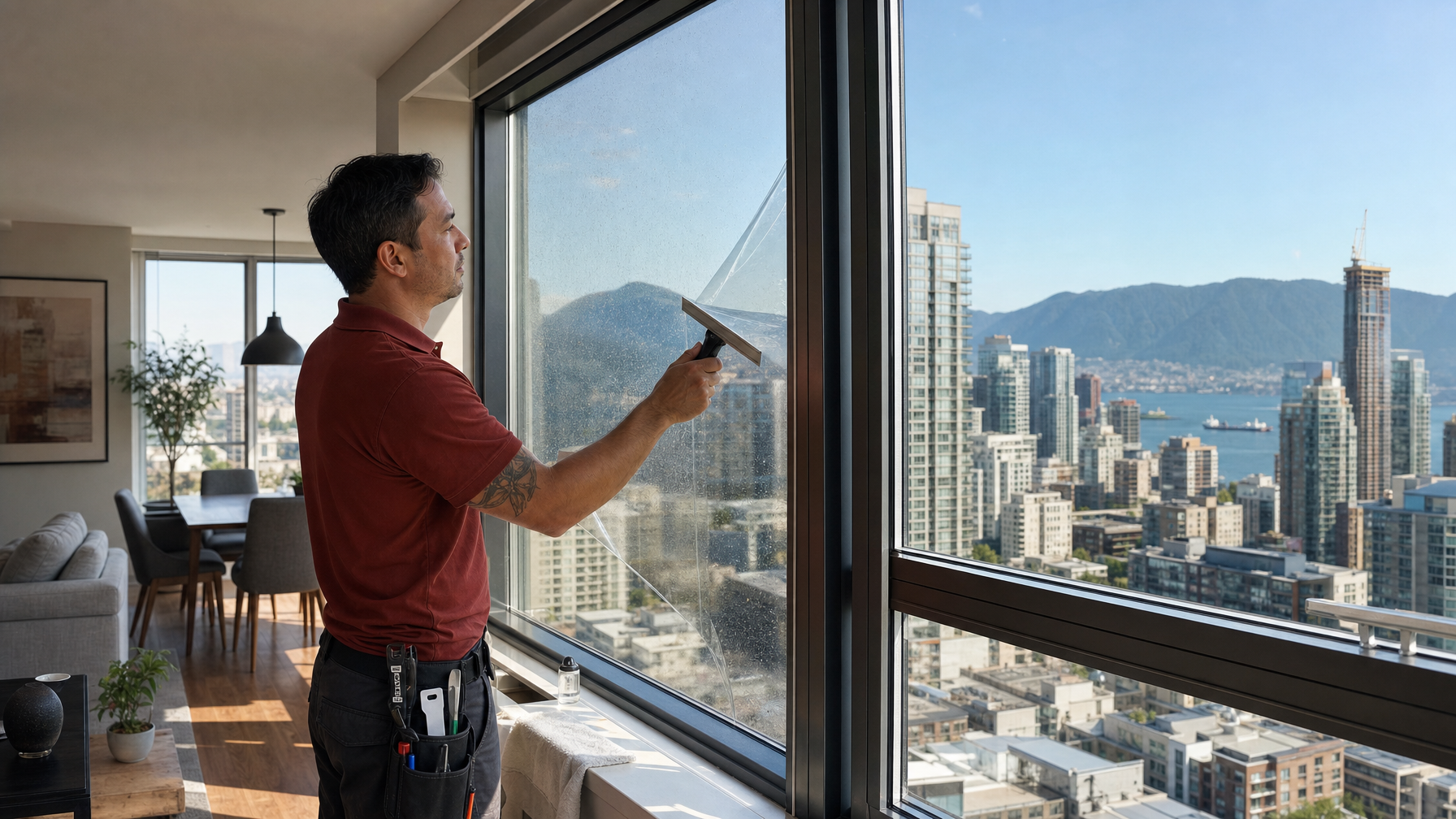
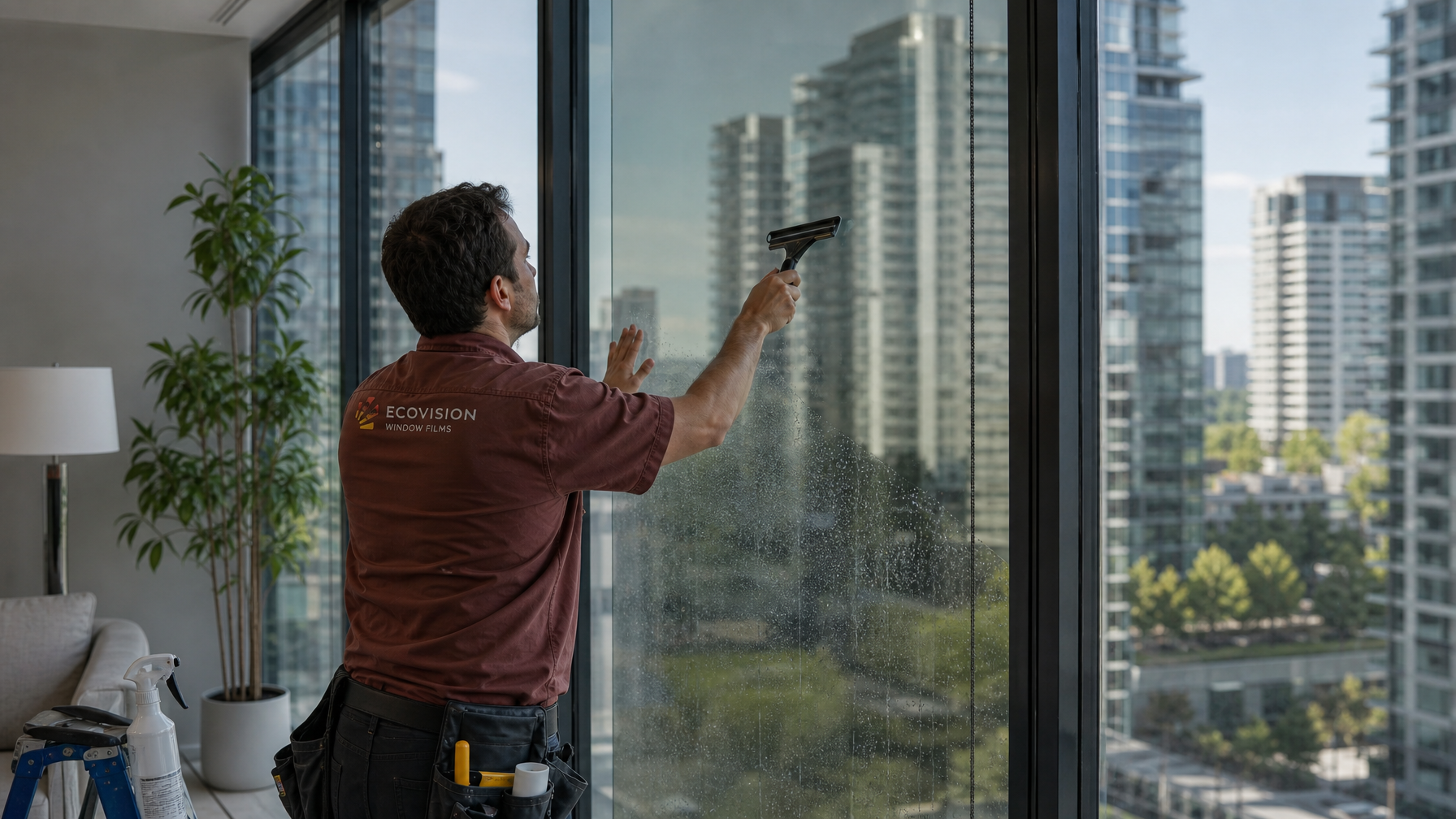
Ecovision Window Films installs anti-glare, solar control, and hybrid film solutions for commercial office buildings, healthcare facilities, and residential properties across Metro Vancouver and all of British Columbia. We help you assess whether anti-glare film is the right choice for your property and can combine it with other film types to maximize energy efficiency and visual comfort. To explore the full range of commercial film systems available across BC, visit our commercial window film services in Vancouver page.
Contact us for a free on-site assessment:
- Phone: (236) 862-0052
- Online: ecovisioncanada.com/contact/
Related Articles
- Commercial Window Tinting in Vancouver: What Businesses Need to Know
- Does Window Film Reduce Heat in Summer?
- Does Window Film Block UV Rays?
- Energy Efficient Window Film in Vancouver: What It Saves, What It Costs, and What to Install
- Commercial Window Film Installation in Vancouver: Types, Costs, and What to Expect