
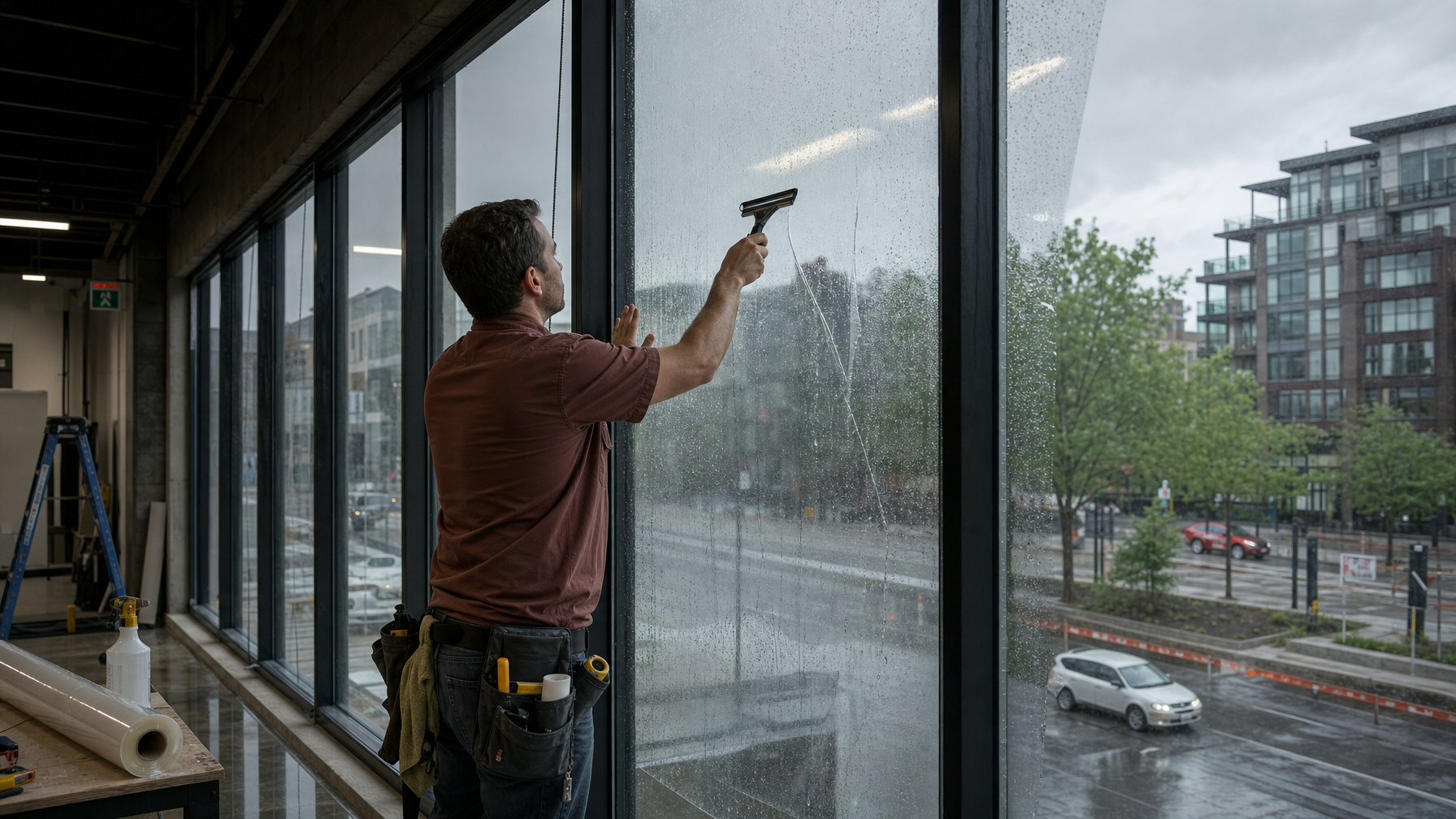
Senior care homes and assisted living facilities have glass-related challenges that standard commercial buildings do not. Residents are more sensitive to heat, more vulnerable to UV exposure, less able to manage their own comfort through window operation, and more at risk from glass breakage in common areas. Window film addresses all four concerns in a single, non-disruptive retrofit that causes no construction noise, no room closures, and no disruption to care schedules. Ecovision Window Films has installed professional-grade window film across multiple BC senior care facilities, including Guildford Seniors Village, Windermere Care Centre, and Rosemary Heights.
Window film in BC senior care homes costs $9 to $22 per square foot professionally installed, depending on film type and building scope. Ecovision Window Films has installed solar, security, and UV-blocking film across multiple Lower Mainland senior care facilities, including Guildford Seniors Village, Windermere Care Centre, and Rosemary Heights, delivering measurable improvements in resident comfort, safety, and UV protection across residential, dining, and clinical glass areas.
Why Do Senior Care Homes in BC Need Window Film?
Standard residential and commercial facilities can rely on occupants to open windows, adjust blinds, or move away from uncomfortable glass. Senior care residents often cannot. Residents with limited mobility, dementia, or temperature dysregulation are directly exposed to whatever the building’s glazing delivers, heat gain in summer, UV exposure year-round, and glare at mealtimes and during therapy sessions.
BC’s 2021 and 2023 heat dome events demonstrated this vulnerability clearly. Facilities with unfiltered south- and west-facing glazing reported heat complaints, discomfort, and elevated cooling loads in resident rooms during sustained periods above 35°C. Ceramic solar film installed on primary sun-facing windows reduces interior temperatures by 5, 8°C on peak summer days without requiring any behavioral change from residents or staff. The healthcare and senior homes vertical is Ecovision’s most consistent application area precisely because the performance case is strongest where occupants have the least control over their environment.
UV exposure through standard clear glass is a secondary but significant concern. Cumulative UVA exposure through windows accelerates skin aging and contributes to skin cancer risk in residents who spend extended time in sun-facing lounge areas, dining rooms, or resident suites with significant glazing. Standard float glass blocks roughly 25% of UVA. Professional-grade window film raises that figure to 99%, protecting residents who may spend 6, 10 hours daily in sun-exposed areas.
What Types of Window Film Work Best in Senior Care Facilities?
BC senior care facilities typically need three film categories, each addressing a different part of the building:
| Film Type | Primary Application in Care Homes | Key Benefit | Typical Cost (Installed, BC) |
|---|---|---|---|
| Ceramic Solar | Resident rooms, south/west-facing dining areas, lounges | Rejects 65, 78% of solar heat; blocks 99% UV; maintains view clarity | $12 – $18/sq ft |
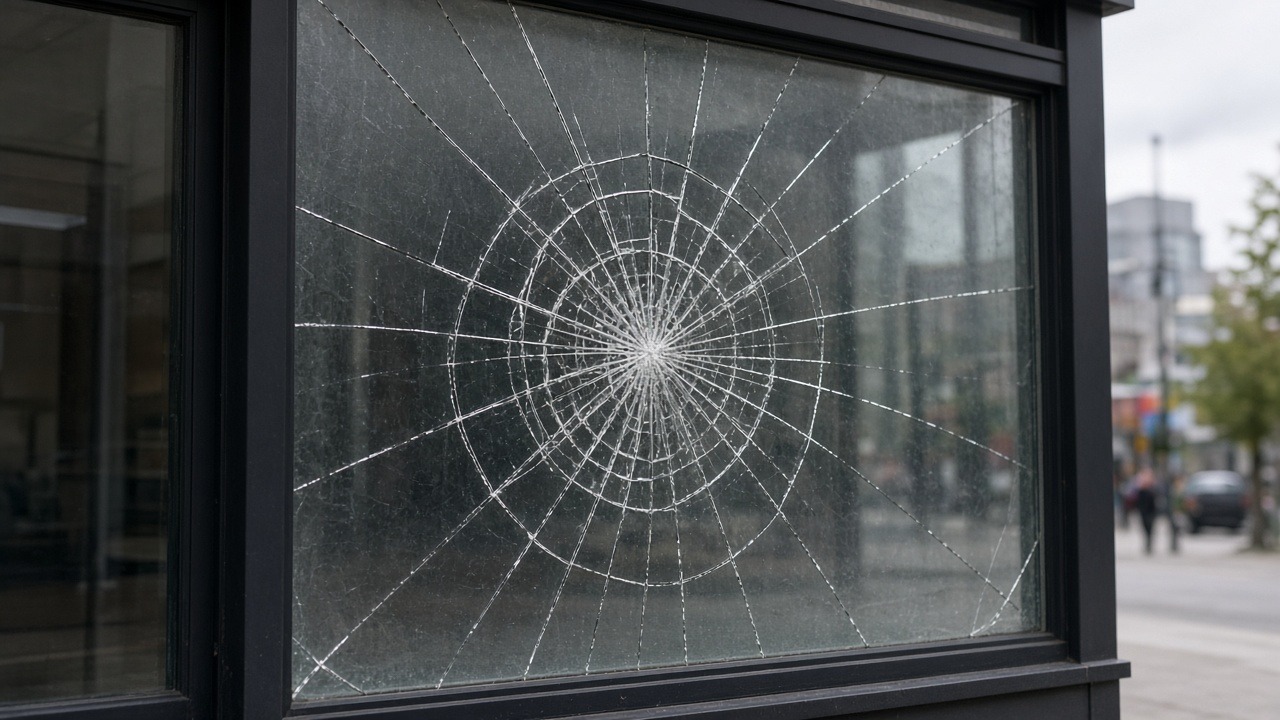
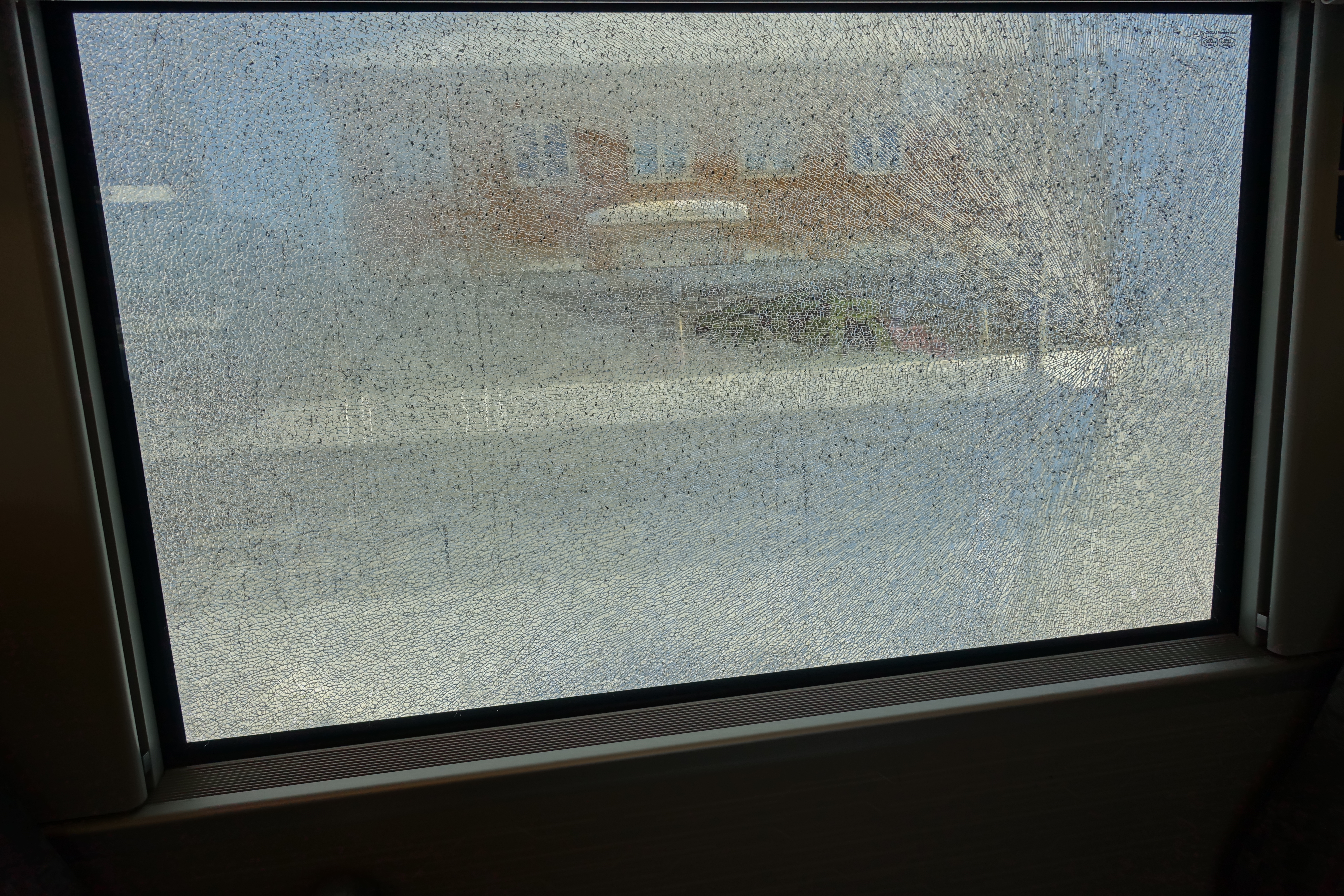
| Security Film (8 mil) | Lobby glass, sliding doors, ground-floor entry points | Holds shattered glass together; protects residents from glass breakage injury | $14 – $20/sq ft |
| Privacy / Frosted | Examination rooms, therapy areas, resident washroom windows | Provides dignified visual privacy in clinical spaces without blocking light | $10 – $15/sq ft |
| Bird-Safe Film | Glass facades near greenways, courtyards, and gardens | Reduces bird-window collisions at facilities near BC natural areas | $11 – $16/sq ft |
| UV-Only / Clear | Heritage buildings, common areas where tinting is aesthetically restricted | Blocks 99% UV without visible tint; protects artwork, flooring, furnishings | $9 – $14/sq ft |
Most BC senior care facilities use a combination of ceramic solar film in resident and dining areas, security film on lobby glass and ground-floor sliding doors, and frosted film in clinical or bathing areas. Ecovision conducts room-by-room assessments to map glazing orientation, occupancy patterns, and existing glass type before specifying a film for each zone.
How Much Does Window Film Cost for a BC Senior Care Home?
A typical BC assisted living facility with 80 suites and significant common area glazing will have 1,500 to 3,000 square feet of primary sun-facing glass across resident rooms, dining, and lounge areas. At ceramic solar film rates of $12 – $18 per square foot installed, a full building treatment runs $18,000 to $54,000 depending on glazing configuration and access. Most facilities phase the project over one or two fiscal years, prioritizing south- and west-facing resident rooms first.
For smaller memory care units or individual wings, the investment is proportionally lower. A 20-suite memory care wing with 400 square feet of common and residential sun-facing glass runs $4,800 to $7,200 for ceramic solar film installation. The full 2026 BC window film cost guide breaks down pricing by film type and building scope across all property categories. Larger multi-building senior care campuses qualify for volume pricing, and Ecovision works directly with facility operators, property managers, and healthcare real estate advisors to structure project phasing that fits capital budgets. Property managers overseeing commercial buildings outside the senior care sector can also explore film options through our commercial window film services in Vancouver page.
Glass replacement in BC senior care facilities runs $400 to $1,200 per window for standard units, significantly more for custom or heritage glazing. Window film delivers equivalent UV protection and meaningful heat rejection at a fraction of replacement cost. For facilities managing aging building stock where glass replacement would require significant capital and construction disruption, film is the most cost-efficient envelope improvement available.
What Results Have BC Senior Care Facilities Seen After Window Film Installation?
Ecovision’s completed projects across Lower Mainland senior care facilities provide a consistent performance picture.
At Guildford Seniors Village in Surrey, ceramic solar film was installed across south- and west-facing resident rooms. The facility’s operations team reported a measurable reduction in afternoon heat complaints during the first post-installation summer, and HVAC runtime decreased noticeably on upper floors. For a care home where residents cannot manage their own thermal comfort, the reduction in heat-related discomfort calls on staff was an operational benefit alongside the energy performance improvement.
At Windermere Care Centre, security window film was installed on lobby glass and ground-floor entry points as part of a broader safety upgrade. The 8 mil film holds shattered glass together on impact, protecting residents and staff from glass breakage injuries, a meaningful safety improvement in a facility where residents move through lobby and corridor areas throughout the day.
At Rosemary Heights, a combination of solar and UV-only film was specified for common areas, including the main dining room with south-facing floor-to-ceiling glazing. The facility prioritized UV protection for dining room furnishings and flooring alongside resident UV exposure reduction, both objectives the film addresses simultaneously without darkening the dining environment.
These are not generic installations. Each project was preceded by a room-by-room assessment identifying glazing type, orientation, occupancy pattern, and existing HVAC performance. The film specification in each case was matched to the specific building rather than applied as a standard product.
What Should BC Senior Care Operators Ask Before Specifying Window Film?
Five questions worth asking any installer before committing to a specification for a senior care facility:
- Have you installed film in occupied care homes? The installation process in a senior care facility requires careful scheduling around resident meal times, therapy sessions, and care routines. An experienced installer will have a clear protocol for working around occupied resident rooms with minimal disruption.
- Is the film compatible with the existing glazing? Sealed double- and triple-pane units require films with low solar absorption to avoid thermal stress on the glass edge seal. Older single-pane glass common in pre-2000 BC care homes has different compatibility requirements. A professional site assessment checks this before any product is specified.
- What warranty does the film carry, and who backs it? Certified installers for LLumar and Vista films can issue manufacturer-backed warranties of 10, 15 years. Only authorized dealers can issue these warranties, an uncertified installation voids the manufacturer coverage entirely.
- Can you provide references from comparable BC senior care or healthcare facilities? General residential references are not a useful benchmark for a healthcare facility project. Ask specifically for senior care, assisted living, or healthcare references.
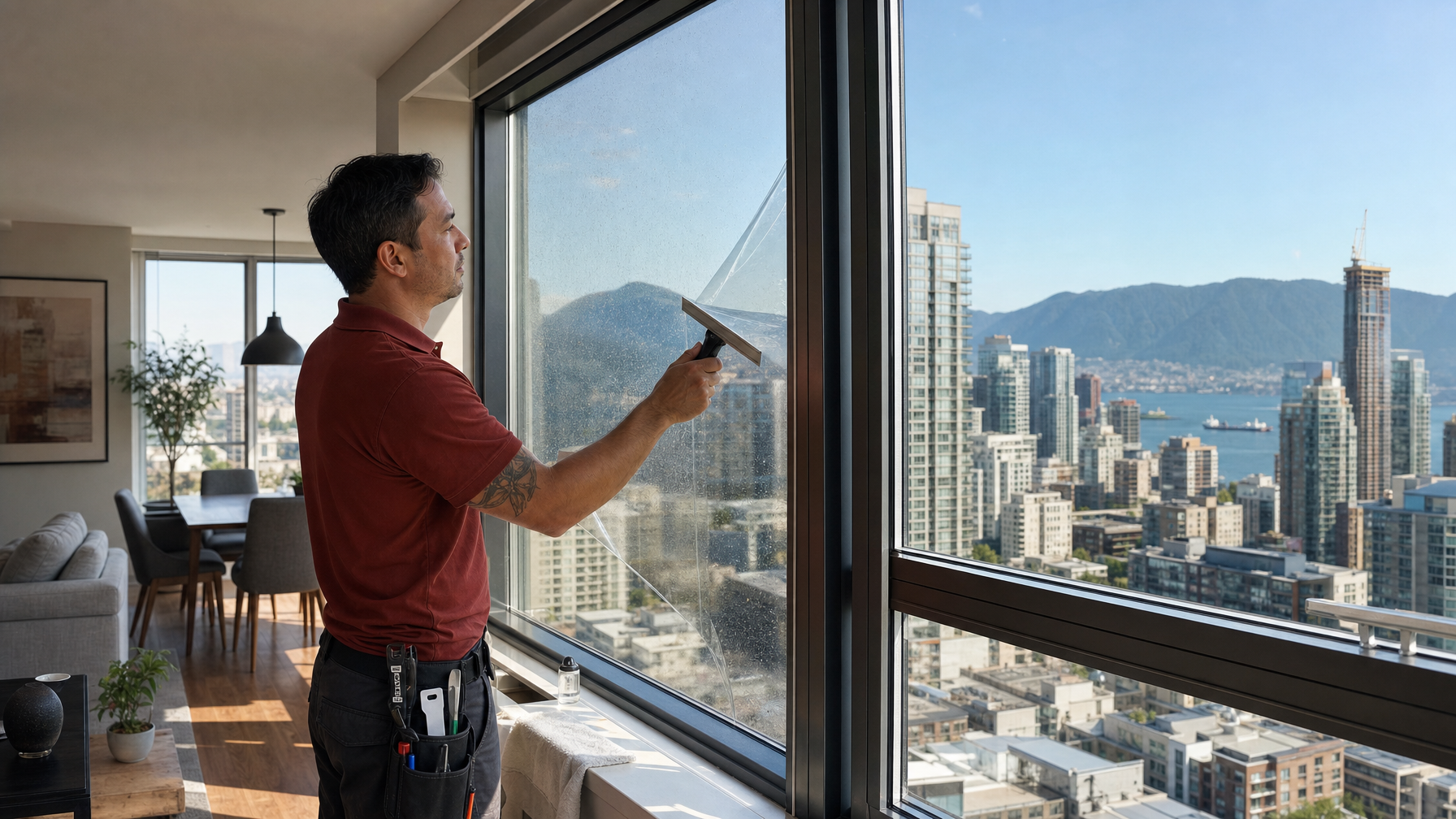
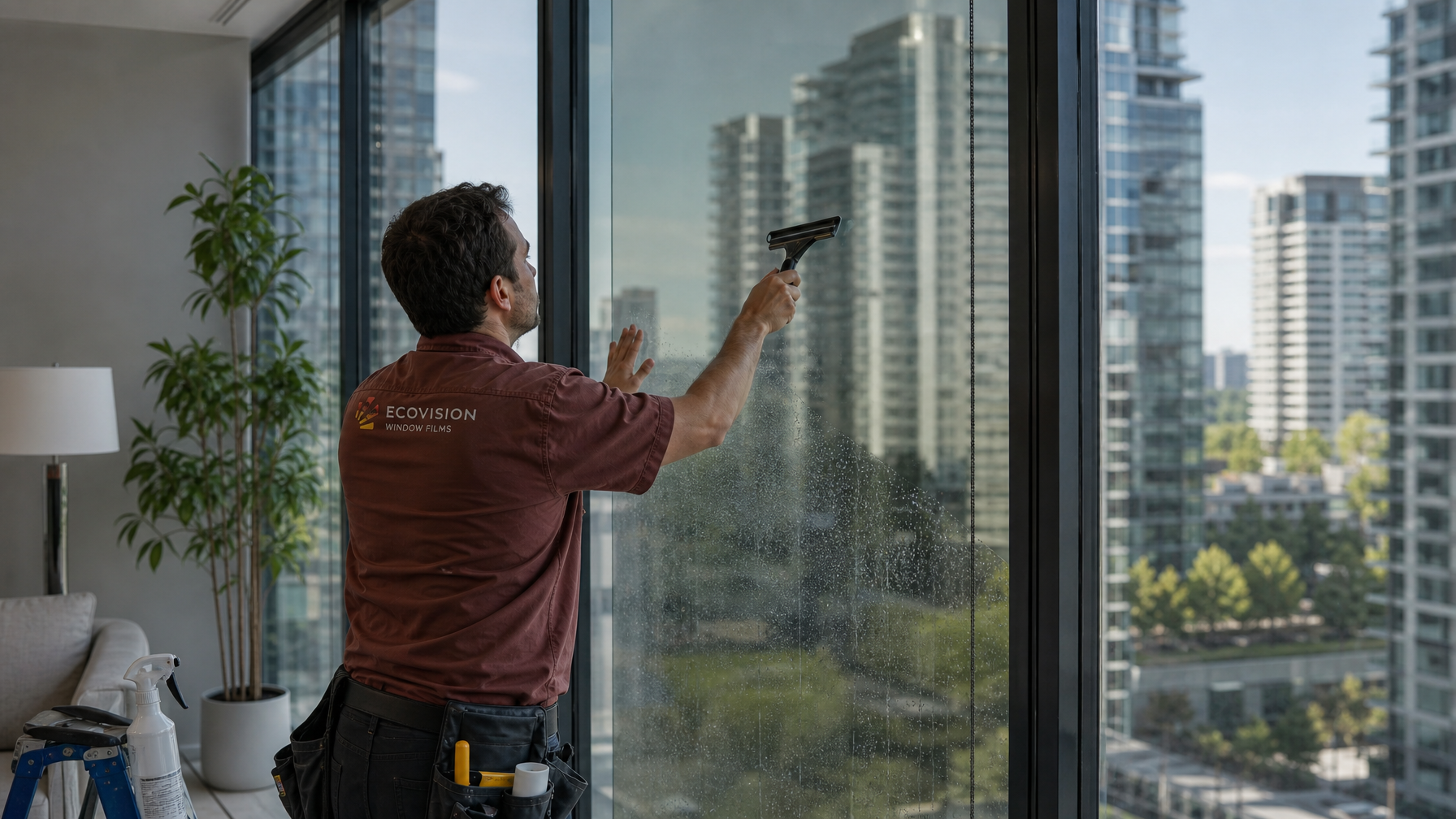
- What is the installation timeline, and how is resident disruption managed? A professional crew installs window film on a standard residential suite window in 15, 30 minutes. Most facilities schedule room-by-room, working floor-by-floor during non-peak resident care hours. A well-organized crew completes a 20-suite wing in one to two days with no room closures required.
For a free site assessment of your BC senior care or assisted living facility, contact Ecovision Window Films at (236) 862-0052 or visit ecovisioncanada.com/contact/. Ecovision is a certified installer with completed projects across the Lower Mainland healthcare and senior care sector.
Related Articles
- Commercial Window Film Installation in Vancouver: Types, Costs, and What to Expect
- Security Window Film in Vancouver, BC: Types, Costs, and What Buildings Need It Most
- Window Film for Office Buildings: 7 Questions Property Managers Ask
- Bird Safe Window Film for Commercial Buildings and High-Rises in BC
- How Much Does Window Film Cost in BC? (2026 Pricing Guide)
About the Author: This article was written by the Ecovision Window Films team. Edward, Director at Ecovision, brings a distinctive perspective to the window film industry, with over a decade in real estate development, including roles as Executive Director at a real estate development firm and Director of Strategic Partnerships, before joining Ecovision. That background gives the company a sharp edge in serving BC property managers and building owners. Ecovision is a certified installer for leading film brands with completed projects for healthcare facilities, government buildings, and commercial properties throughout the Lower Mainland. For a free site assessment, call (236) 862-0052 or visit ecovisioncanada.com/contact/.
Ready to improve comfort, safety, and UV protection across your BC senior care facility? Call Ecovision Window Films at (236) 862-0052 for a free site assessment. We serve senior care operators, healthcare real estate managers, and assisted living operators across Metro Vancouver, the Fraser Valley, and the broader Lower Mainland.