
TLDR
Energy efficient window film reduces solar heat gain through glass by up to 79%, cuts summer cooling costs by 20, 30%, and retains winter heat, making it one of the highest-ROI retrofits available to BC building owners and homeowners without replacing a single window.
How Does Energy Efficient Window Film Work?
Windows are the weakest point in any building’s thermal envelope. Industry research and Natural Resources Canada (NRCan) data shows that up to 76% of sunlight striking a standard double-pane window passes through as heat in summer, while windows account for roughly 30% of a home’s heating energy loss in winter. In BC, where summers are getting warmer and energy costs climb year after year, both of those numbers translate directly into dollars on your utility bill.
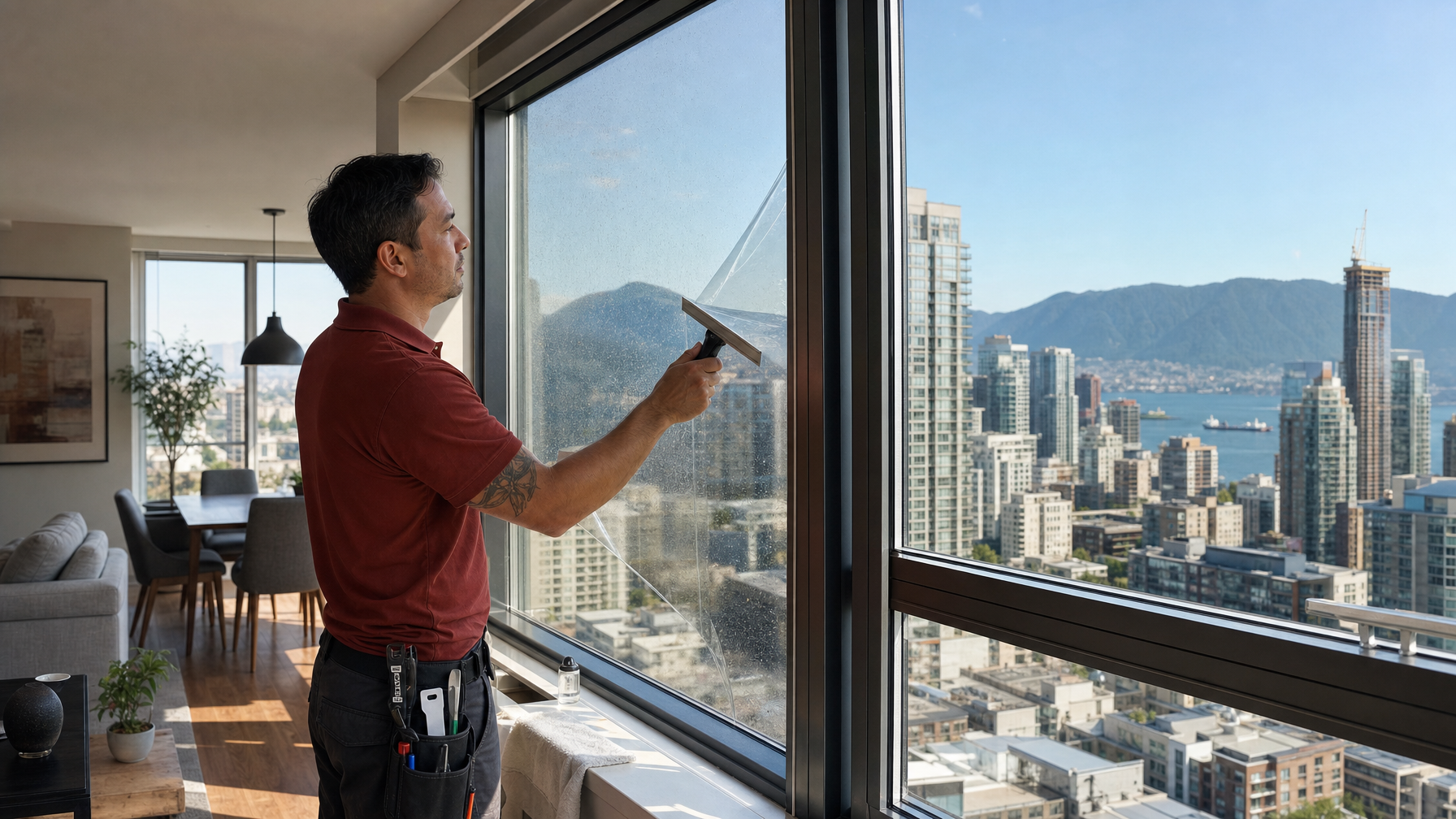
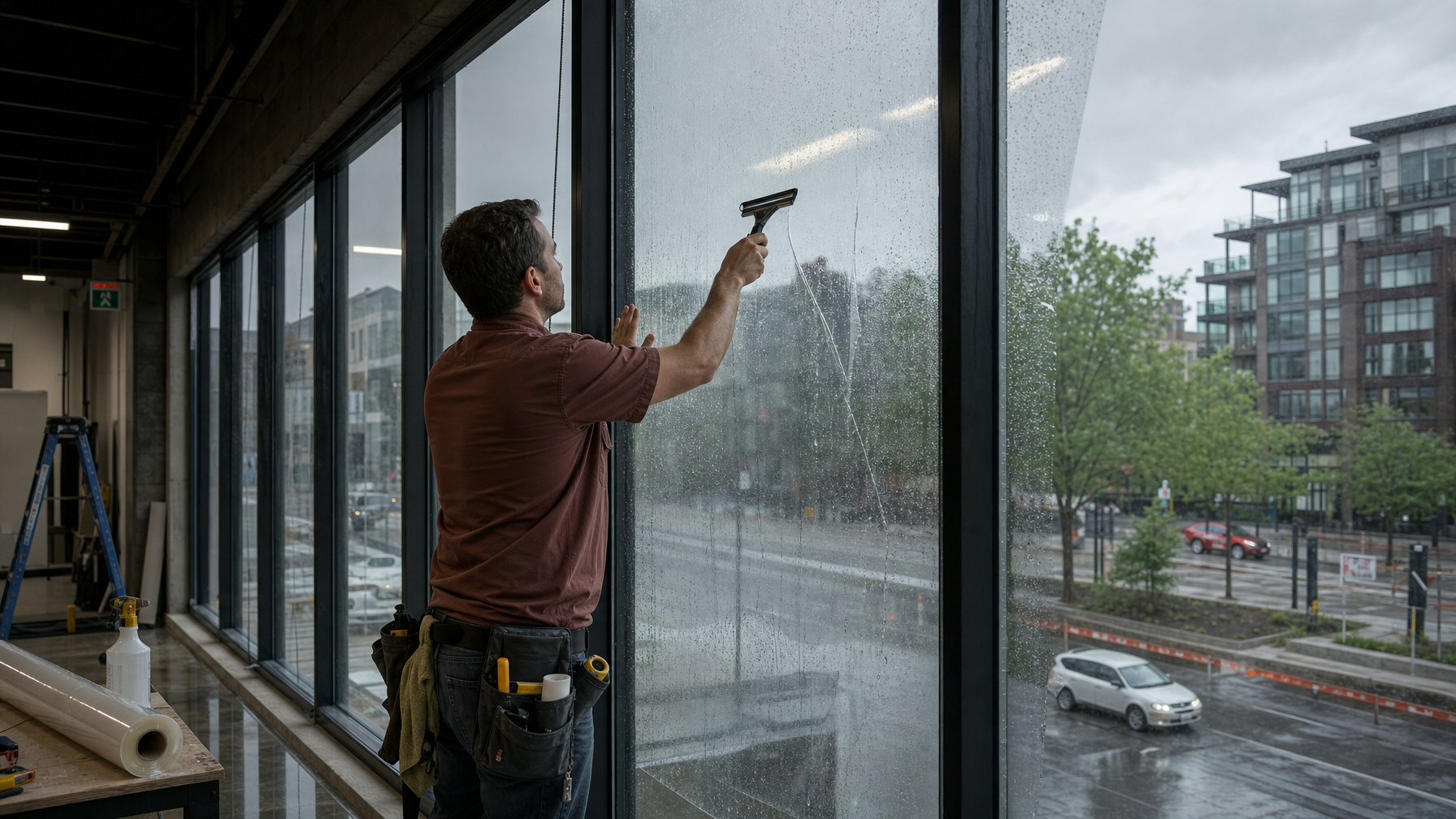
Energy efficient window film addresses both problems with a single product applied directly to the interior glass surface. It does not require window replacement, structural changes, or permits. There are three main technologies:
Solar control film reflects and absorbs solar energy before it converts to indoor heat. High-performance versions reject up to 79% of total solar energy while still allowing visible light to pass through, so rooms stay bright without becoming hot.
Low-E (low emissivity) film works in both directions. It reflects solar heat away in summer and reflects interior radiant heat back into the room in winter, improving year-round thermal performance. Low-E film is particularly effective in BC’s mixed climate, where both summer cooling and winter heating costs matter.
Dual reflective film combines strong solar rejection on the exterior surface with a low interior reflectance, so the glass retains its clarity from inside while blocking heat from outside. This is the specification Ecovision most commonly uses in senior care facilities and commercial towers because it delivers performance without compromising views or interior aesthetics.
How Much Energy Can Window Film Actually Save?
The savings are well-documented. According to commercial window film performance data, solar control films can reduce air-conditioning load by up to one ton for every 100 square feet of glass, retain up to 30% of radiant heat that would otherwise escape through glass in winter, and cut peak cooling demand during the hottest hours of the day.
The International Window Film Association commissioned a comprehensive energy analysis across multiple climate zones and building types. The study found that professionally installed solar control window film consistently outperforms insulation upgrades, air sealing, and new HVAC equipment on a cost-per-dollar-saved basis, specifically in buildings with significant glass exposure. Windows are the single biggest thermal weakness in most commercial and multi-residential buildings, so fixing them first delivers the fastest return.
For residential homes in BC’s mixed climate, most professional installations produce:
- Cooling cost reductions of 20, 30% during summer months
- Heating efficiency improvements of 10, 15% in winter
- 99% UV rejection year-round, protecting flooring, furniture, and merchandise from fading
Does Energy Efficient Window Film Work in BC’s Climate?
A common question. BC’s climate is more variable than a hot-arid state like California or Arizona, and that variability actually makes window film more valuable, not less.
Metro Vancouver, the Lower Mainland, and the Fraser Valley experience mild winters and increasingly warm, sunny summers. South and west-facing windows in these areas accumulate significant solar gain from April through October. The right window film specification cuts that gain without sacrificing natural light.
In winter, the same film’s low-e properties slow the rate at which expensive heated air radiates out through the glass surface, reducing heat loss and keeping interior temperatures more stable. The film does not prevent passive solar gain on cold but sunny days; it moderates it, which is exactly what a mixed climate requires.
BC buildings that benefit most from energy efficient window film include:
- Multi-unit residential towers with large south or west-facing glass
- Senior care facilities where occupant comfort is a clinical priority and HVAC systems run continuously
- Commercial office buildings where tenant comfort directly affects lease renewals
- Government and institutional buildings with stringent energy reporting obligations
- Residential homes with older single or double-pane windows that lack modern low-e coatings
What Does a Real BC Energy Savings Project Look Like?
Windermere Care Centre in Vancouver is a clear example. The facility, a 15-storey building housing approximately 210 seniors, faced severe solar heat gain on its south-facing units. Despite having a chiller system that activated automatically when night temperatures fell below 14°C, residents in south-facing rooms experienced elevated temperatures during peak daylight hours, driving ongoing comfort complaints and straining the HVAC system.
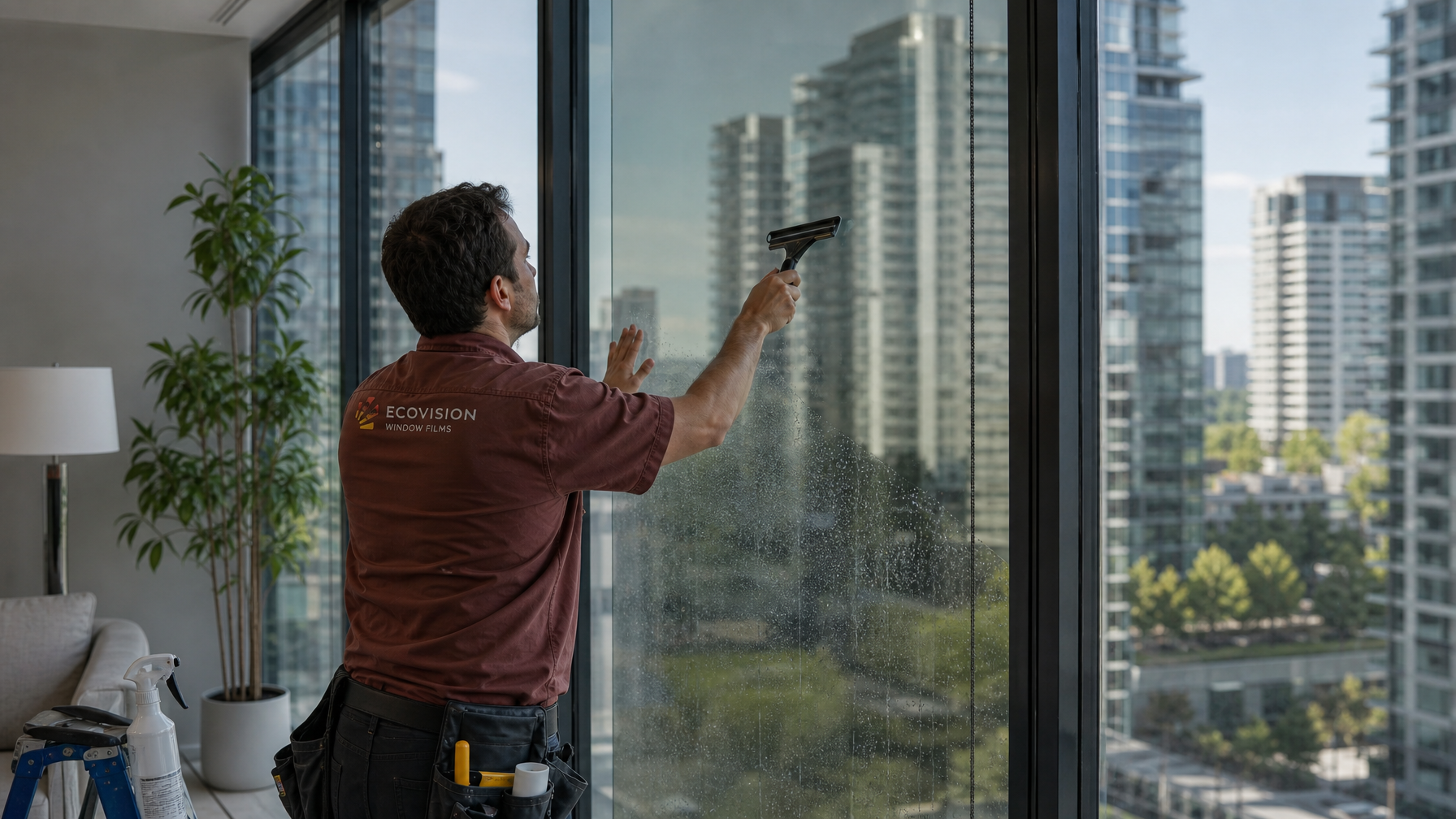
Ecovision installed Dual Reflective Film (DR150) across the full southern wing on all 15 floors. The result: measurably reduced solar heat entry, significantly lower HVAC load during peak summer days, and improved thermal comfort for residents, without obstructing views, altering the building’s exterior appearance, or disrupting operations.
The same principle applies across property types. Office buildings with floor-to-ceiling glazing, residential condos with west-facing balcony doors, and retail spaces with large storefront windows all face the same physics problem: glass lets solar energy in faster than any HVAC system can remove it affordably.
How Long Does Energy Efficient Window Film Take to Pay for Itself?
Payback depends on glass area, orientation, film specification, and local energy rates. In BC, BC Hydro’s tiered residential and commercial rates have increased consistently, and commercial electricity costs in Metro Vancouver are among the higher rates in Canada.
For a typical commercial building in Metro Vancouver with significant south or west-facing glass, most energy efficient window film projects achieve full payback through energy savings alone in 3, 5 years. Residential projects with smaller glass areas generally see payback in 4, 7 years, while providing immediate comfort benefits, UV protection, and glare reduction that have independent value from day one.
Compare that to window replacement. Replacing a commercial double-pane unit in BC typically costs $300, $600+ per window. Professionally installed solar control window film treats the same glass for a fraction of that cost while delivering comparable or superior solar performance. There is no disposal, no construction debris, and no downtime.
Is Energy Efficient Window Film Worth It for BC Homes?
For any room that becomes uncomfortable in summer heat, or that loses warmth quickly through large glass panes in winter, the answer is yes. The film works immediately after installation, there is no run-in period, no calibration, and no seasonal adjustment required.
Residential window film is particularly well-suited to:
- Older homes with single or early double-pane windows that lack factory low-e coatings
- South and west-facing living rooms, bedrooms, or sunrooms that overheat on clear days
- Strata properties where full window replacement requires board approval but film installation does not
- Rental properties where landlords want to reduce cooling complaints without capital expenditure
The UV-blocking benefit applies regardless of orientation. Even north-facing windows that receive no direct sun allow diffuse UV radiation to pass through, which causes gradual fading of hardwood floors, carpets, artwork, and upholstery. Energy efficient window film blocks 99% of that UV exposure.
Talk to Ecovision About Energy Efficient Window Film in BC
Ecovision Window Films is BC’s leading window film specialist, with completed projects at senior care facilities, government buildings, commercial towers, and residential homes across Metro Vancouver, the Lower Mainland, and the BC Interior.
If your building runs its HVAC hard in summer, or if certain rooms are consistently uncomfortable regardless of thermostat settings, a professional film assessment will show you exactly what energy savings are achievable for your specific property.
Call us at (236) 862-0052 or visit ecovisioncanada.com/contact/ to request a free, no-obligation estimate.
Related Articles
- Does Window Film Reduce Heat in Summer?
- Residential Window Film: Benefits for Heat, Glare, UV Protection and Comfort
- Commercial Window Film Installation in Vancouver: Types, Costs, and What to Expect
- Does Window Film Block UV Rays?
Expert resources: Natural Resources Canada (NRCan) provides guidance on energy-efficient building retrofits and performance benchmarks for window treatments in Canadian climates. The International Window Film Association (IWFA) has commissioned independent energy analysis studies documenting the cost-per-dollar-saved performance of solar control window film referenced in this article.