
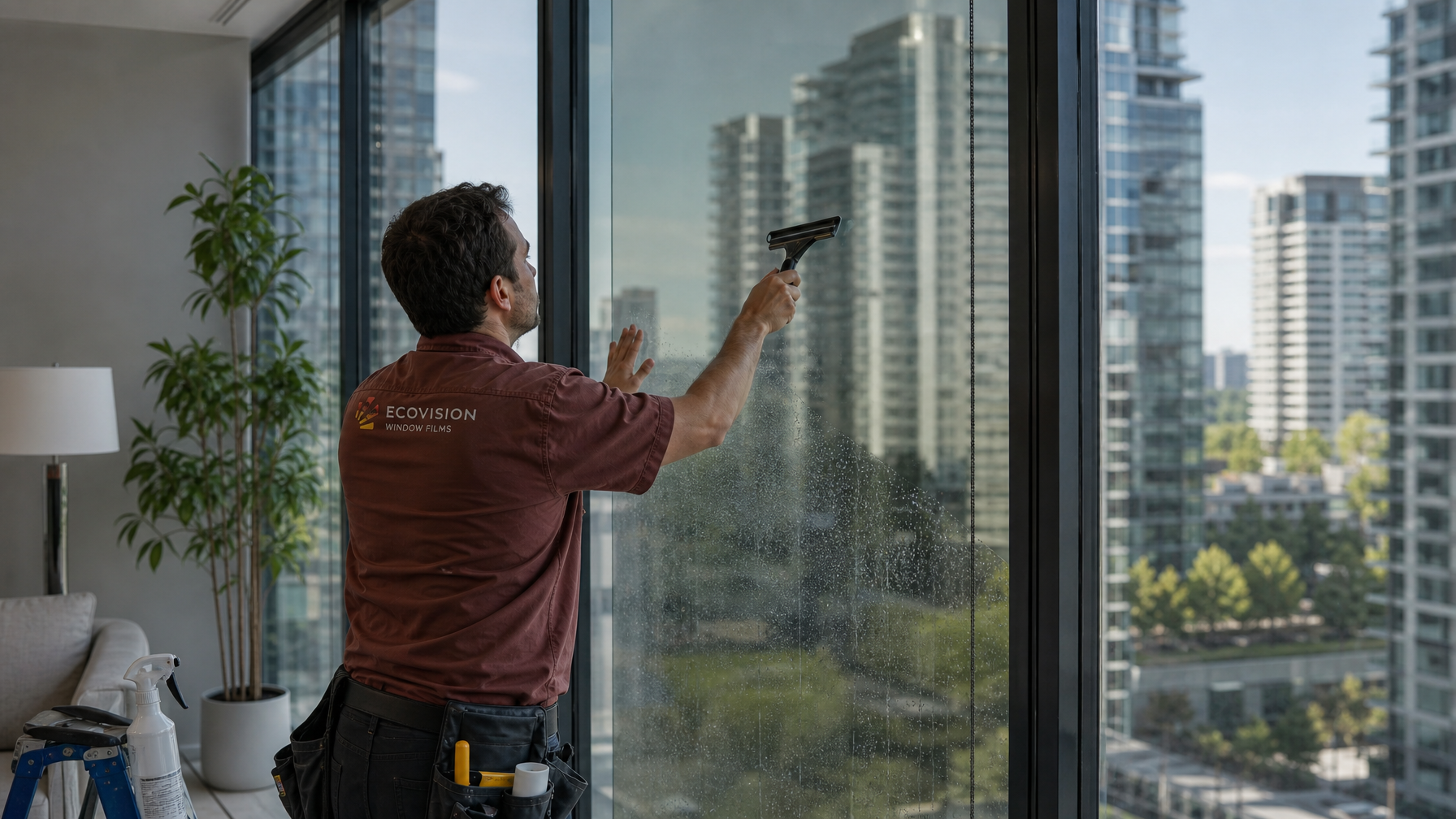
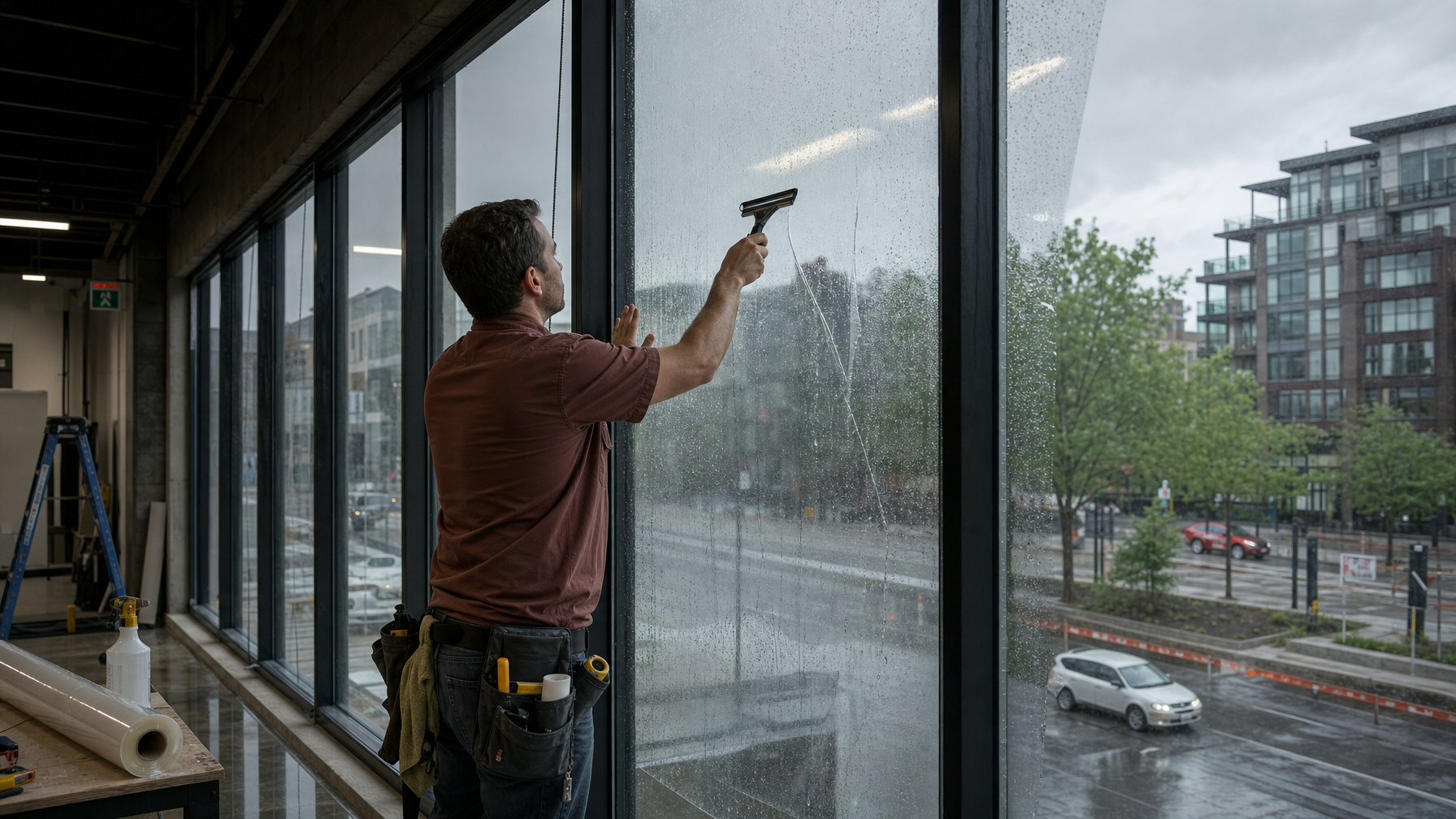
Solar window film is one of the most effective retrofits a Vancouver homeowner can make to an existing home. Ecovision Window Films installs LLumar- and Vista-certified solar control film across Vancouver, the North Shore, and the Lower Mainland, and the questions we hear most often at estimates are the same: What will it actually do to my room temperatures? Will my view change? And what will it cost?
Solar window film for Vancouver homes blocks 50, 78% of total solar energy entering through glass, reduces interior temperatures by 5, 10°C on south- and west-facing windows, rejects more than 99% of UV radiation, and typically costs $8, $22 per square foot installed depending on film grade. Ecovision Window Films installs certified solar control film for residential clients across Vancouver, BC and the Lower Mainland, with most single-family home projects completed in one day.
What Is Solar Window Film and How Does It Work?
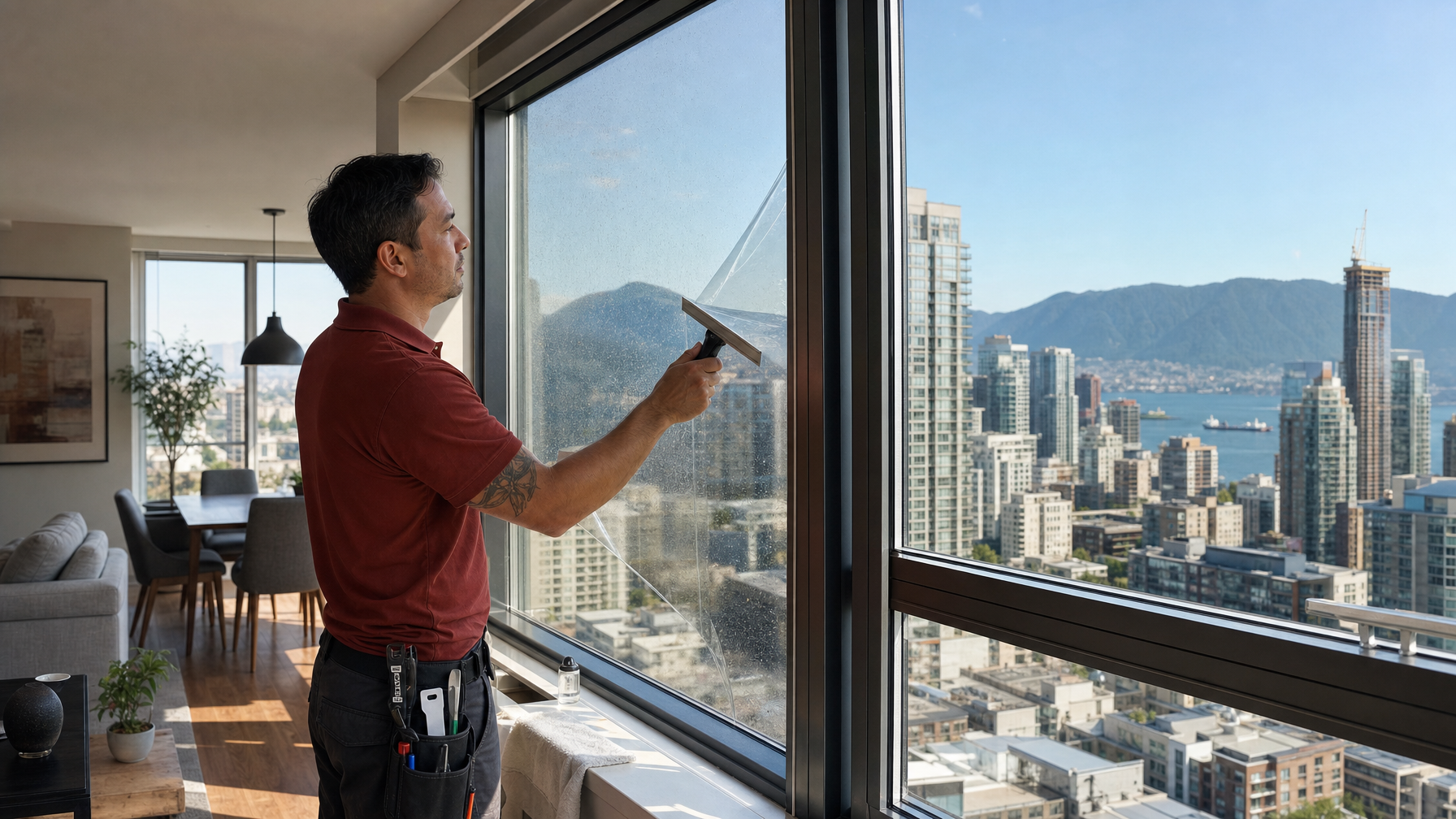
Solar window film is a thin, multi-layer polyester laminate bonded directly to the interior surface of existing glass. It works by selectively filtering the solar spectrum: blocking infrared (heat) and ultraviolet radiation while allowing visible light to pass through at a level you choose. Unlike full window replacement, which averages $700, $1,200 per unit in Greater Vancouver, solar film upgrades the performance of glass already in your home without structural work, permits, or tenant disruption.
Modern solar control films from LLumar and Vista use ceramic and nano-particle technology rather than older metal sputter coatings. Ceramic films remain signal-transparent, no interference with Wi-Fi, cell service, or smart home devices, and retain their optical clarity for 10, 15 years under BC’s UV exposure levels. Metal-coated films from older installations often bubble, turn purple, or delaminate within 7, 10 years, particularly on south-facing glass that takes full summer sun from May through September.
The performance metric that matters most is Total Solar Energy Rejection (TSER): the percentage of the sun’s total energy, visible light, infrared, and UV combined, that the film prevents from entering the room. LLumar’s architectural ceramic series achieves TSER ratings of up to 78%, compared to 8, 14% for standard single-pane clear glass with no film.
Why Are Vancouver Homeowners Installing Solar Film in 2026?
Vancouver’s climate is changing in ways that make solar heat gain a genuine household problem rather than a minor inconvenience. Metro Vancouver now averages 28 days above 25°C per year, a number that Environment and Climate Change Canada projects will more than double by mid-century as Canada continues warming at twice the global average rate. The June 2021 heat dome, which pushed temperatures above 38°C in Metro Vancouver and killed 619 people across BC, brought the consequences of poorly insulated glass into sharp focus for many homeowners who had assumed Pacific Coast weather made active cooling unnecessary.
The homes most affected are those built between 1985 and 2010: large double-pane windows, significant south and west glass exposure, and no mechanical cooling. These properties are now the primary candidates for solar heat control window film in our service area. A south-facing living room in a Kitsilano or Burnaby home with 80 square feet of glass and no film can hit 34, 36°C on a clear July afternoon even with blinds drawn, because blinds absorb and re-radiate heat already inside the room. Solar film stops the heat at the glass surface before it enters.
What Types of Solar Window Film Work Best for Vancouver Homes?
Not every solar film is the right choice for every home or room. The table below shows the four main types Ecovision installs on residential properties in Vancouver and the Lower Mainland, with typical performance ranges and cost benchmarks.
| Film Type | Total Solar Energy Rejection | Visible Light Transmission | Best Residential Use | Installed Cost (BC) |
|---|---|---|---|---|
| Ceramic Solar Film | 50, 70% | 35, 70% | Living rooms, bedrooms, view-facing glass where clarity matters | $12, $18/sqft |
| Reflective Solar Film | 60, 75% | 15, 35% | South and west-facing glass needing maximum heat rejection; privacy benefit | $8, $14/sqft |
| Dual-Reflective Film | 55, 65% | 25, 50% | Condos and townhomes with mixed orientations; moderate glare control | $10, $18/sqft |
| Low-E Insulating Film | 30, 50% summer heat + winter heat retention | 60, 75% | Year-round energy management, single-pane windows, heritage homes | $14, $22/sqft |
For most Vancouver residential projects, ceramic solar film is the preferred specification. It delivers meaningful heat rejection, typically 55, 70% TSER, while maintaining 40, 65% visible light transmission, which means rooms stay bright and views remain clear. The absence of metallic layers means there is no mirror effect from outside during the day and no signal interference. Ecovision has installed ceramic solar film in over 150 residential projects across Vancouver, Burnaby, Richmond, and the North Shore, including Yaletown condos with floor-to-ceiling west-facing glass and single-family homes in Kitsilano with large south-facing skylights and kitchen windows.
Reflective film is the stronger choice when maximum heat rejection is the priority and some degree of daytime privacy is welcome. It reflects more of the solar spectrum back outward, achieving TSER values of 60, 75%, but the reflective exterior appearance is noticeable, appropriate for a west-facing home office or bedroom, less suited to a front facade in a heritage neighbourhood where visual character guidelines apply. Edward reviews orientation, window-to-wall ratio, and local guidelines at every free site assessment before recommending a specific film grade.
How Much Does Solar Window Film Cost in Vancouver?
Professionally installed residential window film in Vancouver costs $8, $22 per square foot installed, with solar control film typically falling between $8 and $18 depending on film grade and glass access. For a typical Vancouver single-family home with 250 square feet of south and west-facing glass, total project cost typically runs $2,000, $4,500 installed. A Yaletown or Coal Harbour condo suite with 150 square feet of west-facing floor-to-ceiling glass generally falls between $1,800 and $3,600 for ceramic solar film.
These figures compare favourably to the alternatives. A portable air conditioner that handles one room runs $400, $900 per unit and consumes 1,000, 1,500 watts continuously, adding $150, $300 per summer season to electricity bills. Solar film, once installed, reduces cooling energy use by up to 30% across all treated rooms with no ongoing operating cost, no noise, and no floor space consumed. The typical payback period for residential solar film in Vancouver is 3, 5 years when measured against reduced cooling energy demand, extended furniture and flooring lifespan (solar film blocks more than 99% of UV, the primary driver of fading), and improved comfort during heat events.
For an accurate cost estimate specific to your home’s window count, glass area, and orientation, Ecovision offers free on-site assessments across Vancouver, BC and the Lower Mainland. Call (236) 862-0052 or visit the contact page to book.
Does Solar Window Film Change the Look of Your Windows?
This is the question homeowners ask most at estimates, and the honest answer depends on the film selected. Ceramic solar films at 50% visible light transmission are nearly invisible from inside, rooms appear naturally lit, and outdoor views look unchanged. From outside, there is a mild reduction in glass reflectivity, which is often an improvement over the washed-out appearance of uncoated clear glass in direct sunlight. Reflective films create a more noticeable exterior appearance but are not visible from inside during daylight hours.
The one scenario where solar film does change the visual experience meaningfully is at night. Once exterior light levels drop below interior light levels, reflective and dual-reflective films reduce outward visibility from inside the treated room, the same optical principle that makes one-way mirror glass work. Ceramic films at 50%+ VLT maintain reasonable nighttime views. This trade-off is worth discussing at the site visit, and Ecovision always brings physical film samples to on-site estimates so homeowners can evaluate appearance before committing.
What Results Should Vancouver Homeowners Expect After Installation?
Based on Ecovision’s residential installation record across the Lower Mainland, homeowners report the most noticeable improvement within the first two to three weeks of warm weather after installation. South-facing bedrooms that previously hit 30°C by mid-afternoon typically stabilize at 24, 26°C with ceramic solar film in place. Living rooms with west-facing glass that generated visible glare from 2pm onward see glare reduced by 65, 80% depending on film specification. These are consistent findings across projects from North Vancouver to South Surrey.
The case for solar film is also well-documented from Ecovision’s commercial project portfolio. At Rocky Mountaineer’s facility in Vancouver, solar control film resolved overheating on sun-exposed glazing that made the space uncomfortable for staff and visitors during peak summer months, a challenge that is directly comparable to a south-facing residential great room. At Bentall 4, one of Vancouver’s Class A office towers, ceramic solar film on south and west-facing floor plates produced measurable reductions in peak cooling load that property management tracked through consecutive summer seasons. The physics are the same in a home: treated glass admits less solar energy, rooms need less mechanical cooling, and comfort improves without changing how the space looks or feels in the shoulder seasons.
For homeowners considering energy efficient window film for year-round performance, Low-E insulating film adds a winter heat-retention benefit on top of summer solar rejection, reducing radiant heat loss through glass by up to 30% during Vancouver’s heating season (October to April). This is particularly effective on single-pane windows in older homes throughout East Vancouver and the heritage stock in Strathcona, Main Street, and Point Grey.
Related Articles
- Energy Efficient Window Film in Vancouver: What It Saves, What It Costs, and What to Install
- UV Window Film for BC Homes and Buildings: What It Blocks, What It Costs, and What to Expect
- How Long Does Professionally Installed Window Film Last in BC?
- Does Window Film Lower Cooling Costs in North Vancouver?
- How Much Does Window Film Cost in BC? (2026 Pricing Guide)
About the Author: This article was written by the Ecovision Window Films team. Edward, Director at Ecovision, brings a distinctive perspective to the window film industry, with over a decade in real estate development, including roles as Executive Director at a real estate development firm and Director of Strategic Partnerships, before joining Ecovision. That background gives the company a sharp edge in serving BC property managers and building owners. Ecovision is a certified installer for leading film brands with completed projects for healthcare facilities, government buildings, and commercial properties throughout the Lower Mainland. For a free site assessment, call (236) 862-0052 or visit ecovisioncanada.com/contact/.