
Quick answer: For an Ecovision window-film project in BC, use CA$10 to CA$24 per square foot installed as a preliminary planning range. The written quote depends on the selected film, measured glass area, glass compatibility, preparation, access and installation requirements. Confirm taxes, minimum charges and any additional scope before booking.
How Much Does Installed Window Film Cost in BC?
For an Ecovision project, use CA$10 to CA$24 per square foot installed as a preliminary planning range. This is not a fixed quote or a guarantee that every product and project falls within the range. The selected film, actual glass, measured area, preparation, access and installation requirements determine the written price.
Ask the quote to state tax treatment, minimum project charges and any separate work explicitly. Specialty access, existing-film removal, security attachment systems, custom graphics and other additional scope must be confirmed separately; do not assume they are included in a square-foot allowance.
| Film application | What changes the quote |
|---|---|
| Frosted and decorative privacy | Coverage, pattern, edge detail, custom cutting and design approval. |
| Heat, glare and solar control | The compatible Vista or LLumar product, daylight and appearance requirements, and installation access. |
| Safety and security | The specified film-and-glass system, frame condition and any required attachment system. |
| Commercial and institutional projects | Pane sizes and quantity, occupied-space phasing, access equipment, schedule and documentation. |
A useful starting calculation is measured glass area multiplied by the planning range. For example, 100 square feet × CA$10 to CA$24 = CA$1,000 to CA$2,400 as a preliminary allowance. This is an arithmetic illustration, not a completed-project price or an offer; confirm scope, taxes and any minimum charge in the written quote.
Request a project-specific estimate with window dimensions, photos and your preferred outcome.
What an Installed Window-Film Quote Should Include
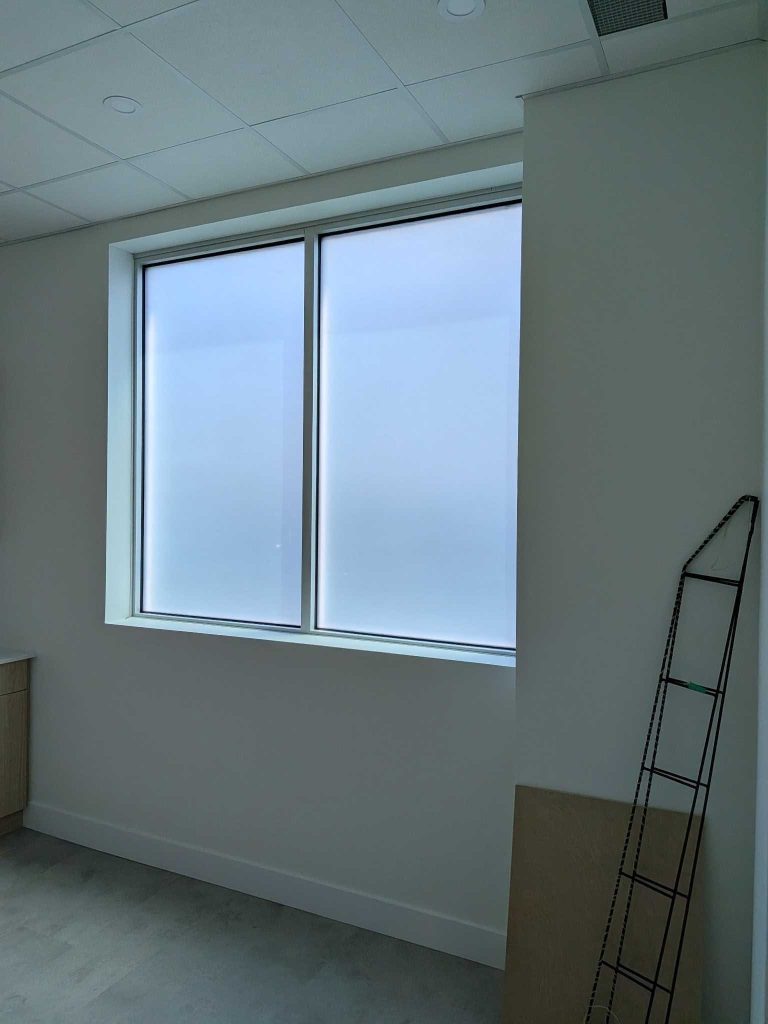
“Cost per square foot” is useful only when two proposals cover the same scope. Use this checklist to compare quotes on equal terms.
| Quote item | What should be stated | Why it changes cost |
|---|---|---|
| Film specification | Manufacturer, product series, thickness or construction, and intended application | Solar-control, privacy, safety/security and specialty films have different materials and installation requirements. |
| Measured film area | Net glass area and the number, size and shape of panes | Many small panes, divided lites and custom shapes require more cutting and handling than one large area. |
| Glass compatibility | Pane construction, coatings, tint, seals and existing damage | The film must be compatible with the actual window system and warranty conditions. |
| Access | Interior or exterior installation, height, lifts, scaffolding and protection requirements | Difficult access adds equipment, setup and safety coordination. |
| Preparation | Cleaning, masking, furniture movement and treatment of existing residue | Contaminated or obstructed glass requires additional labour before installation. |
| Schedule | Occupied-space phasing, after-hours work and site restrictions | Commercial and institutional projects may require multiple mobilizations or restricted working periods. |
| Warranty and closeout | Manufacturer warranty, installer warranty, product data and care instructions | Specified documentation and project administration should be included, not assumed. |
Cost Drivers by Window-Film Family
| Film family | Primary decision | Common scope variables | Ecovision owner |
|---|---|---|---|
| Heat and glare reduction | Balance solar performance, VLT, view and appearance | Orientation, glazing, room use, daylight target and exterior reflectance | Heat & glare service |
| Privacy and decorative | Choose obscuration, pattern and daylight level | Full or partial coverage, custom cutting, logos, seams and design approval | Privacy & decorative service |
| Frosted film | Set the required privacy level and visual finish | Coverage height, pattern alignment, edge detail and existing-film condition | Frosted-film guide |
| Safety and security | Define the hazard or intrusion objective and attachment requirements | Film thickness, anchoring system, frame condition, access and project documentation | Security-film guide |
| Commercial portfolios | Coordinate specification, phasing and occupied spaces | Building access, tenant schedule, repeated mobilization, lifts and closeout records | Commercial service |
How Ecovision Builds an Accurate Installed Quote
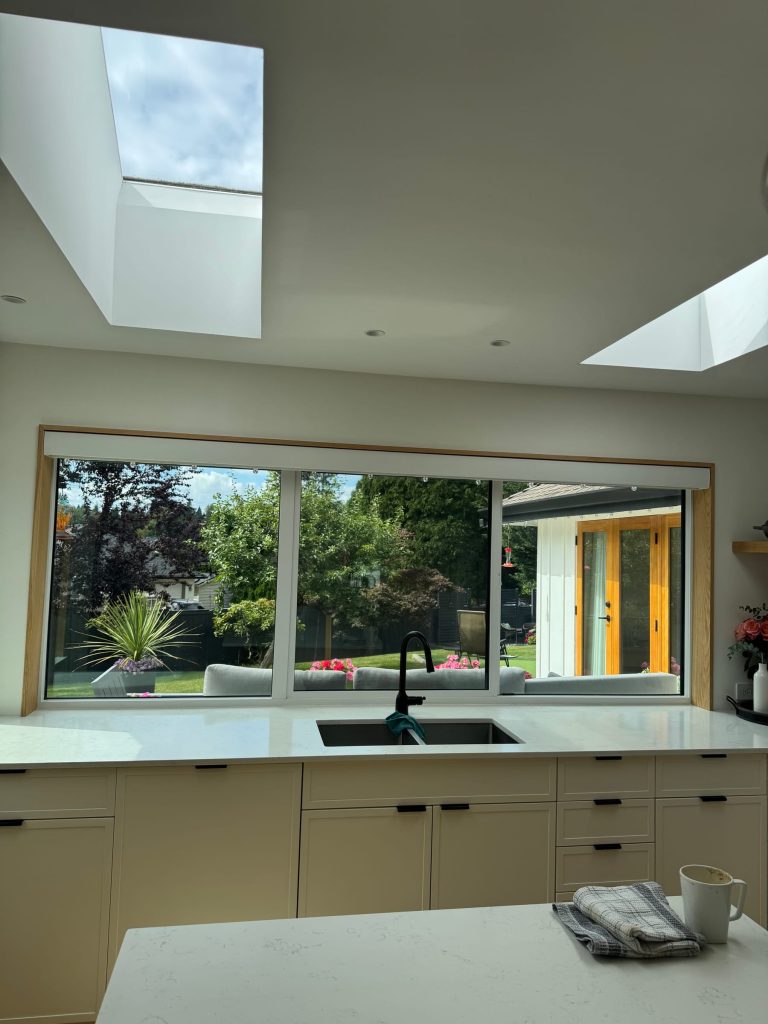
- Define the objective. Identify heat, glare, privacy, safety, fading, appearance or another measurable problem.
- Confirm the glass and window system. Record pane construction, coatings, seals, frames, dimensions and condition.
- Measure the work. Count panes and calculate the film area while noting shapes, obstructions and access.
- Compare compatible products. Review manufacturer data, samples, appearance and warranty requirements.
- Write the scope. Separate base installation, optional preparation, access equipment, phasing and documentation.
- Confirm exclusions. State what is not included so competing quotes can be compared fairly.
Why Online Price Ranges Can Mislead
A low advertised number may describe material only, a simple ground-floor pane or a different product category. A high number may include specialized access, attachment systems, removal, restricted hours or a small-job mobilization. Without the product name, measured area and scope, the numbers are not comparable.
Ecovision therefore does not present an unsupported universal range as a promise. We provide a project-specific written quote after reviewing the actual glass and installation conditions.
Residential Cost Questions
Residential quotes are usually shaped by the number of problem windows, film performance, access, furniture movement, glass compatibility and whether the owner wants to treat one room or a larger elevation. South- and west-facing spaces often need a different daylight and glare balance than bedrooms or bathrooms.
For heat and glare, compare the visible change as well as the manufacturer data. For privacy, decide whether the need is daytime view control, permanent obscuration or decorative screening. Those are different intents and should not be priced as interchangeable products.
Commercial and Institutional Cost Questions
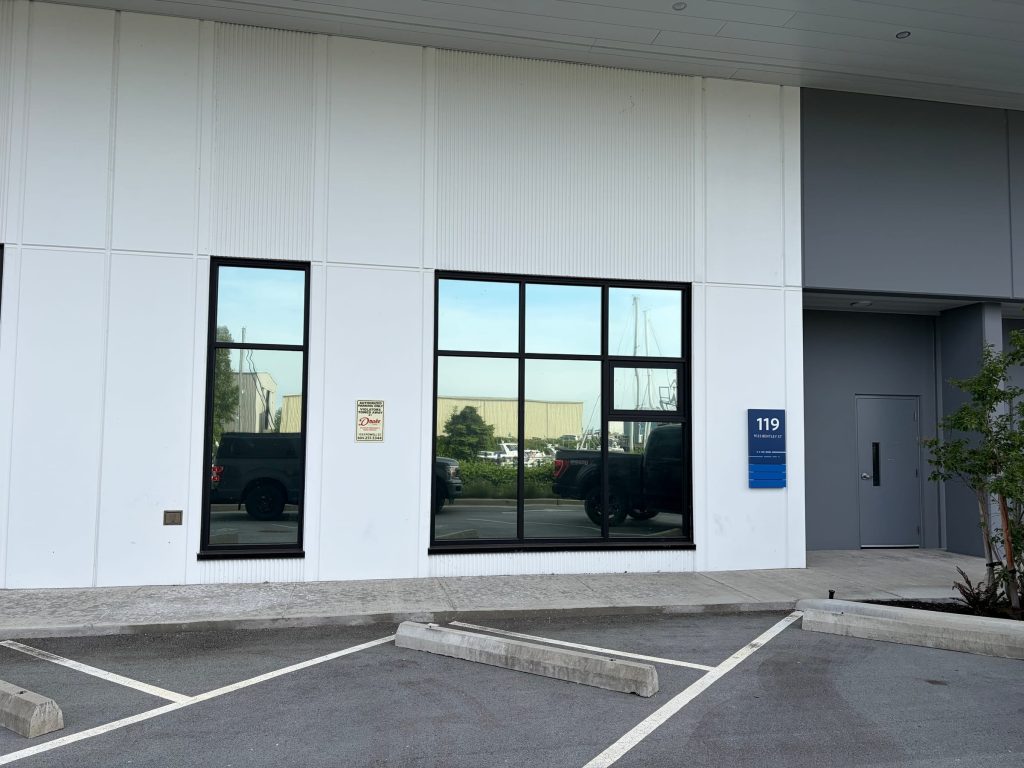
Commercial proposals should identify the building area, occupied-space plan, access method, product specification, mock-up or sample requirement, safety documentation, working hours and closeout deliverables. Multi-site work should also state whether mobilization, phasing and reporting are priced per site or across the portfolio.
For cooling-load projects, film performance is only one input. Glazing area, orientation, internal loads, HVAC operation and local weather influence results. A film data sheet should not be presented as a guaranteed utility saving.
Questions to Ask Every Installer
- Which exact film and manufacturer are included?
- What glass construction and compatibility assumptions were used?
- What measured area and pane count does the quote cover?
- Are access equipment, preparation and protection included?
- Are attachment systems, edge sealing or specialty finishing required?
- What warranty applies to the product, glass and installation?
- What work is specifically excluded?
- How will occupied areas, furniture and business operations be protected?
Installed Window Film Cost FAQ
How much should I budget per square foot?
Use CA$10 to CA$24 per square foot installed as an Ecovision planning range, not a fixed quote. Confirm the chosen film, glass, measured area, access, taxes, any minimum charge and additional scope in a written estimate.
Can I get a price from window dimensions alone?
Dimensions are a useful start, but an accurate installed quote also needs the film family, pane construction, access, condition, number of panes and project schedule.
Why can two quotes for the same area be different?
They may specify different films, warranties, access methods, preparation, attachment systems or documentation. Compare the written scope and product data, not only the total.
Does a lower-VLT film always provide the best value?
No. Lower VLT usually reduces more visible light and glare, but appearance, view, reflectance, glass compatibility and the required solar performance also matter.
Can window film reduce cooling costs?
Solar-control film can reduce solar heat gain through compatible glazing. Actual cooling savings vary with the building, glass, orientation, weather, HVAC and operating schedule, so they should be modelled or measured rather than guaranteed from a product sheet.
Request a Written Window-Film Quote
Send the property address, approximate window dimensions or drawings, photos, the problem you want to solve and any access or strata requirements. Ecovision will confirm the next assessment step and prepare a written scope for the selected film system.
Request a free estimate or call (236) 862-0052.
About Edward Zhang
With nearly 15 years in real estate, Edward Zhang previously worked as a licensed real-estate professional and served in leadership roles including managing broker, sales-team leader and top-performing salesperson. His recognition includes a Medallion Award and top-performer sales awards. Today, he brings that property, sales, marketing and development perspective to Ecovision Window Films when helping owners and project teams evaluate practical window-film options.
Prepared by Edward Zhang. Product availability, technical data, glass compatibility and warranties are verified for each project before recommendation. Call Edward directly at (778) 317-2580 or request a free estimate.