
Solar window film is one of the most cost-effective improvements a North Vancouver homeowner or building manager can make, and the savings are measurable, not theoretical. This guide covers how it works, what to expect from professional installation, and exactly what it costs in BC.
Yes. Solar control window film reduces solar heat gain by 40, 78%, cutting cooling costs by up to 30% in North Vancouver homes and commercial buildings. Ecovision Window Films installs LLumar- and Vista-certified solar film across the Lower Mainland, with completed projects in North Shore strata buildings, Lynn Valley residential suites, and Downtown Vancouver offices. Film starts at $8 per square foot installed and pays back its cost in 3, 5 years through reduced electricity costs. For a full breakdown of film types, savings, and payback periods, see our guide to energy efficient window film in Vancouver.
Why Do North Vancouver Homes and Offices Get So Hot in Summer?
North Vancouver sits at the base of the Coast Mountains, and while many residents think of the area as cool and rainy, summers tell a different story. Metro Vancouver averages 28 days above 25°C annually, and temperatures on the North Shore can feel more intense due to radiant heat bouncing off hillside terrain and the reflective surfaces of mountain-facing glass. On a clear July afternoon, the surface of a south or west-facing window can reach 55, 65°C, turning glass into a radiant heat source inside the room.
According to the U.S. Department of Energy, 76% of sunlight that falls on standard double-pane windows enters the building as heat. In a typical Lynn Valley rancher or North Shore condo with multiple sun-facing windows, that translates to significant air conditioning load from June through September. In newer, airtight homes built to the BC Energy Step Code, that heat builds fast and is slow to escape.
How Does Solar Window Film Actually Reduce Heat?
Solar control window film works by intercepting infrared radiation before it passes fully through the glass. The film applies to the interior surface of the window and uses either metallic layers, ceramic particles, or nano-ceramic technology to reflect and absorb solar energy at the glass surface. Unlike tinted glass, which absorbs heat and can cause thermal stress, quality solar film rejects solar energy without significantly darkening the room.
Premium LLumar and Vista ceramic films can reduce heat entering a room by up to 78%, while maintaining 50, 70% visible light transmission. In practical terms, a west-facing bedroom that reaches 31°C on a July afternoon can drop to 26, 27°C after ceramic film installation, without changing the window, adding blinds, or running the AC longer.
How Much Can You Save on Cooling Bills with Window Film in BC?
Savings depend on your glazing area, window orientation, and film type. Based on benchmarks from the International Window Film Association (IWFA) and Ecovision’s experience across Lower Mainland projects, here are realistic annual savings estimates for common North Vancouver building types:
| Building Type | Approx. Sun-Facing Glazing | Estimated Annual Cooling Savings | Typical Film Payback Period |
|---|---|---|---|
| 3-bedroom detached home (Lynn Valley) | 40, 60 sq ft south/west glass | $180, $320/year | 3, 5 years |
| 1-bedroom condo (North Shore high-rise) | 20, 35 sq ft floor-to-ceiling | $90, $160/year | 3, 4 years |
| Small commercial office (200 sq ft glazing) | 200 sq ft | $800, $1,400/year | 2, 4 years |
| Strata building (10 units, south-facing) | 400, 600 sq ft combined | $1,600, $2,800/year | 2, 3 years |
These figures assume ceramic or nano-ceramic film installed on the primary sun-facing windows. An energy efficient window film installation also blocks 99, 99.9% of UV radiation, which slows the fading of flooring, furniture, and upholstery, adding non-energy savings on top of the utility bill reduction.
Which Solar Window Film Works Best for North Vancouver’s Climate?
Not all films perform equally in BC conditions. Most North Shore homes and newer condo towers use double-pane or triple-pane sealed glazing units (required under the BC Energy Step Code for buildings constructed after 2017). Some film types are not compatible with sealed units without risking thermal stress on the glass edge seal. Here is a breakdown of the main solar film options Ecovision installs across the Lower Mainland:
| Film Type | Solar Heat Rejection | UV Block | Visible Light Transmission | Cost Installed (BC) | Best Application |
|---|---|---|---|---|---|
| Dyed (standard tint) | 30, 45% | 85, 95% | 40, 60% | $8, $10/sq ft | Budget installs, single-pane, privacy |
| Reflective (metallic) | 55, 75% | 99% | 15, 40% | $9, $14/sq ft | Commercial offices, storefronts |
| Ceramic (premium) | 60, 78% | 99.9% | 50, 70% | $12, $18/sq ft | Residential, strata, double-pane |
| Nano-ceramic | 70, 80% | 99.9% | 60, 75% | $14, $22/sq ft | Signal-friendly, luxury residential |
For most North Shore homes and strata buildings, a mid-range ceramic film with 60, 70% heat rejection is the best balance of performance, aesthetics, and compatibility with sealed double-pane units. Nano-ceramic options cost more but preserve Wi-Fi and cellular signal integrity, a genuine concern in high-rise buildings where metallic film can degrade indoor connectivity. Ecovision carries LLumar and Vista product lines and will assess your specific glazing type before recommending a film grade.
What a Real North Shore Installation Looks Like
At Guildford Seniors Village in Surrey, one of Ecovision’s completed healthcare projects, ceramic solar film was installed across south and west-facing resident rooms. The facility’s operations team reported measurable reductions in afternoon heat complaints during the first post-installation summer, and HVAC runtime decreased noticeably on the upper floors. Healthcare and senior care facilities benefit from solar film disproportionately because residents are more sensitive to heat and staff cannot rely on residents to self-manage comfort through window operation.
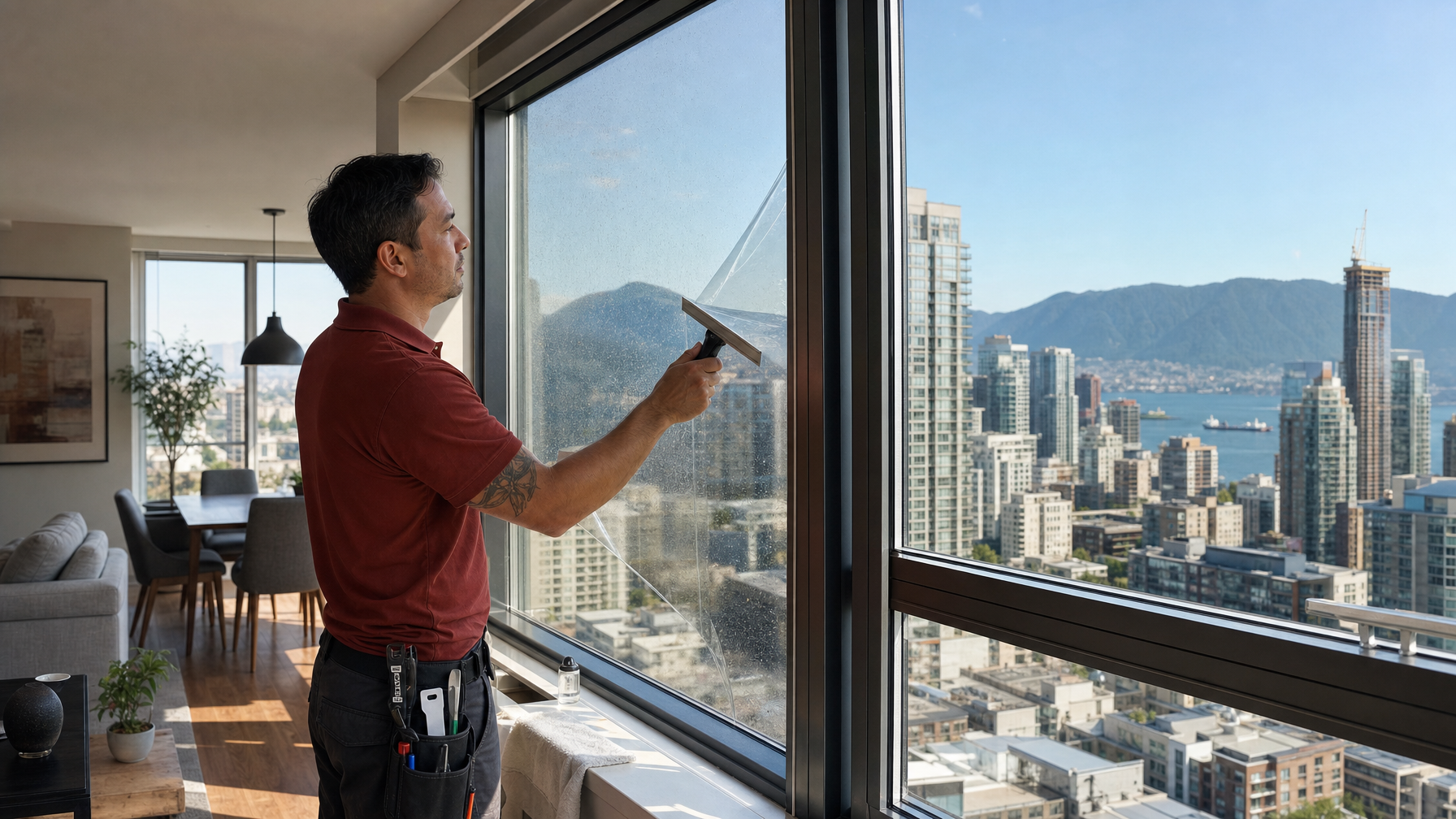
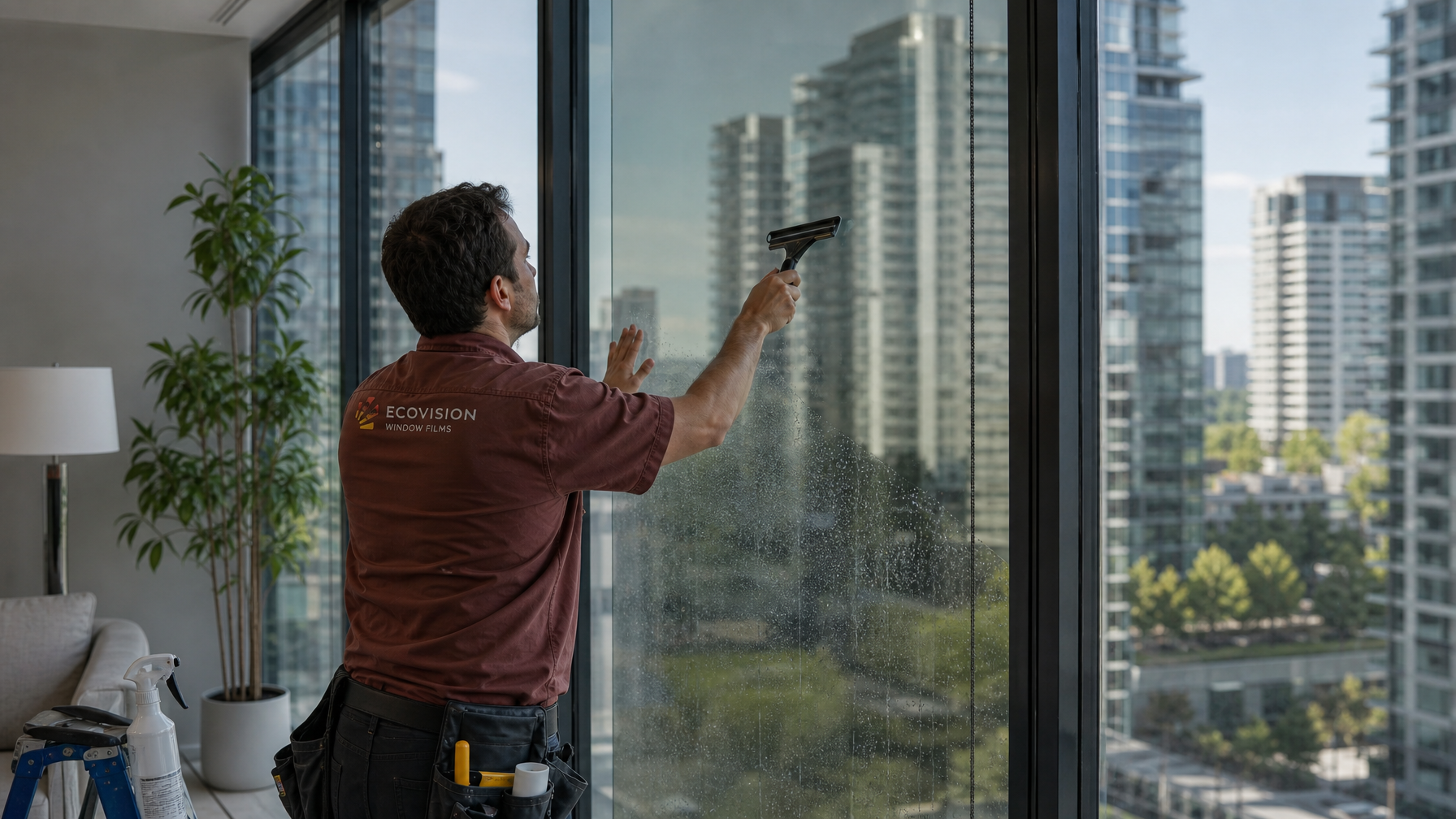
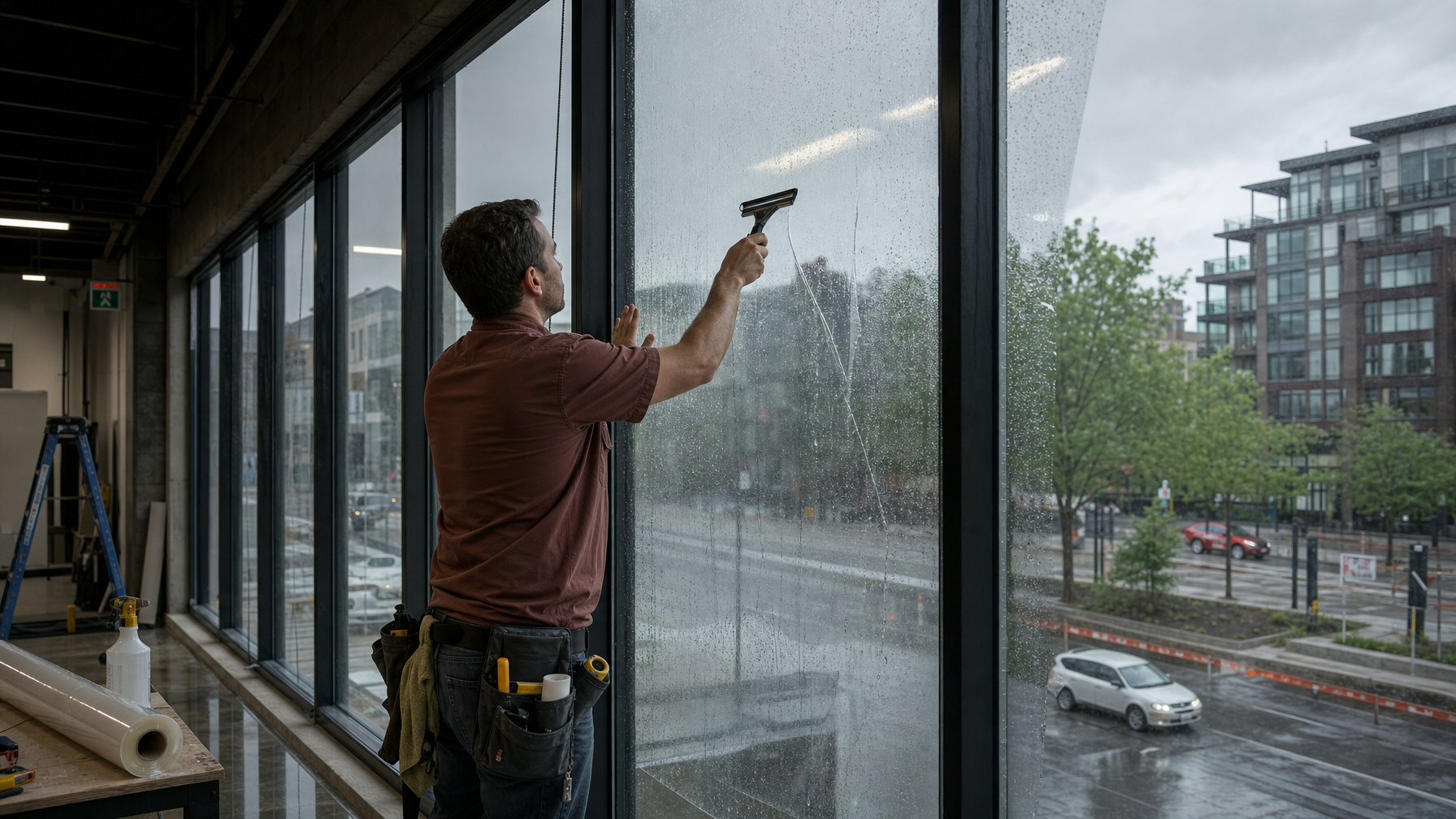
In residential installs across North Shore condo towers, particularly buildings along Marine Drive and in the Lonsdale corridor, Ecovision has completed ceramic film projects on south and west-facing suites where floor-to-ceiling glazing creates serious overheating from June through September. A typical project covers one to two floors of suites in a single day, with no disruption beyond keeping windows clean 48 hours before installation. The film is invisible from inside and barely perceptible from the street.
Is Solar Window Film Covered Under CleanBC or BC Energy Programs?
The CleanBC Better Homes program offers rebates on qualifying energy upgrades for BC homeowners. As of 2026, professionally installed solar control window film does not appear directly on the CleanBC product rebate list. However, projects that are part of a broader home energy retrofit may qualify under the CleanBC assessment path through a registered energy advisor, particularly when window improvements contribute to measurable changes in the home energy rating. The BC Energy Step Code, which governs new construction, mandates improved window performance in new builds; for existing buildings that predate current standards, solar film is one of the most cost-effective ways to close that performance gap without full window replacement.
For commercial buildings pursuing LEED certification or ASHRAE 90.1 compliance in BC, solar control window film contributes to the energy performance baseline model. Ecovision can supply full product specification sheets, tested Solar Heat Gain Coefficient (SHGC) data, and visible transmittance figures for use in energy model submissions to a registered professional engineer or LEED AP.
How Long Does Solar Window Film Take to Pay for Itself in North Vancouver?
For residential installs, payback runs 3, 5 years in BC, based on ceramic film at $12, $18 per square foot installed and typical residential electricity cost assumptions in the Lower Mainland. A west-facing suite in a North Shore high-rise with 40 square feet of primary sun-facing glass might spend $480, $720 on a ceramic film install and save $120, $160 per year in direct electricity costs, reaching payback in 3, 5 years. Quality LLumar and Vista films carry 10, 15 year manufacturer warranties, meaning the total return over the film’s usable life is 2, 4 times the installation cost.
For commercial properties, the payback is faster. A 200-square-foot glass office wall at $14/sq ft installed ($2,800 total) saving $1,100, $1,400 per year in HVAC costs pays back in under 3 years. See how much does window film cost in BC for a full pricing breakdown by film type, glass area, and project size across the Lower Mainland.
Related Articles
- Solar Window Film for Vancouver Homes: What It Does, What It Costs, and What to Install
- Energy Efficient Window Film in Vancouver: What It Saves, What It Costs, and What to Install
- How Much Does Window Film Cost in BC? (2026 Pricing Guide)
- Commercial Window Film ROI: What BC Property Managers Need to Know
- Window Film for Office Buildings: 7 Questions Property Managers Ask
Ready to reduce your cooling costs this summer? Call Ecovision Window Films at (236) 862-0052 for a free on-site assessment. We evaluate your windows, recommend the right film for your building type and sun orientation, and install with minimal disruption to your home or business. Serving North Vancouver, Lynn Valley, the North Shore, Burnaby, Surrey, and the entire Lower Mainland.
About the Author: This article was written by the Ecovision Window Films team. Edward, Director at Ecovision, brings a distinctive perspective to the window film industry, with over a decade in real estate development, including roles as Executive Director at a real estate development firm and Director of Strategic Partnerships, before joining Ecovision. That background gives the company a sharp edge in serving BC property managers and building owners. Ecovision is a certified installer for leading film brands with completed projects for healthcare facilities, government buildings, and commercial properties throughout the Lower Mainland. For a free site assessment, call (236) 862-0052 or visit ecovisioncanada.com/contact/.