
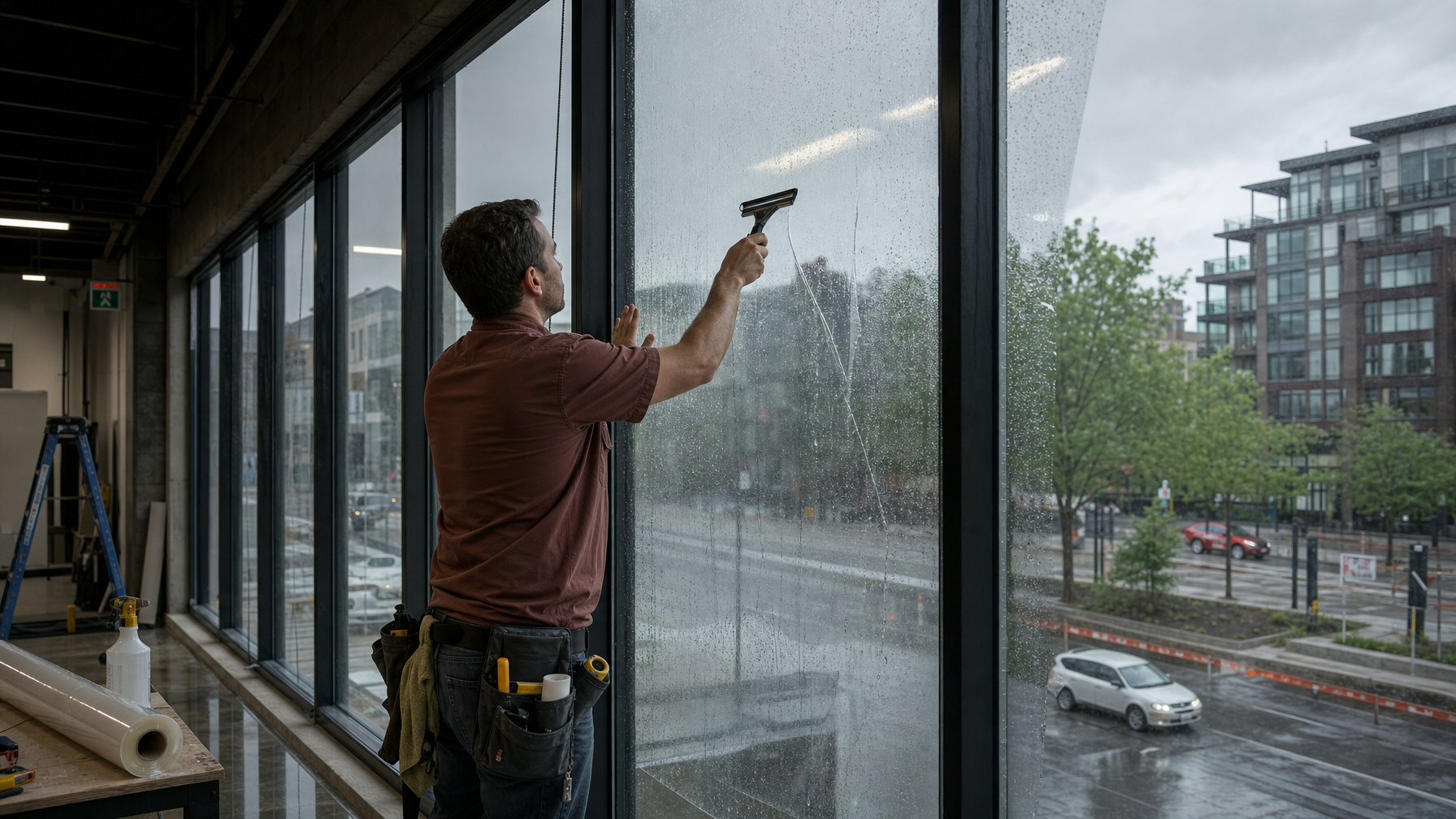
Reflective Window Film for Summer Heat in BC: Types, Costs, and What to Know
Metro Vancouver averages 28 days above 25°C each year, and since the 2021 heat dome pushed temperatures to record highs across BC, property managers and homeowners have been asking the same question: what is the most effective way to stop solar heat from turning south- and west-facing rooms into saunas?
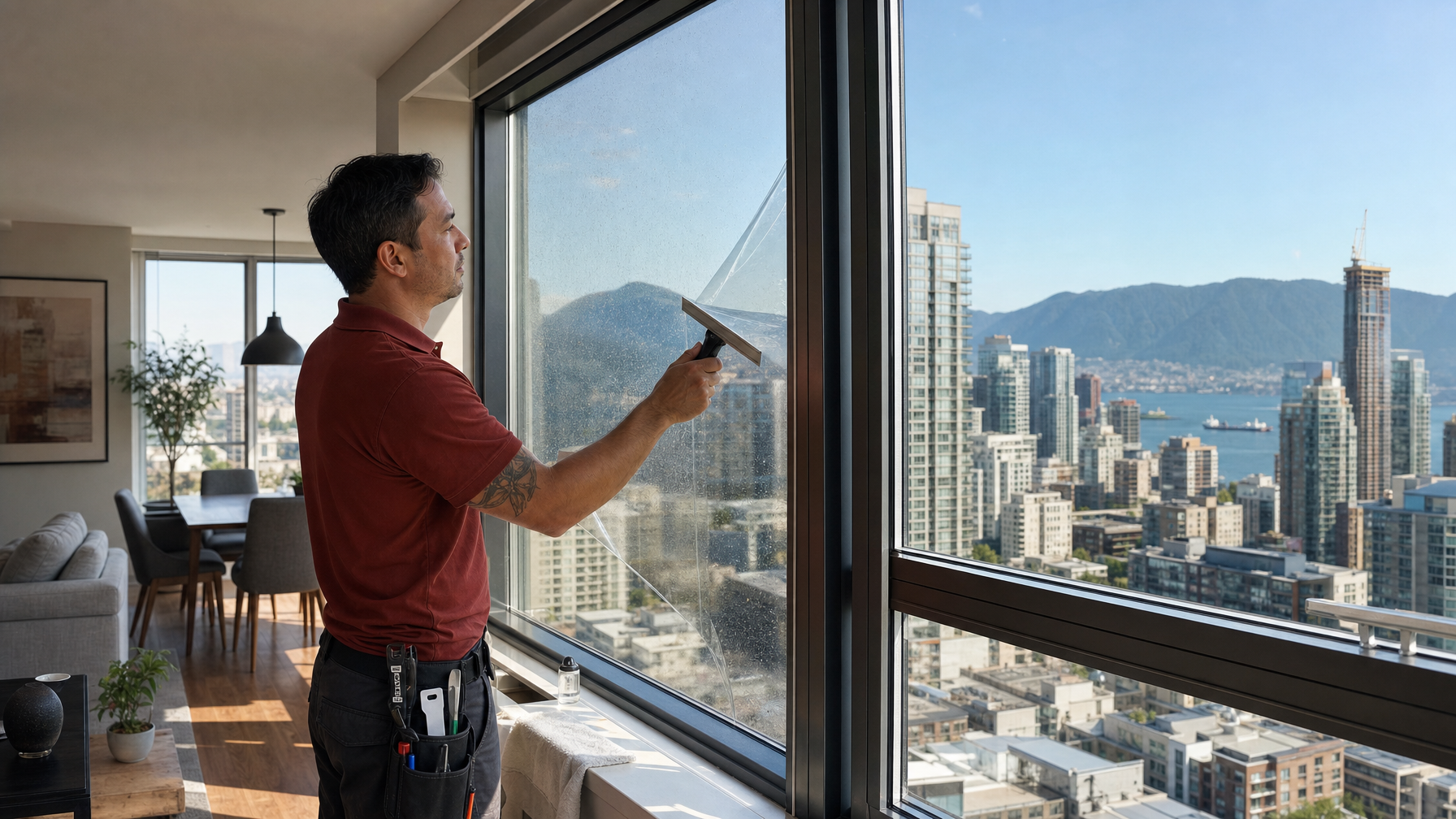
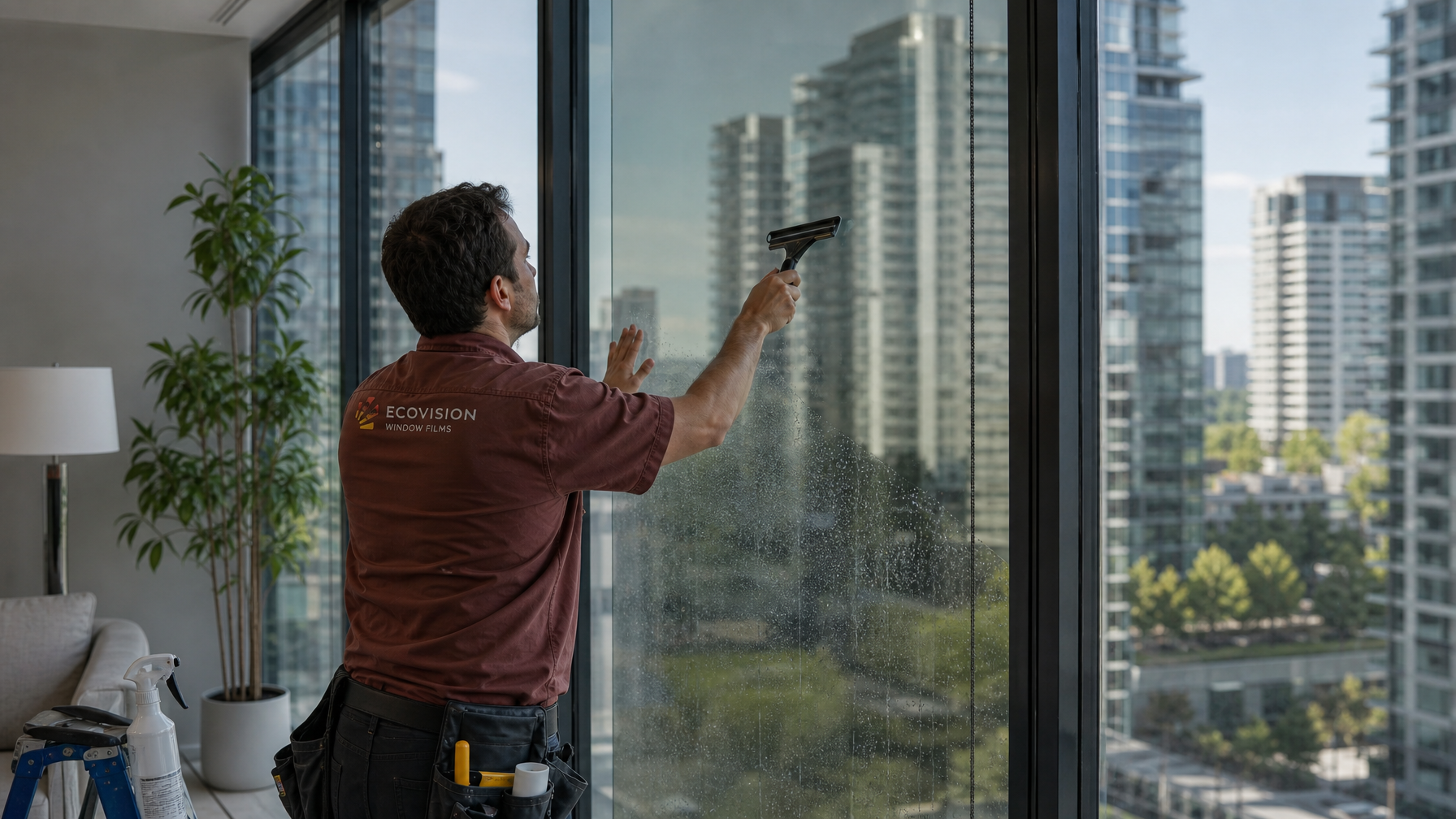
Reflective window film blocks 40, 75% of solar heat gain by reflecting infrared energy before it enters the glass. Ecovision Window Films installs silver, dual-reflective, and ceramic-based reflective films across Metro Vancouver and the broader Lower Mainland, with residential jobs typically completed in two to four hours and commercial projects in one to two days.
What Is Reflective Window Film?
Reflective window film is a thin polyester laminate with a metallic or ceramic coating applied to the interior surface of existing glass. The coating works by bouncing solar radiation back before it can convert to heat inside the building. Unlike standard solar tint, which primarily absorbs heat within the glass itself, reflective film primarily reflects heat outward, making it significantly more effective at reducing solar heat gain on south- and west-facing glass.
Three main product categories exist: standard silver reflective, dual-reflective, and spectrally selective ceramic. Each differs in visible light transmission (VLT), heat rejection rate, exterior appearance, and cost. Ecovision assesses window orientation, room use, and strata bylaws before recommending a product, because the highest-performing film technically is not always the right fit for a given building or unit.
How Does Reflective Window Film Reduce Summer Heat?
Glass is transparent to visible light but nearly equally transparent to solar infrared radiation, the portion of sunlight that converts to heat on contact with interior surfaces. On a clear summer afternoon, an untreated south-facing window can allow 70, 90% of total solar energy to pass through, contributing 25, 40% of a building’s total cooling load according to Natural Resources Canada’s commercial buildings energy data.
Reflective film intercepts that energy at the glass surface. The metallic or ceramic coating reflects a defined portion of the solar spectrum back outside, typically 40, 75% of total solar energy depending on product type, before it can warm interior surfaces, furniture, and occupants. In post-installation assessments of commercial office towers in Vancouver, interior glass surface temperatures on treated south-facing panels dropped by 6, 11°C compared to untreated panels on the same floor.
For workplace compliance, this matters directly. WorkSafeBC guidance recommends that indoor workplaces not regularly exceed 29°C during working hours. Offices in glass-heavy buildings along Vancouver’s south-facing corridors routinely breach this threshold on July and August afternoons without solar control measures in place. Reflective film is one of the few interventions that can be installed without replacing the glass or modifying the HVAC system.
Which Types of Reflective Film Does Ecovision Install?
Ecovision installs LLumar and Vista reflective films, two of the most widely specified brands among certified commercial installers in BC. The three product types below cover the range of applications from high-performance commercial to residential view-sensitive installations.
| Film Type | Solar Heat Rejected | UV Rejected | Visible Light (VLT) | Installed Cost (BC) |
|---|---|---|---|---|
| Standard silver reflective | 60, 75% | Up to 99% | 15, 30% | $8, $12/sqft |
| Dual-reflective | 50, 65% | Up to 99% | 30, 45% | $10, $15/sqft |
| Ceramic spectrally selective | 45, 65% | Up to 99% | 40, 60% | $14, $22/sqft |
Standard silver reflective film delivers the highest heat rejection at the lowest installed price. The trade-off is a mirror-like exterior appearance that is not suitable for every application. It is most appropriate for south-facing commercial office glass where strata councils and building managers are comfortable with a reflective exterior finish, and where maximum heat rejection per dollar is the primary objective.
Dual-reflective film addresses the interior glare problem of standard silver by using a lighter coating on the room-facing side while maintaining strong exterior reflectivity. Views out remain clearer, especially in lower-light conditions. This is Ecovision’s most frequently recommended product for strata units and mid-rise residential buildings, where owners want meaningful heat control without the darkened interior effect of standard silver. On a bright summer day, the difference between a 35% VLT dual-reflective and a 20% standard silver is immediately noticeable to occupants.
Ceramic spectrally selective film uses nano-ceramic technology to reject heat without a metallic exterior appearance, it looks like a light neutral tint rather than a mirror. It allows substantially more visible light in (40, 60% VLT) while still blocking 45, 65% of solar heat gain and up to 99% of UV radiation. The cost is higher, but for heritage buildings, properties with view premiums, or projects where strata bylaws explicitly restrict reflective finishes, ceramic spectrally selective film is often the only option that satisfies both performance and aesthetic requirements.
How Much Does Reflective Window Film Cost in BC?
Installed costs in Metro Vancouver range from $8 to $22 per square foot, depending on film type, floor height, building access requirements, and glass configuration. Standard silver reflective sits at the lower end ($8, $12/sqft), dual-reflective runs $10, $15/sqft, and ceramic spectrally selective ranges from $14, $22/sqft for complex commercial installations requiring elevated access equipment.
For a typical Metro Vancouver home with 400, 600 square feet of south- and west-facing glazing, the total installed cost for dual-reflective film typically lands between $4,000 and $9,000. Most residential projects are complete in a single day. For commercial buildings, cost depends significantly on floor height, access logistics, and glass geometry. Ecovision provides on-site assessments at no charge to give accurate project-specific pricing before any commitment is required.
From an energy compliance perspective, the BC Energy Step Code’s envelope performance requirements mean that solar control film upgrades can support older commercial buildings working toward Step 3 or Step 4 compliance under the CleanBC Better Buildings program. Property managers pursuing an energy audit should ask whether a reflective film installation can be documented as part of the building’s solar heat gain coefficient (SHGC) improvement record.
Which Windows and Properties Benefit Most from Reflective Film?
Reflective film delivers the greatest return on south- and west-facing windows, which receive the highest cumulative solar exposure during summer afternoons in the Lower Mainland. North-facing glass rarely justifies reflective film, the solar heat gain is minimal and the reduction in visible light is not worth the trade-off in a city where overcast days account for much of the year.
- High-rise and mid-rise office towers with curtain wall glass, west- and south-facing units commonly reach 34, 38°C by 3pm in July without solar control
- Strata condo buildings where individual owners cannot replace glazing but can install film on the interior surface without requiring strata approval in most cases
- Retail storefronts on south- or west-facing blocks where product fading and customer comfort are both active concerns
- Detached homes with open-plan living areas where a kitchen or living room faces southwest and overheats mid-afternoon during BC summers
- Healthcare and senior care facilities where WorkSafeBC thermal comfort guidelines and resident welfare standards require active heat management throughout the building
At Bentall 4 in downtown Vancouver, Ecovision installed spectrally selective reflective film across south- and west-facing office suites on multiple floors. Post-installation, facility management reported measurable reductions in afternoon air conditioning demand and a marked drop in tenant complaint calls from high-sun-exposure units, a direct indicator that occupant comfort improved alongside the energy reduction.
Does Reflective Film Affect Views or Interior Light?
The trade-off between heat rejection and view quality is real, but it is largely a function of which film type is selected. Standard silver reflective reduces visible light transmission to 15, 30%, which creates a noticeably darker interior on BC’s many overcast days. For most residential occupants, that sacrifice is significant.
Dual-reflective and ceramic films resolve most of that concern. A dual-reflective film at 35% VLT still transmits substantially more daylight than a standard dark tint, while keeping glare below the threshold most people find uncomfortable for desk work or reading. Spectrally selective energy-efficient films at 45, 55% VLT are largely indistinguishable from untreated glass on interior inspection, the clearest difference is that south-facing rooms no longer reach 32°C on a July afternoon.
For heritage or character buildings with specific glazing aesthetics, Ecovision recommends an on-site mock-up. We apply a sample strip to one window and let the client evaluate it under actual site conditions before full installation proceeds. This step has been standard practice for every Ecovision commercial project above $10,000 in contract value, and it eliminates the most common source of post-installation dissatisfaction, the difference between a film seen on a computer screen and the same film installed on a specific window at a specific time of day.
Related Articles
- Energy Efficient Window Film in Vancouver: What It Saves, What It Costs, and What to Install
- Solar Window Film for Vancouver Homes: What It Does, What It Costs, and What to Install
- Does Window Film Lower Cooling Costs in North Vancouver?
- How Much Does Window Film Cost in BC? (2026 Pricing Guide)
- UV Window Film for BC Homes and Buildings: What It Blocks, What It Costs, and What to Expect
Frequently Asked Questions
About the Author: This article was written by the Ecovision Window Films team. Edward, Director at Ecovision, brings a distinctive perspective to the window film industry, with over a decade in real estate development, including roles as Executive Director at a real estate development firm and Director of Strategic Partnerships, before joining Ecovision. That background gives the company a sharp edge in serving BC property managers and building owners. Ecovision is a certified installer for leading film brands with completed projects for healthcare facilities, government buildings, and commercial properties throughout the Lower Mainland. For a free site assessment, call (236) 862-0052 or visit ecovisioncanada.com/contact/.
Ready to reduce summer heat in your BC property? Ecovision Window Films offers free on-site assessments across Metro Vancouver and the Lower Mainland. Call (236) 862-0052 or contact us online to book your assessment.