
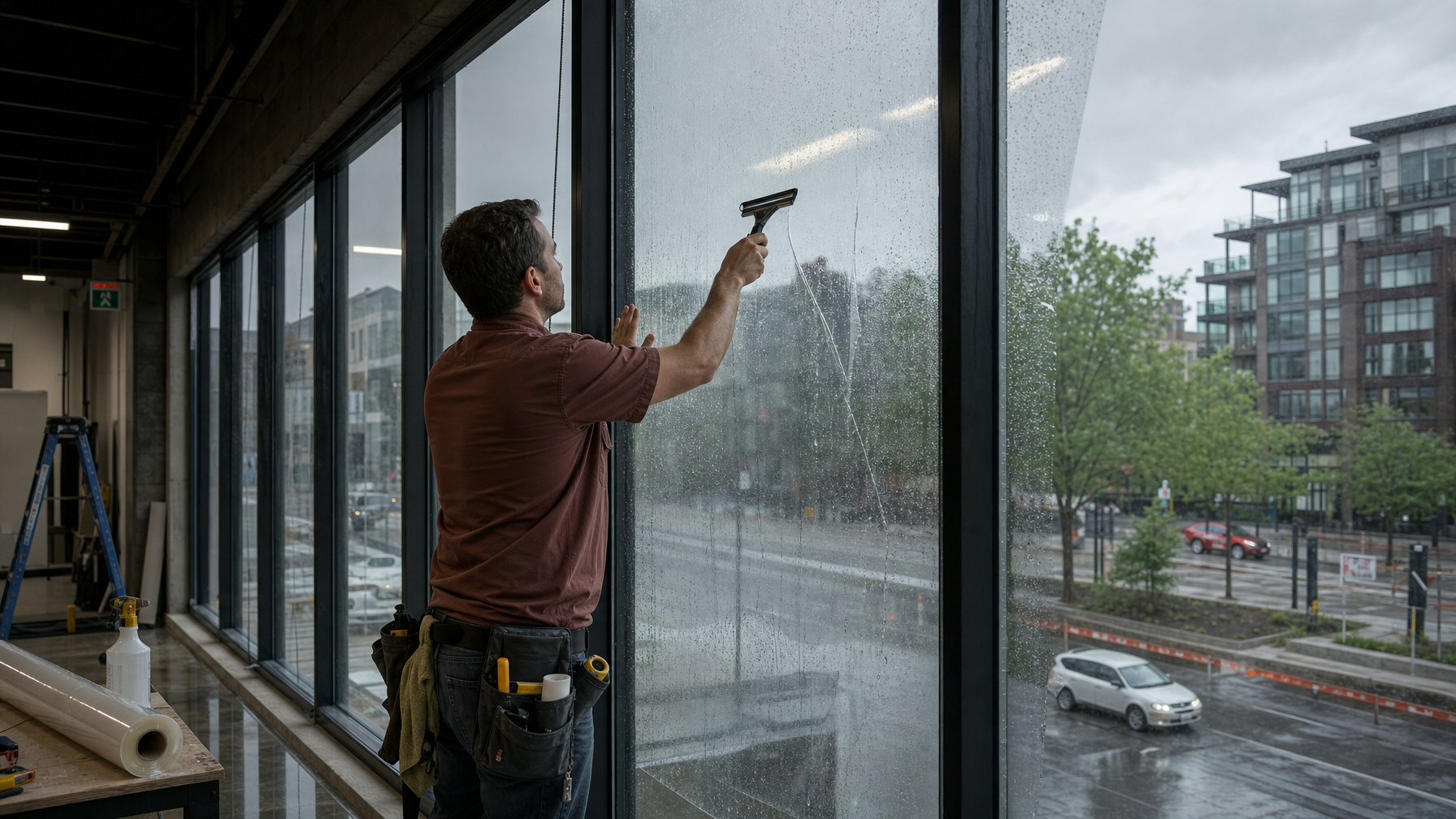
TLDR: Window film is one of the most cost-effective upgrades available for office buildings in Metro Vancouver and across British Columbia. Solar control film runs $9 – $18 CAD/sq ft, privacy film $9 – $16 CAD/sq ft, and security film $12 – $22 CAD/sq ft. Most installations pay for themselves within two to four years and last 10 to 20 years, without replacing existing windows.
1. What Types of Window Film Are Best for Office Buildings?
Office buildings typically need more than one type of film because different areas have different priorities. The four main categories are:
Solar control film reduces heat gain and glare from direct sunlight. It filters out up to 80% of solar heat and 99% of UV rays while preserving views. It is the most common choice for south- and west-facing facades across Metro Vancouver and the Fraser Valley, where afternoon sun drives up cooling costs from May through September.
Privacy and frosted film creates visual separation for boardrooms, reception desks, and ground-floor offices without blocking daylight. Decorative patterns and frosted finishes also add a polished, professional look to interior glass partitions. This is particularly popular in Vancouver’s dense downtown core, where buildings sit close together and street-level visibility is a concern.
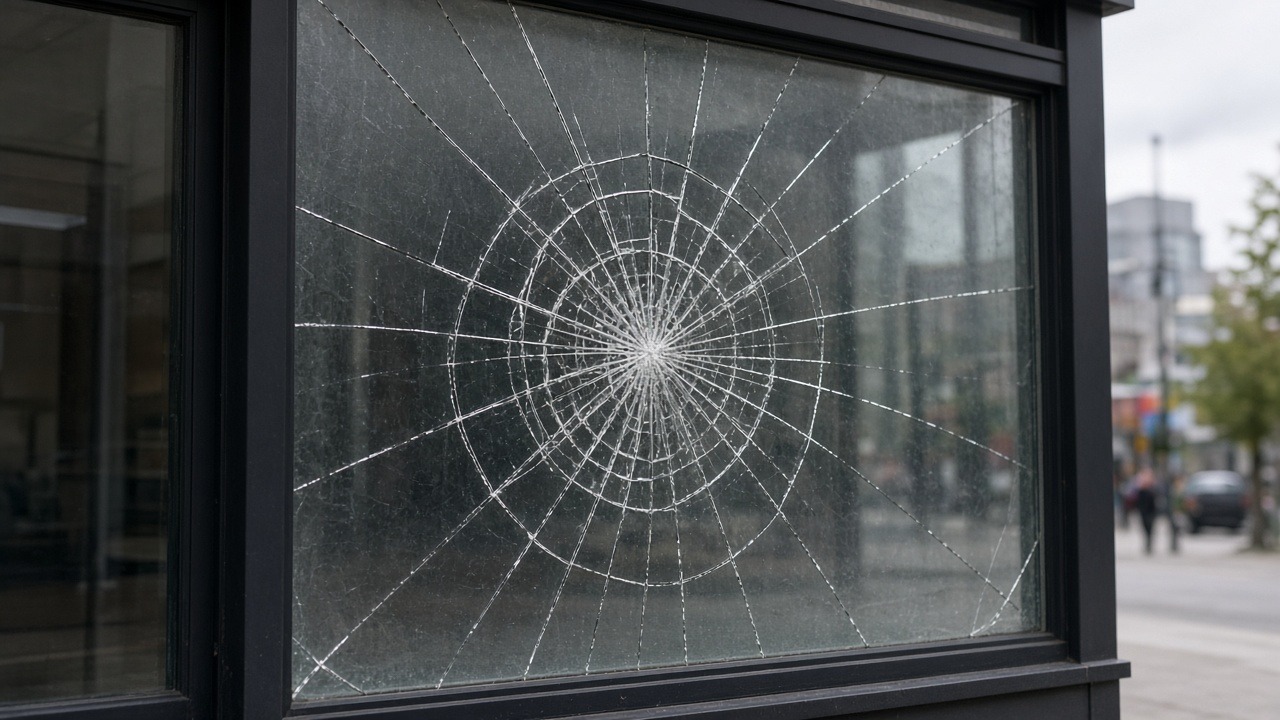
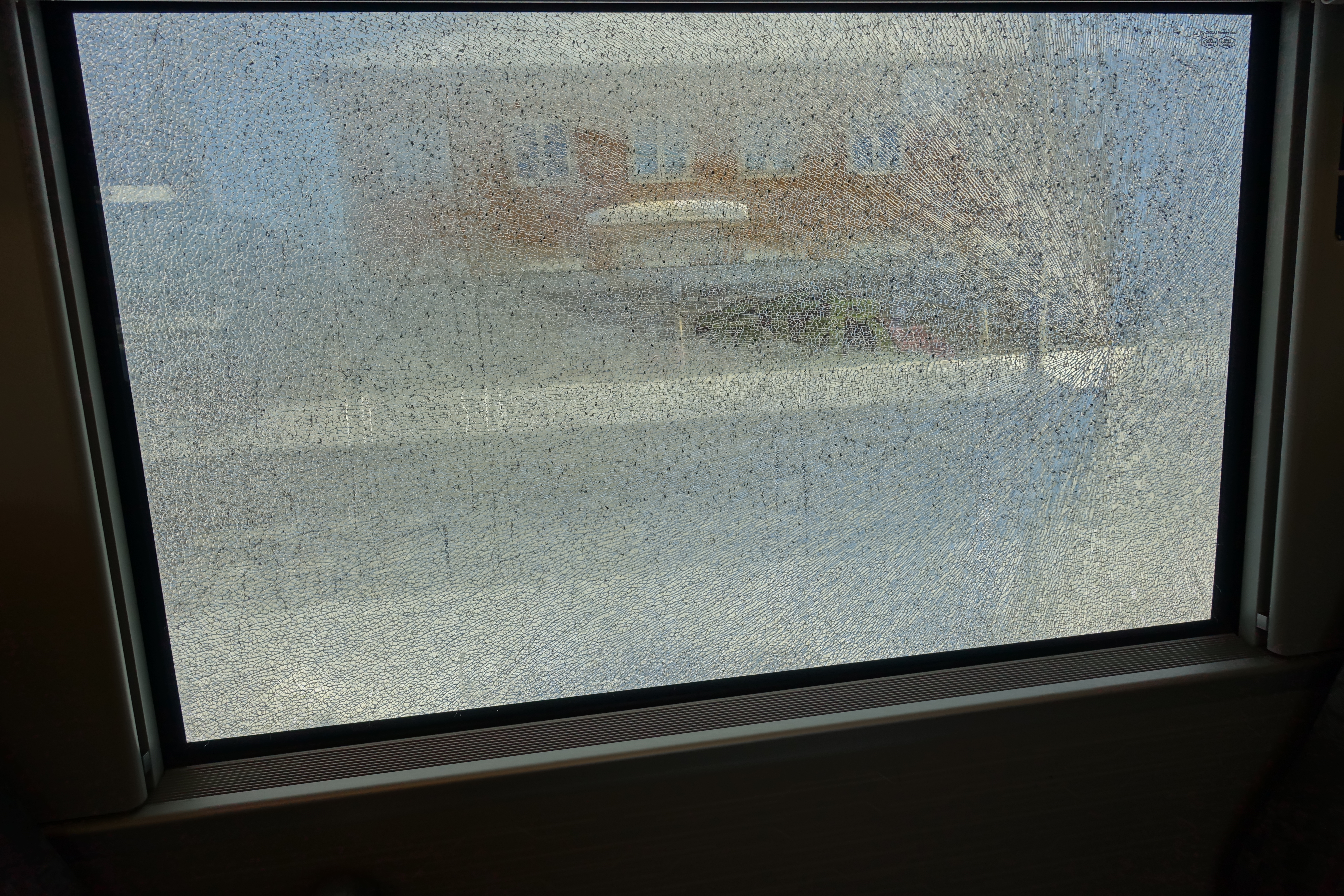
Security film (safety film) holds glass together on impact, dramatically reducing injury risk from break-ins, accidents, or seismic events. Thicker mil options (8 and 12 mil) are popular for ground-floor retail-facing offices and government facilities. In an earthquake-prone region like the Lower Mainland, security film adds a meaningful layer of protection.
Bird-safe film applies a subtle pattern that makes glass visible to birds, preventing fatal collisions. The City of Vancouver’s Bird-Friendly Design Guidelines and many BC municipalities now favour or require bird-safe treatment on commercial glazing. LEED certification programs also award credits for bird collision deterrence.
A full-service supplier should assess your building orientation, floor plan, and occupancy goals before recommending a combination.
2. Does Window Film Actually Reduce Energy Costs in Office Buildings?
Yes, and the data is clear. According to the International Window Film Association (IWFA), window film can reduce solar heat gain by 40% to 80%, lowering the load on HVAC systems during warm months. Natural Resources Canada (NRCan) reports that windows are responsible for a significant portion of heat loss and gain in commercial buildings, making them a priority target for energy retrofits. Industry research shows that 76% of sunlight striking standard single-pane glass enters the building as heat, and that roughly 30% of a commercial building’s heating energy escapes through its windows.
For large-footprint BC office buildings with significant south or west glazing, solar control film is one of the fastest ways to cut cooling costs without a capital-intensive window replacement project. The BC Energy Step Code and the CleanBC plan both encourage envelope upgrades that window film supports.
3. Will Window Film Darken My Office or Hurt Employee Productivity?
This is the most common misconception about commercial window film. Modern high-performance films reduce glare without significantly dimming a space. Visible light transmission ranges from 50% to 95% depending on the film type. Many tenants and facilities managers in Vancouver office towers report that their spaces feel brighter after installation, because glare no longer forces staff to close blinds entirely.
Glare is a serious productivity issue. Research published in workplace environment studies consistently links excessive screen glare to eye strain, headaches, and reduced concentration. In a market like Metro Vancouver, where waterfront and mountain views are a key selling point for Class A office space, the ability to keep blinds open while controlling glare is a genuine competitive advantage for property managers.
Ceramic and spectrally selective films offer the best balance: they reject heat and UV without a visible tint. For spaces where you want maximum daylight, a near-clear security or anti-glare film is an option.
4. How Much Does Commercial Window Film Cost Per Square Foot?
Pricing varies by film type, thickness, and project size. Here are the standard ranges in Canadian dollars before any corporate or bulk incentives:
| Film Type | Cost per sq ft (CAD, supply and install) |
|---|---|
| Solar control film | $9 – $18 |
| Privacy / frosted film | $9 – $16 |
| Security film (4, 8, or 12 mil) | $12 – $22 |
| Bird-safe film | $10 – $15 |
For a complete guide to film types, BC compliance requirements, and what property managers should ask before booking, see our dedicated overview of commercial window tinting in Vancouver.
Factors that affect final cost include building height (which affects access requirements and WorkSafeBC fall protection protocols), glass type (tempered, laminated, Low-E, or IGU), the number of windows with complex shapes or divisions, and project scheduling around tenant occupancy. Large multi-floor projects in Metro Vancouver often qualify for volume pricing.
For a realistic budget estimate specific to your building and film combination, request a quote from Ecovision or call (236) 862-0052. We provide free on-site assessments for commercial properties across BC.
5. How Long Does Window Film Last on a Commercial Building?
Professionally installed commercial window film lasts 10 to 20 years, depending on film quality, glass type, exposure direction, and climate. Interior-applied films typically outlast exterior films because they avoid direct weathering. South- and west-facing windows in BC’s high-UV summer climate may show earlier signs of wear, though the province’s milder winters are easier on film than extreme continental climates.
Quality indicators of film longevity include scratch-resistant coatings, metal or ceramic construction (rather than dye-based films), and a manufacturer’s warranty. Reputable commercial-grade films carry manufacturer warranties of 10 to 15 years. Signs that film needs replacing include bubbling, purple discolouration, or peeling at the edges.
Ecovision installs professional-grade films from LLumar and Vista and stands behind every project with a workmanship guarantee. Most films need only standard glass cleaning with a non-abrasive solution, no specialist maintenance required.
6. What Is the Payback Period for Office Window Film?
Most commercial window film projects pay for themselves in two to four years through energy savings alone. Projects in buildings with poor existing glass performance or high cooling loads can achieve payback in as little as 18 months. Over a 15-year lifespan, the return on investment is substantial.
Beyond energy savings, additional financial benefits include reduced HVAC maintenance costs, lower furniture and flooring fading (which extends the life of interior assets), and improved occupant comfort that supports tenant retention. For buildings pursuing LEED certification, BC Energy Step Code compliance, or CleanBC-aligned sustainability targets, documented window film performance data supports those applications.
Compare that payback horizon to full window replacement, which typically costs $50 to $150 CAD per square foot and takes decades to recover. Film delivers the majority of the thermal and UV performance benefits at a fraction of the cost, which is why it is increasingly favoured by BC strata councils and property management firms as a practical retrofit measure.
7. Can Window Film Be Removed or Replaced Later?
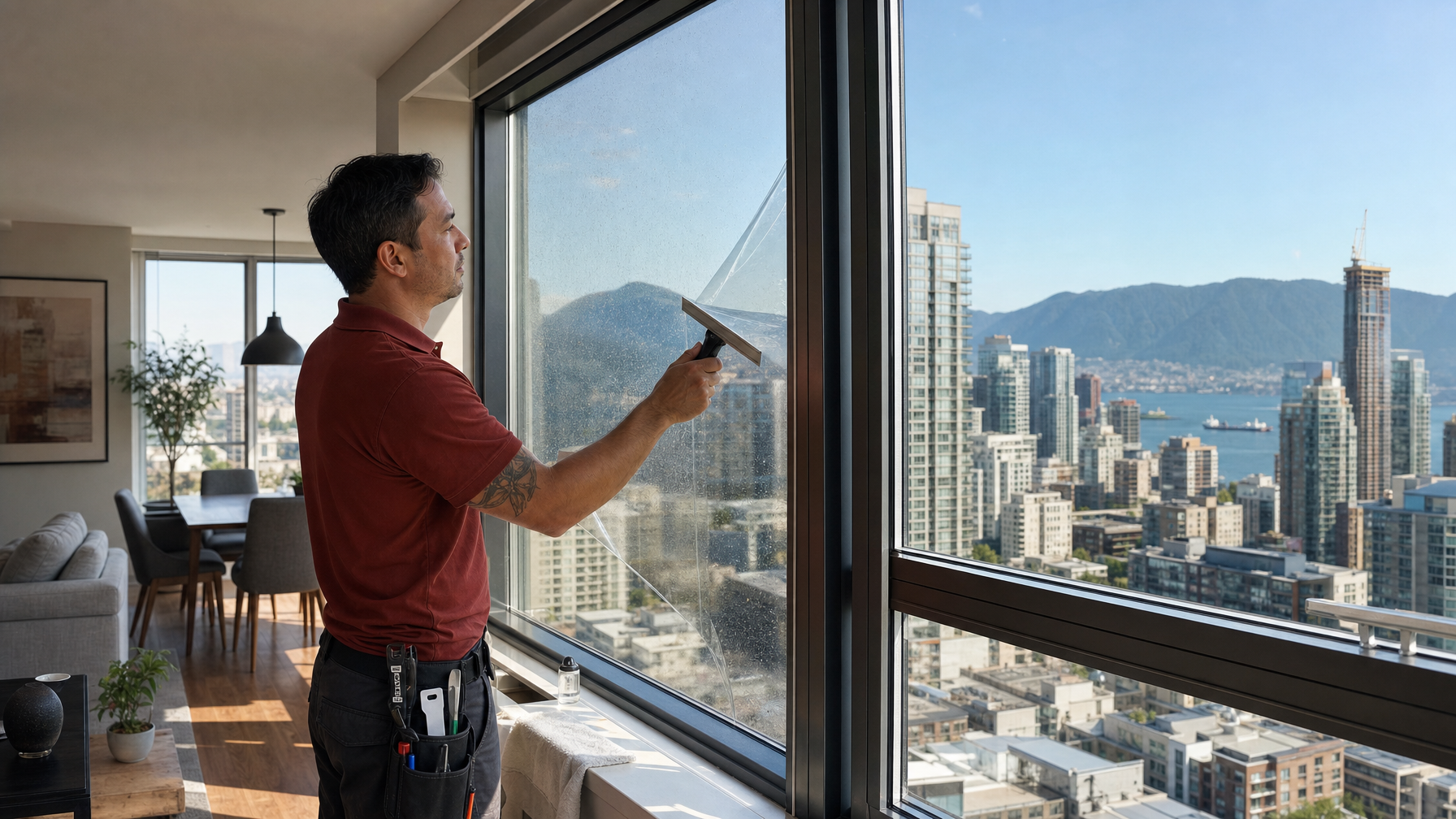
Yes. Window film is designed to be durable, but it is not permanent. A professional installer can remove film cleanly from standard glass without damaging the glazing. The process typically involves a heat source to soften the adhesive and a careful peeling technique, followed by adhesive residue removal with a solvent. On well-maintained glass with quality film, removal leaves the original glass surface intact.
This makes window film particularly appealing for leased office spaces in Vancouver’s commercial districts, where tenants may want to upgrade or change the film between leases, and for property managers who want flexibility as building use changes. Security film on laminated or older glass does require more care during removal, so professional removal is always recommended.
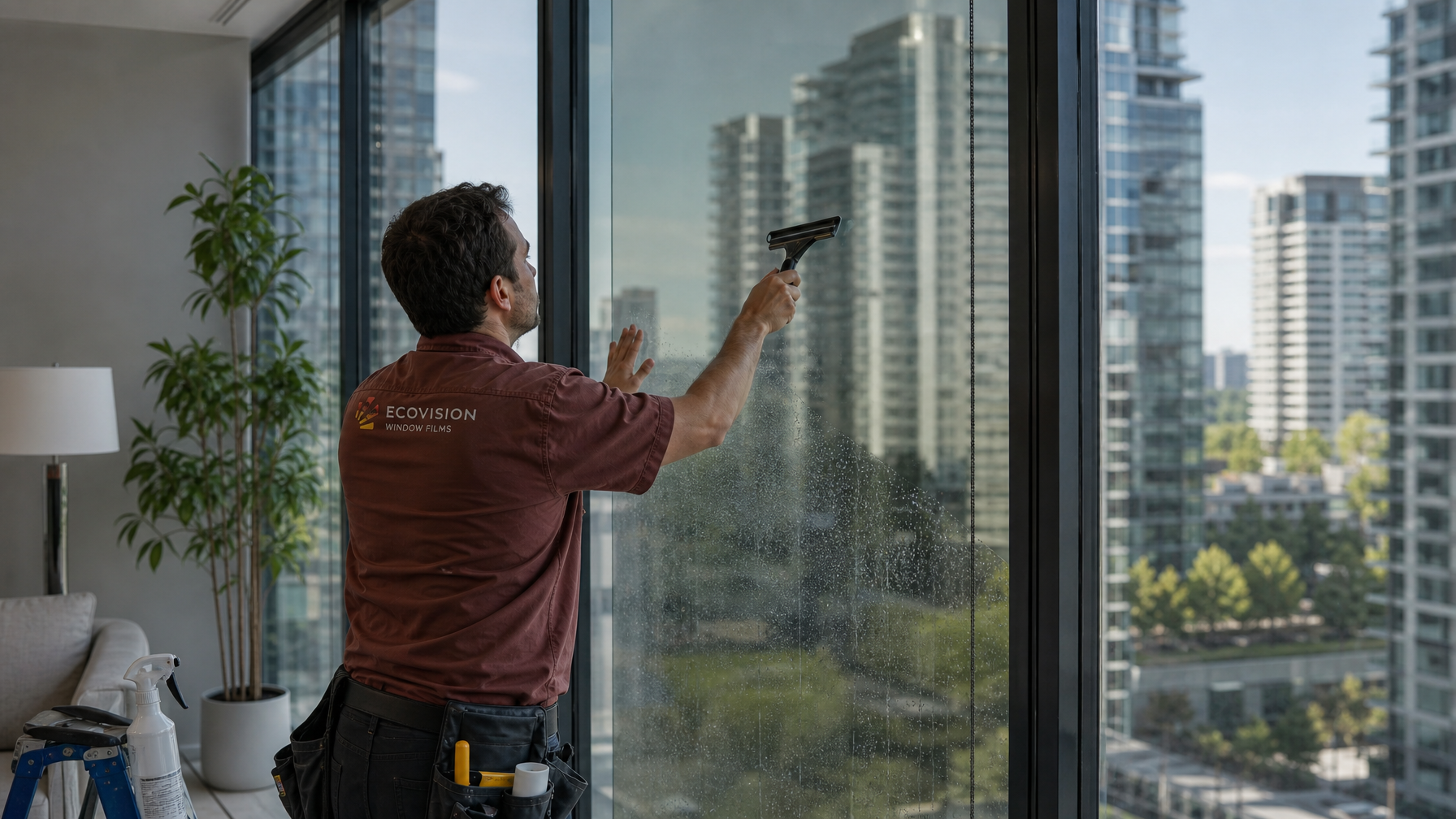
Ecovision handles both installation and removal for commercial clients across Metro Vancouver, the Fraser Valley, and throughout BC. If your building has outdated or bubbling film that needs replacing, our team can assess, remove, and re-film in a single coordinated project.
Related Articles
- Commercial Window Tinting in Vancouver: What Businesses Need to Know
- How Much Does Window Film Cost in BC? (2026 Pricing Guide)
- Window Film Vancouver: Types, Costs, and What to Know Before You Buy
- Energy Efficient Window Film: What It Does, What It Saves, and Whether It’s Worth It in BC
- Glare Reduction Window Film for BC Offices: How It Works, What to Expect, and What It Costs
Ready to Upgrade Your Office Building’s Windows?
Window film for office buildings is a low-disruption, high-return investment that improves comfort, cuts energy costs, and strengthens security without replacing your glazing. Ecovision Window Films serves commercial properties, government buildings, healthcare facilities, and institutional clients across Metro Vancouver, the Fraser Valley, and all of British Columbia. To see the full range of available film systems and service options, visit our commercial window film services in Vancouver page.
Call (236) 862-0052 or request a free on-site assessment. Our team helps you choose the right film for every zone of your building and provides a transparent cost estimate before any work begins.
About the Author: This article was written by the Ecovision Window Films team. Edward, Director at Ecovision, brings a distinctive perspective to the window film industry, with over a decade in real estate development, including roles as Executive Director at a real estate development firm and Director of Strategic Partnerships, before joining Ecovision. That background gives the company a sharp edge in serving BC property managers and building owners. Ecovision is a certified installer for leading film brands with completed projects for healthcare facilities, government buildings, and commercial properties throughout the Lower Mainland. For a free site assessment, call (236) 862-0052 or visit ecovisioncanada.com/contact/.