
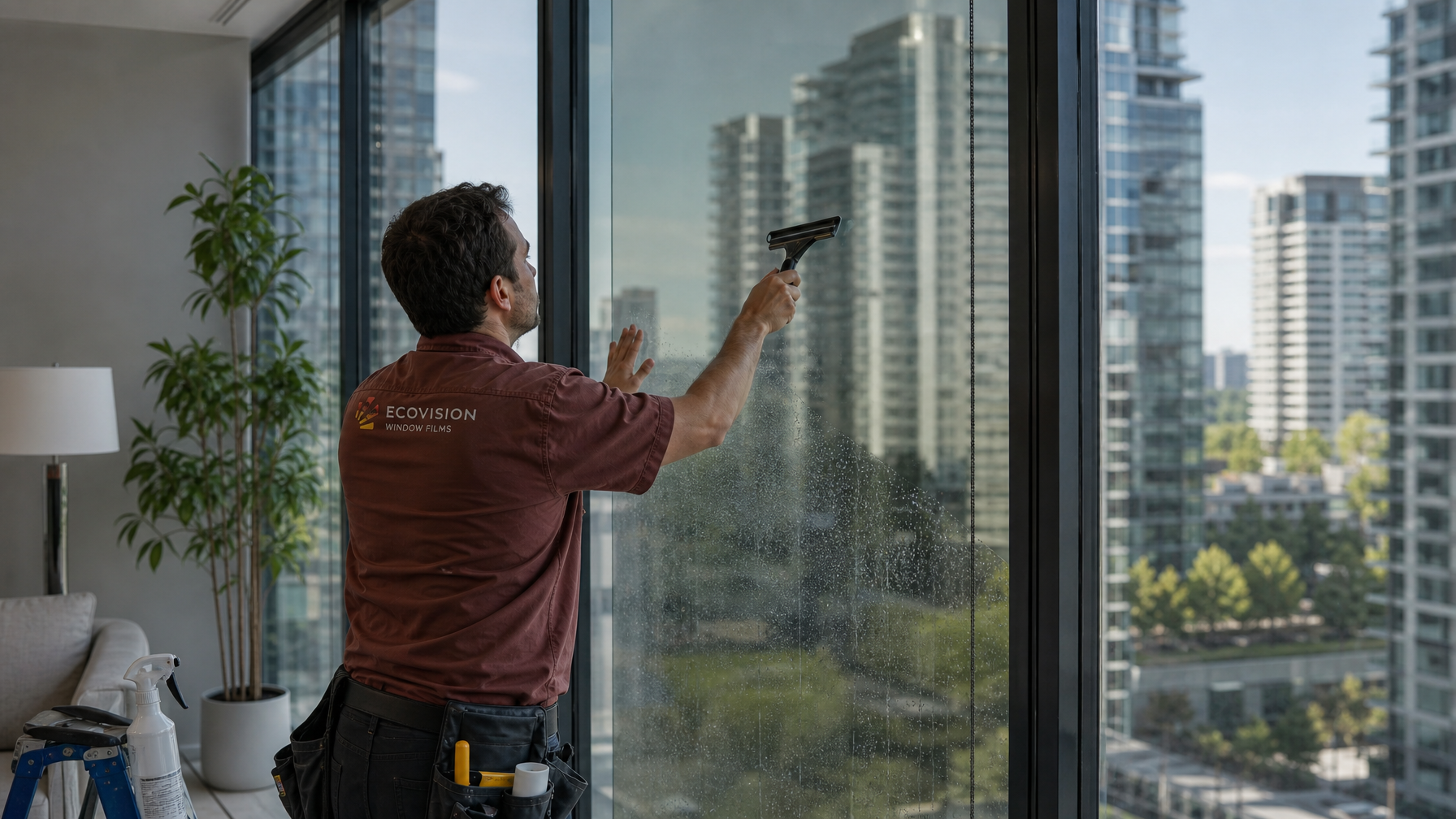
An estimated 25 million birds die from window collisions in Canada each year, the majority from buildings under 4 storeys. Birds can’t distinguish transparent or reflective glass from open air, so they fly directly into it. Bird safety window film solves this by applying visual markers to the exterior glass surface that birds can detect as a barrier, reducing collisions by up to 94%. For BC building owners, this is not just an environmental choice. Canada’s Migratory Birds Regulations (2022) mean negligent building design can carry legal liability.
Why Birds Can’t See Glass
Birds navigate using visual cues. Glass presents two problems they can’t resolve: transparency and reflection. Transparent windows show interior plants, sky, or open space, which birds perceive as a clear flight path. Reflective glass mirrors the surrounding environment, trees, sky, clouds, and birds fly toward what appears to be habitat. Neither scenario signals “solid barrier.” The bird collides at full flight speed, typically causing fatal internal injuries even when the bird flies away afterward.
The problem is worst during migration season (April, May and August, October in BC) when bird density and flight activity peaks. Buildings near shorelines, parks, and urban tree canopy, common across Metro Vancouver, see the highest collision rates.
How Bird Safety Window Film Works
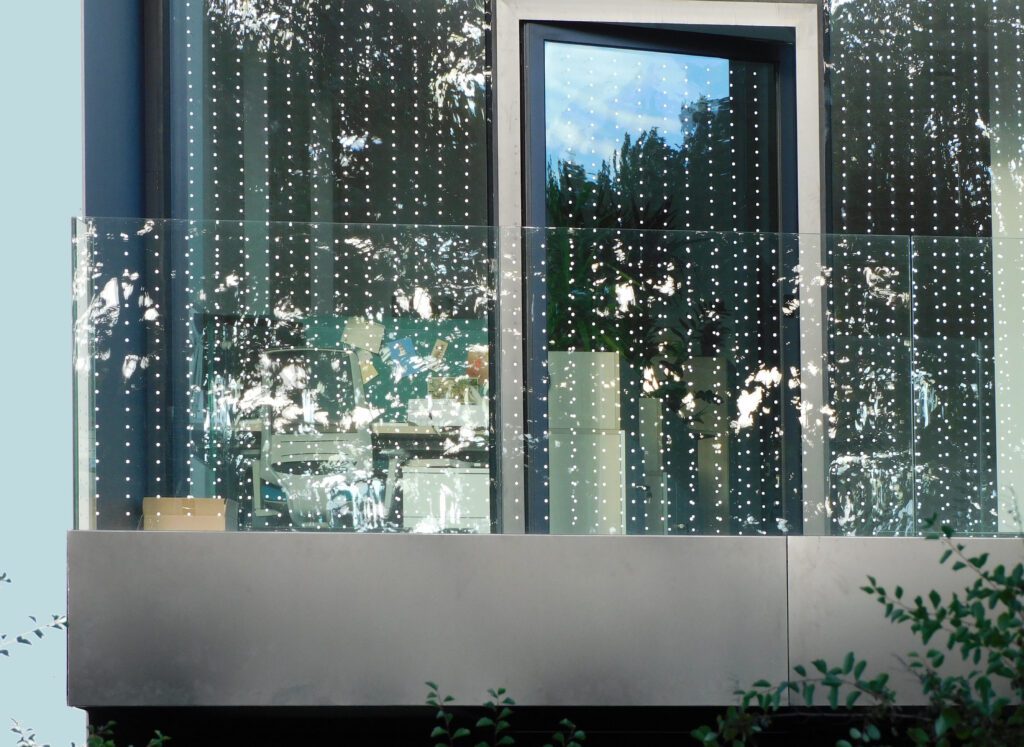
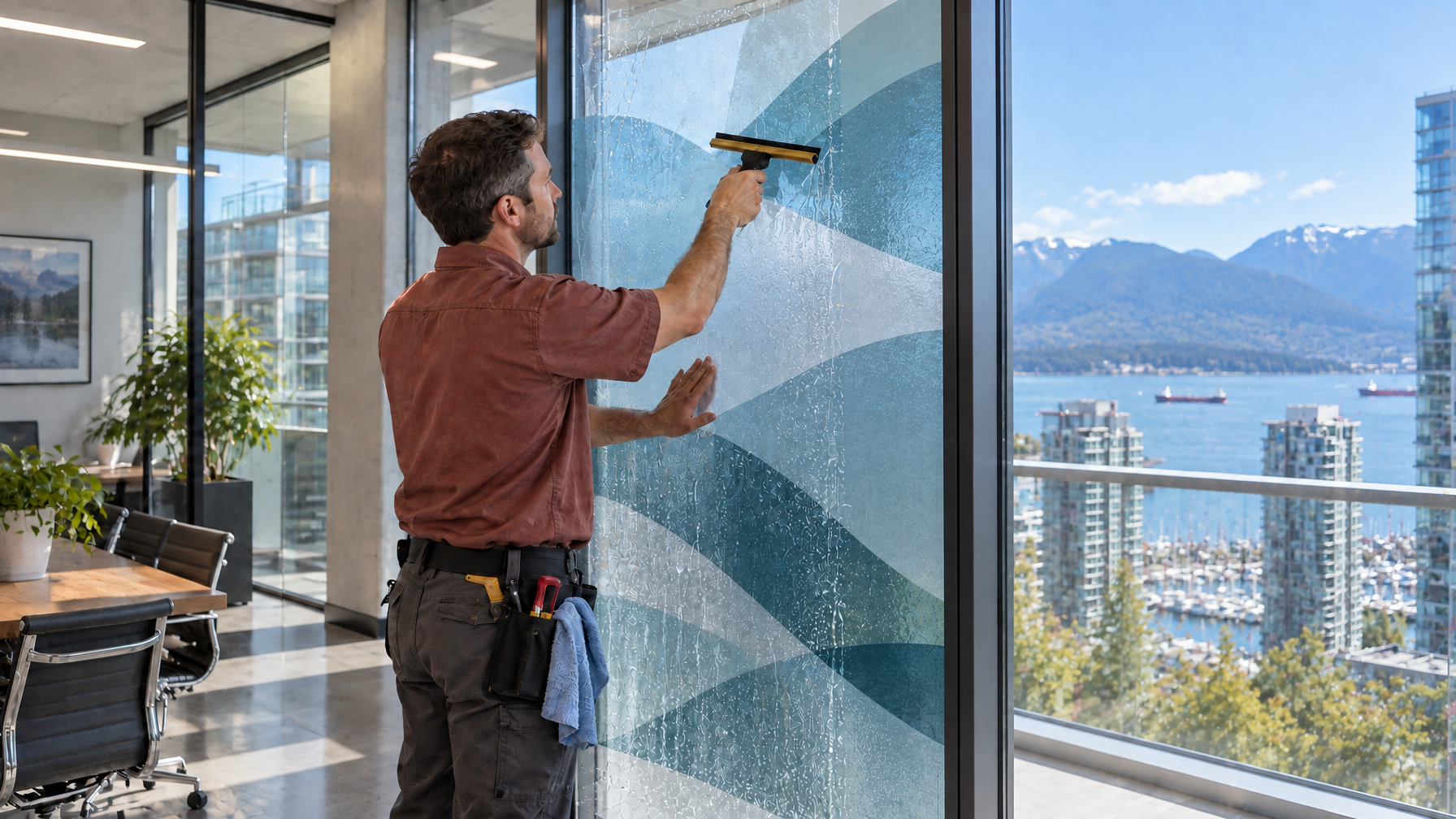
Bird safety window film applies a pattern of markers to the exterior surface of the glass. These markers create visual contrast that birds detect as a physical barrier. The film doesn’t impair the human view from inside; patterns are spaced and sized to remain visually unobtrusive while being highly detectable to birds.
Per the CSA A460 Bird-Friendly Building Design standard, Canada’s national benchmark, markers must be spaced no wider than 5×5 cm apart to provide adequate coverage. Films that don’t meet this spacing leave gaps birds can fly through, defeating the purpose. Ecovision installs films that conform to CSA A460 specifications for verified effectiveness.
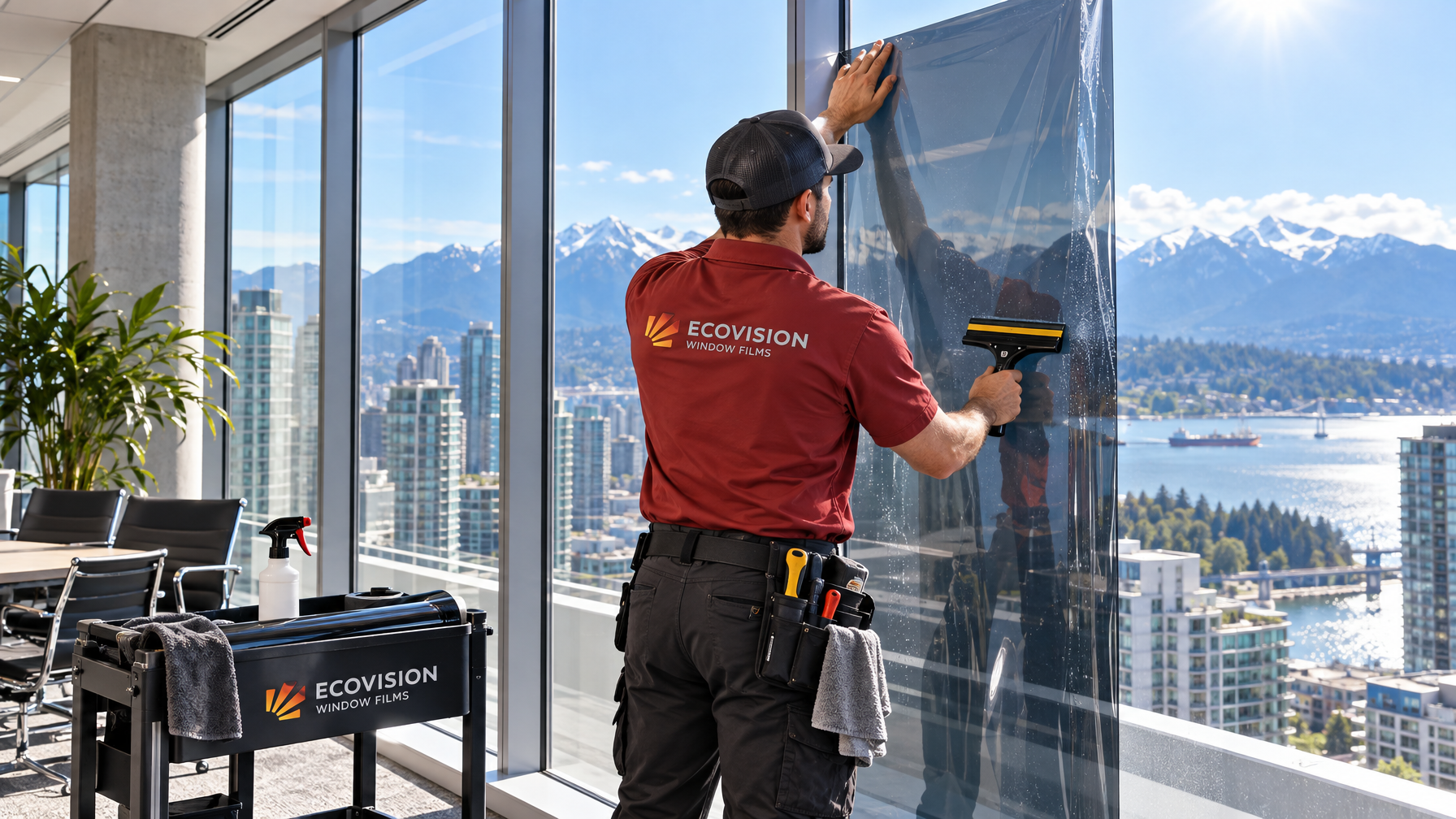
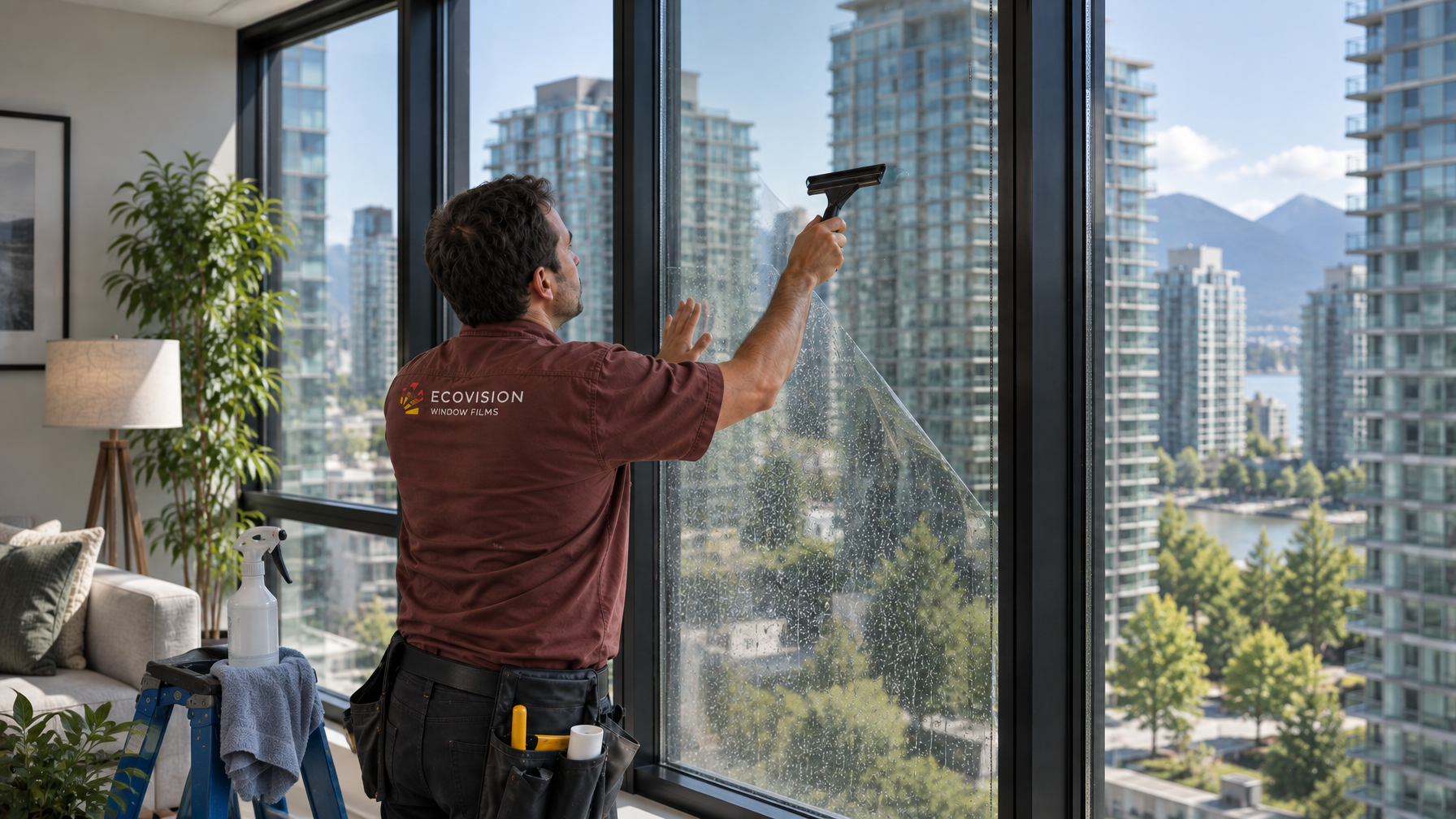
Films must be applied to the exterior surface. A 2023 peer-reviewed study in PeerJ confirmed that films applied to interior glass surfaces showed no measurable reduction in bird collisions. Only exterior application works. This is a critical installation detail that DIY solutions frequently get wrong.
Canada’s Legal Framework: Why BC Building Owners Need to Act
Canada’s Migratory Birds Convention Act (MBCA) and the updated Migratory Birds Regulations (2022) protect over 400 species of birds from harm, including indirect harm caused by building glass. Building owners whose properties cause repeated, preventable bird strikes can face scrutiny under federal wildlife protection law.
Vancouver and several Metro Vancouver municipalities have adopted bird-friendly building design policies aligned with the CSA A460 standard. New commercial construction in these areas is increasingly required to incorporate bird-safe glazing. Retrofitting existing buildings with bird safety window film is the most cost-effective way to comply without replacing glass.
Beyond compliance, ESG-aligned property managers and institutional building owners, hospitals, universities, and government facilities, are proactively retrofitting their buildings as part of environmental stewardship commitments. Ecovision has completed bird safe installations at several senior care homes and commercial facilities across BC.
FLAP Canada and the CSA A460 Standard
FLAP Canada (Fatal Light Awareness Program) is Canada’s leading bird-window collision research and advocacy organization. FLAP follows CSA A460 as its baseline guideline for all collision deterrent recommendations across Canada, including bird safety window film products and installation standards.
To meet FLAP Canada’s guidelines and CSA A460 specifications, window film markers must:
- Be applied to the exterior surface of the glass
- Provide markers spaced no wider than 5 cm × 5 cm across the full glass surface
- Create sufficient visual contrast for birds to detect the glass as a solid barrier
- Cover the full glazed area, not just lower panels or selected zones
FLAP Canada recommends that all bird collision deterrents, including film products, conform to CSA A460 specifications. Building owners using FLAP-endorsed products and installation standards are best positioned for regulatory compliance and verifiable environmental outcomes.
Ecovision installs bird safety window films that conform to CSA A460 and FLAP Canada guidelines. We can provide product data sheets documenting compliance for building permit applications, LEED certifications, or ESG reporting requirements.
Who Needs Bird Safety Window Film in BC and Canada
- Commercial buildings and high-rises with large reflective glass facades near parks, shorelines, or urban green corridors
- Healthcare and senior care facilities with patient-facing windows overlooking gardens or natural settings
- Government and institutional buildings working toward CSA A460 compliance
- Residential homeowners who’ve experienced repeated bird strikes on picture windows or sliding glass doors
- Strata buildings with landscaped courtyards and glass-enclosed balconies
The Added Benefits Beyond Bird Protection
Bird safety window film doesn’t serve one purpose. Many patterns and films simultaneously deliver:
- Solar heat rejection, reducing cooling loads and energy costs
- UV protection, blocking up to 99% of UV rays that fade interiors
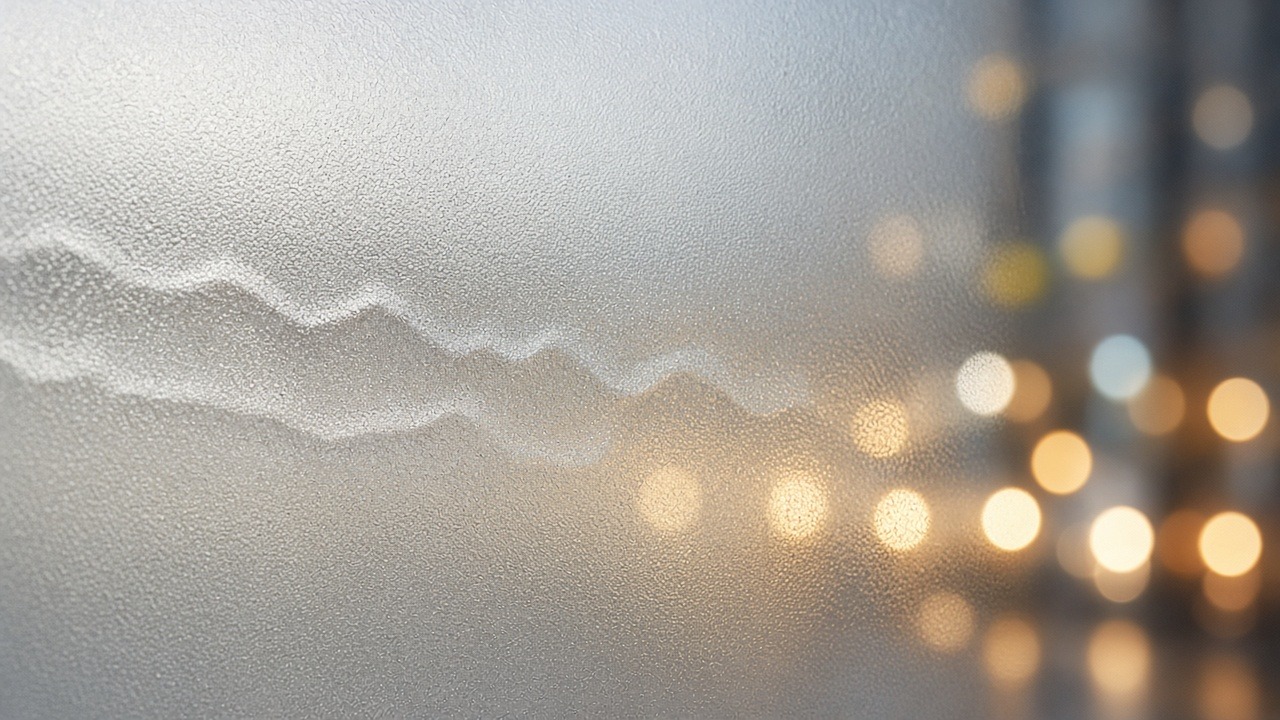
- Privacy, frosted or patterned films obscure interior views while maintaining daylight
- Branding, custom patterns can incorporate logos or design elements for commercial buildings
This means bird safety window film often delivers measurable ROI through energy savings alone, making the environmental investment cost-neutral over time. See: Residential Window Film Benefits for Heat, UV & Comfort
At Ecovision Window Films, we assess your building’s bird strike exposure, recommend the right CSA A460-compliant film, and install it on the exterior surface for verified effectiveness. Call (236) 862-0052 for a free consultation.
More in the Bird Safe Window Film Series
- Does Bird Safe Window Film Actually Work? (What the Research Shows)
- Bird Safe Window Film for Commercial Buildings & High-Rises in BC
- Bird Safe Window Film Patterns: Dot, Line & UV, Which Works Best?
Also explore: Bird Safe Windows | Security Window Film | Residential Window Film