
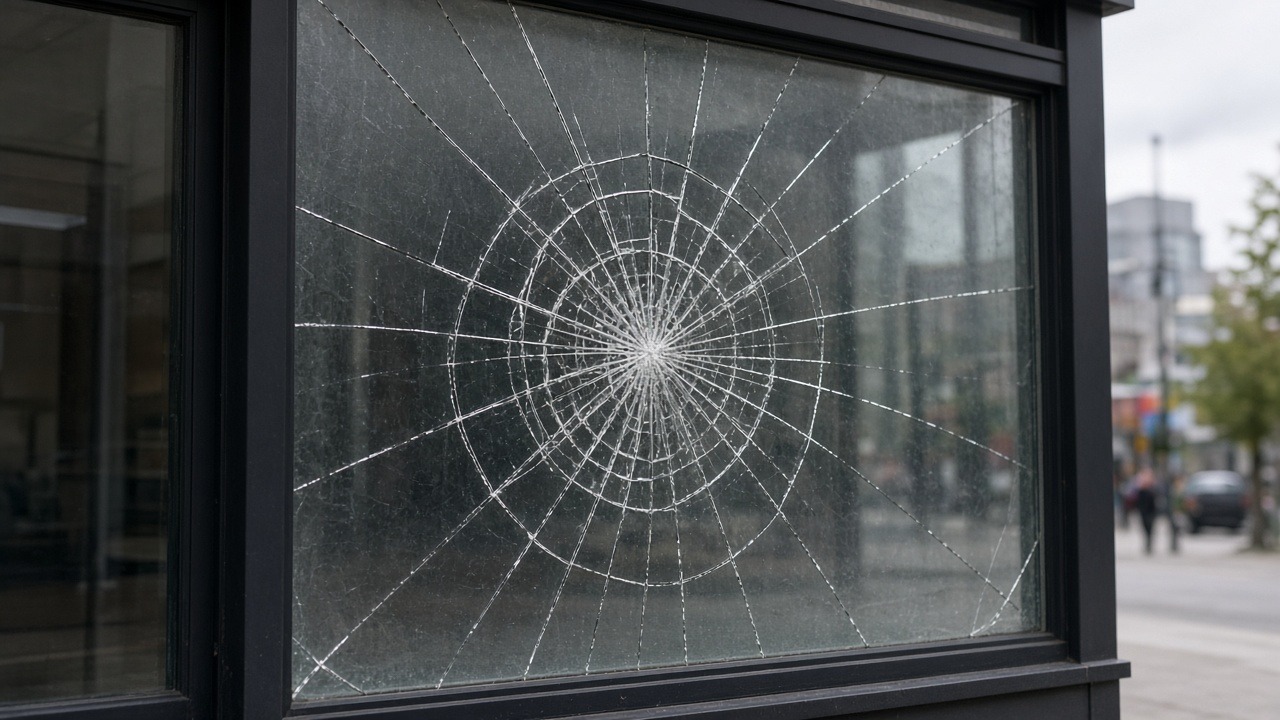
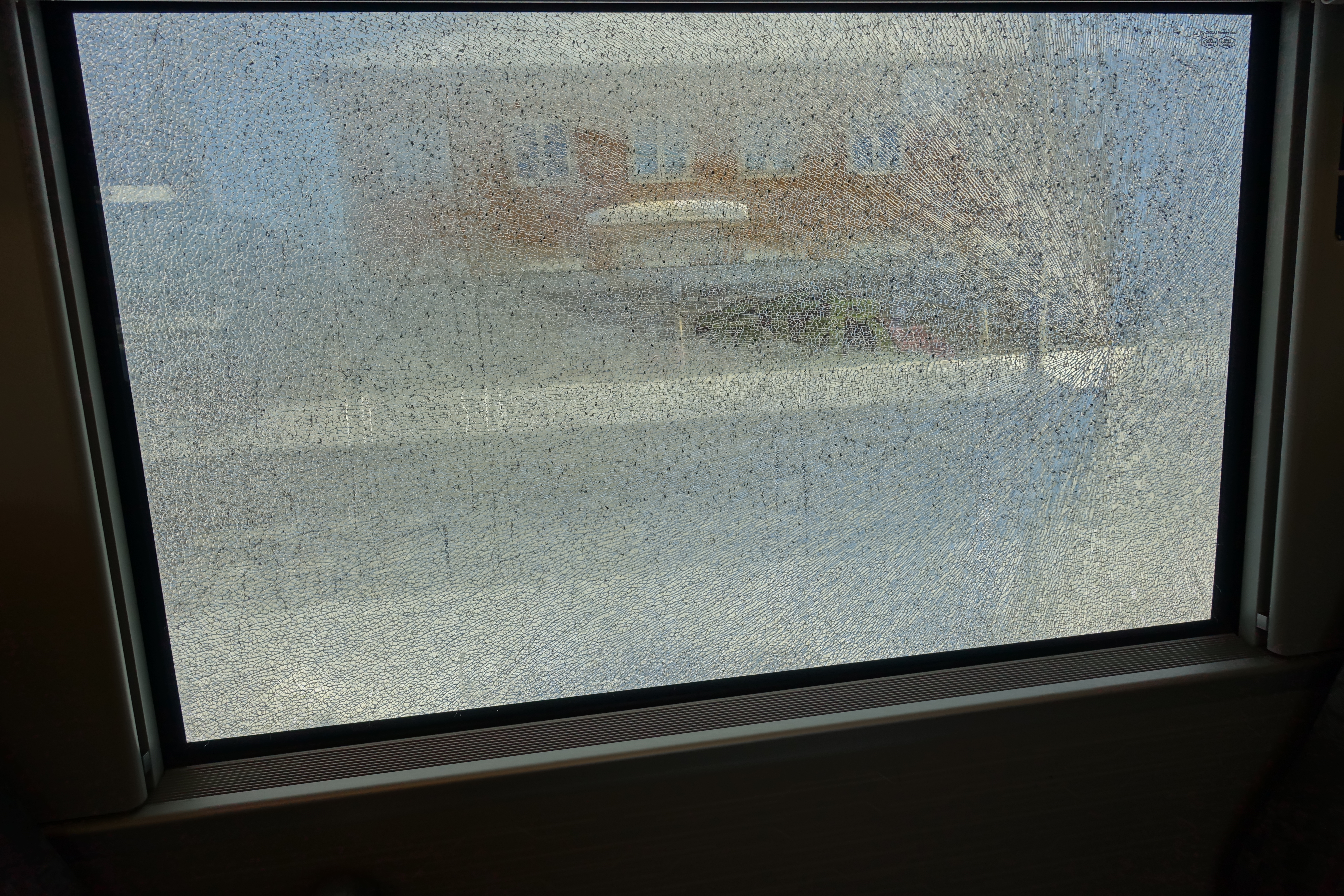
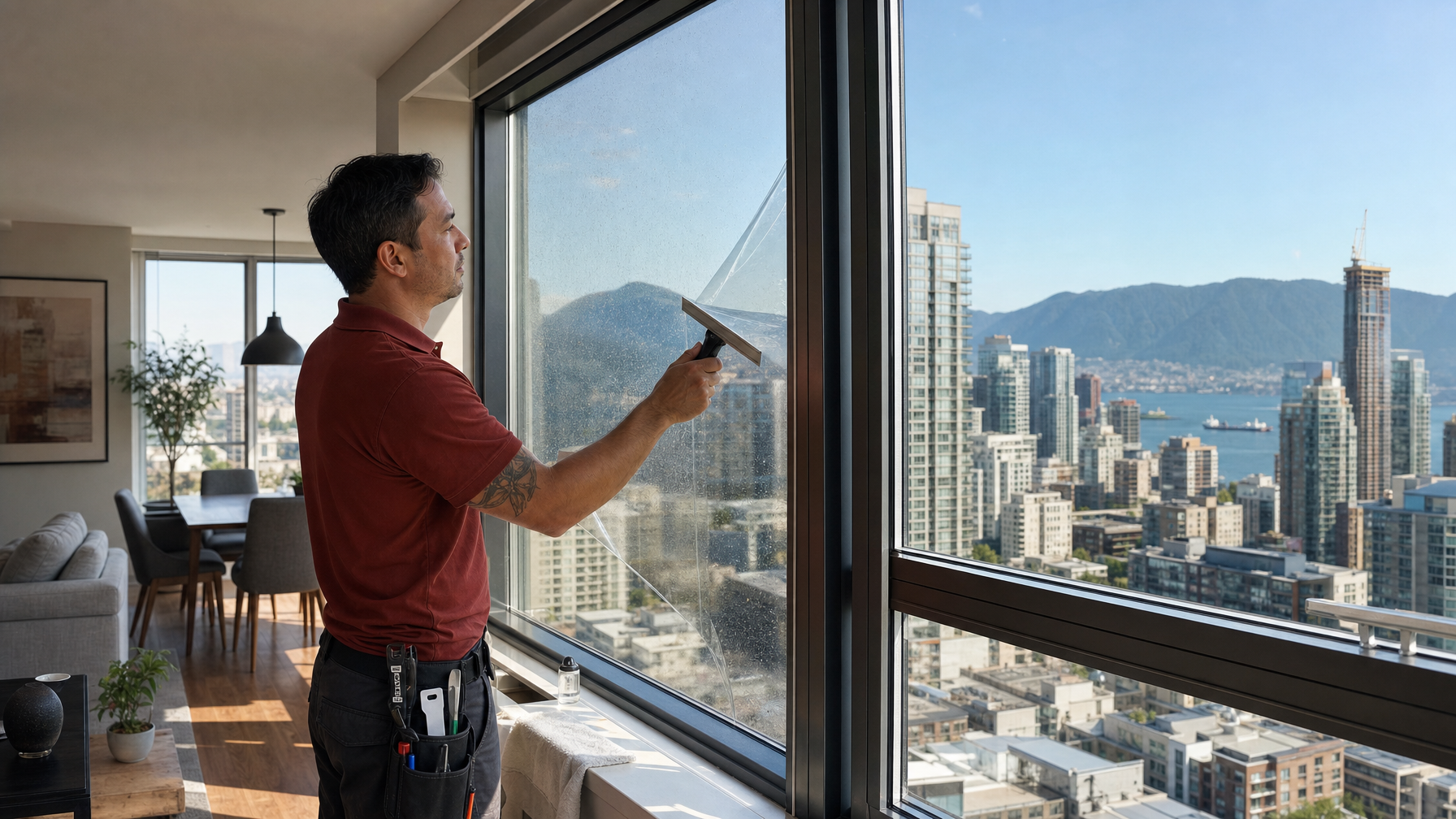
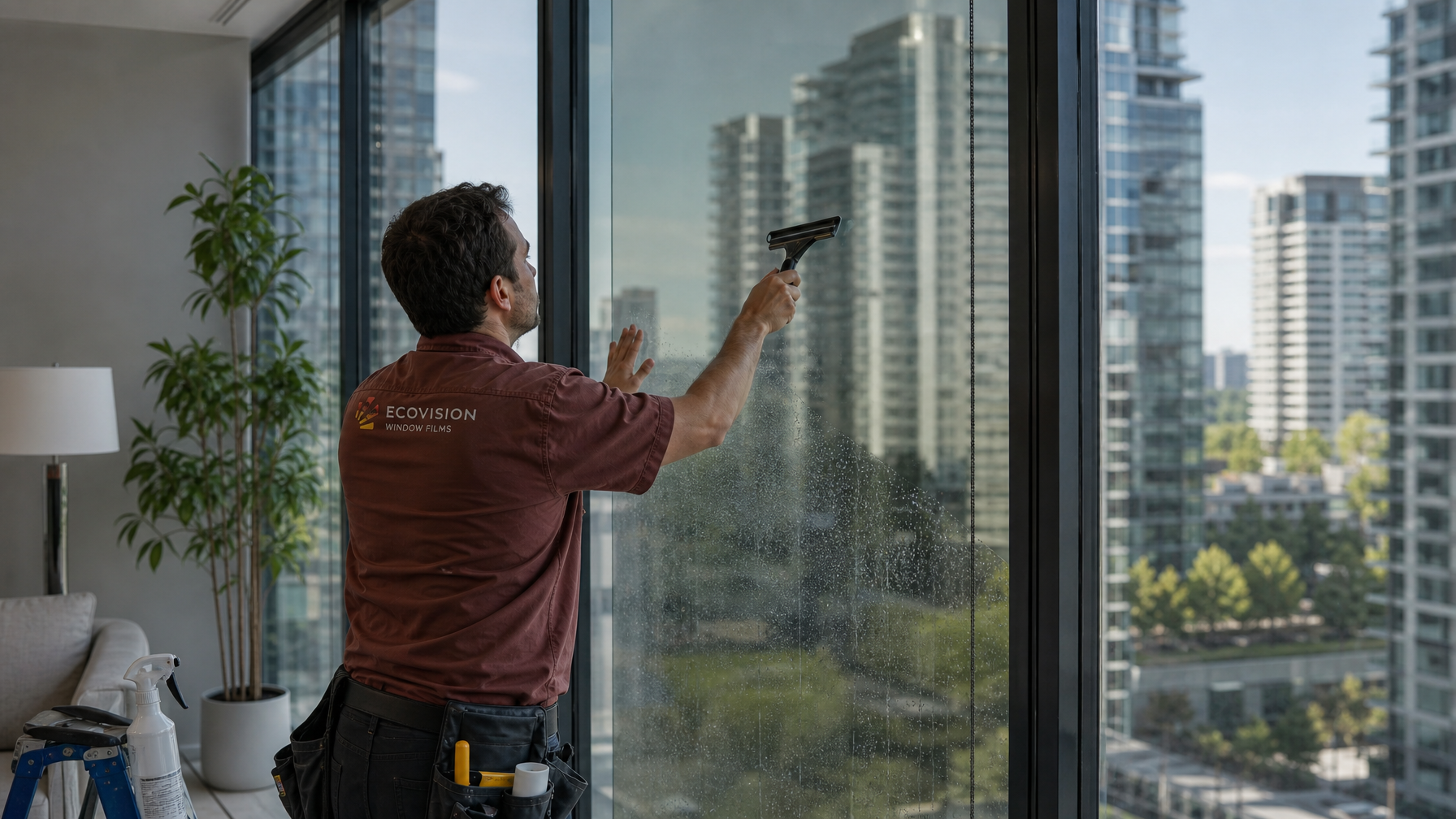
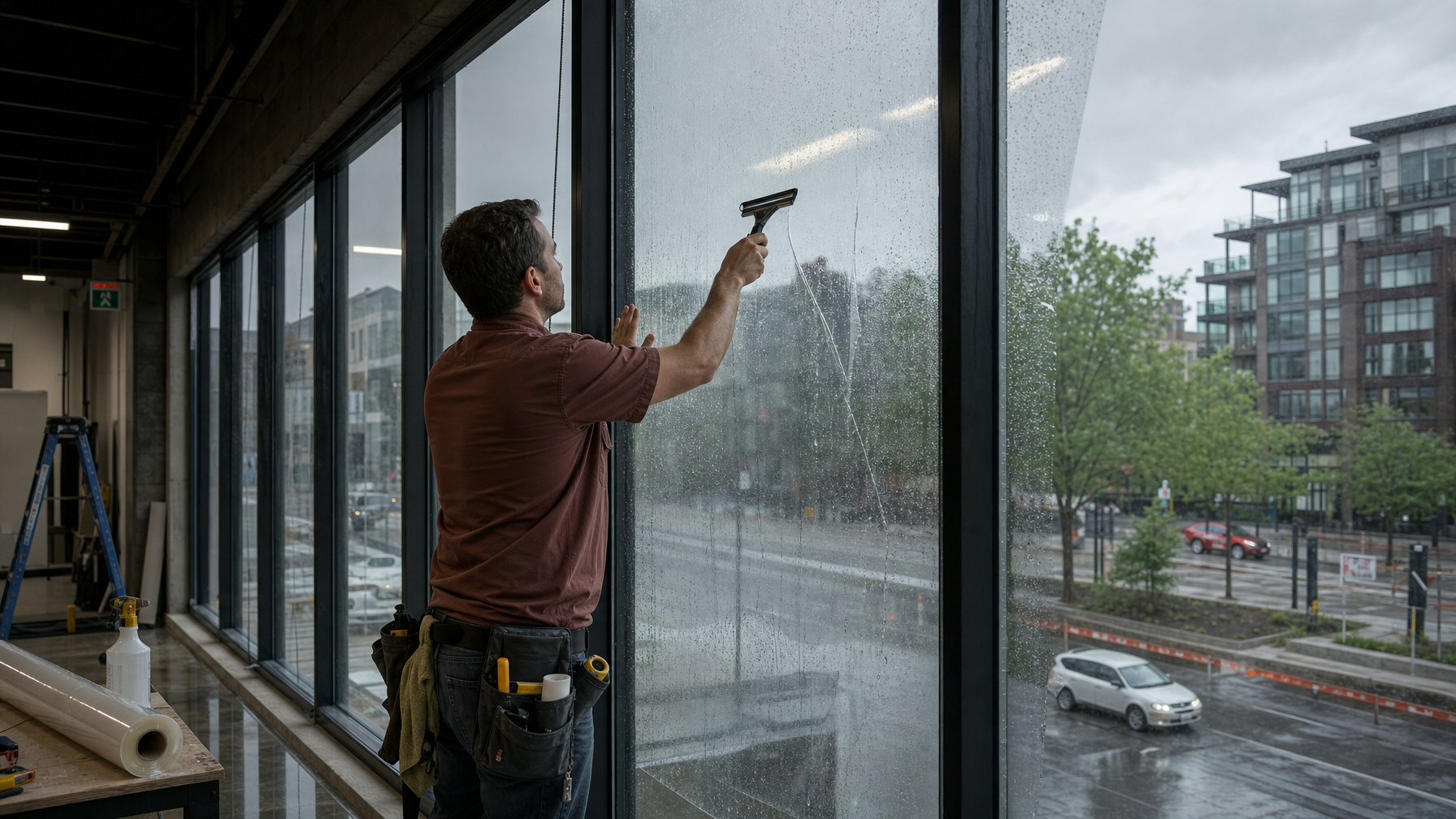
Commercial buildings with large reflective or transparent glass facades cause more bird collisions per structure than any other building type in urban BC. High-rises near green corridors, shorelines, and park edges, common throughout Metro Vancouver, are particularly high-risk. For property managers and building owners, bird safe window film is the most practical retrofit solution: it installs without disrupting tenants, meets CSA A460 compliance requirements, and frequently qualifies as a green building upgrade under LEED and BOMA frameworks.
Why Commercial Buildings Are the Highest-Risk Category
Three factors make commercial buildings disproportionately dangerous for birds:
Large glass surface area. Floor-to-ceiling curtain wall systems and continuous glass facades create vast reflective surfaces that birds cannot distinguish from open sky or vegetation. A single large commercial building can account for thousands of bird strikes annually in a high-migration corridor.
Corner glass and wraparound facades. Glass corners that create the illusion of a clear flight path through a building are among the most lethal design features. Birds see “through” the corner and attempt to fly through what appears to be open space.
Proximity to urban green space. Metro Vancouver’s commercial districts sit adjacent to Stanley Park, the Fraser River, Burrard Inlet, and dozens of urban parks that serve as stopover habitat during spring and fall migration. Buildings on the edges of these corridors see the highest strike volumes.
CSA A460: What BC Commercial Buildings Need to Know
The CSA A460 Bird-Friendly Building Design standard is Canada’s national benchmark for reducing bird collisions in the built environment. Key requirements for glass treatments include:
- Visual markers spaced no wider than 5×5 cm across the entire treated glass surface
- Markers must provide sufficient contrast against both the interior and exterior background
- Treatment must be applied to the exterior surface of the glass for verified effectiveness
- Films and coatings must meet minimum visual detectability thresholds under varying lighting conditions
Vancouver’s Bird Friendly Building Policy aligns with CSA A460 for new construction. Property managers retrofitting existing buildings should use CSA A460 as the specification baseline when evaluating film products and installers, it’s the standard most likely to be referenced in future regulatory updates.
The Business Case for Bird Safe Film in Commercial Properties
Beyond compliance, bird safe window film makes straightforward business sense for commercial property managers:
Energy savings offset installation cost. Many bird safe films simultaneously reject solar heat, reducing cooling loads in summer. For large glass facades, where solar heat gain is a significant HVAC driver, the energy savings alone can recover the installation cost within 3–5 years.
LEED and BOMA points. Bird safe glazing contributes to LEED credits under Sustainable Sites and Innovation categories. BOMA BEST certification also recognizes biodiversity and ecological stewardship measures. For buildings pursuing or maintaining green certification, bird safe film adds demonstrable value.
ESG reporting. Institutional property owners, REITs, pension fund-owned commercial real estate, university endowments, increasingly include biodiversity metrics in ESG disclosures. Documented bird safe retrofits are a concrete, measurable action that supports these commitments.
Tenant attraction. Environmental responsibility is a growing factor in commercial tenant decisions, particularly for technology, finance, and professional services firms with their own sustainability mandates.
How Ecovision Handles Commercial Bird Safe Installations
Commercial bird safe projects differ from residential installations in scale and coordination requirements. Ecovision’s process for commercial buildings includes:
- Bird strike risk assessment, identifying which elevations, floors, and glass types present the highest collision risk based on building position, orientation, and proximity to green space
- Film specification, selecting CSA A460-compliant films appropriate for the building’s glass type, solar exposure, and aesthetic requirements
- Phased installation scheduling, coordinating with property management to minimise tenant disruption, with work sequenced by floor or facade section
- Documentation, providing written confirmation of CSA A460 compliance for your records and any regulatory or certification submissions
Ecovision has completed bird safe installations across commercial, healthcare, and institutional buildings throughout BC. Call (236) 862-0052 to discuss your building’s requirements.
Related Articles
- Does Bird Safe Window Film Actually Work? (What the Research Shows)
- Bird Safe Window Film Patterns: Dot, Line & UV, Which Works Best?
- Bird Safe Window Film in BC and Canada: What It Is, How It Works, and Why Buildings Need It
- Commercial Window Film Installation in Vancouver: Types, Costs, and What to Expect
- Window Film for Office Buildings: 7 Questions Property Managers Ask
About the Author: This article was written by the Ecovision Window Films team. Edward, Director at Ecovision, brings a distinctive perspective to the window film industry, with over a decade in real estate development, including roles as Executive Director at a real estate development firm and Director of Strategic Partnerships, before joining Ecovision. That background gives the company a sharp edge in serving BC property managers and building owners. Ecovision is a certified installer for leading film brands with completed projects for healthcare facilities, government buildings, and commercial properties throughout the Lower Mainland. For a free site assessment, call (236) 862-0052 or visit ecovisioncanada.com/contact/.