

If you’re planning to remove old window tinting or film from your home or commercial building, you’ve probably wondered whether a steamer is a safe option. This guide covers using steam for architectural window film removal from homes and buildings. Ecovision does not tint vehicles, for architectural glass only.
Quick Answer
Yes, steamers are generally safe for removing architectural window film from residential and commercial glass when used correctly. A fabric or garment steamer set between 100°C and 115°C softens the film adhesive without damaging standard float glass. However, certain glass types, including tempered, laminated, and double-pane insulated units, require specific precautions to avoid cracking or seal failure.
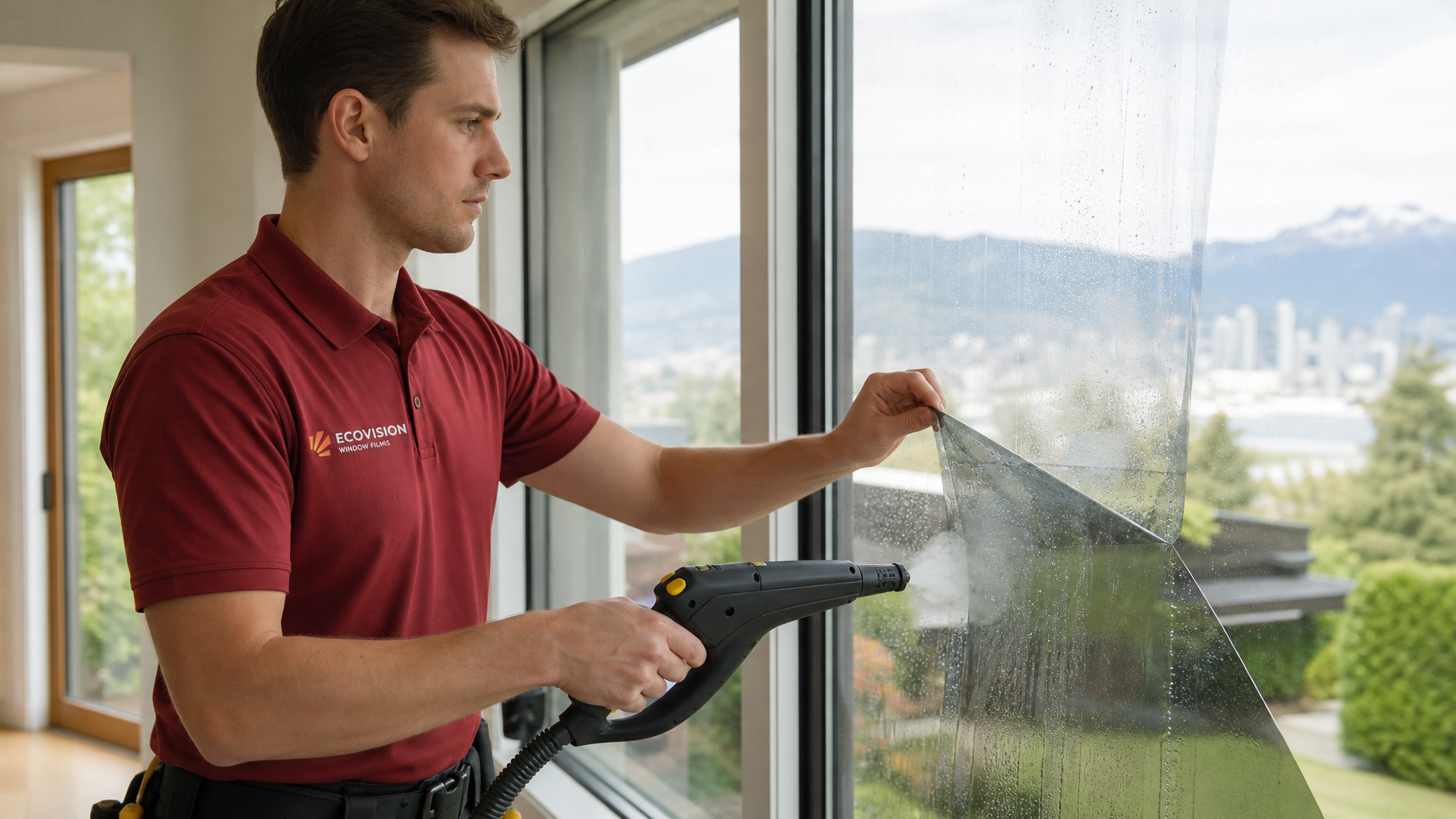
What Makes Steam Effective at Removing Window Film?
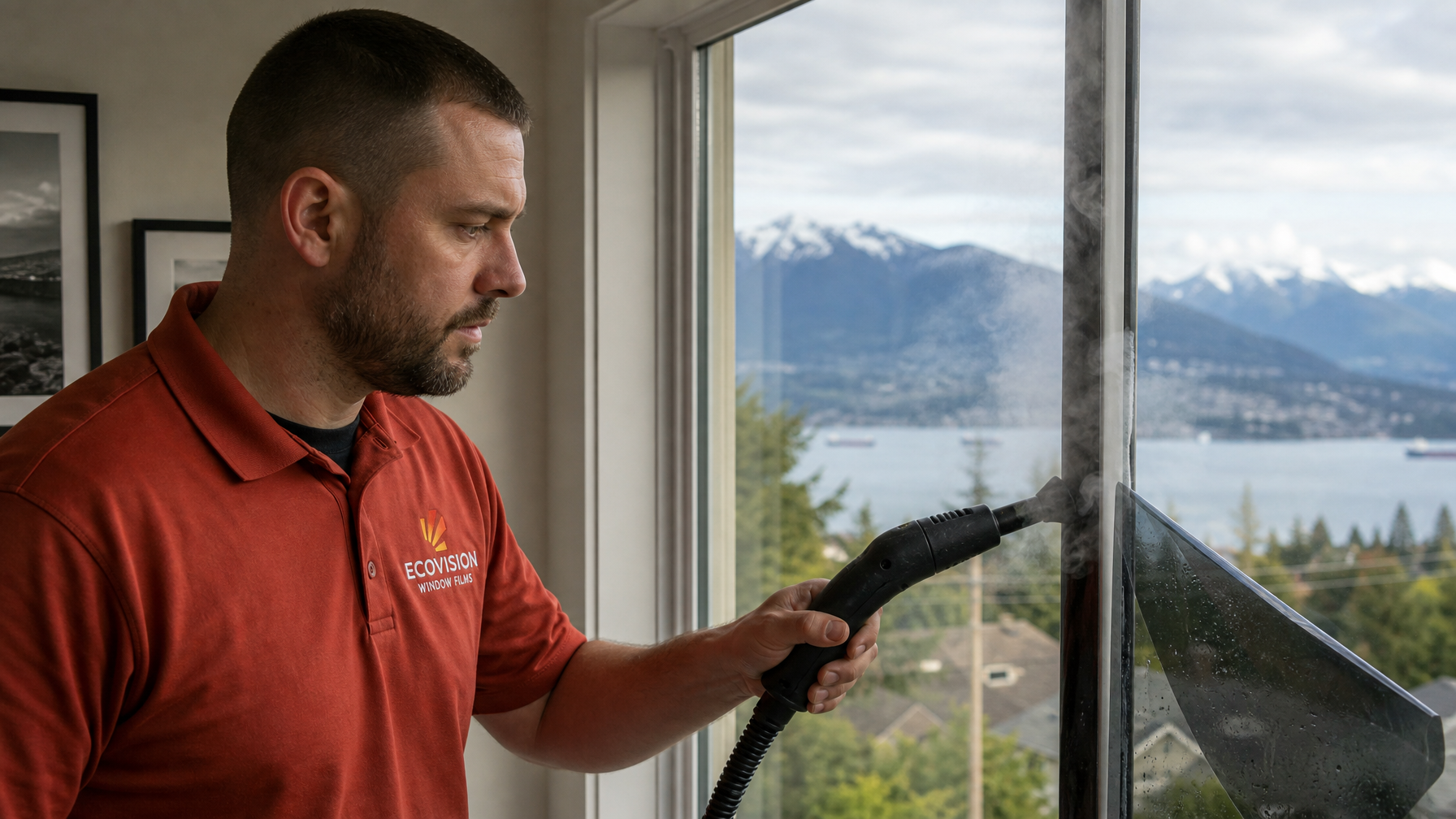
Window film is held to glass by a pressure-sensitive acrylic adhesive that bonds tightly at room temperature but releases cleanly when heated above approximately 65°C. Steam is particularly effective because it delivers sustained, even heat across the film surface, unlike a heat gun, which creates hot spots, and the moisture penetrates behind lifted edges to break down the adhesive bond progressively.
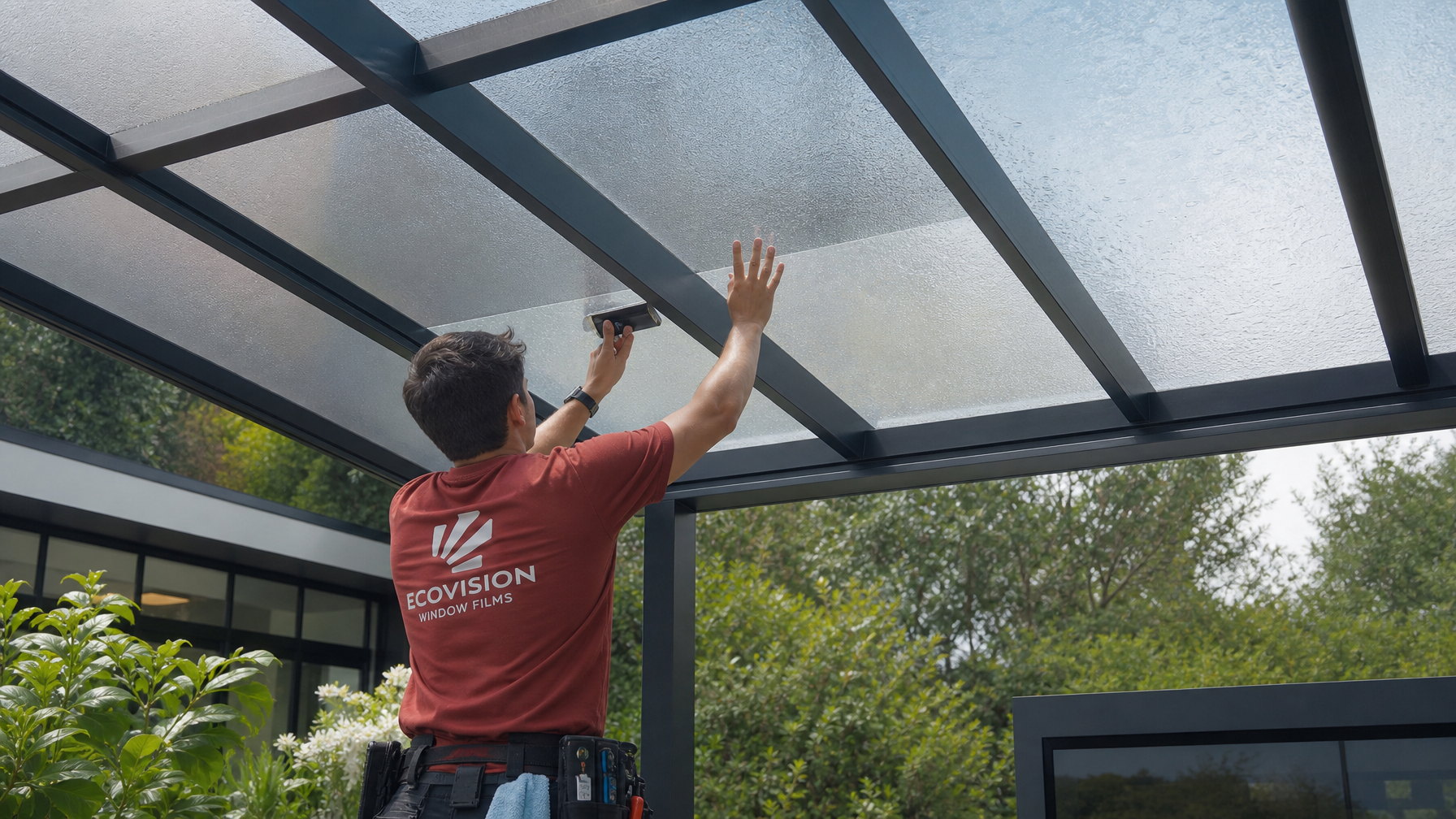
Professional installers at Ecovision Window Films use commercial fabric steamers that output consistent steam at 105°C to 110°C for architectural removals. At these temperatures, even adhesive on 15-year-old film softens within 30 to 60 seconds per square foot, allowing the film to be peeled back in large, clean sections with minimal residue. In contrast, cold removal, pulling film without heat, tears it into small pieces and leaves a thick adhesive layer that requires aggressive solvents to clean.
For a complete overview of how to remove window film without damaging your windows, including all heat-based and solvent-based methods, see our full guide.
Are Steamers Safe on All Types of Glass?
The answer depends on the glass type. Here is a practical breakdown of what BC property owners need to know before applying steam to their windows:
| Glass Type | Steam Safe? | Notes |
|---|---|---|
| Standard float glass (single-pane) | Yes | Most common in pre-2000 BC homes; handles steam well |
| Tempered safety glass | Yes, with care | Keep steamer moving; avoid sustained contact at one point |
| Double-pane insulated units (IGU) | Caution | Heat near edges can weaken the gas seal, work toward centre |
| Laminated glass | Yes | Safe; PVB interlayer is unaffected by exterior steam at standard temperatures |
| Wired or antique glass | No | Thermal stress can crack these glass types, use solvent method instead |
| Low-E coated glass (without film) | N/A | No film to remove; steam not applicable |
The most common glass in Metro Vancouver residential buildings, particularly strata towers and older character homes, is either standard float glass or tempered glass in high-traffic areas. Both handle steam-assisted removal without damage when a professional technician keeps the steamer nozzle 5 to 8 cm from the surface and maintains consistent motion.
What Are the Risks of Using a Steamer on Glass?
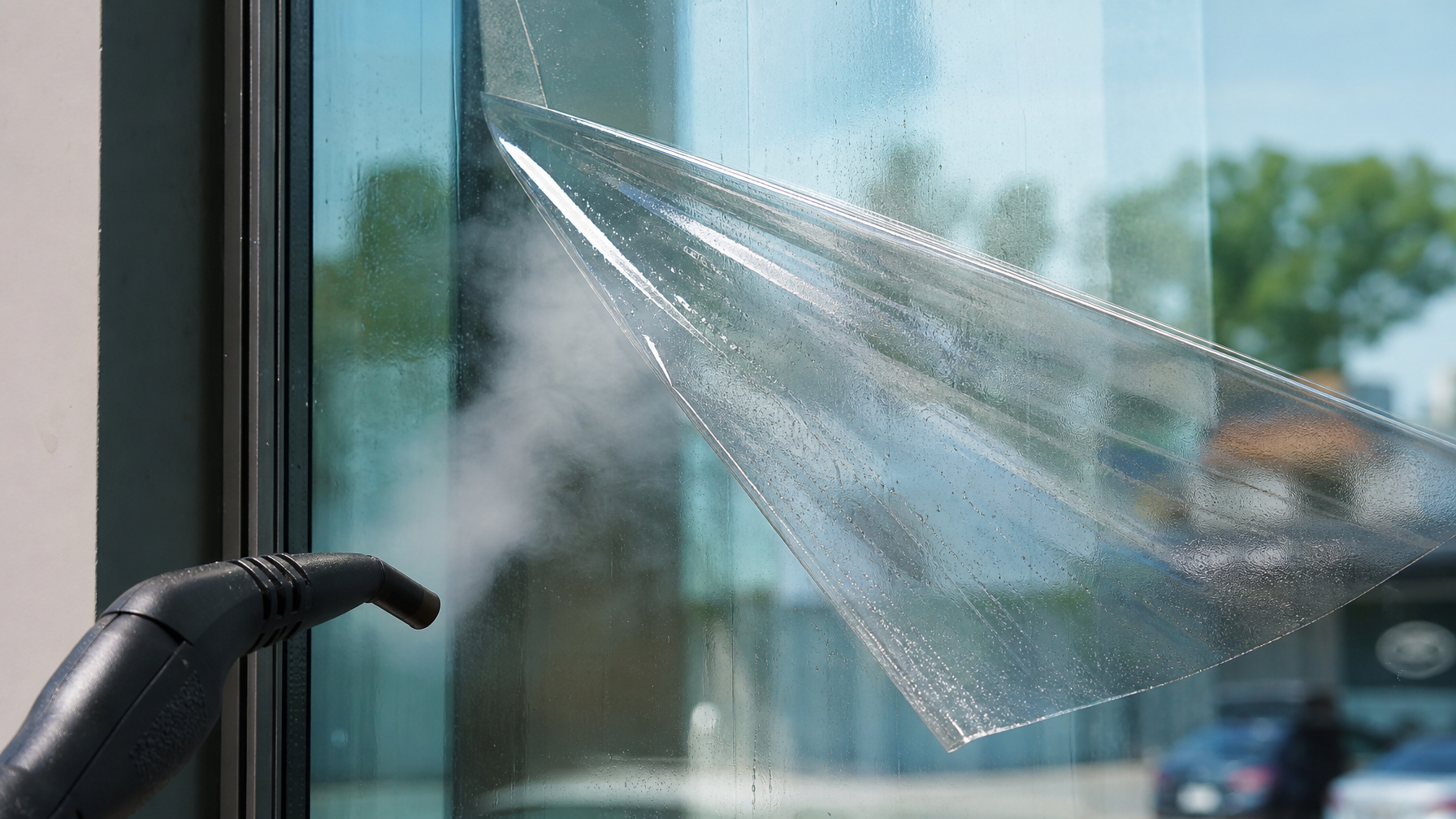
The risks are real but manageable with proper technique. The three main failure points are thermal shock, moisture ingress, and over-saturation of the seal perimeter on double-pane units.
- Thermal shock: Rapidly heating cold glass, for example, steaming a north-facing window in a BC winter without allowing it to warm first, can cause stress fractures. A professional pre-warms the glass surface with lower-temperature steam or a heat lamp before applying full steam pressure.
- Double-pane seal failure: Sustained steam directly on the edge spacer bar of an insulated glass unit can weaken the silicone seal, eventually leading to fogging between panes. Ecovision’s protocol on IGUs is to work the steamer across the centre of the glass and use a plastic scraper at the edges rather than steam.
- Adhesive smearing: If steam temperature is too low (below 80°C), the adhesive softens but does not release cleanly, and dragging a scraper through partially-warmed adhesive creates a smear that is harder to remove than the original film. The correct temperature range is 100°C to 115°C.
- DIY burns and falls: Working with live steam on ladder-height commercial windows carries WorkSafeBC hazard exposure. This is one reason Ecovision recommends professional removal for any glass above 1.5 metres from floor level.
If adhesive residue remains after steam removal, it responds well to isopropyl alcohol (70% or above) or a purpose-made adhesive remover. For more detail on handling stubborn residue, see our guide on how to remove window film adhesive.
How Do Professional Installers Remove Window Film in BC?
Ecovision Window Films follows a six-step removal protocol for residential and commercial jobs across Metro Vancouver:
- Glass assessment: Identify glass type, film age, and seal condition before any heat is applied. Older films (10+ years) often have degraded adhesive that requires less heat; newer films are typically cleaner but more elastic.
- Surface pre-warm: Low steam pass across the entire glass to bring the surface temperature up gradually, preventing thermal shock.
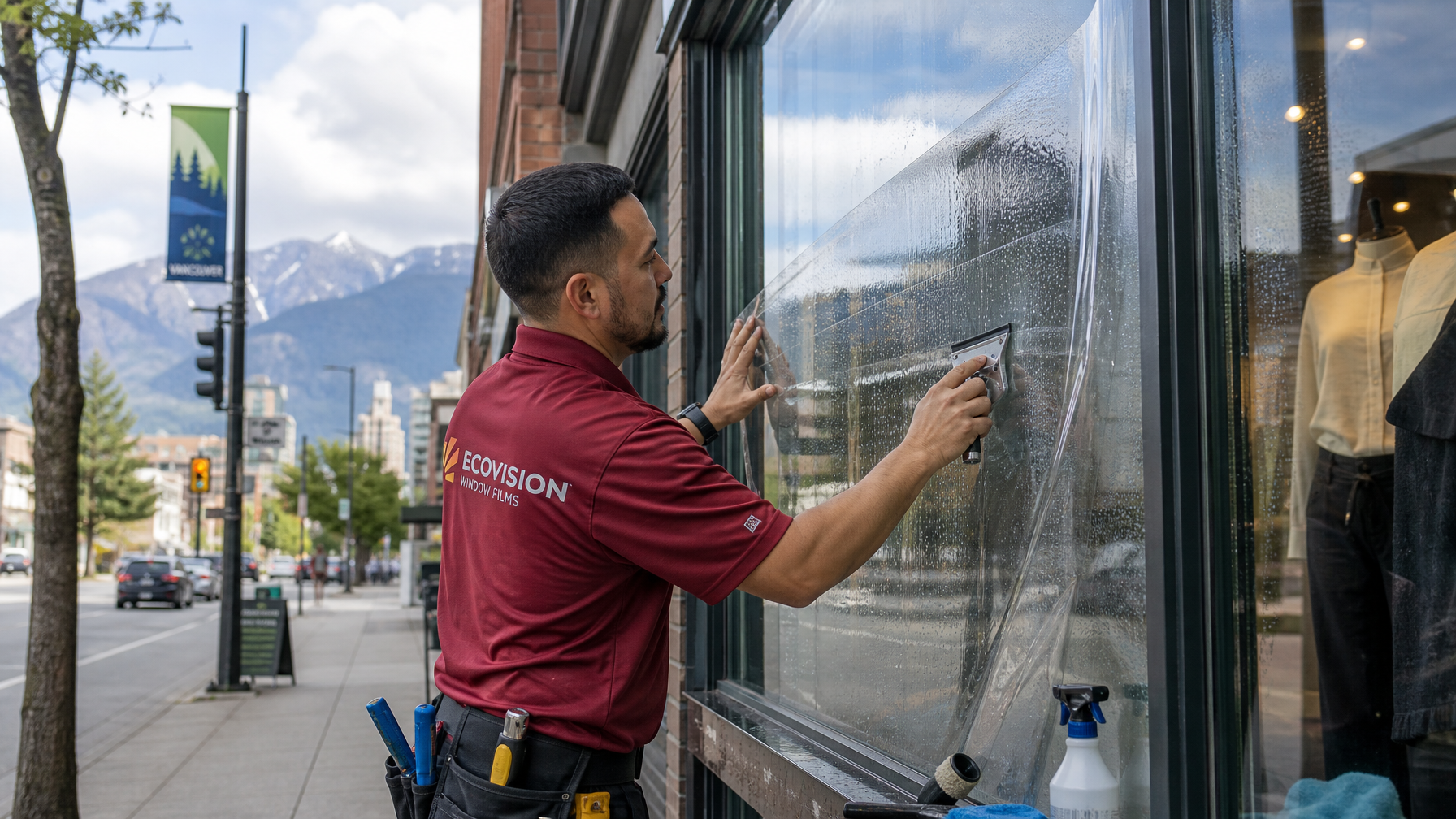
- Film lift and peel: A plastic wedge tool starts one corner, followed by steady steam behind the lifting edge. Film is pulled at a 30-degree angle at consistent speed, too fast tears the film; too slow allows the leading edge to cool and restick.
- Adhesive removal: Any remaining adhesive is treated with isopropyl alcohol or a citrus-based adhesive remover applied with a non-scratch pad.
- Glass cleaning: Final clean with a commercial glass cleaner and a rubber squeegee to confirm no residue, haze, or scratching.
- Inspection: The glass is inspected in raking light to confirm the surface is installation-ready if new film is being applied, or clear and undamaged if the removal is final.
At the Bentall 4 office tower in downtown Vancouver, one of Ecovision’s commercial film projects, the team completed removal and replacement of aging solar film across multiple floors using this protocol, with zero glass breakage or seal damage across approximately 3,200 square feet of glazing.
What About Frosted and Privacy Window Film?
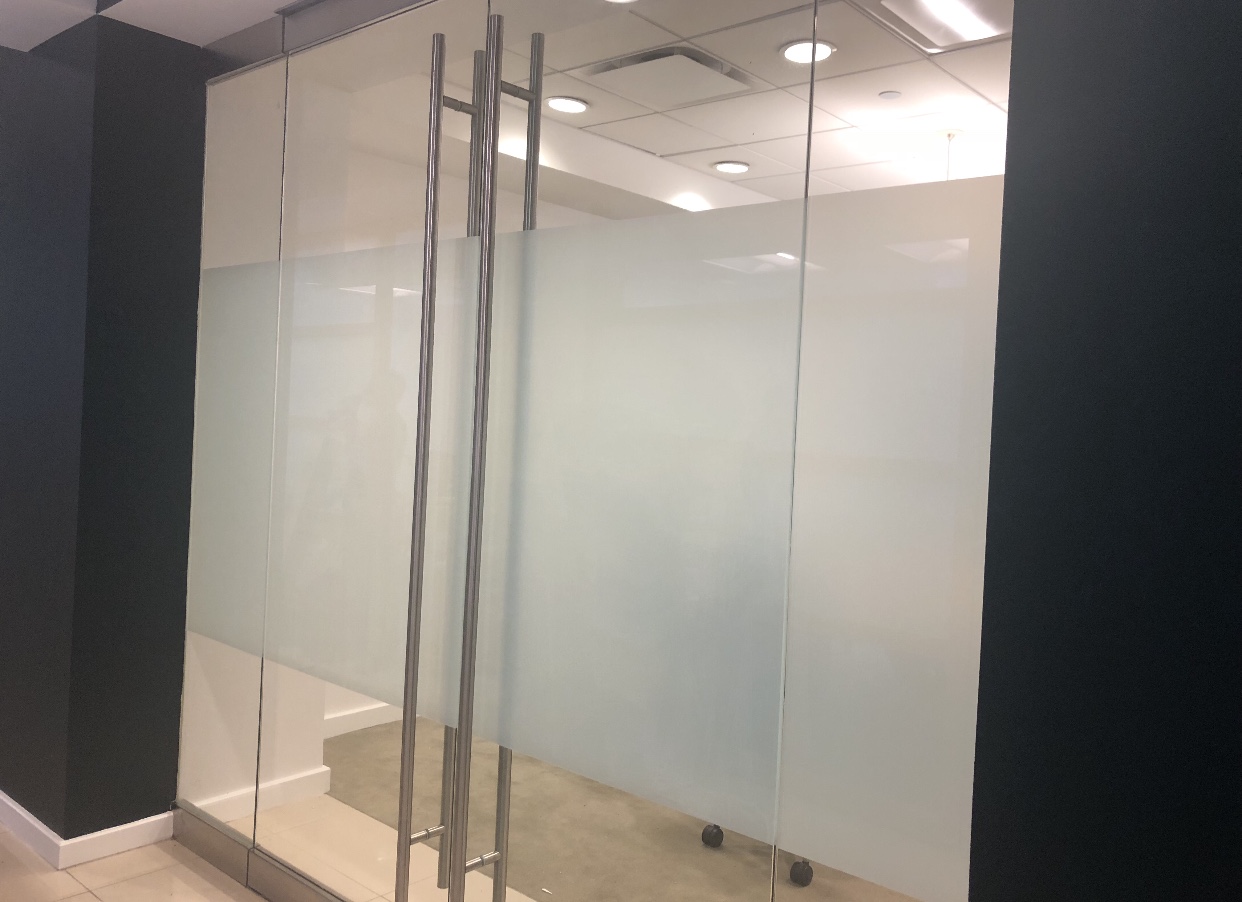
Frosted and decorative films respond to steam in the same way as solar or security films, the adhesive is identical. The only difference is that frosted film is typically thinner and more prone to tearing when pulled at the wrong angle. Using steam correctly allows frosted film to come off in larger sections. For specific guidance on frosted removal, see our article on how to remove frosted window film without damaging the glass.
How Much Does Professional Window Film Removal Cost in BC?

Professional window film removal in BC typically ranges from $9 – $22 per square foot installed, depending on the film type, age, building access, and whether new film is being installed afterward. Removal-only jobs (no new film) are priced at the lower end of this range because no material cost is involved. Jobs where removal is bundled with new film installation are often discounted, since the removal and installation crews mobilize together.
For a standard 1,800 square foot Metro Vancouver home with solar film on south-facing windows (approximately 200 square feet of glazing), a professional removal and re-film project typically runs $2,000 – $3,500 CAD depending on film grade. Removal-only for the same glass area would run approximately $1,200 – $1,800 CAD.
Factors that increase cost in BC include high-floor commercial access (rope access or scaffold adds 40 to 60% to the rate), severely degraded adhesive on film older than 20 years, and wired or specialty glass that prohibits steam use and requires hand-solvent removal.
Related Articles
- How to Remove Window Film Without Damaging Your Windows
- How to Remove Window Film Adhesive: What Works, What Doesn’t
- How to Remove Frosted Window Film Without Damaging the Glass
- How to Remove Gila Window Film: A Step-by-Step Guide for BC Property Owners
- Can Window Film Be Removed and Reapplied? What BC Property Owners Need to Know
Frequently Asked Questions
- Are steamers safe on glass when trying to take window tint off?
- Yes, steamers are safe on most standard, tempered, and laminated glass when used correctly. Keep the nozzle 5 to 8 cm from the surface, maintain consistent motion, and work at 100°C to 115°C. Avoid sustained steam on the edge seal of double-pane units, and do not use steam on wired or antique glass, which is vulnerable to thermal shock.
- What is the best way to remove window film from glass in Vancouver?
- For most residential and commercial glass in Metro Vancouver, steam-assisted removal is the most effective method. A fabric steamer softens the adhesive evenly, allowing the film to peel in large clean sections. Pair steam removal with isopropyl alcohol for any adhesive residue. Professional removal is recommended for high windows, double-pane units, or film older than 15 years.
- Can steam crack or damage glass?
- Steam can crack glass if applied rapidly to cold glass (thermal shock) or if sustained on the edge seal of a double-pane insulated unit. Pre-warming the glass surface and keeping the steamer moving prevents both issues. Standard float glass and tempered glass handle steam well at professional temperatures (100°C to 115°C) without damage.
- How long does it take to remove window film with a steamer?
- A professional technician can remove window film from approximately 100 square feet of glass per hour using a steamer, depending on film age and adhesive condition. Older film with degraded adhesive often removes faster. Fresh film installed within the last 3 to 5 years typically takes longer because the adhesive bond is stronger.
- How much does professional window film removal cost in BC?
- Professional window film removal in BC ranges from $9 – $22 per square foot installed, depending on film type, age, and building access. A 200 square foot residential removal-only job typically runs $1,200 – $1,800 CAD. Removal bundled with new film installation is often discounted. Ecovision provides free on-site estimates across Metro Vancouver, call (236) 862-0052.
Ready to remove old window film from your BC property? Call Ecovision Window Films at (236) 862-0052 or visit ecovisioncanada.com/contact for a free on-site assessment across Metro Vancouver and the Lower Mainland.
About the Author: This article was written by the Ecovision Window Films team. Edward, Director at Ecovision, brings a distinctive perspective to the window film industry, with over a decade in real estate development, including roles as Executive Director at a real estate development firm and Director of Strategic Partnerships, before joining Ecovision. That background gives the company a sharp edge in serving BC property managers and building owners. Ecovision is a certified installer for leading film brands with completed projects for healthcare facilities, government buildings, and commercial properties throughout the Lower Mainland. For a free site assessment, call (236) 862-0052 or visit ecovisioncanada.com/contact/.