
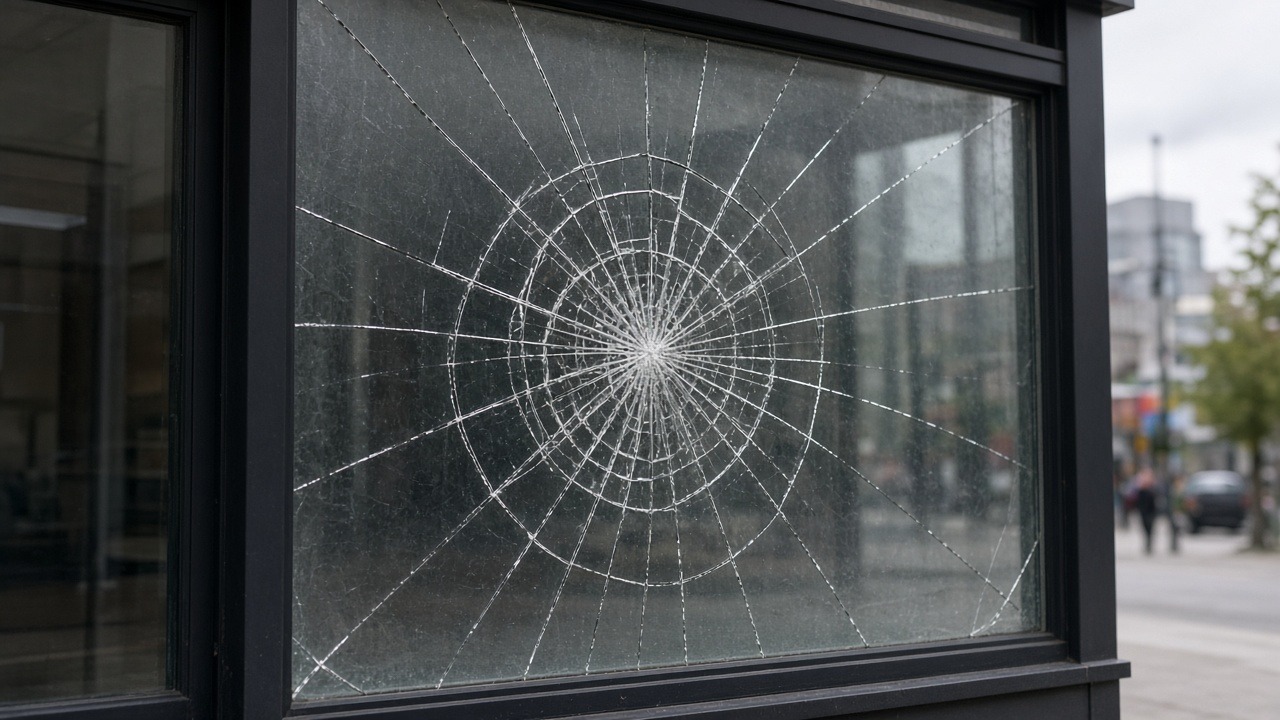
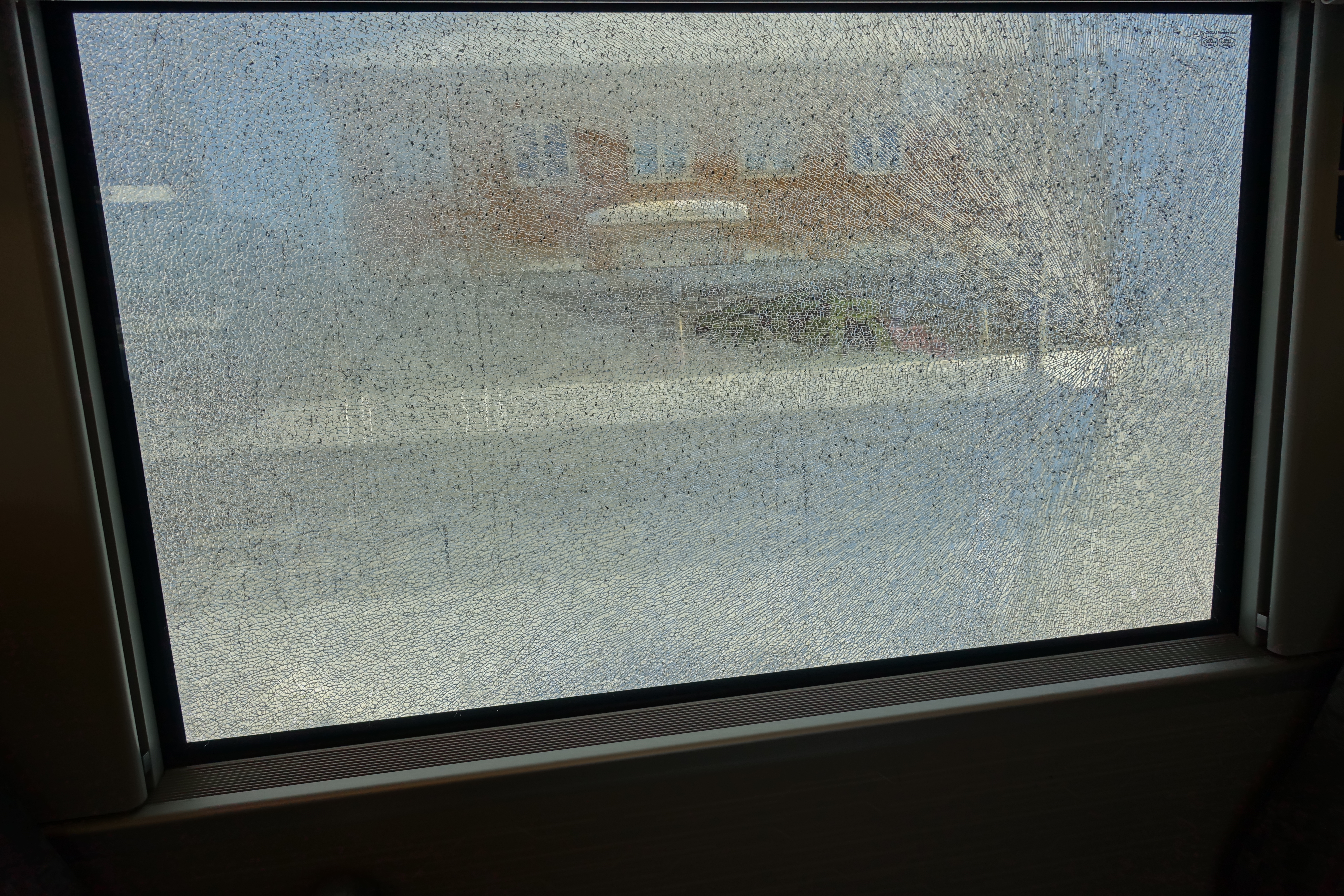
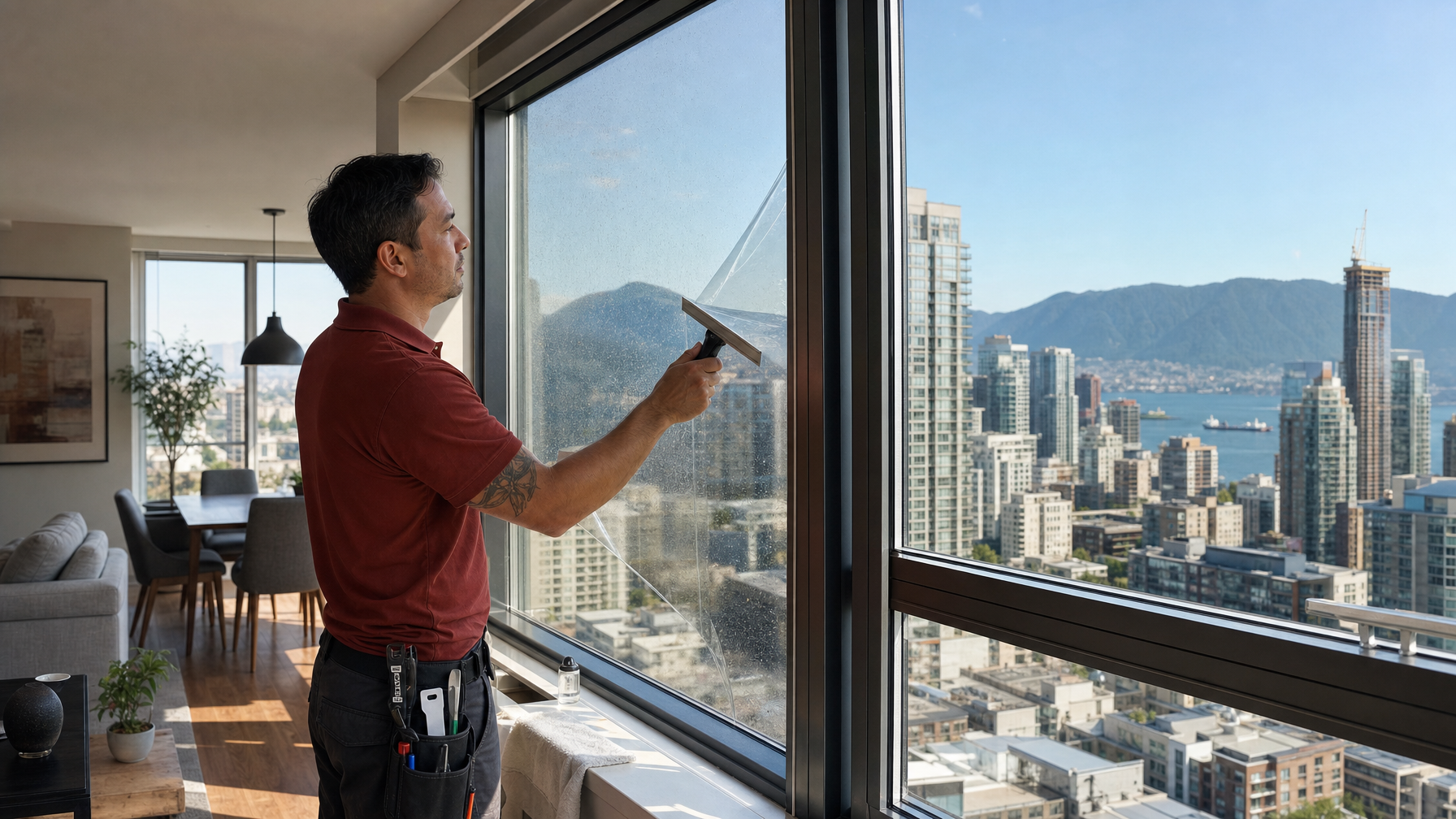
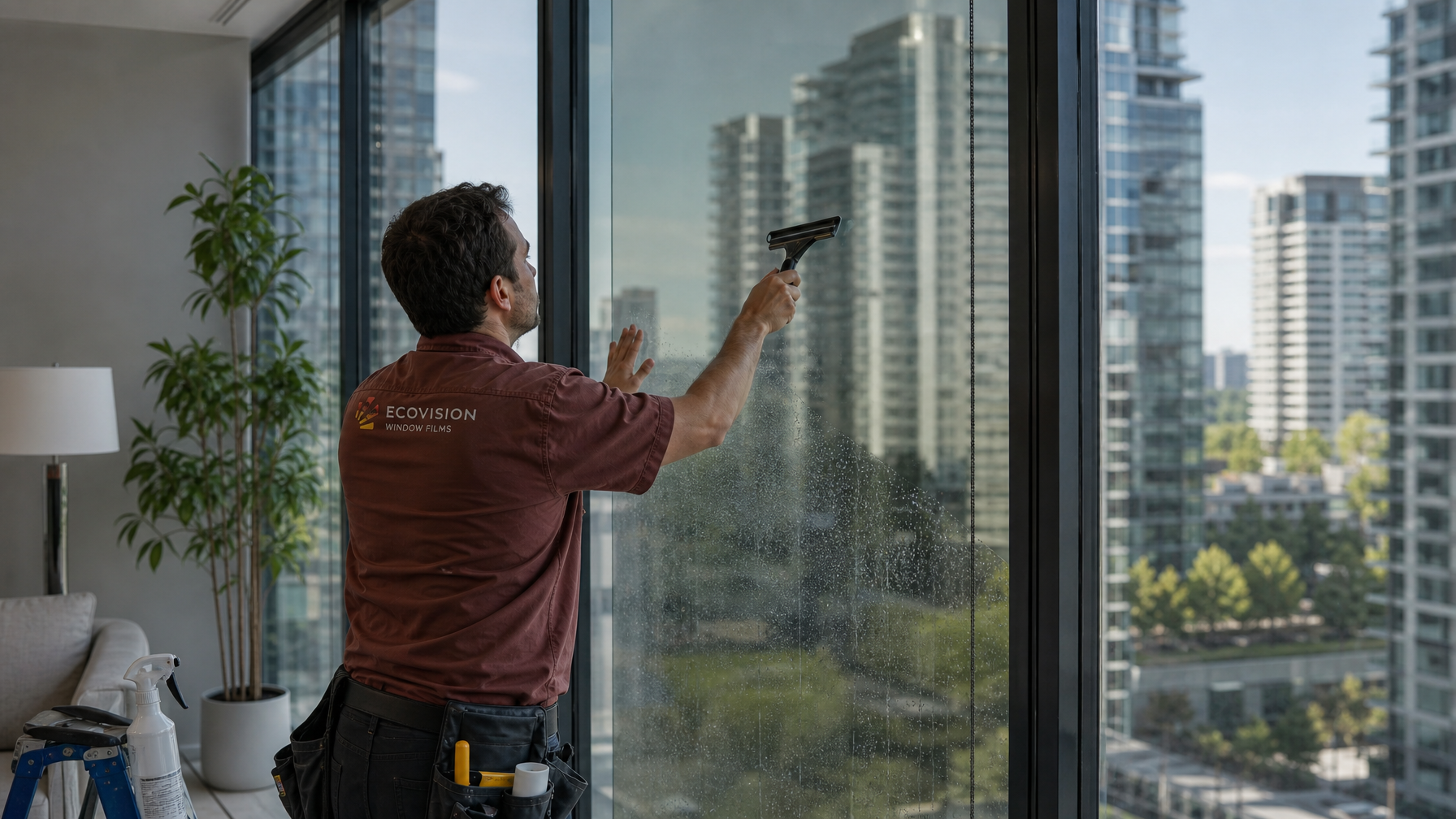
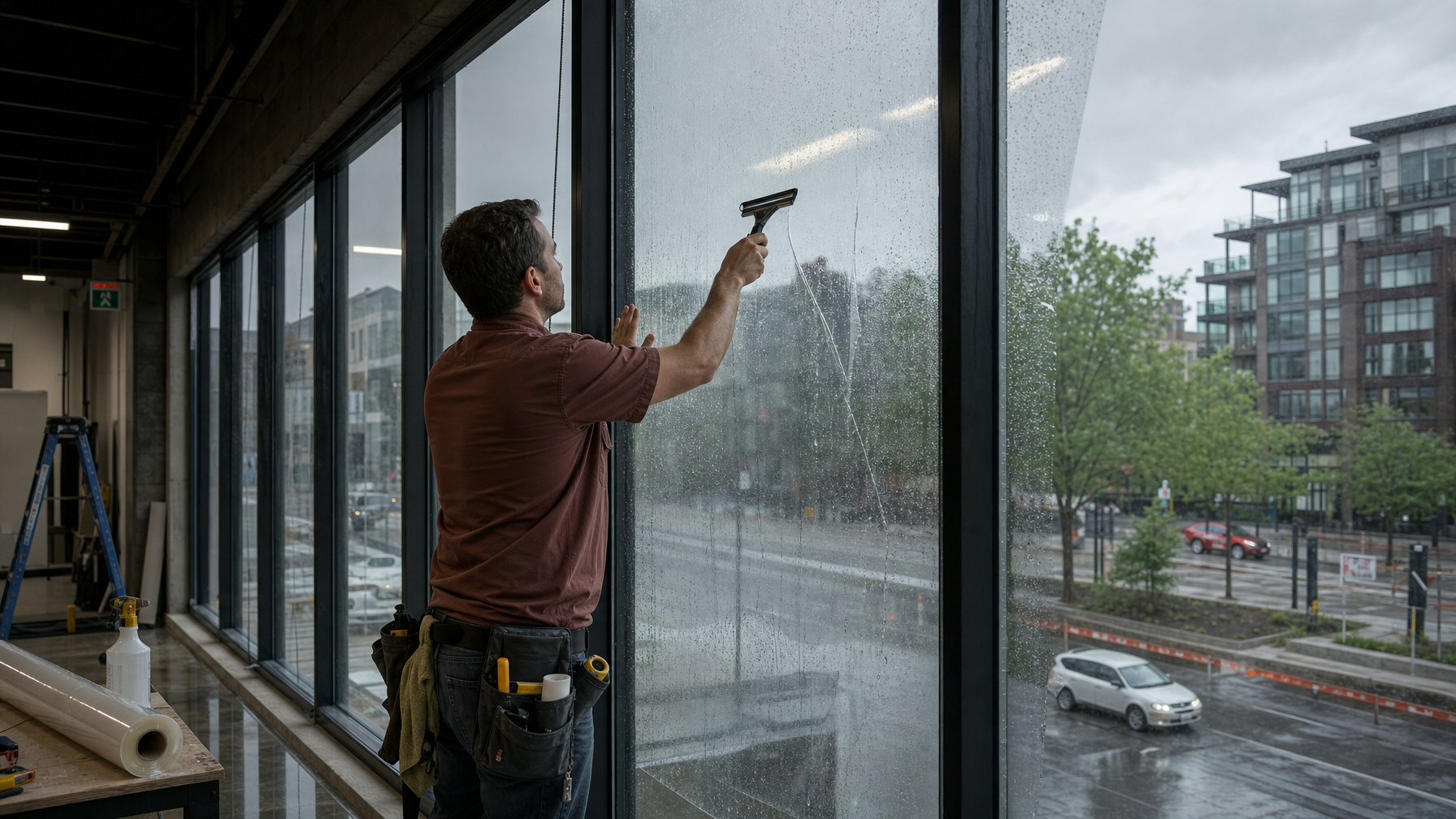
Gila window film is one of the most common DIY window films installed in BC homes, strata units, and older commercial buildings. If you are dealing with bubbling, discolouration, or peeling Gila film, or you are upgrading to professionally installed film, you need a reliable removal process that does not damage your glass. This guide covers exactly how to do it.
Direct Answer: Gila window film can be removed using heat, a plastic or razor scraper, and an adhesive solvent. The full process takes 30 to 90 minutes per window depending on film age and adhesive bond. In BC, DIY Gila film installed more than 10 years ago typically requires professional removal to avoid scoring low-e or thermally treated glass. Ecovision Window Films provides professional window film removal and replacement services across Metro Vancouver and the Lower Mainland, call (236) 862-0052 for a free assessment.
Is Gila Window Film Hard to Remove?
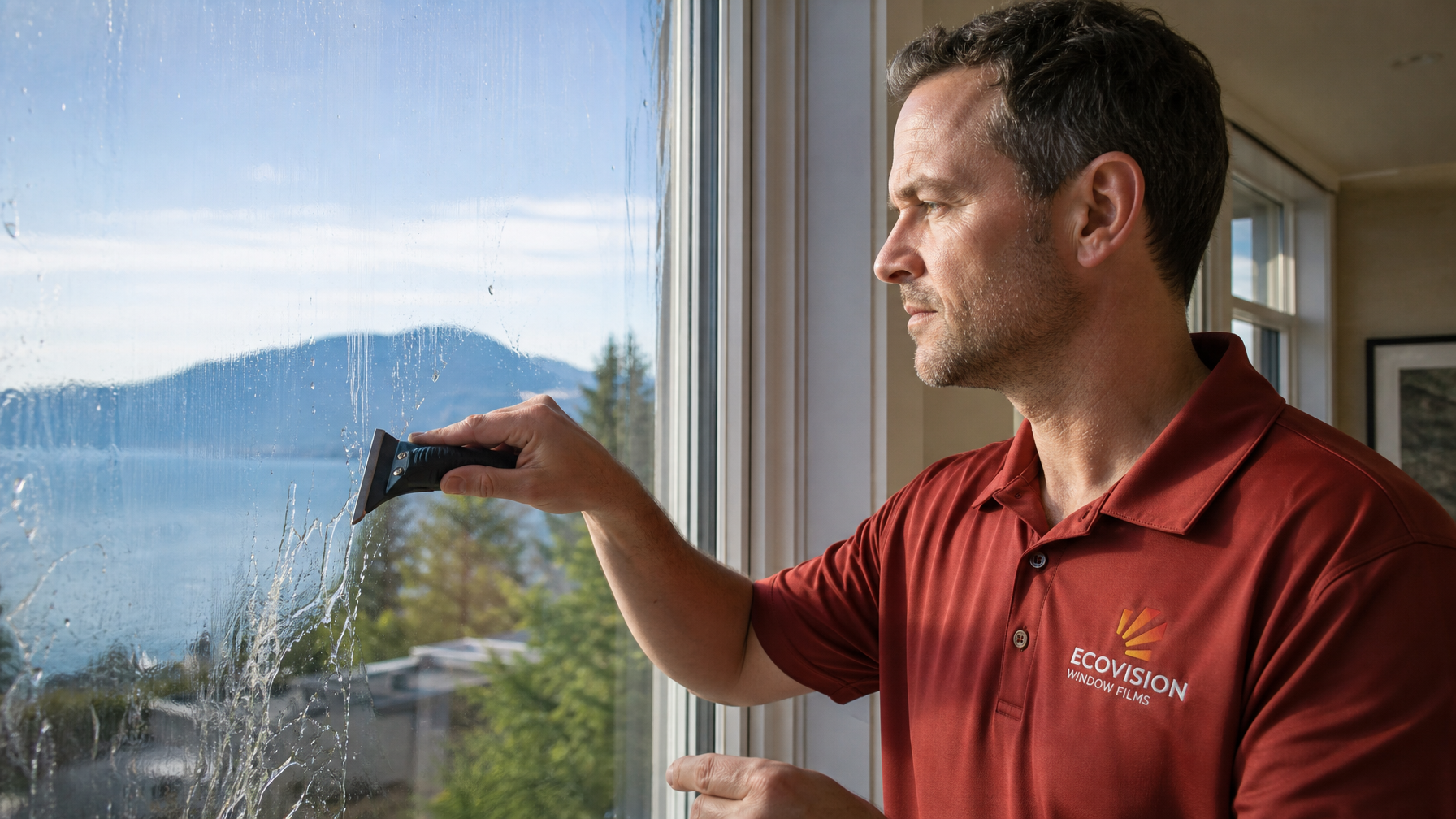
Gila film difficulty varies significantly by age and installation conditions. Film installed within the last 3 to 5 years typically peels off in large sections with minimal residue. Film installed 8 to 15 years ago, common in Metro Vancouver strata units built in the 1990s and 2000s, often has brittle, crystallised adhesive that fractures into small fragments rather than peeling cleanly. BC’s temperature swings between −5°C winter lows and 35°C summer peaks accelerate adhesive degradation compared to milder climates.
Three factors make Gila removal harder than removing professionally installed film: (1) Gila uses a pressure-sensitive acrylic adhesive that bonds more aggressively to glass over time than commercial-grade films, (2) Gila films are thinner (typically 2 mil) than LLumar or Vista professional films (4 to 14 mil), which means they tear into smaller pieces rather than coming off in sheets, and (3) DIY installations frequently trap air bubbles that accelerate UV degradation of the adhesive layer.
What Tools Do You Need to Remove Gila Window Film?
Gather all tools before starting. Using the wrong scraper is the most common cause of glass scratching during film removal.
| Tool | Purpose | Notes |
|---|---|---|
| Plastic scraper (non-scratch) | Lift film edges and clear adhesive | Use plastic, not metal, on tinted or coated glass |
| Single-edge razor blade (optional) | Starting a peel on intact film | Only on standard clear glass, not on low-e, tempered, or laminated glass |
| Spray bottle | Apply soapy water or solvent solution | Mix 1 tsp dish soap per 500 ml warm water |
| Adhesive remover solvent | Dissolve residual adhesive | Isopropyl alcohol (70%+) or commercial adhesive remover works well |
| Microfibre cloths | Wipe off dissolved adhesive | Avoid paper towels, they leave lint |
| Heat gun or hairdryer | Soften adhesive bond before scraping | Keep heat gun 15 cm from glass and move constantly, do not dwell |
| Protective gloves | Protect hands from solvents | Nitrile gloves recommended |
If you are working in a strata building or commercial property, check with your property manager before using any solvent product indoors. Some strata bylaws in Metro Vancouver require professional contractors for any work that involves solvents near window seals.
How Do You Remove Gila Window Film Without Damaging the Glass?
Follow this process step by step for clean removal without scratching or fogging the glass.
- Identify your glass type. Check the bottom corner of your window for an etched mark. If you see a Low-E or Solarban coating mark, do not use a razor blade, use plastic only. Tempered glass is more scratch-resistant, but the coating is still vulnerable.
- Apply heat. Hold a heat gun or hairdryer on medium-high heat 10 to 15 cm from the film surface. Move it back and forth across a 30 cm section for 30 to 60 seconds. The adhesive should soften enough to allow peeling without tearing.
- Start the peel at a corner. Use a plastic scraper to lift a corner of the film. If the film is intact, it may come off in large sections. If it tears immediately into small pieces, work in smaller 15 cm sections.
- Maintain heat while peeling. Keep the heat gun moving just ahead of where you are peeling. Cold adhesive re-bonds within seconds.
- Spray soapy water on stubborn sections. If film resists, spray the surface generously with soapy water and allow it to soak for 2 to 3 minutes before resuming. The water seeps under the film and breaks the adhesive bond.
- Remove adhesive residue. Once the film is off, spray isopropyl alcohol (70% or higher) onto the adhesive residue. Let it sit for 30 seconds, then wipe firmly with a microfibre cloth. Repeat until the glass is clear. A plastic scraper can assist with thick patches.
- Final clean. Wipe the entire glass surface with a clean damp cloth, then dry with a fresh microfibre. Inspect at an angle under light to confirm no adhesive remains.
The Ecovision team uses this same process on a professional scale, but with industrial-grade steam equipment that penetrates adhesive layers more efficiently, especially on film that has been in place for 10 or more years. At Rosemary Heights Retirement Community in South Surrey, our team removed aged window film across 18 residential suites before installing new LLumar solar-control film, each window was restored to optically clear condition without glass replacement.
Does Gila Window Film Leave Adhesive Residue After Removal?
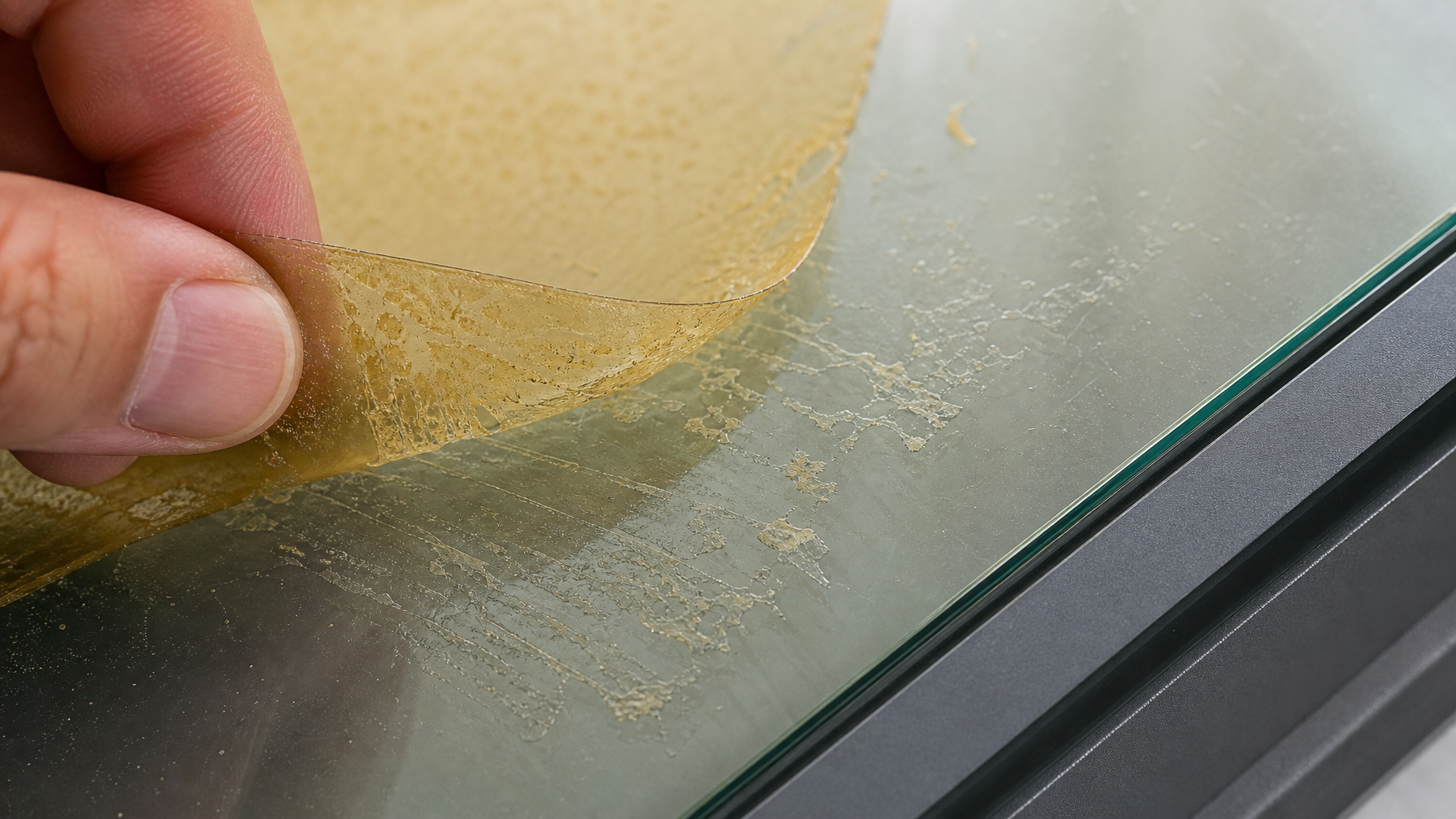
Yes, in most cases. Gila film adhesive becomes more bonded to glass over time due to UV exposure and heat cycling. You should expect some adhesive residue on every window, particularly at the edges where the film was trimmed close to the frame. The residue is not damaging to the glass itself but it must be fully removed before installing new film, any remaining adhesive causes bubbling and adhesion failure on the replacement film.
For mild residue (film removed within 5 years), isopropyl alcohol handles it in one or two passes. For heavy residue (film removed after 10+ years), a commercial adhesive remover product rated for glass, such as Goo Gone or Citristrip, is more effective. Apply, let it dwell for 5 minutes, then scrape and wipe. For very stubborn patches on standard glass, a razor blade held at 30 degrees removes hardened adhesive without scratching. See our full guide on how to remove window film adhesive for BC-specific product recommendations.
Can You Steam Off Gila Window Film?
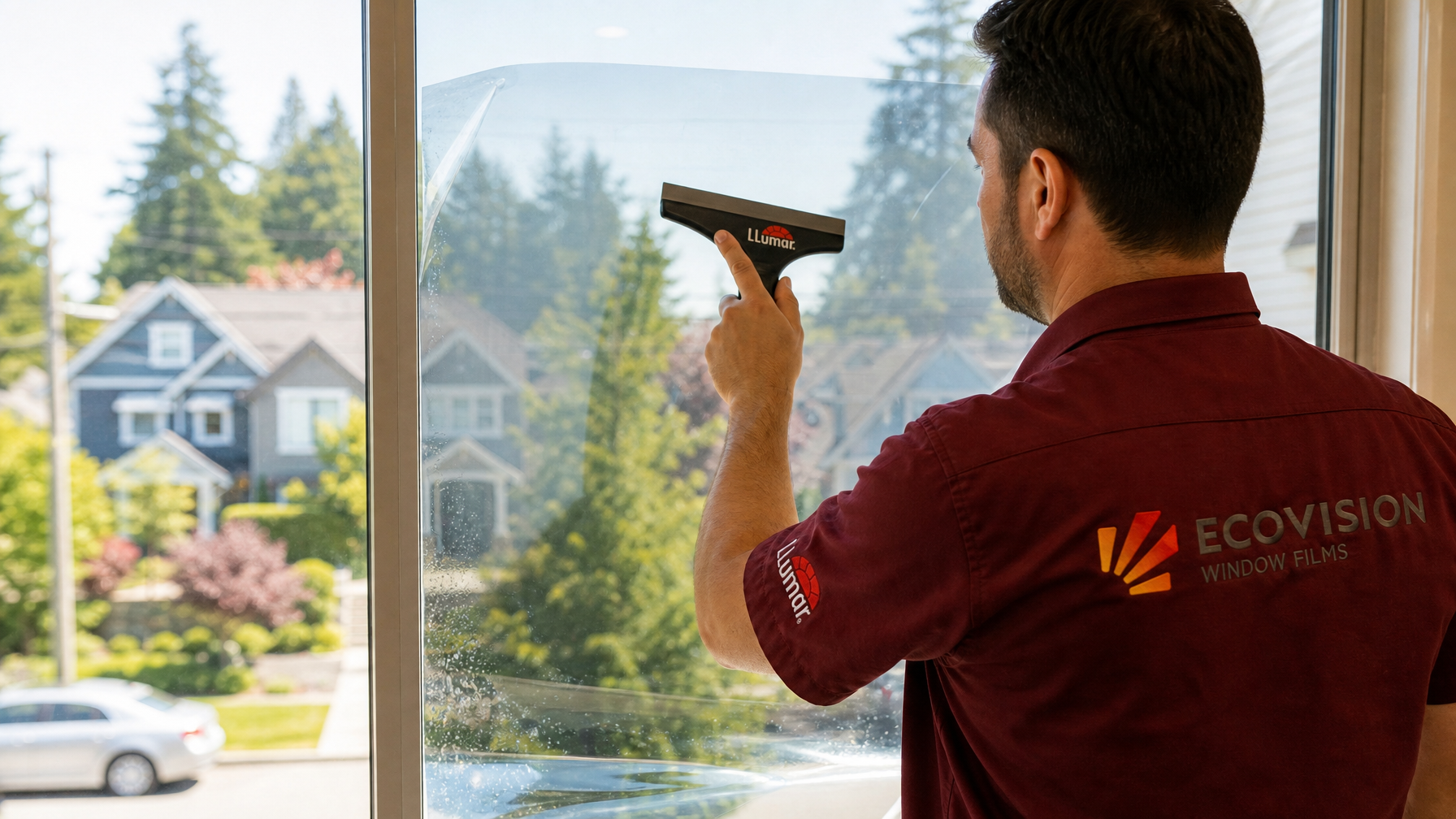
Yes, steam is one of the most effective methods for removing aged Gila film, particularly on large residential windows and sliding glass doors common in Metro Vancouver homes. A clothing steamer or handheld steam cleaner softens both the film layer and the adhesive simultaneously, reducing tear frequency and adhesive residue compared to heat gun methods. Hold the steamer head 5 to 8 cm from the glass and work in 30 cm horizontal strips before peeling.
Important caution: do not steam double-pane (insulated glass unit) windows at the seal perimeter. Steam forced into a compromised spacer seal can cause fogging between the panes, a seal failure that requires glass unit replacement. Apply steam to the central field of the glass only, keeping at least 5 cm away from the frame edge. If your windows are already showing condensation between panes, do not use steam, the seal is already failing and steam will accelerate the damage.
How Long Does Gila Film Last Before It Needs to Be Replaced?
Gila’s DIY window films have a manufacturer-stated lifespan of 5 to 8 years in interior residential applications. In practice, BC property owners commonly see visible degradation, yellowing, bubbling, adhesive failure, beginning at the 5 to 7 year mark, particularly on south and west-facing windows with direct sun exposure. Exterior-grade Gila films have shorter lifespans still: 3 to 5 years in Metro Vancouver’s wet climate, where moisture infiltration under the film edge is the primary failure mode.
By contrast, professionally installed LLumar and Vista films carry 10 to 15 year manufacturer warranties for residential applications and lifetime warranties for commercial installations when professionally applied. If your Gila film is showing any of the following, it is due for removal and replacement: (1) visible bubbles larger than 5 mm that have not cleared within 60 days of installation, (2) a purple or bronze discolouration on a film that was originally clear or grey, (3) adhesive failure at the edges with visible moisture wicking, or (4) delamination, the film separating into layers visible from the interior.
Should You Hire a Professional to Remove Old Window Film in BC?
For windows with film installed more than 8 to 10 years ago, professional removal is strongly recommended. The primary risk is not adhesive residue, it is glass damage. On tempered, laminated, or low-e coated glass, an improper scraper angle or excessive pressure can leave permanent scratching or strip the metal oxide coating that provides the glass’s thermal performance. Replacing a double-pane low-e unit in Metro Vancouver typically costs $350 to $800 per window, significantly more than professional film removal and replacement.
Professional removal also matters when you plan to install new film immediately after. Ecovision Window Films provides a guaranteed adhesive-clean removal service as part of our film replacement process, meaning the glass is inspected under proper lighting after removal, confirmed adhesive-free, and the new film is installed the same day with no risk of contamination. Ecovision is a certified LLumar and Vista installer serving residential and commercial properties across Metro Vancouver, the Fraser Valley, and the Lower Mainland. For a free site assessment and film removal quote, call (236) 862-0052 or visit ecovisioncanada.com/contact.
Related Articles
- How to Remove Window Film Without Damaging Your Windows
- How to Remove Window Film Adhesive: What Works, What Doesn’t, and What BC Property Owners Need to Know
- How to Remove Frosted Window Film Without Damaging the Glass
- How to Remove Privacy Window Film: What BC Property Owners Need to Know
- How to Remove Window Film Adhesive: What Works, What Doesn’t, and What BC Property Owners Need to Know
Frequently Asked Questions: Removing Gila Window Film in BC
About the Author: This article was written by the Ecovision Window Films team, led by Xander, Co-Founder and Director of Operations at Ecovision. Xander brings over 10 years of hands-on installation experience, backed by a family with over 50 years in the installation trades, including window film. His military background reinforces the precision and discipline Ecovision applies to every project. Ecovision is a certified installer for leading film brands with completed projects for healthcare facilities, government buildings, and commercial properties throughout the Lower Mainland. For a free site assessment, call (236) 862-0052 or visit ecovisioncanada.com/contact/.