

Frosted window film is one of the most practical upgrades a BC homeowner or property manager can make, but privacy needs change, tenants move, and offices reconfigure. When that happens, the question Ecovision Window Films hears most is: can you actually remove frosted window film without scratching or clouding the glass underneath?
Yes, professionally installed frosted window film can be removed cleanly without damaging the glass, provided the right technique is used for the adhesive type. DIY removal is possible for recent, undegraded film. Film older than 10 years, or film applied with pressure-sensitive adhesive, almost always requires a professional to avoid leaving residue or surface damage.
Can Frosted Window Film Be Removed Without Damaging the Glass?
Yes. Frosted window film does not chemically bond to glass, it adheres through a pressure-sensitive or static-cling layer that can be reversed. When removed correctly, professionally installed frosted film leaves the glass surface unchanged. The risk of damage comes from using the wrong tools (razor blades on tempered glass, abrasive pads) or skipping the adhesive removal step entirely.
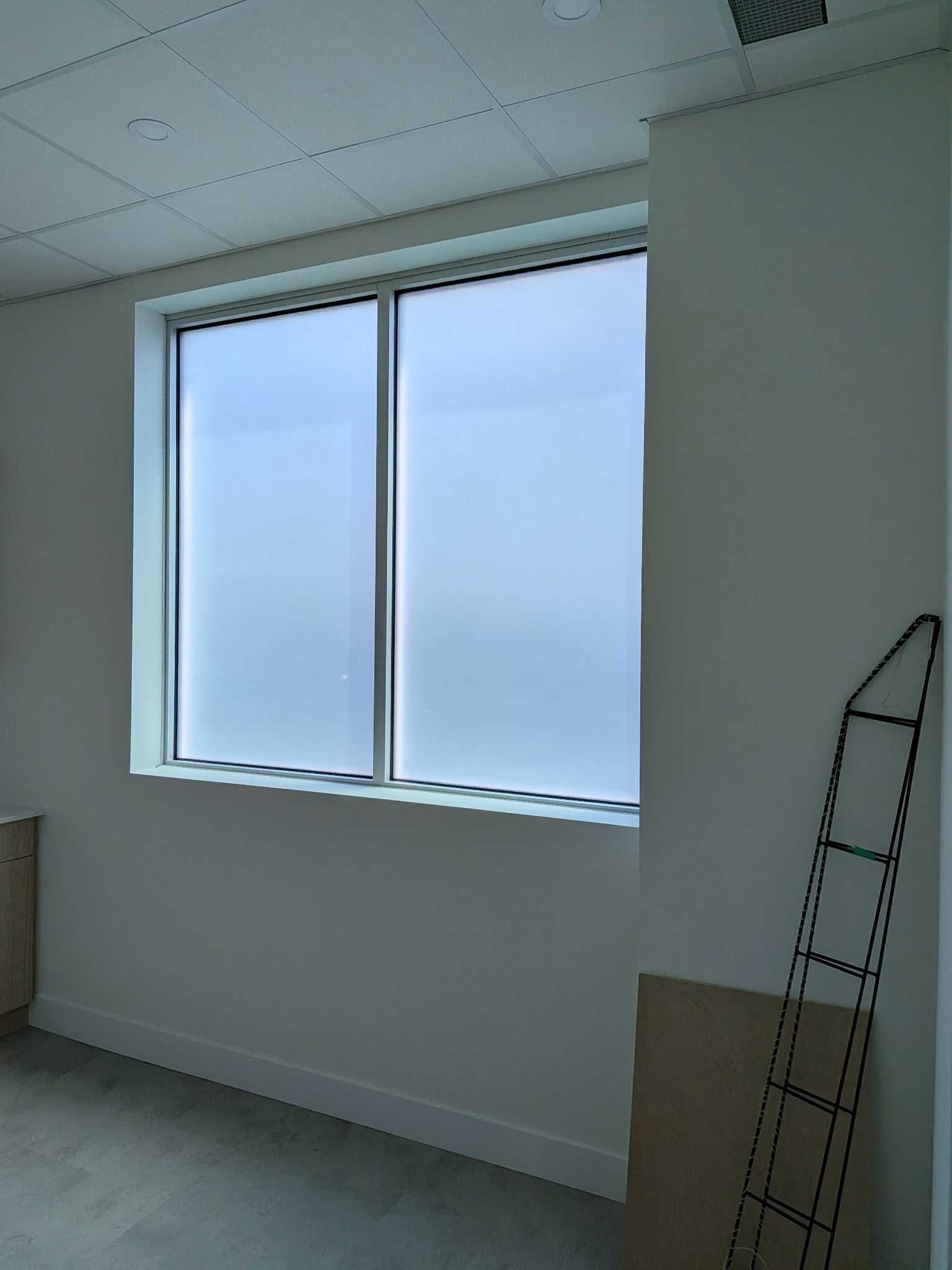
At Ecovision Window Films, our certified installers have removed frosted film from a wide range of glass types across the Lower Mainland, from single-pane residential windows in North Vancouver to tempered glass partitions in Downtown Vancouver commercial offices. The technique varies by film age, adhesive type, and glass specification. Getting it wrong is expensive: a scratched pane of tempered glass on a commercial unit can cost $800 – $2,500 to replace.
What Tools Do You Need to Remove Frosted Window Film?
The tools required depend on whether the film uses a static-cling or adhesive layer. Static-cling frosted film, common in DIY retail products, requires almost no tools. Adhesive-backed film, which is standard in professionally installed LLumar and Vista privacy products, requires a more deliberate approach.
| Film Type | Tools Required | Difficulty |
|---|---|---|
| Static-cling (DIY retail) | Fingernail or plastic card, mild soap + water | Easy, 15 to 30 min per window |
| Adhesive-backed (professional grade, under 5 yrs old) | Fabric steamer or heat gun, plastic scraper, citrus adhesive remover, microfibre cloth | Moderate, 30 to 60 min per window |
| Adhesive-backed (older than 10 yrs / degraded) | Same as above + commercial-grade adhesive solvent, extended dwell time | Difficult, often requires professional |
Tools to avoid on any glass type: metal razor blades on tempered or heat-strengthened glass, abrasive scouring pads, and acetone-based solvents near window frames or rubber seals. These cause cosmetic damage to the surrounding frame material and can void the glass warranty on newer commercial units.
How Do You Remove Frosted Window Film Step by Step?
The following process applies to adhesive-backed frosted film on standard annealed or tempered glass. For glass older than 20 years, laminated glass, or glass with Low-E coatings, consult a certified installer before proceeding, some coatings are damaged by heat or solvents.
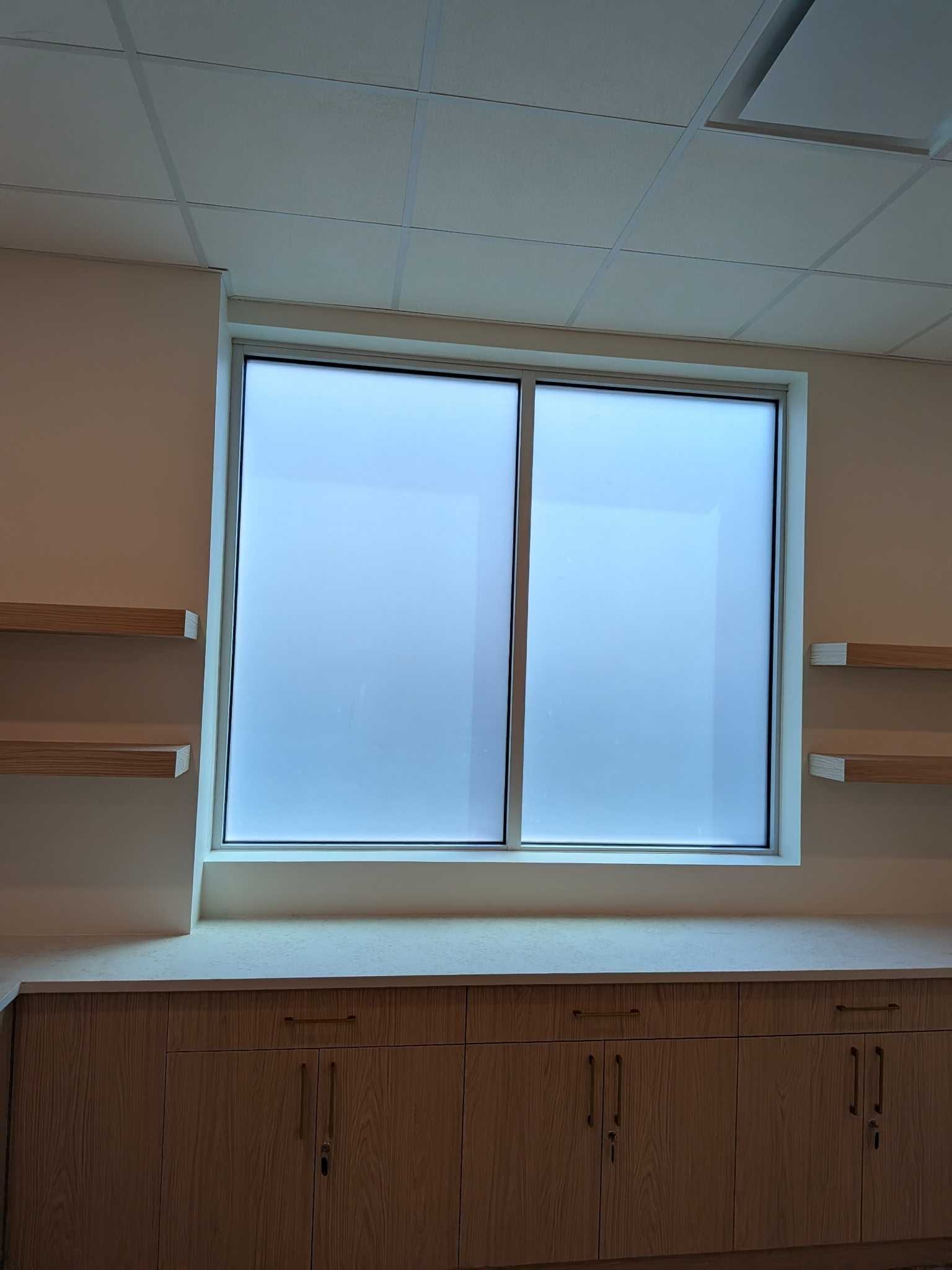
- Heat the film, Use a fabric steamer or heat gun on low setting, held 5 – 8 cm from the glass surface. Work in 30 cm sections. The goal is to soften the adhesive without overheating the glass edge seals. On older film, expect 60 – 90 seconds of dwell time per section.
- Lift a corner with a plastic scraper, Never use a metal blade on the first lift. Start at a corner or seam and work the plastic edge under the film at a shallow angle (15 – 20 degrees). If the film tears into small pieces, the adhesive has degraded, this is the most common indicator that professional removal is needed.
- Peel slowly at a consistent angle, Pull the film back at 45 degrees while keeping heat applied ahead of the peeling edge. Fast pulling causes the film to tear and leave adhesive patches. Slow, consistent tension is the technique.
- Apply adhesive remover to the residue, Citrus-based adhesive removers (Goo Gone Professional Strength or equivalent) work on most LLumar and Vista adhesives. Apply, let dwell for 2 – 3 minutes, then wipe with a microfibre cloth in one direction. Do not scrub in circles, this spreads the adhesive rather than removing it.
- Final clean, Wipe the glass with isopropyl alcohol (70%) to remove any solvent residue, then finish with a standard glass cleaner. Inspect in raking light (hold a flashlight at a low angle) to confirm no adhesive patches remain.
Total time for this process on a standard 90 cm x 150 cm residential window: 45 – 75 minutes for a homeowner doing it for the first time, 20 – 30 minutes for an experienced installer. Commercial projects involving multiple panes of frosted film are priced by the linear metre, not by the hour.
Does Frosted Window Film Leave Adhesive Residue on Glass?
Yes, adhesive-backed frosted film always leaves some adhesive on the glass after the film layer is removed. The quantity and difficulty of removal depends primarily on film age. Film installed within the last 3 – 5 years typically releases adhesive cleanly with a single citrus solvent application. Film older than 8 – 10 years often has degraded adhesive that bonds more aggressively to the glass over time, requiring multiple solvent applications and more dwell time.
Static-cling frosted film, the type sold at hardware stores for DIY installation, leaves no adhesive residue because it does not use an adhesive layer. It holds by surface tension alone, which is also why it tends to shift and peel at edges within 12 – 18 months in high-humidity BC bathrooms and shower enclosures.
One Ecovision job in Guildford, Surrey involved removing 14-year-old frosted film from the corridor windows of a seniors residence. The film had been applied without a slip solution (a common installation shortcut that causes premature adhesive hardening), which meant standard citrus remover wasn’t sufficient. Our team used a professional-grade film remover and extended dwell times, the process took 40% longer than a comparable new-film removal job, but the glass was restored without any etching or scratching.
Should You Remove Frosted Window Film Yourself or Hire a Professional in BC?
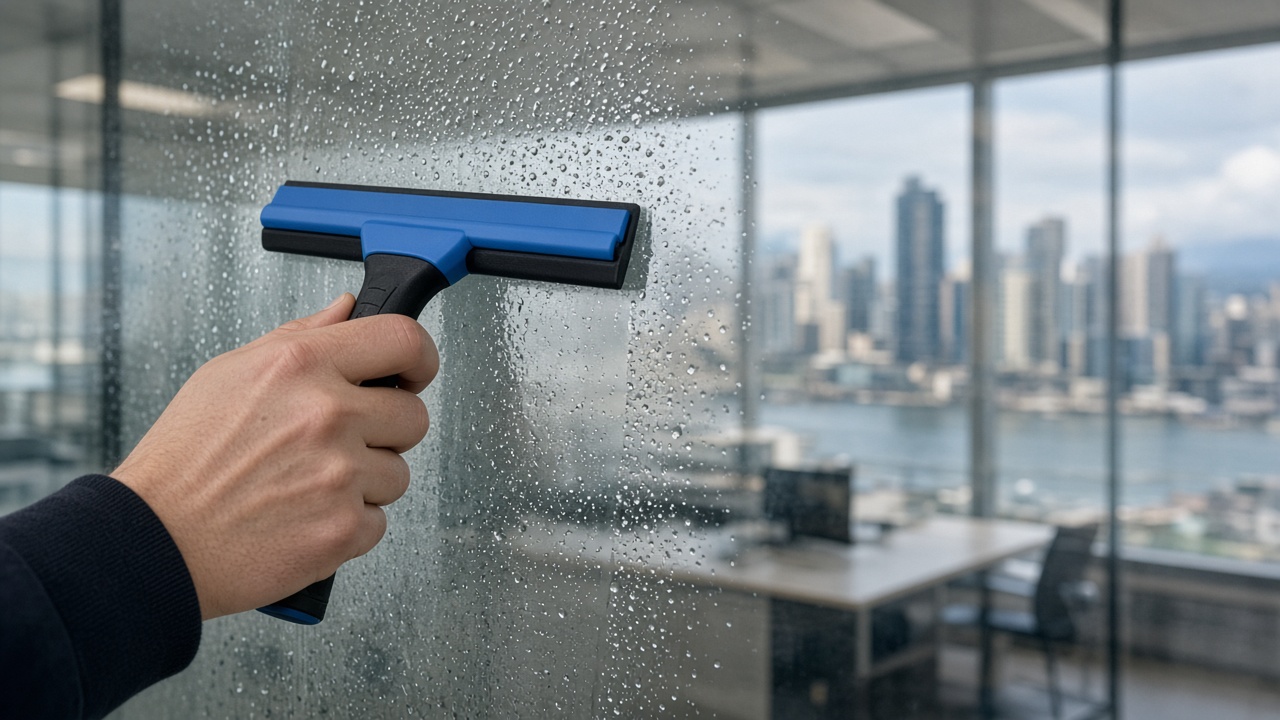
DIY removal is reasonable for recent, adhesive-backed film in good condition, no bubbling, no delamination, no yellowing. If the film is peeling at the edges or has visible moisture bubbles, the adhesive layer has likely begun to break down. Attempting DIY removal on degraded film typically results in the film tearing into small pieces and leaving adhesive patches that require professional solvent treatment anyway.
Situations where professional removal is strongly recommended:
- Film older than 8 years, regardless of visible condition
- Low-E coated glass (common in post-2010 BC residential construction, check your window specs)
- Tempered glass doors in commercial or strata settings (metal scrapers risk surface marks that catch light at certain angles)
- Large commercial installations where glass replacement cost exceeds removal cost by a significant margin
- Film that has yellowed, delaminated, or shows visible moisture pockets
For most BC strata buildings and commercial properties, WorkSafeBC safety requirements also mean that window work above a certain height, or requiring a ladder or scissor lift, must be performed by a qualified contractor with appropriate insurance coverage. This is not optional for strata buildings under the Strata Property Act.
How Much Does Professional Frosted Window Film Removal Cost in BC?
Professional frosted window film removal in the Lower Mainland is quoted as glass prep, not a fixed list price on this page. Complexity (access, adhesive age, commercial vs residential) changes the quote. Replacement frost, if desired, is priced with new privacy film. See our BC window film cost guide for current installed ranges.
A typical bathroom window (60 x 90 cm) removal and replacement is quoted on site from adhesive condition and film grade, see the BC window film cost guide rather than a fixed package total here.
For commercial properties requesting removal across multiple offices or corridors, the type of project Ecovision completed at MacLean Park Residence in Vancouver, where we removed and replaced frosted film across 22 corridor windows in a single two-day project, volume pricing applies and the per-square-foot cost is lower than for single-window residential jobs.
Related Articles
- Frosted Window Film in Vancouver: Types, Costs, and What to Know Before You Buy
- How to Remove Window Film Without Damaging Your Windows
- Privacy Window Film in Vancouver: Types, Costs, and What to Know Before You Install
- Does Frosted Glass Block UV Rays? What BC Property Owners Need to Know
- Can You See Through One-Way Window Film at Night? What BC Homeowners Need to Know
Frequently Asked Questions
About the Author: This article was written by the Ecovision Window Films team. Edward, Director at Ecovision, brings a distinctive perspective to the window film industry, with over a decade in real estate development, including roles as Executive Director at a real estate development firm and Director of Strategic Partnerships, before joining Ecovision. That background gives the company a sharp edge in serving BC property managers and building owners. Ecovision is a certified installer for leading film brands with completed projects for healthcare facilities, government buildings, and commercial properties throughout the Lower Mainland. For a free site assessment, call (236) 862-0052 or visit ecovisioncanada.com/contact/.
Ready to remove or replace frosted window film? Call Ecovision Window Films at (236) 862-0052 for a free on-site assessment. We serve Vancouver, Burnaby, Surrey, Richmond, and the Lower Mainland.