
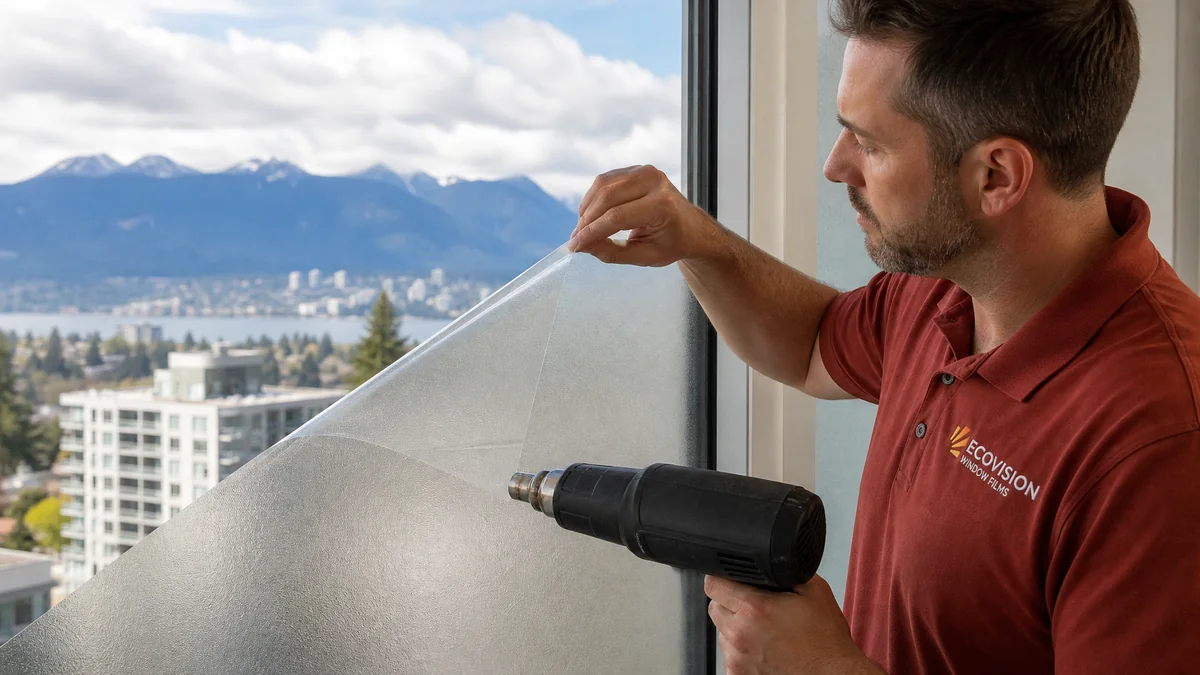
Window film adhesive left behind on glass after removal is one of the most common complaints Ecovision Window Films hears from BC property owners who attempted a DIY film strip. The adhesive layer, typically a pressure-sensitive acrylic, cures to the glass surface over time and resists casual cleaning. In most cases, the right solvent and technique removes it cleanly within 30 to 90 minutes. Getting it wrong risks scratching the glass or damaging Low-E coatings.
How Do You Remove Window Film Adhesive Without Damaging the Glass?
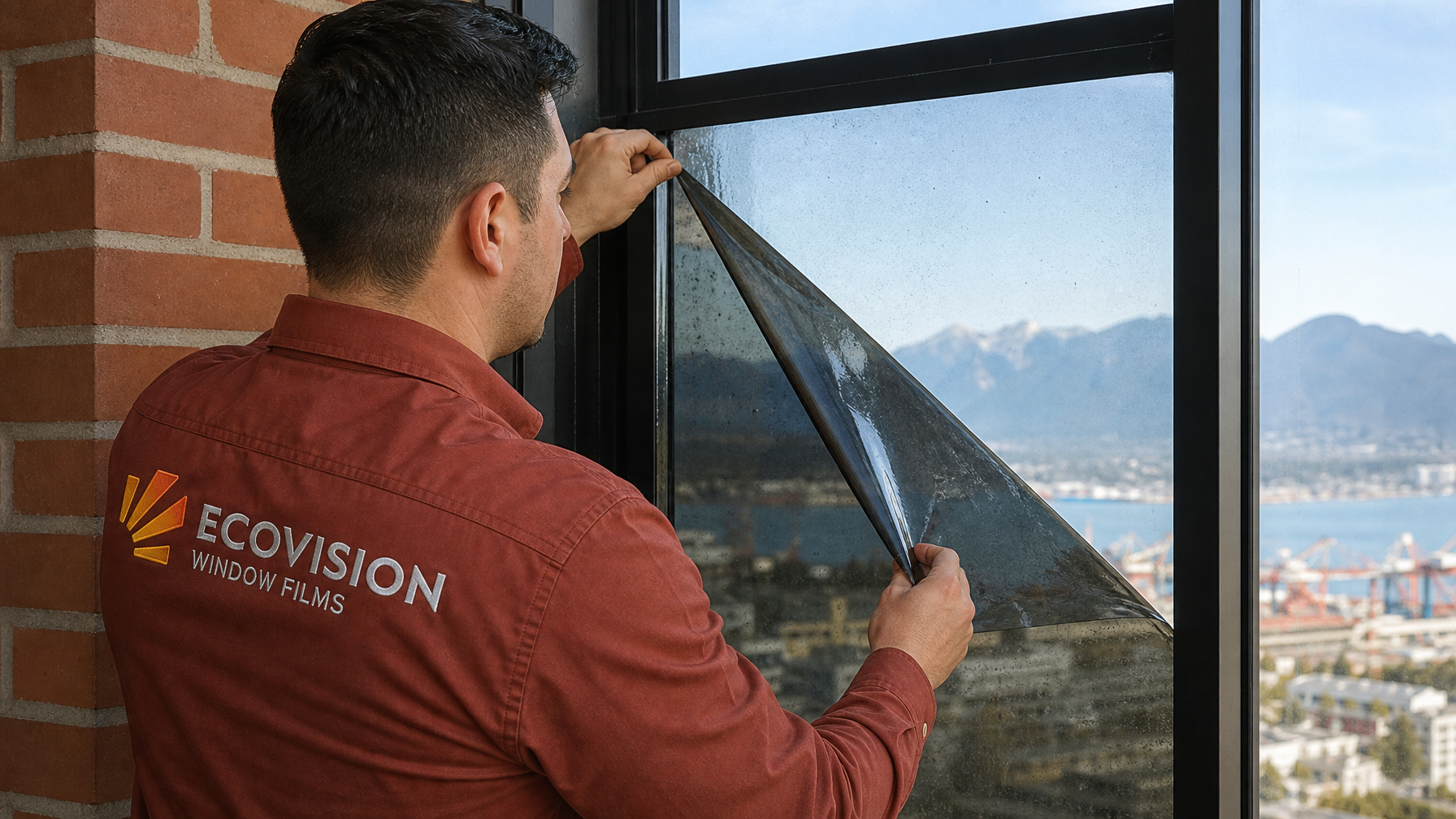
The fastest safe method for removing window film adhesive from glass is isopropyl alcohol (70% or higher), applied with a microfibre cloth and left to dwell for 60 seconds before wiping. For stubborn adhesive on commercial glazing, thick security or solar film installed more than 5 years ago, a commercial-grade adhesive remover such as Goo Gone or UN-DU, applied with a plastic scraper at a 30-degree angle, is more effective. Steel wool or metal scrapers damage glass surfaces and should never be used on Low-E or tempered panels.
Why Is Window Film Adhesive So Hard to Remove?
Window film uses a pressure-sensitive acrylic adhesive with a bond strength typically between 15 and 40 oz/inch, depending on the film type. Security and safety films, which Ecovision installs in Vancouver commercial buildings including Bentall 4, use thicker adhesive layers designed to hold glass fragments together under impact, which also makes the adhesive significantly harder to remove than standard solar or privacy film. On glass installed in BC’s coastal climate, moisture can partially cure the adhesive over time, increasing bond strength by up to 30% compared to interior-only installations in drier climates.
Film age matters. A standard solar film installed 3 to 4 years ago typically releases adhesive with isopropyl alcohol alone. Film installed 8 to 10 years ago, common in Metro Vancouver commercial properties that haven’t been updated, often requires a citrus-based solvent followed by a steam application to soften the residue before wiping.
What Solvents Actually Work, and What to Avoid?
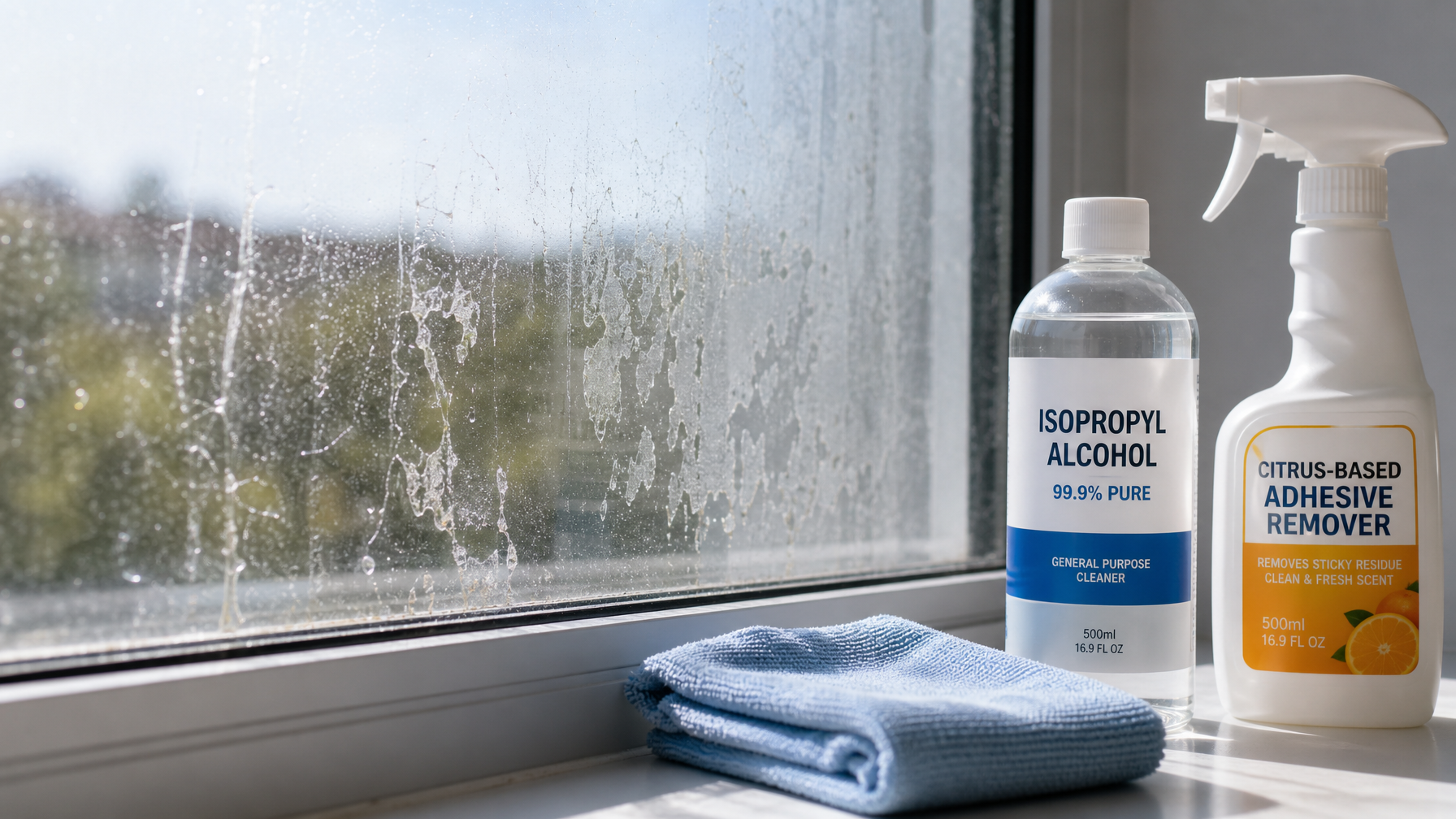 how to remove old plastic film from glass on glass with isopropyl alcohol and citrus remover tools for safe removal in BC”/>
Several products remove window film adhesive safely from standard annealed glass:
| Solvent / Method | Best For | Risk Level |
|---|---|---|
| Isopropyl alcohol (70, 99%) | Fresh adhesive, thin films | Low |
| Citrus-based remover (Goo Gone) | Aged adhesive, 5+ year films | Low |
| Acetone (nail polish remover) | Heavy residue, use with caution | Medium, avoid Low-E glass |
| Steam (hand steamer) | Softening thick security adhesive | Low if kept under 80°C |
| WD-40 | Small spots, not full panels | Low, leaves oily residue |
| Razor blade / metal scraper | Never recommended | High, scratches glass |
| Bleach or ammonia-based cleaners | Never, degrades adhesive chemistry | High |
On Low-E glass, now standard in most BC residential construction under the BC Energy Step Code, acetone and solvent-based strippers can damage the metallic oxide coating. Always test on a small corner first. If the glass has a visible tint, spectrally selective coating, or manufacturer sticker mentioning “low emissivity,” treat it as Low-E and use isopropyl alcohol only.
Step-by-Step: How to Remove Window Film Adhesive Safely
Follow this sequence for standard residential or commercial glass in BC:
- Remove the film layer first. Adhesive removal is a separate step, do not try to dissolve adhesive through a film that is still attached. Score one corner with a fingernail and peel at 15 to 30 degrees, slowly and evenly.
- Assess the glass type. Check for Low-E stickers, visible reflective coating, or dual-pane IGU seals before selecting a solvent.
- Apply isopropyl alcohol generously to the adhesive residue with a clean microfibre cloth. Do not spray directly, dampen the cloth to avoid drips into the window frame seal.
- Let dwell for 60 seconds. This softens the acrylic bond before you attempt to wipe. Wiping immediately reduces effectiveness by roughly 40%.
- Wipe in straight horizontal passes with moderate pressure, working top to bottom. Circular motions risk redistributing adhesive across clean areas.
- For remaining residue, apply a citrus-based remover, let dwell 90 seconds, then use a clean plastic squeegee at 30 degrees. Repeat no more than twice on any panel.
- Final clean: Spray with a standard glass cleaner (not ammonia-based) and finish with a lint-free cloth or paper towel to remove solvent residue.
Total time for a standard residential window: 15 to 25 minutes per pane for recent films, 30 to 60 minutes per pane for aged security or ceramic films. For a commercial property like a strata building or healthcare facility with 20 or more windows, professional removal is substantially more cost-effective at $9 – $16 per square foot installed versus the time, solvent cost, and scratch risk of DIY.
Does Removing Window Film Adhesive Damage the Glass Coating?
Standard annealed and tempered glass handles isopropyl alcohol and citrus-based solvents without damage. The risk increases significantly on three glass types common in Metro Vancouver:
- Low-E glass, The metallic oxide coating is on the interior surface of the pane, not the exterior. Film on the interior side sits directly adjacent to this coating. Acetone, ammonia, and abrasive scrubbers will etch it.
- Spandrel glass, Found in high-rise buildings such as those in Vancouver’s downtown core. Has a ceramic frit coating on the back surface that solvents can discolour.
- Obscure or patterned glass, Textured surfaces trap adhesive in grooves. A soft nylon brush and soapy water, not solvents, is the recommended approach.
Ecovision’s installers assess glass type before any removal job. At properties like Rosemary Heights Seniors Village in South Surrey, where interior privacy film is installed on double-pane Low-E windows, the removal protocol differs entirely from a standard commercial office environment.
When Should You Call a Professional Instead of Doing It Yourself?
DIY adhesive removal is practical for single residential windows with standard film. Call a certified installer when:
- The film is security or safety film rated to ANSI Z97.1 or UL 972, these use structural adhesive, not standard acrylic, and resist DIY solvents
- The glass is Low-E, coated, or part of an IGU (insulated glass unit)
- The building has more than 5 windows to treat, professional equipment cuts time and chemical exposure significantly
- The property is a strata, commercial, or healthcare building where glass damage triggers liability
- The film has been installed for more than 8 years and adhesive has been exposed to BC coastal humidity cycles
Professional window film removal in BC costs $9 – $16 per square foot for standard solar or privacy film, and $14 – $22 per square foot for security film, including adhesive cleanup and disposal. For most commercial strata properties, professional removal protects the glass warranty and avoids the risk of an expensive pane replacement.
Related Articles
- How to Remove Window Film Without Damaging Your Windows
- How to Remove Frosted Window Film Without Damaging the Glass
- Privacy Window Film in Vancouver: Types, Costs, and What to Know
- Frosted Window Film in Vancouver: Types, Costs, and What to Know
- How Much Does Window Film Cost in BC? (2026 Pricing Guide)
Frequently Asked Questions
About the Author: This article was written by the Ecovision Window Films team, led by Xander, Co-Founder and Director of Operations at Ecovision. Xander brings over 10 years of hands-on installation experience, backed by a family with over 50 years in the installation trades, including window film. His military background reinforces the precision and discipline Ecovision applies to every project. Ecovision is a certified installer for leading film brands with completed projects for healthcare facilities, government buildings, and commercial properties throughout the Lower Mainland. For a free site assessment, call (236) 862-0052 or visit ecovisioncanada.com/contact/.