
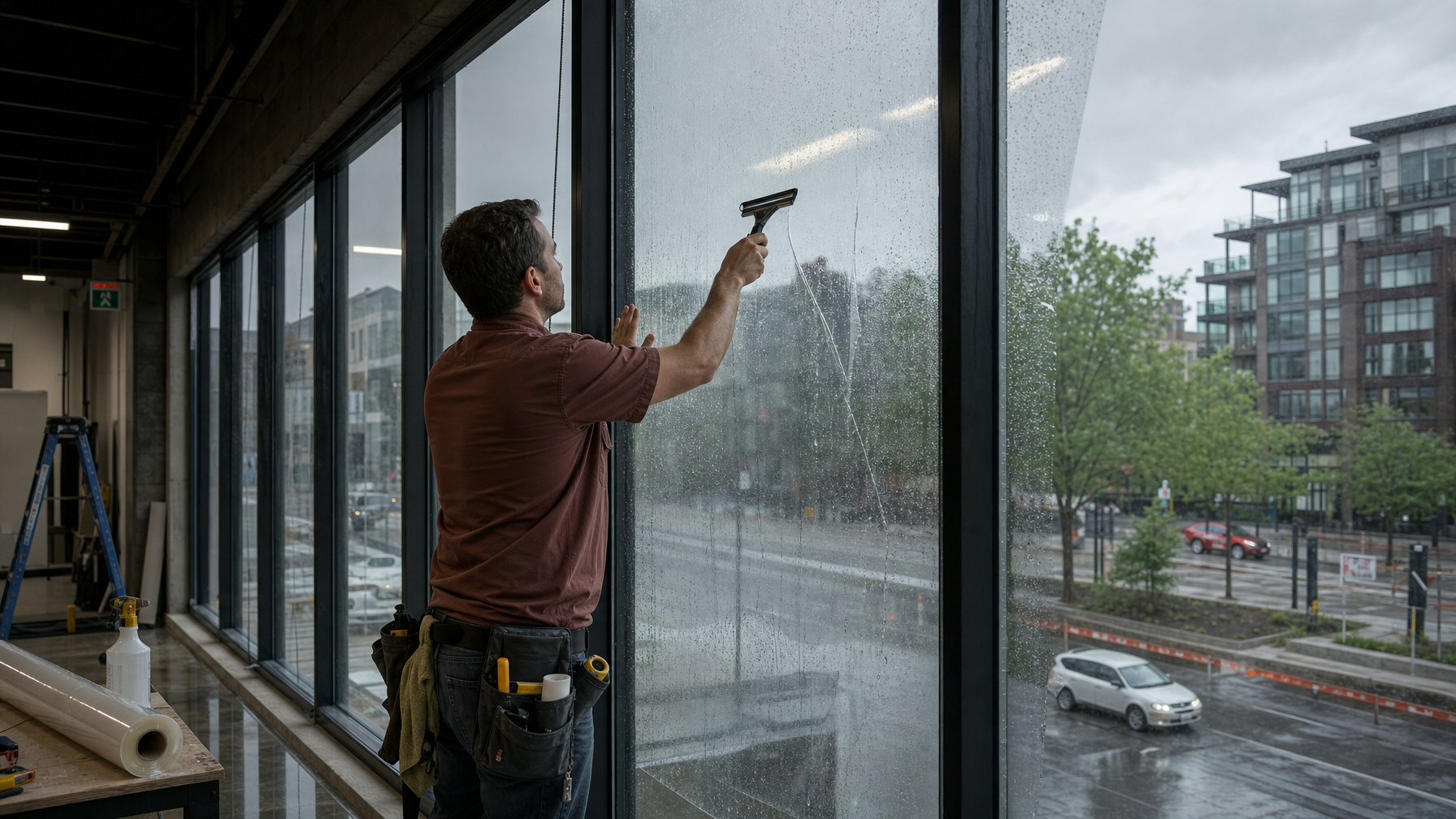
When a BC home or commercial building is losing heat in winter, overheating in summer, or struggling with glare and fading, the first question is usually the same: replace the windows or add film? Both options address the same underlying problems, but they do it at very different price points, timelines, and levels of disruption. This guide breaks down the real comparison so you can make the right call for your property.
Window film costs $9, $22 per square foot installed and delivers heat rejection, UV blocking, privacy, and security without replacing glass. Window replacement costs $400, $1,200 per window and is only necessary when glass is cracked, fogged between panes, or structurally failing. For performance upgrades on sound existing glazing, film provides 80, 90% of the benefit at roughly 10, 15% of the cost.
What Problems Does Each Option Actually Solve?
Window film and window replacement. Owners who already have sound dual-pane IGUs can often add solar control with film instead of new glass; see does window film work on double pane windows. Owners of character homes should also read about window film for heritage windows before committing to sash replacement overlap significantly in what they fix, but they are not interchangeable. Understanding which problems each solution actually addresses is the starting point for any honest comparison.
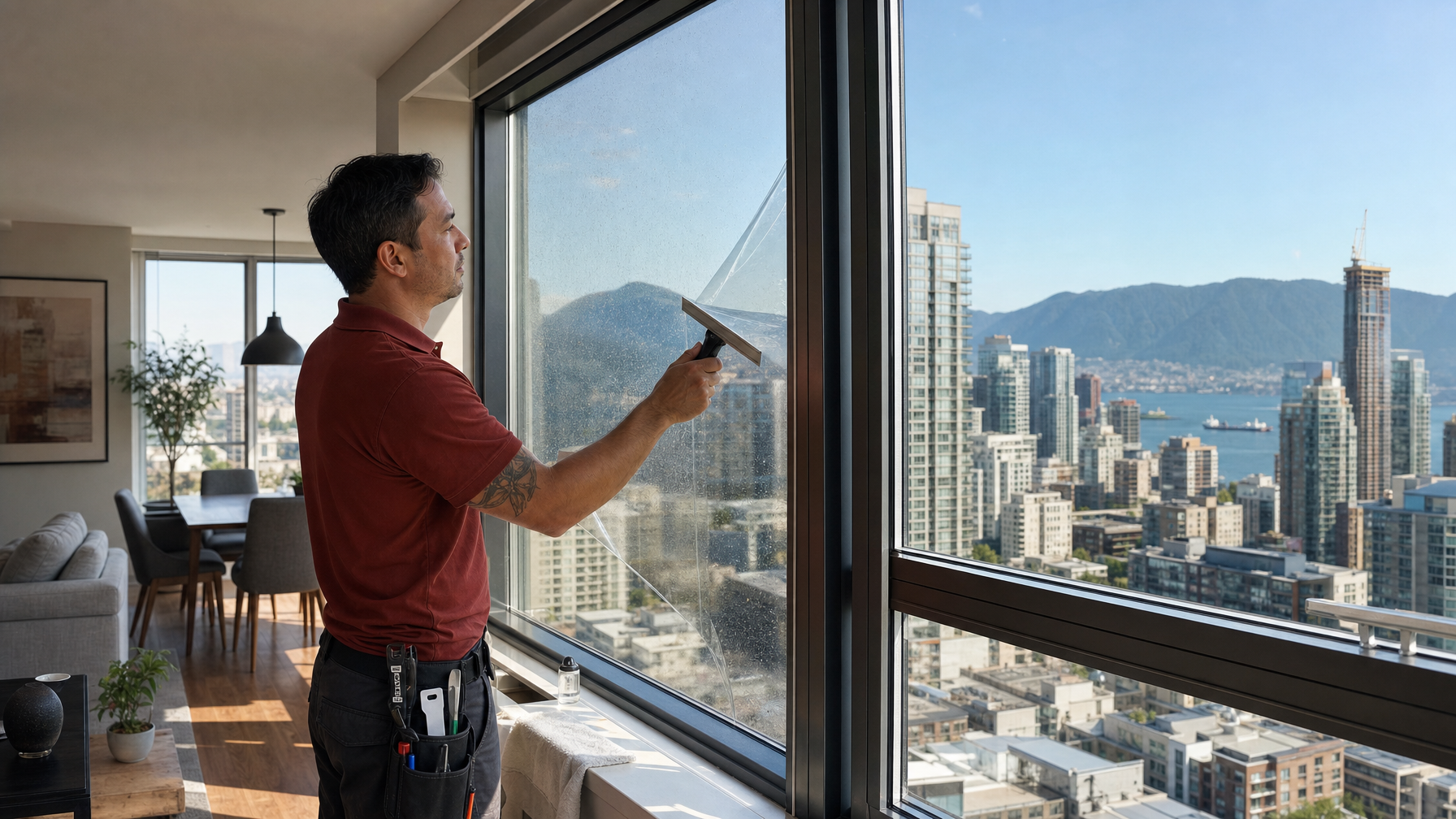
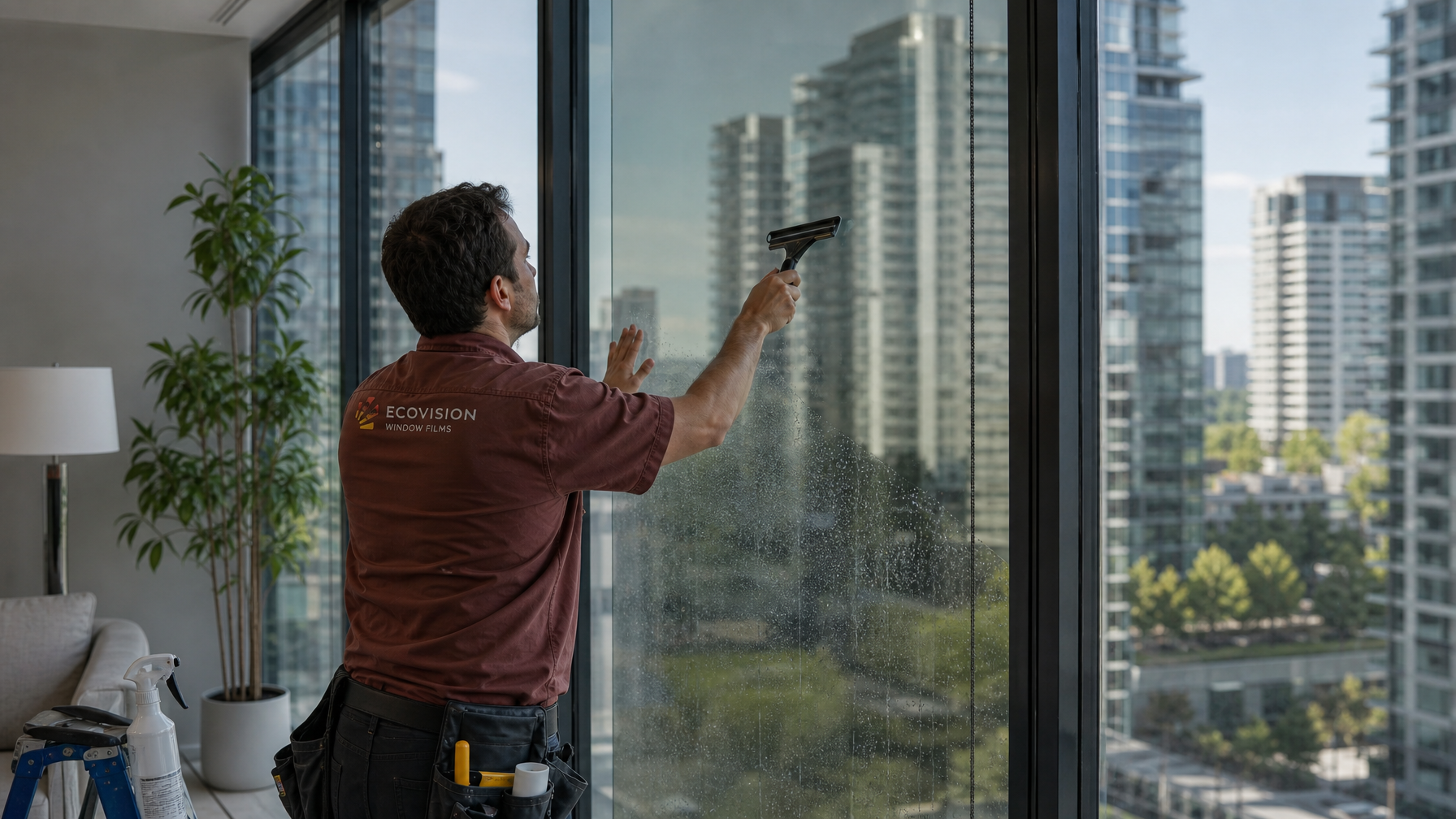
Window film addresses: Solar heat gain (ceramic and reflective films block 40, 80% of infrared heat), UV radiation (quality film blocks up to 99% of UV-A and UV-B), glare at workstations and in living areas, daytime privacy without blocking light, and security against glass breakage. At Ecovision Window Films, we routinely specify film packages for Lower Mainland commercial buildings that cover two or three of these requirements in a single installation pass.
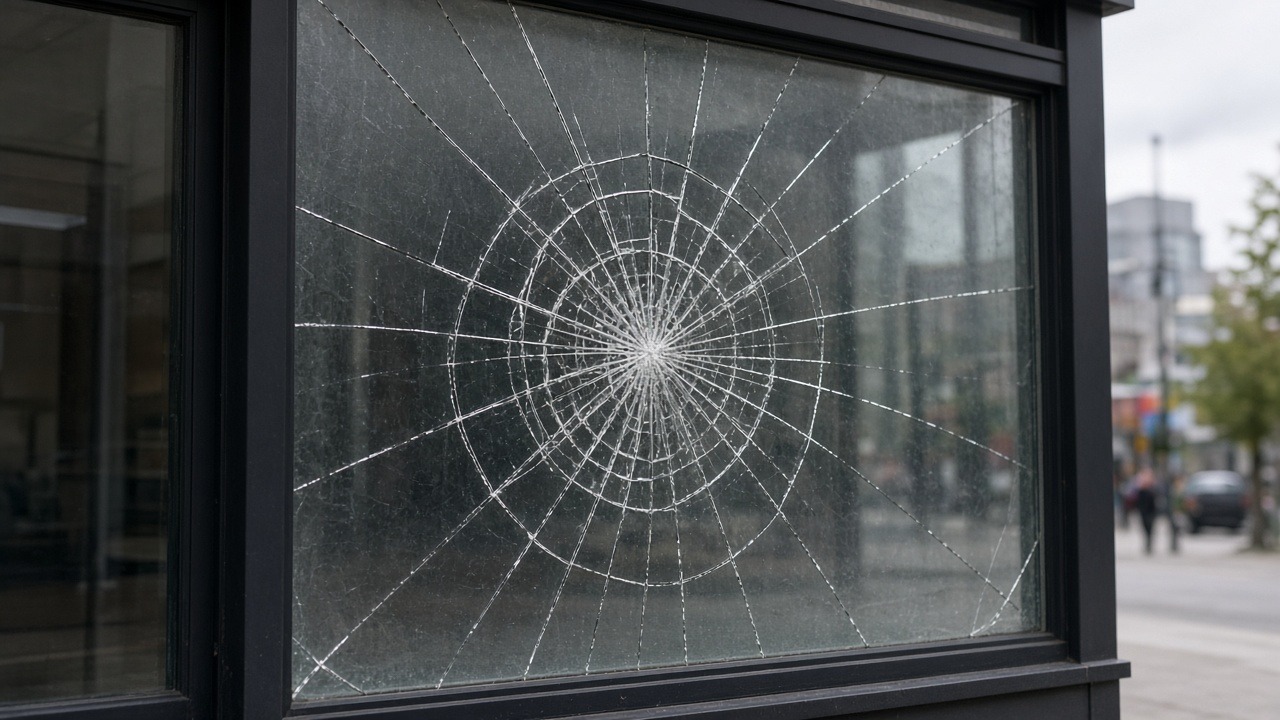
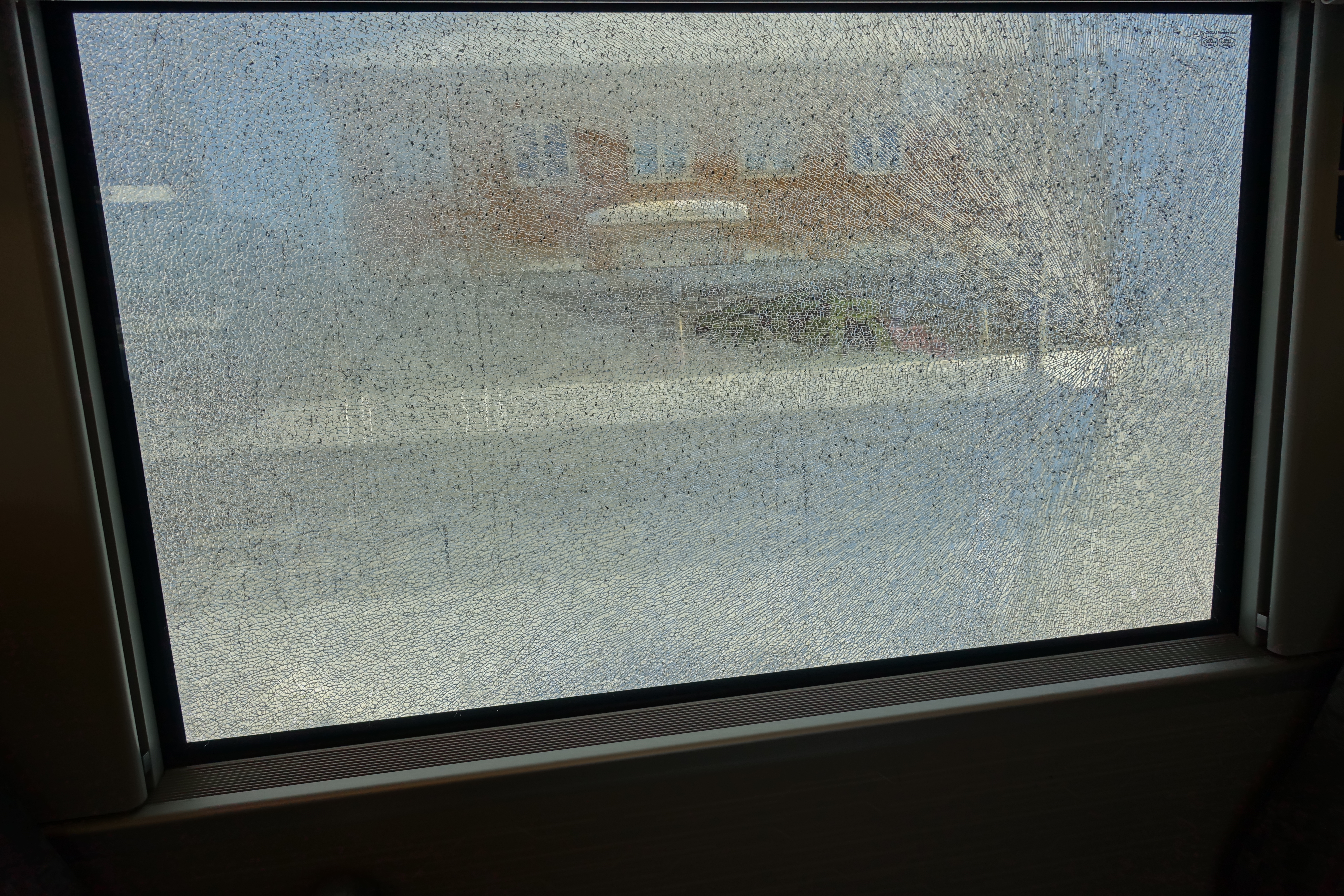
Window replacement addresses: Failed double-pane seals (the fogging between panes that film cannot fix), cracked or broken glass, windows that no longer open, close, or seal correctly, and significant frame deterioration. Replacement also upgrades to higher-efficiency glazing specifications, relevant when a building is pursuing BC Energy Step Code compliance and existing glazing falls short of the required U-value.
If your existing windows open and close correctly, the glass is not cracked, and there is no fogging between panes, film will solve your performance problems without requiring you to pay for the frame, hardware, installation scaffolding, and construction disruption that replacement involves.
Cost Comparison: Window Film vs. Window Replacement in BC
This is where the comparison becomes decisive for most BC property owners.
| Factor | Window Film (BC) | Window Replacement (BC) |
|---|---|---|
| Installed cost | $9, $22 per sq ft | $400, $1,200 per window |
| Typical residential home (20 windows) | $1,800, $4,400 | $8,000, $24,000 |
| Typical commercial floor (200 windows) | $18,000, $44,000 | $80,000, $240,000 |
| Payback period (energy savings) | 3, 5 years | 10, 25 years |
| Permits required | None | Building permit (most BC municipalities) |
| Installation disruption | Hours per space | Days to weeks per floor |
| UV blocking | Up to 99% | 50, 70% (standard double-pane) |
| Lifespan | 12, 20 years (professionally installed) | 20, 30 years (frame-dependent) |
On a per-square-foot basis, professionally installed window film from a certified installer typically runs 85, 92% less than window replacement for the same glazing area. For a typical 2,500-square-foot Lower Mainland home, that difference can be $15,000, $20,000 out of pocket before factoring in permit fees, strata approval processes, or construction-phase disruption.
How Does Window Film Perform vs. New Windows for Heat, UV, and Privacy?
Modern window film technology has closed the performance gap on most metrics that matter to BC property owners.
Heat rejection: High-performance ceramic and nano-ceramic films block 40, 80% of total solar energy. A standard double-pane replacement window with Low-E coating rejects approximately 25, 50% of solar heat gain. For south- and west-facing glazing in the Lower Mainland, which sees meaningful solar load from May through September, film often outperforms new windows on the heat rejection metric alone.
UV blocking: This is where film wins decisively. Quality LLumar and Vista certified films block up to 99% of UV-A and UV-B radiation. Standard clear double-pane Low-E glass blocks approximately 50, 70% of UV. This matters for interior finish longevity, hardwood flooring, upholstered furniture, and artwork fade significantly faster in rooms with unfilmed glass, even through modern replacement windows.
Visible light transmission: Solar control films are available from 15% to 70% visible light transmission (VLT). A neutral 50% VLT film is nearly invisible to occupants and visitors while still delivering meaningful solar performance. Replacement windows cannot add privacy or decorative treatment without upgrading to specialist glazing, which substantially increases the per-window cost.
Winter heat retention: This is the one metric where new windows with high-performance frames have an edge over film. Low-E replacement windows reduce conductive heat loss through the glass. Film reduces radiant heat loss and air infiltration through existing seals, but does not address conductive loss through glass the way a new double- or triple-pane unit does. For BC homes with single-pane glazing, insulating window film can reduce heat loss by up to 30%, but a full replacement will perform better on winter insulation in cold climates.
When Does Window Replacement Make More Sense Than Film?
Window film is not always the right answer. There are specific conditions under which replacement is the correct call, and being clear about those conditions is part of giving BC property owners an honest assessment.
Replace when:
- Glass has failed seals between double-pane units (visible fogging, condensation between panes). Film applied over failed double-pane glass will not restore clarity or thermal performance.
- Frames are cracked, warped, or have significant air infiltration around seals. The performance problem is in the frame, not the glass, film addresses the glass surface only.
- Glass is cracked or structurally compromised. Film cannot restore structural integrity to broken glass.
- The building is pursuing BC Energy Step Code compliance and the existing windows fall below the required U-value. In that case, replacement to a code-compliant specification is necessary regardless of film performance.
- Windows are single-pane and the primary concern is winter insulation in a high-heating-degree-day location. Film helps, but full replacement to double- or triple-pane delivers significantly better results in extreme cold.
At Ecovision, when we assess a property and find failed seals or structural glazing issues, we say so. Film installed over damaged glass is a poor investment. The honest answer in those cases is replacement first.
What Do BC Property Managers and Homeowners Choose?
In practice, most BC commercial property managers and homeowners with sound existing glazing choose film when the performance objective is heat control, UV protection, privacy, or security, because the cost differential is too large to ignore and the performance gap is smaller than most people expect.
At Bentall 4 in Vancouver, Ecovision installed LLumar solar control film across the affected glazing rather than pursuing glass replacement. The project eliminated the need for a major capital works program, reduced solar heat gain in treated zones, and was completed without disrupting tenants. Window replacement for the same scope would have required scaffolding, temporary office closures, and a capital budget several multiples larger.
At Guildford Seniors Village in Surrey, the priority was UV protection and glare reduction for residents who spend extended time near windows. Film installed on existing sound glazing delivered 99% UV blocking and eliminated glare complaints, at a fraction of the cost of replacing glazing across the facility. Healthcare facilities under WorkSafeBC thermal comfort guidelines frequently choose film over replacement because it achieves compliance faster and at lower cost.
The Rocky Mountaineer facility in BC chose film over replacement for the same reason most premium operators do: the performance result is real, the disruption is minimal, and the outcome is invisible to guests and occupants.
Which Option Has the Better Payback Period in BC?
On energy savings alone, window film typically pays back in 3, 5 years in BC commercial applications. Window replacement with premium glazing typically requires 10, 25 years to pay back through energy savings, depending on the existing glazing condition, the replacement specification, and the building’s energy use profile.
The CleanBC program and BC Energy Step Code requirements are driving more property owners toward window performance upgrades, but the compliance pathway matters. For most existing commercial buildings in BC, film applied to sound double-pane glazing delivers a compliant performance improvement faster and at lower cost than a full replacement program.
For residential properties, the math is similar. A LLumar or Vista certified energy efficient window film on south- and west-facing windows in a Lower Mainland home reduces HVAC cooling load measurably from the first summer after installation. The payback period through energy savings alone is typically under 5 years in Metro Vancouver’s climate, considerably faster than reviewing window film costs in BC alongside replacement quotes will confirm.
To find out which option is right for your specific glazing condition, Ecovision Window Films offers free on-site assessments across Vancouver and the Lower Mainland. Call (236) 862-0052 or visit ecovisioncanada.com/contact/ to schedule.
Related Articles
- Energy Efficient Window Film in Vancouver: What It Saves, What It Costs, and What to Install
- How Much Does Window Film Cost in BC? (2026 Pricing Guide)
- Solar Window Film for Vancouver Homes: What It Does, What It Costs, and What to Install
- How Long Does Professionally Installed Window Film Last in BC?
- Reflective Window Film for Summer Heat in BC: Types, Costs, and What to Know
Frequently Asked Questions
About the Author: This article was written by the Ecovision Window Films team. Edward, Director at Ecovision, brings a distinctive perspective to the window film industry, with over a decade in real estate development, including roles as Executive Director at a real estate development firm and Director of Strategic Partnerships, before joining Ecovision. That background gives the company a sharp edge in serving BC property managers and building owners. Ecovision is a certified installer for leading film brands with completed projects for healthcare facilities, government buildings, and commercial properties throughout the Lower Mainland. For a free site assessment, call (236) 862-0052 or visit ecovisioncanada.com/contact/.