
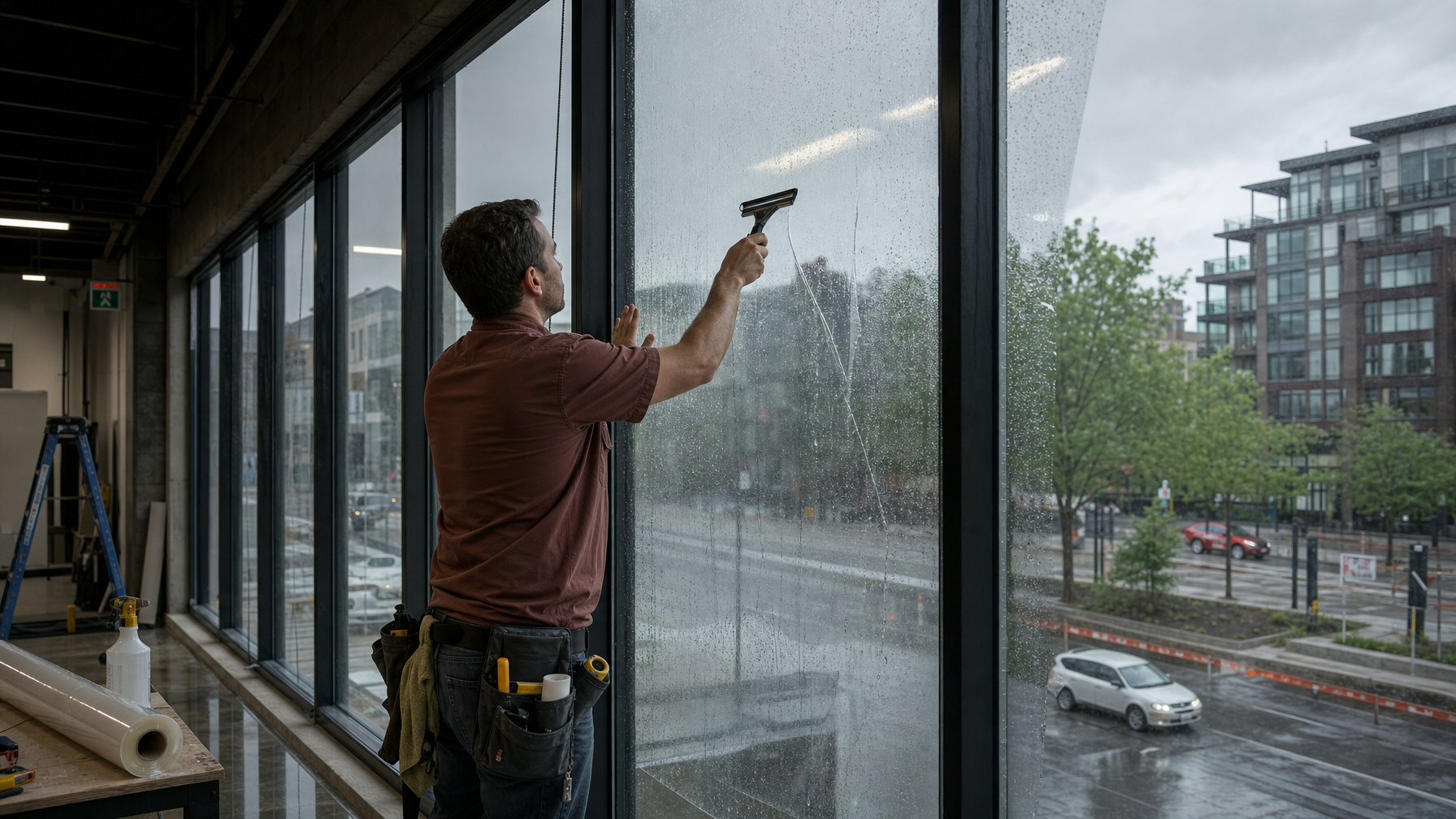
Bird safe window film typically costs $12 – $22 per square foot installed in BC, compared to $9 – $15 for standard solar or privacy film (see our complete 2026 BC window film pricing guide for all film type costs). The premium covers specialized UV-patterned or dot-matrix coatings that birds can detect. For commercial and institutional buildings in Vancouver subject to the City’s Bird-Friendly Design Guidelines, that price difference is rarely optional.
Ecovision Window Films installs both bird safe and standard window films across Vancouver and the Lower Mainland. In this guide, we break down what drives the cost difference, which film types qualify under City of Vancouver requirements, and how to decide whether the upgrade makes sense for your property.
What Makes Bird Safe Window Film Different from Standard Film?
To humans, the difference between standard and bird safe window film is nearly invisible, the patterns are subtle. To birds, the difference determines whether they survive contact with your building.
Birds perceive UV light (wavelengths 320, 400 nm) that is invisible to the human eye. Standard window film appears transparent or reflective to birds, they see the reflected sky or landscape and attempt to fly through the glass. Bird safe film adds UV-reflective coatings or visible patterns that birds register as a solid obstacle and avoid.
There are four primary formats used in BC:
- UV-pattern film: A UV-reflective dot matrix applied uniformly across the glazing. Largely invisible to humans in normal lighting. Most common on new commercial buildings and institutional facilities.
- Stripe pattern film: Horizontal or vertical bands following the “2×4 rule”, stripes no less than 6mm wide, spaced no more than 100mm (4 inches) apart vertically or 50mm (2 inches) apart horizontally.
- Frosted or patterned privacy film: Frosted bands that serve both as privacy film and bird deterrence. Common on office glazing, healthcare corridors, and institutional facilities.
- Solar-reflective tint: Standard solar film. Not specifically designed for bird deterrence, but the reflected skyscape does reduce some collisions, typically 20, 40% reduction versus 80, 95% for dedicated bird safe film.
Ecovision installs LLumar and Vista certified bird safe films, the two manufacturer lines we carry, both of which meet the American Bird Conservancy’s (ABC) BirdSafe rating thresholds when applied to the correct pattern spacing specifications.
How Much Does Bird Safe Window Film Cost in BC? The Full Price Breakdown
The prices below reflect professionally installed film across the Lower Mainland. Supply-chain pricing and building access, height, scaffolding requirements, interior versus exterior application, affect final quotes. All prices are per square foot installed.
| Film Type | Installed Cost (BC) | Bird Deterrence Level | Best For |
|---|---|---|---|
| UV-pattern bird safe film | $14 – $22 / sqft | High (80, 95%+ collision reduction) | Commercial buildings, new construction, institutions |
| Stripe / frosted stripe film | $12 – $18 / sqft | High (meets 2×4 rule) | Low-rise offices, healthcare, residential |
| Frosted privacy film (patterned) | $10 – $16 / sqft | Moderate-High | Bathrooms, stairwells, interior partitions |
| Standard solar tint film | $9 – $14 / sqft | Low (20, 40% incidental reduction) | Heat and glare control only |
| Standard one-way privacy film | $10 – $15 / sqft | Low-Moderate (reflective deterrence only) | Offices, boardrooms |
| Standard security film | $12 – $22 / sqft | None (glass-holding only) | Storefronts, government, safety compliance |
For a typical commercial building in Vancouver with 2,000 square feet of glazing, the incremental cost of upgrading from standard solar film to dedicated UV-pattern bird safe film is approximately $12,000 – $16,000. For a residential property with 200 sqft of exterior glass, the upgrade typically runs $1,200 – $1,600 more than standard film, a manageable one-time expense for a treatment that lasts 12, 20 years.
What Drives the Price Difference Between Bird Safe and Standard Film?
Three factors push bird safe film above the price of standard tint:
- Specialized coating technology. UV-reflective layers require additional manufacturing steps not present in standard dyed or metallic-laminate tint. The UV coating must fluoresce at wavelengths around 365 nm, visible to birds, without distorting daylight colour for occupants. That precision adds cost at the production level.
- Pattern precision during installation. Stripe and dot-matrix films must be applied with exact spacing to meet bird-friendly design guidelines. Installers measure and cut to a stricter tolerance than standard film, adding 15, 25% to labour time versus a comparable standard film installation.
- Lower market volume. Standard solar film is one of the most widely installed glazing products globally. Bird safe film remains a smaller, more specialized segment, lower volume means less price competition and higher per-unit cost from manufacturers.
These cost drivers are not a reason to avoid bird safe film. They are a reason to budget accurately from the start rather than treating it as a standard film add-on.
Does Vancouver Require Bird Safe Window Film on Commercial Buildings?
Yes, in many cases. The City of Vancouver’s Bird-Friendly Design Guidelines (adopted 2022 under the Bird-Friendly Standards Policy) require bird collision deterrence measures on new buildings and major renovations. The key rules applicable to window film:
- All glazing from grade up to 12 metres (approximately the 4th floor) on new development must use bird-friendly treatments
- Glazing with a Threat Factor score above 30 requires mitigation, this includes most clear or highly reflective glass panels larger than 2 square metres
- The 2×4 rule applies: deterrence elements must be spaced no more than 50mm horizontally and 100mm vertically to qualify under the guidelines
- Building permits for Class A developments in Vancouver include bird-friendly design review as part of the approvals process
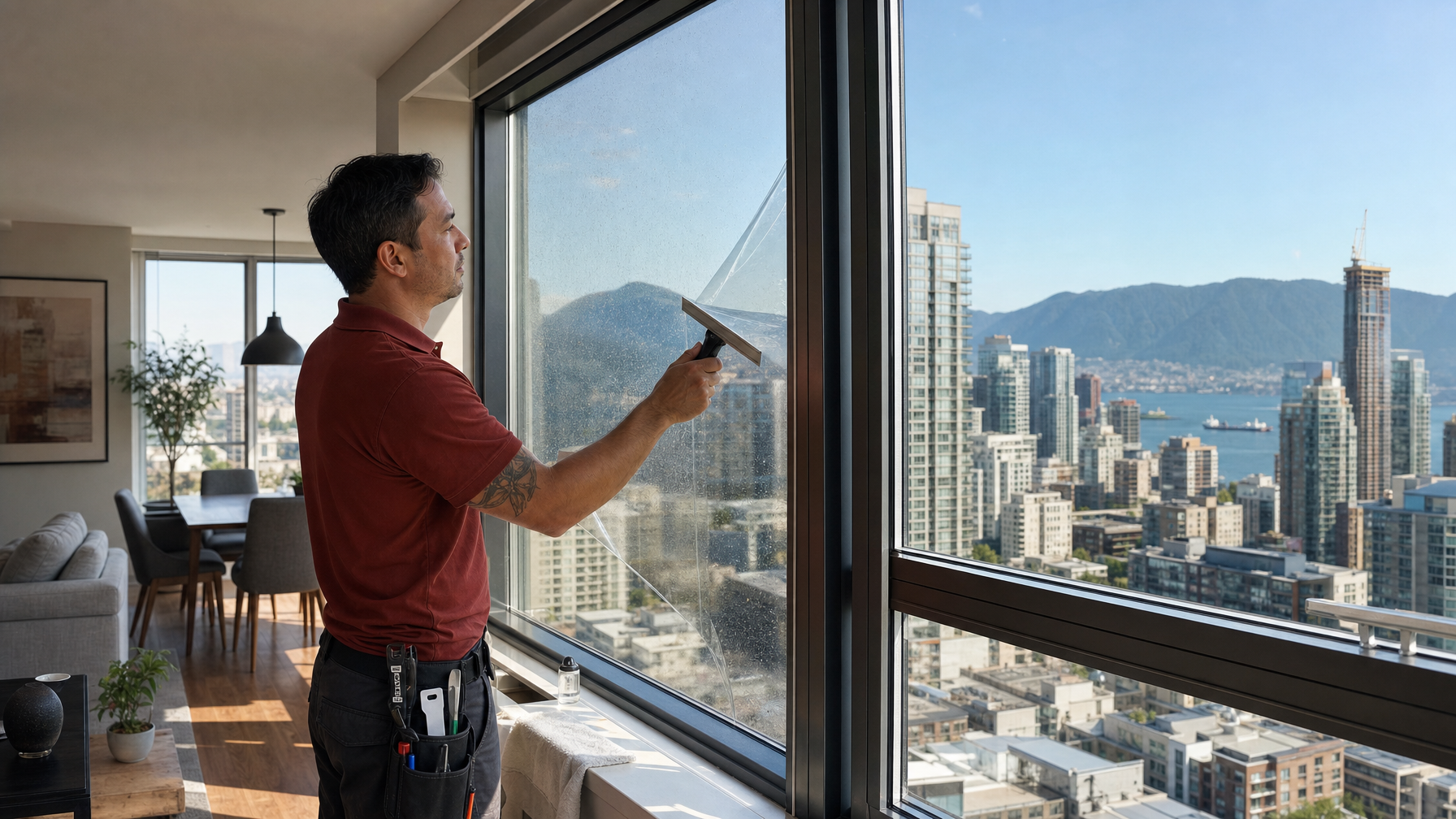
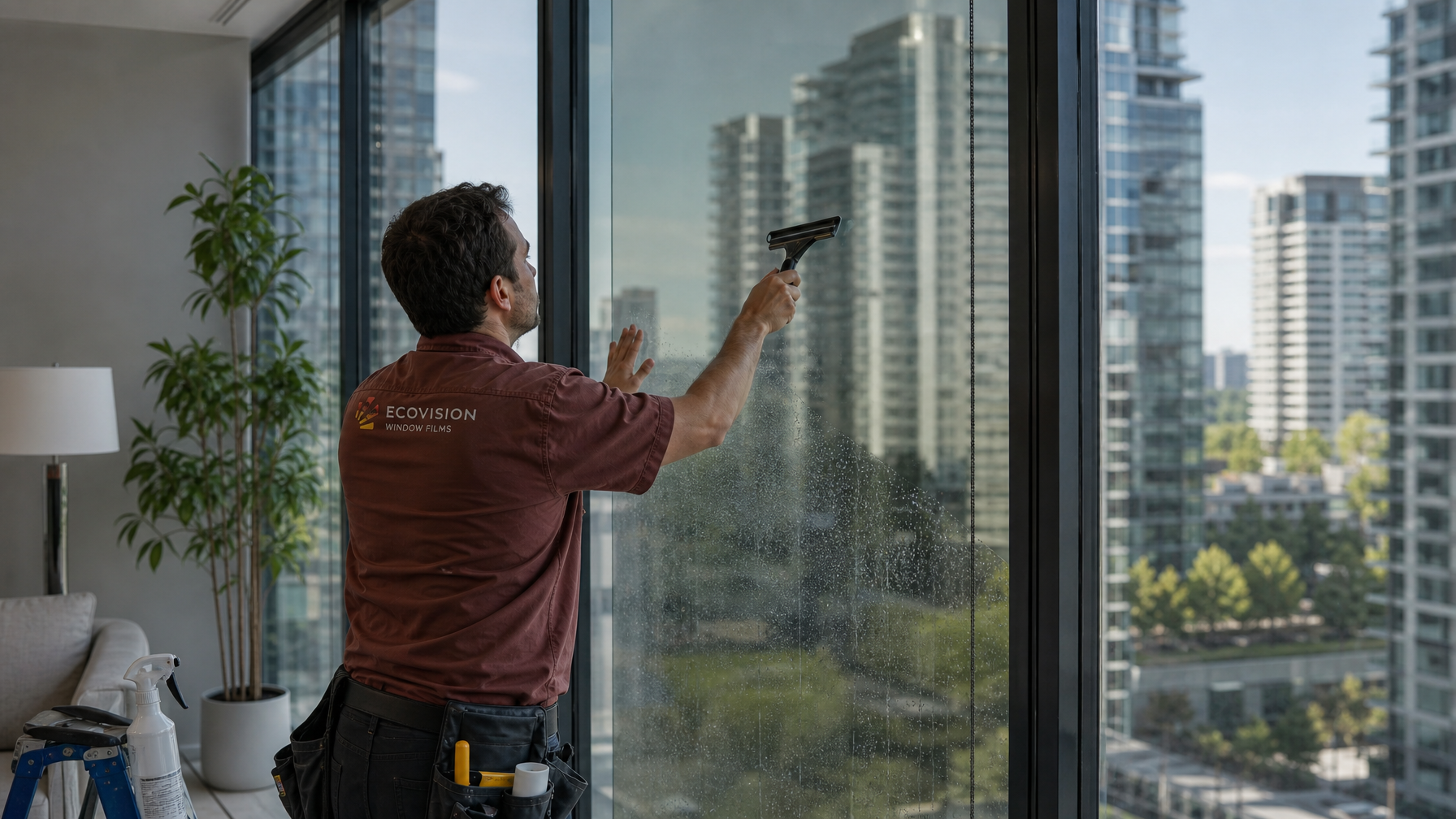
For existing buildings, bird safe film is the most cost-effective retrofit solution, it avoids glass replacement entirely and can be applied to the interior surface, bypassing exterior access restrictions in strata and high-rise buildings. The City of Vancouver guidelines explicitly recognize window film treatments as an accepted deterrence method when they meet the 2×4 spacing standard.
Beyond Vancouver, the City of Burnaby and Metro Vancouver’s Regional Context Statement both encourage bird-friendly design. Only Vancouver currently enforces it as a permit condition, but this is expected to expand under future BC Building Code framework revisions.
Is Bird Safe Window Film Worth the Extra Cost for BC Properties?
For properties subject to Vancouver’s Bird-Friendly Design Guidelines, the cost question is less about “worth it” and more about “how to budget it.” Compliance is a permit condition for new builds, bird safe film is consistently the lowest-cost path to meeting it versus glass replacement or architectural screening.
For existing buildings not yet under a retrofit requirement, the calculation depends on building location and exposure. Buildings near urban greenways, water features, parks, or open sky corridors see significantly higher bird strike rates. Environment and Climate Change Canada (ECCC) estimates that building glass kills between 16 and 42 million birds annually in Canada, with urban mid-rise and low-rise buildings (2, 8 storeys) responsible for the majority of strikes. High-rise towers above 12 storeys account for a much smaller share per building.
At Ecovision, we have completed bird safe film installations on institutional and healthcare buildings throughout the Lower Mainland, including facilities near MacLean Park and on institutional campuses where atrium glazing posed ongoing bird strike risk. In one healthcare corridor retrofit, the client had experienced recurring strike incidents on a floor-to-ceiling glass corridor spanning 340 square feet. After installing LLumar UV-pattern bird safe film at $16/sqft installed, strike incidents dropped to zero within the first migratory season. The film also reduced solar heat gain in that corridor by 38%, adding measurable energy benefit alongside the bird deterrence value.
For most commercial properties, the per-sqft premium over standard film pays for itself in avoided liability, regulatory compliance, and, for dual-purpose energy-efficient bird safe films, real heat reduction. Learn more about how bird safe window film works and whether bird safe window films are effective at reducing collisions.
Which BC Buildings Benefit Most from Bird Safe Window Film?
Not all buildings carry equal bird strike risk. The following building types account for the highest collision rates in Metro Vancouver and the Lower Mainland:
- Healthcare facilities and senior care homes: Often built with abundant natural light, atrium glazing, and corridor windows that create flight-path illusions for birds. Ecovision has completed bird safe installations at senior care facilities in the Lower Mainland for this exact reason.
- Institutional and university buildings: Large glass facades, often surrounded by campus greenspace. Migratory bird routes cross many Lower Mainland campuses seasonally.
- Office buildings near parks or water: Gastown, False Creek, the Cambie Corridor, and the Burrard waterfront all have elevated strike rates due to proximity to greenways and open flyways.
- Retail storefronts with full-height glazing: Large clear glass panes at grade level are among the highest-risk configurations per square foot, birds approach at speed without warning signals.
- Residential homes with corner or angled glazing: The illusion of a flight-through gap between two panes meeting at a corner is a common residential strike trigger across the Lower Mainland.
For a site assessment and written quote comparing bird safe and standard film options for your building, contact Ecovision Window Films at (236) 862-0052 or visit ecovisioncanada.com/contact/.
Related Articles
- Are Bird Safe Window Films Effective?
- How Does Bird Safe Window Film Work? The UV Science Explained
- UV Window Film for BC Homes and Buildings: What It Blocks, What It Costs, and What to Expect
- Privacy Window Film in Vancouver: Types, Costs, and What to Know Before You Install
- Energy Efficient Window Film in Vancouver: What It Saves, What It Costs, and What to Install
About the Author: This article was written by the Ecovision Window Films team. Edward, Director at Ecovision, brings a distinctive perspective to the window film industry, with over a decade in real estate development, including roles as Executive Director at a real estate development firm and Director of Strategic Partnerships, before joining Ecovision. That background gives the company a sharp edge in serving BC property managers and building owners. Ecovision is a certified installer for leading film brands with completed projects for healthcare facilities, government buildings, and commercial properties throughout the Lower Mainland. For a free site assessment, call (236) 862-0052 or visit ecovisioncanada.com/contact/.