
Many multi-unit residential buildings (MURBs) and older condo towers across Greater Vancouver were constructed without mechanical cooling or central air conditioning. During peak summer heat waves, solar radiation passes unimpeded through window glass, trapping heat indoors and creating unlivable temperatures exceeding 30°C. For strata councils and property owners seeking temperature relief without expensive retrofit HVAC additions, architectural solar film provides a proven, non-invasive thermal barrier.
Does Solar Window Film Reduce Heat in Condos Without Air Conditioning?
Yes. Solar window film effectively reduces heat in BC condos and multi-unit residential buildings (MURBs) that lack mechanical air conditioning. By rejecting up to 78% of incoming solar thermal energy before it penetrates the glass, solar window film installed by Ecovision Window Films lowers indoor summer temperatures by 5 to 10°C throughout Greater Vancouver.
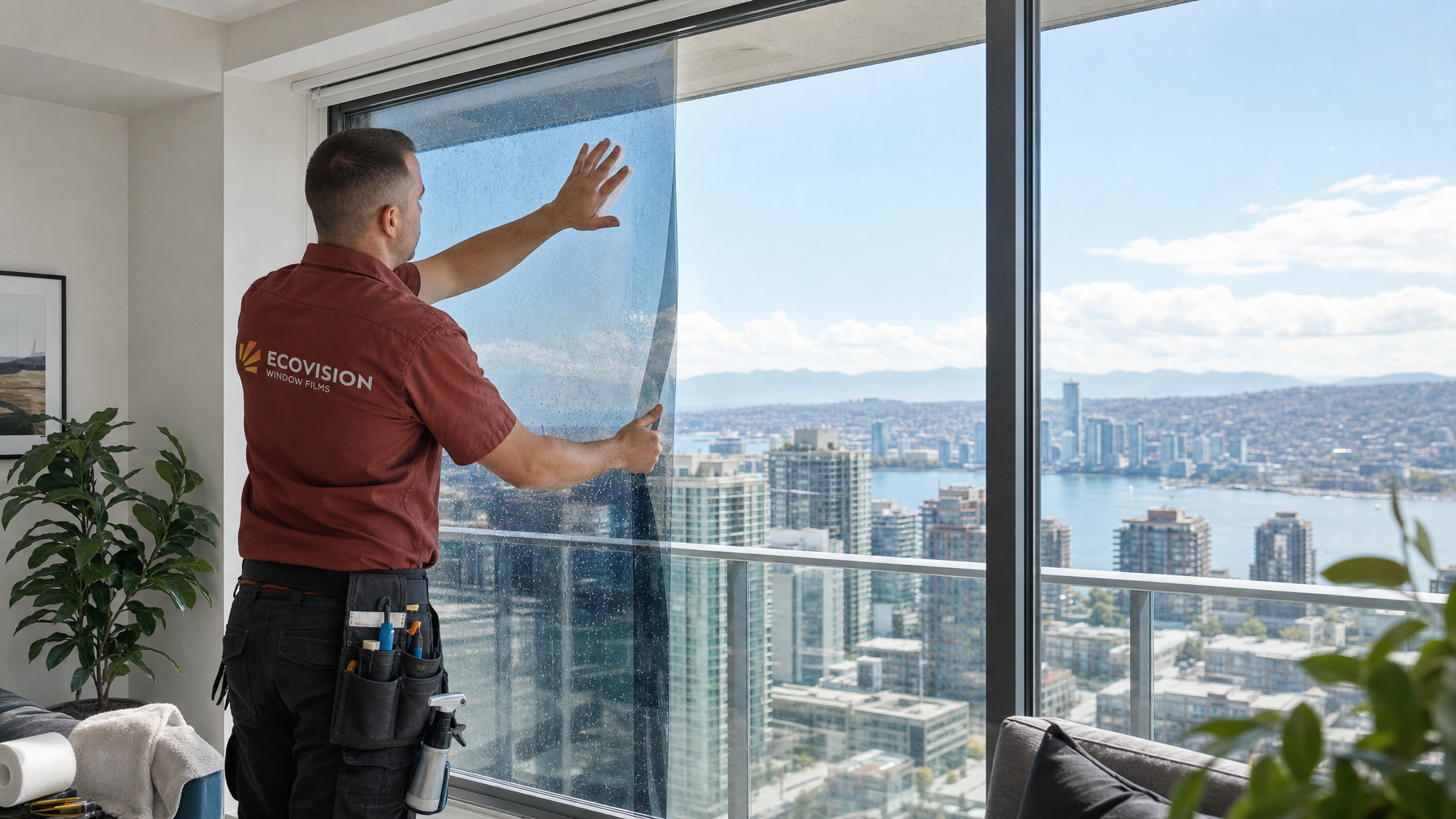
In non-cooled residential units, solar radiation entering through double-pane or single-pane windows absorbs into interior surfaces, drywall, flooring, and furniture. This thermal mass re-radiates heat as far-infrared energy, which becomes trapped behind standard window glass, a phenomenon known as the greenhouse effect. Installing high-performance solar control film reflects and absorbs solar heat at the exterior glass boundary, stopping heat accumulation before interior thermal buildup occurs.
During testing across residential properties in Vancouver, Burnaby, and Surrey, units treated with spectrally selective solar films experienced a reduction in peak afternoon indoor temperatures from 32°C down to 23°C without operating portable or window-mounted air conditioners. For property managers and strata councils managing non-cooled buildings, window film delivers immediate thermal comfort while preserving building envelope integrity.
Why Do Non-Cooled Condos Overheat in Greater Vancouver?
Residential high-rises and wood-frame MURBs built prior to updated building codes were engineered primarily for thermal retention during BC winters rather than solar heat rejection during summer. Standard clear glass window assemblies permit over 75% of total solar energy (TSER) to pass directly into living spaces, turning west- and south-facing condos into severe heat traps.
- High Window-to-Wall Ratios: Modern floor-to-ceiling glass design maximizes natural daylight but dramatically expands solar exposure surfaces.
- Lack of Structural Shading: Few residential towers in Vancouver or Richmond incorporate exterior overhangs, louvers, or architectural fins to shade glass elevations during summer solstice sun angles.
- Thermal Mass Absorption: Concrete slabs and interior materials absorb radiant heat during daylight hours and continuously emit heat well into the night, preventing night-flush cooling.
- HVAC Retrofit Barriers: Installing centralized AC or individual mini-split heat pumps in multi-unit strata buildings often faces insurmountable hurdles due to electrical capacity limits, exterior envelope penetrations, and strata bylaw restrictions.
Under the BC Energy Step Code and CleanBC sustainability guidelines, reducing cooling loads through passive envelope measures is recognized as a primary decarbonization strategy. Professional solar window film serves as an ideal passive solar mitigation technology for non-cooled residential glass.
How Does Solar Control Film Lower Indoor Temperatures Without Mechanical Cooling?
Solar window film works by controlling the three components of solar radiation: visible light, ultraviolet (UV) rays, and near-infrared (IR) heat. While human eyes perceive visible light, infrared energy accounts for over 53% of total solar heat gain felt inside a room.
Professional ceramic and spectrally selective films selectively filter the solar spectrum. Utilizing nano-ceramic or precious metal sputtering technology, these films absorb and reflect up to 97% of near-infrared wavelengths while allowing up to 70% of visible light to pass through. This maintains abundant natural daylight without the thermal heat radiation that drives up indoor temperatures.
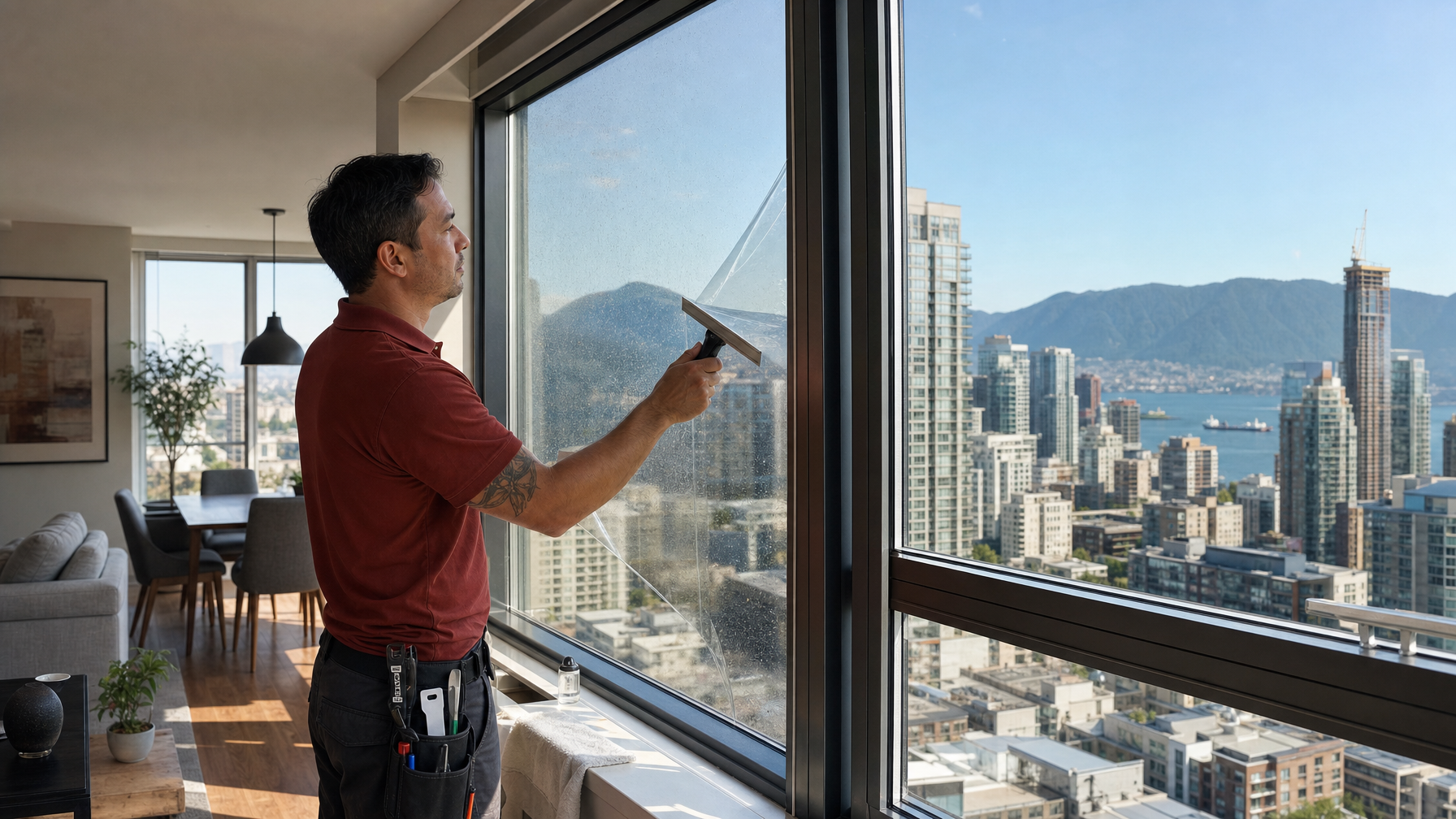
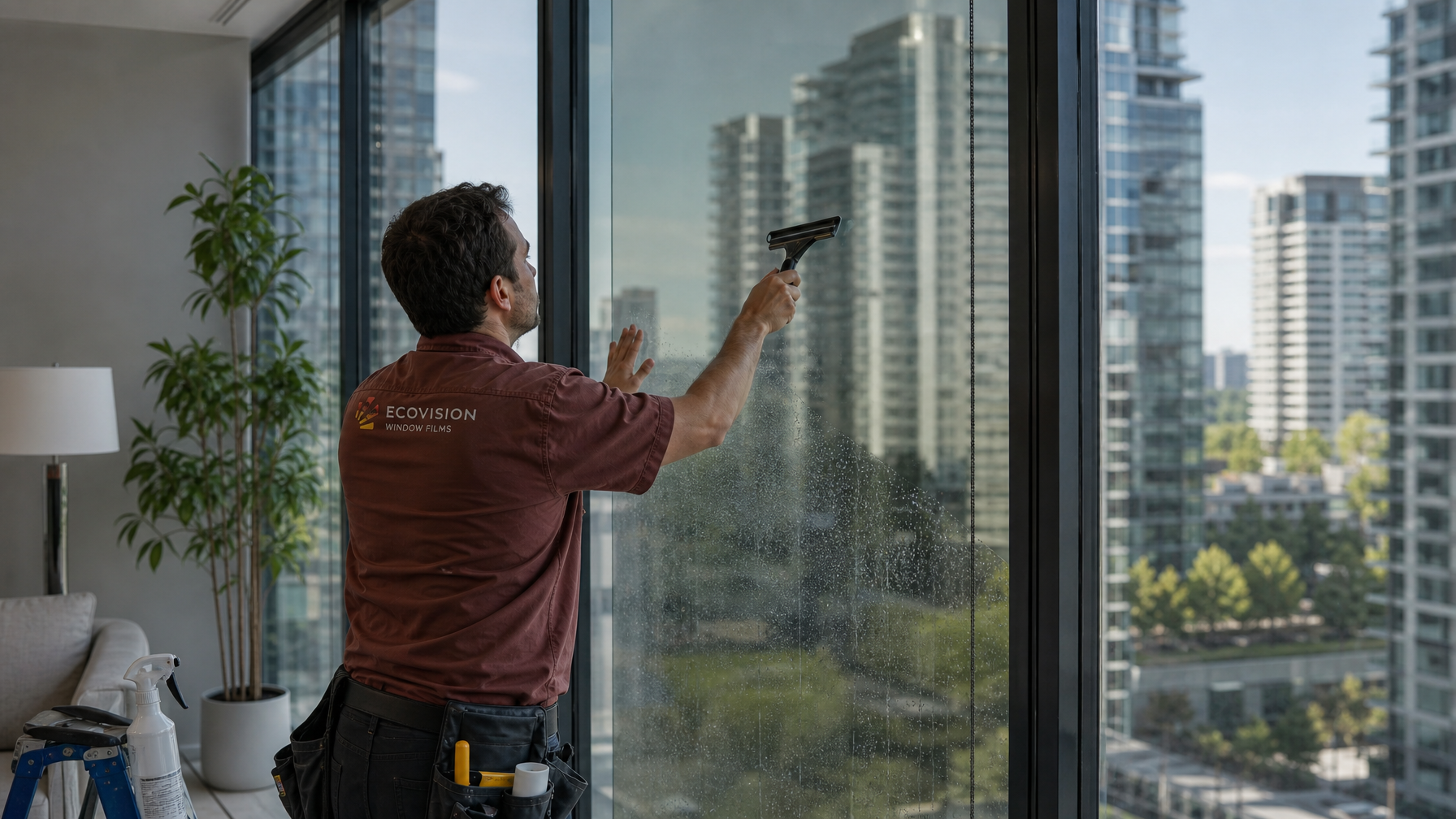
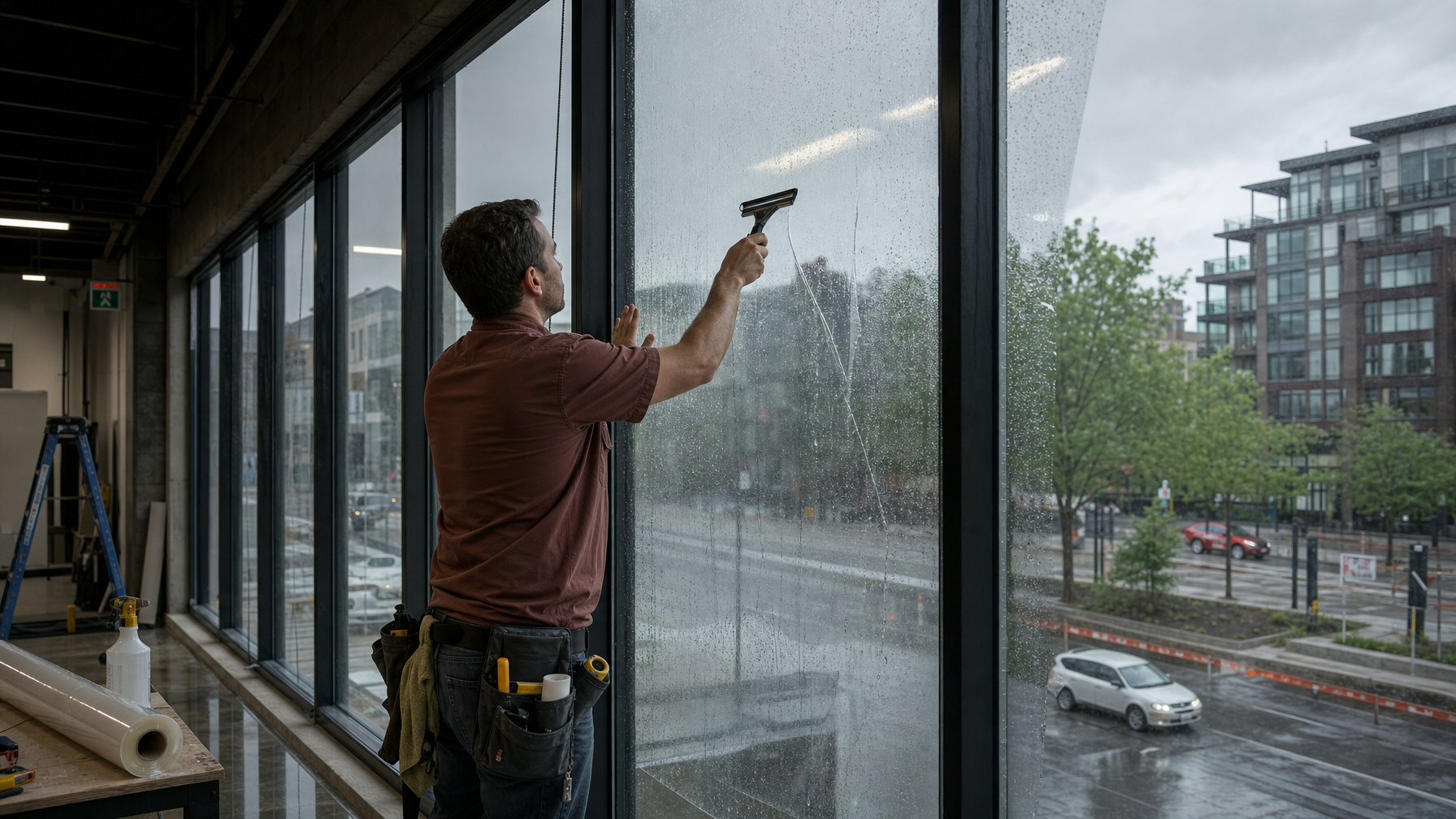
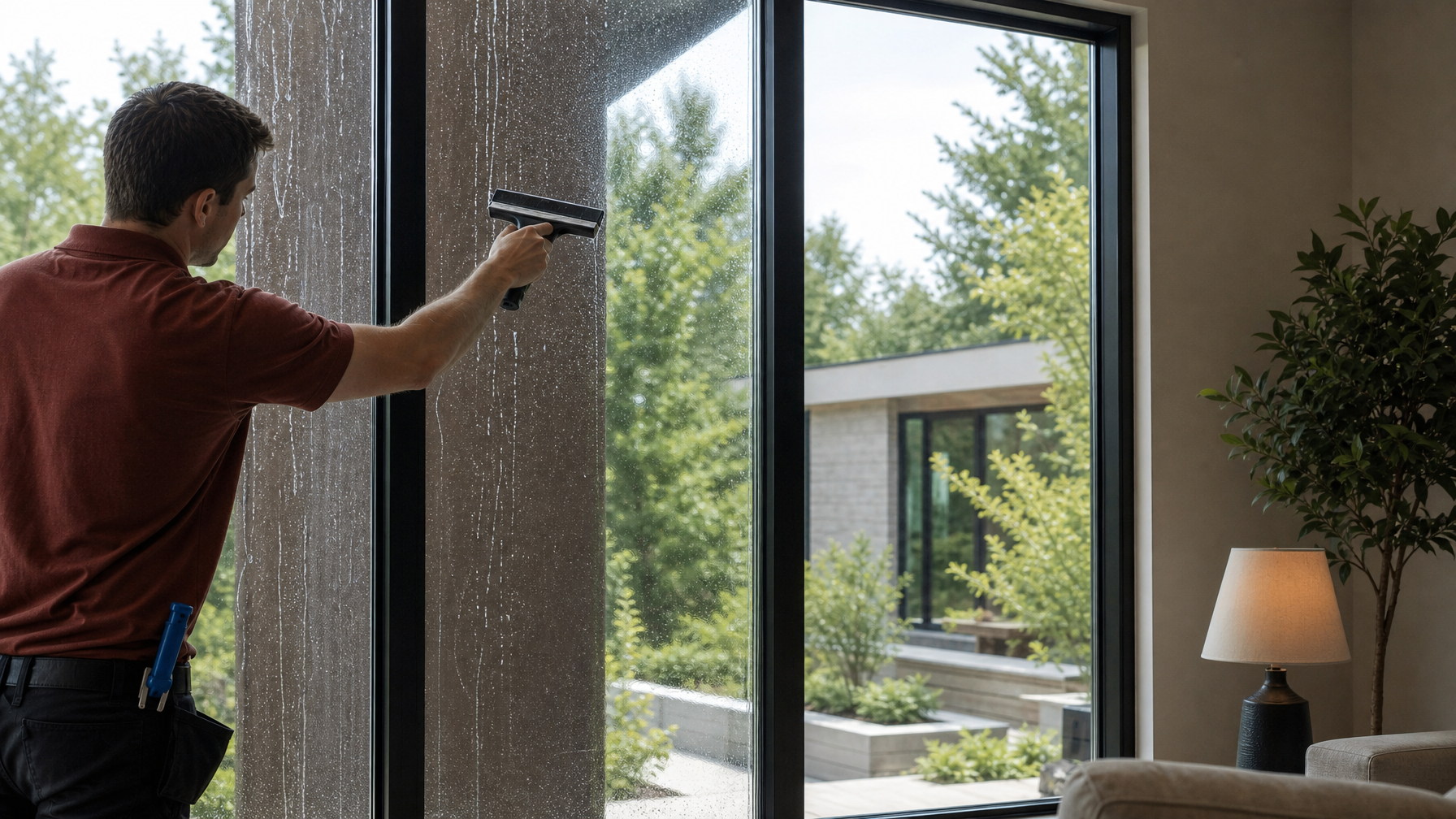
Ecovision Window Films technicians apply these films to the interior or exterior surface of existing window glass using a wet-lamination process. Following installation, the film enters a curing phase lasting 30 to 60 days, during which residual moisture evaporates and the optical adhesive forms a permanent bond with the glass surface.
Spectrally Selective vs. Dual-Reflective Films for Non-Cooled Strata Units
When selecting window film for non-cooled condos and MURBs, property owners must choose between spectrally selective (virtually invisible) films and dual-reflective films depending on strata bylaw restrictions and performance requirements.
| Film Category | Visible Light Transmittance (VLT) | Total Solar Energy Rejected (TSER) | Infrared Rejection (IRR) | Strata Exterior Uniformity | Typical Installed Cost |
|---|---|---|---|---|---|
| Spectrally Selective Ceramic (LLumar VS70) | 62% | 49% | 85% | 100% Invisible / Neutral | $12 – $18 / sq ft |
| High-Rejection Ceramic (LLumar Ceramic 35) | 35% | 56% | 88% | Subtle Warm Tint | $11 – $16 / sq ft |
| Dual-Reflective Solar (LLumar DR15 / DR25) | 15% – 25% | 68% – 78% | 92% | Reflective Exterior / Neutral Interior | $10 – $15 / sq ft |
| Clear Thermal Safety Film (Vista Vista 60) | 59% | 50% | 82% | Neutral Clear | $13 – $19 / sq ft |
For strata properties with strict rules regarding exterior facade uniformity, spectrally selective films like LLumar VS70 or VS60 provide substantial thermal rejection without altering the external appearance or reflectivity of the building’s glass elevation. For detailed strata compliance strategies, see our guide on dual-reflective window film for Vancouver strata buildings.
What Are the Real-World Costs and Energy Savings for BC Multi-Family Properties?
In non-cooled residential buildings, financial return on investment is measured through extended tenant retention, reduction of heat stress risks, and avoidance of structural HVAC capital expenditures. Professional residential solar film installation costs in Greater Vancouver typically range from $10 – $18 per square foot installed, adhering to our minimum installation price floor of $9 per square foot up to $22 per square foot for specialized safety combinations.

For a standard 750-square-foot Vancouver condo featuring 150 square feet of perimeter glass, a complete professional installation costs between $1,500 and $2,700. In comparison, retrofitting an individual ductless heat pump system in a strata tower frequently exceeds $8,000 to $12,000 per unit after factoring in electrical panel upgrades, coring through concrete exterior walls, and strata engineering reviews.
At commercial and institutional installations, such as our completed projects at Bentall 4 in downtown Vancouver, Rosemary Heights Seniors Village in Surrey, and the Rocky Mountaineer station, solar window film has successfully eliminated afternoon thermal spikes while reducing solar glare on computer screens and electronic displays.
How Do Strata Councils Evaluate Window Film for Non-Cooled Buildings?
Strata councils evaluating building-wide or individual unit solar film requests must balance thermal relief for residents against facade aesthetic consistency and glass thermal stress safety.
- Glass Thermal Stress Analysis: Ecovision’s certified technicians conduct a glass-to-film compatibility analysis to ensure selected films do not induce thermal stress breakage on dual-pane or Low-E insulated glass units (IGUs).
- Sample Mock-Up Approvals: Installing a single window test pane allows strata council members to inspect visible light transmittance and exterior reflectance under varying daylight conditions before full approval.
- Bulk Strata Pricing Programs: When multiple condo owners in a non-cooled tower combine orders, bulk installation scheduling reduces mobilizations and lowers per-unit installation costs by 15% to 25%.
Learn more about customizing solar solutions for multi-story residential towers in our detailed breakdown of window film for south- and southwest-facing Vancouver condos or explore our residential window film services and commercial window film services.
Related Articles
- Dual-Reflective Window Film for Vancouver Strata: Neutral Exterior Rules Explained
- How Window Film Stops Heat in South and Southwest-Facing Vancouver Condos
- Window Film for Strata Buildings in Vancouver: What Strata Councils Need to Know
- Energy Efficient Window Film in Vancouver: What It Saves and Costs
- Does Window Film Lower Cooling Costs in BC Homes and Buildings?
Frequently Asked Questions
Does solar window film work if my condo has no air conditioning?
Yes. Solar film blocks up to 78% of incoming solar heat at the window glass before it enters the room. This prevents thermal buildup, keeping non-cooled condos 5 to 10°C cooler during summer heat waves in Vancouver.
Will solar window film darken my living room?
Not necessarily. Spectrally selective ceramic films like LLumar VS70 allow up to 62% of visible light into the room while blocking 85% of infrared heat, providing temperature reduction with virtually invisible tinting.
How much does solar window film cost for a condo in Greater Vancouver?
Professionally installed solar window film costs between $10 and $18 per square foot. An average condo installation with 150 square feet of glass typically costs between $1,500 and $2,700.
Will strata allow solar window film on non-cooled units?
Most strata councils approve solar window films if they meet exterior uniformity guidelines. Spectrally selective ceramic films maintain neutral exterior glass aesthetics and are widely approved across Lower Mainland strata towers.
How long does window film take to cure after installation?
Window film requires a cure time of 30 to 60 days in BC’s coastal climate. During this period, small water pockets or mild haziness may appear as moisture evaporates, which fully clears as the adhesive cures.
About the Author: This article was written by the Ecovision Window Films team. Edward, Director at Ecovision, brings a distinctive perspective to the window film industry, with over a decade in real estate development, including roles as Executive Director at a real estate development firm and Director of Strategic Partnerships, before joining Ecovision. That background gives the company a sharp edge in serving BC property managers and building owners. Ecovision is a certified installer for leading film brands (LLumar and Vista) with completed projects for healthcare facilities, government buildings, and commercial properties throughout the Lower Mainland. For a free site assessment, call (236) 862-0052 or visit ecovisioncanada.com/contact/.