
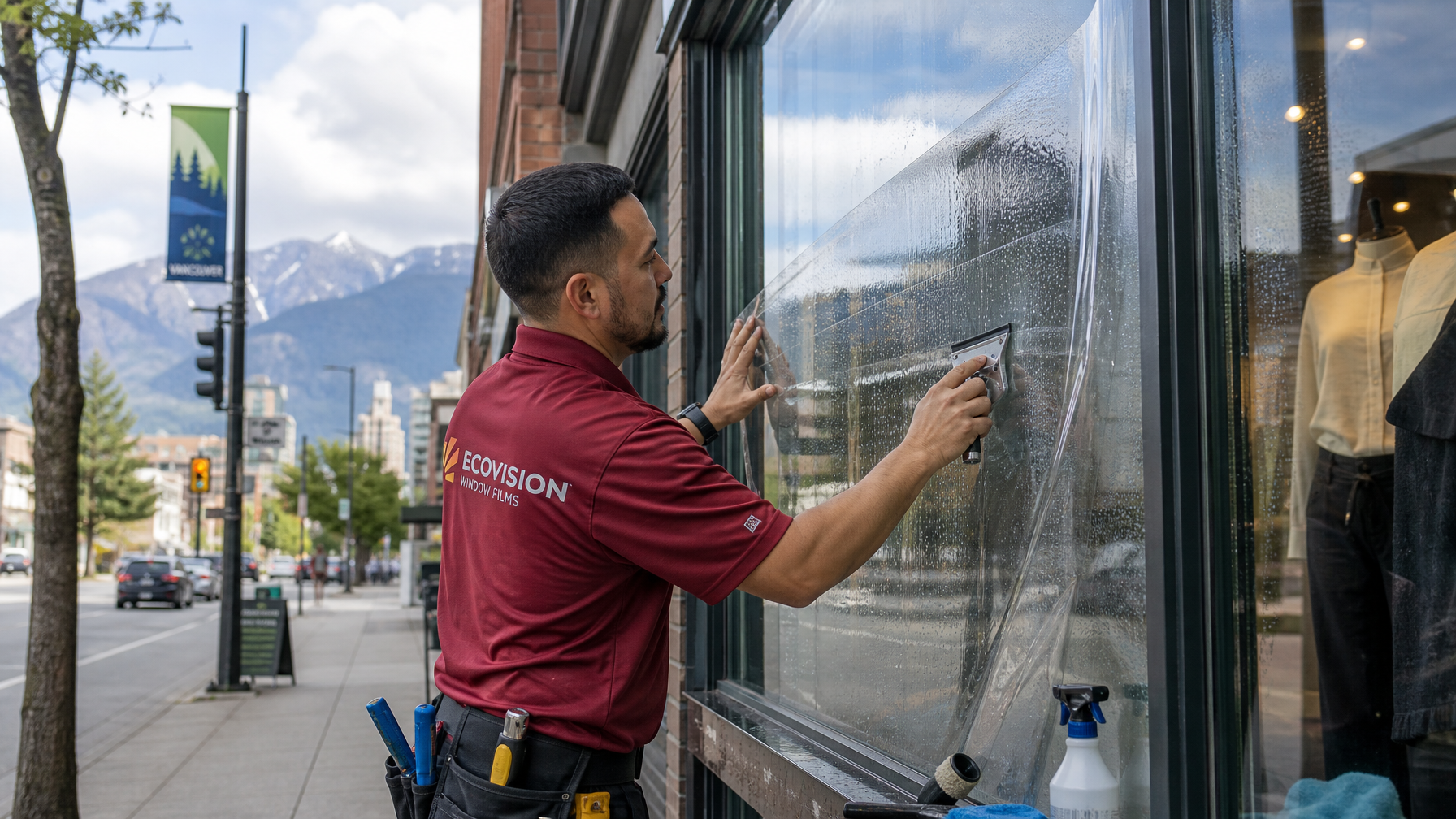
This guide covers window film for homes and condo units. Ecovision does not tint vehicles. Architectural glass only.
Quick Answer
Yes. Solar control film on south and southwest-facing condo windows blocks 40 to 75% of incoming solar heat and 40 to 60% of glare-causing visible light. In Metro Vancouver’s long summer days, a southwest-facing floor-to-ceiling window delivers as much heat as a space heater running from 1pm to 7pm. Film eliminates the peak heat gain without blocking the view, without blinds, and without changing how the glass looks from outside.
Why South and Southwest-Facing Condo Units Overheat in Summer
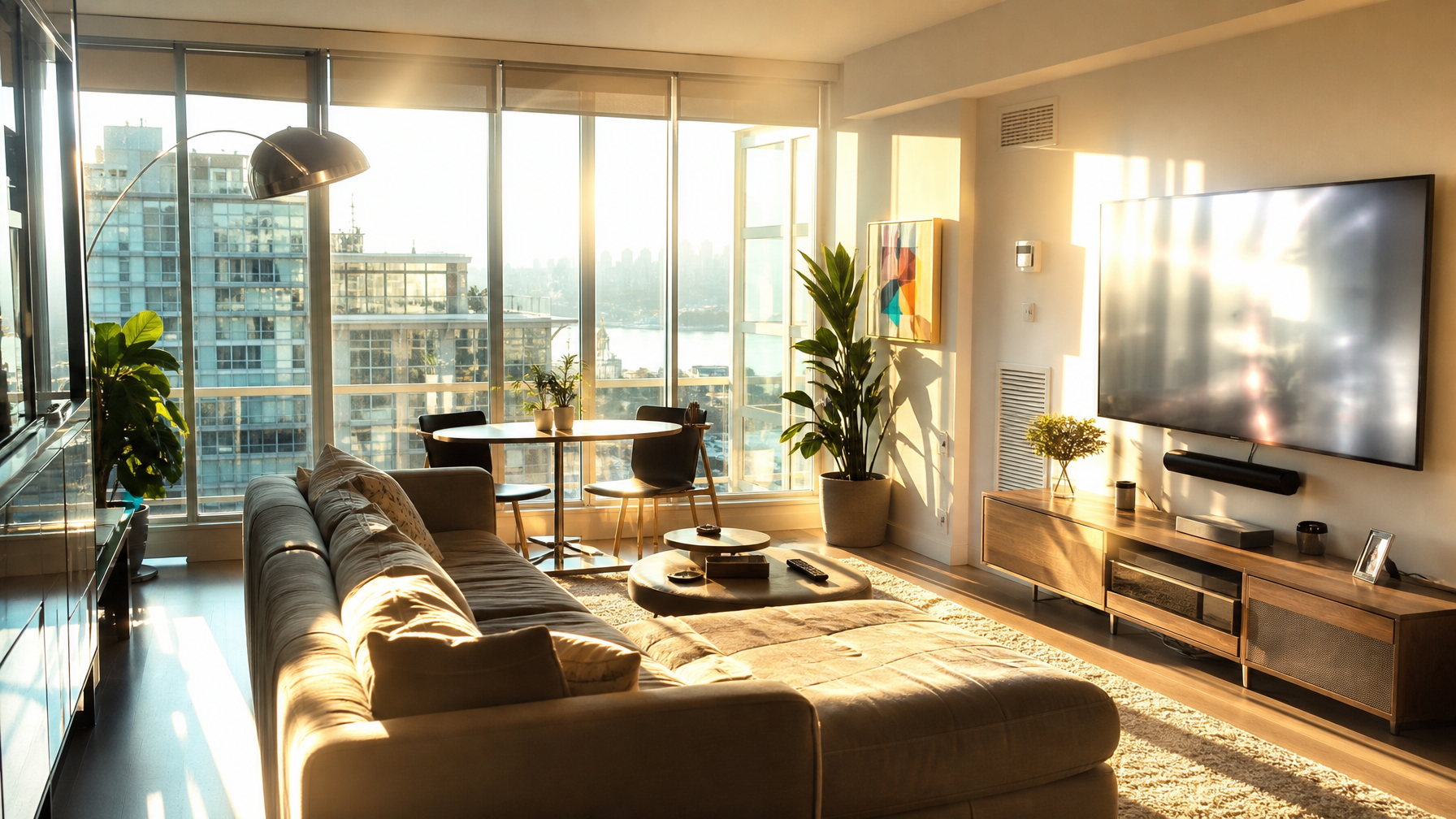
Compass orientation is the single biggest variable in residential solar heat gain. A north-facing unit in the same building on the same floor receives no direct sun exposure from April through October. A southwest-facing unit receives maximum direct exposure during the hottest part of the day, from roughly 1pm until sunset. In Vancouver’s latitude, a southwest-facing window intercepts the sun at a lower, more direct angle during peak summer heat, which increases the solar radiation hitting the glass surface compared to a window that faces due south.
For condo units with large glazing, this is compounded by the glass area. A standard patio door panel of 80 by 48 inches presents 26.7 square feet of unshielded glass. In direct afternoon sun, a single panel like this delivers approximately 700 to 900 BTU per hour of solar heat gain into the unit. With two or three panels, the combined heat load matches a medium-sized space heater running continuously through the afternoon. Mini-split systems and window AC units struggle to compensate, and electricity use spikes.
“I have floor-to-ceiling windows, southwest-facing. The sun shines in and blinds you while watching TV.” That is how Kelly, a Metro Vancouver condo owner, described the problem to Ecovision. It is the most common residential inquiry the company receives from May through August.
What Does Solar Film Actually Do to a South-Facing Window?
Solar control film works by filtering the infrared and near-infrared wavelengths of sunlight that carry heat, while passing a controlled percentage of visible light. Standard window glass is transparent to nearly the full solar spectrum. It lets in 85 to 90% of visible light and a large portion of the infrared radiation that actually heats a room. Film selectively blocks the infrared without blocking the view.
The key measurements are:
- Solar heat gain coefficient (SHGC): Lower is better. Standard glass has an SHGC of 0.85 to 0.87. A spectrally selective ceramic film reduces this to 0.20 to 0.45 depending on product grade. In practical terms, this means 55 to 80% less solar heat entering the unit through each filmed pane.
- Visible light transmittance (VLT): The percentage of visible light that passes through. High-performance clear films maintain 50 to 70% VLT while delivering the heat rejection above. The room stays bright and the view stays open.
- UV rejection: 99% of UV-A and UV-B blocked on all LLumar CTX and Vista SHC series films. UV is the primary cause of fading on hardwood floors, rugs, and upholstery in sun-exposed condo units.

Which Floors Are Worst for Solar Heat Gain in a Strata Tower?
In a uniform strata tower with consistent glazing floor to floor, solar heat gain is roughly equivalent on every floor that has an unobstructed line of sight to the sun. Lower floors may have shading from adjacent buildings, trees, or podium structures that upper floors lack. Above the treeline and beyond the shadow of neighbouring buildings, every floor is exposed equally.
The practical difference is that upper-floor units tend to have better views and larger glass panels, which increases exposure. Units directly facing southwest at floors 6 and above in most Metro Vancouver towers have full unobstructed afternoon exposure from May through September. For buildings in Port Moody, Surrey, and the eastern Fraser Valley, where neighbouring buildings are less dense, even lower-floor units face full southwest exposure.
Ecovision has filmed units at every floor level across BC, from second-floor townhouse-style strata units in Langley to 30th-floor southwest-facing condos in Vancouver’s West End. The heat problem scales with glass area and orientation, not floor level.
How Much Cooler Does the Room Get After Film?
In a southwest-facing Metro Vancouver condo unit with large glazing and no supplemental cooling, spectrally selective ceramic film typically reduces peak afternoon interior temperature on the exposed side of the room by 4 to 8 degrees Celsius. With in-suite mini-split or window AC running, the same unit will reach its target temperature faster and hold it with less compressor runtime.
At Rosemary Heights in Surrey, solar film on south-facing common area and residential windows produced a reported reduction in summer cooling costs of approximately 22% in the first full season after installation. The building has a large proportion of south-facing glass in its common corridors and lounge areas, which created a significant baseline heat load.
In Port Moody, a similar strata building with southwest-facing units in the mid-rise section had spectrally selective film installed in three units as a pilot. All three reported the same outcome: afternoon indoor temperatures became comfortable without running AC, and the blinds stayed open for the first time in summer.
Will the Film Change How My Windows Look?
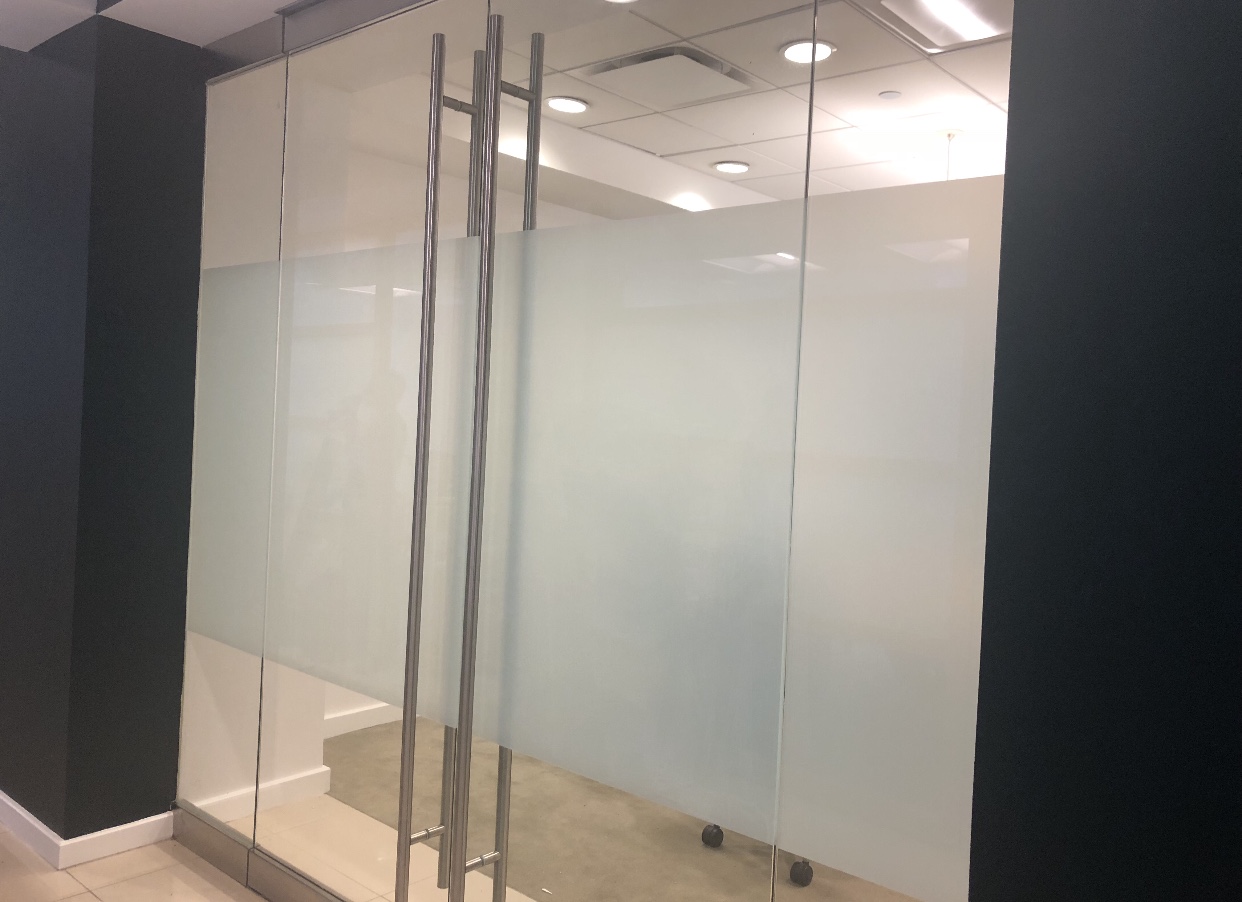
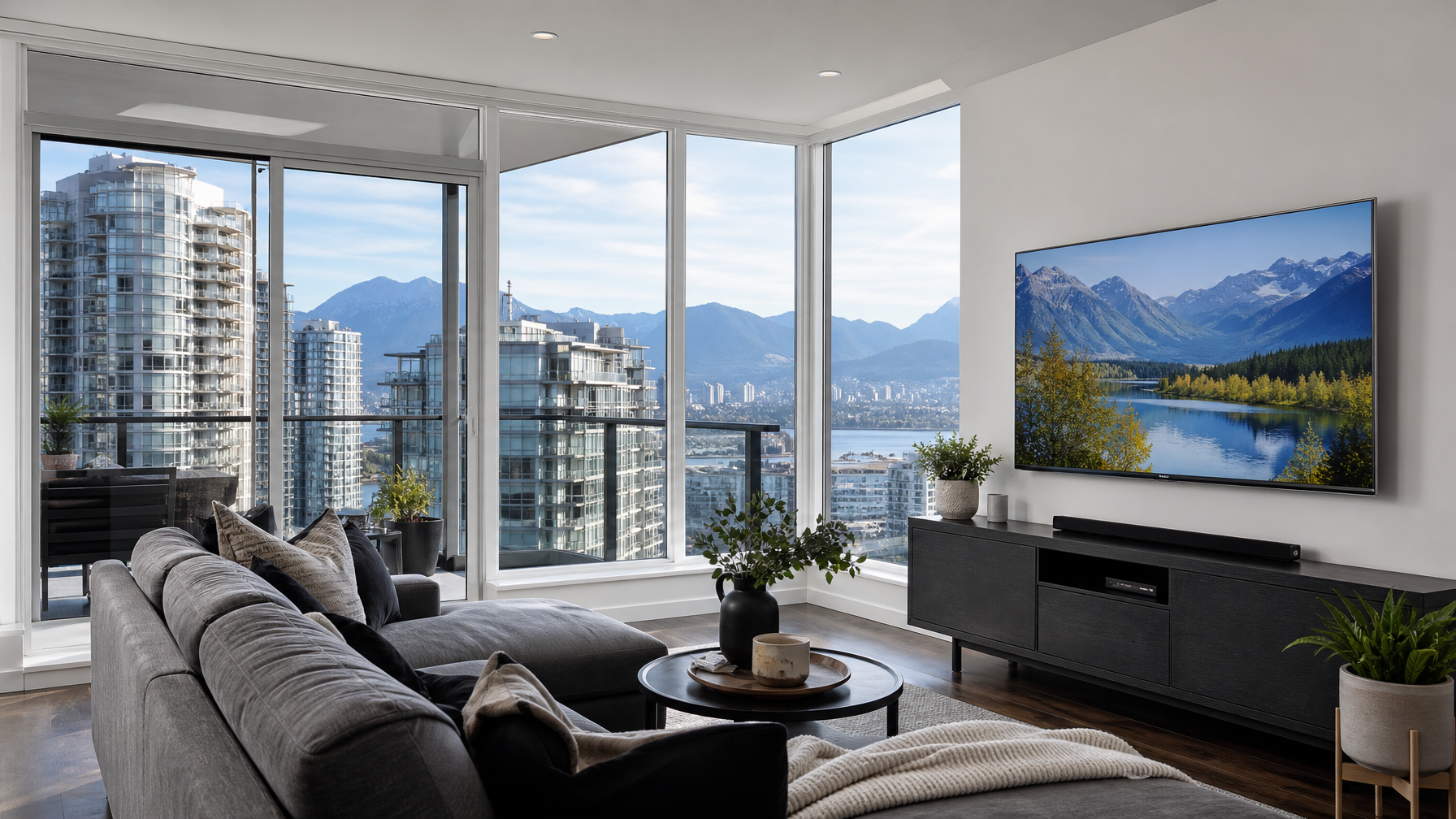
With spectrally selective clear ceramic film, the change to the glass appearance is minimal. LLumar CTX and Vista SHC series films have a neutral-to-silver exterior appearance that blends with modern double-pane Low-E glass. From inside the unit, the view remains fully open with no tint overlay. Visible light drops by 15 to 30% depending on film grade, which is comparable to a lightly overcast day.
Most strata councils in Metro Vancouver approve spectrally selective clear films without objection because the exterior change to the building face is negligible. Ecovision can provide a product description and sample photographs for any council that requests documentation prior to installation.
Non-metallic ceramic films (LLumar CTX, Vista SHC) do not interfere with WiFi, cellular service, or remote key fobs. This is a common concern in condo buildings where residents work from home and building entry systems use wireless signals.
What Film Should I Use for a Southwest-Facing Vancouver Condo?
Ecovision recommends one of two products for the majority of southwest-facing condo applications:
- LLumar CTX 35: 35% VLT, 71% total solar energy rejected. The highest-performance option for units with extreme direct southwest exposure. Reduces glare more aggressively (65% reduction) with a slightly more noticeable exterior appearance. Best for rooms where afternoon sun is severe enough to make the space unusable without intervention.
- LLumar CTX 50: 50% VLT, 59% total solar energy rejected. The most popular choice for southwest-facing living areas and bedrooms. Strong heat and glare control, near-neutral appearance from outside, minimal visible darkening from inside. Preferred for units where the view and natural light are important and the heat problem is significant but not extreme.
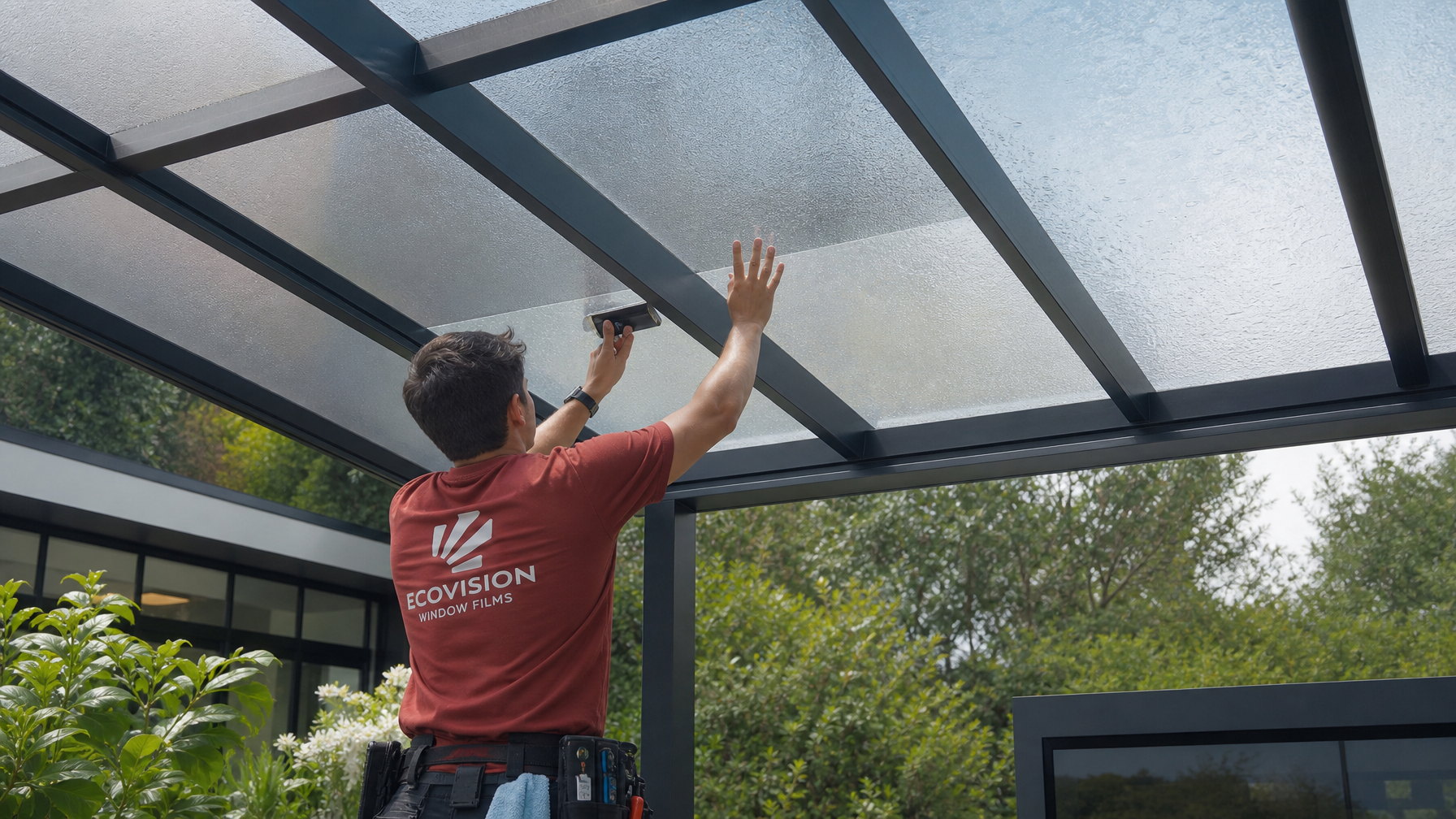
Vista SHC 35 and SHC 55 are the Vista-brand equivalents with comparable performance. Film selection depends on the exact orientation, glass area, and how the occupant uses the space. Ecovision’s free on-site assessment includes a sample comparison on your actual glass before any commitment.
What Does Solar Film Cost for a Condo Unit in BC?
Residential solar control film for condo units in Metro Vancouver runs $10 – $18 per square foot installed, depending on film grade and window count. For a typical southwest-facing one-bedroom unit with one patio door and two bedroom windows, approximately 60 to 80 square feet total, the installed cost runs $600 – $1,440 all in.
For buildings where multiple units are filmed in the same visit, Ecovision can reduce the per-unit rate. Building-wide or multi-unit projects are quoted separately with volume pricing. A free on-site assessment is available for all properties across Metro Vancouver and the Fraser Valley.
There are no ongoing costs. LLumar and Vista ceramic films carry manufacturer warranties of 10 to 15 years for residential installations and regularly outlast the warranty period. Call (236) 862-0052 or visit ecovisioncanada.com/contact/ to book.
Frequently Asked Questions
Does window film help with heat in south-facing condos in Vancouver?
Yes, significantly. Spectrally selective solar control film on south-facing condo windows reduces incoming solar heat by 55 to 80% depending on the film grade. In a southwest-facing Metro Vancouver condo with large glazing, this typically reduces peak afternoon indoor temperature by 4 to 8 degrees Celsius and lowers cooling system runtime.
Will solar window film stop me from seeing the view?
No. Clear spectrally selective films like LLumar CTX 50 or Vista SHC 55 maintain 50 to 70% visible light transmittance. The view remains fully open. From inside, the change is comparable to a slightly overcast day. There is no dark tint overlay. From outside, the glass has a very faint neutral sheen similar to modern Low-E factory glass.
Do I need strata council approval to install window film in my condo?
In most BC strata buildings, no. Window film applied to the interior glass surface of your unit is a unit-owner alteration under the Strata Property Act and does not require council consent unless your building’s specific bylaws restrict it. Clear ceramic films that do not visibly alter the exterior appearance are routinely approved when documentation is requested. Ecovision provides product data sheets and sample photos on request.
How long does condo window film installation take?
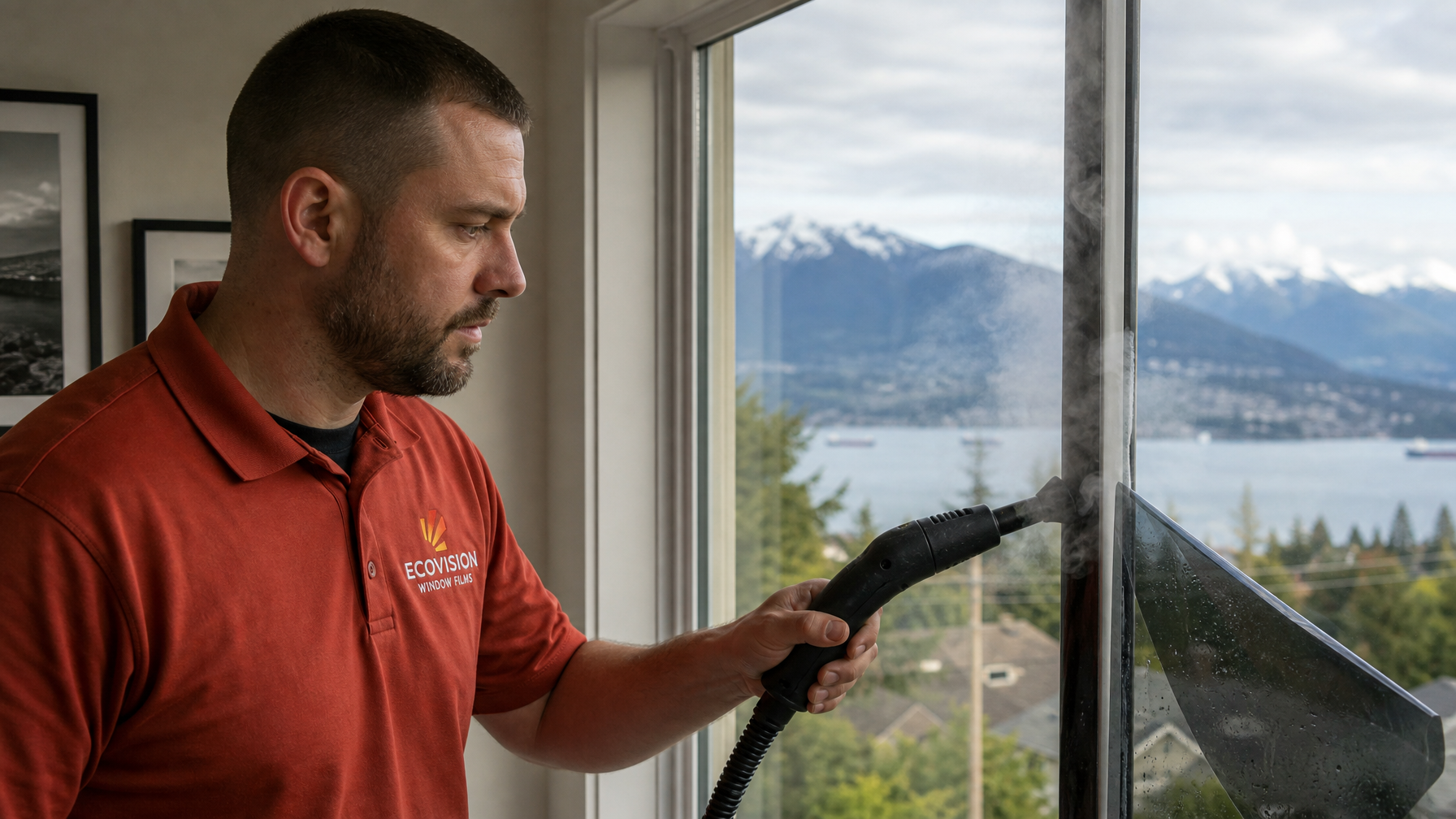
A typical one or two-bedroom condo unit takes two to four hours. Furniture within 18 inches of the glass is moved and returned. The film cures over 30 to 60 days, during which minor moisture bubbles may appear and then disappear. The unit is fully usable immediately after installation.
What does solar window film cost per square foot in Surrey and Metro Vancouver?
Spectrally selective solar film for residential condo units runs $10 – $18 per square foot installed across Metro Vancouver and Surrey. A typical one-bedroom southwest-facing unit with 60 to 80 square feet of glass costs $600 – $1,440 all in. Free on-site assessments available. Call (236) 862-0052 or book at ecovisioncanada.com/contact/.
Related Articles
- Best Strata-Approved Window Film for Heat Rejection in Vancouver Condos
- Does Window Film Stop Sun Glare Without Darkening Your Glass? A BC Homeowner’s Guide
- Energy Efficient Window Film in Vancouver: What It Saves, What It Costs, and What to Install
- Window Film for Condo Buildings in Vancouver: What Owners and Strata Councils Need to Know
- Window Tinting for Townhouses in Vancouver, BC: What Strata Owners Need to Know
About the Author: This article was written by the Ecovision Window Films team. Edward, Director at Ecovision, brings a distinctive perspective to the window film industry, with over a decade in real estate development, including roles as Executive Director at a real estate development firm and Director of Strategic Partnerships, before joining Ecovision. That background gives the company a sharp edge in serving BC property managers and building owners. Ecovision is a certified installer for leading film brands with completed projects for healthcare facilities, government buildings, and commercial properties throughout the Lower Mainland. For a free site assessment, call (236) 862-0052 or visit ecovisioncanada.com/contact/.