
The most common reason window film removal goes wrong is glass scratching, not the peeling itself. This guide focuses specifically on scratch prevention at every stage: the right blade angle, when to use plastic vs metal scrapers, and why keeping the glass wet is non-negotiable. If you’re looking for a full method comparison (heat gun vs steamer vs soapy water), start with our complete window film removal guide first, then come back here for the scratch-prevention details.
Start With Heat to Loosen Window Film for Easy Peeling
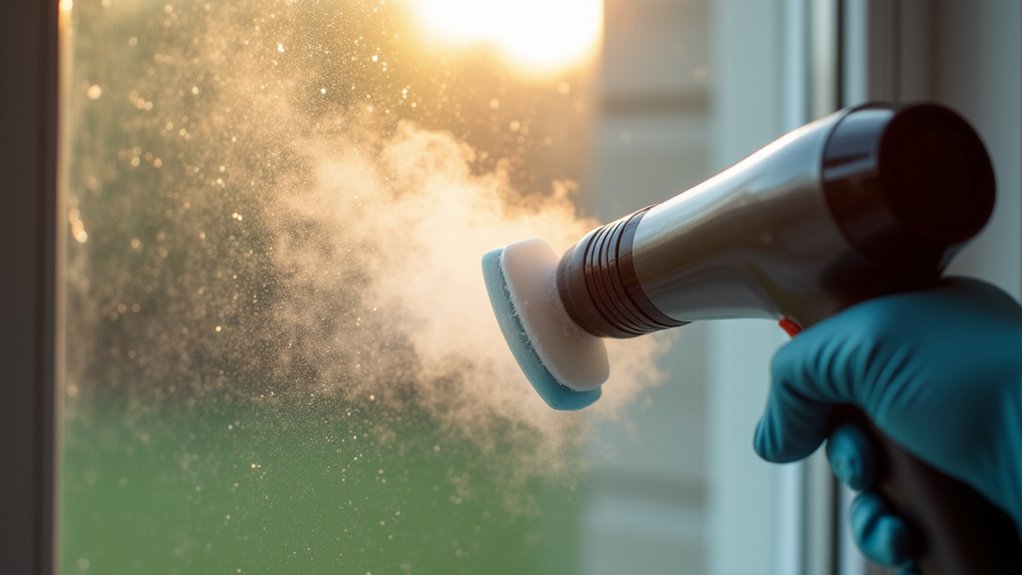
Before you reach for a razor blade or scraper, apply heat to soften the film’s adhesive bond, this single step prevents most scratching incidents during removal. For home window tint removal, a fabric steamer delivers moist heat that loosens both film and adhesive simultaneously without thermal shock risk.
Begin at a top corner, directing steady steam several centimeters from the glass surface. Use slow, sweeping passes to distribute heat evenly, never concentrate on one spot. Listen for popping or ticking sounds, which indicate overheating. If you hear them, stop and let the glass cool completely. Once the film begins to curl or lift, use your fingernail or a plastic razor blade to carefully pick at the loosened edge before peeling downward.
How to Peel Window Film Without Tearing It
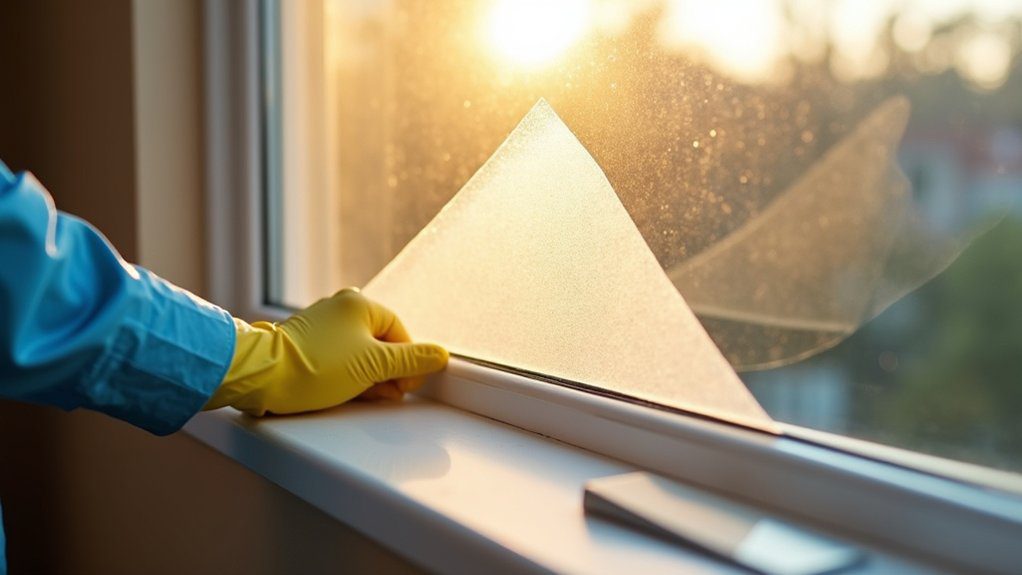
Once the adhesive bond has softened from heat application, your technique during the peel determines whether the film comes off in one clean sheet or frustrating fragments.
Create a corner tab by cutting a small section at the film’s edge. Use a fingernail or plastic tool to lift this tab gently, never metal scrapers at this stage, which scratch glass on contact with any grit present. Peel at a low angle, maintaining 45 degrees or less against the glass. Apply continuous tension with steady, even pressure. If the film starts to tear, spray soapy water along the exposed adhesive to further soften stubborn areas.
Why You Must Keep the Glass Wet During Scraping
This is the step most people skip, and it’s the main cause of scratched glass. Any particle of grit, dried adhesive, or debris trapped between your blade and the glass acts like sandpaper the moment you apply pressure. A wet surface flushes debris away and creates a lubricating layer between the blade edge and the glass. Apply your soapy water solution liberally and refresh it constantly. Never let the surface dry out mid-scrape. Use a fresh razor blade and replace it as soon as you feel any drag or resistance, a dull blade requires more pressure, which is when scratches happen.
Plastic Scraper vs Metal Razor Blade: When to Use Each
Use a plastic scraper when: peeling the initial film layer, working near window seals or frames, scraping rear-window defroster lines, or any time you’re not 100% certain the surface is fully wet.
Use a metal razor blade (single-edge, new) only when: the glass is fully saturated with soapy solution, you’re working on standard flat glass (not tinted or coated glass), and you’re holding the blade at a strict 30-45 degree angle. Anything steeper than 45 degrees digs the blade tip into the glass surface.
Never use a metal blade dry. This is the single rule that eliminates 90% of scratching incidents.
The Correct Blade Angle, and Why It Matters
Hold your razor blade at 30-45 degrees relative to the glass surface. At this angle, the flat face of the blade does the work, gliding parallel to the glass rather than digging in. Steeper angles beyond 45 degrees shift pressure to the blade’s tip and corner, which is what creates gouges. Keep your wrist locked and move in straight, consistent strokes. Check your progress under direct light every few passes to catch micro-scratches before they compound.
Avoid These Mistakes That Scratch Glass
Dry Scraping. Never scrape adhesive without adequate lubrication. Dry conditions trap particles beneath your tool, creating micro-abrasions instantly.
Wrong Tool for the Surface. Metal razor blades without lubrication gouge glass immediately. Paper towels embed fibers that scratch during wiping. Always use plastic scrapers and lint-free cloths on sensitive areas.
Too Much Heat Too Close. Positioning heat guns too close causes thermal shock and potential cracking. Uneven heating also makes film tear, forcing aggressive peeling that damages surfaces.
Rushed Peeling. Pulling film too quickly without consistent heat forces you into repeated blade passes. Start from corners, not the center.
Removing Adhesive Residue Without Scratching
Once the film is off, stubborn adhesive residue is the next scratch risk. Apply isopropyl alcohol or a commercial adhesive remover and give it a full 5-10 minute dwell time before touching the surface. The solvent does the work, you shouldn’t need to scrub. Wipe with a clean microfiber cloth using light, straight strokes. If residue remains, reapply and wait again rather than increasing pressure.
For a full breakdown of adhesive removal without harsh chemicals, see: How to Remove Window Film Adhesive Residue
Final Clean for a Streak-Free Finish
Mix one part distilled white vinegar to 10 parts warm water with a few drops of dish soap. Spray onto a lint-free microfiber cloth, not directly on the glass. Work top to bottom in a zig-zag motion, then follow immediately with a rubber-bladed squeegee, wiping the blade after each pass. Finish with a dry microfiber cloth using quick, light strokes.
At Ecovision Window Films, our installation team uses these exact techniques on every removal job. If you’d rather not risk your glass, call (236) 862-0052 and we’ll handle it professionally.
Related Articles
- How to Remove Window Film Safely? (Without Damaging Glass)
- How to Remove Privacy Film From Windows (Frosted + Decorative)
- How to Remove Window Film Adhesive Residue (Without Harsh Chemicals)
- Residential Window Film: Benefits for Heat, Glare, UV Protection & Comfort
- How Long Does Window Film Last on House Windows?
More Window Film Removal Guides
Industry Reference: The International Window Film Association (IWFA) sets standards for security and safety window film products and certifies professional installers across North America.
How do you remove window film without scratching glass?
Use a heat gun or steamer to soften the adhesive, then peel at a low 15, 20 degree angle with a razor blade kept wet with soapy water. Never dry-scrape.
What tools do you need to remove window film?
A heat gun or steamer, a new razor blade, slip solution, clean microfibre cloths, and an adhesive solvent for residue removal.
How much does professional window film removal cost?
Professional removal in BC costs $3, $8 CAD per sq ft depending on film age, type, and adhesive condition.