
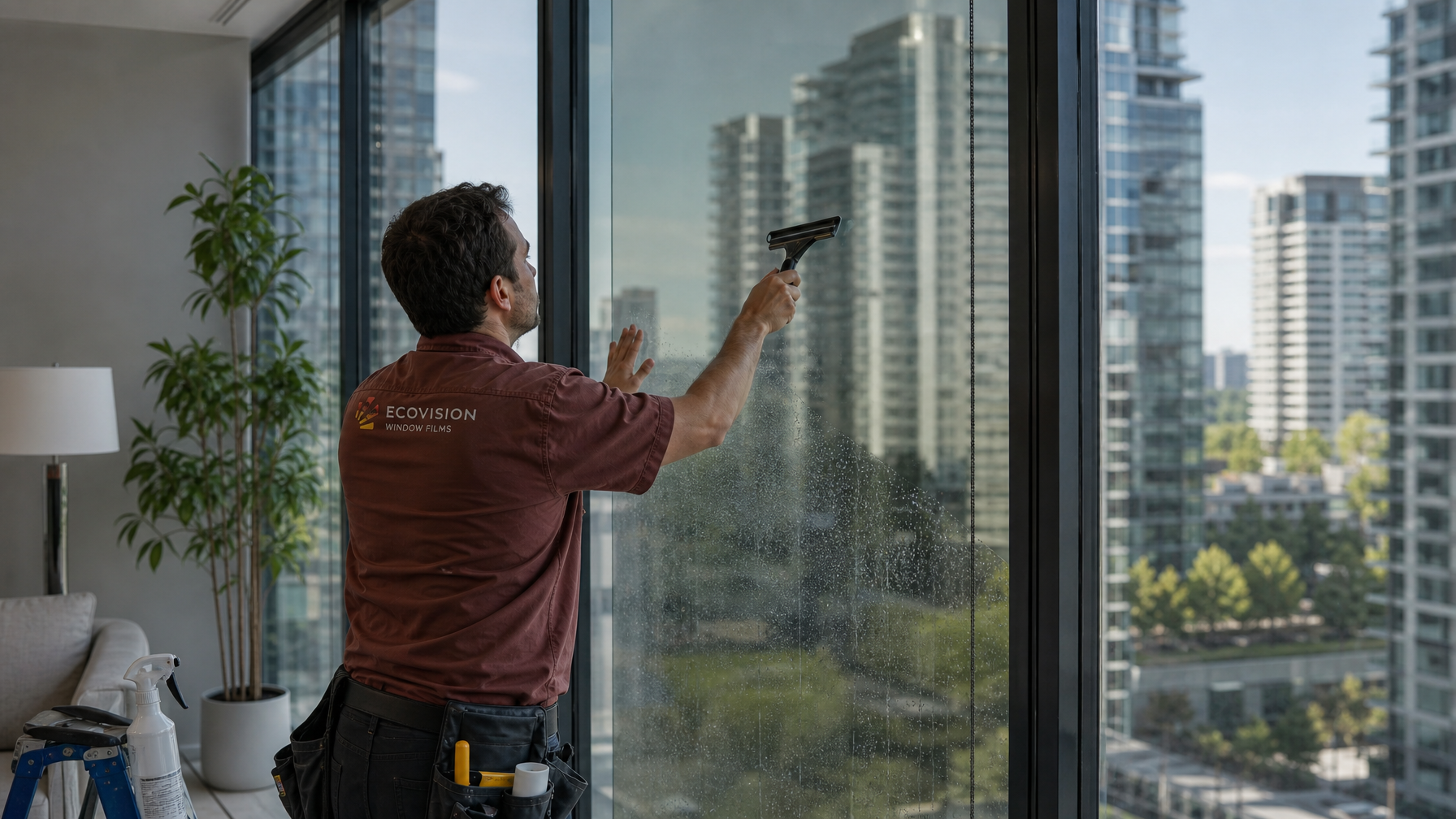
You can remove window film adhesive residue without harsh chemicals by starting with a 1:1 white vinegar and water solution. Saturate the affected area, allow 5-10 minutes of dwell time, then wipe with a microfiber cloth using gentle circular motions. For stubborn residue, citrus-based cleaners like Koch Chemie Orange Power break down persistent adhesive more effectively. When solvents alone won’t work, a hair dryer softens bonds for easier removal.
Start With Vinegar to Remove Light Window Film Adhesive
When tackling light adhesive residue left behind by window film, white vinegar serves as an effective first-line solvent due to its acetic acid content, which breaks down the polymer bonds in most pressure-sensitive adhesives. Mix equal parts white vinegar and water in a spray bottle for ideal concentration. After saturation, use a microfiber cloth with gentle circular motions to lift the dissolved residue. Apply light pressure to prevent surface scratching.
Try Citrus Cleaners for Stubborn Window Film Residue
Citrus-based cleaners offer a stronger alternative when vinegar fails to dissolve persistent window film adhesive. Products like Koch Chemie Orange Power and 3M Adhesive Remover Citrus Base use natural citrus oils to break down stubborn residue without harsh chemicals. These formulations evaporate quickly, leaving no oily buildup on glass surfaces.
To remove window film glue effectively: apply the citrus cleaner directly to the residue with a microfiber cloth, allow the product to sit for several seconds to dissolve the adhesive, then wipe in circular motions and buff with a fresh cloth.
Use a Hairdryer When Solvents Alone Won’t Work
Stubborn adhesive residue sometimes won’t break down with solvents alone, that’s when you’ll want to bring in targeted heat application. A standard hair dryer on high heat softens adhesive bonds when applied consistently to small sections for several minutes. Work in controlled intervals, heating until the residue becomes pliable, then wiping with a microfiber cloth. This method proves especially effective when paired with rubbing alcohol, apply 90% isopropyl alcohol immediately after heating to dissolve what remains.
Scrape Away Remaining Adhesive Without Scratching Glass
Three primary tool categories handle mechanical adhesive removal safely:
- Plastic scrapers apply gentle pressure using pan scrapers with defined edges. Test on a small area first.
- Razor blades hold at a 30-45 degree angle against the glass. Never dig the blade corner into the surface, and only scrape after softening adhesive with cleaner.
- 3M white scrub pads combine with soap and water for mild abrasive action. These lift remaining adhesive post-chemical softening without causing fine scratches.
Always work on cool, wet surfaces to maintain control during scraping. Start with the gentlest mechanical method and increase pressure gradually only if the adhesive proves resistant to initial efforts.
Related Articles
- How to Remove Window Film Safely? (Without Damaging Glass)
- How to Remove Window Film Without Scratching Your Glass
- How to Remove Privacy Film From Windows (Frosted + Decorative)
- Residential Window Film: Benefits for Heat, Glare, UV Protection & Comfort
- How Long Does Window Film Last on House Windows?
Industry Reference: The International Window Film Association (IWFA) sets standards for security and safety window film products and certifies professional installers across North America.
How do you remove window film adhesive residue?
Apply isopropyl alcohol, white vinegar, or a commercial adhesive remover to the residue. Let it soak for 1, 2 minutes, then wipe away with a soft cloth.
Can you remove window film adhesive without chemicals?
Yes. A steam cleaner or heat gun softens the adhesive so it can be wiped away with a cloth.
Will adhesive residue damage glass if left on?
Over time, dried adhesive attracts dirt and becomes harder to remove. Clean residue within a few days of film removal using gentle solvents.