
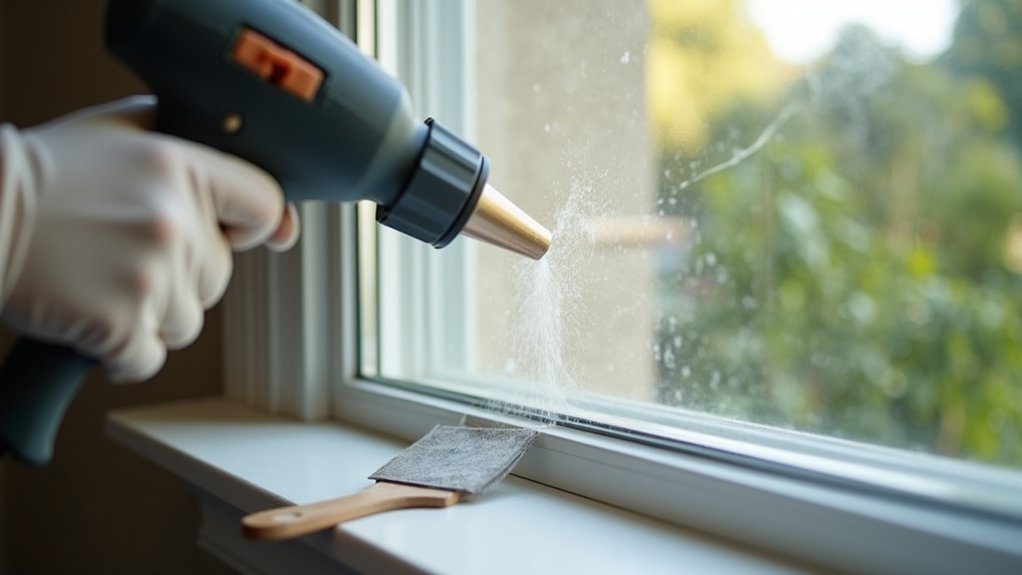
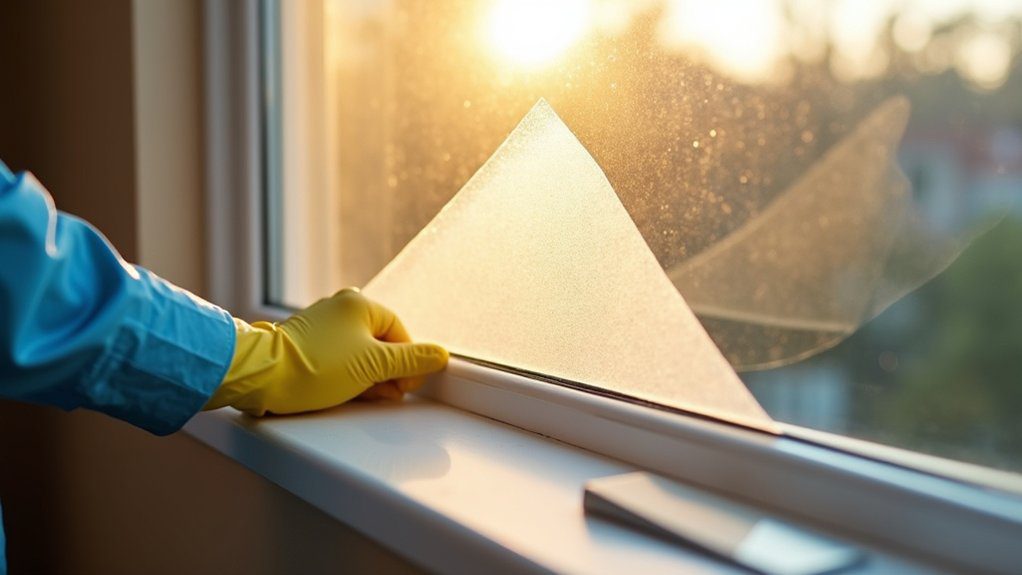
To remove architectural window film safely, start with the least aggressive method: warm a corner with a hair dryer or fabric steamer, peel slowly, and keep the glass wet while cleaning adhesive residue. Use a plastic scraper first. Use a metal blade only on a glass surface confirmed to be suitable, never on dry, coated, textured, damaged or unknown glass.
Choose Your Removal Method Based on Film Type
The safest removal method depends on the film’s age, adhesive and condition, and on the glass itself. Older film with brittle adhesive often responds to gentle heat or steam. Newer film may release with warm soapy water and slow peeling. If the glass is coated, textured, damaged or difficult to identify, stop before scraping and ask a window-film professional to assess it.
Removing frosted or decorative privacy film? See our dedicated guide: How to Remove Privacy Film From Windows
Tools and Materials to Gather Before You Start
Gather the tools before you start so the film and exposed adhesive do not dry while you work.
- Gentle heat: A hair dryer or fabric steamer
- Slip solution: Warm water, a small amount of dish soap and a spray bottle
- Scraping tools: A plastic scraper first; a fresh single-edge blade only for confirmed compatible glass
- Cleanup and protection: Lint-free cloths, a squeegee, gloves and a drop cloth for frames and floors
- Adhesive remover: A product labelled for the glass, sealant and frame materials involved
How to Remove Window Film With a Hair Dryer
A hair dryer is the safest heat source for most small DIY jobs. Use low to medium heat, hold it several inches from the film and keep it moving. Warm one corner in short intervals, lift the edge with a fingernail or plastic scraper, then pull the film back over itself slowly while warming just ahead of the peel line. If the glass or frame becomes unusually hot, stop and let it cool.
How to Remove Baked-On Tint With a Heat Gun
A heat gun can overheat glass, seals and painted frames. Start with a hair dryer or steamer instead. If you are experienced and the glass is confirmed suitable, use the lowest effective setting, keep the tool moving and well away from the surface, and warm only a small area at a time. Do not concentrate heat near a pane edge, crack or damaged seal. For large areas or brittle baked-on film, professional removal is the safer choice.
How to Steam Off Stubborn Window Film
A fabric steamer provides even heat and moisture that can soften stubborn adhesive. Keep the nozzle moving, avoid prolonged heat at pane edges and peel while the adhesive is warm. Protect nearby wood, drywall, electrical components and finishes from moisture. After the film releases, keep any residue wet and use a compatible cleaner with the least aggressive scraping method that works.
Dealing specifically with adhesive left behind? See: How to Remove Window Film Adhesive Residue Without Harsh Chemicals
How to Remove Window Film Using Soapy Water
Mix warm water with a small amount of dish soap in a spray bottle. Lift a corner with a fingernail or plastic scraper, then peel slowly while spraying the exposed adhesive line. Keep the surface wet so residue does not dry. Start cleanup with a plastic scraper; use a metal blade only after confirming that the specific glass surface is suitable.
When Solvents Work Better Than Heat or Water
If warm soapy water does not release the residue, try a remover specifically labelled for the glass, sealant and frame materials involved. Follow the product label, ventilate the space, wear appropriate gloves and protect nearby finishes. Isopropyl alcohol may help with some adhesives. Acetone can damage painted, plastic and vinyl surfaces, so do not use it until material compatibility is confirmed. Spot-test any cleaner in an inconspicuous area first.
Safe Scraping Techniques That Won’t Scratch Glass
Start with a plastic scraper. If confirmed compatible, uncoated flat glass requires a metal blade, use a fresh single-edge blade, flood the surface with slip solution, keep the blade at a shallow angle and push in one direction with light pressure. Never scrape dry, and never use a metal blade on coated, textured, damaged or unidentified glass. Grit or fabrication debris can scratch glass; stop if you feel resistance.
Worried about scratching? Read: How to Remove Window Film From House Windows Without Scratching
How to Get Glass Crystal Clear After Removal
After the film is off, keep residue wet with a compatible cleaner and remove it in small sections. Rinse away cleaner residue, then finish with a lint-free cloth and squeegee. Inspect the pane in side light before installing replacement film. If residue will not release without heavy pressure or aggressive scraping, stop and have the glass assessed.
Mistakes That Leave Residue or Damage Glass
Dry scraping, overheating a pane edge or seal, using an incompatible solvent, pulling too quickly and working on unidentified coated glass can all cause damage. Keep the surface wet, use clean tools, follow cleaner dwell-time instructions and reapply gentle heat when the film begins to tear. Stop if the glass is cracked, damaged or reacting unpredictably.
When to Hire a Professional for Window Film Removal
Professional assessment is sensible when film covers a large storefront or strata property, sits on hard-to-reach glass, has become brittle or baked on, or the glass type and coating are unknown. It is also the best time to plan removal and replacement together so the new film is matched to the glass and building need.
Need old film removed, or replaced?
Ecovision assesses residential and commercial architectural window film across Metro Vancouver. We can review the existing film, glass condition and replacement goals before recommending the next step.
Request a Film Removal Assessment
Prefer to speak with someone? Call (236) 862-0052. For a faster assessment, include the service location, approximate amount of glass and whether the film is peeling, bubbling or baked on.
More Window Film Removal Guides
- How to Remove Window Film Without Scratching
- How to Remove Privacy Film From Windows (Frosted + Decorative)
- How to Remove Window Film Adhesive Residue (Without Harsh Chemicals)
Ready for new film? Explore: Security Window Film | Privacy Window Film | Residential Window Film
Industry reference: The International Window Film Association (IWFA) publishes consumer and technical information about architectural window film.
Window Film Removal FAQ
What is the safest way to remove window film from glass?
Start with gentle heat from a hair dryer or steamer, lift one corner, and peel slowly while reheating. Keep the glass wet during residue cleanup. Stop and request professional advice if the film is brittle, baked on, above safe working height, or the glass surface is uncertain.
Can I remove window film without scratching the glass?
You can reduce the risk, but no DIY method guarantees scratch-free glass. Never scrape dry. Start with a plastic scraper. Use a metal blade only on a compatible surface, with the glass wet, a fresh blade, a shallow angle and light pressure.
How do I remove frosted window film?
Warm a corner with a hair dryer or steamer, lift it with a plastic scraper, and peel slowly while continuing to apply gentle heat. If it tears into small pieces or leaves heavy adhesive, use the residue-removal method or request professional help.
What removes adhesive left after window film removal?
Begin with warm soapy water. If residue remains, use a cleaner labelled as compatible with the glass, sealants and frame materials. Follow the label, ventilate the area and spot-test first.
When should I hire a professional to remove window film?
Professional assessment makes sense when film is brittle or baked on, covers many panes, is above safe working height, or the glass type or coating is uncertain. Ecovision can assess removal and replacement options for Metro Vancouver properties.