
Does Window Film Block UVA Rays? What BC Property Owners Need to Know
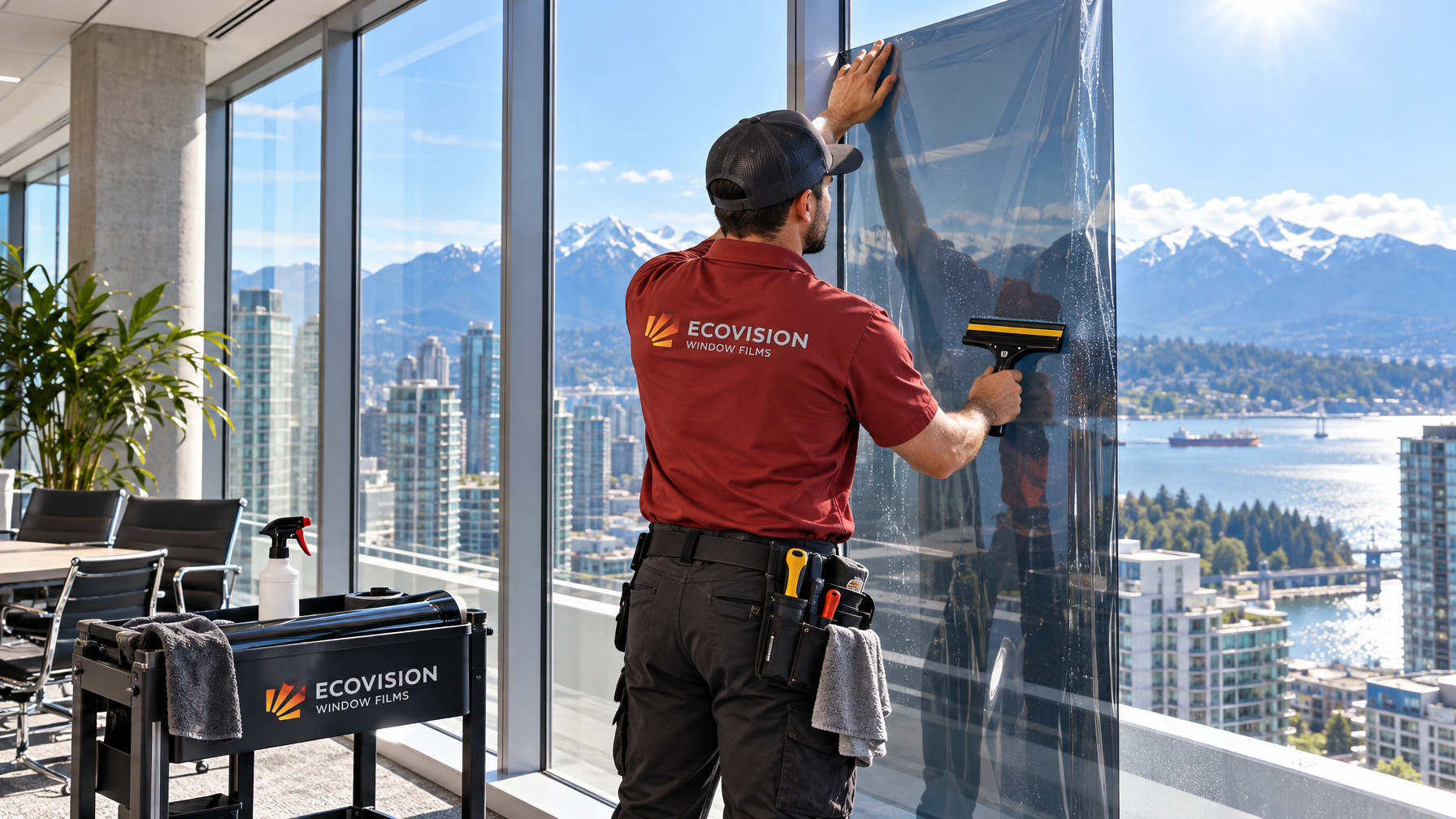
Ecovision Window Films installs solar and UV-protective film across Vancouver, Burnaby, Surrey, and the broader Lower Mainland. A question that comes up often in client consultations, particularly from strata managers, healthcare facilities, and homeowners near south-facing glass, is whether window film actually blocks UV radiation. The short answer is yes, but the more useful answer starts with understanding what type of UV you're dealing with.
Does window film block UVA rays? Yes. Quality architectural window film blocks the majority of UVA radiation that passes through ordinary glass. Standard clear glass already filters most UVB, but it transmits significant UVA, particularly the longer UVA1 band (340-400 nm) responsible for photoaging and oxidative skin damage. Window film closes that gap. Products like LLumar VS60 and VS70, which Ecovision installs across residential and commercial buildings in BC, achieve greater than 99% rejection across the full UV spectrum when applied to standard clear glass.
What Is the Difference Between UVA and UVB Rays?
Ultraviolet radiation is not one uniform thing. The sun emits a spectrum, and UVA and UVB occupy different bands within that spectrum with meaningfully different biological effects.
| Radiation | Wavelength | Penetration | Primary Biological Effect |
|---|---|---|---|
| UVB | 280-315 nm | Superficial (epidermis) | Sunburn, direct DNA damage, elevated skin cancer risk |
| UVA2 | 315-340 nm | Epidermis | DNA and oxidative damage |
| UVA1 | 340-400 nm | Deeper (into dermis) | Photoaging, oxidative stress, carcinogenic |
| Visible blue | 400-500 nm | Varies | Pigmentation effects, reactive oxygen species, not equivalent to UV cancer risk |
UVB photons carry more energy and directly damage DNA, which is why UVB is strongly associated with sunburn and skin cancer. UVA photons carry less energy individually but penetrate deeper into skin tissue and cause damage primarily through oxidative mechanisms. The American Cancer Society notes that both UVA and UVB contribute to skin cancer risk, and the Skin Cancer Foundation confirms that UVA passes through ordinary window glass at meaningful levels.
The distinction between these two bands is exactly what makes window film relevant indoors.
Does Ordinary Glass Already Block UV Rays?
Yes, but only part of the UV spectrum. Standard silicate architectural glass absorbs strongly at shorter UV wavelengths. The American Cancer Society describes typical home and office windows as blocking most UVB while allowing meaningful UVA transmission. This is an important starting point for understanding what window film actually adds.
Here is a simplified picture of what happens at a standard clear glass window:
| Radiation | Ordinary Glass | With UV Film |
|---|---|---|
| UVB (280-315 nm) | Mostly blocked | Blocked (>99%) |
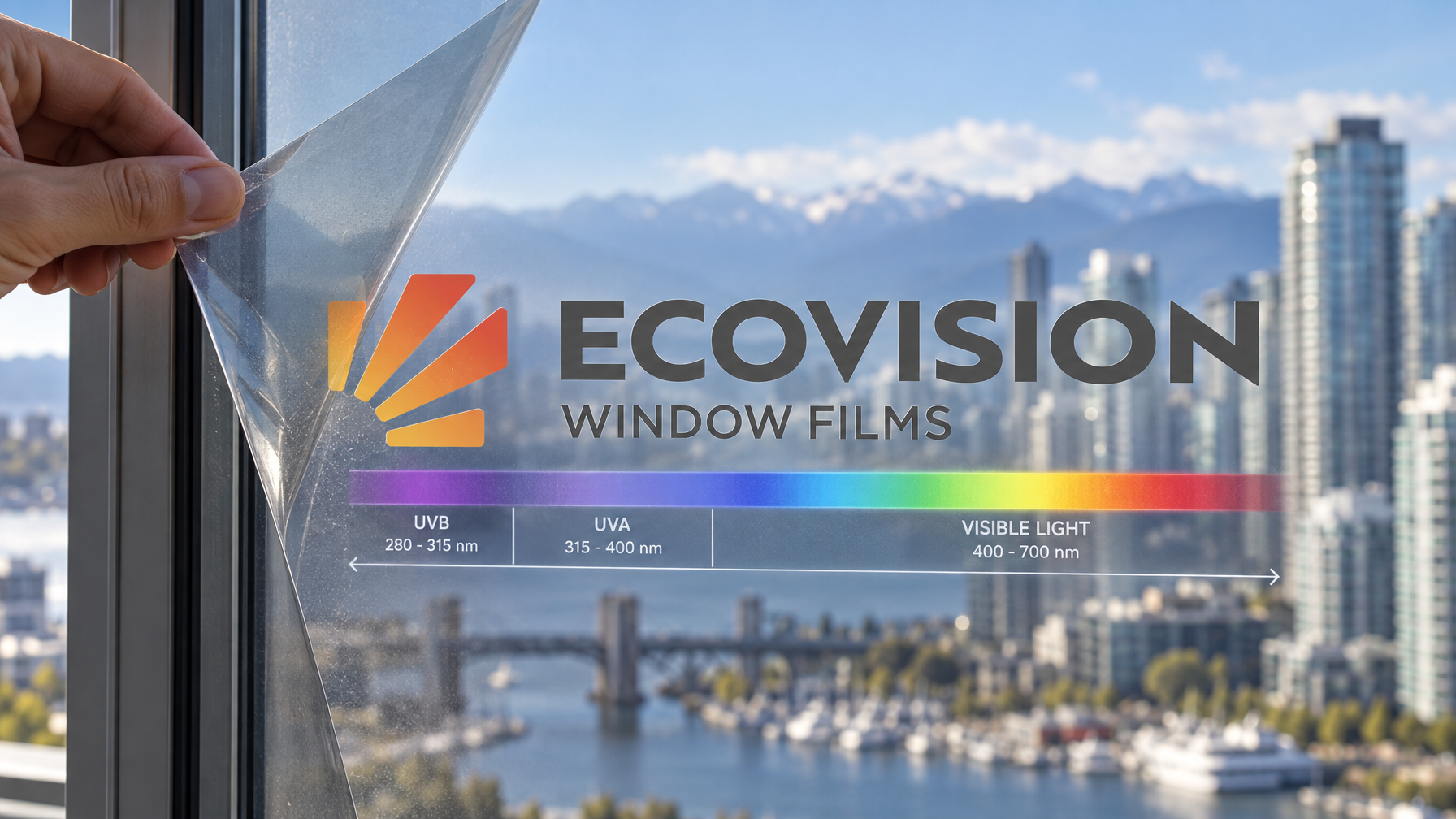
| UVA (315-400 nm) | Significant transmission | Blocked (>99%) |
| Visible light (400-700 nm) | High transmission | Dependent on film VLT |
The person sitting beside an untreated window in a Vancouver office building or strata unit is not receiving the same solar spectrum as someone standing outdoors. Glass has already altered the spectrum. But the UVA that does come through accumulates over hours each day, week after week, and that cumulative UVA exposure is where indoor UV risk is concentrated.
This is why Ecovision's site assessments focus on south and southwest-facing glass in particular: prolonged direct sun exposure through untreated windows in Metro Vancouver's May-to-September season represents the highest indoor UV accumulation for most property types.
Does Window Film Block UVA Specifically?
Quality architectural window film blocks UVA across the full 315-400 nm band. The film achieves this through UV-absorbing compounds embedded in its polymer layers, these absorb UV photons before they transmit through the glass system into the interior.
Importantly, UV rejection is not the same as visible light transmission (VLT). A film can be optically clear, appearing nearly invisible on the glass, while still blocking greater than 99% of UV radiation. LLumar VS60, for example, carries approximately 59% VLT with greater than 99% UV rejection on standard clear glass. VS70 achieves similar UV performance at approximately 62% VLT. Both are strata-friendly options in BC buildings where appearance rules restrict darker films.
This also explains why the spectral transmission data from Eastman's 2026 performance workbook is more revealing than a single marketing headline. The AU85 film, measured on 3 mm clear glass, transmits approximately 26% at 400 nm but rises steeply to 88% at 450 nm, illustrating that UV rejection performance is measured across a specific wavelength range, not a uniform wall that cuts off everything below a single line.
What Does ">99% UV Rejection" Actually Mean?
The ">99% UV rejection" figure that appears on most quality window film specifications refers to the film's rejection of UV radiation across the defined ultraviolet wavelength band, typically 280-380 nm or 280-400 nm depending on the test method and standard applied. It does not mean the film blocks 99% of all photobiologically active radiation.
Here is why that distinction matters:
At approximately 400 nm, the spectrum transitions from long-wave UVA into visible violet and blue light. Film performance across this boundary varies by product. A film achieving >99% UV rejection may simultaneously transmit a substantial portion of visible light above 400 nm, which is, in fact, the desired outcome for most architectural applications, where occupant comfort and daylighting are priorities alongside UV control.
The practical implication: when evaluating a film's UV protection for a specific application, such as a healthcare facility treating photosensitive patients, or a strata building with south-facing common areas, it is more useful to ask for spectral transmission data across the 300-500 nm range than to rely on a single summary figure.
Ecovision's team can provide film-specific spectral performance data from Eastman's certified product workbook for any project in the Lower Mainland.
Does Window Film Protect Against Blue Light?
Solar-control films do reduce a portion of visible blue light (approximately 400-500 nm) depending on the product's spectral characteristics. However, it is important not to conflate blue light reduction with UV skin cancer protection. They are different biological questions.
Research published in peer-reviewed photobiology journals confirms that visible blue light can influence reactive oxygen species production, pigmentation, and inflammatory signaling in skin tissue, with effects that differ meaningfully by skin phototype. That is genuinely emerging science. What the same research does not establish is a direct blue light-to-skin cancer link comparable to the well-documented UV evidence.
For Ecovision's purposes, the health communication is straightforward: window film's primary validated benefit for indoor occupants is UVA reduction. Ordinary glass handles most UVB. Film handles UVA. Blue light effects from solar exposure are real but represent a separate and less conclusive body of evidence, and should not be presented as equivalent to the established UV-to-skin-cancer pathway.
This distinction actually makes the UVA argument stronger, not weaker. It focuses the claim on the mechanism with the most robust scientific support.
Which LLumar Films Does Ecovision Recommend for UVA Protection in BC?
All LLumar and Vista films installed by Ecovision Window Films achieve greater than 99% UV rejection. The relevant decision for most BC property owners is not which film blocks more UV, they all perform similarly on that measure, but which film balances UV protection with the VLT, heat rejection, and appearance requirements of the specific building.
| Film | VLT | UV Rejection | Best For |
|---|---|---|---|
| LLumar VS60 | ~59% | >99% | Strata buildings, residential south-facing glass |
| LLumar VS70 | ~62% | >99% | Low-interference applications, light control |
| LLumar Ceramic 35 | ~35% | >99% | High heat-rejection commercial or residential |
| LLumar Ceramic 45 | ~45% | >99% | Balanced heat and glare control |
For healthcare facilities, senior residences, and any application where photosensitive occupants are a factor, Ecovision recommends a site assessment to evaluate solar angle, glass type, and daily exposure hours before specifying a film product. What performs well on a north-facing strata window may be the wrong specification for a south-facing clinic treatment room.
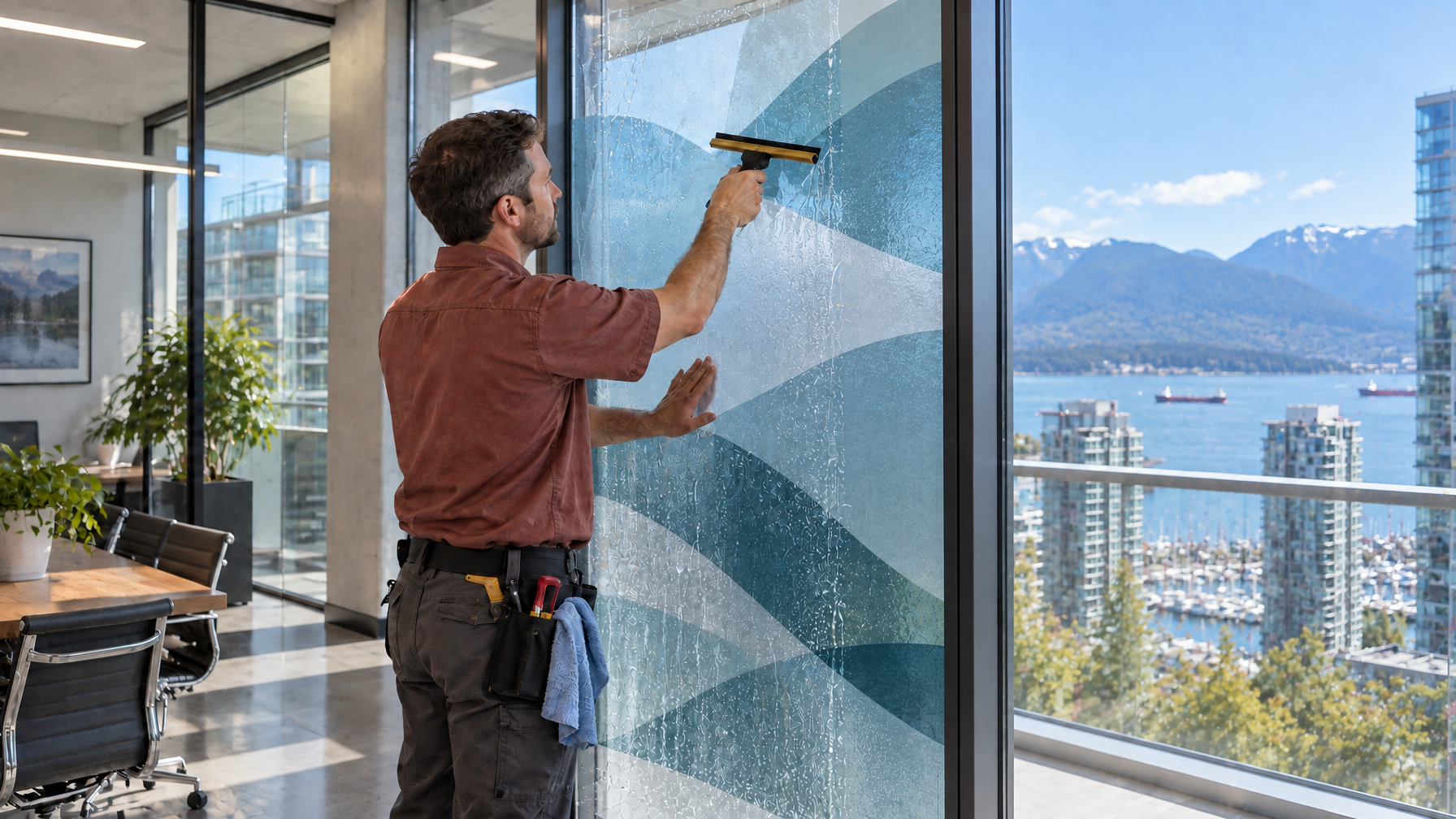
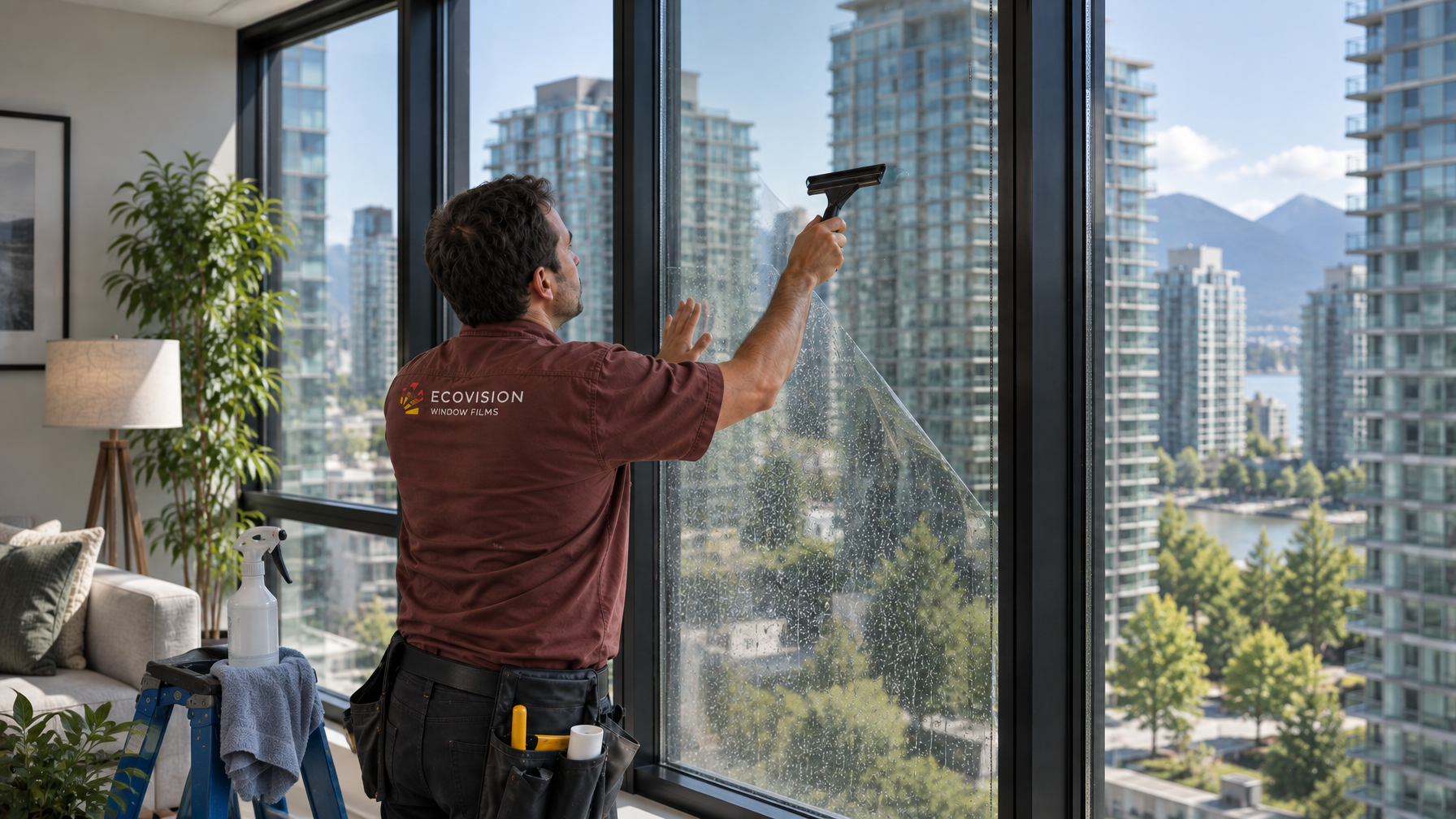
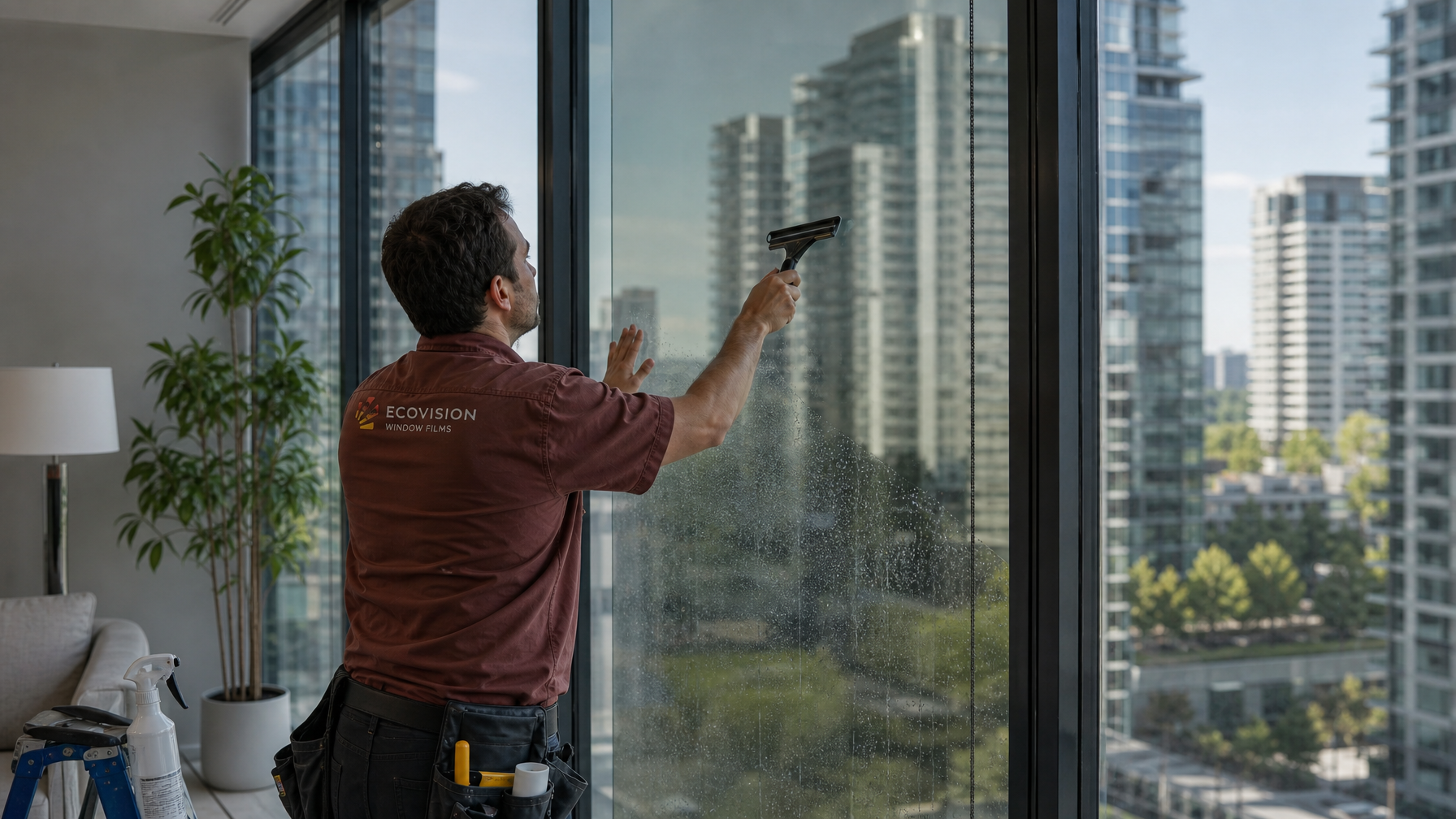
Pricing for UV-protective solar film in BC typically ranges from $10 – $18 per square foot installed for residential applications and $9 – $18 for commercial work, depending on film grade, glass access, and total area. Installation does not affect existing window warranties on standard glazing systems. Cure time for the adhesive layer is 30 to 60 days, during which minor haze or moisture pockets are normal and will clear.
Related Articles
- Does Window Film Block UV Rays? What BC Property Owners Need to Know
- How Window Film Stops Heat in South and Southwest-Facing Vancouver Condos
- Does Window Film Stop Sun Glare Without Darkening Your Glass? A BC Homeowner's Guide
- LLumar Window Film in Vancouver: Certified Dealer, Film Types and What to Expect
- Frosted Window Film for Front Doors and Entry Glass: What BC Homeowners Need to Know
Frequently Asked Questions
Does window film block both UVA and UVB rays?
Yes. Quality architectural window film blocks greater than 99% of both UVA and UVB radiation when applied to standard clear glass. Ordinary glass already filters most UVB on its own, so the incremental protection from film is concentrated in the UVA range, particularly UVA1 (340-400 nm), which penetrates glass and accumulates on skin and furnishings over time.
Can you get UV damage sitting next to a window in your Vancouver home or office?
Yes. Standard clear glass does not block UVA. Someone sitting close to south or west-facing windows for extended periods in Metro Vancouver's May-to-September season receives meaningful cumulative UVA exposure. Adding a UV-filtering film to those windows reduces that indoor exposure by greater than 99% across the UV spectrum.
Does a darker window tint mean better UV protection?
No. UV rejection and visible light transmission (VLT) are independent properties. A nearly clear film like LLumar VS70 (~62% VLT) achieves the same greater than 99% UV rejection as a darker film. Tint level affects glare control and heat rejection, UV blocking comes from the film's UV-absorbing compounds, not its darkness.
How long does UV-protective window film last in BC?
LLumar and Vista architectural films carry manufacturer warranties of 10 to 15 years for most residential and commercial applications. Performance degrades gradually over time, most noticeably in direct sun applications on south-facing glass. Ecovision recommends an inspection at the 10-year mark for heavily sun-exposed installations.
Does window film protect furniture and flooring from UV fading in BC homes?
Yes. UVA and visible light are both contributors to interior fading, with UV radiation accounting for roughly 40% of fading causes according to industry data. By blocking greater than 99% of UV, window film significantly slows fading on hardwood floors, upholstery, and artwork. It is not a complete fading solution, visible light and heat also contribute, but UV control is the most impactful single step available without replacing glazing.
About the Author: This article was written by the Ecovision Window Films team. Edward, Director at Ecovision, brings a distinctive perspective to the window film industry, with over a decade in real estate development, including roles as Executive Director at a real estate development firm and Director of Strategic Partnerships, before joining Ecovision. That background gives the company a sharp edge in serving BC property managers and building owners. Ecovision is a certified installer for leading film brands with completed projects for healthcare facilities, government buildings, and commercial properties throughout the Lower Mainland. For a free site assessment, call (236) 862-0052 or visit ecovisioncanada.com/contact/.