

This guide covers window film for homes and buildings. Ecovision does not tint vehicles. Architectural glass only.
Quick Answer
Yes. Clear spectrally selective solar film blocks 40 to 60% of glare-causing visible light and up to 99% UV through floor-to-ceiling windows while keeping glass looking virtually unchanged. LLumar CTX and Vista SHC series films are designed exactly for this. Maximum glare control with minimal visible change to the glass. Most BC homeowners describe the result as “like nothing changed”. Except the afternoon sun no longer blinds them.
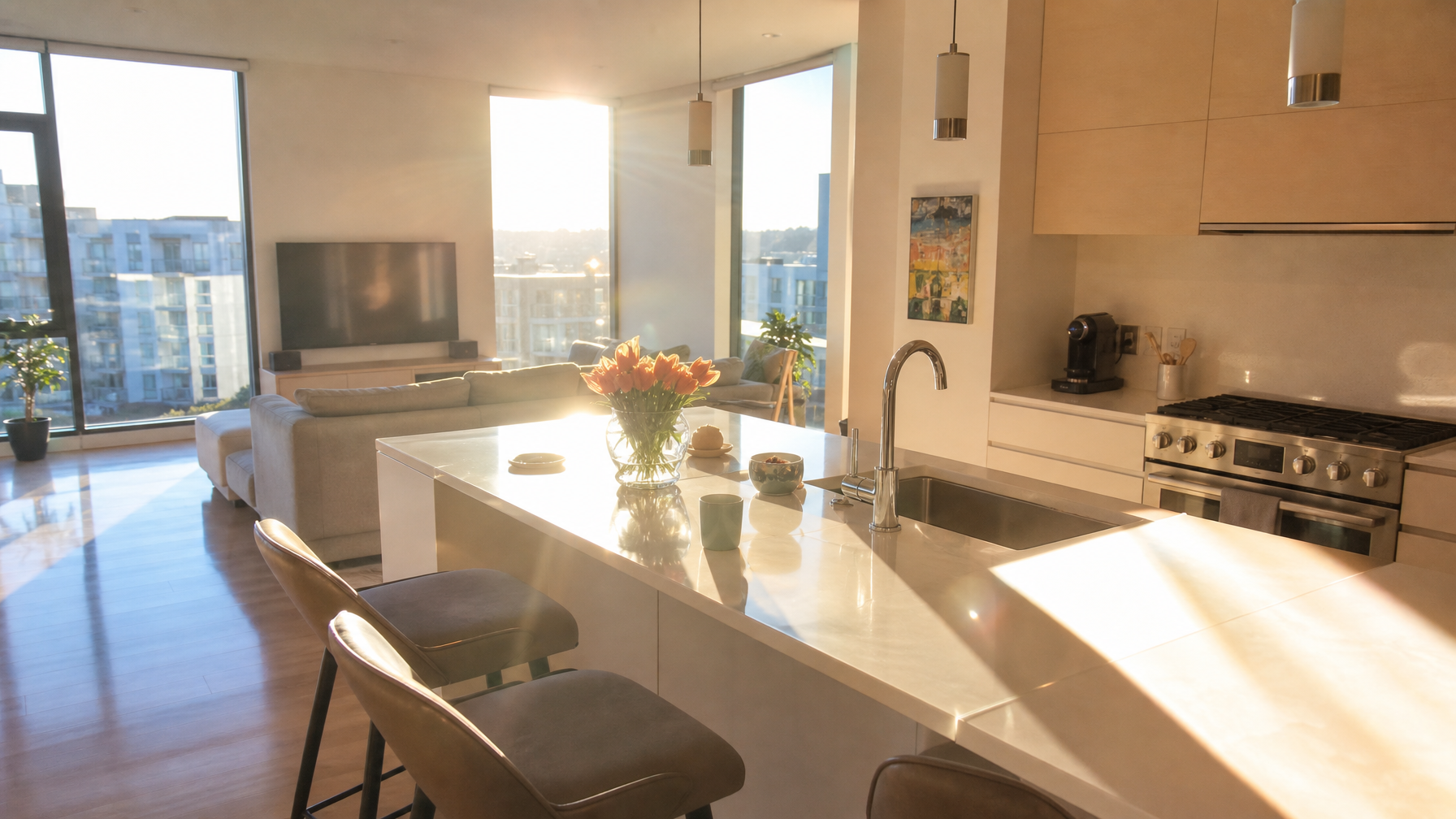
What Is Clear Solar Film and How Does It Reduce Glare?
Clear solar control film. Also called spectrally selective window film. Works by filtering specific wavelengths of light rather than blocking all incoming light evenly. Standard tinted films darken a window by absorbing visible light across the full spectrum. Spectrally selective films target the near-infrared and high-intensity visible light wavelengths that cause heat and glare, while transmitting a higher percentage of the ambient visible light that makes a room feel naturally lit.
The result is a window that rejects 40 to 60% of incoming solar glare and 40 to 75% of solar heat, while still allowing 60. 75% of visible light to pass through. To the eye from inside and outside, the glass looks nearly unchanged. Perhaps a very faint reflective sheen visible from certain angles in direct sun, but no dark tint.
LLumar CTX ceramic series and Vista SHC series are the two product lines Ecovision most frequently installs for this application. Both use nano-ceramic technology rather than metallic coatings, which means they do not interfere with WiFi, cell signals, or remote car entry. A common concern homeowners raise when comparing film options.
Will My Glass Look the Same After Film Is Installed?
For spectrally selective clear film: yes, with a minor qualification. From inside your home, the view remains fully open and natural. Colours are not distorted, and there is no dark overlay on the glass. The ambient light level in the room drops slightly. Typically 15. 25% with a high-transmittance clear film. But the change is comparable to a light overcast day, not a darkened room.
From outside, the glass has a very slight reflective quality under direct sunlight, similar to what modern double-pane Low-E glass already has from the factory. In BC’s typical overcast or indirect light conditions, the glass is indistinguishable from uncoated glass.
What changes dramatically is the quality of light inside. The harsh, blinding bright patches from direct sun are replaced by diffused, even natural light. The UV filtering also stops fading of hardwood floors, upholstery, artwork, and cabinetry. One of the least-visible but highest-value benefits of the installation.
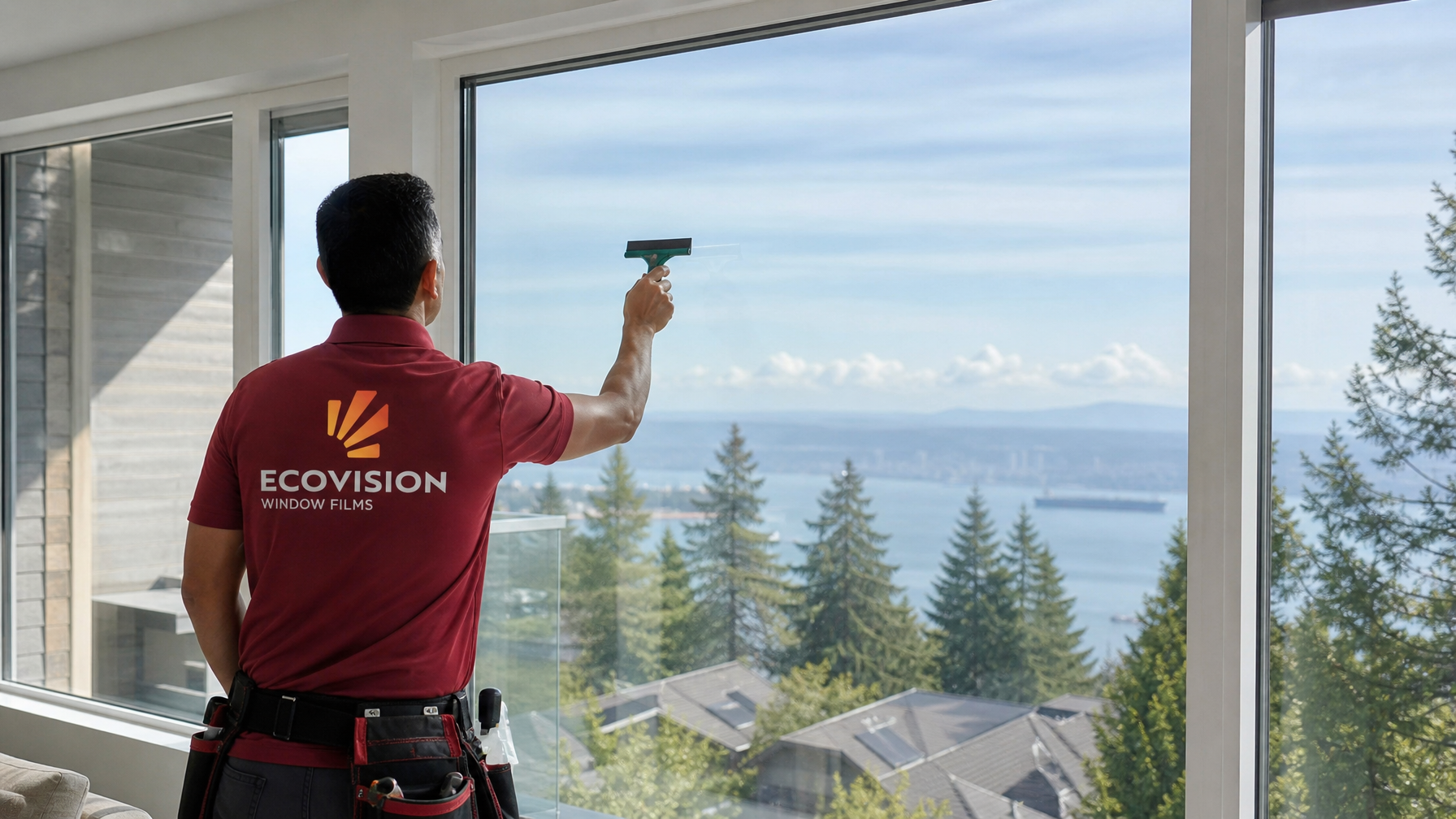
Are Floor-to-Ceiling Kitchen Windows a Good Candidate?
They are one of the best candidates. A floor-to-ceiling window of door-size proportions. Approximately 80 inches tall by 36 inches wide. Presents roughly 20 square feet of unshielded glass per panel. Two panels of that size deliver the solar load of a large south-facing wall with no insulation between you and the sun.
West- and southwest-facing kitchen windows are the most common glare complaint Ecovision receives from BC homeowners. The issue peaks between 2pm and 6pm when the sun drops toward the horizon and angles directly into the room. At this angle, the glare from an untreated glass panel is severe enough to make a TV screen or laptop completely unreadable from almost any position in the room.
Film resolves this without the daily exercise of closing blinds and losing your view. One of the most consistent pieces of feedback Ecovision receives after installation is that homeowners stop using their blinds entirely. The film handles the glare at all hours, and the view stays open.
Floor-to-ceiling windows are also straightforward to film. The large, uninterrupted glass surface means minimal cutting, fast installation, and a clean, seamless result. A two-panel kitchen installation of this type typically takes one to two hours.
How Much Glare Does Clear Solar Film Actually Block?
Glare is measured by visible light transmittance (VLT). The percentage of visible light that passes through the glass. Higher VLT means more light, including more glare. Standard uncoated residential glass transmits 85. 90% of visible light. A spectrally selective film on that glass reduces VLT to 55. 70%, depending on product selection.
In practical terms, this reduces peak glare intensity by 35. 50%. That is enough to eliminate the blinding effect on a TV screen or laptop and restore comfortable visibility across the room during peak afternoon sun hours. It is not enough to make a bright sunny day feel like overcast. The room remains naturally lit and open.
For rooms where glare is more severe. A south-facing sunroom, a west-facing home office. Ecovision also offers mid-range solar films with VLT in the 40. 55% range. These reduce glare more aggressively (by 50. 65%) with a slightly more noticeable tint. In most residential kitchens and living areas, the high-transmittance clear films hit the right balance without any perceptible darkening.

Does It Also Reduce Summer Heat?
Yes, and for floor-to-ceiling windows the heat reduction is meaningful. A large uncoated glass panel in direct afternoon sun delivers a solar heat gain equivalent to a small space heater running in the room. Spectrally selective film reduces solar heat gain coefficient (SHGC) by 40 to 75% depending on product grade.
For a typical Metro Vancouver home with west-facing floor-to-ceiling windows, this translates to a reduction in peak interior temperature of 4. 8°C on the exposed side of the room. At Rosemary Heights in Surrey, a residential building with large south-facing common area windows, comparable spectrally selective film installation reduced reported summer cooling costs by approximately 22% in the first season after installation.
For homeowners in MacLean Park and similar strata communities across the Lower Mainland, summer cooling comfort is often the primary driver for inquiries. The TV glare is the visible annoyance, but the invisible heat loading is the one running up the hydro bill.
Which Film Should I Choose for My Home’s Windows?
For the classic use case. Floor-to-ceiling windows, afternoon sun, glare while watching TV or working, preference to keep glass looking unchanged. Ecovision recommends two starting points:
- LLumar CTX 35 or CTX 50: Nano-ceramic, spectrally selective. CTX 50 (50% VLT) is the most popular choice for living areas. Clear appearance, strong glare control, excellent heat rejection. CTX 35 is for rooms where the sun exposure is more severe and slightly more glare reduction is needed.
- Vista SHC 55: Similar performance to CTX 50, with a slightly warmer colour tone. Preferred by homeowners who find the faint blue-neutral tone of CTX less suited to their interior palette.
Both options block 99% of UV. Both carry manufacturer warranties of 10. 15 years for residential installations. Both are installed by Ecovision’s certified crew in one visit with no disruption to the room. Furniture moved 18 inches from the glass, installation completed, furniture returned.
The right choice for your specific windows depends on orientation, glass type, and desired performance level. Ecovision’s on-site assessment is free and includes a side-by-side sample comparison on your actual glass before you commit.
What Does Residential Glare Reduction Film Cost in BC?
Spectrally selective clear solar film for residential windows in Metro Vancouver typically runs $10 – $18 per square foot installed, depending on the film grade, window count, and site access. For a two-panel floor-to-ceiling kitchen installation of approximately 40 square feet total, the installed cost generally falls in the $400 – $720 range.
Installation is a one-time cost with no maintenance required beyond standard window cleaning. LLumar and Vista residential film warranties run 10. 15 years, and well-installed ceramic films regularly outlast the warranty period without performance degradation. There are no recurring costs.
Ecovision offers free on-site assessments across Metro Vancouver, the Fraser Valley, and surrounding areas. During the assessment, you will see film samples applied directly to your glass so you can evaluate exactly how the finished product will look and perform before any commitment.
Frequently Asked Questions
Does window film completely eliminate glare, or just reduce it?
Clear solar film significantly reduces glare. By 35. 50% in most residential installations. But does not eliminate all ambient brightness. On an extremely bright day you may still see some reflections on screens at certain angles. The blinding effect from direct sun through uncoated floor-to-ceiling glass is eliminated. Most homeowners find the result allows them to use their TV and laptop comfortably at all times.
Will the film affect my view or darken the room?
Spectrally selective films are designed to preserve your view and natural light. Visible light transmittance on high-performance clear films sits at 55. 70%, which most people do not register as a darkened room. Colour rendering remains accurate. From inside, the view is open and natural. From outside, the glass has a very faint reflective quality in direct sun, similar to modern Low-E glass.
Does it make a difference for strata or condo buildings in BC?
Yes. In strata buildings, spectrally selective clear film is typically the easiest product to get council approval for, because it does not substantially change the exterior appearance of the building. Most strata bylaws in Metro Vancouver approve standard solar control film provided it does not significantly alter the reflectance or tint visible from the street. Ecovision can provide strata documentation packages on request.
How long does the installation take for two kitchen windows?
A two-panel floor-to-ceiling kitchen installation takes one to two hours for an Ecovision crew. The film requires a 30 to 60 day curing period during which small moisture bubbles may appear and then fully disappear. The room is fully usable immediately after installation. No drying or off-limits period for occupants.
What does residential solar film cost in the Lower Mainland?
Residential solar control film in Metro Vancouver runs $10 – $18 per square foot installed for standard and mid-grade spectrally selective films. A typical two-panel kitchen installation (approximately 40 sq ft) costs $400 – $720 all-in. Ecovision provides free on-site assessments with sample comparisons on your actual glass before any commitment. Call (236) 862-0052 or visit ecovisioncanada.com/contact/.
Related Articles
- Residential Window Film: Benefits for Heat, Glare, UV Protection
- Does Window Film Reduce Heat in Summer?
- Does Window Film Block UV Rays?
- Privacy Window Film in Vancouver: Types, Costs, and What to Know
- Window Tinting for Townhouses in Vancouver, BC: What Strata Owners Need to Know
About the Author: This article was written by the Ecovision Window Films team. Edward, Director at Ecovision, brings a distinctive perspective to the window film industry, with over a decade in real estate development, including roles as Executive Director at a real estate development firm and Director of Strategic Partnerships, before joining Ecovision. That background gives the company a sharp edge in serving BC property managers and building owners. Ecovision is a certified installer for leading film brands with completed projects for healthcare facilities, government buildings, and commercial properties throughout the Lower Mainland. For a free site assessment, call (236) 862-0052 or visit ecovisioncanada.com/contact/.