
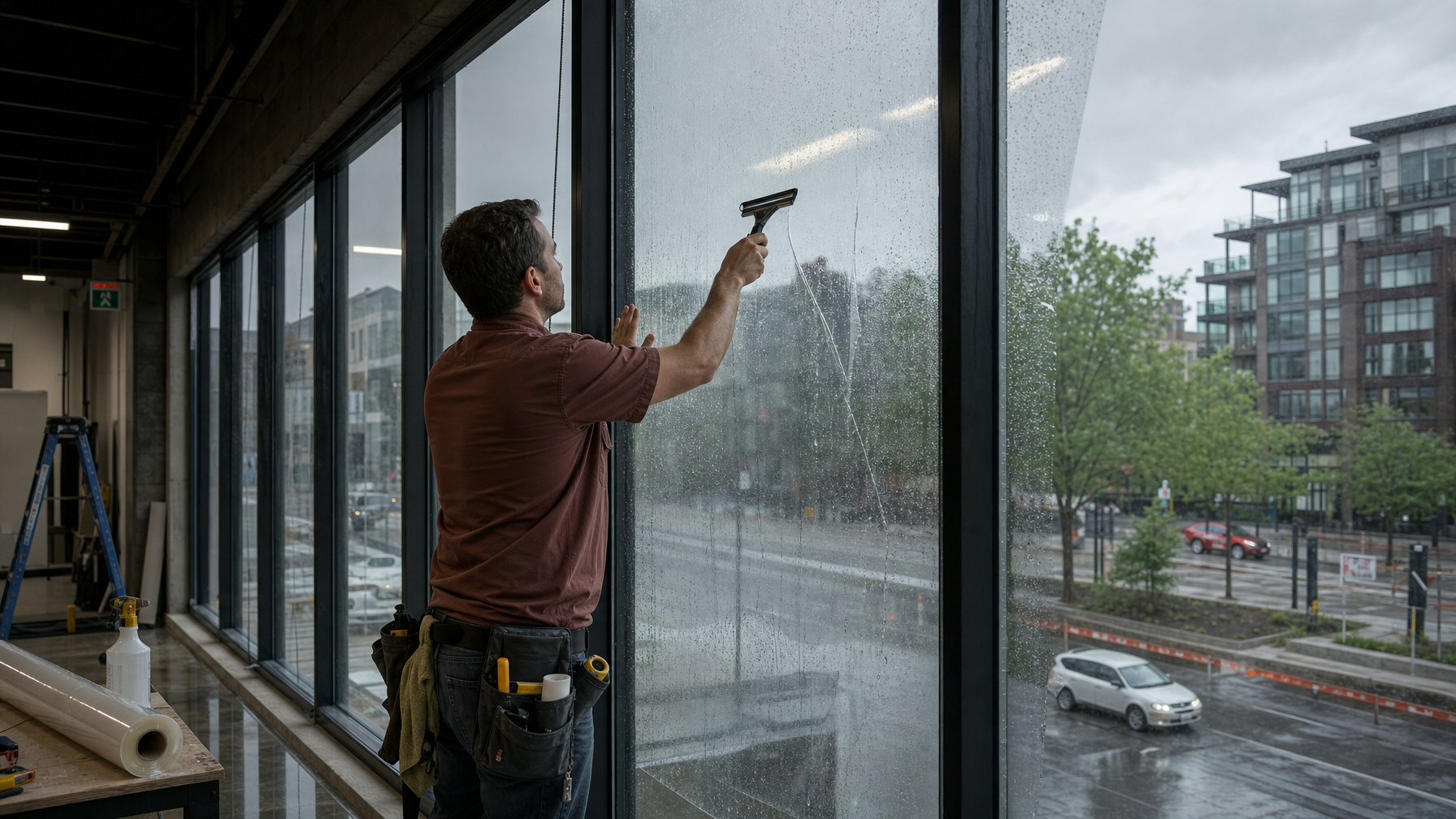
Yes, most professional-grade window films block 99% of UV rays, including both UVA and UVB. That single number understates the practical impact: UV radiation is the primary cause of furniture, flooring, and fabric fading, and a documented contributor to skin damage even through glass. Installing window film is one of the most cost-effective ways to protect both your interiors and the people inside your BC property year-round.
What UV Rays Actually Do Inside Your Building
UV radiation passes through standard glass almost completely unfiltered. Once inside, it breaks down the chemical bonds in dyes, pigments, and fibres, the process that causes hardwood floors to grey, upholstery to bleach, and artwork to fade. The Skin Cancer Foundation notes that UVA rays, which penetrate glass more readily than UVB, are associated with premature skin aging and contribute to skin cancer risk for people who spend extended time near windows.
In BC’s climate, this matters year-round. Overcast skies scatter UV rather than block it, diffuse UV still reaches interior surfaces on cloudy Lower Mainland days. South- and west-facing windows in particular accumulate significant UV load over the course of a year.
How Window Film Blocks UV Rays
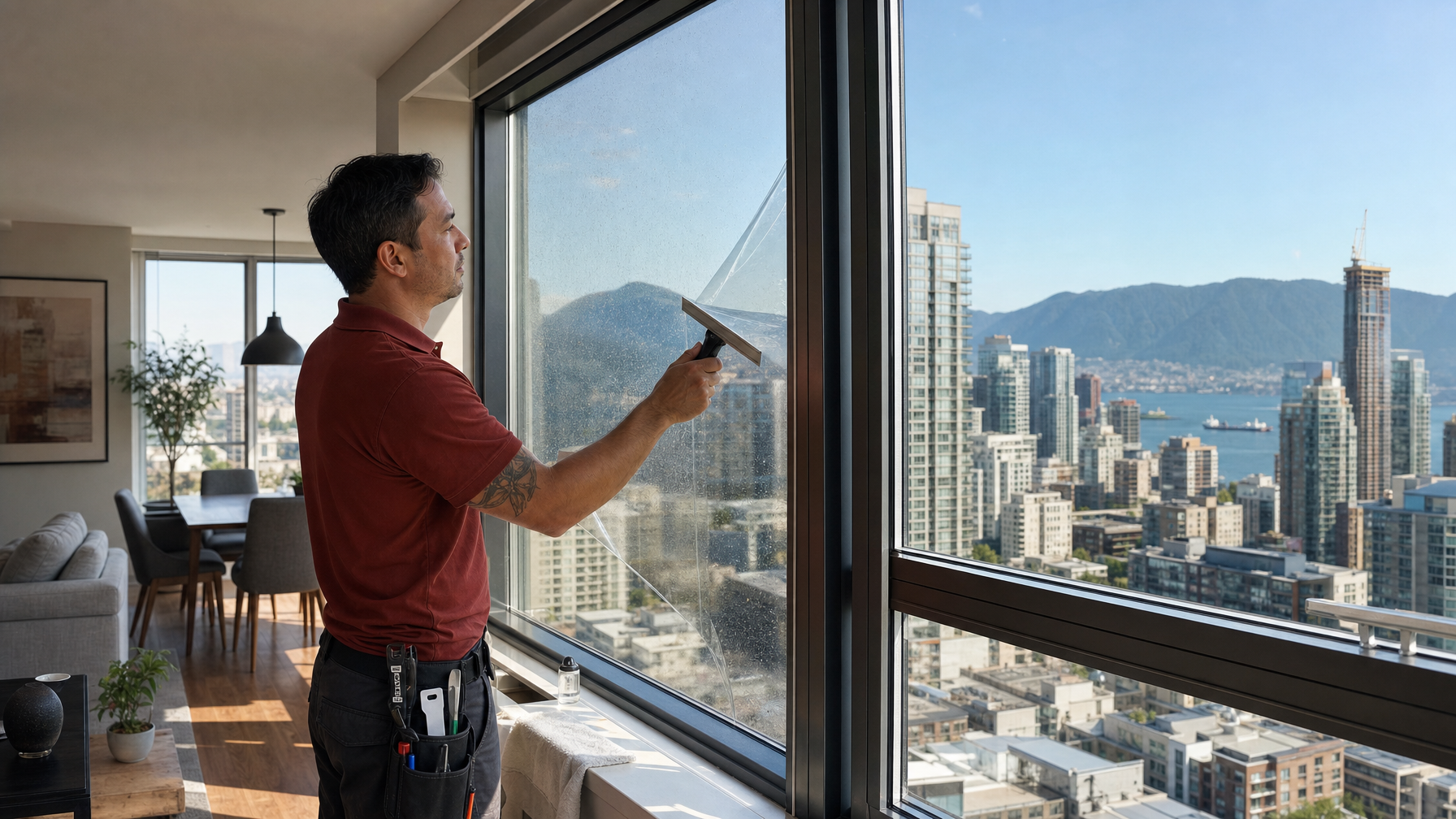
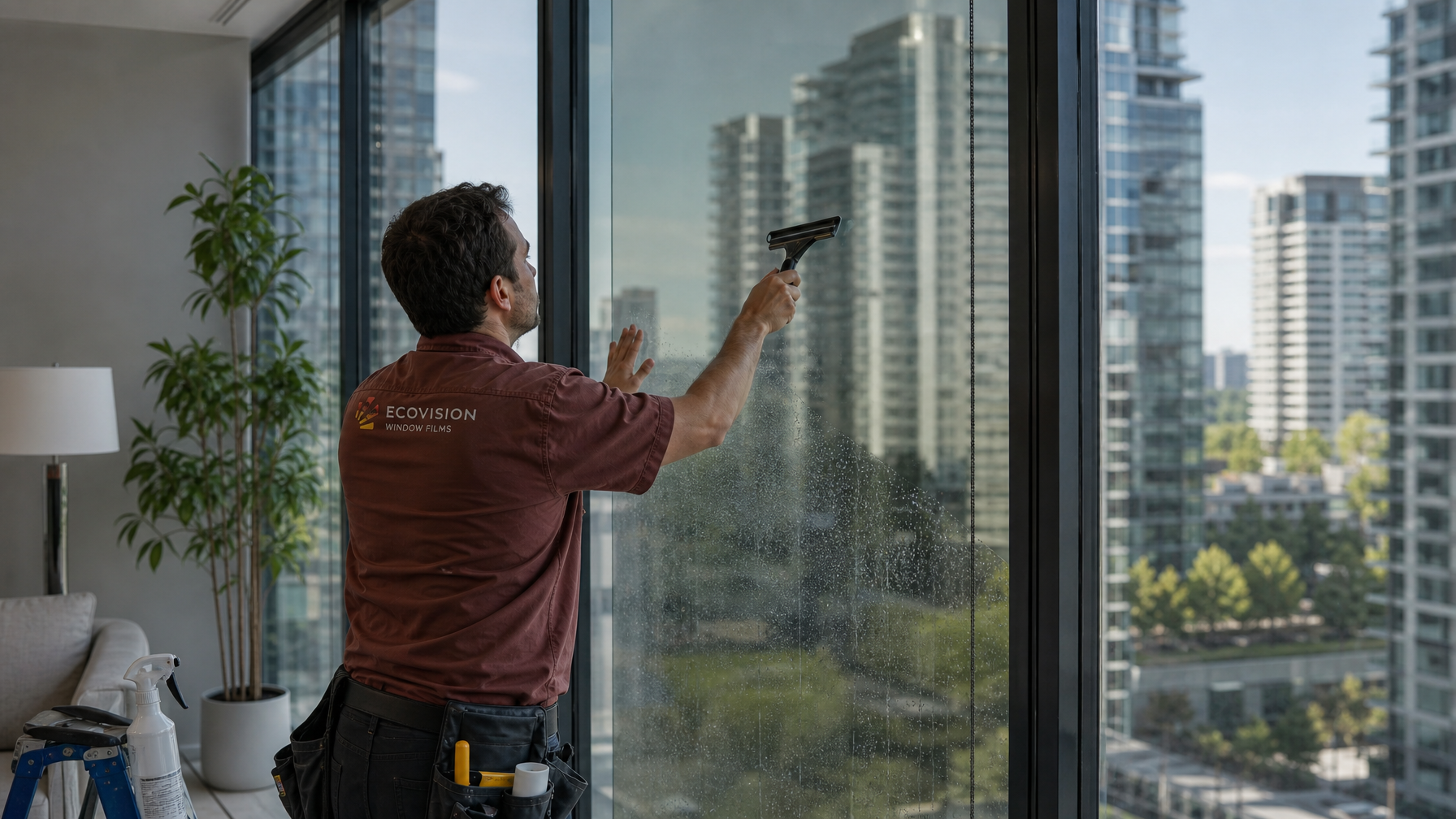
Window film achieves UV rejection through two mechanisms working together. The film’s polyester substrate absorbs UV energy before it can pass through the glass. A thin metal or ceramic layer, present in most solar and safety films, reflects the remaining UV back outward. The result is a combined rejection rate that reaches 99%+ in quality films, regardless of how much visible light the film allows through.
This is a key distinction: UV rejection is not the same as tint level. A nearly clear low-e film can block 99% of UV while transmitting 70% of visible light. You get the protection without darkening the room or obscuring your view, an important consideration for residential living spaces and healthcare environments where natural light matters.
Which Films Offer the Best UV Protection?
All LLumar and Vista films certified for architectural use block 99% of UV as a baseline. Within that, the right film for your project depends on what else you need:
Solar control films add heat rejection (up to 86%) on top of UV protection, the right choice for south-facing offices or residential rooms that overheat in summer. Safety and security films prioritize glass-hold-together performance in impact events while maintaining full UV protection. Low-e or spectrally selective films maximize visible light while rejecting UV and a portion of infrared heat, ideal for spaces where brightness is critical. Decorative and privacy films block UV while adding frosted or patterned appearance.
For most BC residential and commercial properties, a solar control film in the LLumar ATC or CTX series covers both UV protection and heat management in one product.
Does UV-Blocking Film Prevent Fading Completely?
UV accounts for roughly 40% of fading causes. The remaining 60% comes from visible light (25%), heat (25%), and humidity and other factors (10%). Blocking 99% of UV dramatically slows fading, most Ecovision clients report their protected interiors look the same after several years as they did at installation, but it does not eliminate fading entirely. Pairing UV-blocking film with low solar heat gain glass or interior shading handles the visible light and heat components for maximum protection.
UV Protection and Skin Health in Commercial Buildings
For healthcare facilities, senior homes, and office environments, UV protection through glass has documented occupant health implications. Staff and residents near windows accumulate meaningful UV exposure over a year. Ecovision has installed UV-blocking film at healthcare facilities across the Lower Mainland, including Windermere Care Centre and Guildford Seniors Village, specifically to reduce resident UV exposure without compromising the natural light that supports circadian health.
For commercial property managers, this is increasingly relevant to tenant wellness commitments and WELL Building Standard considerations.