
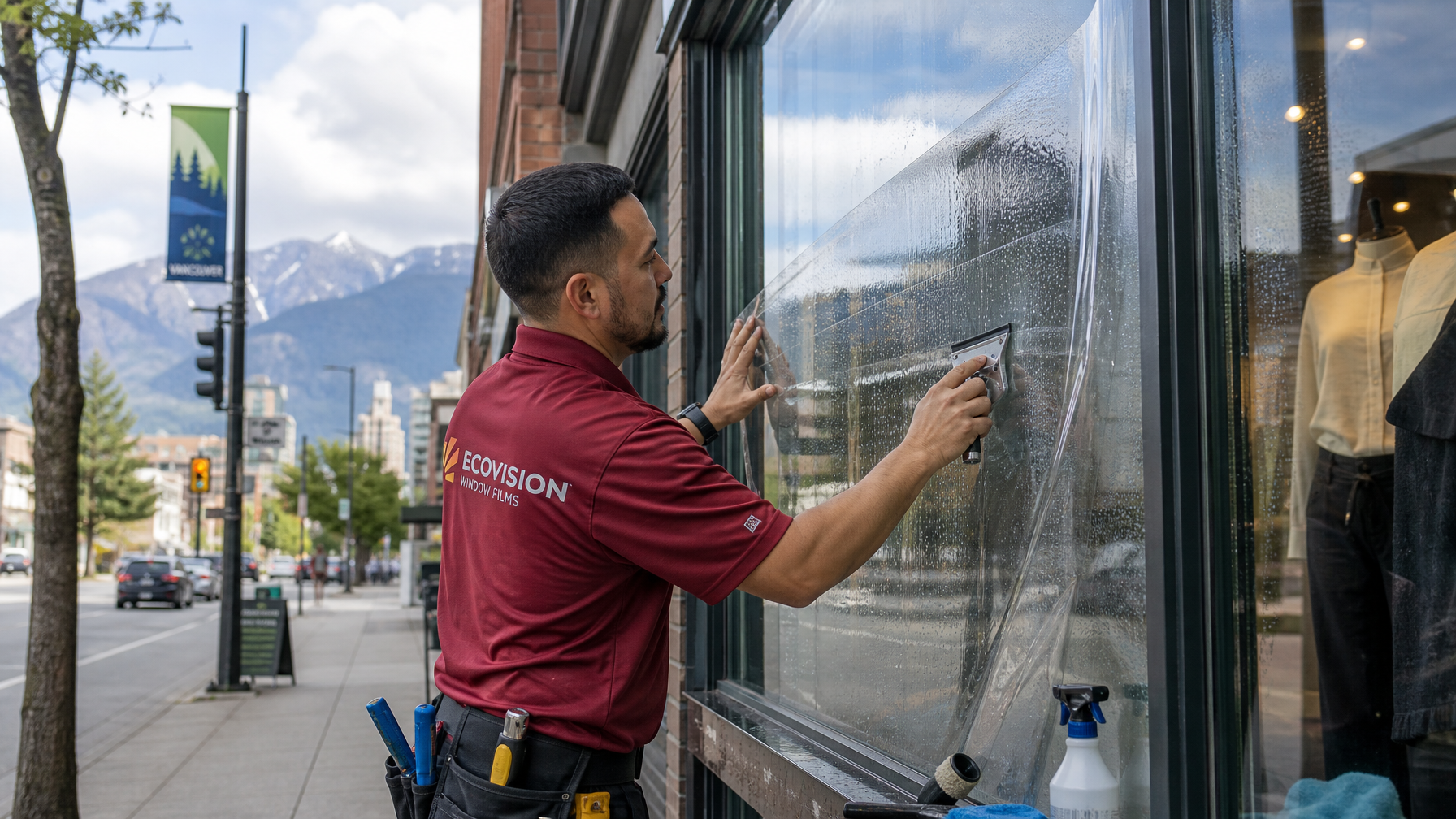
This guide covers window film for strata condo units and buildings. Ecovision does not tint vehicles. Architectural glass only.
Quick Answer
The best strata-friendly window film for heat rejection in a Vancouver condo is a spectrally selective ceramic film, such as LLumar CTX or Vista SHC. These block 40. 75% of solar heat while appearing nearly clear from outside, which means most strata councils approve them without debate. One unit can be done in two to three hours with no mess and no alteration to the building exterior.
What Makes a Window Film “Strata-Friendly”?
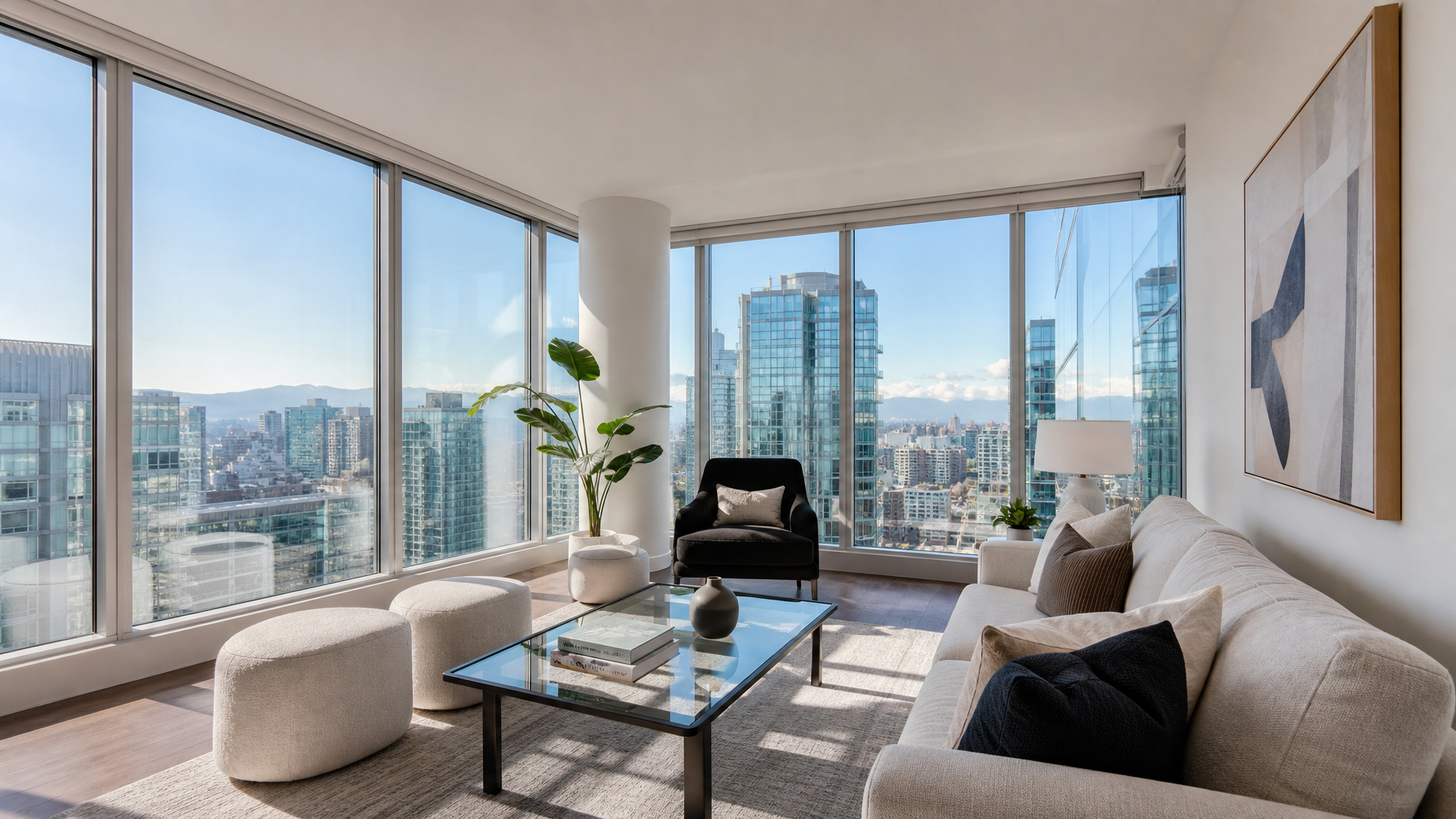
In BC strata buildings, window film is one of the most effective upgrades a unit owner can make, and one of the most misunderstood from a bylaw perspective. Most strata bylaws regulate alterations to the common property or exterior of the building. A window film installed on the interior surface of your glazing is almost always a unit owner’s decision, not a strata decision. The complication arises when the film changes the exterior appearance of the glass in a way that is visible from outside and inconsistent with neighbouring units.
A strata-friendly film meets three criteria:
- Minimal exterior reflectance change: The film does not significantly increase or change the colour of the glass reflection as seen from outside. Spectrally selective ceramic films typically have a neutral-to-slight-silver exterior appearance that blends with modern Low-E glass already installed in most post-2000 strata towers.
- No visible tint from street level: Dark or bronze-tinted films visibly alter the appearance of the building face and are more likely to trigger a strata notice. Clear or very lightly tinted ceramic films do not.
- No structural modification: Film applied to the interior glass surface does not require drilling, fasteners, or alterations to seals or frames. No building permit is required, and no engineering sign-off is needed for standard residential glazing.
“We are looking for the best heat rejection with minimal tinting. AKA strata-friendly.” That is how a West Quay condo owner put it to Ecovision, and it captures exactly what most BC strata residents want. Maximum performance. Minimum visibility. No council headache.
Which Films Have the Best Heat Rejection Without a Visible Tint?
Performance and appearance are controlled by two separate measurements: solar heat gain coefficient (SHGC) and visible light transmittance (VLT). Lower SHGC means more heat is blocked. Higher VLT means more visible light passes through, and the glass looks clearer. The challenge with older window films was that you could not have both: high heat rejection required a dark or reflective film.
Nano-ceramic technology changed this. By using non-metallic ceramic particles engineered to block infrared radiation while transmitting visible light, modern films can achieve heat rejection of 50. 75% with VLT of 50. 75%. In plain terms: very high heat rejection and very clear-looking glass at the same time.
Ecovision’s two primary recommendations for strata condo applications:
- LLumar CTX 50: 50% VLT, 59% total solar energy rejected, near-neutral exterior appearance. The most popular choice for west- and south-facing strata units across Metro Vancouver. At MacLean Park Residence, similar spectrally selective film across the south-facing common area units reduced reported summer heat discomfort substantially without any visible change to the building face.
- Vista SHC 55: 55% VLT, 56% total solar energy rejected, very slightly warmer colour tone. Popular in strata buildings with warm-toned exterior glazing. Ecovision installers used a comparable Vista series product at Rosemary Heights, where the building management required film that would not alter the exterior colour scheme.
Both are non-metallic, which means no interference with cell signals, WiFi, or remote entry fobs. Both block 99% UV. Both are warranted for residential installation for 10. 15 years by the manufacturer.
How Do You Get Strata Council Approval for Window Film?
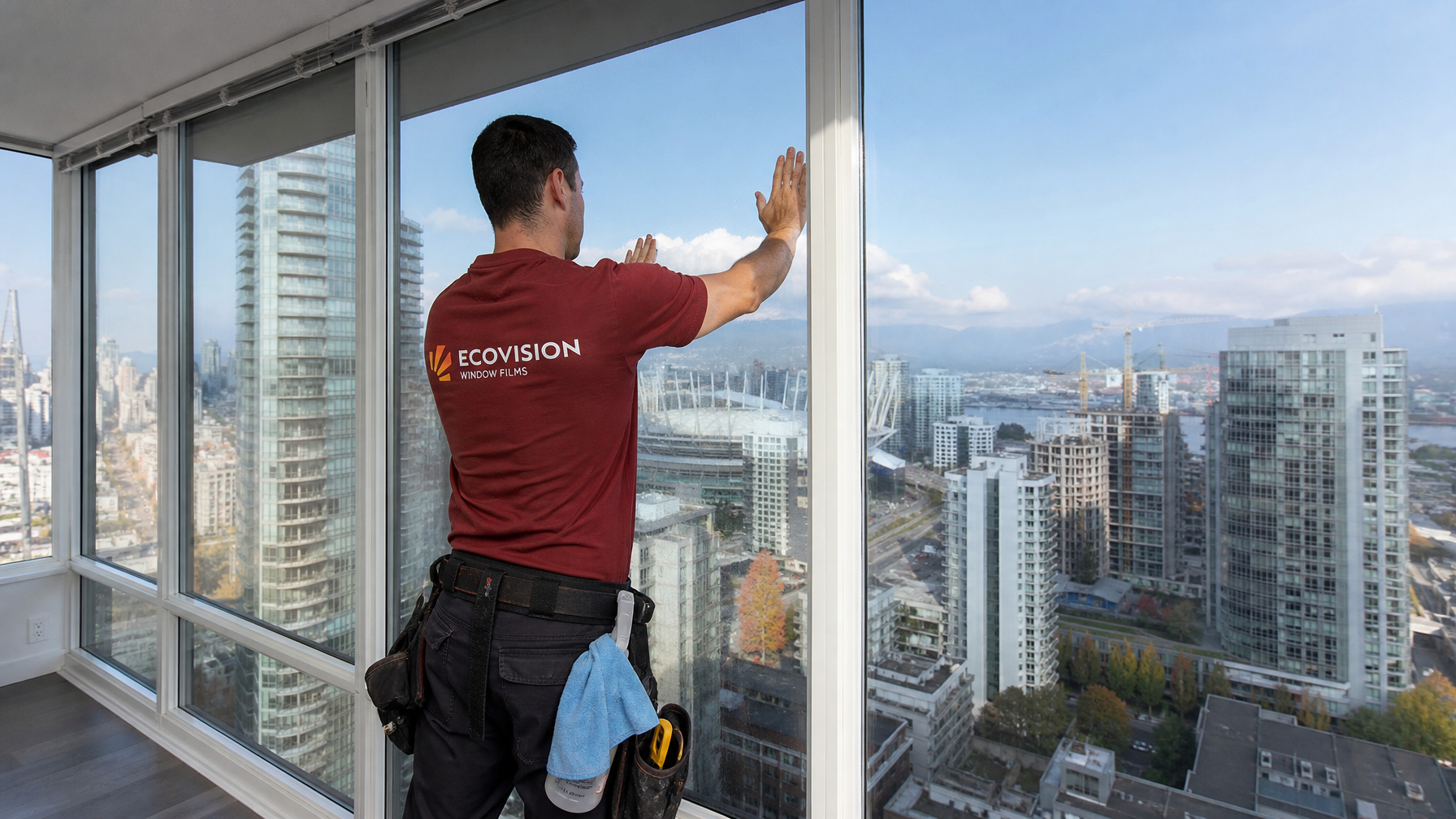
For most ceramic clear films installed on the interior glass surface, you do not need strata approval at all. In BC, under the Strata Property Act, a unit owner’s alterations to their own strata lot are generally permitted without council consent unless the strata’s bylaws specifically restrict them. Window film applied to the interior surface of your unit’s glazing is typically your decision as the owner.
Where approval becomes relevant:
- Your building’s bylaws include an explicit clause about window treatments or alterations visible from outside
- The building is a leasehold or rental strata where modifications require landlord consent
- You want to have the film covered under a future strata-funded maintenance project
If you do choose to run the approval through council, Ecovision can provide a written product description, manufacturer data sheet, and sample photographs of before-and-after installations for comparable buildings. Most strata councils that see the exterior appearance of a CTX or SHC ceramic film on a sample pane approve it in the same meeting. The visual change is negligible at street level.
For strata managers handling building-wide film projects. Multiple units, common area glass, or lobby glazing. Ecovision has completed pilot programs with several Metro Vancouver property management firms and can supply the documentation packages typically required for strata AGM approval and council sign-off.
Will Clear Solar Film Really Make a Measurable Difference in a Vancouver Condo?
It depends on the unit’s orientation and glass area. The impact is highest in south-, west-, and southwest-facing units, which receive the most direct sun during BC’s long daylight hours from May through September. A floor-to-ceiling window or patio door panel in these orientations can deliver as much solar heat gain as a small space heater running continuously during peak afternoon hours.
In practice, Ecovision condo owners with west-facing units consistently report two things after installation: the afternoon temperature in the room drops noticeably, and they stop using their blinds during the day. A spectrally selective film on a standard 80 x 36 inch patio door panel reduces solar heat gain by approximately 500. 700 BTU per hour at peak sun. Over a Vancouver summer, this translates to a material reduction in cooling load and, for units with in-suite mini-split AC or window units, a measurable reduction in electricity use.
For north-facing or substantially shaded units, the heat benefit is small. UV protection remains (99% blocked regardless), and glare reduction in rooms with diffuse reflected light is still meaningful, but the energy case is weaker. Ecovision’s free on-site assessment includes an orientation review and a realistic estimate of the thermal performance you can expect before any commitment.

South- and West-Facing Units: Which Floors Need Film Most?
All floors in a south- or west-facing block benefit, but the middle and upper floors tend to experience the most intense solar gain. Lower floors often have shading from surrounding buildings or mature trees. Upper floors have the longest unobstructed sun exposure and the highest altitude angle from the sun in late morning and early afternoon.
In strata towers with consistent glazing floor to floor, Ecovision often recommends a building-wide film survey before individual unit owners proceed. When multiple units film their windows in the same building, a coordinated approach ensures consistent exterior appearance and eliminates the patchwork look that occasionally triggers strata notice. Ecovision has managed coordinated projects in strata towers across Burnaby, Richmond, and Vancouver’s West End where 12 to 40 units were filmed over two to three days under a single building permit package.
What Does Strata-Approved Window Film Cost in BC?
For a residential condo unit, spectrally selective ceramic film runs $10 – $18 per square foot installed across Metro Vancouver. The range reflects film grade and site access. A typical one-bedroom west-facing unit with one patio door panel and two bedroom windows. Approximately 60. 80 square feet of glass. runs $600 – $1,440 installed depending on film grade selected.
For multi-unit building projects, Ecovision offers volume pricing for building-wide installations where multiple owners coordinate. The per-square-foot rate on coordinated projects of 10 or more units is lower than individual unit pricing.
There are no ongoing costs after installation. LLumar and Vista ceramic films require no maintenance beyond standard window cleaning and carry manufacturer warranties of 10. 15 years for residential applications. Most films installed professionally outlast the warranty period without performance degradation.
Ecovision provides free on-site assessments with sample comparisons directly on your glass before any commitment. For strata buildings, we can also provide building managers with a project overview document for distribution to interested unit owners. Call (236) 862-0052 or visit ecovisioncanada.com/contact/ to book.
Frequently Asked Questions
Do I need strata council permission to install window film in my condo?
In most BC strata buildings, no. Window film applied to the interior glass surface of your unit is a unit-owner alteration and does not require strata consent under the Strata Property Act unless your building’s specific bylaws restrict it. Clear or lightly tinted ceramic films that do not visibly change the exterior appearance of the building rarely trigger bylaw issues. Ecovision can provide a written product description if you choose to inform your council proactively.
Will the film change how my condo looks from outside the building?
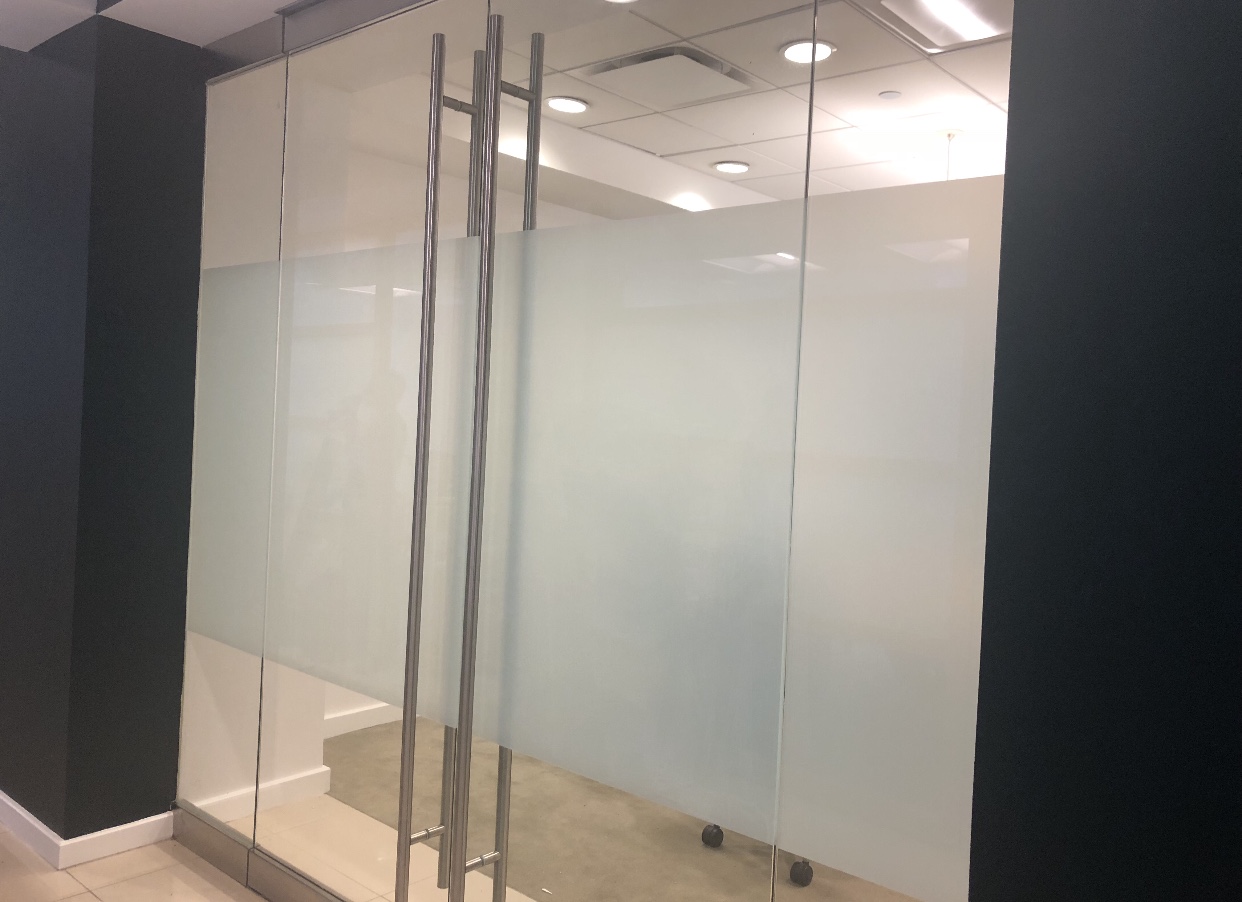
With a spectrally selective clear film like LLumar CTX or Vista SHC, the change from outside is minimal. The glass has a very faint neutral-silver reflective quality in direct sun, similar to what modern Low-E factory glazing already produces. At street level, the difference between filmed and unfilmed units is not visible to the eye. This is why these products pass most strata aesthetic reviews without objection.
What is the best film for a south-facing Vancouver condo?
For maximum heat rejection with minimum visible tint, LLumar CTX 35 or CTX 50 are the most common choices for south-facing strata units. CTX 50 (50% VLT) is the right starting point for most living areas. CTX 35 gives stronger heat and glare control for rooms with extreme direct exposure. Both block 99% UV and have a near-neutral exterior appearance. Ecovision will bring samples to your unit for comparison on your actual glass.
How long does a condo window film installation take?
A typical one-bedroom or two-bedroom condo unit takes two to four hours. Ecovision moves furniture 18 inches from the glass, films all selected panes, and returns the room to its original layout before leaving. The film requires a 14. 30 day curing period during which minor moisture bubbles may appear and disappear. The unit is fully usable immediately after installation.
What does strata window film cost per square foot in Vancouver?
Spectrally selective ceramic film for strata condo units in Metro Vancouver runs $10 – $18 per square foot installed. A typical unit with one patio door and two bedroom windows, approximately 60. 80 square feet, costs $600 – $1,440 all-in. Ecovision offers volume pricing for coordinated building-wide projects. Free on-site assessment at (236) 862-0052 or ecovisioncanada.com/contact/.
For more on heat management in south and southwest-facing condo windows.
Related Articles
- Window Film for Condo Buildings in Vancouver: What Owners and Strata Councils Need to Know
- Does Window Film Stop Sun Glare Without Darkening Your Glass? A BC Homeowner’s Guide
- Window Tinting for Townhouses in Vancouver, BC: What Strata Owners Need to Know
- Ceramic vs. Dyed Window Film: Which Is Right for BC Homes and Businesses?
- Energy Efficient Window Film in Vancouver: What It Saves, What It Costs, and What to Install
About the Author: This article was written by the Ecovision Window Films team. Edward, Director at Ecovision, brings a distinctive perspective to the window film industry, with over a decade in real estate development, including roles as Executive Director at a real estate development firm and Director of Strategic Partnerships, before joining Ecovision. That background gives the company a sharp edge in serving BC property managers and building owners. Ecovision is a certified installer for leading film brands with completed projects for healthcare facilities, government buildings, and commercial properties throughout the Lower Mainland. For a free site assessment, call (236) 862-0052 or visit ecovisioncanada.com/contact/.