
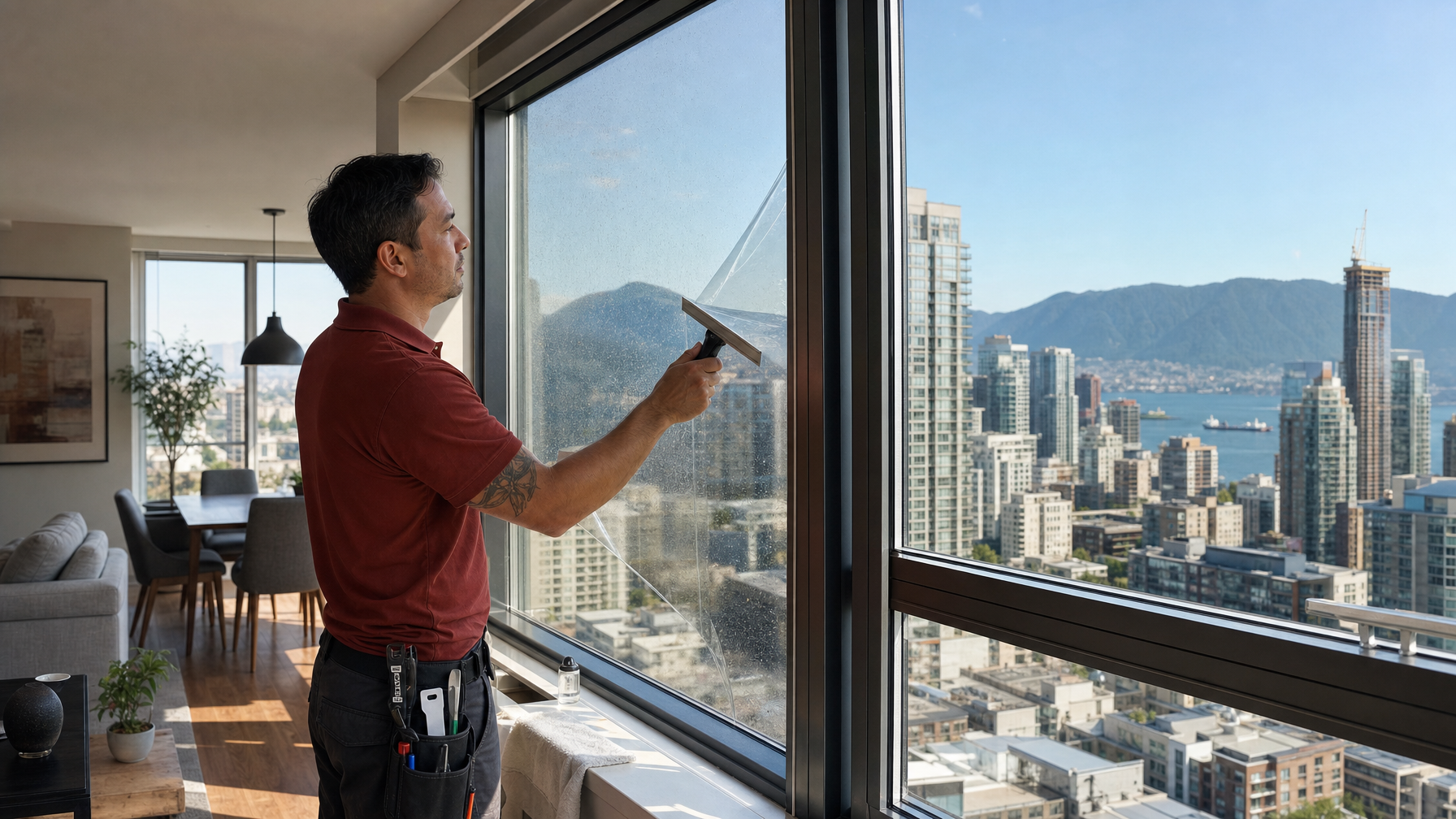
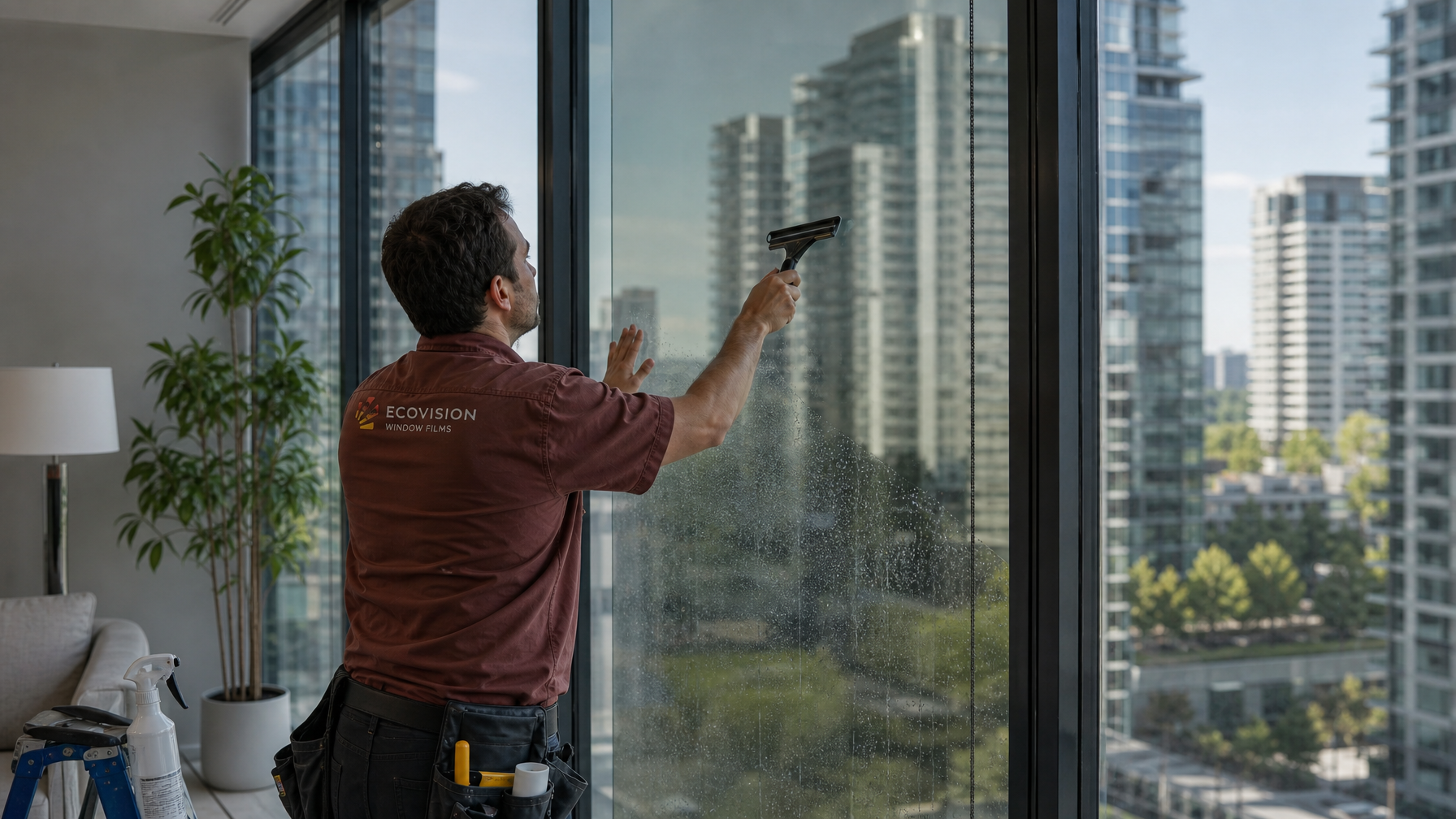
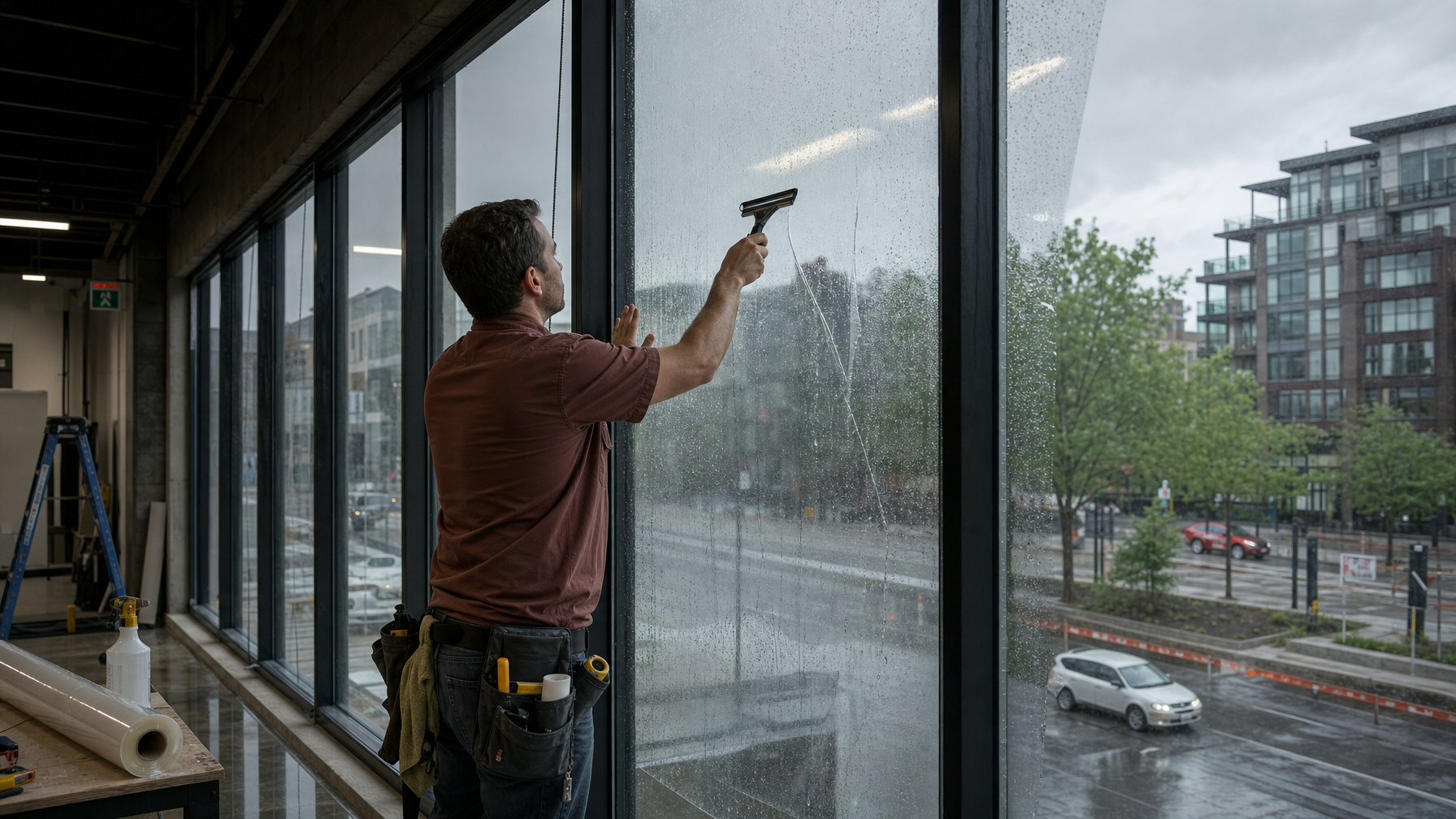
Heat blocking window film for Vancouver homes and offices can cut solar heat gain by 40 – 80%, depending on film type and glazing. Ecovision Window Films installs LLumar and Vista certified solar control film across the Lower Mainland, reducing indoor temperatures by 5 – 10°C in treated rooms and cutting cooling loads by up to 30%, without replacing glass or losing the view.
What Is Heat Blocking Window Film and How Does It Work?
Heat blocking window film is a thin polyester laminate applied directly to the interior surface of existing glass. It works by absorbing and reflecting solar infrared (IR) radiation, the wavelength responsible for heat, before it can pass through the glass into your space. High-performance ceramic films block up to 80% of total solar energy (TSER) while still allowing 50 – 70% of visible light through, so rooms stay bright without becoming ovens.
The physics is straightforward. Glass on its own has a solar heat gain coefficient (SHGC) of 0.82 to 0.86 for standard single-pane glazing, meaning it transmits over 80% of solar energy as heat. A quality LLumar or Vista solar control film can reduce that SHGC to 0.25 – 0.45, cutting heat transmission by more than half. For a west-facing home office in Vancouver’s July heat, that difference is measurable in minutes after the afternoon sun hits.
Metro Vancouver averages 28 days above 25°C annually from May through September. South and west-facing windows bear the full brunt of afternoon solar gain from 1 pm onward. For the Rocky Mountaineer luxury train fleet, an Ecovision Window Films commercial installation, solar control film eliminated overheating complaints in glass-domed rail cars where HVAC alone could not keep pace with direct sun exposure. The same physics applies to glass-heavy residential sunrooms, high-rise offices, and retail storefronts across BC.
How Much Heat Does Window Film Actually Block?
Performance varies significantly by film type. The key metric is Total Solar Energy Rejected (TSER), which measures the percentage of incoming solar energy that the film prevents from entering the space as heat. Here is a comparison of the main film categories Ecovision installs:
| Film Type | TSER | Visible Light Transmission | Best Application | Cost (per sq ft installed) |
|---|---|---|---|---|
| Dyed film (entry) | 30 – 40% | 25 – 40% | Privacy + light control | $9 – $12 |
| Metalized solar film | 50 – 65% | 20 – 45% | Residential solar control | $10 – $14 |
| Ceramic solar film | 60 – 80% | 40 – 70% | Offices, sunrooms, west-facing glass | $13 – $18 |
| Dual-reflective film | 55 – 72% | 35 – 55% | High-rise commercial, privacy | $12 – $17 |
Ceramic film is the preferred choice for most Vancouver installations because it delivers the highest heat rejection without the mirror-like exterior appearance of metalized film. LLumar Quantum ceramic series and Vista by Llumar ExteriorSeries are both available through Ecovision and carry manufacturer warranties of 10 – 15 years for commercial applications. For BC’s CleanBC program objectives on commercial buildings, ceramic film on existing glazing is one of the fastest-payback envelope upgrades available, typically recovering installation cost within 3 – 5 years through HVAC savings alone.
What Is the Best Heat Blocking Window Film for Vancouver’s Climate?
Vancouver’s climate presents a specific challenge: summers are warm and sunny, but winters are overcast and mild. A film optimized purely for summer heat rejection can reduce passive solar gain in winter, adding marginally to heating loads. The right film for Vancouver balances summer heat rejection with year-round light transmission.
For residential south and west-facing windows, Ecovision recommends ceramic solar control film in the 50 – 60% visible light transmission range. This maintains a bright, open interior while rejecting 60 – 70% of solar heat gain during peak summer months. For commercial south-facing curtain walls, such as the Bentall 4 office tower in downtown Vancouver, where Ecovision has completed commercial installations, dual-reflective film reduces glare and heat while maintaining daytime views for occupants.
Factors that shape the right film choice for your property:
- Glazing type, double-pane low-e glass requires film specifically rated for sealed unit compatibility to avoid seal failure from heat stress
- Orientation, south and west exposures need higher TSER; north-facing glass rarely benefits from solar film
- Building use, residential comfort focus vs. commercial energy efficiency target vs. tenant experience
- HOA or strata restrictions on exterior appearance, dual-reflective and neutral films typically meet most strata requirements
How Much Does Heat Blocking Window Film Cost in BC?
In BC, professionally installed heat blocking window film ranges from $9 – $18 per square foot depending on film grade, building access, and total project size. Entry-level dyed film starts at $9 per square foot, while high-performance ceramic film for commercial or large residential projects runs $13 – $18 per square foot installed.
For a standard 1,200 sq ft Vancouver home treating south and west-facing windows (typically 150 – 250 sq ft of glass), the installed cost for ceramic solar film falls in the $1,950 – $4,500 range. A full commercial floor plate of 5,000 sq ft of exterior glazing runs $45,000 – $90,000, though commercial volume typically reduces per-square-foot pricing. Ecovision offers free on-site assessments including a room-by-room heat mapping conversation to help property owners prioritize which windows to treat first for maximum return.
Unlike window replacement, which runs $800 – $2,000 per window and requires permits in BC, window film is installed without construction, without permits, and without building downtime. Most residential projects complete in a single day. Under BC’s Energy Step Code, window film is recognized as a legitimate envelope improvement when paired with energy modelling for building permit applications.
Does Heat Blocking Window Film Darken Your Windows?
This is the most common concern Ecovision hears from homeowners considering solar control film, and the honest answer depends on the film chosen. Older generation dyed and metalized films could reduce visible light to 20 – 30%, creating a noticeably darker interior. Modern ceramic films address this directly: LLumar Quantum C60 and Vista VS40 series both transmit 50 – 70% of visible light while rejecting 60 – 75% of solar heat, a combination that was not available a decade ago.
At 60% visible light transmission, the difference between filmed and unfilmed glass is subtle, most occupants describe it as similar to a very light tint, comparable to wearing sunglasses indoors. Natural light levels remain high enough for comfortable reading, screen work, and plant growth. At 40% VLT, the interior reads clearly darker and is more appropriate for commercial spaces with artificial lighting or south-facing glass that receives 6+ hours of direct sun daily.
For energy efficient window film installations where maintaining natural light is a priority, Ecovision’s team conducts a site visit to measure ambient light levels and recommend the specific film grade that balances heat rejection and brightness for each room. A film that works perfectly in a west-facing bedroom may be too dark for a north-facing kitchen.
How Long Does Heat Blocking Window Film Last in BC?
Professionally installed solar control film from LLumar or Vista carries manufacturer warranties of 10 years for residential applications and 5 – 15 years for commercial, depending on film grade and glazing type. In BC’s relatively mild coastal climate, lower UV intensity than Alberta or Ontario, and without the extreme freeze-thaw cycling of interior BC, solar films reliably exceed warranty periods, with many installations lasting 15 – 25 years before edge lifting or delamination occurs.
Film longevity in BC depends primarily on three factors: installation quality (professional installation with proper edge sealing outlasts DIY by 5 – 10 years), glazing type (film on sealed double-pane units requires a certified compatible product to avoid heat stress cracking), and cleaning practices (abrasive cleaners and ammonia-based products degrade the adhesive over time, mild soap and soft cloth is all that is needed). Ecovision’s installations are backed by the manufacturer warranty plus Ecovision’s own workmanship guarantee. For a full breakdown of film lifespan by type and climate zone, see how long does window film last in BC.
Related Articles
- Energy Efficient Window Film in Vancouver: What It Saves, What It Costs, and What to Install
- Solar Window Film for Vancouver Homes: What It Does, What It Costs, and What to Install
- Reflective Window Film for Summer Heat in BC: Types, Costs, and What to Know
- Does Window Film Lower Cooling Costs in North Vancouver?
- How Long Does Professionally Installed Window Film Last in BC?
Frequently Asked Questions: Heat Blocking Window Film Vancouver
About the Author: This article was written by the Ecovision Window Films team. Edward, Director at Ecovision, brings a distinctive perspective to the window film industry, with over a decade in real estate development, including roles as Executive Director at a real estate development firm and Director of Strategic Partnerships, before joining Ecovision. That background gives the company a sharp edge in serving BC property managers and building owners. Ecovision is a certified installer for leading film brands with completed projects for healthcare facilities, government buildings, and commercial properties throughout the Lower Mainland. For a free site assessment, call (236) 862-0052 or visit ecovisioncanada.com/contact/.