
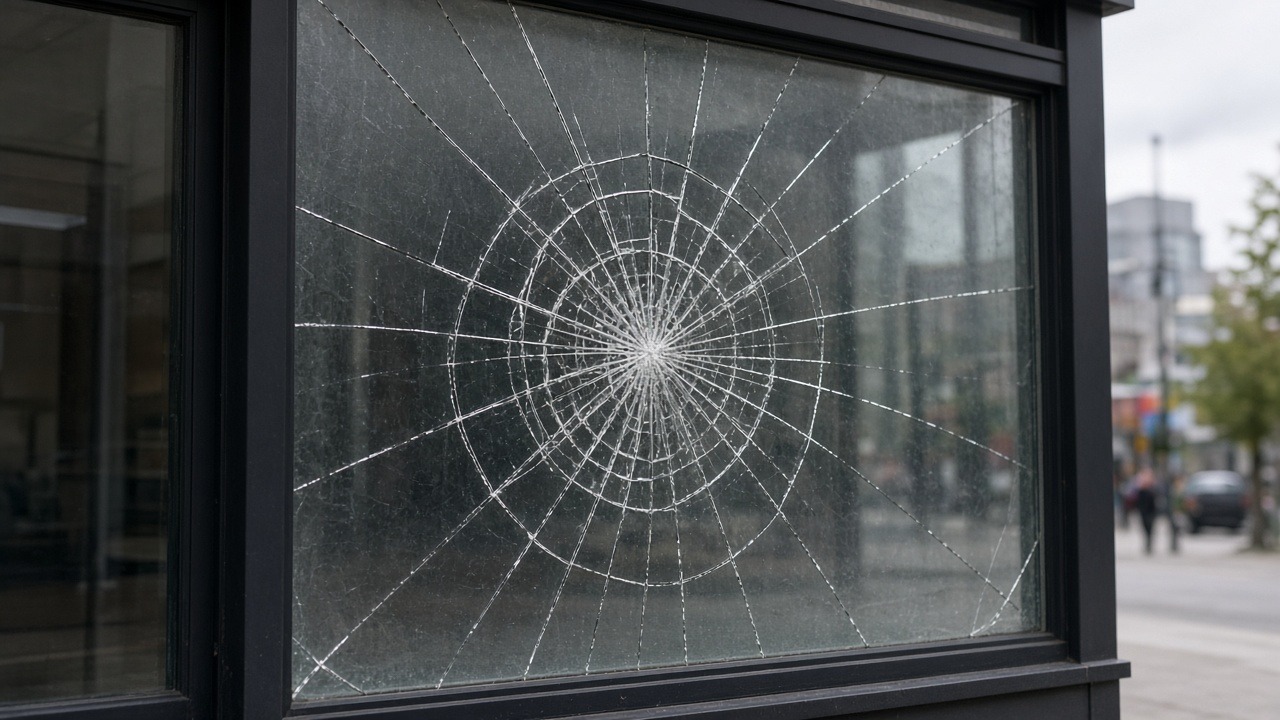
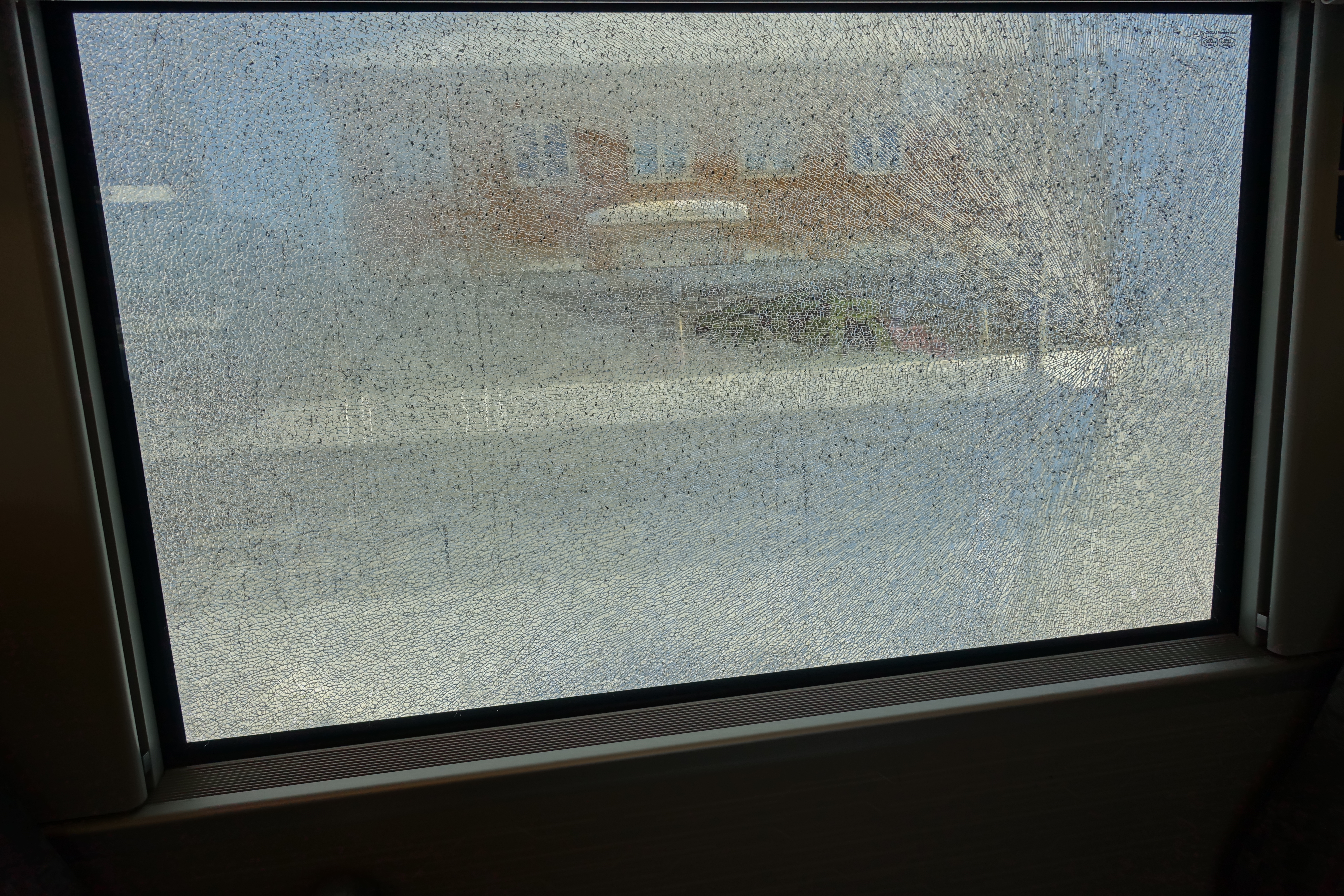
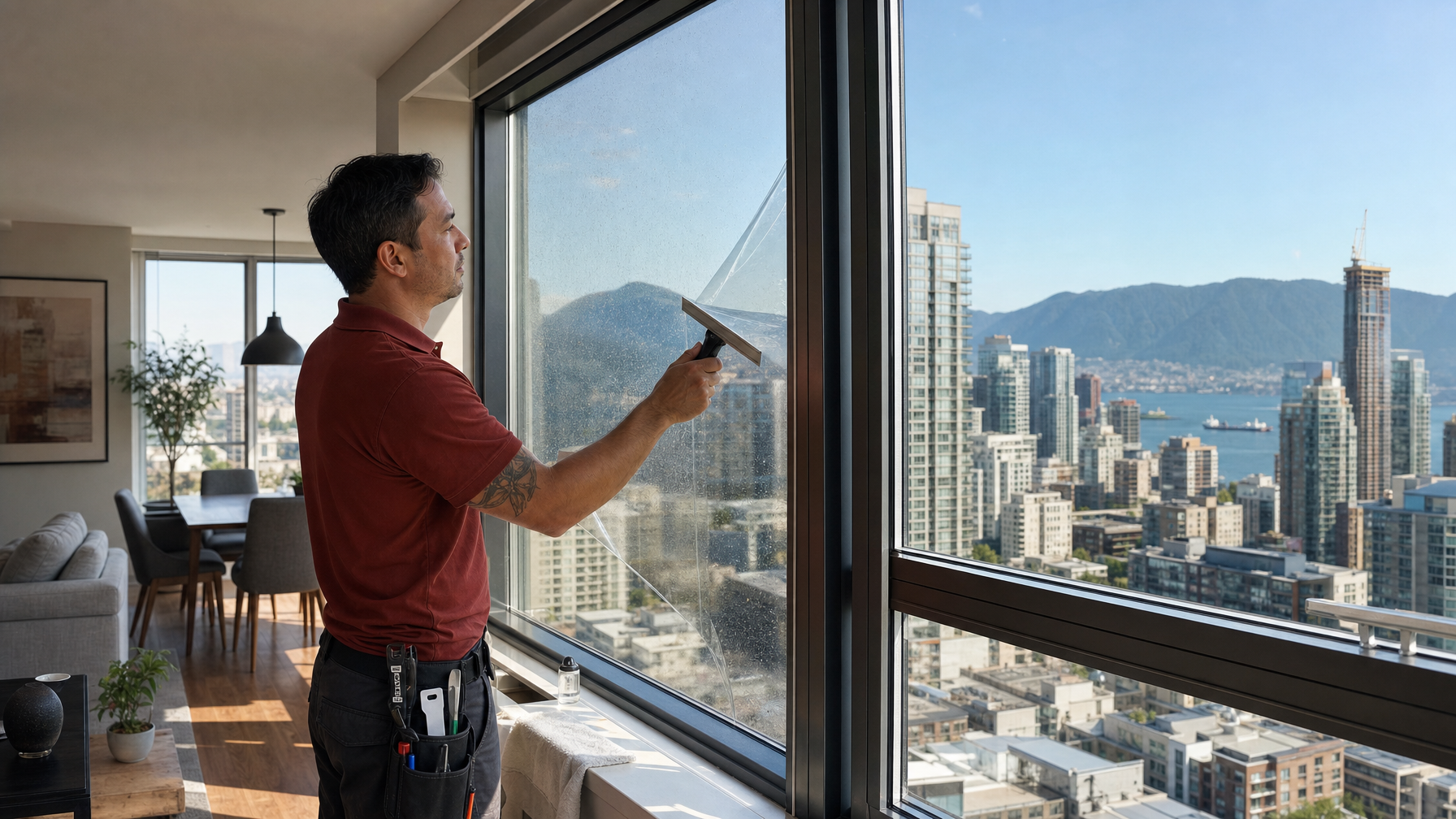
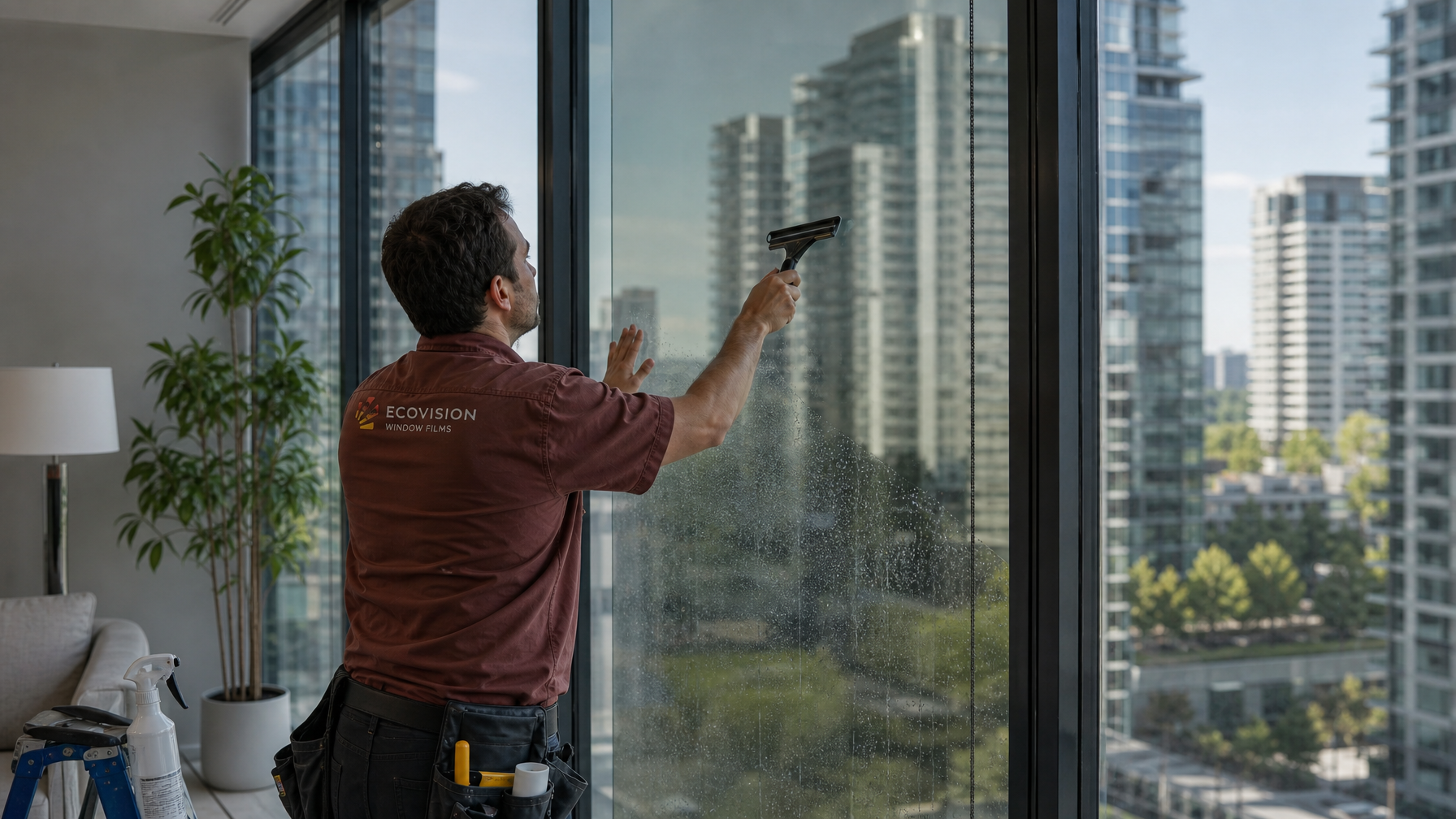
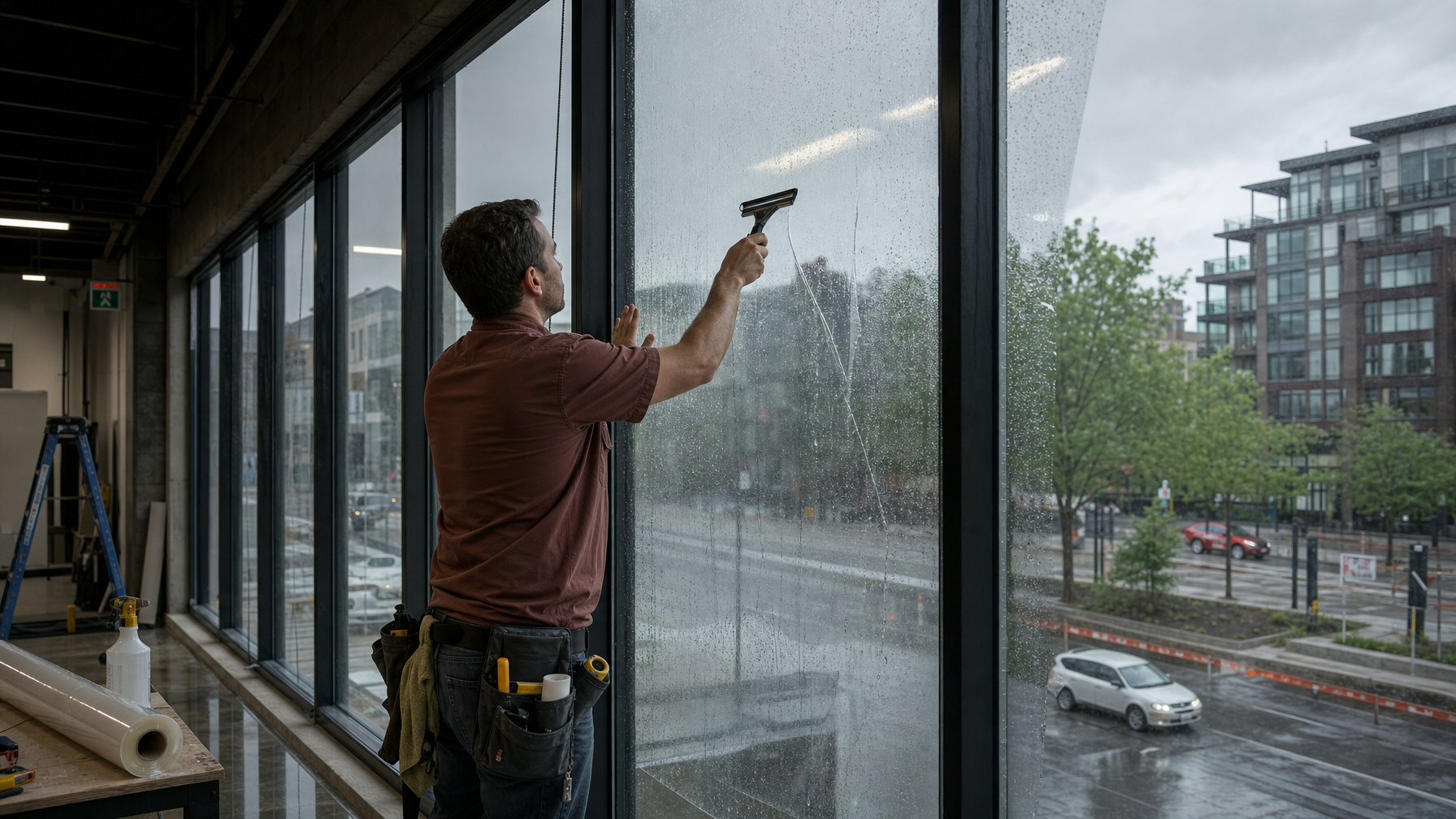
Window film marketed as “soundproof” reduces noise transmission by 2, 5 decibels, depending on film thickness and how well your window frames are sealed. That is a measurable improvement for street-facing apartments and offices near Vancouver’s SkyTrain corridors, but it is not a substitute for acoustic glass replacement. Ecovision Window Films installs LLumar and Vista certified film across the Lower Mainland, and this guide gives you an honest answer on what to expect.
What Is Soundproof Window Film and How Does It Work?
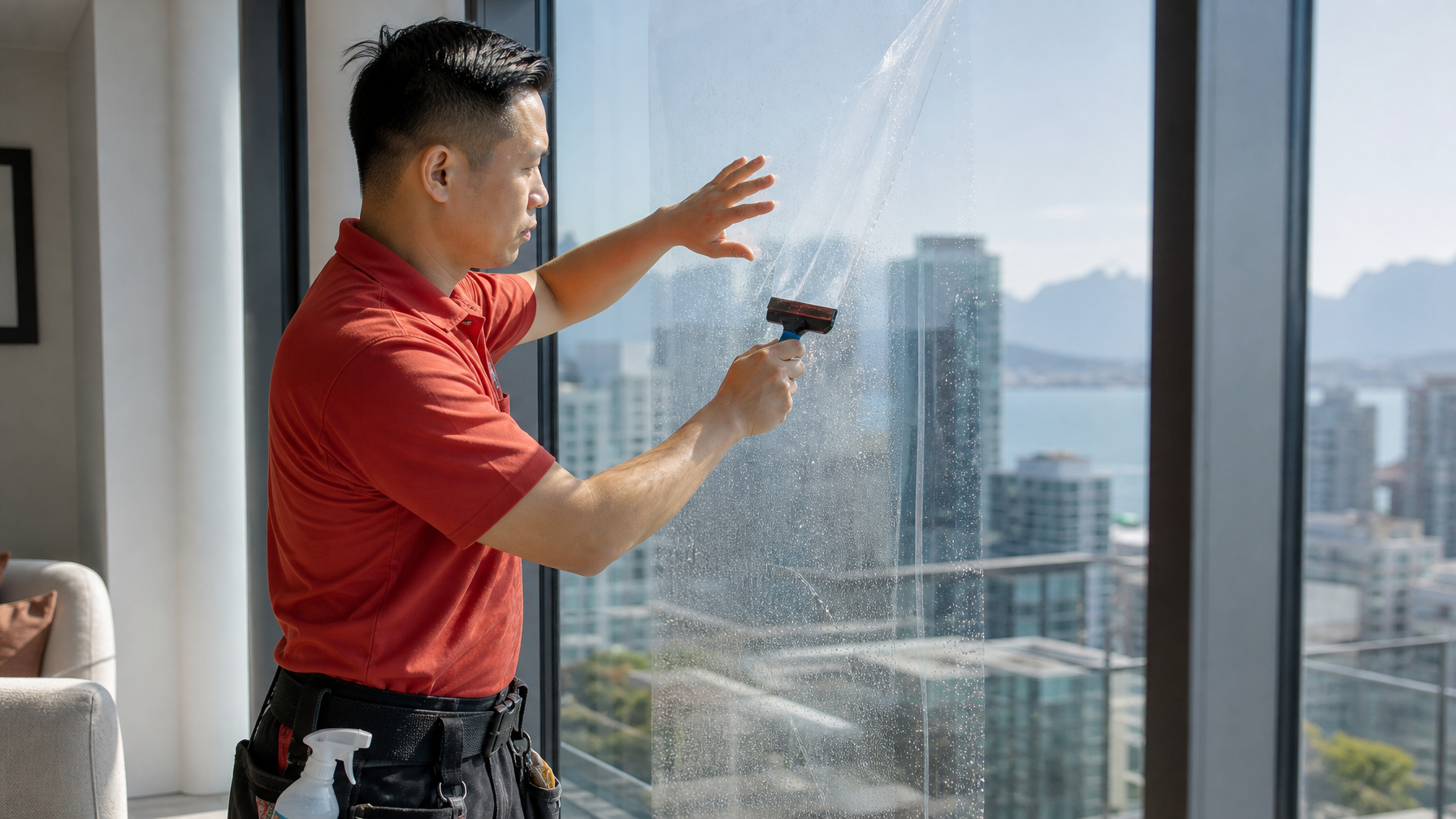
No window film is truly soundproof. Sound is vibration transmitted through solid materials, glass, frames, walls, and a thin polymer film alone cannot stop that energy. What thicker safety films do is add mass to the glass pane, dampening resonant vibration at mid-range frequencies (roughly 300, 3,000 Hz). That range covers traffic hum, conversation bleed, and HVAC noise, the sounds most BC homeowners report in street-facing suites.
The products sold as acoustic or “soundproof” window film are typically 7, 14 mil safety and security films, the same products used for forced-entry delay and glass retention in commercial applications. The film adds a bonded polymer layer that vibrates less freely than bare glass, reducing the energy transferred to the interior. Standard 2, 4 mil solar control film provides negligible acoustic benefit and should not be purchased for noise reduction purposes.
Noise enters a room through three pathways: the glass pane itself, the frame seals, and gaps around the perimeter. Film addresses the glass pathway only. Cracked or compressed frame seals account for 40, 60% of noise ingress in older Vancouver buildings and should be inspected and replaced before or alongside film installation. Ecovision includes frame seal assessment as part of every residential on-site evaluation.
How Much Noise Can Window Film Actually Reduce?
Typical measured results from safety and security window film installations in comparable building types:
| Film Type | Thickness | Noise Reduction | Primary Use |
|---|---|---|---|
| Standard solar control film | 2, 4 mil | 1, 2 dB | Heat / UV, not acoustic |
| Safety film (LLumar S-series, Vista) | 7, 8 mil | 2, 3 dB | Glass retention + minor noise dampening |
| Security film (LLumar / Vista) | 8, 14 mil | 3, 5 dB | Forced entry delay + acoustic dampening |
| Acoustic laminated glass (replacement) | N/A | 8, 15 dB | Maximum acoustic performance |
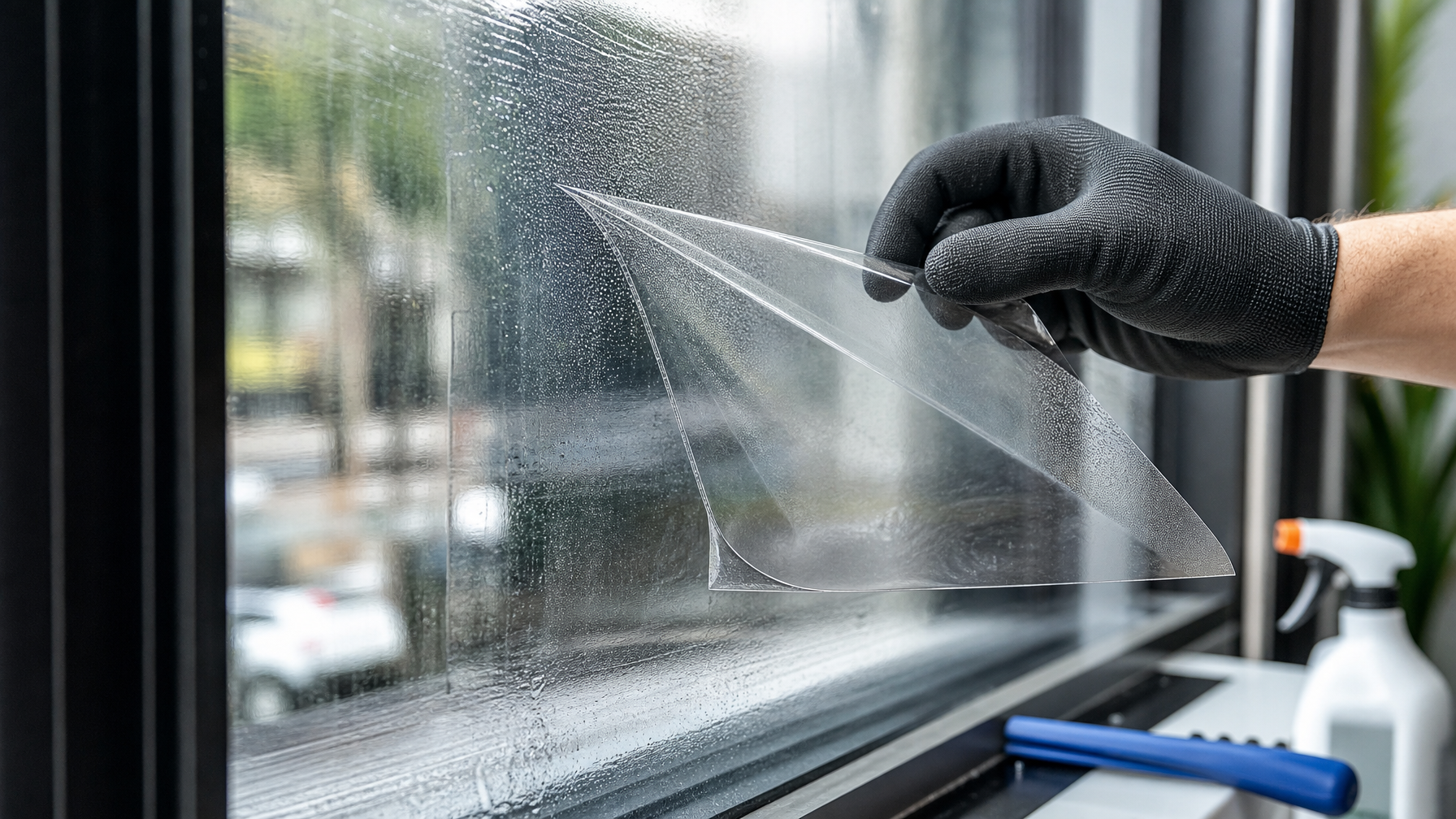
A 3 dB reduction is a halving of sound intensity as measured in decibels, noticeable but not dramatic. A 5 dB reduction is clearly perceptible as meaningfully quieter. For reference: a typical Vancouver street-facing suite exposed to Granville Street traffic measures 60, 70 dB indoors with unfilmed single-pane glass. A 4, 5 dB reduction brings that range down to 55, 65 dB, closer to a comfortable office environment. It is an improvement, not a transformation.
How Much Does Noise Reduction Window Film Cost in BC?
In BC, professionally installed noise reduction window film from a certified installer runs:
- Safety film (7, 8 mil, LLumar or Vista): $9 – $16 per square foot installed
- Security film (8, 14 mil): $16 – $22 per square foot installed
- Typical condo suite (8, 12 windows, approximately 200 sq ft of glass): $1,800 – $4,400 installed
For comparison, replacing standard residential double-pane windows with acoustic laminated glass in Metro Vancouver costs $800 – $1,500 per window. A full 8-window suite runs $6,400 – $12,000, requires strata council approval under the Strata Property Act in most BC buildings, and takes 2, 4 weeks with contractor access and occupant disruption. Window film is installed in 4, 8 hours with no permits, no strata approval in most cases, and no building downtime. The acoustic trade-off, 3, 5 dB versus 8, 15 dB, is often worth that difference in cost and disruption for owners managing existing buildings.
Is Security Film Better Than Regular Film for Noise Control?
Yes. Thicker film adds more mass to the glass pane, and mass is the primary mechanism of acoustic dampening. A 14-mil security film provides measurably more noise reduction than a 4-mil solar film, and LLumar and Vista produce certified products in that range. For BC property managers balancing multiple building objectives, forced-entry delay, seismic glass retention, UV protection, and acoustic dampening, security and safety film addresses all four requirements in a single installation.
LLumar and Vista security films are certified to UL 972 (burglary resistance) and ANSI Z97.1 (safety glazing) standards. At Bentall 4 in Vancouver, Ecovision installed LLumar security film across a commercial tower floor plate, the project addressed solar heat gain, UV protection, and glass performance without operational disruption to the occupied building. For commercial office environments where acoustic privacy between meeting rooms is a priority, security film on glass partitions reduces conversation bleed at seated working distances.
Which BC Properties Benefit Most from Acoustic Window Film?
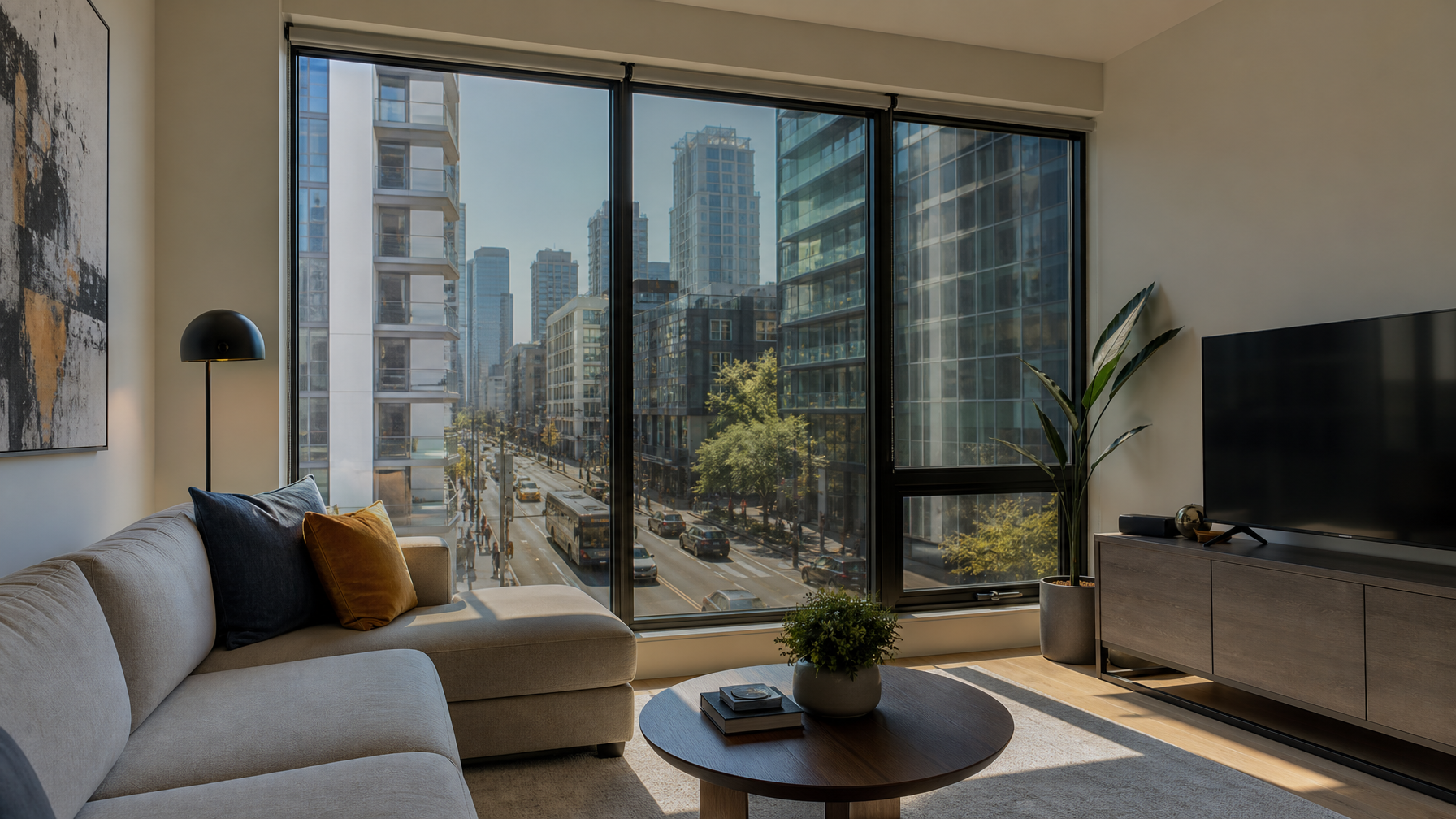
The best candidates for noise reduction window film in BC share at least two of these conditions:
- Single-pane glazing: Older buildings in East Vancouver, New Westminster, and Surrey with single-pane glass see the greatest relative acoustic improvement from film. There is more performance gap to close.
- Street-facing suites near SkyTrain, Granville, Broadway, or major arterials: Mid-frequency traffic and rail noise, exactly the frequency range that film dampens most effectively.
- Strata buildings where glass replacement is not permitted or approved: Film is an owner-applied improvement in most BC strata buildings that does not require council approval under standard bylaws, unlike structural window replacement.
- Healthcare and senior care facilities: Noise management in patient rooms is a documented factor in recovery outcomes and resident sleep quality. LLumar safety film on street-facing glazing at senior care facilities across the Lower Mainland, including Windermere Care Centre, has addressed both acoustic dampening and UV protection for residents in sun-exposed rooms.
- Residential suites with security concerns: For ground-floor or podium-level suites, 14-mil security film provides acoustic improvement alongside the forced-entry delay that standard solar film does not provide.
What does not work well: noise from interior sources (plumbing, HVAC ducts, neighbour floors), bass-heavy frequencies below 100 Hz, and buildings where the primary noise pathway is through exterior walls rather than glazing. Film is a glass solution, not a whole-envelope acoustic solution.
What Does Ecovision Recommend for Vancouver Noise Problems?
For most Vancouver condo and apartment situations, a street-facing suite with double-pane glass near a major arterial or SkyTrain station, Ecovision recommends a layered approach:
- Frame seal inspection first. Perimeter seal gaps account for a large share of noise ingress in buildings over 15 years old. Resealing costs $200 – $600 for a standard suite and delivers the most acoustic improvement per dollar of any single measure.
- Layer 8-mil safety film over the glass. Adds 2, 3 dB and provides glass retention, relevant for seismic resilience in BC’s earthquake zone. Cost: $9 – $16 per square foot installed.
- Consider 14-mil security film for high-exposure positions. For suites directly facing a SkyTrain guideway, Granville Street, or a sustained construction corridor, the 3, 5 dB reduction from thicker film makes a clearly perceptible difference. Cost: $16 – $22 per square foot installed.
Realistic expectation: the combined approach, sealed frames plus 8, 14 mil film, typically delivers 4, 7 dB of total noise reduction. That is noticeably quieter, particularly at mid-frequencies, but not silent. If your noise situation requires 10+ dB of reduction, acoustic glass replacement or interior acoustic window inserts are the right tool for the job.
Ecovision provides free on-site assessments for residential and commercial clients across Metro Vancouver. We assess your glazing type, measure existing frame seal condition, and give you a straight answer on whether film is the right tool for your specific noise problem. Call (236) 862-0052 or visit ecovisioncanada.com/contact/ to book.
Related Articles
- Privacy Window Film in Vancouver: Types, Costs, and What to Know Before You Install
- How Long Does Professionally Installed Window Film Last in BC?
- Window Film for Condo Buildings in Vancouver: What Owners and Strata Councils Need to Know
- Window Film for High-Rise Buildings in Vancouver: Types, Costs, and What Property Managers Need to Know
- Heat Blocking Window Film for Vancouver Homes and Offices: What Works and What It Costs
Frequently Asked Questions
About the Author: This article was written by the Ecovision Window Films team. Edward, Director at Ecovision, brings a distinctive perspective to the window film industry, with over a decade in real estate development, including roles as Executive Director at a real estate development firm and Director of Strategic Partnerships, before joining Ecovision. That background gives the company a sharp edge in serving BC property managers and building owners. Ecovision is a certified installer for leading film brands with completed projects for healthcare facilities, government buildings, and commercial properties throughout the Lower Mainland. For a free site assessment, call (236) 862-0052 or visit ecovisioncanada.com/contact/.