
Window Film for Glass Walls in Vancouver: Types, Costs, and What Property Owners Need to Know
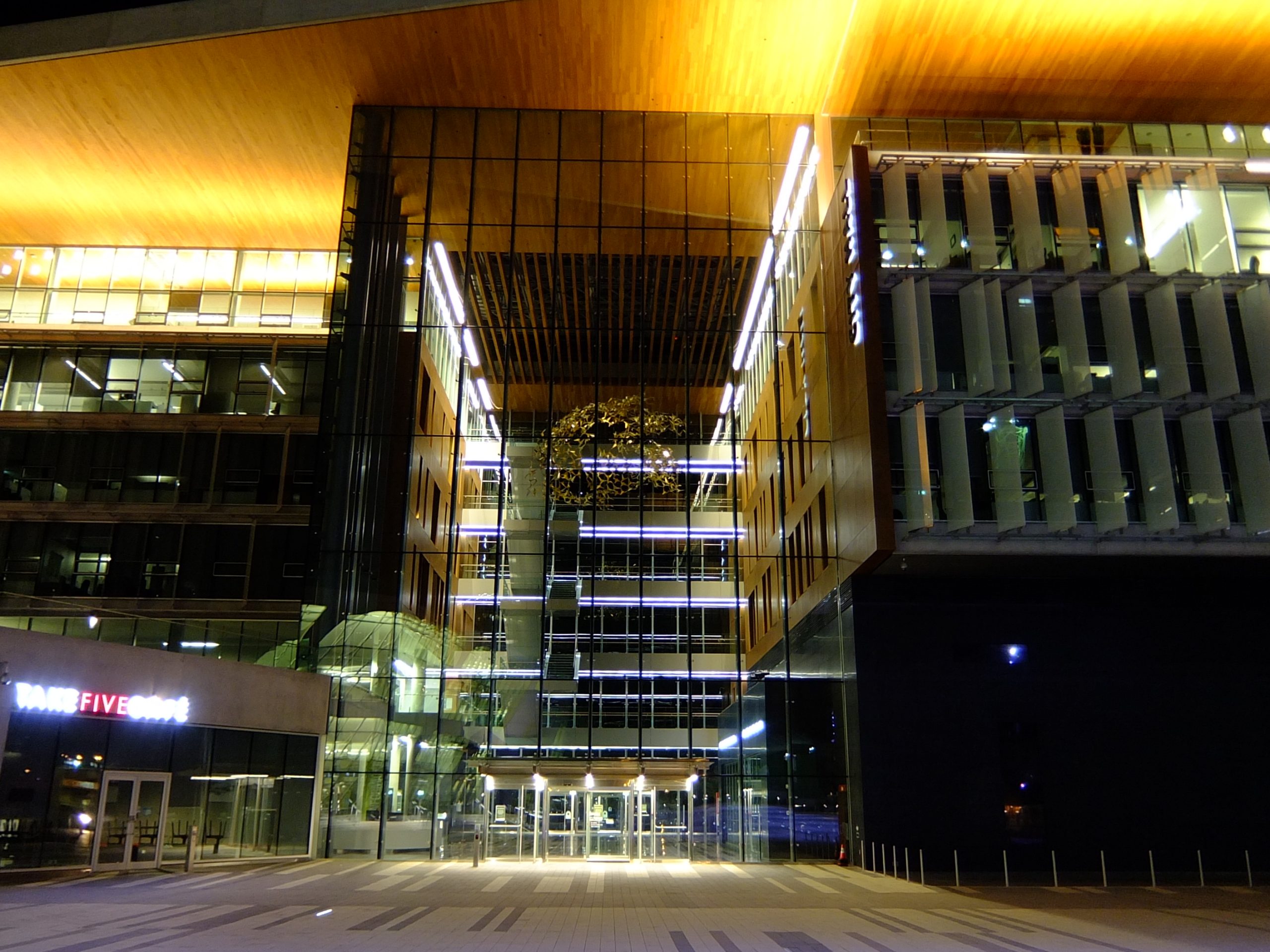
Vancouver’s commercial buildings increasingly feature floor-to-ceiling glass walls and curtain wall systems designed to maximize natural light and skyline views. Those same glass walls create serious solar heat gain, glare, UV damage, and privacy challenges, especially on south- and west-facing exposures. Window film is the most cost-effective solution available without structural modifications.
What You Need to Know, Fast Answer
Window film can be applied to most commercial glass wall and curtain wall systems in Vancouver, blocking up to 85% of solar heat gain and 99% of UV rays while maintaining daylight. Ecovision Window Films installs LLumar and Vista certified films on glass walls across Metro Vancouver, with installed costs ranging from $9 – $18 per square foot depending on film type and access requirements.
What Is a Window Wall and Why Does It Create Heat and Glare Problems?
A window wall is a non-structural glazing system that spans floor-to-ceiling between building floors, typically used in mid-rise and high-rise residential and commercial buildings across Vancouver. Unlike a curtain wall, which is a separate structural skin hung in front of the building frame, a window wall is set directly into the floor and ceiling slabs. Both systems share the same core problem: large glass surface areas that transmit solar radiation directly into the building interior.
In Metro Vancouver, south- and west-facing glass walls experience peak solar heat gain from April through September. A single floor plate with 400 square feet of west-facing unfilmed glass can add the equivalent of 12,000 – 20,000 BTUs of heat per hour on a summer afternoon, enough to overwhelm HVAC systems sized for standard occupancy loads. The result is overheating in perimeter zones, uneven temperatures across the floor plate, and compressor overrun that drives up energy costs. For strata buildings and commercial tenants, this creates measurable discomfort and operating cost problems that facilities managers are contractually obligated to address.
Glare is the second issue. Floor-to-ceiling glass walls generate reflected and direct glare that makes screens unreadable and causes eye strain, particularly in open-plan office environments. Occupant complaints about glare are among the most common triggers for a window film assessment request in Vancouver commercial buildings.
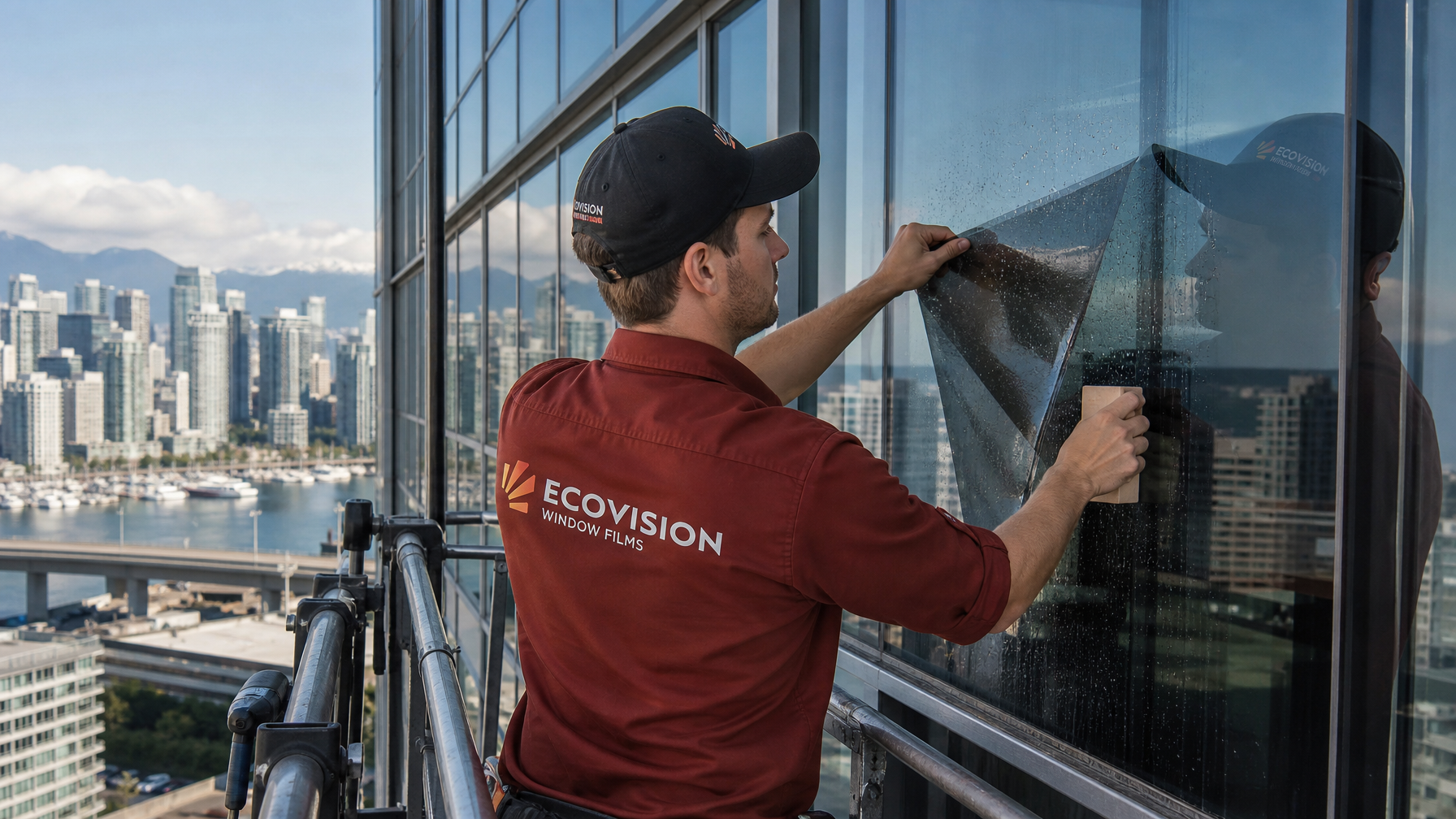
Can Window Film Be Applied to Curtain Wall and Window Wall Systems?
Yes, with an important qualification. Most standard window film products are compatible with single-pane, double-pane, and low-e glass used in window wall and curtain wall systems. However, some high-performance low-e glazing with internal coatings (common in newer Class A commercial buildings built after 2015 in Vancouver) requires a compatibility assessment before installation. Applying an incorrect film on certain coated glass types can cause thermal stress fractures.
Ecovision conducts a glazing compatibility check on every commercial glass wall project before recommending a film product. This includes reviewing the glazing specification, manufacturer data, and thermal load calculations for the specific elevation. For buildings covered by a glazing warranty, we provide written documentation confirming product compatibility, a requirement most strata councils and property managers need before approving the installation.
For Ecovision’s commercial window film portfolio, see our commercial window film services page for the full range of film types available for window wall applications.
What Types of Window Film Work Best for Commercial Glass Walls?
The right film type for a commercial glass wall depends on the primary objective: heat rejection, glare control, UV protection, privacy, or a combination. Here is how the main categories perform in Vancouver commercial applications:
| Film Type | Solar Heat Rejection | Glare Reduction | UV Block | Cost (installed/sqft) | Best For |
|---|---|---|---|---|---|
| Solar Control (Neutral) | Up to 79% | Moderate | Up to 99% | $9 – $14 | West/south-facing commercial glass walls |
| Ceramic Film | Up to 80% | High | 99% | $12 – $18 | High-performance buildings; low-e glass |
| Reflective Film | Up to 85% | Very High | 99% | $10 – $16 | High solar load; privacy from street level |
| Dual-Reflective | Up to 82% | High (exterior), Low (interior) | 99% | $11 – $17 | Views preservation with heat and glare control |
For most Vancouver commercial glass wall applications, LLumar’s Dual Reflective series and Vista’s V-Series solar control films provide the best balance of heat rejection and interior clarity. Ceramic films are recommended for buildings where the existing glazing specification includes a soft-coat low-e layer, as they avoid thermal stress issues common with metallic reflective films on high-performance glass.
Ecovision’s installation at Bentall 4 in downtown Vancouver used LLumar solar control film across multiple floor plates of the commercial tower’s west-facing glass walls, reducing perimeter zone temperatures by 6 – 8°C and addressing occupant comfort complaints that had persisted through multiple HVAC tuning attempts.
How Much Does Window Film Cost for Glass Walls in Vancouver?
Installed window film for commercial glass walls in Vancouver typically costs between $9 – $18 per square foot, including product, labour, and surface preparation. The range reflects film tier (standard solar control vs. premium ceramic), glass wall access requirements (accessible from inside vs. requiring lift equipment or building access systems), and the total project square footage.
For a typical mid-rise commercial floor plate with 600 – 800 square feet of west-facing glass wall, total installed costs generally fall between $5,400 and $14,400. Projects with exterior access requirements, common in curtain wall systems where some panels are not accessible from the interior, may incur additional lift or suspended platform costs that are quoted separately after a site assessment.
Return on investment for commercial glass wall film is typically 3 – 5 years through energy savings alone, before accounting for reduced HVAC maintenance frequency and extended interior finish life. For the full ROI calculation framework, see our guide on commercial window film ROI for BC property managers.
Does Window Film Void My Glazing Warranty?
This is the most common concern raised by strata councils and property managers considering window film for glass wall systems. The answer depends on the glazing manufacturer, the specific film product, and who installs it.
Most major commercial glazing manufacturers, including Kawneer, Oldcastle BuildingEnvelope, and Guardian Glass, permit window film installation on their products when the film meets their published thermal performance specifications and is installed by a certified professional. LLumar and Vista both maintain glazing compatibility documentation for the majority of commercial glass products in use across Metro Vancouver. Ecovision provides written confirmation of compatibility before every glass wall project.
Where a glazing warranty concern exists, the standard process is: (1) obtain the glazing specification from the building’s original construction documents, (2) cross-reference against the film manufacturer’s compatibility database, and (3) receive written sign-off from the film manufacturer confirming the warranty remains unaffected. Ecovision manages this documentation process as part of every commercial glass wall engagement.
What BC Regulations Apply to Window Film on Commercial Glass Walls?
Commercial window film installations on glass wall systems in Vancouver are not subject to a building permit in most cases, as the work is classified as a maintenance improvement rather than a structural alteration. However, several BC regulatory frameworks are relevant to the performance case for window film:
- BC Energy Step Code: Commercial buildings undergoing major retrofits or tenant improvement work in Vancouver must demonstrate compliance with energy performance targets under the BC Energy Step Code. Window film contributes to glazing SHGC (Solar Heat Gain Coefficient) targets and can be documented as part of an energy efficiency upgrade.
- CleanBC Better Buildings: The CleanBC program supports commercial building energy improvements. Solar control window film reduces cooling loads and can be documented in an energy audit as a completed efficiency measure.
- City of Vancouver Bird-Friendly Design Guidelines: Buildings within the City of Vancouver that trigger a development permit must meet the Bird-Friendly Design Guidelines. Window film with appropriate UV patterning or fritting can satisfy the threat factor requirements under these guidelines for treated glass surfaces.
- WorkSafeBC: For glass wall installations requiring elevated access (scaffolding, suspended platforms), WorkSafeBC fall protection regulations apply. Ecovision’s installation crews hold current fall protection training and comply with all OHS requirements for elevated glass wall work.
For detailed information on window film for high-rise glass wall systems specifically, see our guide on window film for high-rise buildings in Vancouver.
What to Expect From Ecovision’s Glass Wall Installation Process
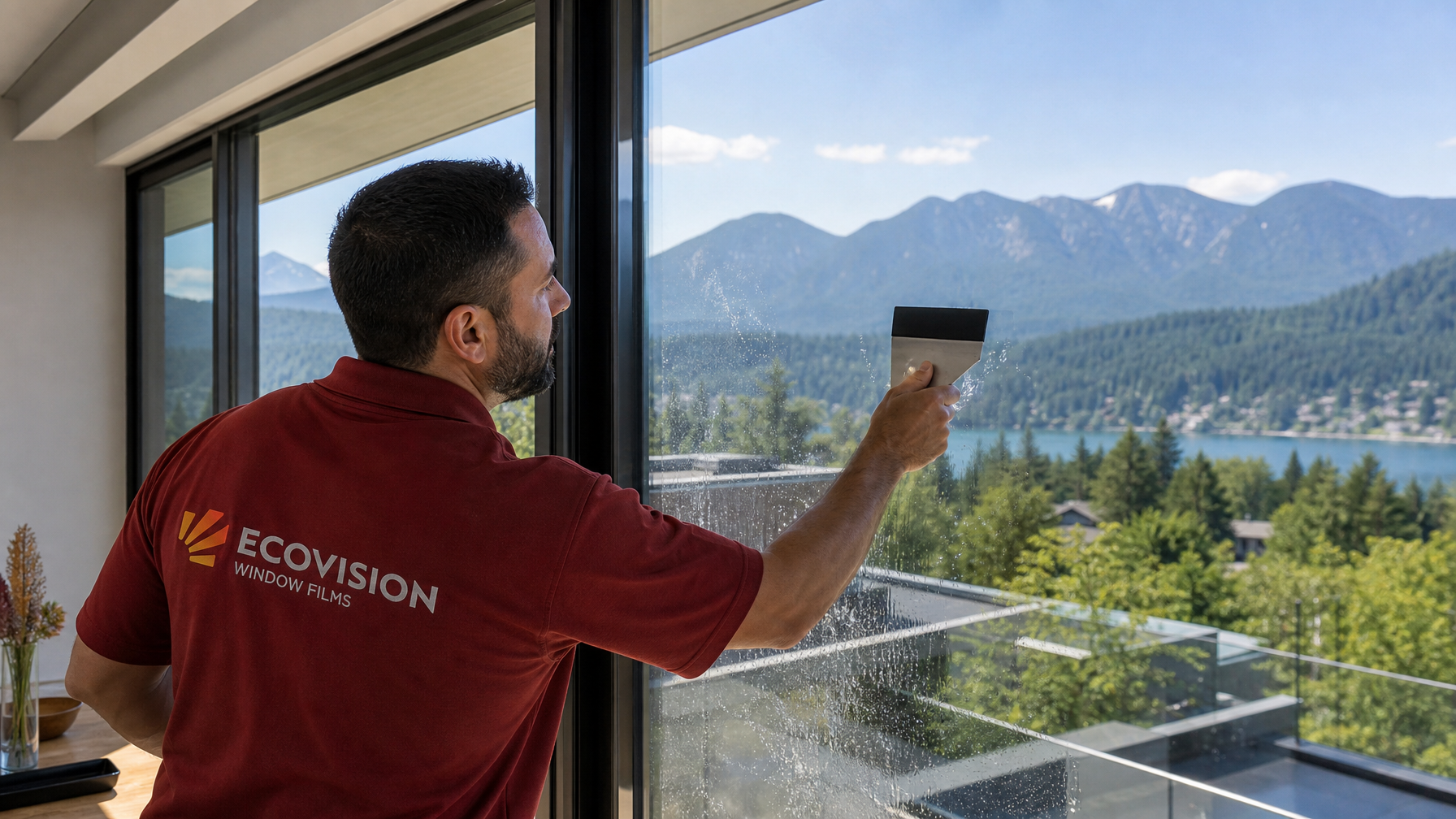
- On-Site Assessment (1 – 2 hours): An Ecovision technician measures the glass wall area, photographs the glazing, reviews any available glazing specifications, and identifies access requirements. The assessment is free with no obligation.
- Film Selection and Compatibility Review: Based on the assessment, Ecovision recommends 2 – 3 film options with written compatibility confirmation from LLumar or Vista. A written quotation is provided within 48 hours of the assessment.
- Installation (1 – 3 days depending on scale): Most commercial glass wall projects are completed within one to three business days. Interior glass wall panels are installed from inside the building with no exterior access required. Exterior curtain wall panels may require a separate lift equipment booking coordinated with building management.
- Quality Inspection: All installed panels are inspected for edge seals, surface clarity, and film adhesion before the project is signed off. A written warranty, typically 10 – 15 years for commercial LLumar and Vista products, is provided at completion.
Related Articles
- Commercial Window Tinting in Vancouver: What Businesses Need to Know
- Window Film for High-Rise Buildings in Vancouver: Types, Costs, and What Property Managers Need to Know
- Commercial Window Film ROI: What BC Property Managers Need to Know
- Reflective Window Film for Summer Heat in BC: Types, Costs, and What to Know
- Energy Efficient Window Film in Vancouver: What It Saves, What It Costs, and What to Install
Frequently Asked Questions
Get a Free Glass Wall Assessment in Vancouver
If your commercial building has glass walls creating heat, glare, or UV problems, Ecovision offers a free on-site assessment with no obligation. We’ll review your glazing, confirm compatibility, and provide a written quotation within 48 hours. Call (236) 862-0052 or visit ecovisioncanada.com/contact/ to book your assessment.
About the Author: This article was written by the Ecovision Window Films team, led by Xander, Co-Founder and Director of Operations at Ecovision. Xander brings over 10 years of hands-on installation experience, backed by a family with over 50 years in the installation trades, including window film. His military background reinforces the precision and discipline Ecovision applies to every project. Ecovision is a certified installer for leading film brands with completed projects for healthcare facilities, government buildings, and commercial properties throughout the Lower Mainland. For a free site assessment, call (236) 862-0052 or visit ecovisioncanada.com/contact/.