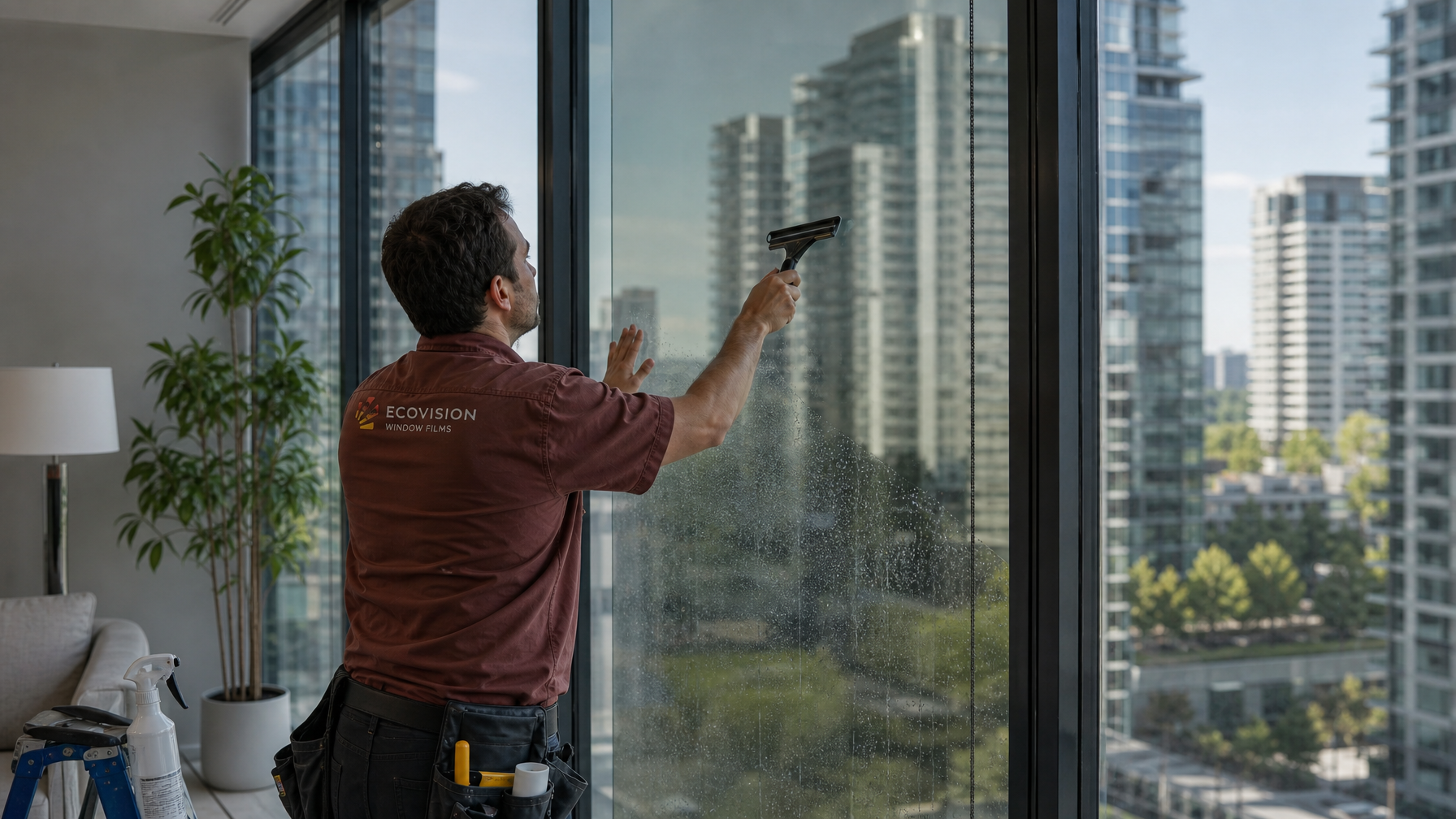
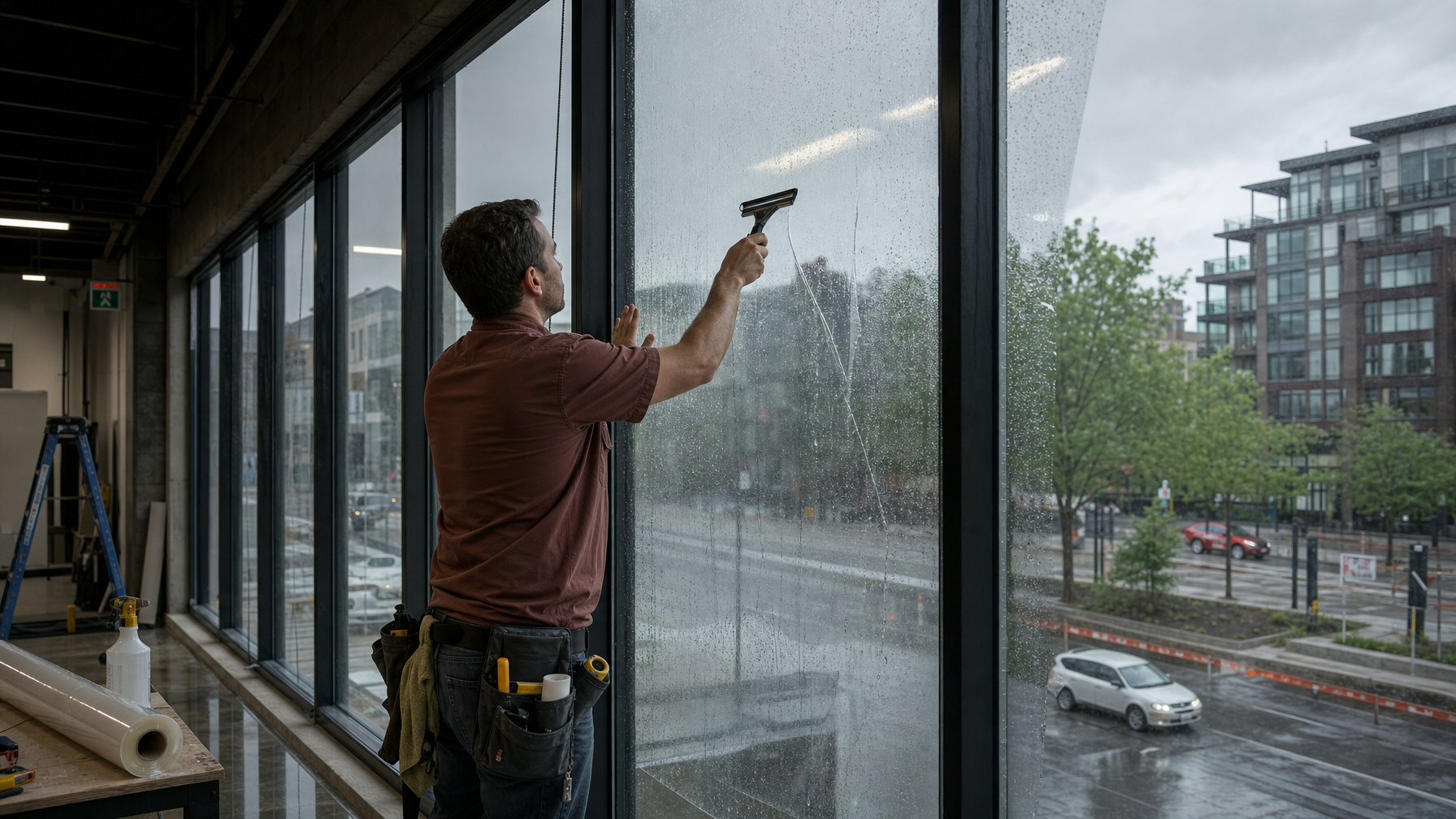
Glass towers define Vancouver’s skyline, and every floor of curtain-wall glass above ground level creates heat gain, UV exposure, glare, and energy loss that building managers deal with year-round. Window film for high-rise buildings in Vancouver costs $10 – $22 per square foot installed, depending on film type, floor height, and access method. Ceramic solar films and LLumar safety films are the most common choices for glass towers above 10 storeys. Ecovision Window Films installs film on commercial high-rises across Metro Vancouver, with completed projects at Bentall 4 and multiple residential towers in the Lower Mainland.
This guide covers the film types suited to high-rise installations, the real cost premium for elevated access, BC regulatory requirements, and what property managers and strata councils should expect during installation.
Why Do High-Rise Buildings in Vancouver Need Window Film?
Vancouver’s mild climate masks a real solar heat problem. Metro Vancouver averages 28 days above 25°C annually, and glass-heavy towers on southern or western exposures absorb substantially more solar heat than brick-and-concrete low-rises. Above the 10th floor, there are no trees, awnings, or neighbouring buildings to shade the glass, suites and offices on the south and west faces receive full-day solar exposure from May through September.
The consequences for unfilmed high-rise glass include:
- Thermal discomfort: South-facing offices can run 5 – 8°C above thermostat set points on sunny days, even with HVAC running at capacity.
- Glare at workstations: Low-angle morning and afternoon sun at elevation strikes workstations for 2 – 4 hours daily, reducing screen visibility and increasing eye strain.
- UV damage to interiors: UV radiation bleaches furniture, flooring, and artwork within 18 – 24 months on unprotected glass. Quality solar film blocks up to 99% of UV.
- Elevated energy costs: The International Window Film Association estimates solar control film reduces cooling loads by 25 – 50% on sun-exposed facades of commercial buildings.
- Bird collisions: High-rise glass is a proven hazard to migratory birds. The City of Vancouver’s Bird-Friendly Design Guidelines apply to new construction over 16 m, and many strata councils now retrofit bird-safe film on existing towers to comply with the intent of the policy.
What Types of Window Film Work Best for High-Rise Buildings?
Not all window film performs the same on a 25-storey glass tower. The key selection factors are solar heat rejection, glare control, UV blocking, visible light transmission, and compatibility with the existing glass type, standard annealed, tempered, or low-e coated.
| Film Type | Best Application | Heat Rejection | Installed Cost (BC) |
|---|---|---|---|
| Ceramic Solar | South/west-facing offices and suites | Up to 80% | $14 – $22/sqft |
| Dual-Reflective | Privacy + heat control, mixed-use towers | 55 – 70% | $12 – $18/sqft |
| Safety / Security | Lobby glass, parkade entries, ground floor | 15 – 30% | $12 – $18/sqft |
| Bird Safe (UV Pattern) | Full-tower retrofit, floors 2 – 15 | 30 – 50% | $14 – $22/sqft |
| Low-Reflectance Solar | North-facing or low-visibility specifications | 40 – 60% | $10 – $16/sqft |
For most Vancouver high-rises, commercial window film projects use ceramic or spectrally selective film on south and west exposures, with safety or bird-safe film on lower floors and lobby glass. LLumar and Vista, the two certified brands Ecovision installs, both manufacture high-performance films rated for curtain-wall glass systems and publish glass compatibility data for every product.
For architectural and custom-design window film applications in commercial or institutional high-rise buildings, see the complete guide to architectural window film in Vancouver.
How Does Building Height Affect Window Film Installation?
Installation cost and logistics scale with height, but less than most building managers expect. Below floor 5, film installation uses an internal team and standard ladders. Above floor 10, access becomes a planning consideration that affects price and scheduling only when exterior-application films are required.
Common access methods for high-rise film installation in Vancouver:
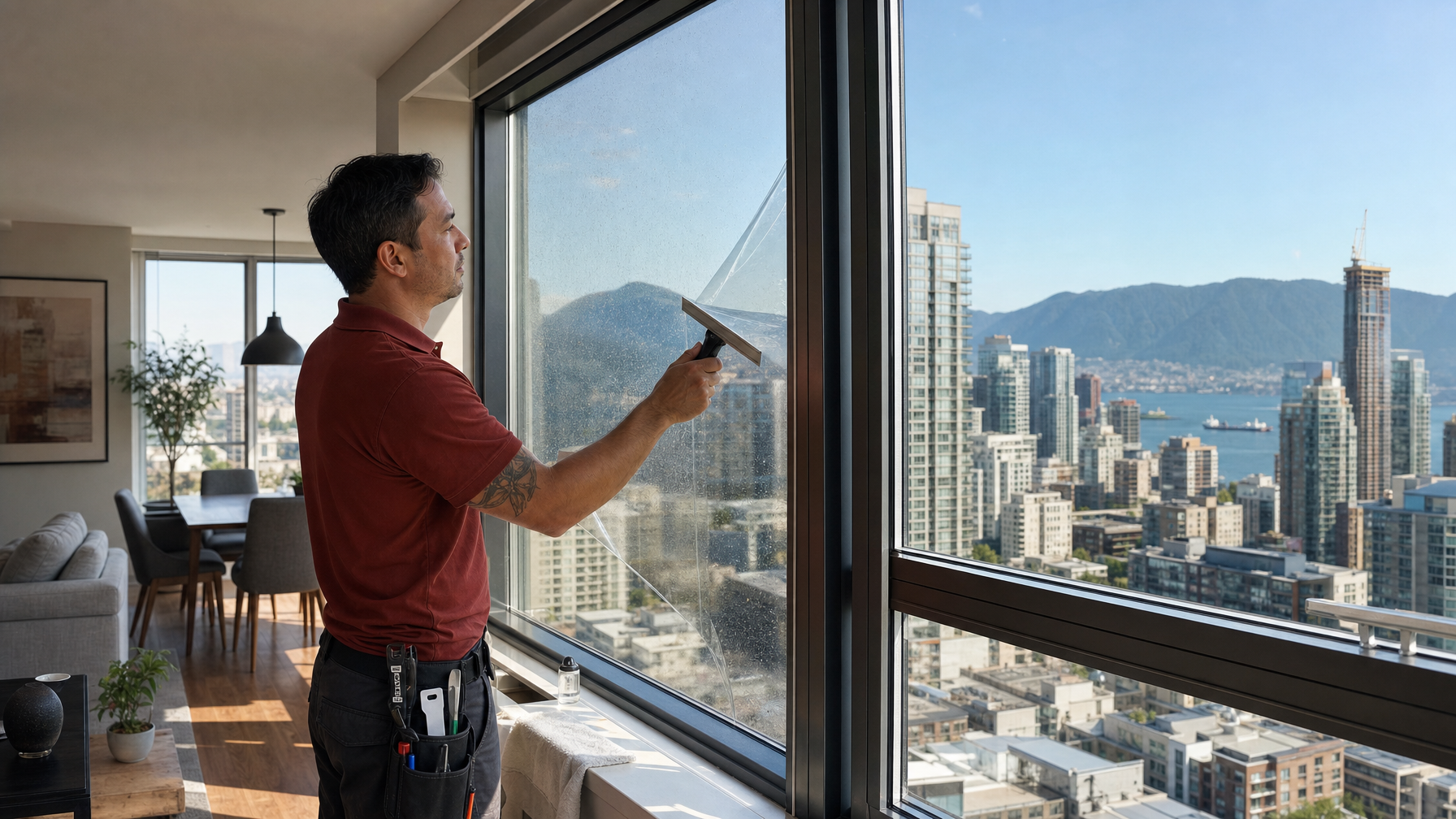
- Interior installation (all floors): Film applied from inside the suite or office, no height premium regardless of floor. This is the standard method for the vast majority of high-rise projects and requires no suspended access equipment or external permits.
- Swing stage or rope access (exterior film): Required for exterior-application films above floor 3. Adds $3 – $6 per square foot to the base cost and must comply with WorkSafeBC Regulation Part 13 (rope access work).
- Building gondola: Towers with permanently rigged maintenance gondolas can use them for exterior film work, typically adding only $1 – $2 per square foot over the base film cost.
The practical takeaway for property managers: interior-application films, which cover the overwhelming majority of high-rise projects, carry no height surcharge. The per-square-foot price of the film itself is the same on floor 3 or floor 43. The premium only applies when exterior-facing film or gondola-style access is specifically required.
How Much Does Window Film Cost for a High-Rise in Vancouver?
Most high-rise property managers budget $10 – $22 per square foot installed for quality commercial film in Metro Vancouver. On a typical glass tower floor with 1,000 square feet of south-facing glazing, a single-floor solar film installation runs $10,000 – $22,000 depending on film grade. Full-tower projects across multiple exposures can achieve modest volume pricing for multi-floor commitments.
Representative cost scenarios for Vancouver high-rise film:
- Single suite, south-facing (approx. 400 sqft of glass): $4,000 – $8,800
- Full floor, mixed exposures (approx. 1,500 sqft of glass): $15,000 – $33,000
- Bird-safe retrofit, floors 2 – 10 (approx. 8,000 sqft): $112,000 – $176,000
- Lobby and ground-floor safety film (approx. 600 sqft): $7,200 – $13,200
These ranges reflect installed cost in Metro Vancouver as of 2026 and include film, labour, and standard interior access. For a complete breakdown by film type across residential and commercial applications, see the 2026 BC window film cost guide. Strata councils coordinating a full-building retrofit across multiple suites can contact Ecovision for a site assessment and project-specific quote.
What BC Regulations Apply to High-Rise Window Film?
BC Energy Step Code: Buildings targeting Step 3 or higher must demonstrate improved envelope thermal performance. Retrofitting solar control film on existing glass contributes to overall building envelope improvements and is recognised under CleanBC’s commercial building performance pathway as an operational upgrade. New construction teams should confirm window film compatibility with the project’s energy modelling at the specification stage.
City of Vancouver Bird-Friendly Design Guidelines: Buildings 16 metres or taller face bird-friendly design requirements under the city’s guidelines. While the guidelines apply primarily to new construction and major renovations, many strata councils and building owners are proactively retrofitting bird-safe film on existing towers. Vista and LLumar bird-safe films with UV-pattern technology meet the standard for Threat Factor 2 (TF2) deterrence.
WorkSafeBC Regulation Part 13: Any exterior film installation above floor 3 requires a WorkSafeBC-compliant rope access or suspended access plan. Interior installation, which covers the majority of high-rise projects, does not trigger this requirement. Ecovision uses interior-application methods on most high-rise projects, which simplifies permitting and keeps scheduling predictable.
Does Window Film Affect the Structural Integrity of High-Rise Glass?
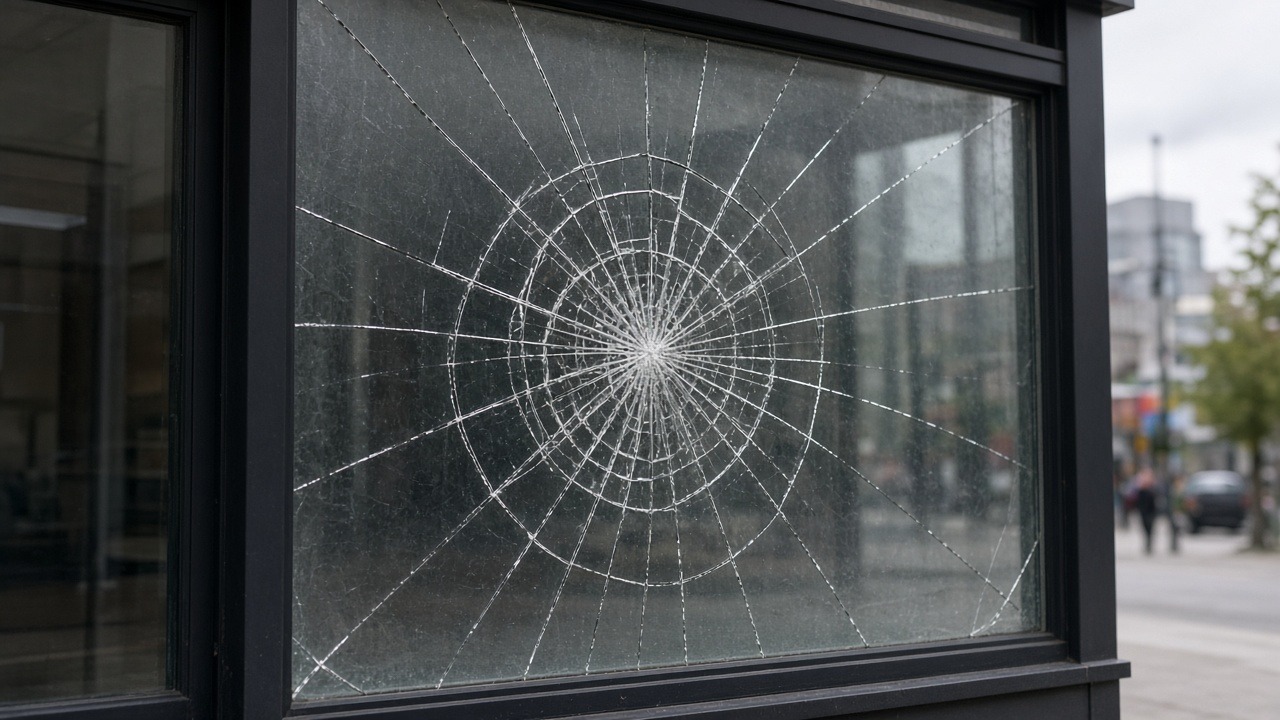
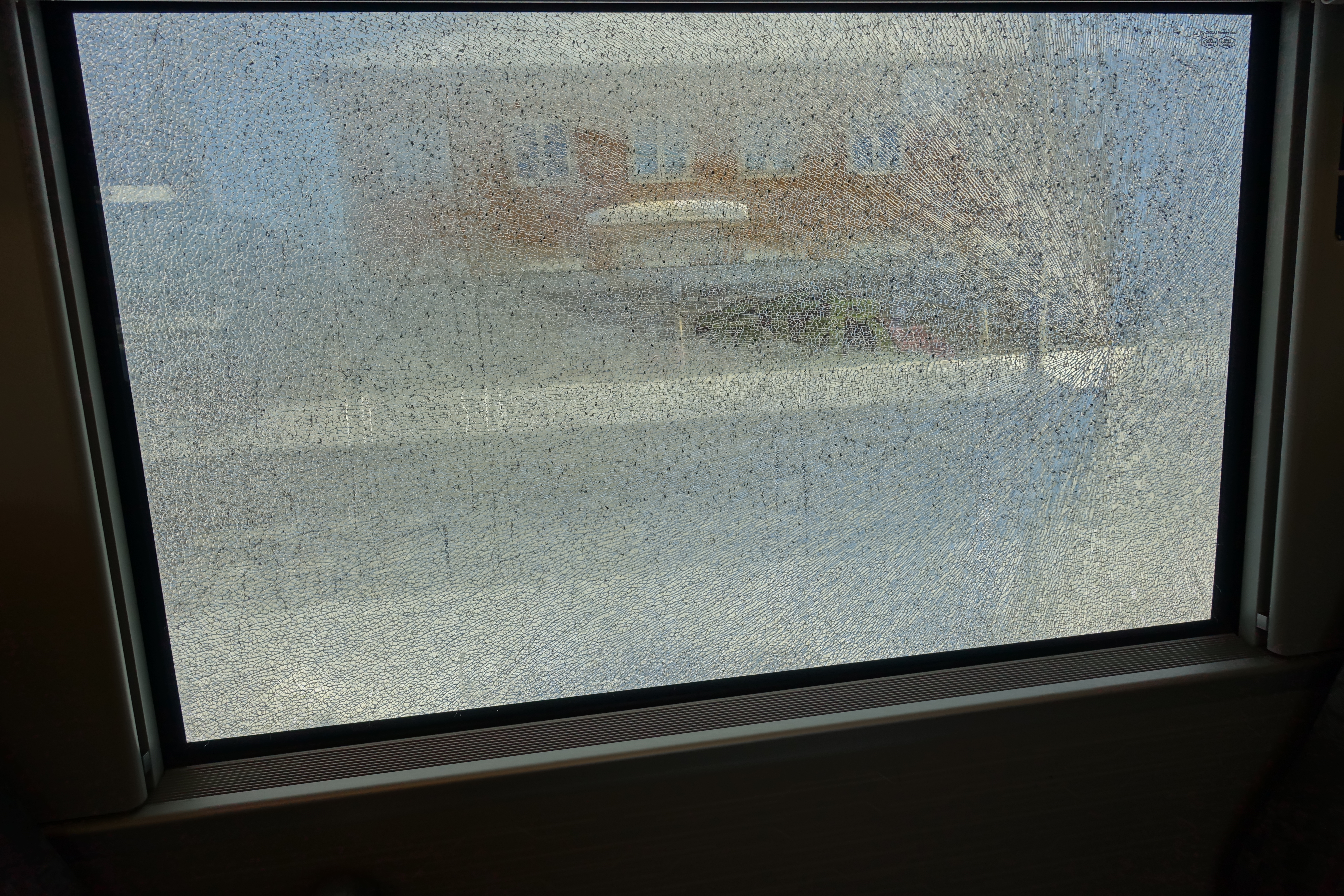
This concern comes up in almost every strata and property management consultation. The direct answer: properly specified window film does not compromise glass integrity. The wrong film on the wrong glass, however, can cause thermal stress fractures.
The risk is specific: dark, highly absorptive films applied to large-pane annealed (non-tempered) glass can create uneven thermal expansion, which leads to edge cracking. This is rare with modern spectrally selective films but is a real concern with improperly matched products. LLumar and Vista both publish glass compatibility data for every film in their catalogues. A certified installer, not just a film supplier, reviews that data before specifying a product for your building’s glass type.
Tempered glass, standard in most Vancouver high-rises built after 1990, is compatible with the full range of solar and safety films. Laminated safety glass is similarly unrestricted. Original single-pane annealed glass from the 1970s and 1980s requires a compatibility assessment before installation, this is a one-step process that Ecovision includes in all commercial site assessments at no charge.
Bentall 4: Window Film on a Real Vancouver Office Tower
Bentall 4, a 35-storey class-A office tower at 1055 Dunsmuir Street in downtown Vancouver, is one of Ecovision’s completed high-rise projects. The building’s south-facing glass was producing uncomfortable heat gain in perimeter offices, and the building management team needed a solution that would improve tenant comfort without altering the exterior architectural appearance or requiring strata approval for glass replacement.
Ecovision installed LLumar spectrally selective solar film on the affected floor exposures using interior access, no gondola, no external permits, and no disruption to building tenants beyond a standard suite-by-suite scheduling process. Post-installation surface temperatures on the treated glass dropped approximately 8 – 12°C under peak solar conditions. For a full breakdown of energy savings and payback timelines, see energy-efficient window film in Vancouver.
For high-rise buildings where strata councils are coordinating a multi-suite installation, Ecovision provides a package proposal covering film specifications, glass compatibility confirmation, installation sequencing, and sample panels for strata approval presentations. Call (236) 862-0052 or visit ecovisioncanada.com/contact to book a free on-site assessment.
Related Articles
- Commercial Window Film ROI: What BC Property Managers Need to Know
- Window Film for Strata Buildings in Vancouver: What Strata Councils and Property Managers Need to Know
- Window Film for Condo Buildings in Vancouver: What Owners and Strata Councils Need to Know
- Commercial Window Tinting in Vancouver: What Businesses Need to Know
- Energy Efficient Window Film in Vancouver: What It Saves, What It Costs, and What to Install
About the Author: This article was written by the Ecovision Window Films team, led by Xander, Co-Founder and Director of Operations at Ecovision. Xander brings over 10 years of hands-on installation experience, backed by a family with over 50 years in the installation trades, including window film. His military background reinforces the precision and discipline Ecovision applies to every project. Ecovision is a certified installer for leading film brands with completed projects for healthcare facilities, government buildings, and commercial properties throughout the Lower Mainland. For a free site assessment, call (236) 862-0052 or visit ecovisioncanada.com/contact/.