Rocky Mountaineer operates one of the most visually distinctive passenger rail experiences in North America. Guests travel through the Canadian Rockies in railcars designed around panoramic glass, enormous 80″ x 80″ sky dome windows that put the mountain landscape at the centre of the experience. Those same windows were creating a serious operational problem.
The Challenge: Panoramic Glass and Uncontrolled Solar Heat
Large glass panels are thermally demanding. Each 80″ x 80″ sky dome window on the Rocky Mountaineer fleet acts as a solar collector, absorbing and transmitting infrared radiation directly into the passenger cabin. During peak daylight hours through the Rockies, the resulting solar heat gain pushed cabin temperatures well above comfortable levels.
The HVAC system compensated by running continuously at high capacity. Energy costs increased, mechanical wear accelerated, and passenger comfort, the defining measure of a luxury rail journey, was compromised on sun-exposed runs.
The constraint was specific: any solution had to preserve the visual clarity and light transmission that made the sky dome windows the product’s defining feature. Tinted films that visibly darkened the glass were not viable. Blinds or shades would defeat the purpose of panoramic glazing entirely.
The Solution: High-Performance Transparent Solar Film
Ecovision Window Films installed a high-performance transparent solar control film engineered for exactly this type of application: maximum solar heat rejection with minimum visible light reduction.
Modern spectrally selective solar films reject infrared and near-infrared radiation, the wavelengths that generate heat, while passing the majority of visible light. The result is a glass surface that looks and feels functionally unchanged to passengers but performs significantly differently thermally.
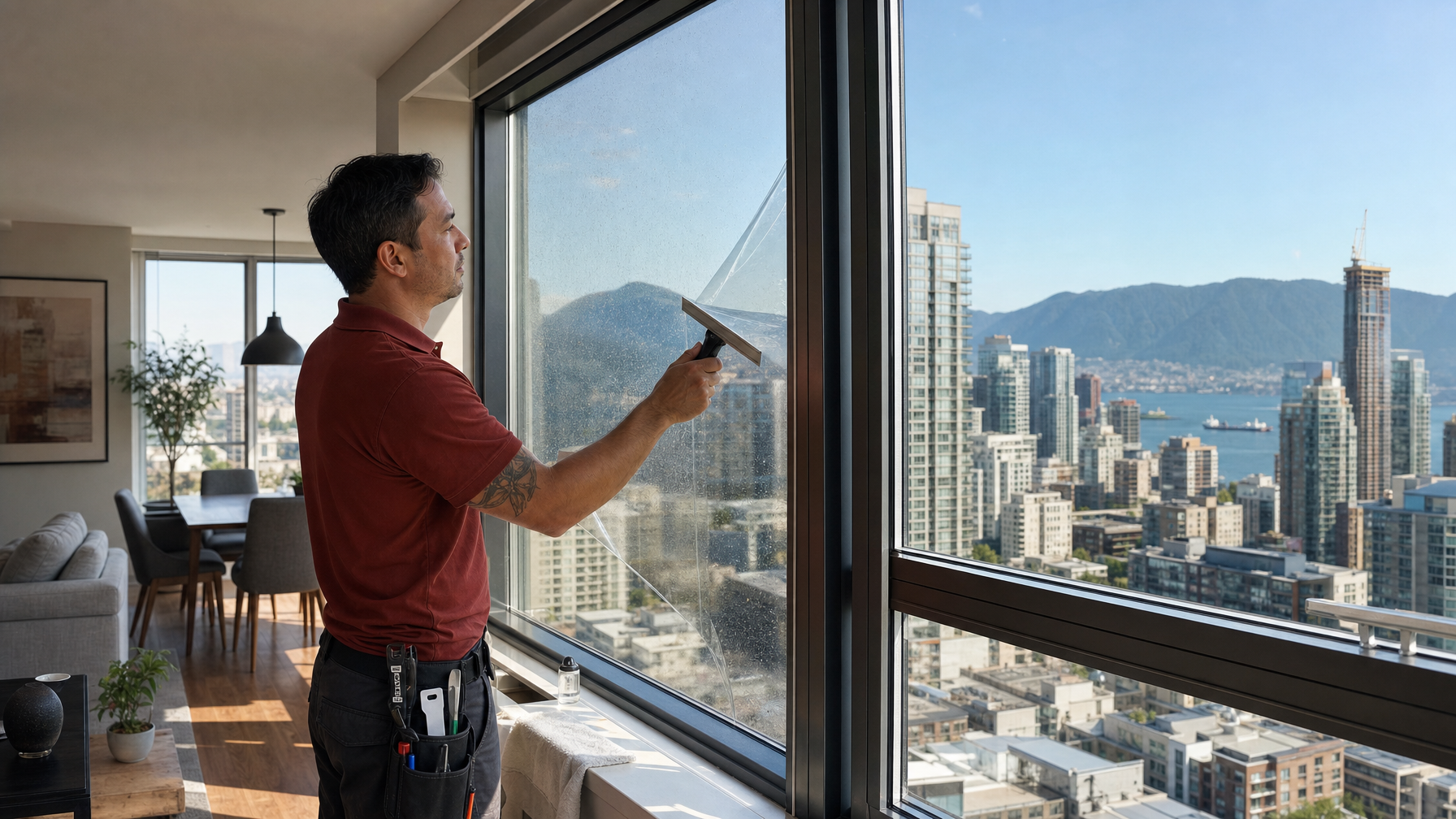
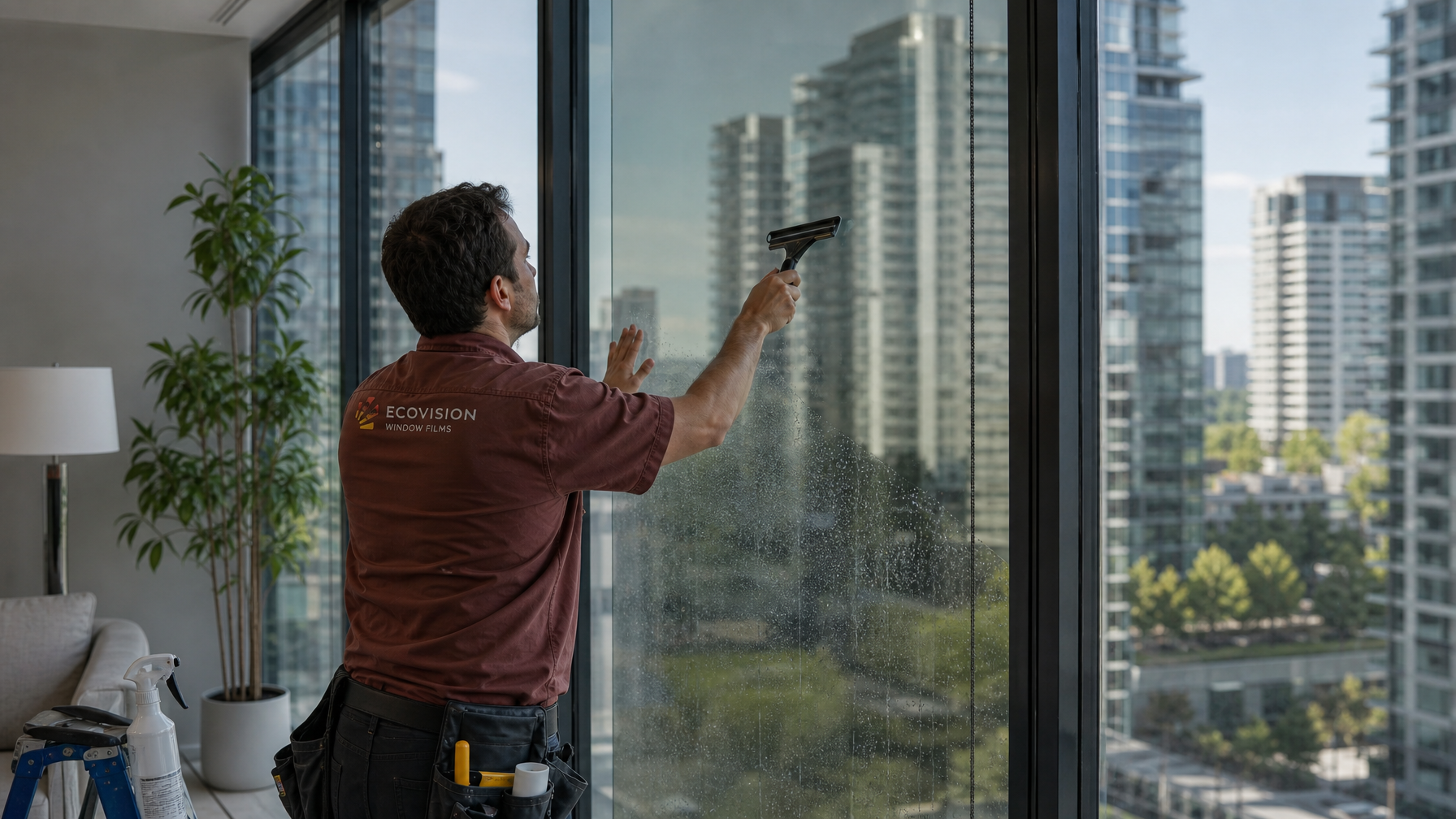
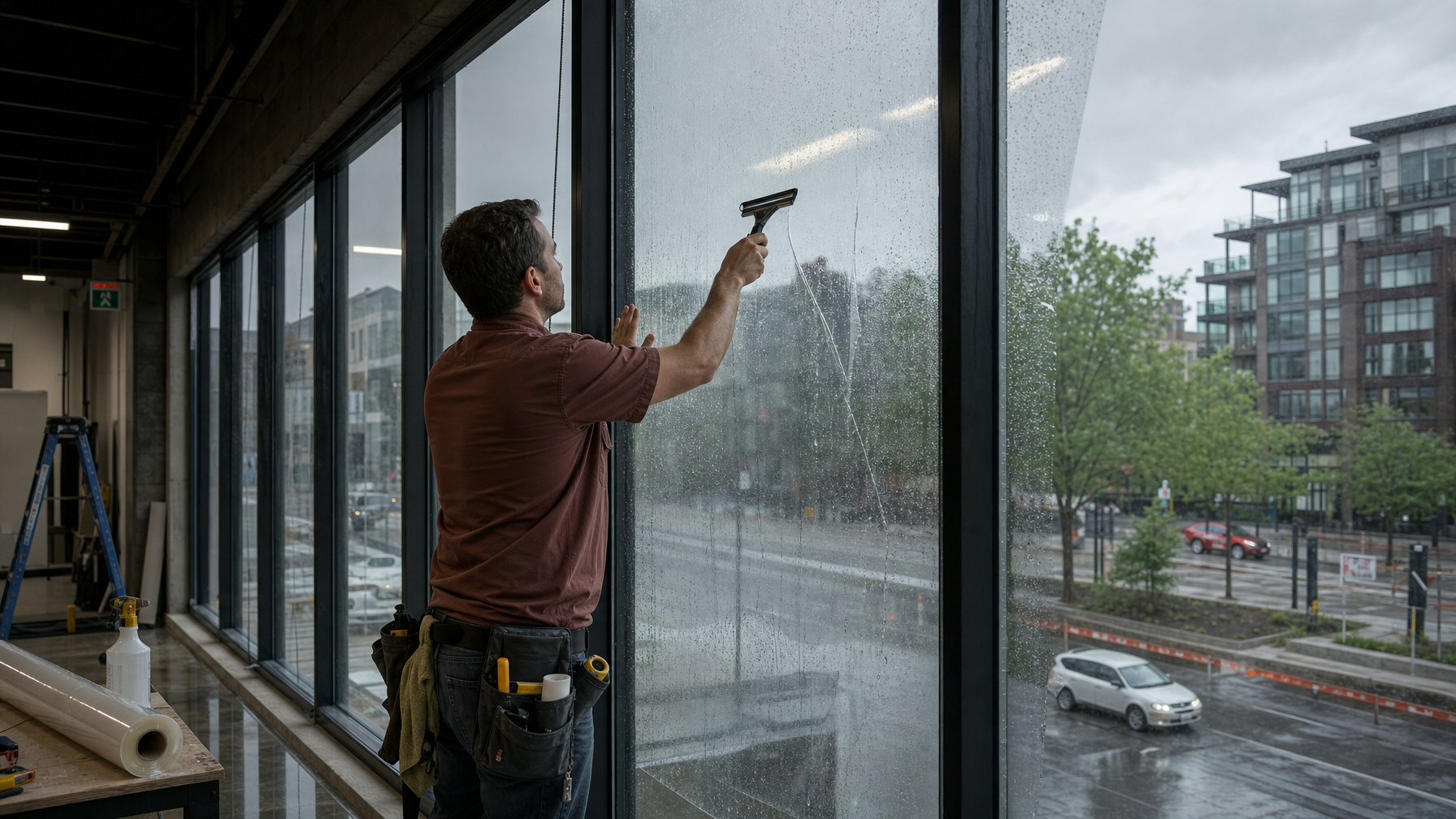
The installation covered the sky dome windows across the Rocky Mountaineer fleet, working within the operational schedule of an active rail service. Installers used precision cutting for the large-format panels, applying slip solution to each surface, positioning the film, and squeegeeing to a bubble-free finish. Curing completed within the standard 14 to 30-day period, during which normal operations continued.
The Results
Post-installation, the film reduced cabin temperatures by up to 7 degrees Celsius during peak sunlight hours. For a luxury rail environment where passenger comfort is the core product, this is a material improvement.
Additional measured outcomes:
- Natural light retention: The spectrally selective film maintained the bright, open interior atmosphere of the sky dome cars. Passengers continued to experience full panoramic views without visible tint or colour shift.
- HVAC load reduction: With less solar heat entering the cabin, the HVAC system ran less aggressively during sun-exposed segments, reducing both energy consumption and mechanical demand.
- UV protection: The film blocks up to 99% of UV radiation. This protects interior upholstery, seating, and fittings from accelerated fading, a meaningful durability benefit for a fleet asset.
- Glare reduction: Diffused incoming light reduced glare on screens and interior surfaces, improving passenger comfort without compromising the view.
Why Window Film Over Other Approaches
The alternatives to window film for solar heat control in this application were limited. Glass replacement with high-performance thermally insulating units would have required removing and replacing the custom sky dome panels, an extremely costly and logistically complex project. Interior shading systems would have blocked the views the product is built around.
Window film applied to the interior surface of existing glass delivered the thermal performance improvement at a fraction of the cost of glass replacement, with no disruption to the visual product and no structural modification to the railcar.
For building owners and facility managers evaluating similar challenges, glass-heavy commercial buildings where heat control and occupant comfort are in tension with the desire to preserve light and views, the Rocky Mountaineer project demonstrates what purpose-specified solar film achieves in a demanding, high-profile application.
About Ecovision Window Films
Ecovision Window Films installs professional-grade solar control, security, privacy, and bird-safe film for commercial buildings, healthcare facilities, government properties, and specialized applications across Metro Vancouver, the Lower Mainland, and BC.
For commercial building owners evaluating solar control film, see our commercial installation guide and 2026 BC pricing guide.
Call (236) 862-0052 or request a free site assessment and quote online.
More Case Studies
- Rosemary Heights Seniors Home, Solar and Privacy Film Installation
- Windermere Care Centre, Healthcare Window Film Project
- Commercial Window Film Services, Full Overview
Expert resource: Natural Resources Canada (NRCan) provides guidance on energy-efficient building retrofits and the documented performance benefits of solar control window treatments in Canadian climates.
Related Articles
- Commercial Window Film Installation in Vancouver: Types, Costs, and What to Expect
- How Much Does Window Film Cost in BC? (2026 Pricing Guide)
- Does Window Film Reduce Heat in Summer?
- Does Window Film Block UV Rays?
- Window Film for Office Buildings: 7 Questions Property Managers Ask
About the Author: This article was written by the Ecovision Window Films team. Edward, Director at Ecovision, brings a distinctive perspective to the window film industry, with over a decade in real estate development, including roles as Executive Director at a real estate development firm and Director of Strategic Partnerships, before joining Ecovision. That background gives the company a sharp edge in serving BC property managers and building owners. Ecovision is a certified installer for leading film brands with completed projects for healthcare facilities, government buildings, and commercial properties throughout the Lower Mainland. For a free site assessment, call (236) 862-0052 or visit ecovisioncanada.com/contact/.