
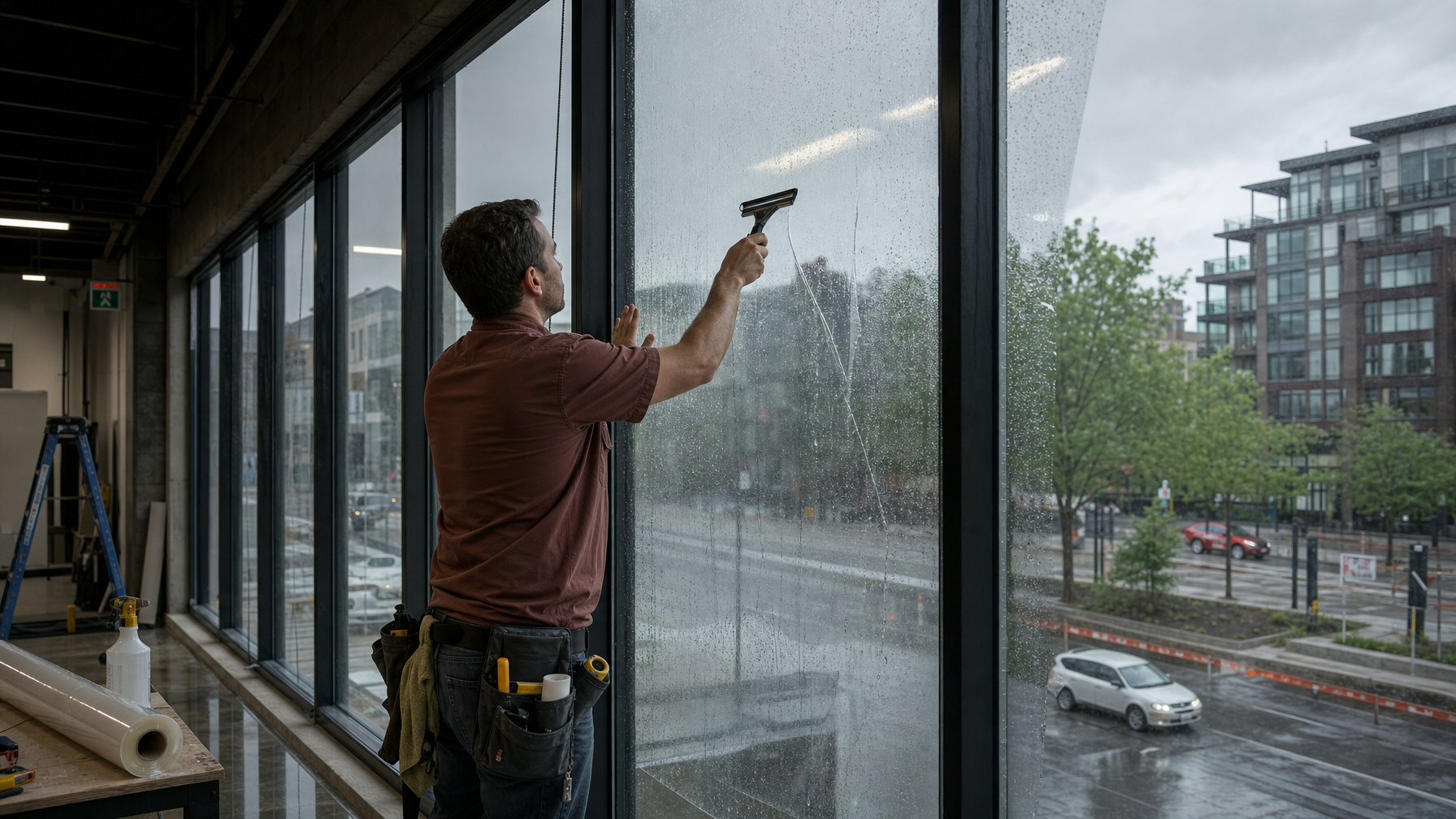
Privacy film for windows comes in five main types: dark tinted, mirrored, frosted, blackout, and cloaking. One-way mirrored films rely on light differential, they’ll protect your privacy during daylight but reverse at night when interior lights make you visible from outside. Two-way frosted films block views from both directions regardless of lighting conditions. You’ll want to match film type to your specific application, and understanding how each performs across different lighting scenarios will help you choose correctly.
What Are the Five Types of Privacy Window Film?
Privacy film falls into five distinct categories, each engineered for specific visibility and light transmission requirements. Dark tinted film reduces visibility through gray, brown, or black coloration while maintaining outward sightlines. Mirrored privacy film creates a reflective barrier that blocks external views during daylight hours. Decorative privacy window film delivers frosted, translucent effects that obscure vision from both directions around the clock. Window film that blocks view completely includes blackout options, opaque materials eliminating all light and visibility for high-security applications. Cloaking film represents the newest category, selectively obscuring digital screens from external angles while preserving interior brightness.
One-Way vs. Two-Way: Which Direction Can People See Through?
One-way privacy film uses a metallic reflective layer that creates a mirror effect on the brighter side, allowing you to see out while blocking exterior views inward during daylight hours. Two-way film employs light-diffusing or frosted layers that obstruct visibility from both directions simultaneously, ideal for sensitive environments like patient rooms and treatment areas in hospitals where complete privacy is essential.
Want to understand the mechanism in depth? Read: How Does Privacy Window Film Work?
Why Do Most Privacy Films Fail at Night?
When you turn on your lights at night, your interior becomes brighter than the dark exterior, reversing the reflective effect that provided daytime privacy. Privacy films require a brightness differential to create the one-way mirror effect that blocks incoming views. Without sufficient external light intensity, reflective and tinted films lose their effectiveness. For consistent around-the-clock coverage, frosted or decorative film remains effective regardless of lighting conditions since it physically obscures the view rather than relying on light differentials.
Full breakdown: Does Privacy Film Work at Night? (What to Expect)
What Is the Best Privacy Film for Bathrooms, Offices, and Front Doors?
For bathrooms, you’ll want waterproof frosted films that resist mold, mildew, and odors in humid environments. For offices and storefronts, frosted films deliver 24/7 privacy without sacrificing natural light. Reflective films excel on exterior storefront windows, providing daytime privacy plus solar control. High-security areas like legal offices benefit from blackout films that block 100% of incoming light and visibility.
See our full room-by-room guide: Best Privacy Film for Bathrooms, Front Doors & Offices
Does Privacy Film Block UV, Reduce Glare, and Lower Energy Bills?
Yes. Most quality privacy films block 99% of UV-A and UV-B radiation and reduce visible light by 15 to 60%, significantly cutting screen glare. Solar control-combined privacy films also reject 40 to 70% of solar heat. Beyond the privacy benefit, you get meaningful UV, glare, and thermal performance from a single installed film.
Beyond privacy, many window films pull double duty by filtering harmful UV radiation, cutting glare, and improving thermal performance. High-quality adhesive privacy film blocks up to 99% of UV rays in the 300, 380 nm range. Medium tints cut visible light 30, 50% for improved visual comfort, and metalized or ceramic layers reflect infrared spectrum, reducing cooling loads.
Related: Does Window Film Reduce Heat in Summer? | Does Window Film Block UV Rays?
At Ecovision Window Films, we help you choose the right privacy film for your specific space. Call (236) 862-0052 for a free consultation.
More in the Privacy Window Film Series
- How Does Privacy Window Film Work?
- Does Privacy Film Work at Night? (What to Expect)
- Best Privacy Film for Bathrooms, Front Doors & Offices
- Frosted Window Film vs Etched Glass (Which Is Better?)
Also explore: Residential Window Film Benefits | How to Remove Privacy Film | Security Window Film
Industry Reference: The International Window Film Association (IWFA) sets standards for security and safety window film products and certifies professional installers across North America.