
If you’ve ever Googled “window tinting for homes Vancouver,” you’ve probably ended up with answers written for car owners or US markets. This guide answers the 20 questions BC homeowners and strata residents actually ask Ecovision Window Films before booking an installation.
This guide covers window tinting for homes and buildings. Ecovision does not tint vehicles, for architectural glass only.
Does Residential Window Tinting Actually Work?
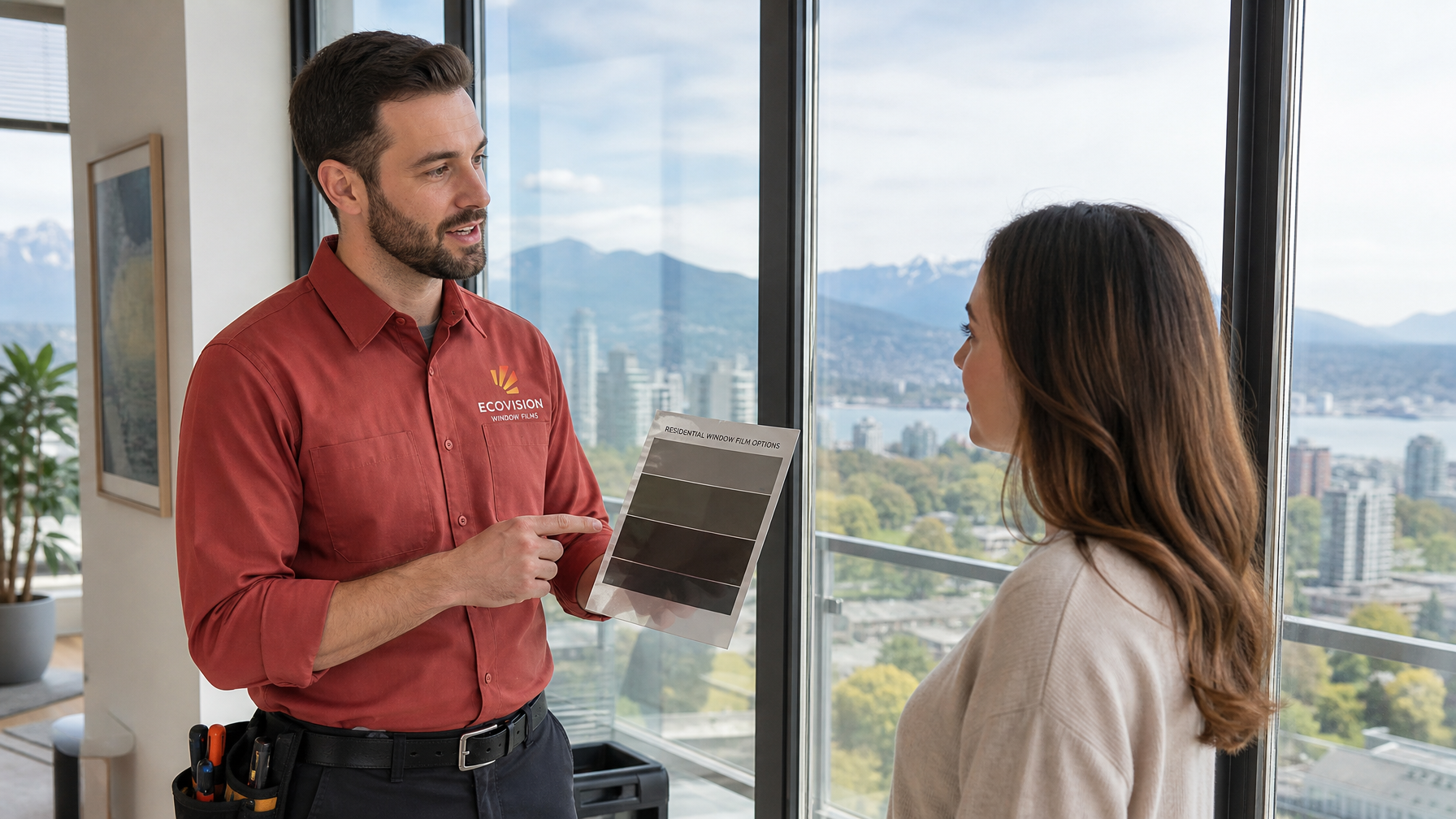
Yes. Professionally installed residential window film blocks 40 – 80% of solar heat gain depending on the film type, reduces UV transmission by up to 99%, and can lower interior temperatures by 5 – 10°C during Metro Vancouver’s warmest months (June – September). Ecovision Window Films installs LLumar and Vista certified film on homes throughout the Lower Mainland, and clients consistently report measurable cooling improvements within days of installation.
Q1: Does window tinting work the same way on homes as it does on cars?
No, and this distinction matters. Automotive tinting uses dyed or carbon films primarily for heat and privacy. Architectural window tinting for homes uses a wider range of film types: solar control ceramic, safety, security, frosted privacy, bird-safe, and decorative. The installation process is also different, home window film is applied to the interior surface of glass and requires different adhesives, cutting techniques, and curing times than vehicle film. Ecovision installs architectural film only; we do not tint vehicles.
Q2: How much does residential window tinting cost in BC?
Professionally installed residential window film in BC ranges from $9 – $22 per square foot installed, depending on the film type and complexity of the job. Here is a breakdown by category:
| Film Type | Price Range (per sq ft installed) |
|---|---|
| Frosted / Privacy Film | $9 – $14 |
| Solar Control (Residential) | $10 – $18 |
| Ceramic Window Tint | $12 – $18 |
| Safety Film (4 – 7 mil) | $12 – $18 |
| Security Film (8 – 14 mil) | $16 – $22 |
| Bird-Safe Film | $10 – $16 |
A typical 1,800 sq ft Vancouver home with south- and west-facing windows falls in the $1,400 – $3,200 range for a full solar control installation. Ecovision provides free on-site assessments, call (236) 862-0052 to schedule yours.
Q3: Will window tinting make my rooms too dark?
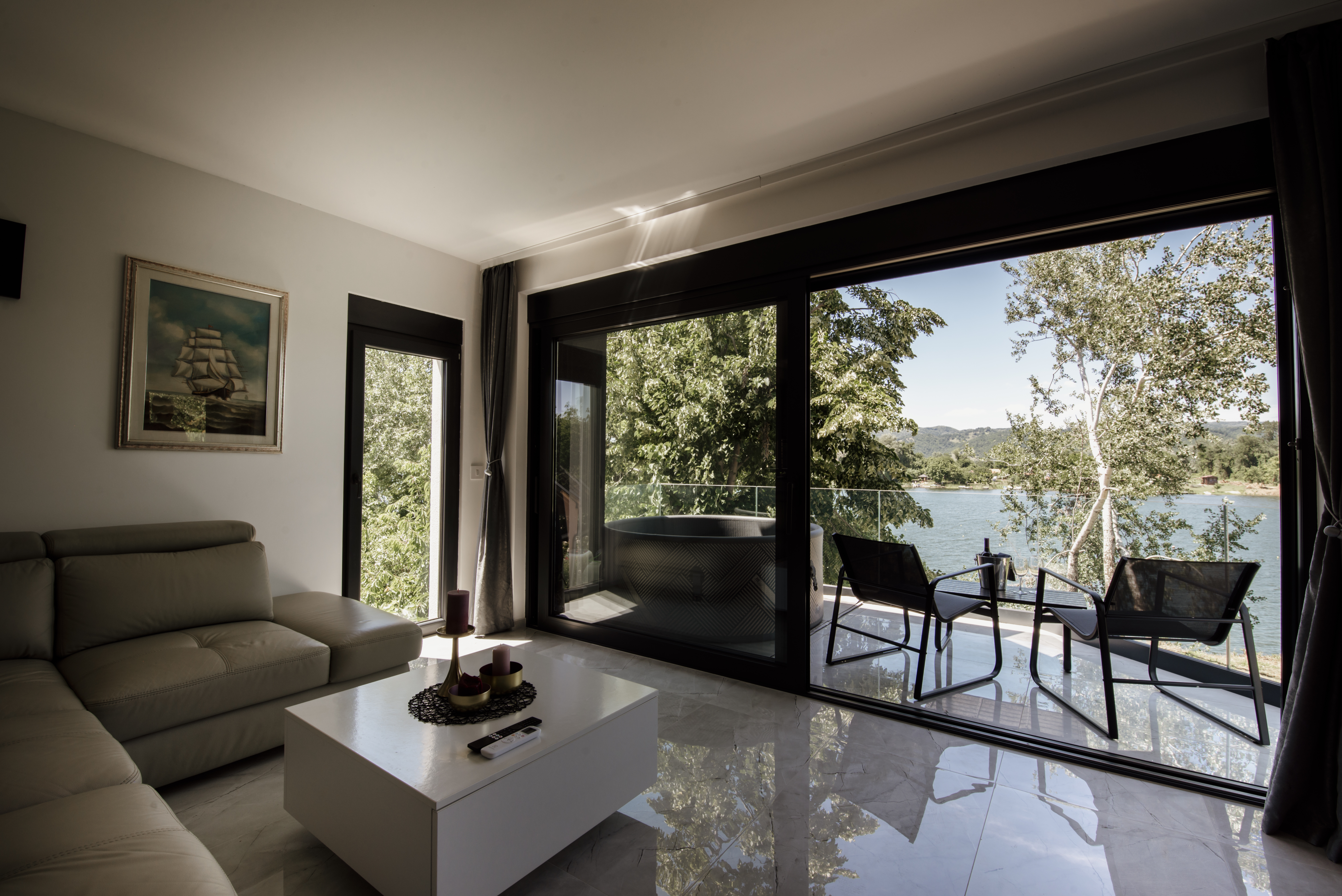
Not with modern ceramic and spectrally selective film. These films reject heat and UV while preserving 40 – 70% of visible light, most homeowners describe the result as “sunglasses for your house” rather than a darkened room. Standard solar tints (VLT 35 – 50%) are the most popular choice for bedrooms and living areas. Darker reflective films (VLT 15 – 25%) are sometimes used on south-facing office windows where glare is the primary complaint.
What Types of Residential Window Film Are Available?
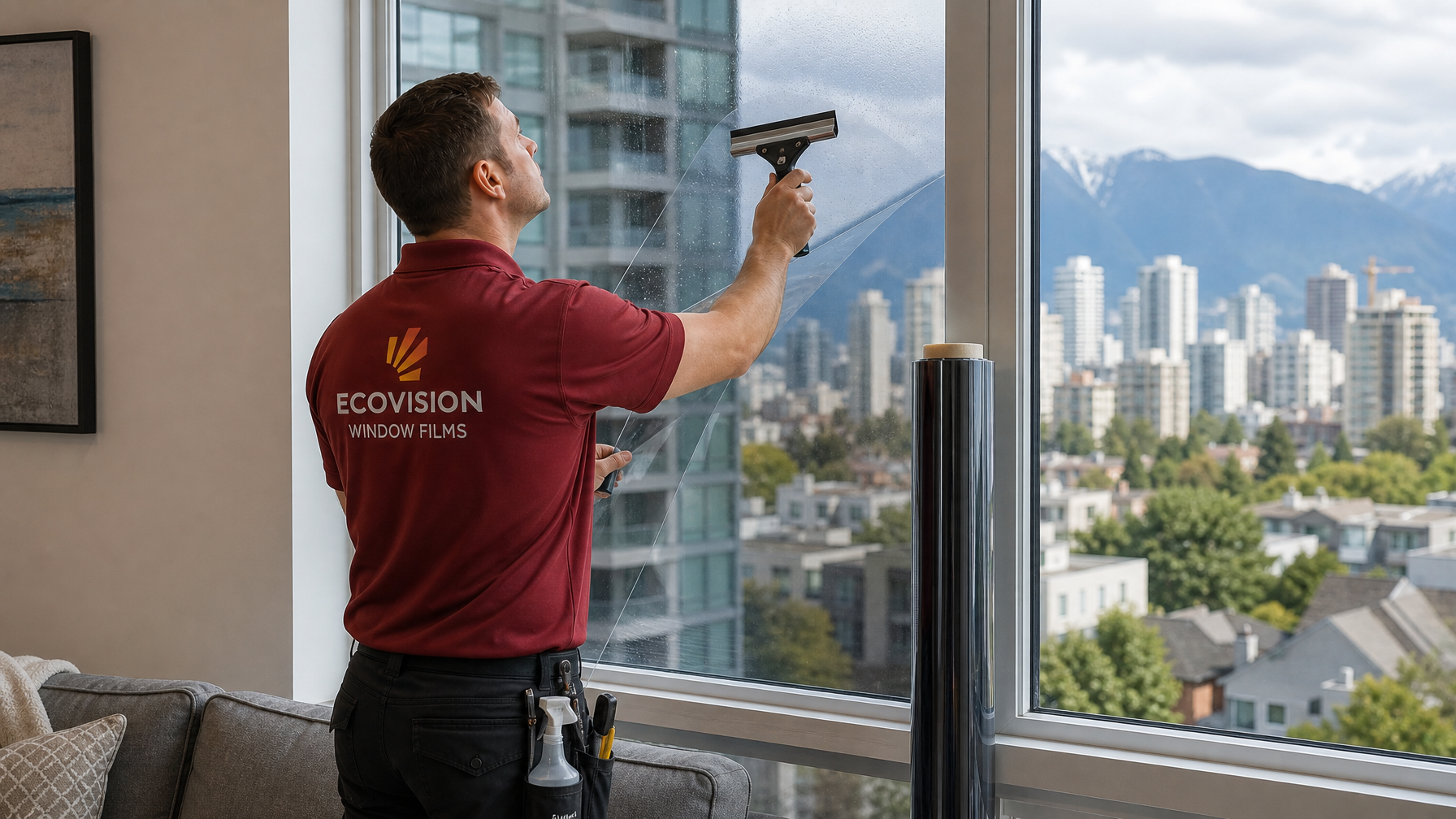
Ecovision installs six primary categories of architectural film for homes and residential buildings across Metro Vancouver. The right type depends on the specific problem you’re solving.
Q4: What is the difference between solar film, privacy film, and safety film?
Solar control film targets heat and glare reduction, it blocks infrared radiation while letting visible light through. Privacy film (frosted, one-way, or mirror) limits the line of sight into your home without blacking out the window entirely. Safety film (4 – 14 mil polyester) holds broken glass together on impact, meeting ANSI Z97.1 standards. Many homeowners layer benefits: a solar-control safety film gives you heat rejection and glass retention in one product.
Q5: What is ceramic window tint and is it worth the extra cost?
Ceramic window film uses nano-ceramic particles, not metal or dye, to block infrared heat. It is the premium choice for residential use because it does not interfere with Wi-Fi or cell signals (unlike metallic films), does not fade over time (unlike dyed films), and delivers the highest heat rejection per visible light lost ratio. At $12 – $18 per sq ft installed, ceramic tint typically costs 20 – 30% more than standard solar film but lasts 15 – 20 years with a manufacturer warranty through LLumar and Vista.
Q6: Is there a window film that provides privacy during the day but not at night?
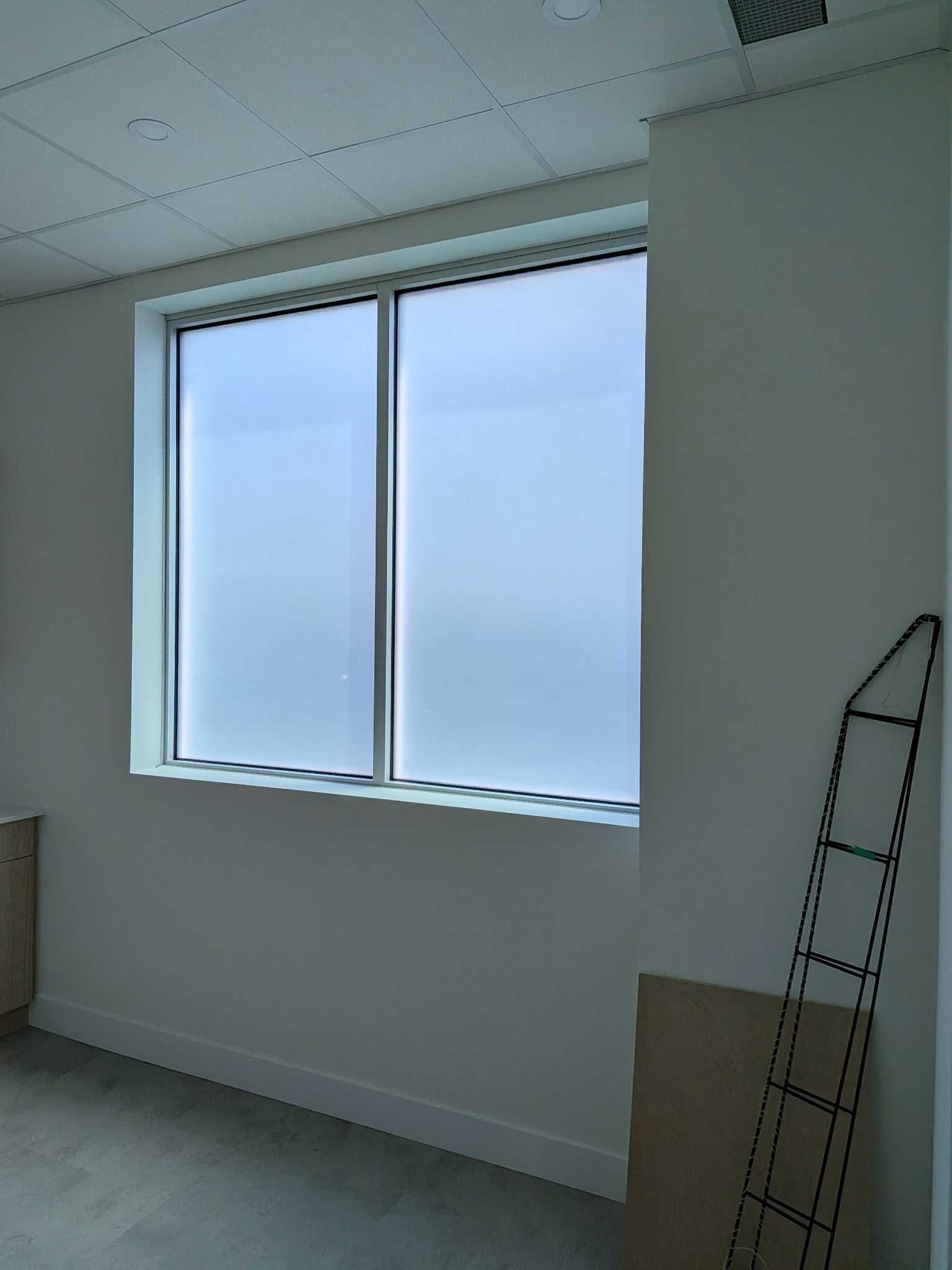
Yes, one-way or reflective mirror film provides daytime privacy because the exterior side is brighter than the interior. After dark, when interior lights are on and exterior light drops, visibility reverses: people outside can see in more easily. For consistent 24-hour privacy, frosted or etched film is the correct choice, it diffuses light in both directions regardless of lighting conditions. Ecovision can help you select the right film for your specific window orientation and usage pattern.
How Does Window Tinting Perform in BC’s Climate?
Metro Vancouver averages 28 days above 25°C annually, with peak solar exposure from May through September. The North Shore mountains, glass-heavy strata buildings, and west-facing suites in the Fraser Valley amplify heat gain. BC’s CleanBC program recognizes window film as a building efficiency measure, relevant for property owners pursuing energy step code compliance on existing buildings.
Q7: Does window tinting reduce heat in BC summers?
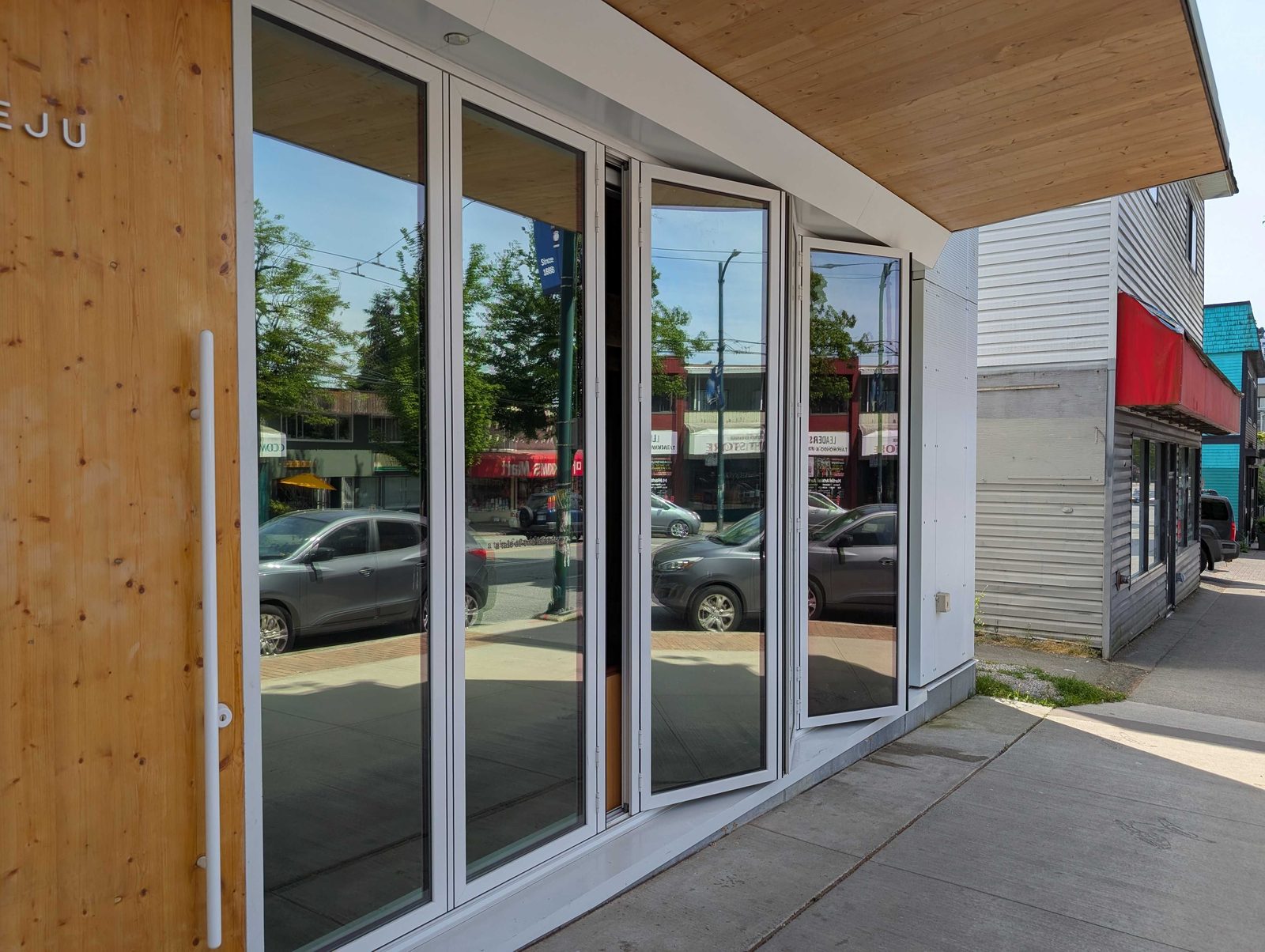
Consistently, yes. LLumar solar film installed at Ecovision’s project on the Rocky Mountaineer building in Vancouver rejected 79% of solar energy on south- and west-facing glazing, reducing interior temperatures by 7°C and cutting cooling loads measurably during summer months. For residential installations, expect a 5 – 10°C reduction in direct-sun spaces and a 20 – 35% reduction in cooling energy consumption during peak months.
Q8: Does window tinting work in winter or does it make homes colder?
Modern spectrally selective and low-emissivity films are engineered to be seasonally neutral. They block short-wave solar radiation in summer while retaining long-wave radiant heat produced inside the home. The net result in BC’s mild winters is minimal heat loss, most homeowners see no measurable increase in heating bills after film installation. The payback period is primarily driven by summer cooling savings and UV damage prevention rather than winter performance.
Q9: Does window film block UV rays that cause fading?
Yes, this is one of the strongest return-on-investment arguments for residential window film. Most UV window film blocks 99% of UVA and UVB radiation, the wavelengths responsible for fading hardwood floors, area rugs, artwork, and upholstered furniture. A Vancouver homeowner with $12,000 in wood flooring protecting it with $800 in window film is making a straightforward investment.
Q10: Will window film affect my energy efficiency if I have double-pane windows?
Window film is compatible with double-pane (insulated glass unit or IGU) windows, but the film type matters. High-reflectivity metallic films can, in rare cases, increase heat absorption at the glass surface of an IGU and stress the seal. LLumar and Vista films include compatibility ratings for IGU installations, Ecovision’s certified installers confirm compatibility before every residential job. For most standard double-pane windows made after 2005, solar control or ceramic film is fully compatible without voiding the window manufacturer’s warranty.
What Are the Rules for Window Tinting in Strata and Condo Buildings?
This is the question Ecovision hears most from Vancouver strata owners. The answer depends on your specific building bylaws, but there are consistent patterns across Metro Vancouver strata corporations.
Q11: Can I tint my windows if I live in a strata?
In most BC strata buildings, window film is a cosmetic alteration requiring strata council approval under the Strata Property Act. The typical threshold: if the film changes the exterior appearance of the building (reflective or tinted film visible from outside), written approval is required. Frosted film applied to interior-only surfaces (bathroom windows, interior partition glass) usually falls below the approval threshold. Ecovision works with strata councils regularly and can provide product spec sheets, appearance samples, and approval documentation to support your application.
Q12: Do townhouses have different window tinting rules than apartment-style condos?
Townhouse strata owners often have more autonomy over their unit’s exterior envelope than apartment-style condo residents, but this varies by building. Ground-level townhouses in Surrey, Langley, and Burnaby frequently allow solar film without full council approval, particularly when the film is neutral or near-neutral in tone. Mirror or highly reflective film almost always requires approval regardless of unit type. Ecovision’s team reviews your strata bylaws before every residential townhouse job.
Installation, Maintenance, and Longevity
These are the practical questions most homeowners ask once they have decided to proceed, timelines, care instructions, and what happens if they change their mind.
Q13: How long does a residential window tinting installation take?
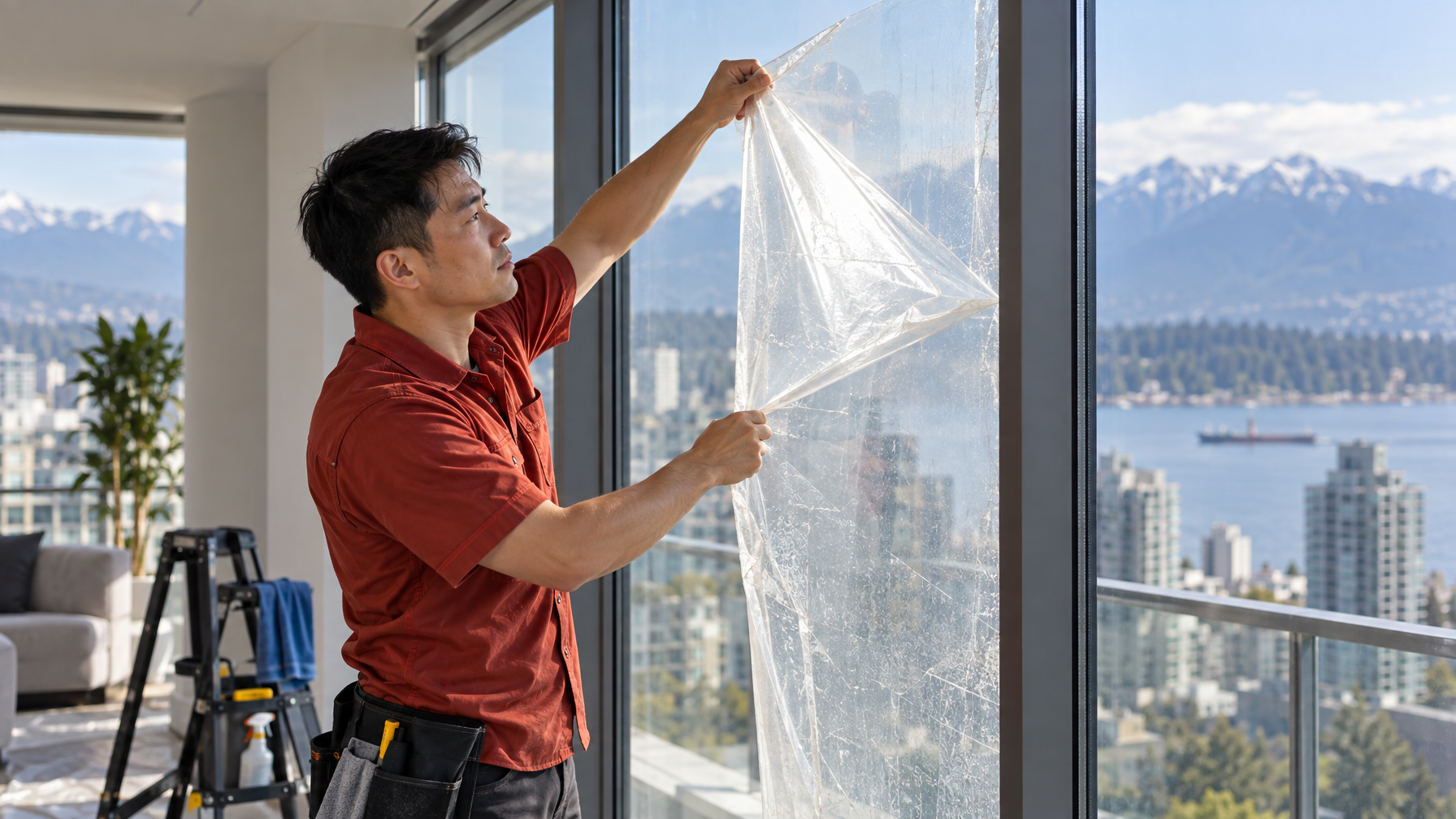
A standard residential job, 8 to 15 windows in a detached home, takes 4 – 8 hours with a two-person Ecovision crew. Single-room installations (a bedroom or living room) typically run 2 – 3 hours. Film requires a 30 – 60 day curing period after installation, during which hazing and small water pockets are normal. Full cure depends on ambient temperature and humidity, typical Vancouver spring and fall conditions (8 – 16°C) extend curing to 45 – 60 days versus 20 – 30 days in summer heat.
Q14: How long does residential window tinting last?
Professionally installed LLumar and Vista film carries a manufacturer warranty of 10 – 15 years for residential applications. Actual lifespan depends on film type, sun exposure, and maintenance: south-facing Vancouver windows with maximum UV exposure typically see ceramic films last 15 – 20 years; interior-facing frosted film in low-UV spaces can exceed 20 years. DIY film purchased from hardware stores lasts 3 – 7 years and is not covered by a manufacturer warranty.
Q15: Can residential window tinting be removed?
Yes. Professionally installed architectural film can be removed without damaging the glass in most cases. The process involves scoring, peeling, and removing adhesive residue with a solvent, a job that typically takes the same time as the original installation. Removing window film from older or low-E coated glass requires more care to avoid scratching. Ecovision offers film removal and replacement as a standalone service.
Frequently Asked Questions
Q16: How do I clean windows after tinting?
Wait the full curing period (30 – 60 days from installation) before cleaning tinted windows. After curing, use a soft microfiber cloth and a mild ammonia-free glass cleaner, standard household glass cleaners often contain ammonia, which degrades film adhesive over time. Avoid abrasive pads, razor blades, or squeegees with metal edges. Ecovision provides a maintenance guide with every residential installation.
Q17: Can I install window tinting myself?
DIY window film kits are available at hardware stores for $1.50 – $4.00 per sq ft, but the gap in performance and lifespan versus professional installation is significant. Professional film uses 2 – 4 mil adhesive layers that require precise cutting tools, squeegees, and slip solutions to install without bubbles, creases, or edge lifting. For small bathroom privacy applications, DIY is a reasonable option. For whole-home solar control or safety film, where performance and warranty matter, professional installation is the only way to ensure the film performs as specified.
Special Considerations for BC Homeowners
Q18: Does window tinting help with neighbour privacy without making my home look like a mirror?
Yes, neutral-tone solar control film (charcoal or grey, VLT 35 – 50%) reduces visibility into your home from street level without creating a strong reflective or mirrored appearance. For ground-floor windows directly facing a neighbour, frosted film on the lower third of the pane is a common Ecovision recommendation, it maintains your view of the sky while blocking sightlines at seated or standing height. Ecovision installed this approach at Rosemary Heights Seniors Village in Surrey, where resident privacy on ground-floor suites was a primary design requirement.
Q19: Is window tinting worth it for a rental property in BC?
For BC landlords, window film delivers ROI through three channels: reduced tenant turnover (comfortable units retain tenants longer), lower vacancy risk in summer months when overheated suites are a known complaint, and potential compliance with municipal cooling bylaws, New Westminster’s cooling bylaw, for example, sets minimum interior temperature standards that window film directly supports. Solar film installed in rental units typically pays back in 3 – 5 years through lower HVAC wear and reduced tenant turnover.
Q20: Does Ecovision tint vehicle windows?
No. Ecovision Window Films specialises exclusively in architectural glass, residential homes, commercial buildings, strata and condo units, healthcare facilities, and government buildings. For vehicle tinting, you’ll need an automotive tinting shop. Ecovision’s entire training, equipment, and film certification is focused on building glass: LLumar and Vista certified installation, ANSI Z97.1 safety standards, and BC Building Code compliance.
Related Articles
- Privacy Window Film in Vancouver: Types, Costs, and What to Know Before You Install
- How Much Does Window Film Cost in BC? (2026 Pricing Guide)
- How Long Does Professionally Installed Window Film Last in BC?
- Window Film for Condo Buildings in Vancouver: What Owners and Strata Councils Need to Know
- Frosted Window Film in Vancouver: Types, Costs, and What to Know Before You Buy
About the Author: This article was written by the Ecovision Window Films team. Edward, Director at Ecovision, brings a distinctive perspective to the window film industry, with over a decade in real estate development, including roles as Executive Director at a real estate development firm and Director of Strategic Partnerships, before joining Ecovision. That background gives the company a sharp edge in serving BC property managers and building owners. Ecovision is a certified installer for leading film brands with completed projects for healthcare facilities, government buildings, and commercial properties throughout the Lower Mainland. For a free site assessment, call (236) 862-0052 or visit ecovisioncanada.com/contact/.