
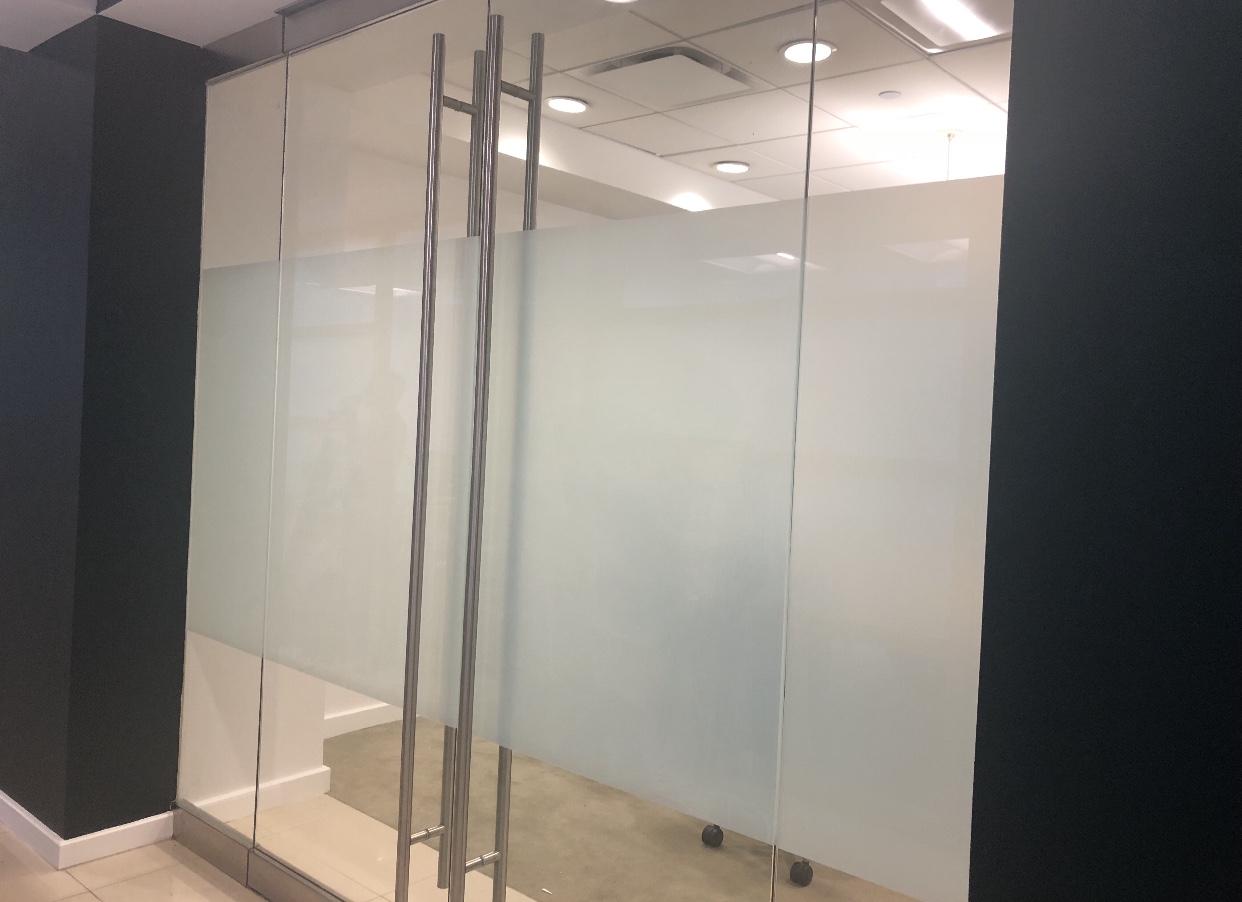
Frosted glass is a common privacy solution in BC offices, healthcare facilities, and homes, but its UV-blocking performance is frequently misunderstood. The opaque white appearance suggests better solar protection than clear glass. It does not. If UV protection matters for your building, the type of film matters as much as the frosted finish.
Does frosted glass block UV rays? Standard sandblasted or acid-etched frosted glass transmits as much UV radiation as clear glass, allowing 25, 45% of damaging UV-A to pass through the pane. For genuine UV protection combined with privacy, Ecovision Window Films installs UV-inhibiting frosted film across Vancouver and the Lower Mainland, starting at $12 per square foot installed.
What Is Frosted Glass and Why Doesn’t It Block UV?
Frosted glass is produced by one of two methods: sandblasting the glass surface with fine abrasives, or applying an acid-etching treatment. Both techniques scatter incoming light, creating the characteristic diffused, opaque appearance. Neither method adds UV-filtering chemistry to the glass.
UV-blocking performance in any glass panel comes from its chemical composition, specifically whether UV-absorbing compounds are embedded in the glass during manufacturing. Standard float glass, the most common type in BC commercial and residential buildings, blocks most UV-B radiation (wavelengths below 315 nm) but allows a significant portion of UV-A radiation (315, 380 nm) to pass through. Frosting the surface does not alter this UV-A transmission.
For BC property owners, this matters because south- and west-facing frosted windows still allow enough UV-A through to cause fabric fading, flooring discoloration, and cumulative skin exposure for occupants who spend extended time near those windows. Metro Vancouver averages 1,938 hours of sunshine annually, and UV-A loads in south-facing rooms remain significant from March through October.
Does Frosted Window Film Block UV Rays?
Here is where the distinction between frosted glass and frosted window film becomes important. Standard decorative frosted film applied to interior glass surfaces provides visual privacy, but when the product contains only a frosted coating layer, its UV performance mirrors that of the underlying glass: moderate for UV-B, weak for UV-A.
LLumar and Vista, the brands Ecovision Window Films installs, both manufacture frosted films that include UV-inhibiting layers. These UV-blocking frosted films achieve 99% or greater UV rejection across both UV-A and UV-B wavelengths. The film bonds to the interior glass surface and requires no glass removal or replacement. The frosted appearance is preserved exactly as you would expect from standard frosted glass, while the UV protection is functionally equivalent to a dedicated UV window film product.
How Does Frosted Glass Compare to Frosted Window Film for UV Protection?
The table below compares the four most common configurations BC property owners encounter when evaluating privacy and UV protection together.
| Window Solution | UV Blocking | Privacy Level | Glare Reduction | Approx. Cost in BC |
|---|---|---|---|---|
| Sandblasted frosted glass | ~30, 40% | High | Moderate | Permanent (retrofit cost varies) |
| Standard decorative frosted film | ~40, 60% | High | Moderate | $8, $12 per sq ft |
| UV-blocking frosted film (LLumar/Vista) | 99%+ | High | Moderate, High | $12, $18 per sq ft |
| Clear UV-protective film | 99%+ | None | Low | $10, $16 per sq ft |
For BC buildings where privacy and UV protection are both required, strata common areas, healthcare corridors, executive offices, and senior care rooms, UV-blocking frosted film is the most cost-effective single solution.
What Is UV-A and Why Does It Matter for BC Interiors?
UV radiation in the range most relevant to window film is UV-A (315, 380 nm). UV-B (280, 315 nm) is mostly blocked by standard float glass. UV-A is not. UV-A is the primary contributor to:
- Approximately 40% of interior fading in fabrics, flooring, and artwork, visible light and heat account for the remainder
- Long-term skin damage from extended proximity to unfiltered windows, particularly relevant for patients and residents in care facilities
- Degradation of adhesive materials, printed graphics, and commercial signage installed near windows
BC’s CleanBC program identifies building envelope performance, including glazing, as a key lever in reducing energy consumption and improving occupant health outcomes in commercial buildings. Window film that blocks UV-A simultaneously reduces solar heat gain, which supports lower cooling loads during the Lower Mainland’s summer peak months of June through August.
What Does UV-Blocking Frosted Window Film Cost in BC?
Professionally installed UV-blocking frosted film in Vancouver and the Lower Mainland typically ranges from $12, $18 per square foot. Standard decorative frosted film without the UV-inhibiting layer runs $8, $12 per square foot. The premium for UV protection is generally $3, $6 per square foot, worthwhile for south- and west-facing rooms with extended sun exposure and high-value interior furnishings.
For a practical example: a standard office meeting room with four windows (approximately 40 square feet of glass) would run $480, $720 installed with UV-blocking frosted film. A residential bathroom with two windows (approximately 12 square feet) would typically cost $144, $216. For multi-floor strata buildings or healthcare facility corridors, per-square-foot pricing typically scales down with volume.
Ecovision Window Films provides free on-site estimates for any commercial or residential project across the Lower Mainland. Call (236) 862-0052 to schedule.
Which BC Properties Benefit Most From UV-Blocking Frosted Film?
- Senior care and assisted living facilities: Residents who spend extended time near windows accumulate meaningful UV-A exposure daily. At senior care facilities across the Lower Mainland, including installations Ecovision has completed at Windermere Care Centre, UV-blocking frosted film in patient-facing rooms reduces glare, protects skin, and improves thermal comfort without restricting natural light to unacceptable levels.
- Strata and condo buildings in Vancouver: Strata councils frequently specify frosted film for lobby and corridor glass as a privacy measure. Upgrading to UV-blocking film at the time of installation adds measurable occupant protection at a modest cost premium.
- Commercial offices in downtown Vancouver: South- and west-facing conference rooms and open-plan floors receive strong afternoon UV-A loads from May through September. UV-blocking frosted film on interior glass partitions and exterior-facing windows protects staff and reduces fading on carpeting, furniture, and printed materials. For offices that also want patterned, etched-look, or custom-branded film on their glass, see our dedicated guide to decorative window film for offices in Vancouver.
- Residential bathrooms and home offices: Homeowners can apply UV-blocking frosted film directly over existing bathroom window glass or standard windows, no glass removal required. Most residential installations are completed in a single visit.
Related Articles
- Privacy Window Film in Vancouver: Types, Costs, and What to Know Before You Install
- Decorative Window Film for Offices in Vancouver: Types, Costs, and What to Know
- Energy Efficient Window Film in Vancouver: What It Saves, What It Costs, and What to Install
- How Does One-Way Glass Work? The Physics Behind One-Way Window Film
- Does Window Film Lower Cooling Costs in North Vancouver?
About the Author: This article was written by the Ecovision Window Films team, led by Xander, Co-Founder and Director of Operations at Ecovision. Xander brings over 10 years of hands-on installation experience, backed by a family with over 50 years in the installation trades, including window film. His military background reinforces the precision and discipline Ecovision applies to every project. Ecovision is a certified installer for leading film brands with completed projects for healthcare facilities, government buildings, and commercial properties throughout the Lower Mainland. For a free site assessment, call (236) 862-0052 or visit ecovisioncanada.com/contact/.