
If you live or manage a condo in Vancouver, heat, glare, and privacy through floor-to-ceiling glass are real, daily problems. Ecovision Window Films installs professional window film in condo buildings across Vancouver, BC, from single units to full building retrofits coordinated through strata councils.
Window film for condo buildings in Vancouver typically costs $9 – $22 per square foot installed, depending on film type and unit count. Ecovision installs LLumar and Vista-certified film across Vancouver condos and high-rises, reducing solar heat gain by up to 80%, blocking 99% of UV radiation, and improving privacy without replacing windows. Most condo units are completed in one to three hours with no disruption to other residents.
Why Vancouver Condo Residents Are Turning to Window Film in 2026
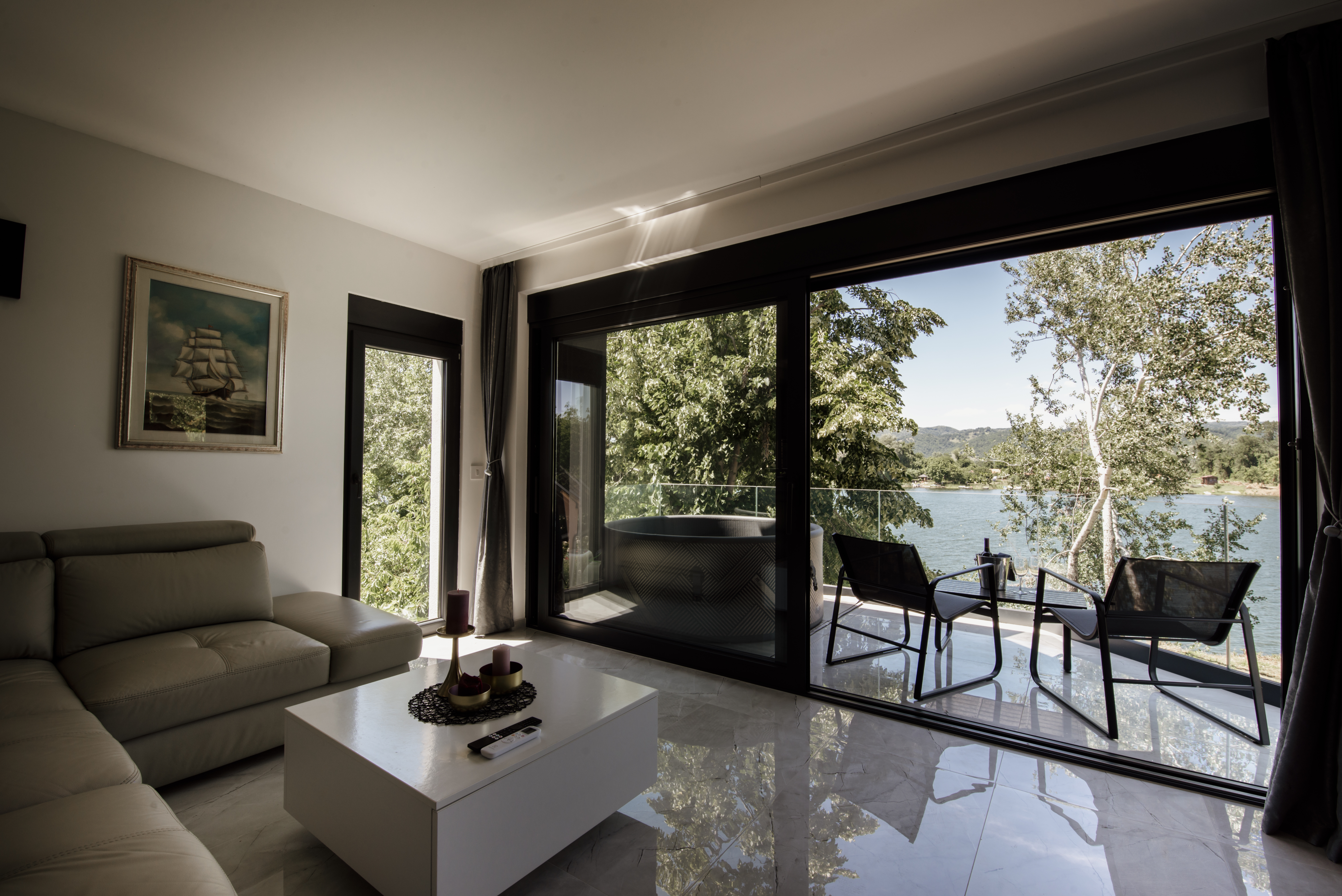
Metro Vancouver averages 28 days above 25°C annually, and modern condo construction heavily favours floor-to-ceiling glass. That combination creates a predictable problem: interiors that overheat, glare that makes screens unwatchable, and privacy loss that curtains only partially solve.
Window film addresses all three problems without altering your unit’s exterior appearance, an important factor in strata-managed buildings where exterior modifications require council approval. Unlike blinds or curtains, film is permanently bonded to the glass surface, works year-round, and does not require daily adjustment.
BC’s CleanBC program lists window film retrofits as an eligible energy efficiency improvement for commercial and multi-unit residential buildings. For condo buildings targeting lower cooling costs or LEED certification, professionally installed solar control film is one of the most cost-effective envelope upgrades available, typically returning its installation cost within two to four cooling seasons through energy savings alone.
What Types of Window Film Work Best for Vancouver Condos?
Not all window film performs the same in a high-rise environment. The right choice depends on your floor, orientation, and primary concern, heat, glare, privacy, UV, or a combination. Here are the main film categories relevant to Vancouver condo buildings:
| Film Type | Heat Rejected | UV Blocked | Best For | Approx. Cost/sqft |
|---|---|---|---|---|
| Ceramic Solar Control | Up to 80% | 99% | South- and west-facing units with severe heat gain | $14 – $22 |
| Dual-Reflective | 55 – 70% | 99% | Balancing privacy and views, daytime one-way effect | $10 – $18 |
| Low-E Window Film | 40 – 60% | 99% | Year-round energy savings, retains winter heat | $12 – $20 |
| Frosted / Decorative | Minimal | Up to 99% | Bathroom windows, glass partitions, privacy on lower floors | $9 – $14 |
| Anti-Graffiti | None | None | Lobby glass, elevator doors, ground-floor retail | $9 – $15 |
For most Vancouver condo owners, ceramic solar control or dual-reflective film delivers the best balance of heat rejection, view preservation, and aesthetic neutrality. High-floor units with unobstructed southern exposure typically benefit most from ceramic film, while ground- and second-floor units often benefit more from a combination of solar control and privacy film. Ecovision’s residential window film services include a free on-site assessment to match the correct film to your specific exposure and building requirements.
How Much Does Window Film Cost for a Condo in Vancouver?
Professional window film installation in a Vancouver condo typically ranges from $9 to $22 per square foot installed, all-in. A standard one-bedroom condo unit with four to six windows averages 60 – 100 square feet of glass, making a full unit installation cost between $540 and $1,800 depending on film type.
Several factors affect the final price:
- Film grade: Entry-level dyed film starts at $9/sqft; premium ceramic film runs $18 – $22/sqft
- Unit count: Multi-unit building projects (10+ units) qualify for volume pricing, strata councils coordinating building-wide installations typically save 15 – 25% versus individual bookings
- Floor height and access: High-rise units above the 20th floor may require additional setup time depending on window access from inside the unit
- Glass type: Dual-pane or tempered glass may limit film options, Ecovision assesses compatibility during the site visit at no cost
- Square footage: Larger glass panels with fewer cuts per unit reduce installation labour time and overall cost
For strata councils coordinating a full building retrofit, Ecovision provides itemised quotes per floor and per unit type, making it straightforward to present options to council and individual owners. Contact us at (236) 862-0052 for a building-wide assessment and quote.
Does Strata Council Need to Approve Window Film in BC?
In most BC strata buildings, yes. Under the Strata Property Act, alterations that affect the exterior appearance of a strata lot or common property require strata council approval. Because window film is visible from outside the building, even if subtle, most strata bylaws in BC classify it as an exterior modification subject to council sign-off.
In practice, strata councils in Vancouver rarely reject window film requests when the film is neutral in tone (charcoal, grey, or clear) and does not substantially change the building’s exterior appearance. The more common requirement is that owners use a consistent film specification across the building, which is why strata-coordinated installations are increasingly common in Metro Vancouver’s newer high-rise stock.
Ecovision has managed coordinated strata installations across multiple Lower Mainland buildings, presenting film options to councils, providing sample panels for approval, and managing installation scheduling unit by unit to minimise disruption. If your building is exploring a coordinated window film program, Ecovision can present to your strata council and prepare the documentation required for bylaw compliance.
What Are the Heat, Glare, and Privacy Benefits of Condo Window Film?
Heat control is the primary reason condo owners in Vancouver request window film. South- and west-facing units with floor-to-ceiling glass can reach interior temperatures 8 – 12°C higher than north-facing units during Vancouver’s summer months. Ceramic solar control film reduces that differential significantly, cutting solar heat gain by up to 80% without meaningfully reducing natural light transmission.
Glare reduction is the secondary driver. Vancouver’s low-angle summer sun, particularly in late afternoon, creates screen glare that makes working from home nearly impossible in west-facing units. Dual-reflective film reduces visible light transmission by 30 – 50% while maintaining outward views, which distinguishes it from heavy blinds that block both glare and natural light entirely.
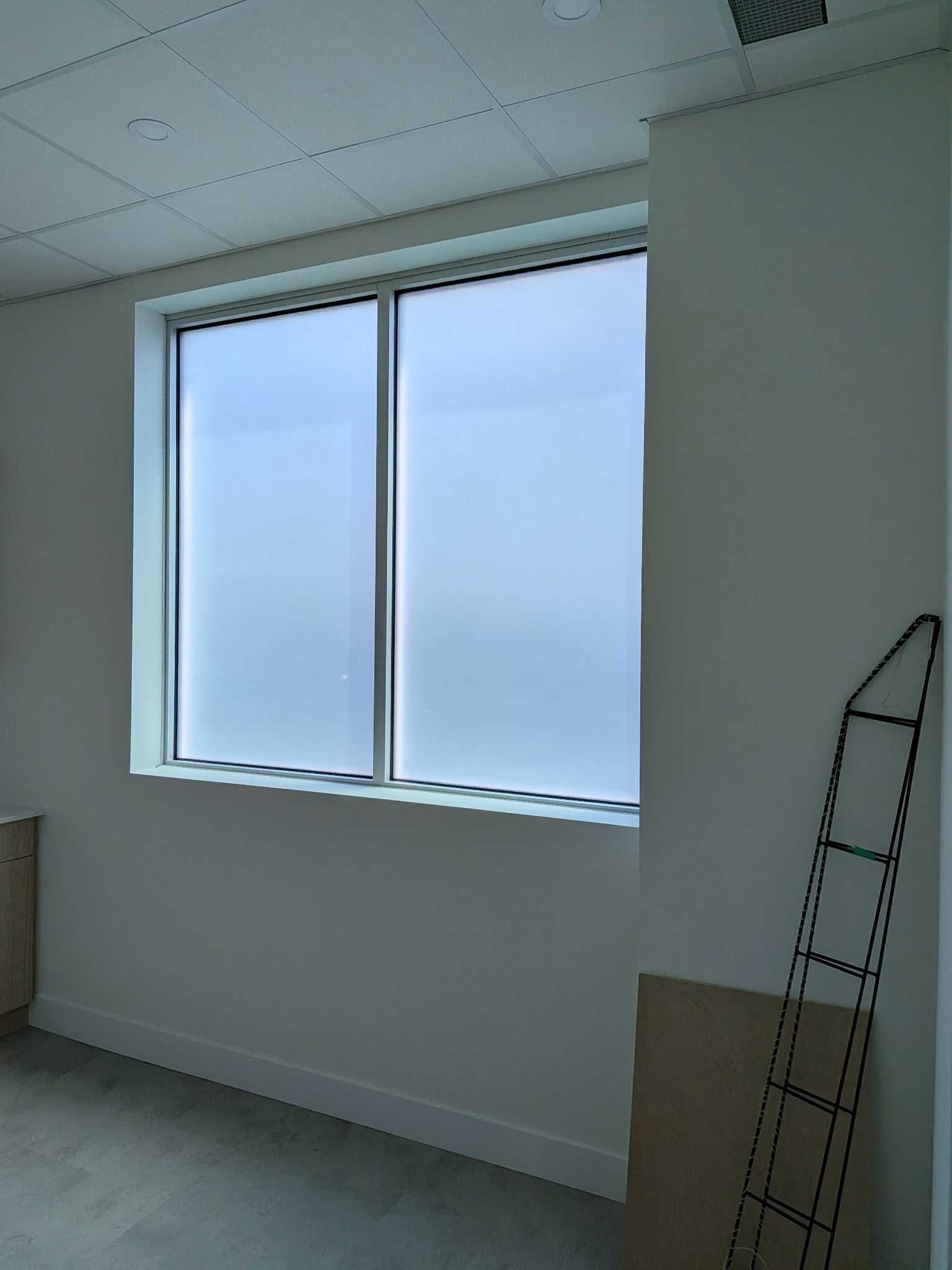
For privacy and decorative window film options, dual-reflective one-way film (daytime privacy only), frosted film (permanent privacy, all light angles), and patterned or etched-look decorative film are popular in bathrooms and lower-floor units. At the Rosemary Heights senior living community in Surrey, Ecovision installed privacy film on ground-floor residential units that required complete visual privacy while retaining usable daylight, a challenge that frosted film resolved without any window replacement.
For condo buildings where noise from adjacent streets or inter-unit sound transmission is also a concern, soundproof window film reduces sound transmission alongside the thermal and UV benefits covered above.
UV protection is the long-term benefit many condo owners overlook. Unfiltered UV exposure through untreated condo glass bleaches hardwood floors, fades fabric, and degrades artwork. Professional-grade LLumar and Vista film blocks 99% of UV radiation, significantly reducing fading damage without altering the colour or optical clarity of the glass.
How Is Window Film Installed in a Condo Building?
Professional condo window film installation follows a consistent process that takes one to three hours per unit depending on window count and film type:
- Site assessment (free): Ecovision measures all windows, confirms glass type and condition, and recommends compatible film options. This step prevents film failures on incompatible glass such as older single-pane units or damaged seals.
- Film selection: Based on orientation, floor, and owner priorities, a film grade and tint level are confirmed. Sample panels can be applied temporarily for strata approval purposes.
- Surface preparation: Glass is cleaned thoroughly with professional-grade solution. Any existing film must be fully removed before new film is applied.
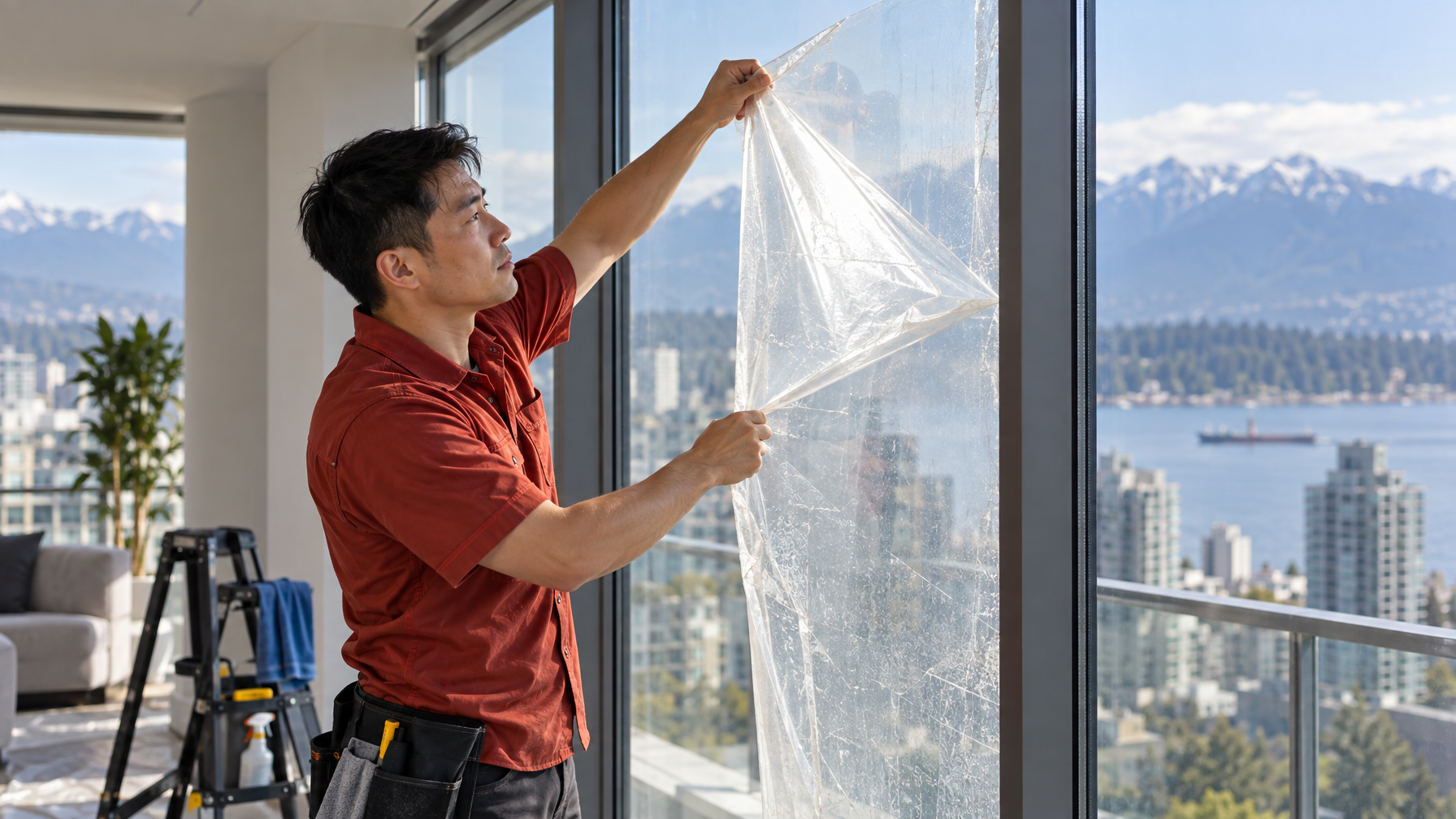
- Film application: Film is cut to fit and applied using a water-based slip solution that allows precise positioning before final bonding. Bubbles and edges are squeegeed to a clean finish.
- Cure time: Most films cure fully within 30 days. Minor haze or small water bubbles during the cure period are normal and disappear as the adhesive fully bonds to the glass.
Ecovision uses only LLumar and Vista-certified film brands, both backed by manufacturer lifetime warranties for residential applications. All installations include a written workmanship warranty. For heat and glare reduction film, Ecovision provides post-installation documentation confirming the SHGC (solar heat gain coefficient) and VLT (visible light transmittance) values, useful for strata records or energy audit purposes.
How Long Does Window Film Last in a Vancouver High-Rise?
Professionally installed window film on interior glass surfaces in a Vancouver condo typically lasts 12 – 20 years. LLumar and Vista films carry manufacturer lifetime warranties for residential applications, covering delamination, bubbling, and significant colour fade under normal conditions.
Several factors influence lifespan in a high-rise environment:
- Direct sun exposure: South- and west-facing films experience higher cumulative UV and heat loads, expect 12 – 15 years on high-exposure surfaces versus 18 – 20 years on north-facing glass
- Film quality: Ceramic and hybrid films outlast dyed films significantly, dyed films can begin to purple or fade within 5 – 8 years, while ceramic films retain optical clarity for 15+ years
- Cleaning practices: Clean with pH-neutral glass cleaner and a soft cloth, avoid ammonia-based cleaners, which degrade the film adhesive layer over time
- Original glass condition: Film applied to scratched or poorly sealed dual-pane units may fail earlier, Ecovision identifies glass condition issues during the assessment and advises before any film is applied
When film reaches end of life, professional removal and replacement is straightforward. Ecovision handles film removal as part of the replacement service, restoring the glass to a clean surface before new film is applied.
Related Articles
- Window Film for Strata Buildings in Vancouver: What Strata Councils and Property Managers Need to Know
- Privacy Window Film in Vancouver: Types, Costs, and What to Know Before You Install
- Commercial Window Tinting in Vancouver: What Businesses Need to Know
- UV Window Film for BC Homes and Buildings: What It Blocks, What It Costs, and What to Expect
- Does Window Film Lower Cooling Costs in North Vancouver?
Ready to reduce heat, glare, and UV in your Vancouver condo? Ecovision Window Films provides free on-site assessments across Vancouver and the Lower Mainland. Call (236) 862-0052 or visit our contact page to book your assessment today.
About the Author: This article was written by the Ecovision Window Films team. Edward, Director at Ecovision, brings a distinctive perspective to the window film industry, with over a decade in real estate development, including roles as Executive Director at a real estate development firm and Director of Strategic Partnerships, before joining Ecovision. That background gives the company a sharp edge in serving BC property managers and building owners. Ecovision is a certified installer for leading film brands with completed projects for healthcare facilities, government buildings, and commercial properties throughout the Lower Mainland. For a free site assessment, call (236) 862-0052 or visit ecovisioncanada.com/contact/.