
Animal clinics across the Lower Mainland sit on glass-heavy storefronts and treatment rooms. That glass brings daylight for clients, and it also brings heat, glare, and street sightlines into exam and recovery spaces. Ecovision Window Films. Clinic suites inside mixed-use towers should also read our note on dual reflective film strata neutral exterior BC if the building has a shared elevation rule installs architectural film for veterinary and animal clinic glass throughout Vancouver and the rest of British Columbia.
Window film for veterinary clinics in BC is architectural solar, privacy, or security film applied to waiting-room, exam, and treatment glass. Certified LLumar and Vista grades block more than 99% of UV, reject about 49 to 50% of solar energy on high-VLT solar films such as VS60 and VS70. Installed pricing depends on film type, glass size and access. Ecovision Window Films specifies film for clinics across Vancouver and the Lower Mainland.
Why Do Veterinary Clinics Need Window Film?
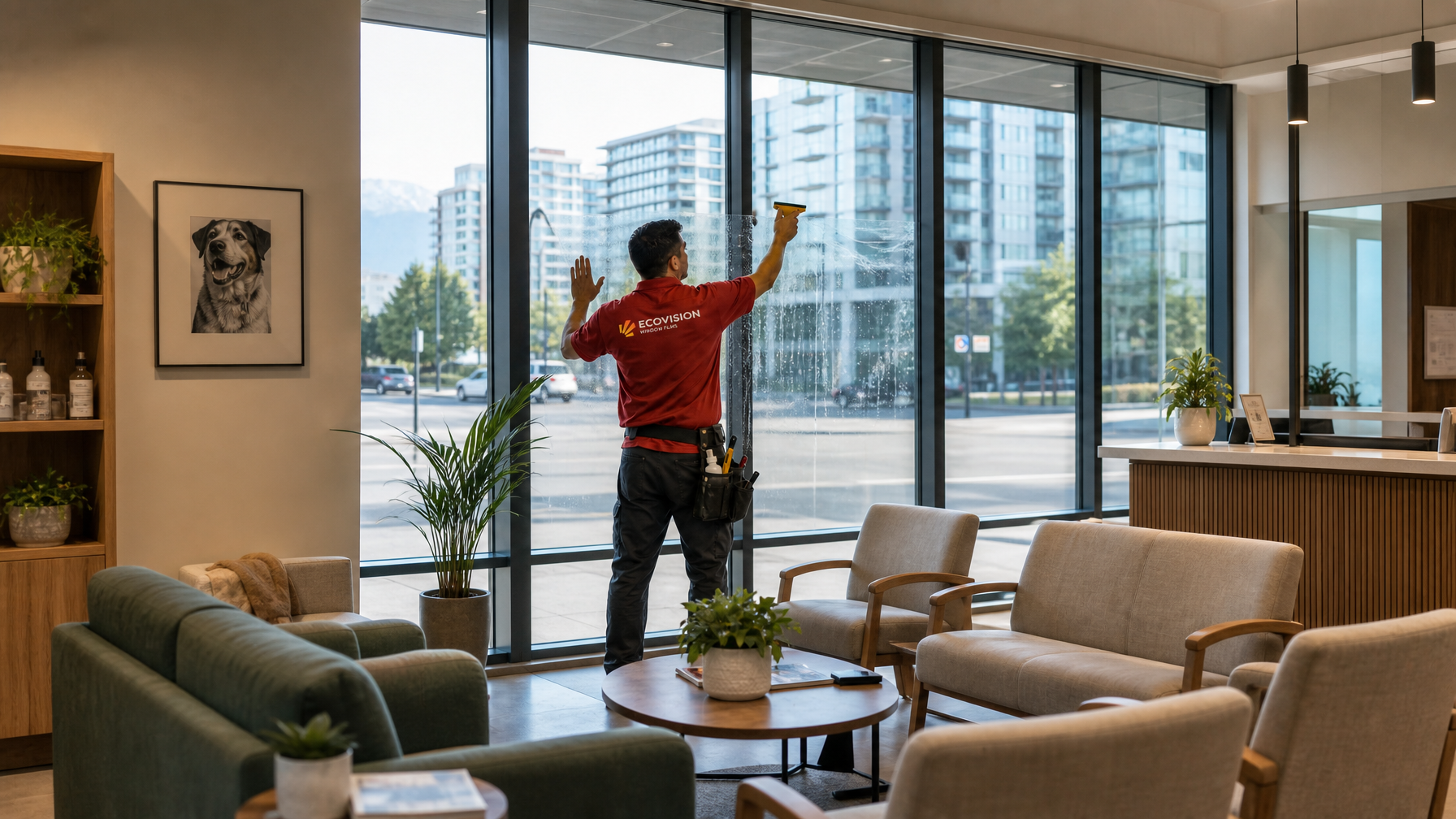
Most BC animal hospitals use storefront glazing on the street and interior glass at reception, pharmacy, and consult rooms. Pets and staff sit in those rooms for 15 to 90 minutes at a time. South- and west-facing lites can push indoor temperatures several degrees above the rest of the suite in July and August, which raises panting and restlessness in waiting animals.
UV through untreated glass also fades vinyl seating, laminate reception desks, and printed wayfinding. Architectural film with a UV absorber cuts more than 99% of UV-A and UV-B on the treated lite. That is the same UV standard Ecovision specifies on window film for healthcare facilities in BC, and it applies equally to veterinary practices. The same clinic-glass mix (solar on waiting rooms, frost on exam partitions) is covered in our guide to window film for dental offices in BC.
What Film Types Work on Animal Clinic Glass?
Clinic owners usually mix two or three grades rather than one film for the whole suite. Waiting rooms stay relatively clear. Exam rooms and surgical prep often need privacy. Street-facing doors may need a safety layer.
| Clinic zone | Typical film | Why it fits |
|---|---|---|
| Waiting room / storefront | LLumar VS60 or VS70 | 59 to 62% VLT, about 49 to 50% TSER, low visual change |
| Exam / consult glass | Frosted or gradient privacy | Blocks standing sightlines, keeps daylight |
| Pharmacy / records | Decorative or frosted | Screens computers and meds from the lobby |
| Street doors / sidelights | Clear safety (SCL SR PS4 to PS8) | Holds glass if struck |
VS60 and VS70 are the default high-VLT solar grades Ecovision uses when a practice wants heat control without a dark storefront. Ceramic 35 or 45 is reserved for west-facing treatment rooms where VS is too light. Privacy grades stay interior-facing so the street elevation stays consistent with neighbouring commercial glass.
How Much Does Veterinary Clinic Window Film Cost in BC?
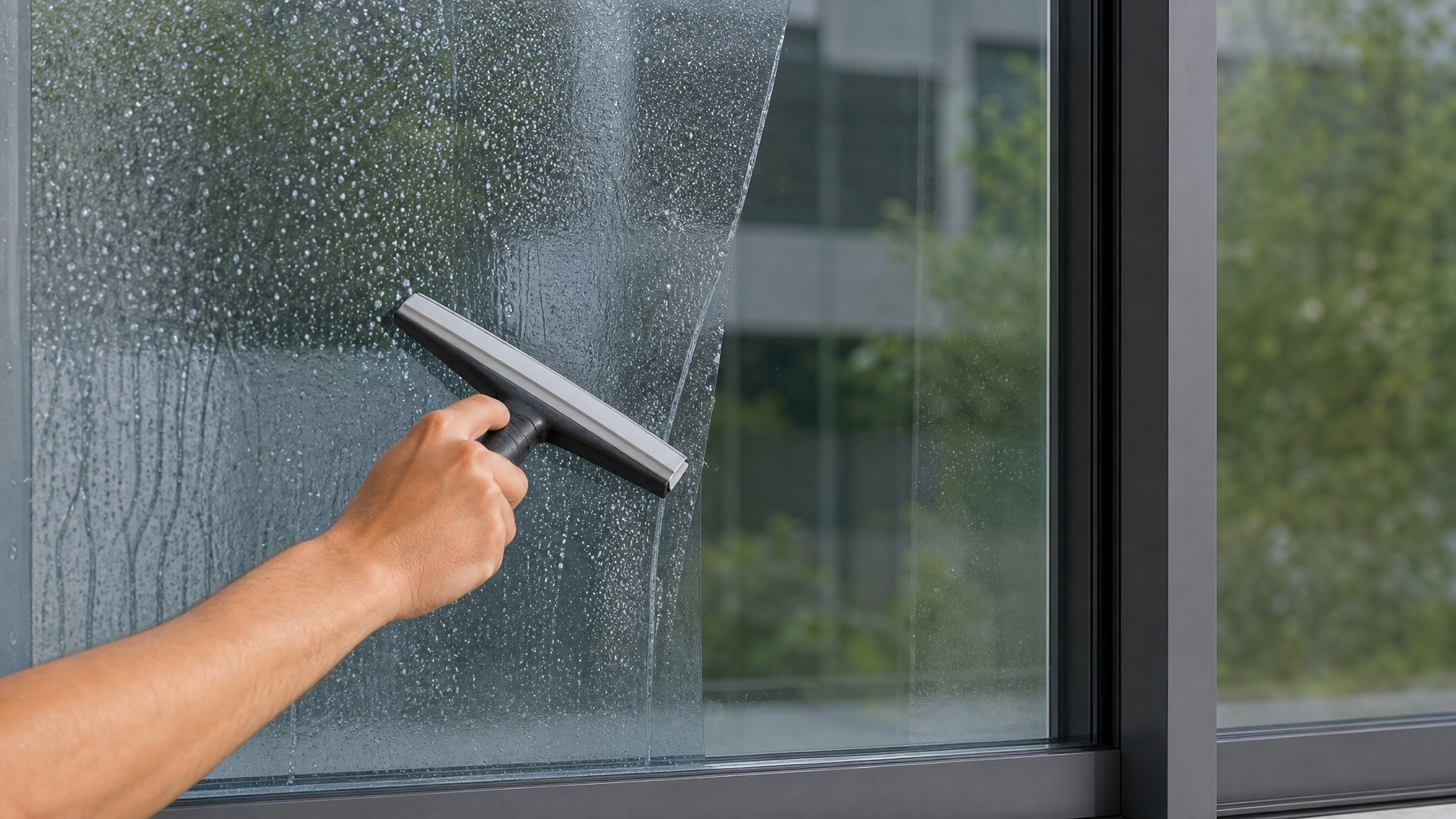
Installed pricing depends on film type, glass size and access. Security grades cost more because the film is thicker and edge work takes longer. See our cost guide for typical ranges.
A typical 400-square-foot storefront waiting room with 180 square feet of glass is roughly $1,800 – $3,240 at solar rates. Adding frosted film on two 4-foot by 7-foot exam partitions (56 square feet) adds about $504 – $896. After-hours work in occupied clinics can add a modest labour premium.
Does Window Film Help Pets With Heat and Glare?
Yes, on the glass that actually faces the sun. VS60 rejects about 50% of total solar energy on 6 mm dual clear. That cuts the radiant load on animals sitting against the lite. It does not replace HVAC. It reduces the spike that makes a south-facing waiting bay feel several degrees hotter than the corridor.
Glare reduction on VS60 is about 25%, and about 22% on VS70. That is enough to keep tablet screens and digital x-ray review stations readable without blackout blinds. Exam rooms that need stronger glare control step to Ceramic 35 (about 61% glare reduction) only when the practice accepts a darker look.
How Is Film Installed in an Operating Animal Hospital?
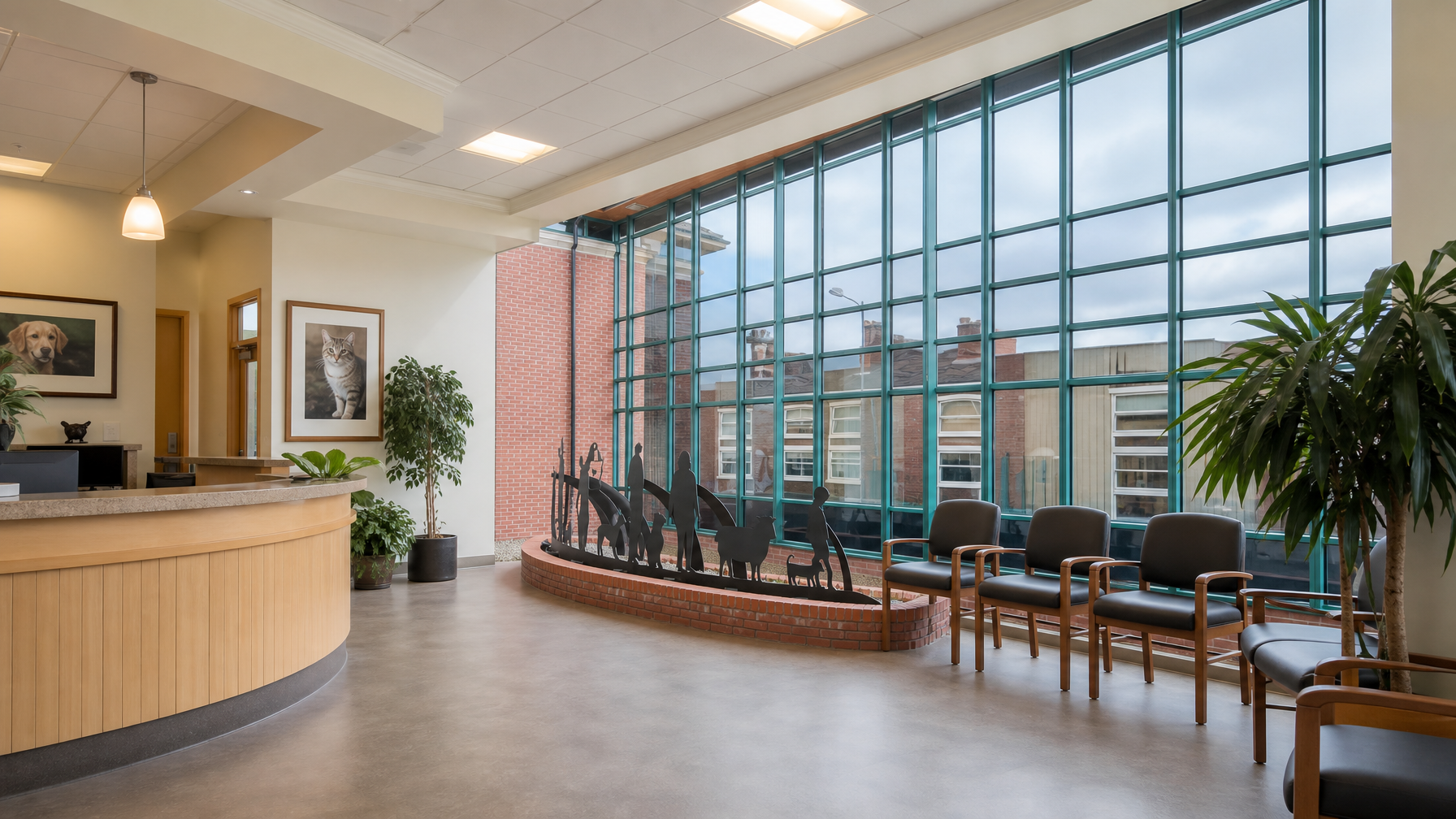
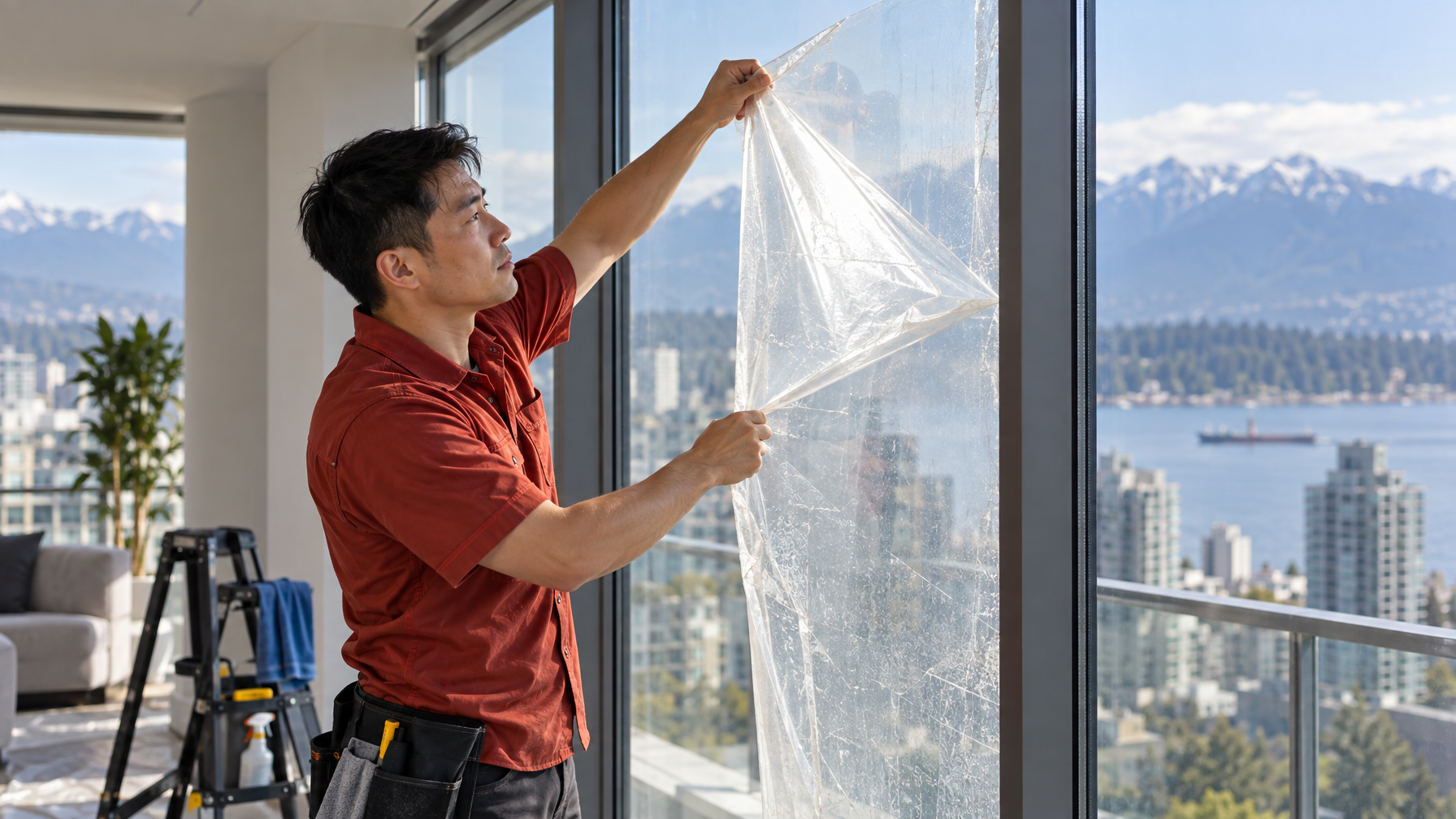
Ecovision schedules clinic work around appointments. Storefront glass is usually filmed after closing or on a half-day block. Interior partitions can be filmed one room at a time so surgery and recovery stay open. A standard waiting-room elevation of 6 to 10 lites takes 3 to 6 hours including prep and cleanup.
Cure time is always 30 to 60 days. Fine moisture pockets during that window are normal. Staff can wipe glass with a soft cloth after 48 hours; no ammonia cleaners. The same aftercare Ecovision used on Rosemary Heights Seniors Village and other occupied healthcare sites applies here: no disruption to clinical workflow beyond the filmed room.
What Should Clinic Owners Check Before They Buy?
Confirm the glass type. Many clinic storefronts are dual-pane Low-E. High-VLT solar film such as VS60 or VS70 is the usual match. Dark automotive film is never specified on building glass. Confirm landlord or strata approval if the clinic is a leased bay. Confirm whether exam glass needs true two-way privacy (frosted) or only daytime screening.
Ecovision is a certified LLumar and Vista installer. The same film families used at Bentall 4 and at healthcare sites such as Guildford Seniors Village and Windermere Care Centre are the products specified for veterinary suites. For a site measure, call (236) 862-0052 or use the contact page.
Related Articles
- Window Film for Healthcare Facilities in BC: UV Protection, Privacy & Comfort for Patients and Staff
- Window Film for Senior Care Homes and Assisted Living Facilities in BC
- Privacy Window Film in Vancouver: Types, Costs, and What to Know Before You Install
- Frosted Window Film in Vancouver: Types, Costs, and What to Know Before You Buy
- Commercial Window Tinting in Vancouver: What Businesses Need to Know
Is window film safe for animals in a veterinary clinic?
Yes. Architectural film is applied to interior glass and contains no fumes once the application solution evaporates. Cure time is 30 to 60 days. Clinics stay open during install when rooms are staged one at a time.
How much does window film cost for a veterinary clinic in BC?
Installed pricing depends on film type, glass size and access; see our cost guide for typical ranges.
Will solar film make the waiting room look dark?
Not if you specify high-VLT grades. LLumar VS60 and VS70 keep about 59 to 62% visible light while rejecting about 49 to 50% of solar energy. Darker ceramic grades are only used when heat or glare is extreme.
Can you film exam rooms for privacy without blocking light?
Yes. Frosted and gradient films screen standing sightlines while passing daylight. Gradient bands of 600 to 1,200 mm are common on consult glass that faces a hallway.
Do Vancouver veterinary clinics need landlord approval?
Leased bays usually do. Film is removable and does not replace glass, which most commercial landlords accept after a simple written scope. Ecovision can provide product data and insurance documents for the landlord package.
About the Author: This article was written by the Ecovision Window Films team, led by Xander, Co-Founder and Director of Operations at Ecovision. Xander brings over 10 years of hands-on installation experience, backed by a family with over 50 years in the installation trades, including window film. His military background reinforces the precision and discipline Ecovision applies to every project. Ecovision is a certified installer for leading film brands with completed projects for healthcare facilities, government buildings, and commercial properties throughout the Lower Mainland. For a free site assessment, call (236) 862-0052 or visit ecovisioncanada.com/contact/.