
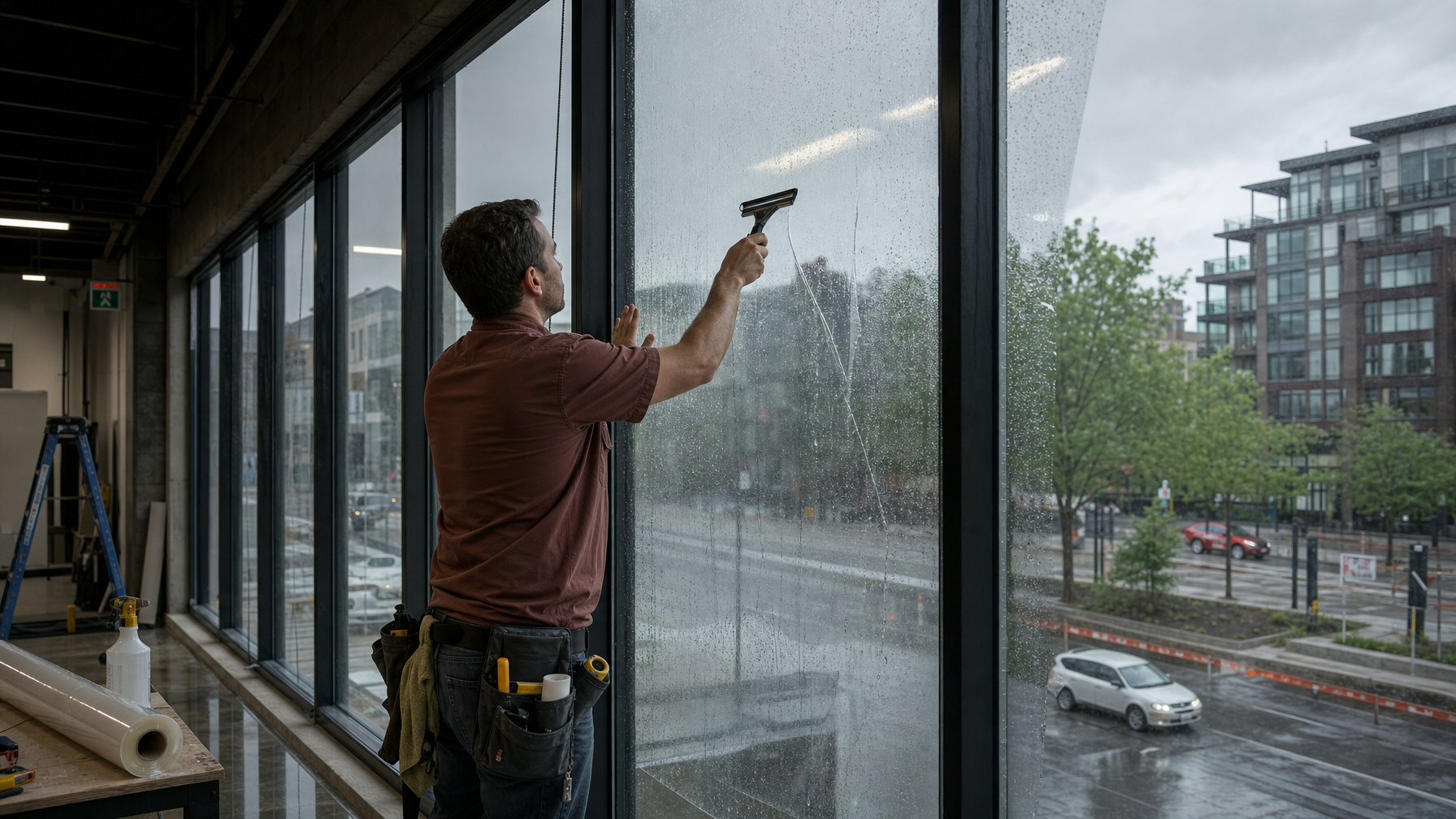
Office window tinting in Vancouver typically costs $9, $22 per square foot installed, with most single-floor open-plan office projects running $4,500, $9,000 for LLumar or Vista certified solar, privacy, or combined film. The decision involves three variables most facilities managers don’t know about upfront: IGU thermal stress compatibility, strata or landlord approval requirements, and whether the tint addresses heat, glare, privacy, or all three.
If you’re a facilities manager or property manager evaluating office window tinting for a Vancouver building, this guide is written for you, not for homeowners searching for DIY kits. The decisions are different at commercial scale: you’re justifying a building-wide investment to a CFO or strata council, coordinating with tenants, and navigating strata bylaws, IGU warranties, and WorkSafeBC requirements alongside the core performance question of which film actually solves your problem.
Here is what you need to know before you commit.
What Office Window Tinting Actually Does (and What It Doesn’t)
The term “window tinting” implies a colour or opacity change. The professional term is window film, and what it does is selectively block, transmit, or reflect specific wavelengths of the solar spectrum. Understanding the distinction matters before you choose a product.
What office window film does well:
- Solar heat control: High-performance solar film can block 40, 80% of solar heat gain (measured as Solar Heat Gain Coefficient, or SHGC). On a south- or west-facing Vancouver office floor in summer, this translates directly to reduced cooling load, fewer HVAC complaints, and measurable energy cost reduction. LLumar and Vista solar films are independently rated for SHGC performance, these are not manufacturer self-reported figures.
- Glare reduction: Visible light transmission (VLT) is the key metric. A film with 30% VLT reduces visible light entering the space by 70%. For screen-based work environments, which describes most modern Vancouver offices, glare is often the primary complaint that triggers a window film inquiry. Film addresses glare far more effectively than interior blinds, which block light but not heat.
- Daytime privacy: Reflective and dual-reflective films create a one-way mirror effect during daylight hours. From the exterior, occupants are not visible; from the interior, the view out is preserved (at reduced clarity depending on film reflectance). This is effective for ground-floor street-facing offices, boardrooms, and areas handling sensitive information. It is not effective after dark when interior lighting is brighter than exterior ambient light.
- UV protection: All LLumar and Vista solar films block 99%+ of UV-A and UV-B radiation, protecting furnishings, flooring, and, for buildings with extended human occupancy near glazing, occupant skin from cumulative UV exposure.
What office window film does not do:
- It is not a blackout solution. Even dark solar film (20% VLT) transmits significant ambient light. If you need a room that can be fully darkened, an AV presentation room or media suite, you need motorised blinds or blackout treatments in addition to film.
- It does not address after-hours privacy. Reflective film works by exterior ambient light being greater than interior. At night, with interior lights on, a reflective film office is fully visible from the street. If after-hours privacy is a requirement, frosted or opaque film (not reflective solar film) is the right product for those specific panels.
- It does not replace HVAC. Film significantly reduces peak cooling load, but it does not eliminate the need for mechanical cooling in a Metro Vancouver summer. The correct framing is heat and glare reduction, not heat elimination.
The 4 Film Types Used in Vancouver Office Buildings
Every commercial office window film project involves a choice between four primary product categories. The right choice depends on your orientation, occupant needs, and whether heat, glare, privacy, or a combination of all three is the driving requirement.
| Film Type | SHGC | VLT | Best For | Installed Cost (CAD) |
|---|---|---|---|---|
| Reflective Solar | 0.22, 0.30 | 20, 35% | Maximum heat rejection on south and west-facing floors where solar gain is severe and privacy is secondary | $9, $12/sq ft |
| Ceramic Solar | 0.20, 0.28 | 40, 60% | Clear exterior views with strong heat rejection, ideal for high-rise offices where views are a tenant amenity | $12, $18/sq ft |
| Dual-Reflective | 0.22, 0.30 | 30, 45% | Daytime privacy combined with heat rejection, ground floor and podium level offices visible from the street | $11, $16/sq ft |
| Frosted / Privacy | N/A | Variable | Meeting rooms, boardrooms, reception areas, and internal glazed partitions where privacy is the goal rather than solar control | $9, $14/sq ft |
A note on ceramic film: the price premium over standard reflective film ($12, $18 vs $9, $12) reflects real performance differences. Ceramic film uses non-metallic nano-ceramic particles to reject infrared heat without the mirror-like appearance of metallic reflective film. For Class A office buildings where exterior appearance and tenant experience matter, ceramic film is typically the right choice. For industrial, logistics, or ground-floor retail applications where maximum heat rejection at lowest cost is the goal, standard reflective film delivers better value.
How Much Does Office Window Tinting Cost in Vancouver?
The following pricing ranges are for professionally installed LLumar or Vista film in Vancouver and the Lower Mainland, all in CAD. These are realistic installed costs, not materials-only figures or manufacturer suggested retail prices.
By Project Scale
- Single office floor, 300, 500 sq ft of glass: $2,700, $9,000, depending on film type (reflective vs ceramic) and glass accessibility. Most single-floor projects in standard Vancouver office towers fall in the $4,500, $7,000 range for ceramic or dual-reflective film.
- Multi-floor office building, 3, 5 floors: $8,000, $35,000. Volume across multiple floors typically reduces per-sq-ft cost by 10, 15% versus single-floor pricing, and scheduling multiple floors in a single mobilization reduces the fixed cost overhead.
- Boardroom or meeting room privacy film only: $800, $2,500 for a typical boardroom (frosted or dual-reflective film on perimeter and internal glazing). This is often the starting point for organizations that want to test the product before committing to a floor-wide installation.
- High-rise with swing stage or suspended access: Add 20, 40% to base installation cost. Interior-applied film on floors 1, 5 is accessible via standard ladders and lifts. Above floor 5, exterior work may require building access systems; interior access on open-plan floors is typically straightforward regardless of floor height.
What Drives Cost Up
- Multi-floor mobilization with separate scheduling per floor
- IGU thermal stress compatibility requirements (additional assessment time and documentation)
- After-hours or weekend scheduling to avoid tenant disruption
- High-rise exterior access requirements
- Structural edge anchoring or daylight anchoring systems for security-rated film
- Custom-cut irregular glazing shapes (atrium, sloped glazing, curtain wall units)
What Drives Cost Down
- Ground-floor or accessible glazing (no access equipment required)
- Single-pane glass (no IGU thermal stress assessment needed)
- Standard rectangular window units in consistent sizes
- Accessible during business hours (no after-hours premium)
- Volume commitment across multiple floors or buildings in a single project
What Vancouver Facilities Managers Get Wrong About Office Window Tinting
After completing commercial office window film projects across Vancouver, Burnaby, and the Lower Mainland, Ecovision sees the same avoidable mistakes repeatedly. These are the decisions that come back as problems, either technical failures or budget surprises.
1. Ordering film before doing a thermal stress calculation
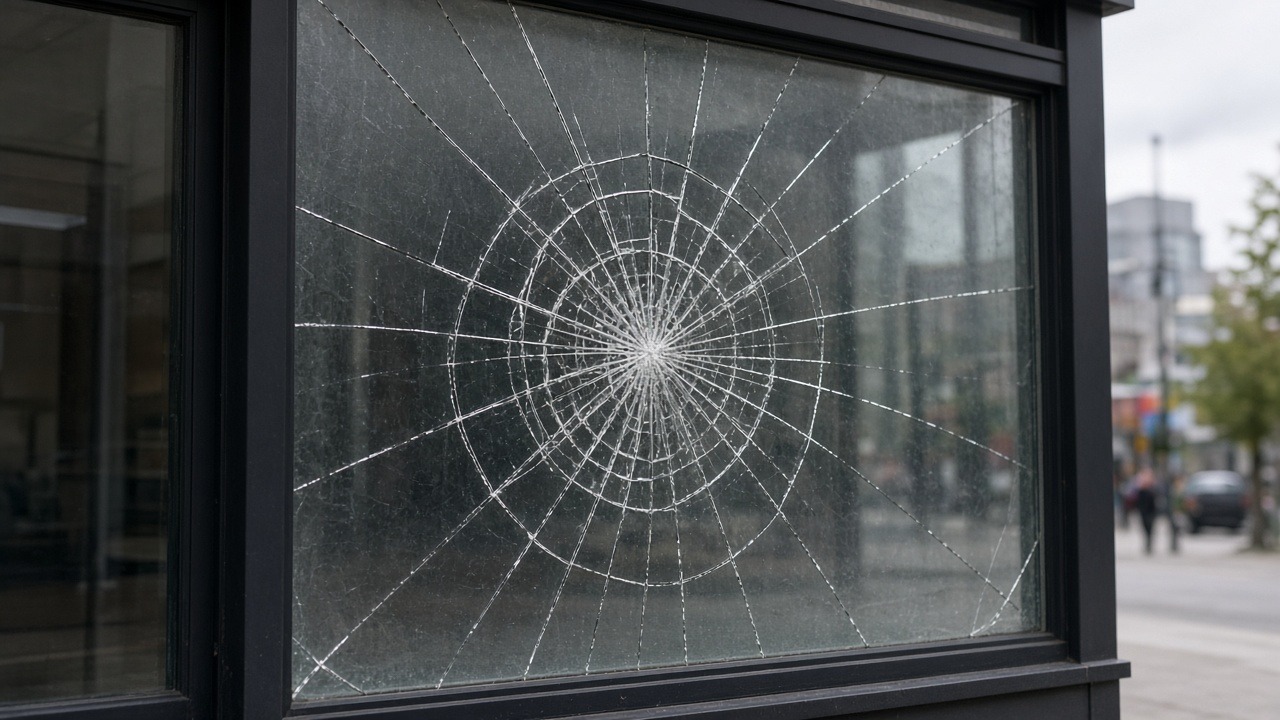
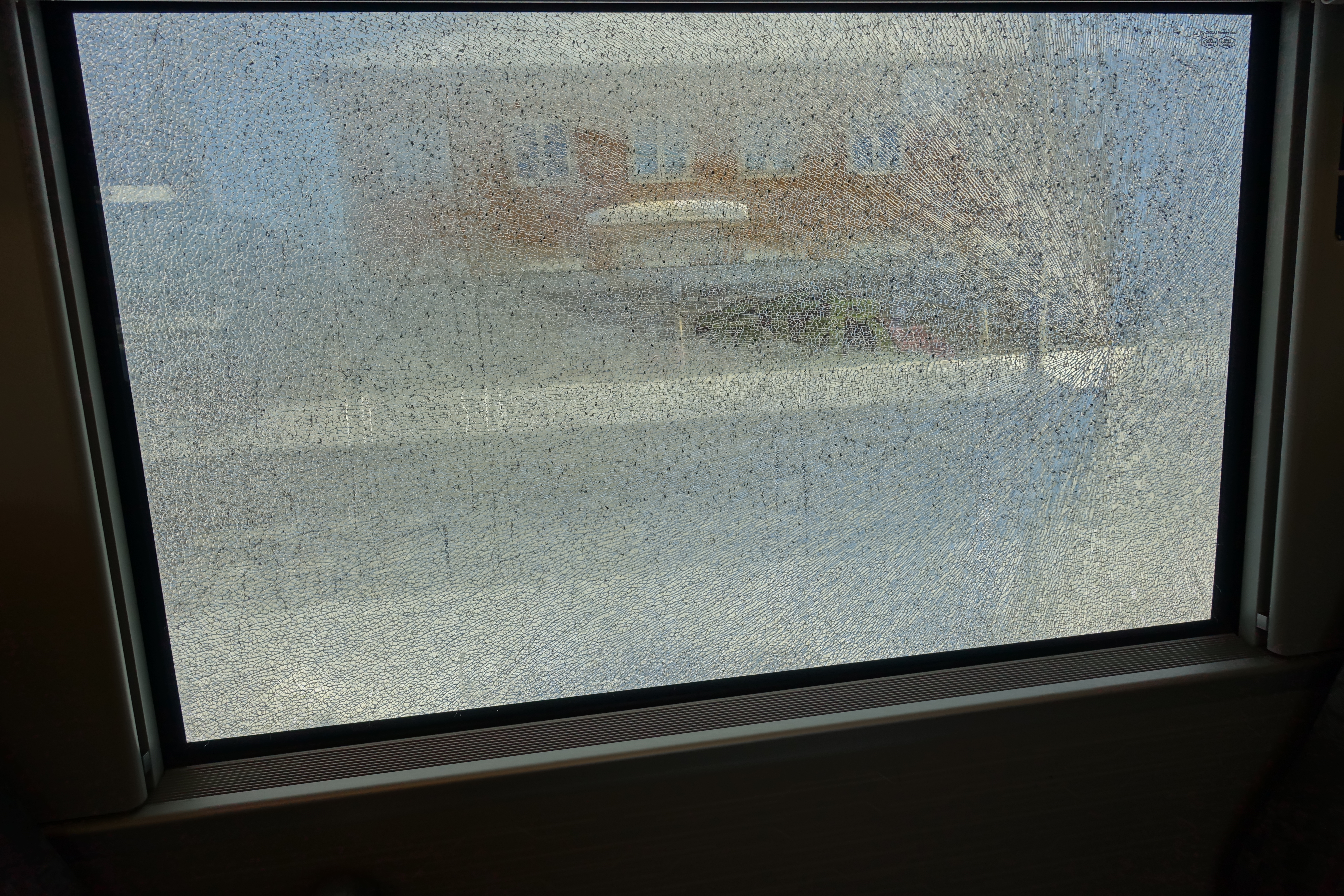
Dark or highly reflective films absorb heat in the glass before rejecting it outward. On an IGU (double-pane window), this absorbed heat can cause differential thermal expansion between the inner and outer panes, stressing the glass seal or, in worst cases, cracking the glass. A thermal stress calculation using the specific film’s solar absorption data and the glass specification is required before installing any film above a certain reflectance level on double-pane glazing. Skipping this step can void the glass warranty, which matters if your building’s windows are still under warranty, and can cause costly glass failure. Ecovision performs thermal stress assessments as standard practice on all IGU applications.
2. Choosing film based on appearance samples rather than performance specs
Film samples in a binder look similar. The meaningful differences are in the SHGC and VLT numbers, the Solar Heat Gain Coefficient and Visible Light Transmission, which are independently measured and published by the manufacturer. A film that looks slightly darker in a sample may have a significantly higher SHGC (less heat rejection) than a lighter-looking ceramic film. When comparing options, ask for the NFRC-rated or manufacturer-published SHGC and VLT for each film. These are the numbers that determine actual summer performance.
3. Forgetting landlord or strata approval
In the majority of Vancouver strata commercial buildings and leased office premises, any window treatment that alters the exterior appearance of the building requires landlord or strata council approval. Reflective solar film visibly changes the building’s exterior, even a lightly tinted film changes the reflectance of the glazing. Installing without approval can trigger a bylaw violation or lease default. Ecovision recommends obtaining written approval before booking an installation, and can provide specification documentation to support the approval request.
4. Scheduling film installation during a busy quarter without understanding disruption
Most facilities managers assume window film installation will be more disruptive than it is. A standard open-plan office floor of 300, 500 sq ft of glass is typically completed in 4, 8 hours. Installers work methodically across the floor; most of the floor remains accessible during the installation. The primary disruption is access to window areas for 15, 30 minutes per section. There is no smell, no noise beyond ordinary human activity, and no significant mess. Film should not be washed for 30 days post-installation (the curing period), and some temporary haze or water pockets are normal during curing, this is worth communicating to tenants in advance to avoid unnecessary concern.
5. Choosing the cheapest option and getting adhesive failure in three years
Low-cost window film, whether purchased online or from a supplier who does not disclose the brand, often uses lower-grade adhesive that delaminates within 3, 5 years in BC’s UV-intensive summer conditions. The visible signs are bubbling, edge peeling, and purple discolouration (a sign of UV-degraded dye in low-quality film). LLumar and Vista films use pressure-sensitive adhesives with documented UV resistance, and both brands carry 10, 15 year commercial warranties. The per-square-foot cost difference between quality-branded film and unbranded film is typically $2, $4/sq ft, a difference that pays for itself many times over in avoided removal and reinstallation costs.
Does Office Window Tinting Meet BC Code and WorkSafeBC Requirements?
No Building Permit Required
Interior-applied window film does not require a building permit in BC for commercial applications. The installation does not alter the structural, fire, or mechanical systems of the building and is not a regulated trade activity requiring a permit. This is one of the practical advantages of window film over other building envelope upgrades.
WorkSafeBC Thermal Comfort
WorkSafeBC OHS Regulation Section 4.80 requires that employers provide thermal comfort in the workplace. While the regulation does not prescribe specific temperature thresholds for office environments, documented complaints about heat and glare in a glazed office can become a WorkSafeBC compliance matter. Window film is a recognized physical control measure for thermal comfort and can be referenced in a WorkSafeBC response to a thermal comfort order or complaint.
BC Energy Step Code
For commercial buildings undergoing energy upgrades, solar control window film is a recognized passive measure for improving solar heat gain performance. While film is typically not sufficient on its own to meet Step Code performance targets, it is a legitimate component of a broader building envelope improvement strategy and can be documented as part of an energy audit or energy model.
City of Vancouver Bird-Friendly Building Design Guidelines (2022)
If your Vancouver office project involves a major building renovation or new construction, the City of Vancouver’s Bird-Friendly Building Design Guidelines may require bird-safe glazing treatments on the building envelope. Window film with a pattern visible to birds (dot matrix or line patterns applied at specific spacing) can satisfy bird-safe glazing requirements. If your project triggers these guidelines, Ecovision can specify bird-safe film that simultaneously meets solar control and bird-safe requirements.
Strata Approval: The Practical Reality
Under most Vancouver strata commercial bylaws, any modification that changes the exterior appearance of the building, including window film visible from the exterior, requires strata council approval. The approval process typically involves submitting film specifications, a colour/reflectance sample, and a brief written description of the installation. Most strata councils approve commercial office film without difficulty; the risk is installing without asking and being ordered to remove it.
The Office Window Tinting Installation Process in Vancouver
Understanding the installation sequence helps facilities managers plan scheduling and communicate with tenants. Here is what a typical commercial office installation looks like:
- Site assessment: An Ecovision representative visits the office to measure all glazed areas, identify glass type (single-pane vs IGU, tempered vs annealed), assess orientation and sun exposure, and confirm access requirements. For IGU buildings, this visit includes documentation of the glass specification for thermal stress calculation.
- Film selection: Based on the site assessment, Ecovision provides a written specification with recommended film options, SHGC and VLT ratings for each option, installed cost by option, and a recommendation based on your specific performance goals. Physical samples are provided for approval if required by the strata or landlord.
- Scheduling: Most single-floor commercial installations are scheduled as a single full-day installation. Ecovision schedules around occupancy requirements, standard business hours are generally fine for open-plan floors. Boardrooms and meeting rooms may be scheduled for a half-day block to minimize meeting disruption.
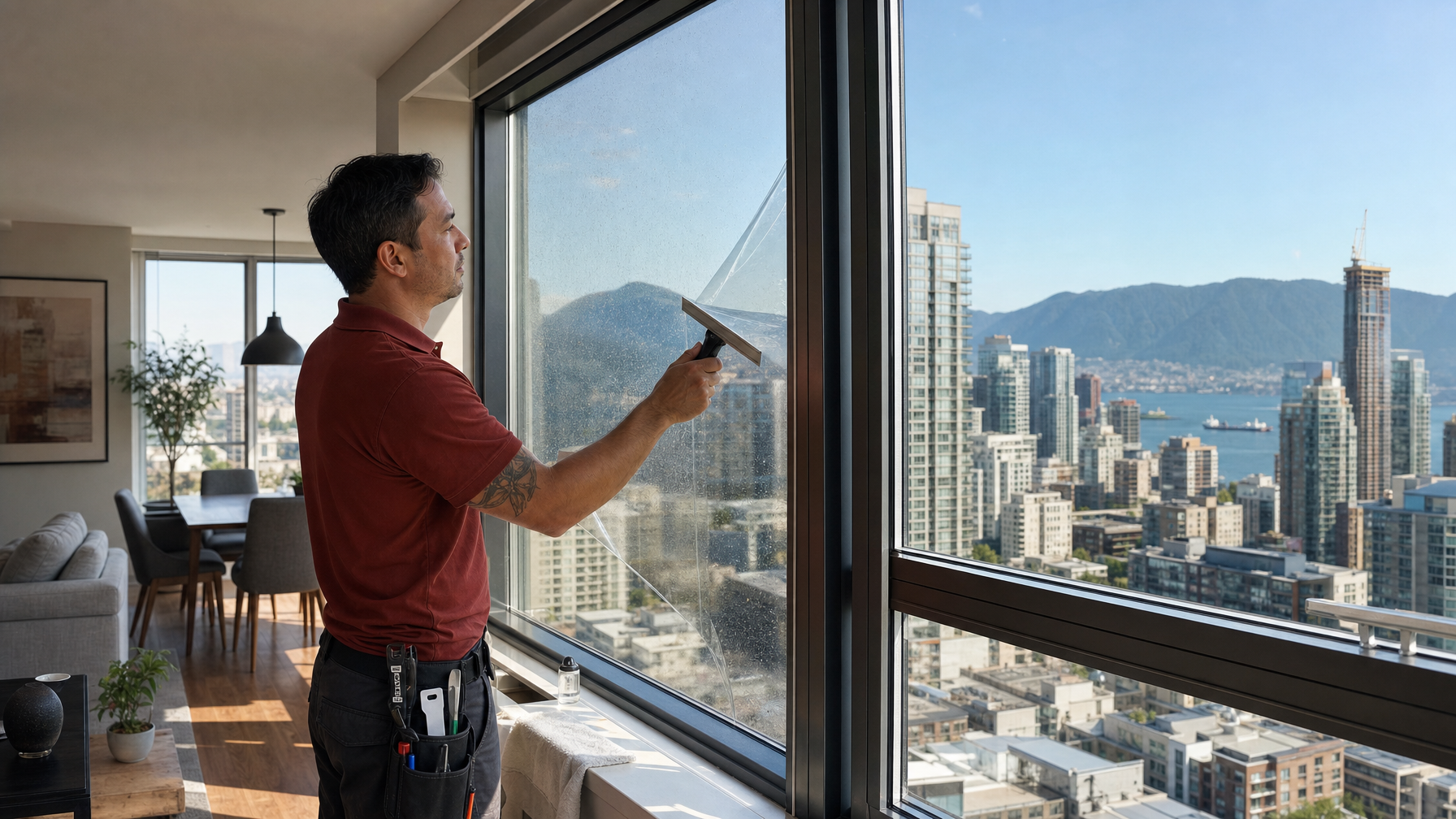
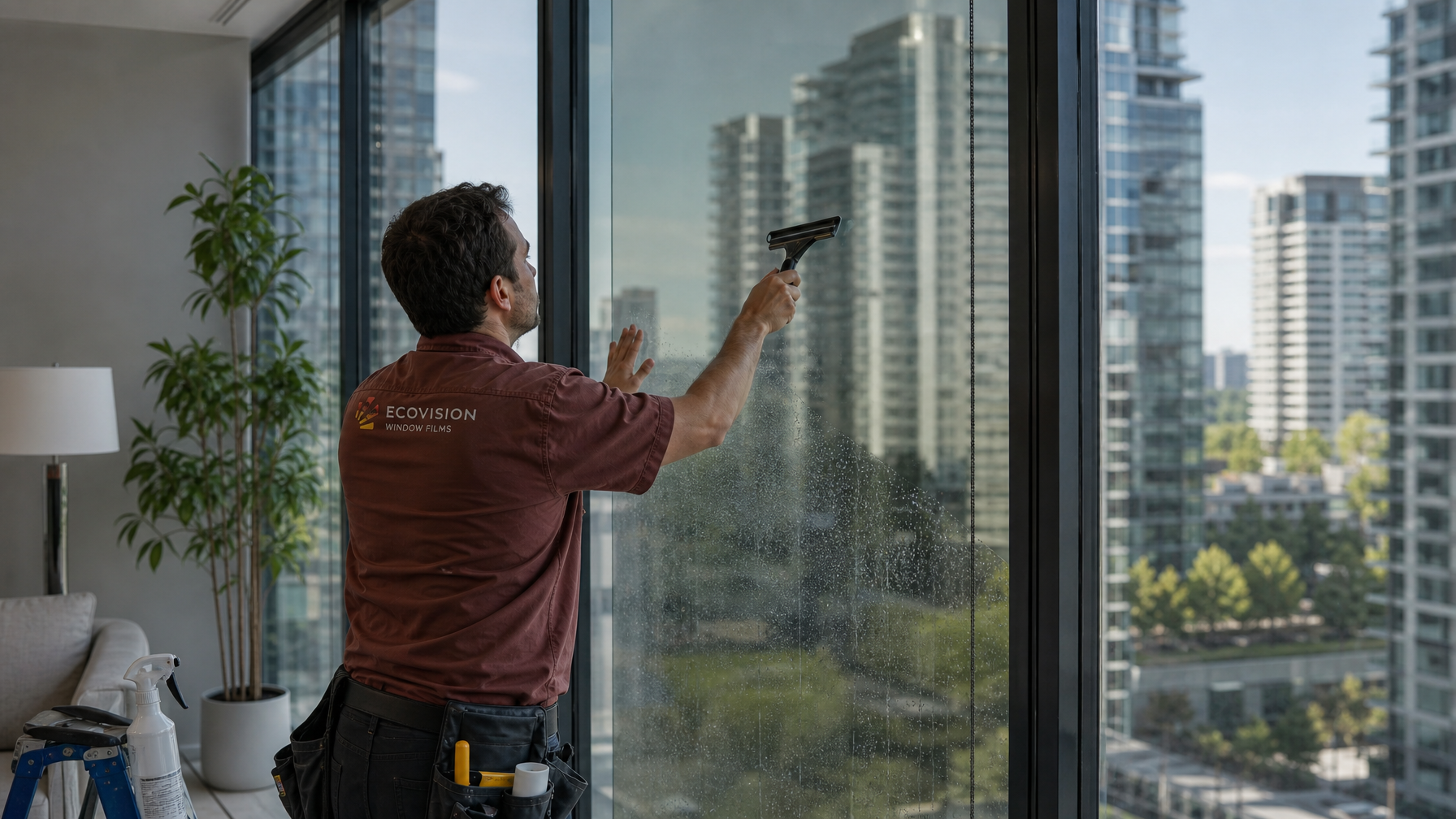
- Installation: The installation team cleans the glass surface thoroughly, cuts film to size with precision tools, applies the film using a professional slip solution, and uses squeegees and heat guns to ensure full adhesion without bubbles or contamination. Most open-plan office floors of 300, 500 sq ft glass are completed in 4, 8 hours.
- Curing: Film cures over approximately 30 days as the adhesive fully bonds to the glass. During this period, small water pockets or a slight haze in certain lighting conditions is normal. The film should not be cleaned during this period. After curing, the film can be cleaned with a soft cloth and mild soap solution, no ammonia-based cleaners, which can degrade the film over time.
Case Study Reference: Multi-Floor Commercial Office, Vancouver
Ecovision completed a multi-floor solar film installation in a major downtown Vancouver commercial tower, addressing persistent heat and glare complaints from occupants on south and west-facing floors during summer peak hours. The project was scheduled around occupancy requirements, with each floor completed in a single day without disruption to building operations. LLumar ceramic solar film was selected to maximize heat rejection while preserving exterior views, a priority for the building’s Class A tenants. The result was a measurable reduction in afternoon peak temperatures on the treated floors, a significant reduction in glare complaints, and documented energy cost savings on floor-level cooling during the summer months.
The project also required coordination with the building’s strata management for exterior appearance approval and a thermal stress assessment across the building’s double-pane curtain wall glazing prior to film selection. Both were completed as part of Ecovision’s standard commercial assessment process.
Frequently Asked Questions: Office Window Tinting in Vancouver
How much does office window tinting cost per floor in Vancouver?
A typical single office floor with 300, 500 sq ft of glazing costs $2,700, $9,000 installed, depending on film type. Most mid-rise Vancouver office projects using LLumar or Vista ceramic or dual-reflective solar film fall in the $4,500, $7,000 range per floor. Multi-floor projects benefit from volume pricing, typically reducing per-sq-ft cost by 10, 15%. All prices are in CAD.
Do I need landlord or strata approval for office window tinting?
Almost certainly yes, if the film is visible from the building exterior. Most Vancouver commercial strata bylaws and standard office leases require approval for any modification that alters the building’s exterior appearance. The approval process is typically straightforward, submit film specs and a reflectance sample, but installing without approval creates risk of a bylaw violation or lease default. Ecovision can provide specification documentation to support the approval process.
Will office window tinting void my building’s window warranty?
It can, if film is applied to IGU (double-pane) glazing without a thermal stress assessment, or if the applied film exceeds the glass manufacturer’s specifications for solar absorption. A professional thermal stress calculation using the specific film’s solar absorption data and the glass specification determines whether a particular film is compatible with the IGU without affecting the warranty. Ecovision performs this assessment as standard practice and provides documentation confirming compatibility for applicable projects.
How long does office window tinting installation take?
Most single-floor office installations, 300, 500 sq ft of glass, are completed in one day (4, 8 hours). Disruption to occupants is minimal: installers work across the floor in sections, most of the floor remains accessible, and there is no noise, smell, or significant debris. The film cures over 30 days; some haze or water pockets during this period are normal and resolve on their own.
What’s the difference between window tinting and window film for offices?
“Window tinting” is a consumer term most commonly associated with automotive glass. In commercial building applications, the professional term is window film. The products are technically similar, polyester film applied to glass, but commercial window film is engineered to much higher performance specifications, carries independent third-party certifications for solar performance (NFRC ratings), and is warranted by the manufacturer for commercial interior applications. The installation process and durability requirements are also different. For a commercial office, always specify commercial-grade window film from a named brand such as LLumar or Vista, not automotive-grade tint.
Can office window tinting help with WorkSafeBC thermal comfort requirements?
Yes. WorkSafeBC OHS Regulation Section 4.80 requires employers to provide thermal comfort in the workplace. In a glazed office with excessive solar gain, documented heat and glare complaints can become a WorkSafeBC compliance matter. Solar control window film is a recognized physical control measure that demonstrably reduces solar heat gain and glare. Ecovision can provide written documentation of the film’s SHGC and glare reduction performance to support a WorkSafeBC response or internal health and safety documentation.
Get a Free On-Site Assessment for Your Vancouver Office
For a free on-site assessment and film demonstration for your Vancouver office, contact Ecovision Window Films at (236) 862-0052 or visit ecovisioncanada.com/contact/. We serve commercial offices across Vancouver, Burnaby, Richmond, Surrey, North Vancouver, and the Lower Mainland.
Our assessment includes glass type identification, IGU compatibility review, film specification with SHGC and VLT data, and a written cost estimate, at no charge.