
Some architectural window films can reduce cell phone and WiFi strength. Metalized and silver-layer solar films may attenuate radio signals through glass. Non-metal ceramic and nanoparticle IR films typically do not. Ecovision Window Films installs LLumar and Vista products across Vancouver and the Lower Mainland and helps clients choose heat control without cutting work-from-home connectivity.
Direct Answer: Metal-containing solar films can weaken cellular and WiFi signals through glass. Non-metal options such as LLumar Ceramic grades and LLumar AIR80 or AIR90 use ceramic or IR-absorbing nanoparticles instead of continuous metal layers, so they behave much closer to clear glass for phones and WiFi. Ecovision specifies film type against heat goals and signal priorities on every BC site assessment.
This guide covers window tinting for homes and buildings. Ecovision does not tint vehicles, for architectural glass only.
Why Would Window Film Affect Cell Phone or WiFi Signal?
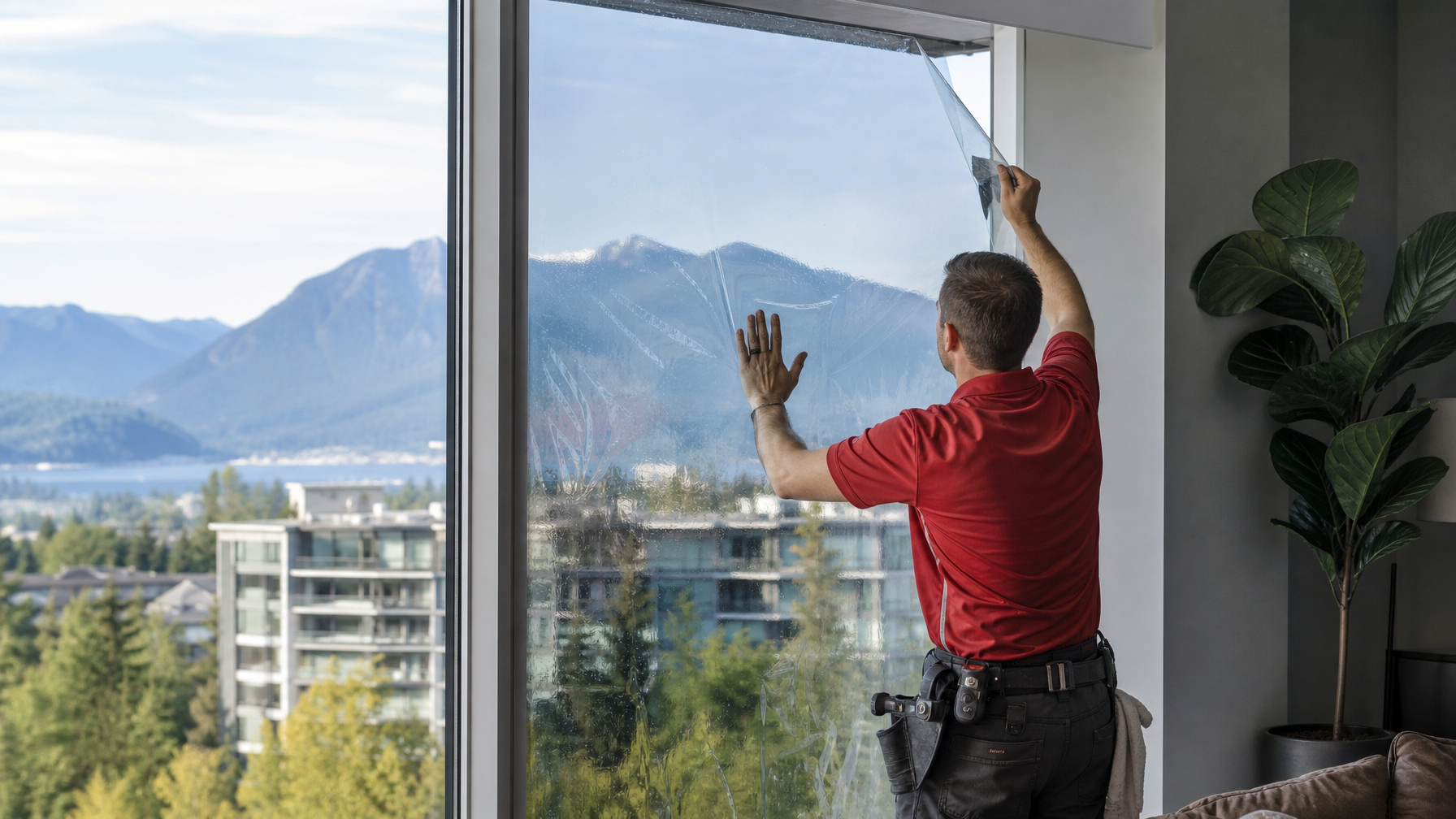
Radio signals for cellular networks and WiFi are electromagnetic waves. Continuous metal layers in some solar films reflect and absorb parts of those frequencies the same way a Faraday cage weakens reception. Older reflective and dual-reflective metalized films were built for heat rejection, not wireless transparency. When every lite on a west elevation is covered in metalized film, the cumulative effect can show up as fewer bars near the glass, dropped Zoom calls, or weaker outdoor WiFi mesh links.
Glass itself already reduces signal versus an open wall. Low-e coatings and insulated glass units add more attenuation. Film is one more layer in that stack. The practical question for BC homeowners and property managers is not whether any film "blocks" phones forever. It is whether the specific product you install is metalized, dual-reflective metal, or non-metal.
Which Types of Window Film Interfere With Wireless Signals?
| Film category | Typical construction | Signal impact | Heat role |
|---|---|---|---|
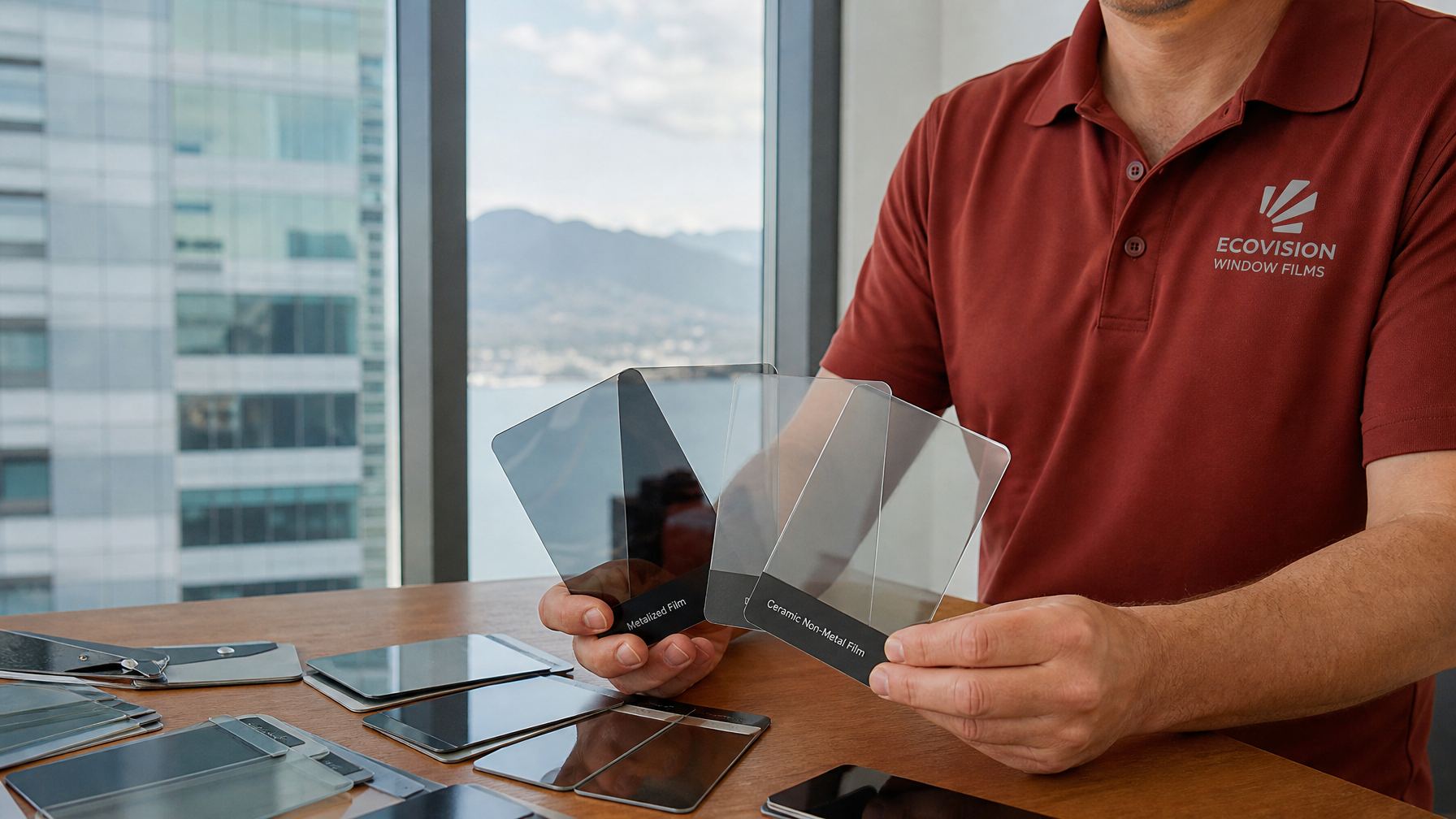
| Metalized / silver-layer solar | Sputtered metal | Can reduce cell and WiFi through glass | Strong heat rejection |
| Dual-reflective metal privacy | Metal + appearance layers | Often higher attenuation | Heat + privacy |
| Ceramic nano-particle | Non-metal ceramics | Minimal, similar to clear glass | Strong IR control |
| Non-metal IR (e.g. AIR80 / AIR90) | IR-absorbing nanoparticles | Minimal | Moderate heat, high VLT |
| Clear safety / security (non-metal) | Polyester laminate | Minimal | Safety, not solar |
Ecovision regularly discusses this tradeoff with work-from-home clients. Vista VS-series spectrally selective films can include sputtered silver layers for high solar performance. When maximum heat rejection is the only goal, those grades remain excellent. When reliable cellular service is non-negotiable, we steer clients toward non-metal paths such as LLumar Ceramic 35, 45, 55, or 65, or LLumar AIR80 and AIR90 where higher visible light is required.
For high-VLT, strata-friendly solar with strong daylight, LLumar VS60 (about 59% VLT, 50% TSER on 6mm dual clear) and VS70 (about 62% VLT, 49% TSER) are our default clear-solar recommendations when appearance rules out dark film. If a client flags signal risk after reviewing product construction, we document the metal content and present a non-metal alternative side by side before anyone signs.
Does Ceramic Window Film Block Cell Phone Reception?
No. Ceramic architectural film uses inert nano-ceramic particles, not continuous metal sheets. Those particles absorb infrared heat while remaining non-conductive for everyday cellular and WiFi bands. That is why ceramic is the standard recommendation when clients say, "I cannot lose bars for work calls."
Ceramic is not a marketing synonym for "clear." Ceramic 35 sits near 31% VLT with about 46% TSER on 6mm dual clear. Ceramic 45 is about 42% VLT. Ceramic 55 and 65 keep more daylight. Ecovision matches grade to orientation, strata rules, and whether the room is a home office, living room, or commercial floor plate.
Will WiFi Still Work After Solar Film Installation?
Internal WiFi between rooms usually depends more on walls, floors, and router placement than on window film. The risk case is signal entering or leaving through glass: phones using outdoor towers near perimeter glass, outdoor access points, or mesh nodes that bounce through large glazed walls. Metalized film on a full curtain wall can degrade those paths. Non-metal ceramic or AIR-series film keeps the glass closer to its original radio behaviour.
If you already have weak coverage because of concrete cores, Low-E IGUs, or underground parking spillover, film will not fix a building RF problem. A booster or better access-point layout still may be needed. Film selection simply should not make a borderline situation worse.
How Do You Choose Film When Heat and Signal Both Matter?
- Rank priorities: heat and glare first, appearance second, wireless third, or reverse the order for medical, trading, or heavy WFH suites.
- Ask for construction notes: metalized, dual-reflective metal, ceramic, or non-metal IR.
- Compare TSER and VLT on the same glass type, not brochure marketing labels alone.
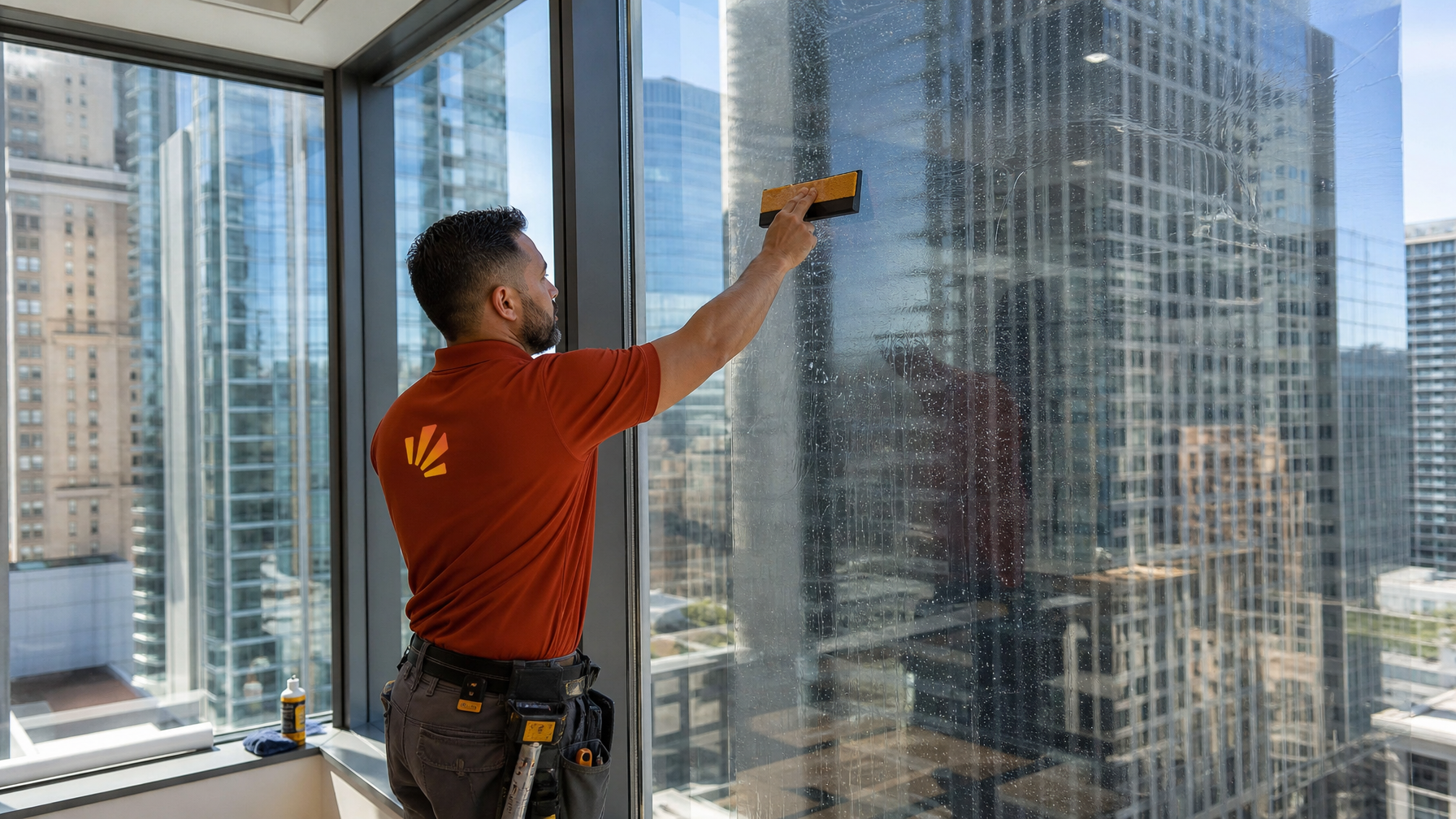
- Sample on one lite if the building is sensitive. Live with a mock-up for a few days of calls and WiFi speed checks.
- Document strata or landlord approval with the exact product code.
On commercial interiors such as Bentall 4-style downtown glass, Ecovision often splits the specification: non-metal ceramic on desk-line elevations where people live on laptops and phones, and higher-performance solar on mechanical rooms or less RF-sensitive zones. At residential projects near Rosemary Heights and other Surrey strata communities, councils frequently prefer high-VLT neutral films; we pair that aesthetic preference with an honest metal-content conversation when clients work from home full time.
How Much Does Non-Metal Solar Film Cost in BC?
Professionally installed architectural solar film in Metro Vancouver typically runs:
- Residential solar control: $10 – $18 per square foot installed
- Commercial solar control: $9 – $18 per square foot installed
- Premium ceramic or complex access: up to $22 per square foot where height, after-hours labour, or security laminates apply
Clear safety film without solar layers is usually lower in the solar range when it is safety-only. Security grades land at $16 – $22 per square foot. Prices include professional installation by a certified LLumar and Vista dealer, not DIY rolls. For a full market breakdown, see our 2026 BC window film cost guide.
What Should You Ask Your Installer Before You Book?
Ask whether the recommended film contains metal or silver layers, request the manufacturer product code, and ask how the product behaves for cellular and WiFi relative to clear glass. A certified installer should answer without hedging. Ecovision provides written quotes with product codes, VLT, TSER, and a free on-site assessment. Call (236) 862-0052 or visit ecovisioncanada.com/contact.
Related Articles
- Ceramic Window Tinting for BC Homes and Buildings
- Does Window Film Stop Sun Glare Without Darkening Your Glass?
- Best Strata-Approved Window Film for Heat Rejection in Vancouver Condos
- How Window Film Stops Heat in South and Southwest-Facing Vancouver Condos
- How Much Does Window Film Cost in BC? 2026 Pricing Guide
Frequently Asked Questions
Does all window film block cell phone signal?
No. Only films with continuous metal or heavy metalized layers are likely to reduce signal through glass. Ceramic and non-metal IR films generally do not.
Does frosted privacy film affect WiFi?
Standard non-metal frosted and decorative films rarely affect WiFi. Dual-reflective metal privacy grades can.
Is LLumar VS60 safe for work-from-home cell service?
VS60 and VS70 are high-performance solar grades. Confirm metal construction for your RF sensitivity. If signal preservation is the top priority, Ecovision will quote ceramic or AIR alternatives.
Can I remove metalized film later if signal is bad?
Yes, professional removal is possible, but it is labour-intensive. Choosing the right film first is cheaper than a full strip and re-film.
How long does film take to cure in Vancouver?
Allow 30 to 60 days for full curing. Temporary haze or moisture patterns during cure are normal and unrelated to wireless performance.
About the Author: This article was written by the Ecovision Window Films team. Edward, Director at Ecovision, brings a distinctive perspective to the window film industry, with over a decade in real estate development, including roles as Executive Director at a real estate development firm and Director of Strategic Partnerships, before joining Ecovision. That background gives the company a sharp edge in serving BC property managers and building owners. Ecovision is a certified installer for leading film brands with completed projects for healthcare facilities, government buildings, and commercial properties throughout the Lower Mainland. For a free site assessment, call (236) 862-0052 or visit ecovisioncanada.com/contact/.