
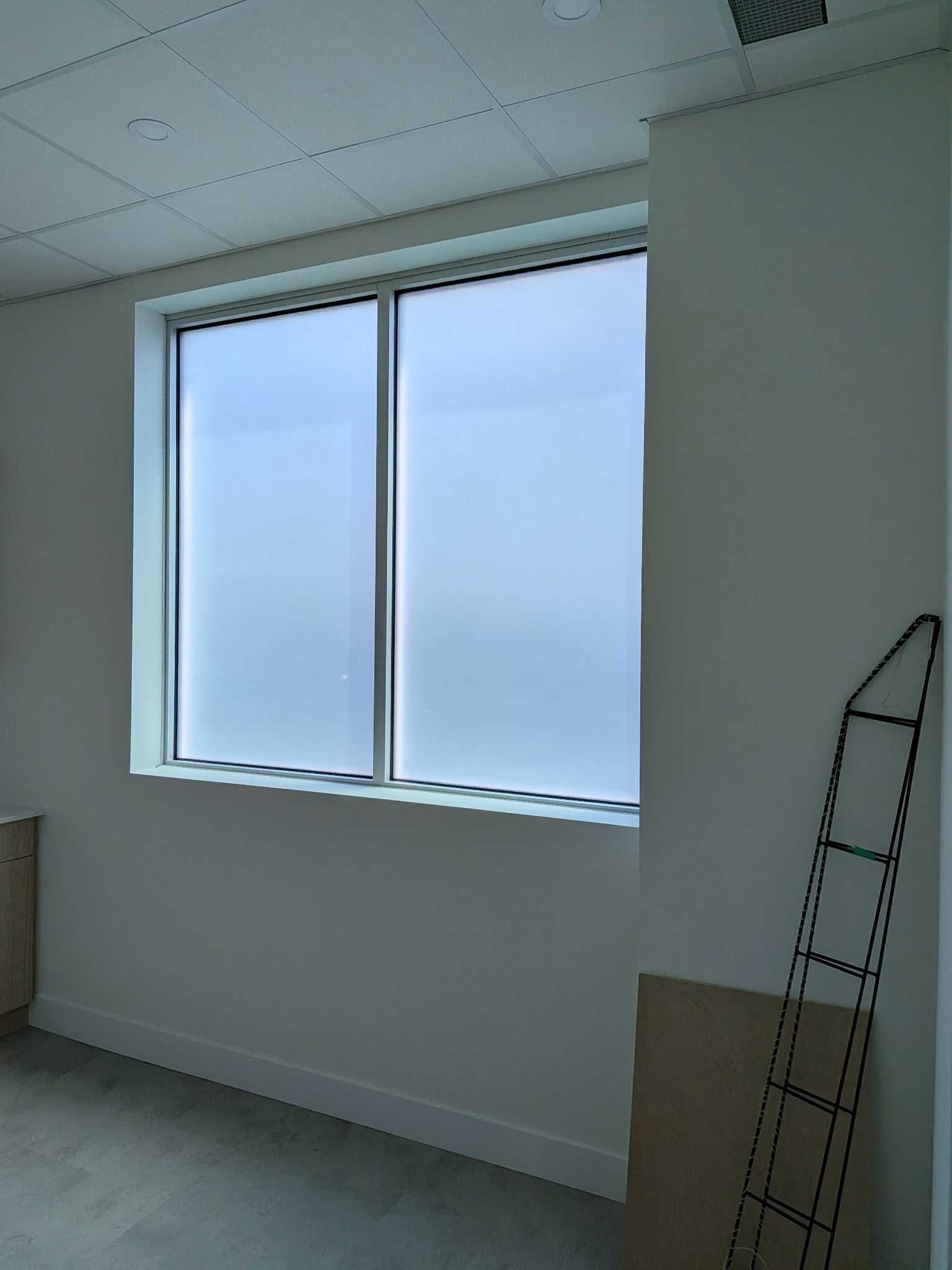
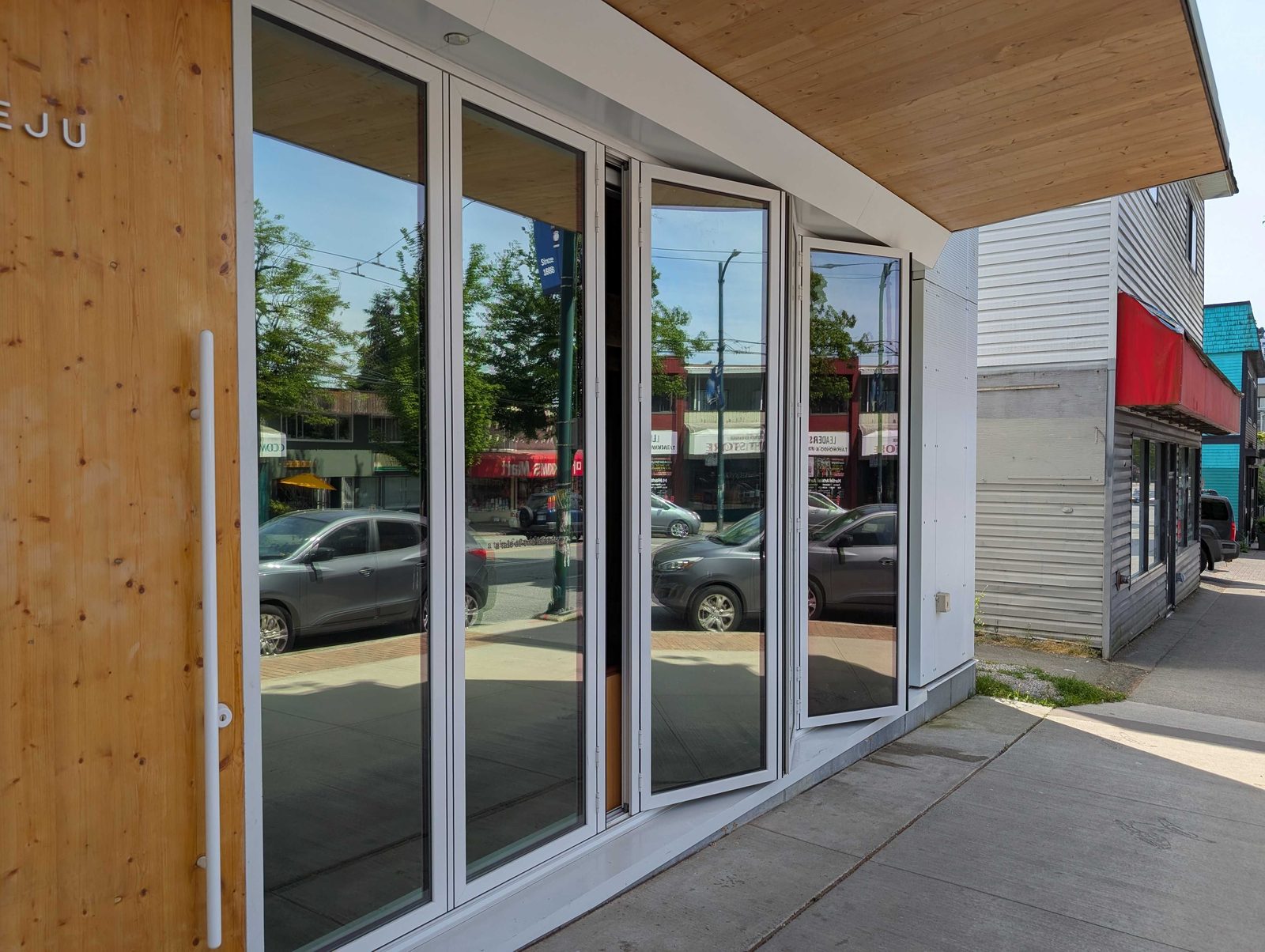
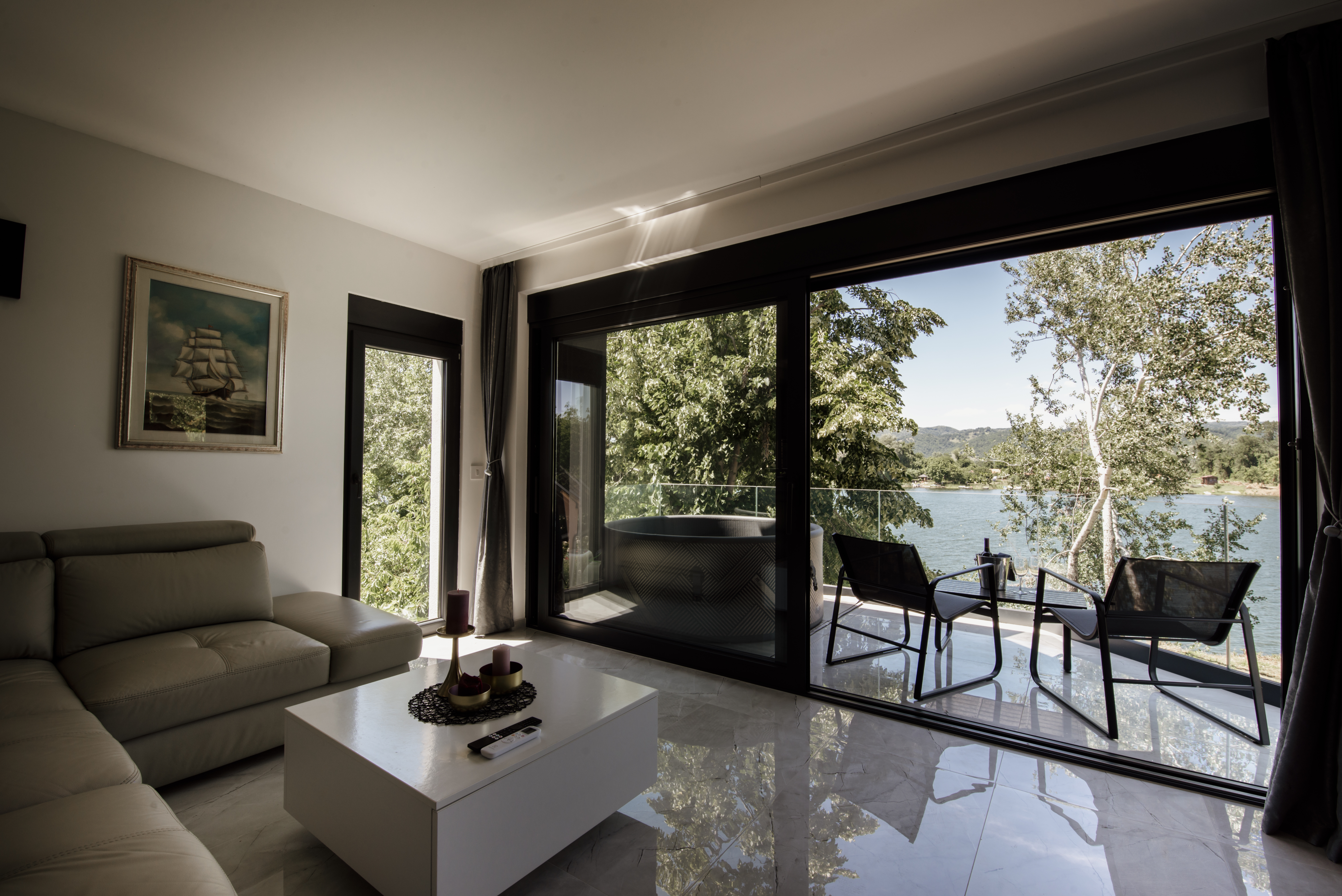
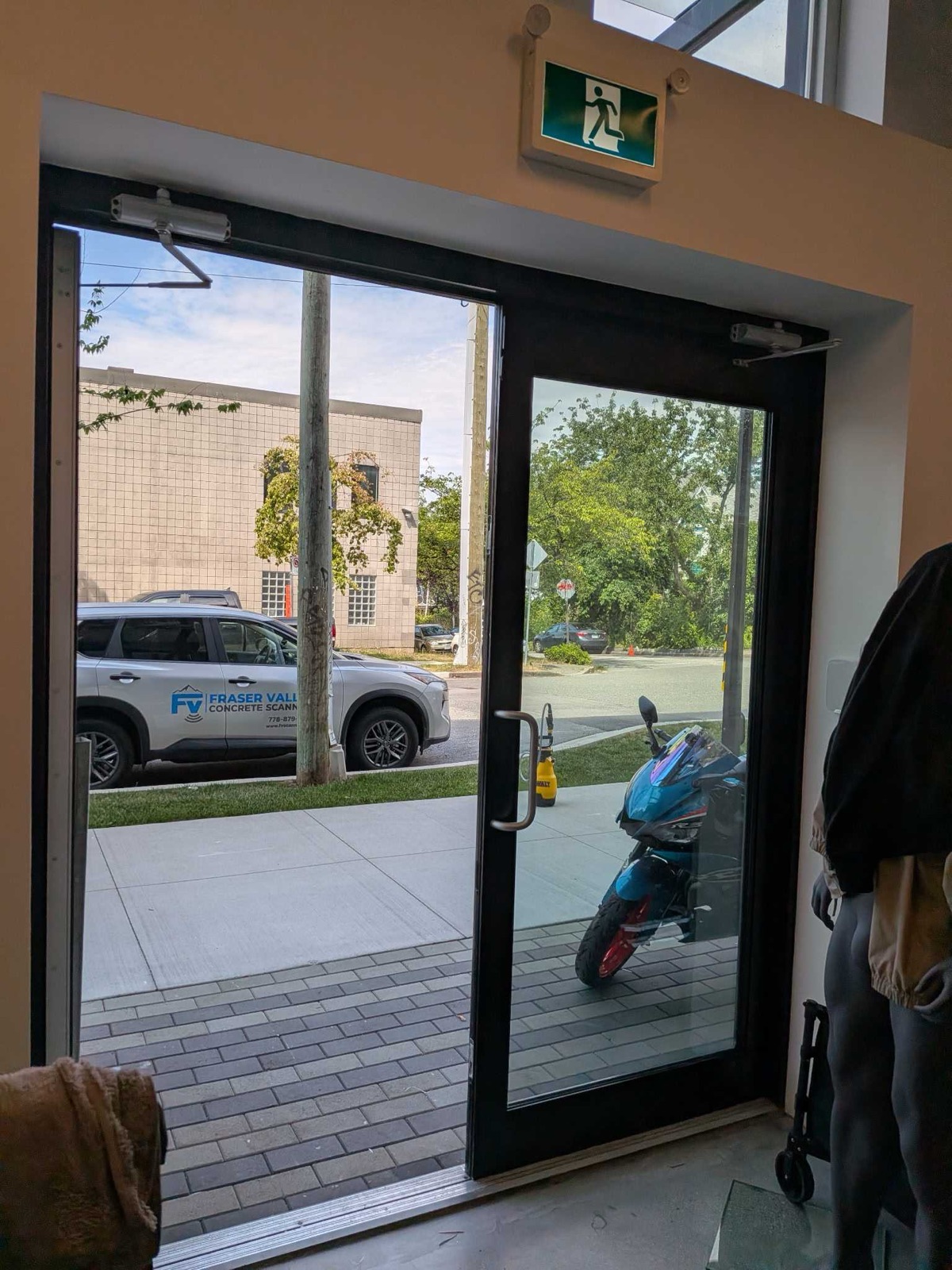
Protective film for glass doors is a professionally applied polyester laminate that bonds to existing glass to block UV rays, reduce glare, reinforce against forced entry, or add frosted privacy, without replacing the door. In BC, professionally installed glass door film ranges from $9 – $22 per square foot depending on film type and building access. Ecovision Window Films installs protective film on commercial and residential glass doors across Vancouver and the Lower Mainland, and this guide covers every film type, cost, and application scenario BC property owners need to understand.
What Is Protective Film for Glass Doors and What Does It Do?
Protective film for glass doors is a thin polyester layer, typically 2 to 14 mil thick, that adheres to the interior or exterior surface of existing glass. Once installed, it acts as a functional barrier between the glass surface and whatever the property needs protection from: ultraviolet light, heat, scratching, forced entry, or unwanted visibility. The film does not change the structural properties of the glass itself, but it significantly changes how the glass performs and what it can withstand.
Unlike window replacement, glass door film is installed by a certified technician in a matter of hours, with no construction, no permits, and no building downtime. The result is immediate and verifiable: UV readings drop to near zero on the protected side, surface temperatures in sun-exposed doorways decrease measurably, and privacy is added without blocking daylight. For most BC buildings, protective door film is not a compromise between performance and aesthetics, it is the more practical and cost-effective specification.
What Types of Protective Film Are Available for Glass Doors?
There are four primary categories of protective film for glass doors. The same overlay is often searched as safe and sound window film, each engineered for a specific performance outcome. Most BC installations use one primary film type, though some buildings, particularly senior care facilities and government buildings, specify layered combinations for multiple performance requirements.
| Film Type | Primary Function | Thickness | Cost (per sq ft installed) | Best For |
|---|---|---|---|---|
| Safety Film (clear) | Holds glass fragments on impact | 4 – 7 mil | $12 – $18 | Residential entry doors, schools |
| Security Film | Delays forced entry 30 – 90 seconds | 8 – 14 mil | $16 – $22 | Commercial storefronts, government |
| Frosted / Privacy Film | Blocks sightlines, adds branding | 2 – 4 mil | $9 – $14 | Office lobbies, healthcare, strata |
| Solar / UV Film | Blocks 99% UV, reduces heat gain | 2 – 4 mil | $10 – $18 | South/west-facing doors, retail |
Safety film (4 – 7 mil, clear): The base-level protective specification. On impact, safety film holds glass fragments in place rather than allowing them to scatter. It meets ANSI Z97.1 safety glazing standards and is commonly specified for schools, senior care facilities, and residential entry doors where break-in resistance is less critical than injury prevention from accidental glass breakage.
Security film (8 – 14 mil): Engineered for forced-entry delay. At 8 – 14 mil thickness, security film dramatically increases the time and effort required to breach a glass door. Independent testing shows that 11 – 14 mil security film can delay entry by 30 – 90 seconds, enough time to trigger building alarms or deter opportunistic break-ins. LLumar and Vista both manufacture certified security film grades compatible with most commercial door glazing in BC.
Frosted and decorative privacy film: Applied to the lower portion or full pane of glass doors to block direct sightlines without eliminating daylight. Common in healthcare reception areas, open-plan office lobbies, and strata building entrances. Custom pattern cuts are available for branding applications, a popular specification for retail storefronts and professional services offices in the Lower Mainland.
Solar control and UV film: Blocks up to 99% of ultraviolet radiation and 40 – 80% of solar heat gain through glass door panels. Particularly relevant for south-facing and west-facing retail entrances that experience peak afternoon heat load between May and September in the Lower Mainland. UV film prevents fading of flooring, furniture, and merchandise near the door without significantly reducing visible light transmission.
How Much Does Protective Film for Glass Doors Cost in BC?
Professionally installed glass door protective film in BC ranges from $9 – $22 per square foot, with the primary cost driver being film thickness and type rather than door size. A standard 36″ x 80″ commercial glass door panel covers approximately 20 square feet, making total installation costs for a single door $180 – $440 depending on film specification. Multi-door installations and full building specifications are priced lower per square foot due to reduced mobilization cost per door.
Access complexity also affects final cost. Ground-floor standard-height commercial doors are the most straightforward to specify and install. Glass doors in stairwells, loading areas, or on upper floors accessible only by lift-assisted equipment carry a mobilization premium of $50 – $150 per door. Ecovision provides free on-site assessments for all commercial door film projects, the assessment identifies any access considerations before pricing is finalized.
For context from completed Ecovision projects: the security film specification at Guildford Seniors Village covered multiple glass entry doors across the facility’s ground floor, the installation was completed in one day with no disruption to resident movement. The Bentall 4 lobby specification used solar UV film on east- and south-facing glass panels, with installation scheduled during off-peak hours. Neither project required permits or structural modifications.
Is Protective Film the Same as Security Film for Glass Doors?
Not exactly. Security film is one type of protective film, but protective film is a broader category that includes safety, privacy, solar, and UV films as well. The distinction matters for specification: if the goal is forced-entry resistance, security film (8 – 14 mil) is the correct product. If the goal is injury prevention from accidental glass breakage, safety film (4 – 7 mil) is sufficient. If the goal is privacy or heat control, solar or frosted film is specified, and those films do not offer meaningful security resistance.
Some projects require a layered specification, safety film with a frosted privacy overlay, for example, or solar film with a security substrate. This is technically feasible in most cases but requires a site assessment to confirm the glass unit type and existing coating before specifying a multi-layer installation. Laminated glass and certain low-e coated units have compatibility constraints that affect which film products can be applied. Ecovision’s certified LLumar and Vista installers conduct compatibility checks as part of every site assessment at no additional charge.
Does Protective Film Work on Existing Glass Doors?
Yes, protective film is specifically designed for retrofit installation on existing glazing, and nearly all standard commercial and residential glass door types in BC are compatible. Single-pane, double-pane, tempered, laminated, and most low-e coated glass units accept protective film. The only glass types that create installation constraints are certain high-performance reflective coatings and some dual-pane units with unusual spacer configurations, these are identified during the site assessment.
Installation on an existing glass door does not require removing the door from its frame. The film is wet-applied using a slip solution and squeegeed flat, with edges trimmed to a 1/16″ reveal inside the frame. Cure time ranges from 30 days (summer, low humidity) to 60 days (winter, higher humidity), during which the film may show minor water pockets or haziness that fully resolve as the adhesive cures. The door is fully functional immediately after installation.
How Long Does Protective Film Last on Glass Doors?
Professionally installed protective film on glass doors typically lasts 10 – 15 years with normal maintenance. Film life depends on sun exposure, cleaning frequency, and film grade. Exterior-mounted film on south- or west-facing doors experiences more UV degradation than interior-mounted film and may require replacement after 8 – 12 years in full-sun conditions. Interior-mounted film on the same doors, which is the standard installation method for security and safety film, routinely reaches 15 years before showing delamination or edge lifting.
Maintenance requirements are minimal. Glass door film should be cleaned with a soft cloth and mild soapy water, no ammonia-based cleaners, no abrasive pads, and no razor scrapers. Harsh cleaning products are the primary cause of premature film failure, particularly edge lifting, and this is covered in the care documentation Ecovision provides with every completed installation. LLumar and Vista film products carry manufacturer warranties of 5 – 10 years depending on product line and application type.
What BC Buildings Benefit Most From Protective Glass Door Film?
Glass door film delivers measurable ROI across several building categories in BC. The strongest use cases, based on Ecovision’s installed project history across the Lower Mainland:
- Senior care and long-term care facilities: Security film on ground-floor and memory care unit glass doors is a safety requirement for many BC licensing frameworks. UV film in common areas prevents fading of furnishings and reduces the UV liability exposure associated with photosensitive residents. Rosemary Heights Seniors Village and Windermere Care Centre are among the Ecovision projects where glass door film was specified as part of a broader facility-wide UV and security upgrade.
- Commercial storefronts and retail: Retail glass doors on Robson Street and Granville Street-type corridors face both UV fade risk for displayed merchandise and break-in exposure during after-hours periods. A combined solar + security specification addresses both issues at a total cost typically 5 – 10% of the equivalent glass replacement cost.
- Strata building main entrances: Frosted privacy film on lobby glass doors is a common strata council specification, it adds visual identity without altering the exterior building appearance, which simplifies strata approval. Ecovision provides written compatibility documentation suitable for strata council submission as part of every site assessment.
- Government and institutional buildings: The City of Vancouver’s Bird-Friendly Design Guidelines apply to building glazing including glass door panels, fritted or UV-patterned film applied to glass doors near bird migration corridors is an accepted compliance measure. WorkSafeBC recommends safety-glazing standards that glass door film can satisfy in retrofit applications where existing glass does not meet current specifications.
For property managers and building owners considering security film for glass doors specifically, the forced-entry delay argument is the most quantifiable ROI driver: a 30 – 90 second delay on a glass door is the difference between a completed break-in and a foiled one in most opportunistic commercial theft scenarios. For a deeper look at film cost structures across all types, see our guide to how much window film costs in BC. Buildings with broader UV and solar control needs should also review our overview of energy efficient window film for Vancouver buildings.
Related Articles
- Does Glass Door Film Stop Intruders? Security Film for Glass Doors Explained
- Security Window Film in Vancouver, BC: Types, Costs, and What Buildings Need It Most
- Frosted Window Film in Vancouver: Types, Costs, and What to Know Before You Buy
- Privacy Window Film in Vancouver: Types, Costs, and What to Know Before You Install
- Commercial Window Film ROI: What BC Property Managers Need to Know
About the Author: This article was written by the Ecovision Window Films team. Edward, Director at Ecovision, brings a distinctive perspective to the window film industry, with over a decade in real estate development, including roles as Executive Director at a real estate development firm and Director of Strategic Partnerships, before joining Ecovision. That background gives the company a sharp edge in serving BC property managers and building owners. Ecovision is a certified installer for leading film brands with completed projects for healthcare facilities, government buildings, and commercial properties throughout the Lower Mainland. For a free site assessment, call (236) 862-0052 or visit ecovisioncanada.com/contact/.