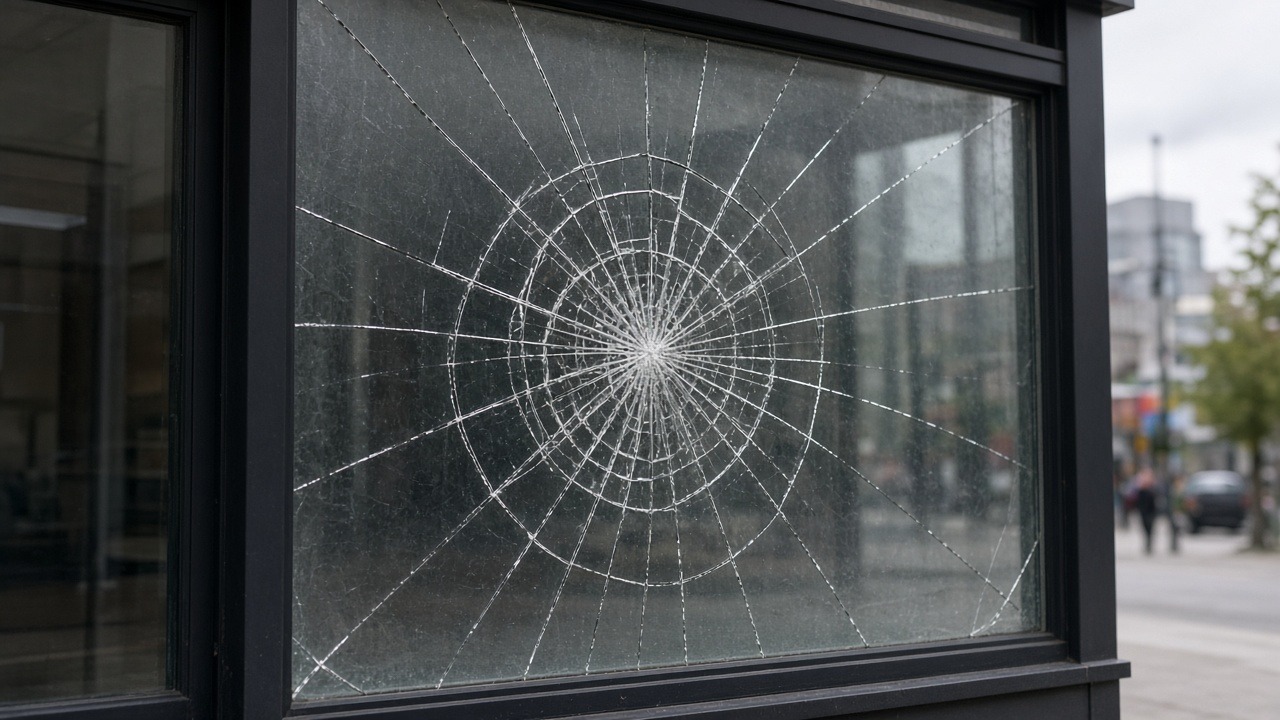
Glass doors are the most targeted entry point in break-ins, and security window film is one of the most cost-effective ways to reinforce them. Film applied to a glass door does not make the glass unbreakable, but it holds shattered fragments in the frame for significantly longer, turning a 5-second smash-and-grab into a minute-plus forced-entry attempt that most intruders abandon.
Does Glass Door Film Stop Intruders?
Security window film slows forced entry through glass doors by holding shattered fragments together in the frame. Instead of a 5-second breach, an intruder faces a flexible, tear-resistant barrier that typically requires 2–9 minutes to penetrate. Most burglars abandon the attempt before breaching. Film does not make glass unbreakable — it makes breaking in take long enough to fail.
Why Glass Doors Are a Primary Target
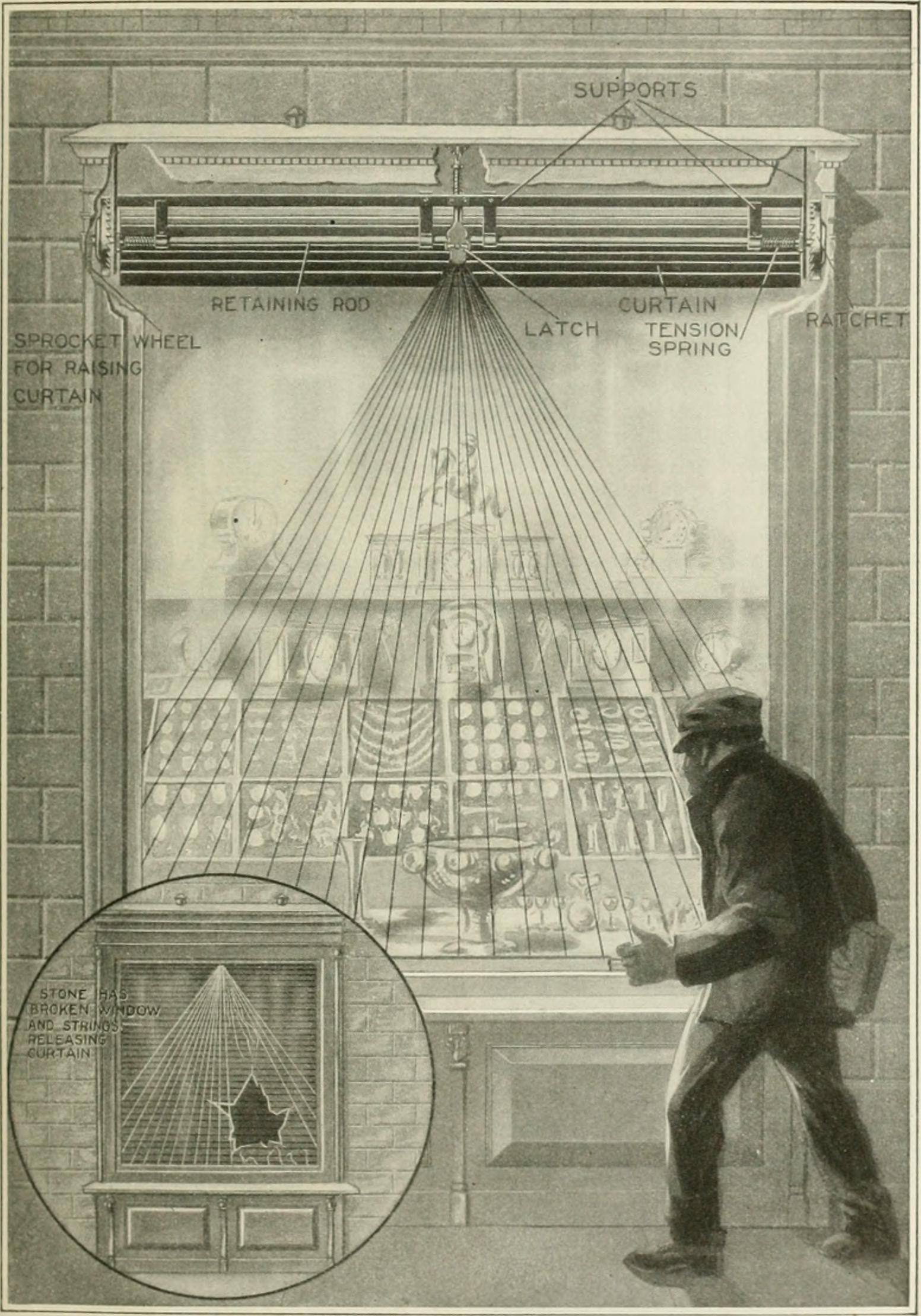
Statistics Canada recorded 121,000 residential and commercial break-ins in 2024, roughly 331 per day. The vast majority involve glass. Why? Because standard glass, whether on a front entry door, a sliding patio door, or a retail storefront, shatters instantly with a single strike from a rock, brick, or hammer. One blow clears a path wide enough to reach through or step through in seconds.
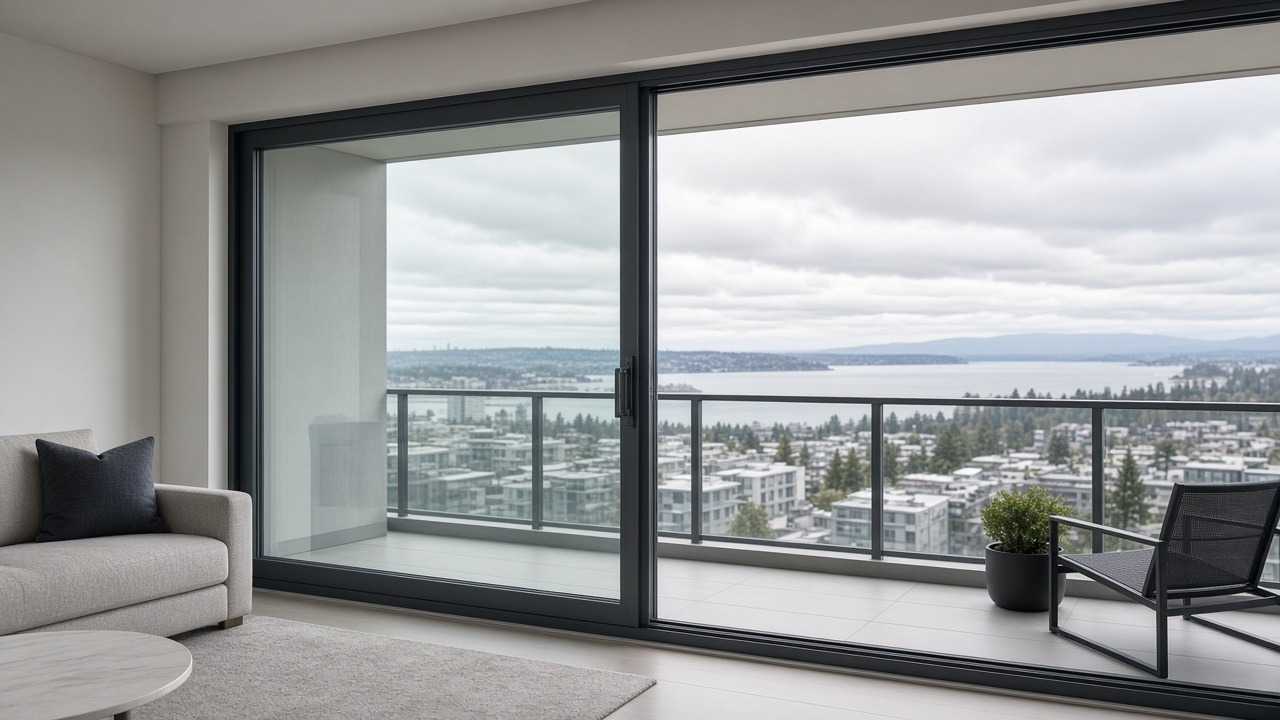
Patio doors are particularly vulnerable. Security specialists cite that over 40% of home break-ins involve the intruder shattering sliding glass door panels, which are large, often isolated from street view, and held by latches that offer minimal resistance. Commercial storefronts face a different but equally serious threat: smash-and-grab thieves who break through display glass in under 10 seconds, grab high-value merchandise, and leave before any alarm can be responded to.
The vulnerability in both scenarios is the glass itself, not the lock.
What Security Film Actually Does to a Glass Door
Security window film is a thick, multi-layered polyester film bonded directly to the interior surface of the glass. When the glass is struck and breaks, the film holds the fractured pieces together in a web-like mat against the frame instead of collapsing outward.
This changes the physics of forced entry completely. An intruder who expects to punch through shattered glass now faces:
- A flexible, tear-resistant membrane that absorbs repeated impacts
- Glass fragments held tightly, no clean opening to reach through or climb through
- A visual signal that the door is resisting, increasing the noise, time, and effort required
- A deterrent effect: the longer an entry attempt takes, the higher the risk of detection
Independent testing has shown that security film can delay forced entry through glass by 2 to 9 times longer than unprotected glass, depending on film thickness and installation method. Burglars rely on speed. When a glass door takes minutes rather than seconds to breach, most abandon the attempt.
Does Film Work the Same on All Types of Glass Doors?
Yes, with some nuance. Security film is compatible with the most common glass door types in BC residential and commercial properties:
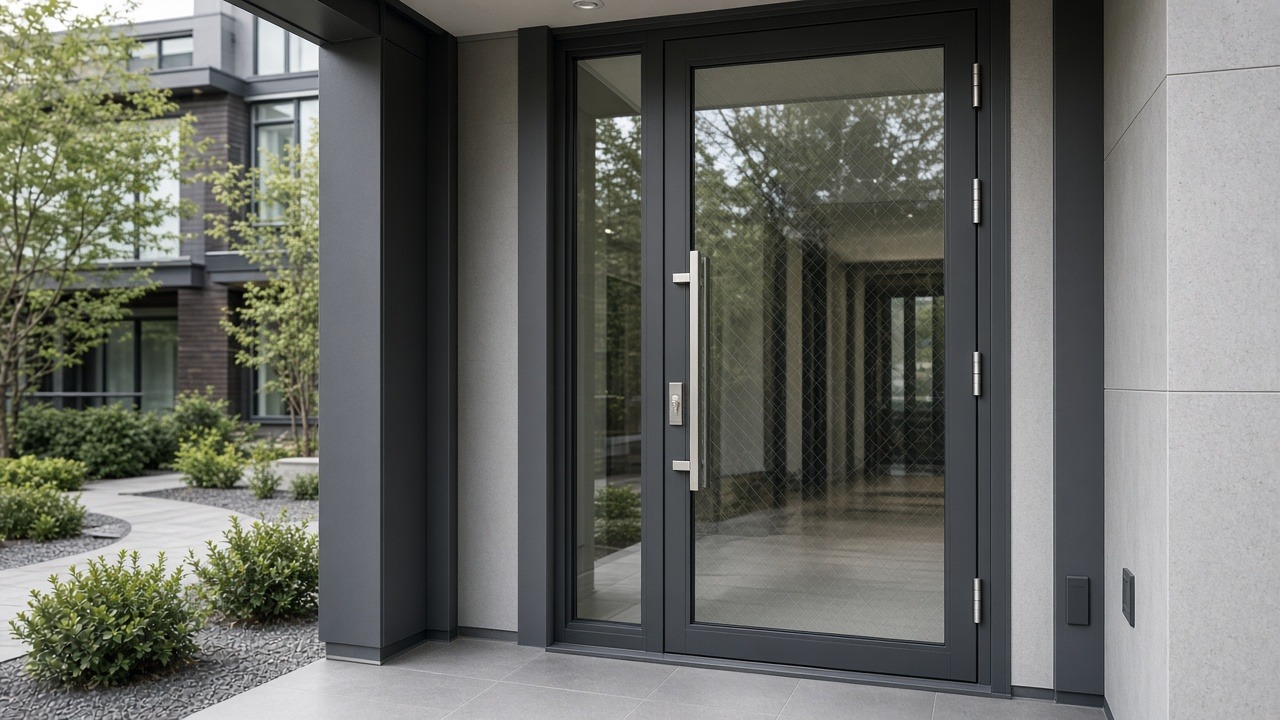
Front entry doors with glass panels, whether a full-lite or half-lite door, film is applied to the interior surface of the glass insert. This is especially effective because entry doors are lockable; film means an intruder cannot simply punch through the glass to reach the handle or deadbolt from inside.
Sliding patio doors, these are large-format glass panels and a common target. Film applied to the interior holds the panels together on impact. Some installers use a secondary “wet glaze” attachment system that anchors the film to the door frame, which provides an additional layer of holdback resistance.
Storefront glass doors and sidelites, retail businesses and commercial offices use thicker film (8–14 mil) on storefront glass. This is the highest-risk category for smash-and-grab theft and is where professionally installed security film delivers the clearest return on investment.
Tempered glass doors, tempered glass shatters into small cubes by design, which is actually a challenge for security because the small pieces offer less resistance once broken. Film on tempered glass is critical precisely because it binds those fragments together, which is the only way to maintain a barrier after impact.
What Thickness of Film Does a Glass Door Need?
Film thickness is measured in mils (thousandths of an inch). For glass doors, the right thickness depends on the risk level:
- 4 mil: Suitable for low-risk residential interior doors or areas where the primary concern is safety glazing (preventing injury from accidental breakage) rather than intrusion deterrence.
- 7–8 mil: The standard residential recommendation for exterior glass doors and patio doors where forced entry is the concern. This thickness provides meaningful delay without being overly costly.
- 12–14 mil: Recommended for commercial storefronts, pharmacies, jewelry stores, government buildings, and any property that is a higher theft target. At this thickness, repeated strikes with hand tools are required to breach a typical commercial glass door.
Thickness alone does not tell the full story. The attachment method matters equally. Film installed with a structural wet-glaze system, where the film is bonded to the door frame around the perimeter, holds the glass assembly together far more effectively than a standard dry installation, because the frame itself becomes part of the barrier.
Does the Film Show on the Glass?
Security film is optically clear in most formulations. On a glass door, a properly installed clear security film is essentially invisible, visitors and customers will not notice it. The glass retains its normal appearance and light transmittance.
Some property owners choose a lightly tinted or privacy-tinted security film for glass doors, which combines intrusion deterrence with reduced visibility into the interior. This is common in clinics, offices, and retail environments where both security and privacy are priorities.
Film vs. Other Glass Door Security Options
Security film is frequently compared to security glass replacements, window bars, and roller shutters. Here is how they compare in practical terms for BC property owners:
Laminated security glass replacement delivers the best intrusion resistance but costs 10–20x more than film. For existing properties with standard glass doors, film is the cost-effective alternative.
Window bars or grilles are visually unappealing and can create egress hazards in residential fire scenarios. They are rarely appropriate for glass doors in commercial or residential properties in Metro Vancouver.
Roller shutters offer strong protection when deployed but require action, add cost, and are often not practical for residential entry doors or interior-facing storefronts.
Security film installs in hours, does not alter the door’s appearance or daily function, and provides continuous passive protection that requires no action to activate.
Get Professional Security Film on Your Glass Doors in BC
If your property has glass doors, whether a sliding patio, a commercial front entry, or a retail storefront, Ecovision Window Films can assess the right film specification for your risk level and install it correctly. Proper installation is critical: film that is cut short of the edge, applied with air bubbles, or not anchored to the frame will underperform.
Ecovision serves commercial, residential, government, and institutional clients across Metro Vancouver and BC.
Call (236) 862-0052 or request a free estimate at ecovisioncanada.com/contact/.
Related Articles
- Security Window Film: What It Is, How It Works & When You Need It
- How Does Security Window Film Prevent Break-Ins? (What the Research Shows)
- Security Film vs Safety Film: What’s the Difference?
- Is Security Film Worth It for Homes vs Storefronts?
- Does Shatterproof Window Film Stop Break-Ins? (The Honest Answer)