Start where the person looking in would stand. From the corridor, can you see a screen, the people seated at the table, or just the tops of their heads? Inside the room, check what you still want to see through the glass. Those two views help us decide which panes to treat and where the frosting should start and stop.
In one office, the troublesome view might be through a single door when someone walks past reception. In another, the door already has a solid panel and the view runs diagonally through the window beside it. From the meeting table those rooms can look much the same. A photograph from the corridor helps us see the difference and avoids paying to cover a pane that was never part of the problem.
Frosted window film installation gives you a way to change the view through glass you already have. The film goes onto the pane; the door, frame and layout stay in place. If you need a new partition, a different door or a quieter room for conversations, tell us at the outset. A change to what people can see through the glass won’t address what they can hear around it.
Show us the sightline you want to screen
A strip that works beside a desk may sit too low beside a door. We look at how the space is used before recommending a height or finish.
A useful first decision is whether you want to screen people, objects or most of the room. A band might screen paperwork on a meeting table while leaving a clear view above it. The same band can leave a seated person visible through the gap below, especially from a stair landing. Use removable markers to sketch a top and bottom edge, then walk the usual route past the room. That simple check gives us a starting point for the sample visit.
For office door frosting, check the view both standing and seated. We can lay out the proposed height on the door and compare it with the adjoining glass before you decide.
Open the door as well as closing it. A clear sidelight beside the handle can reveal a desk even when the door itself is screened. When you enquire about frosting a door, include that side panel in the photograph so we can discuss whether the finish should continue across it.
If a partition runs past several desks, walk its full length. Tell us which seats need screening and which clear panels help people see whether the room is occupied.
A team comparing frosting layouts for meeting rooms can start with the room they use most. Put one person in the chair facing the corridor while another walks past. Their observations are more useful than picking a pattern from a catalogue before anyone has checked the sightline.
Stand outside on the path or landing that overlooks the room. Mark the part of the window you want screened. If evening privacy matters, check the sample again with the lights on inside.
For a bathroom window, look from the nearest accessible path as well as from inside the room. Check that view with the bathroom light on as well. For sliding glass doors, send a picture of both panels and identify which one moves so we can check the glass and the proposed coverage together.
Look at a sample of frosted privacy window film on your own glass from both sides. A finish you like in your hand may look different across a whole pane. With someone standing at the distance that matters to you, check whether movement or outlines remain visible. Try the lighting you normally use before choosing the coverage.
For a closer look at finishes, read our frosted film buying guide. If you’re also considering patterns or other treatments, explore our privacy and decorative film options.
People often ask for frosted glass film when they like the soft appearance of etched glass. Film adds a finish to an existing surface. Etching changes the glass itself. If you’re deciding between the two for a renovation, our comparison of film and etched glass explains the distinction. For an installation estimate, what helps us most is knowing whether the pane is already in place and which view you want to change.
A sample also helps answer a question that a daytime photograph can miss. Have someone stand near the glass with a light behind them, then step back to the position they would normally occupy. Check from the other side each time. If an outline is still too distinct for that room, tell us before approving the finish. Our guide to frosted film at night goes further into that question.
Send a photo that shows the whole opening, including its frame. A second photo taken from the problem sightline tells us more than a close-up of the glass alone.
If you’re comparing a window frosting company with another installer, give each one the same description. For example, specify whether the request covers the door alone, the matching side panels, or the entire glazed wall. Include any existing stripes, lettering or film you want assessed. Two estimates can both say “meeting room” and still allow for quite different amounts of work.
We look at the existing panes, their condition and any film already in place. Point out door hardware, narrow side panels or furniture that limits access.
A wide photo shows the layout; a closer one helps us spot details to ask about. If you already have a glazing schedule or film record, include it. There is no need to guess the glass type from its colour or reflections.
We review the finish and proposed coverage with you on site. For office window frosting, include someone who uses the room so they can check the view from their usual seat.
Use the sample to agree on the edge as well as the finish. Look along adjacent panes from the corridor to see how a continuous band would meet different frames. If two rooms need different heights, mark that distinction while you can see them side by side.
We confirm the panes, measurements, finish and access before providing a firm quote. For an occupied space, we agree when the crew can reach the glass and which rooms need to be available.
For several rooms, name them as your staff do and identify any that can’t be taken out of use together. For a school, start with the sightline at the particular classroom or office door and have the facilities team confirm which views must stay clear. Our school window film guide covers wider considerations.
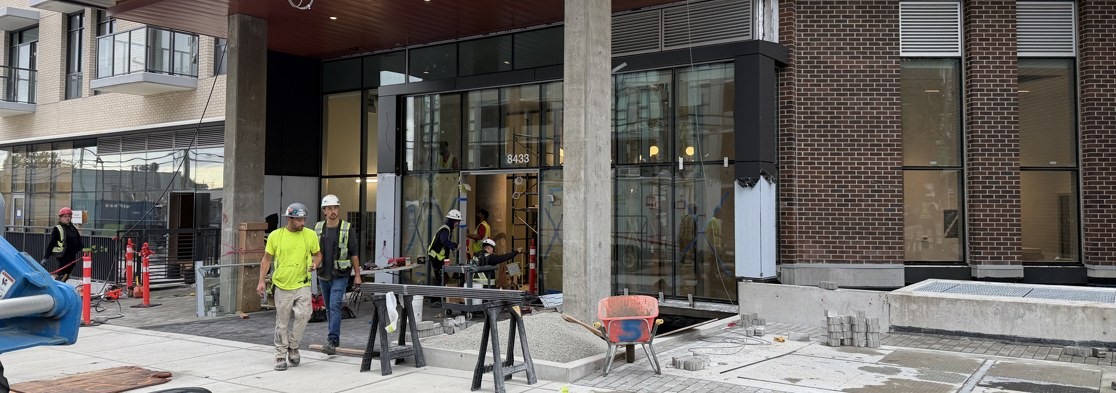
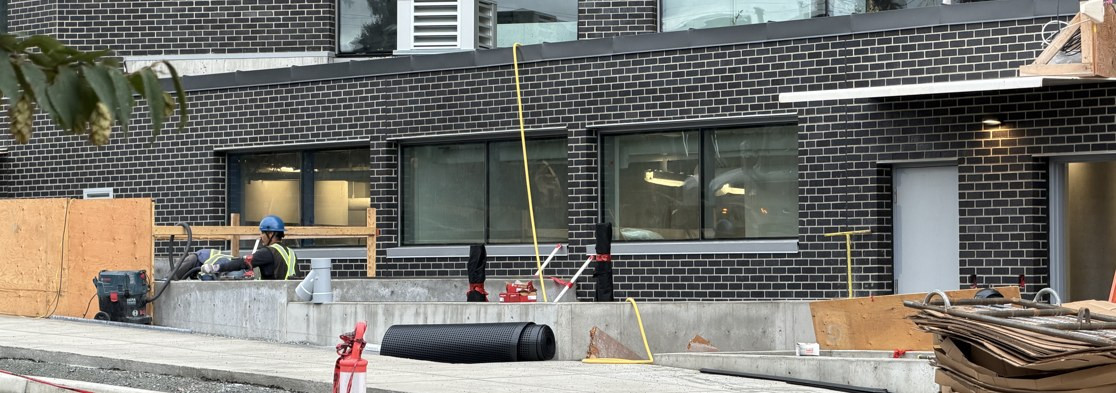
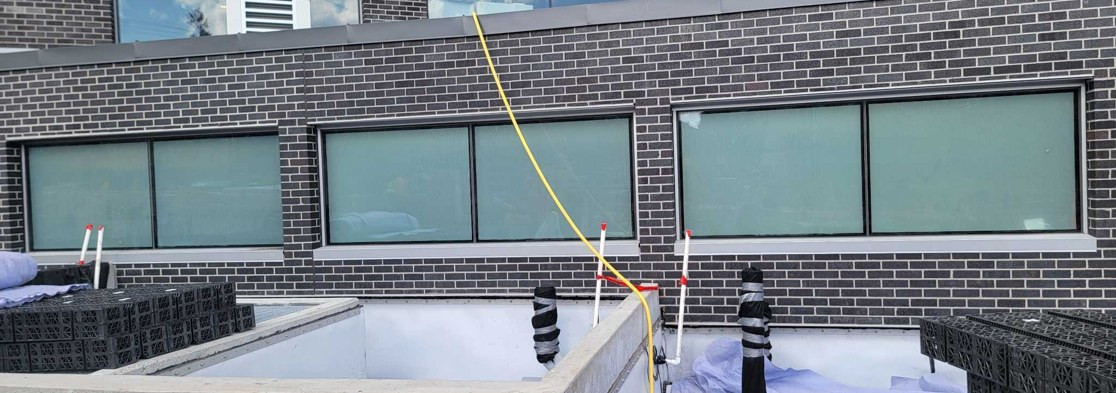
At The Cascades in Vancouver, Ecovision supplied and installed Frost NRM PS2 on selected existing windows. The project shows how a defined group of panes can receive a frosted finish while the rest of the glazing stays outside the scope. See the Cascades installation.
The project photographs above show the entrance for context, followed by the original glazing and the frosted finish. When you look at the images, notice where the change begins and ends. That is a useful question to bring to your own project, even if the room, glass and lighting are quite different. To compare privacy for your building, we would still look at a sample from your viewing positions.
Tell us your city in Metro Vancouver and whether we’ll be visiting a home or an occupied building. If a property manager or strata council needs to review the appearance, let us know before the sample visit.
For a local installation visit, it helps to know who can unlock the room and whether the glass can be viewed from the other side. In a home, that might mean access to a side path. In a managed building, the second view may be from a tenant’s office. Arranging that access lets you compare both sides of the sample during the same visit.
We can assess a band or partial coverage on the existing pane. Mark the height you have in mind and check the view from the other side before settling on it.
If a band appears to work from one chair, move to the end of the table and try again. With a long run of glass, the angle changes as you move. You might decide to extend the treatment across one more pane, leave a pane clear, or mark a different edge for the door. We can record those choices on the scope before installation.
Pane size, the number of separate pieces, existing film and access all help define the work. Approximate dimensions are useful for a first conversation. We confirm the glass and measurements before quoting. Our window film pricing guide explains the broader budgeting factors.
A price for a roll of film tells you little about the installed job. Two openings with similar overall dimensions can have very different layouts: one uninterrupted pane in the first room, several narrow panes around handles and frames in the second. Tell us whether you want the same finish for every piece and whether there is old material to assess. That gives you a clearer basis for comparing the eventual quotes.
Send your city, a photo of the glass and a short description of what people can see today. If privacy changes after dark, mention that too. We’ll use those details to plan what to check on site.
Thanks for requesting the white paper. Look for an email from Ecovision with your PDF attached.
Please check your inbox and spam folder. The email also includes a link if you prefer to read the PDF online.
Need a hand? Contact us below and we’ll help.
Unlock expert insights with just one step. Enter your email below to receive the full white paper instantly.