
This guide covers window tinting for homes and buildings. Ecovision does not tint vehicles. For architectural glass only.
Quick Answer
Direct Answer: Window film for veterinary clinics and animal hospitals in BC is specialized solar control, frosted privacy, or safety glass film installed on waiting rooms, exam rooms, treatment areas, and glass entrance doors. Certified LLumar and Vista architectural grades block greater than 99% of UV radiation, reduce solar heat gain by 40 to 80%, and prevent anxious pets from being triggered by sidewalk traffic. Installed pricing for veterinary clinics in BC depends on film type, glass height, and access.
Why Do Veterinary Clinics Need Architectural Window Film?
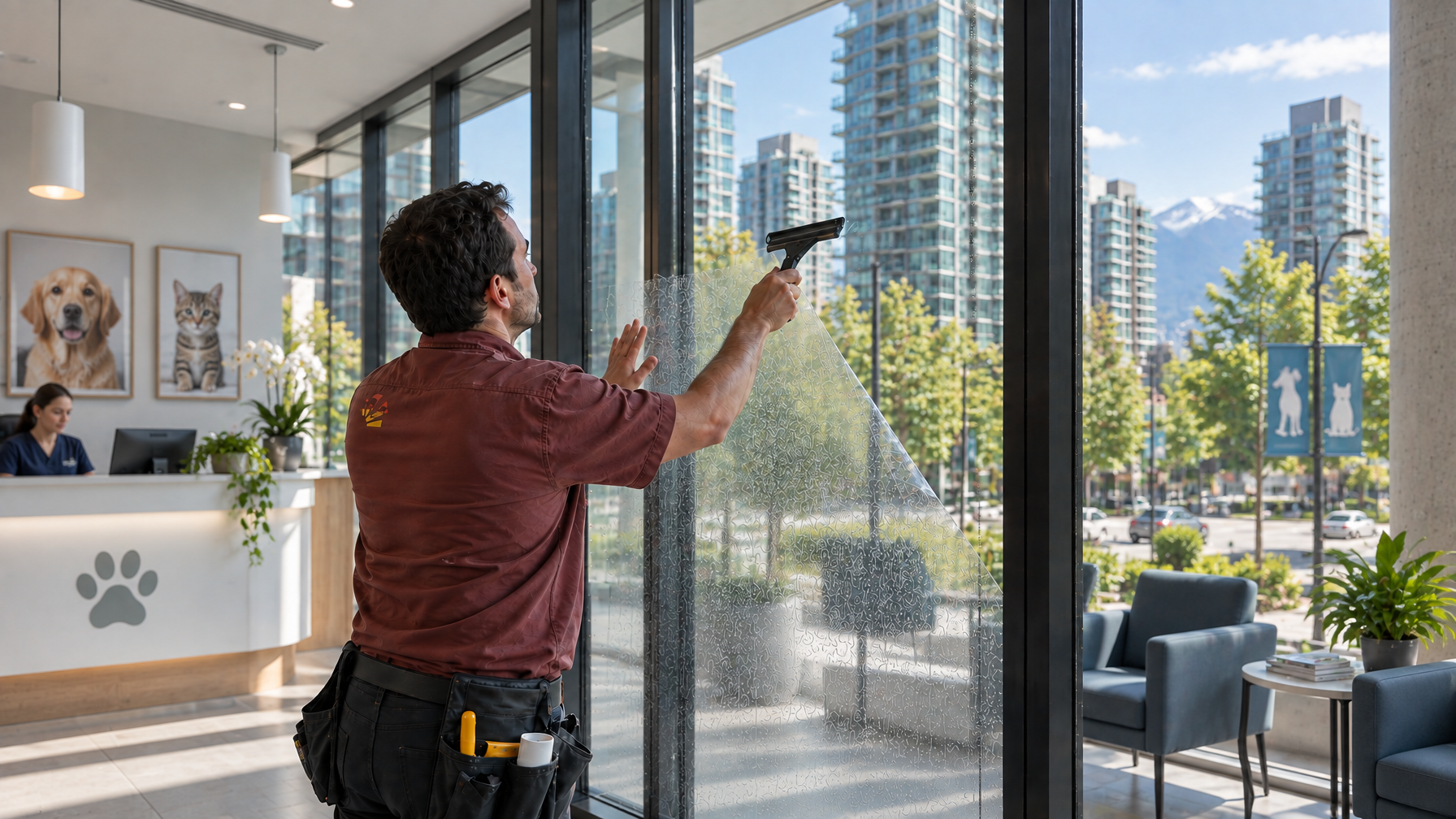
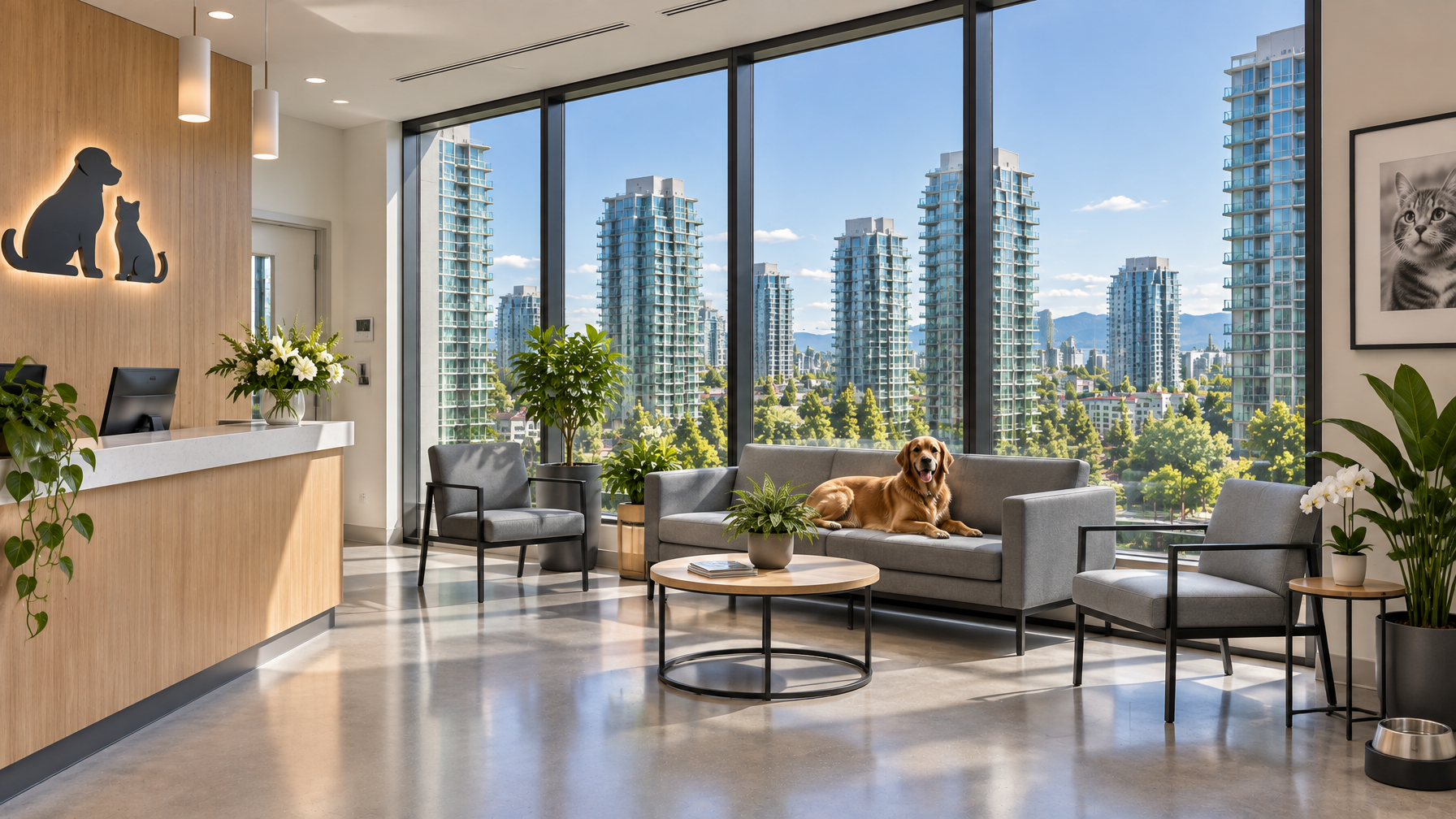
Veterinary clinics and emergency animal hospitals face unique glass performance challenges in Metro Vancouver. Ground-floor storefronts and large glass elevations let in intense afternoon sun, creating hot spots in waiting areas where stressed dogs and cats sit for appointments. Excess heat and direct glare increase animal restlessness and strain commercial HVAC systems on south- and west-facing elevations in Kitsilano, Mount Pleasant, and Central City.
Sightlines through clear glass are an acute operational issue for veterinary practices. Unrestricted views of passing dogs, pedestrians, and delivery vehicles along sidewalk elevations can agitate reactive pets in waiting rooms and recovery suites. Frosted privacy film or decorative gradient film eliminates visual triggers while preserving natural daylighting. Similar healthcare and privacy requirements apply to window film for physiotherapy clinics in BC and window film for dental offices in BC.
Which Film Types Are Used in Veterinary Practices?
Veterinary practice managers typically combine two or three film types depending on room function and glass exposure across the clinic floorplan:
| Clinic Zone | Recommended Film Type | Primary Function | Typical specification |
|---|---|---|---|
| Waiting Room / Reception | LLumar VS60 / VS70 Spectrally Selective | Heat & glare reduction with high daylight transmission | High-VLT solar |
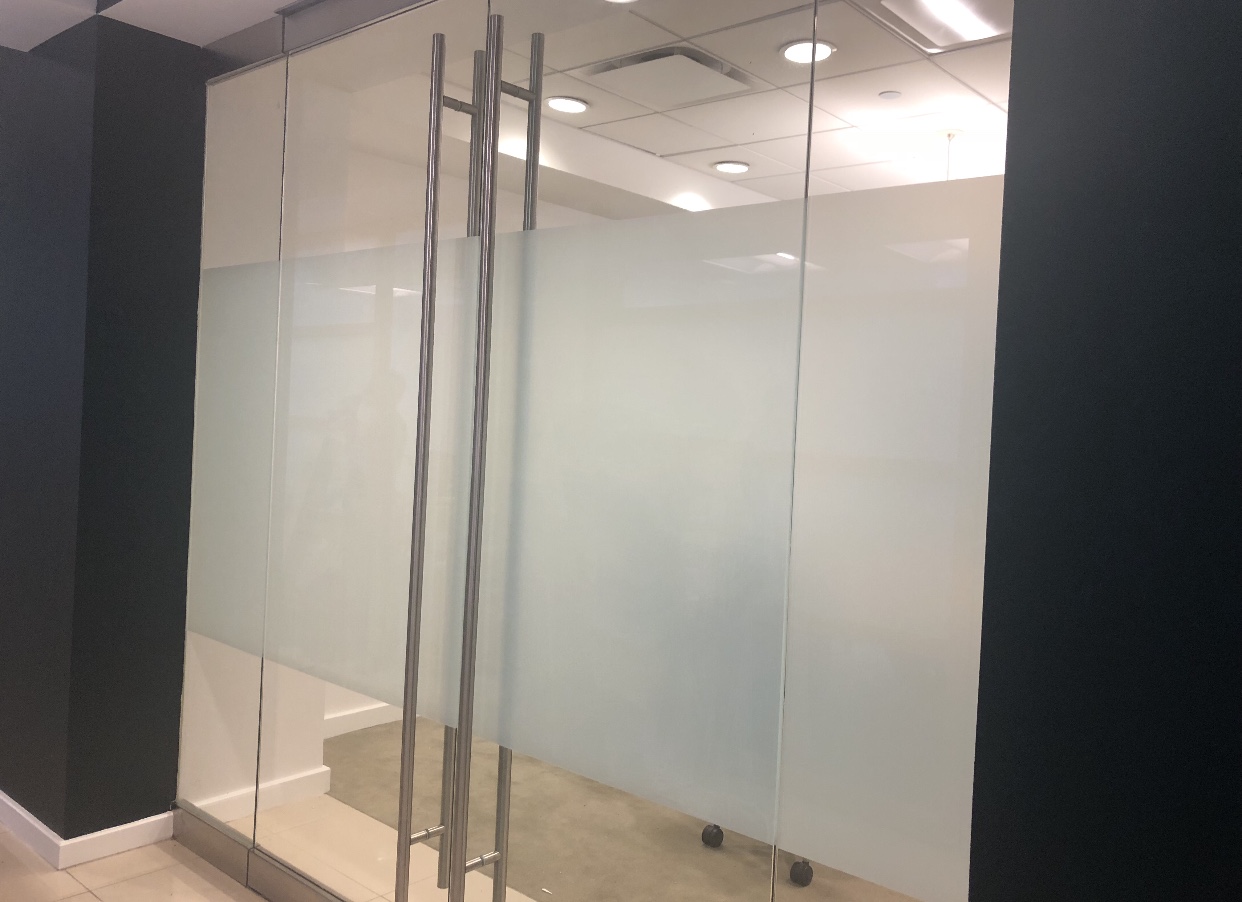
| Exam Rooms & Treatment Bays | Frosted or Gradient Decorative Privacy | Blocks eye-level sightlines, reduces pet agitation | Frosted / gradient privacy |
| Recovery & Surgical Prep | Dual-Reflective / Neutral Solar Control | Heat rejection and one-way daytime privacy | Neutral solar / dual-reflective |
| Entrance Doors & Sidelights | Clear Safety & Security (4 to 8 mil) | Impact resistance and forced-entry delay | Clear safety overlay |
High-VLT (Visible Light Transmission) solar films like LLumar VS60 and VS70 are preferred in waiting rooms to keep spaces bright and welcoming while rejecting roughly 50% of total solar energy. Frosted or frosted gradient films are applied to internal glass partitions and lower exterior panes to prevent pets from staring down outside distractions.
How Much Does Veterinary Clinic Window Film Cost in BC?
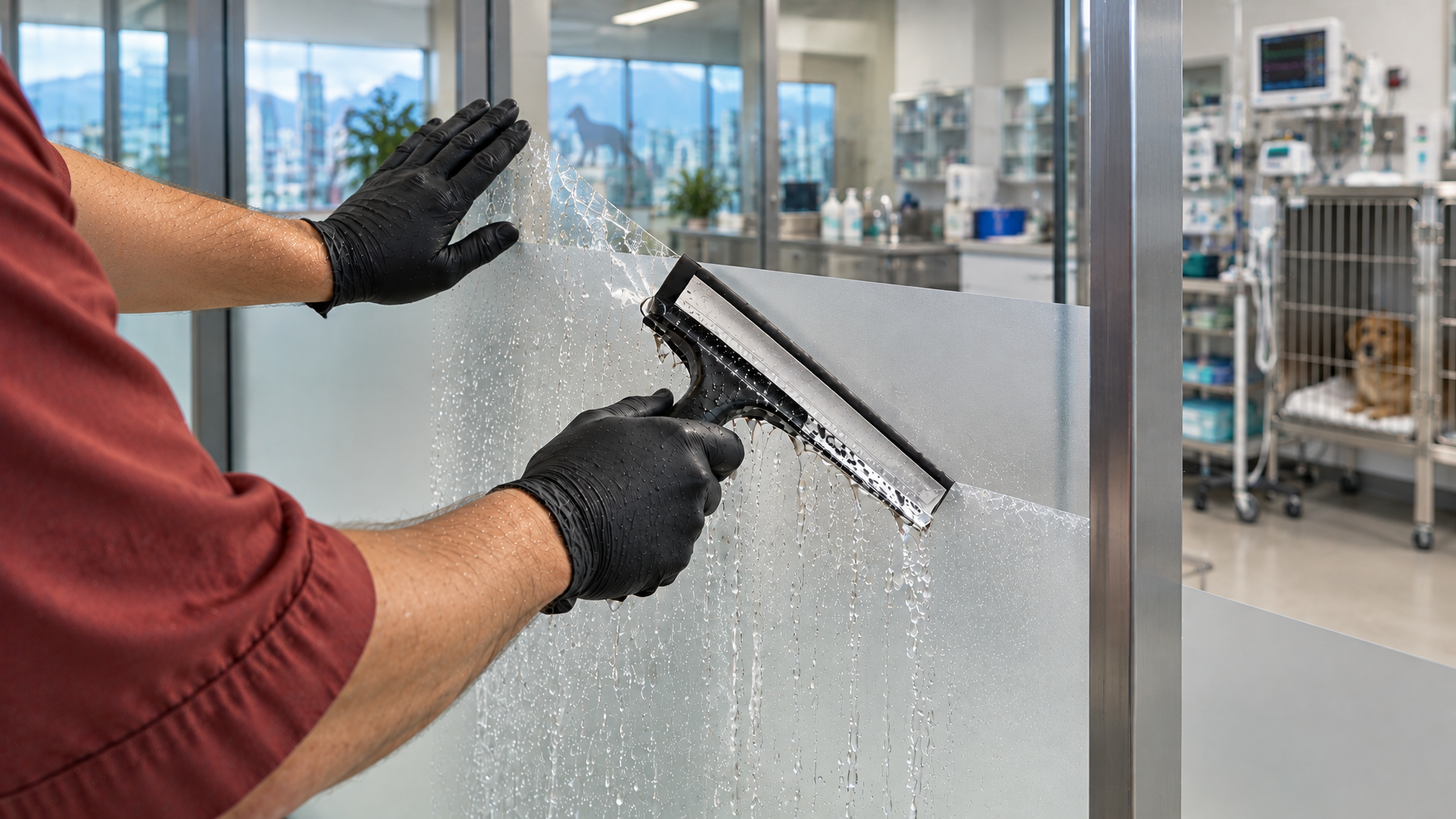
Installed pricing for veterinary clinics in BC depends on film type (solar control, frosted privacy or security), glass height, and access requirements.
For a typical 2,500-square-foot veterinary practice with 250 square feet of street-facing waiting room glass and internal partition glazing, solar and privacy film treatment is quoted from measured glass, not a published lump sum. Full details on commercial pricing factors are available in our BC window film cost guide.
Does Installation Disrupt Clinic Operations or Patients?
Installation causes minimal operational disruption. Ecovision installation technicians use a clean, dust-free wet-lamination process directly on interior glass surfaces. There is no noise, demolition, or chemical odour. Work is scheduled room by room or during off-peak hours (including early mornings, evenings, or weekends) so surgical schedules, exams, and boarding operations continue normally.
After installation, the film enters a wet cure period of 30 to 60 days. During this window, minor moisture haze or small water pockets form and evaporate as the mounting adhesive bonds securely to the glass. For broader institutional standards, see our guide on window film for healthcare facilities in BC.
Get a Free Veterinary Clinic Window Film Assessment
Ecovision Window Films provides on-site glass measurement, solar heat evaluations, and film samples for veterinary practices across Vancouver, Burnaby, Richmond, Surrey, and the Lower Mainland. Contact Edward at (236) 862-0052 or request a site assessment online at ecovisioncanada.com/contact/.
Related Articles
- Window Film for Physiotherapy Clinics in BC: Heat, Glare, and Privacy
- Window Film for Dental Offices in BC: Heat, Glare, and Privacy
- Commercial Window Film Installation in Vancouver: Types, Costs, and What to Expect
- Window Film for Healthcare Facilities in BC: Energy, Comfort, and Security
- Privacy Window Film: Types, Visibility, Day/Night Performance and Best Uses