
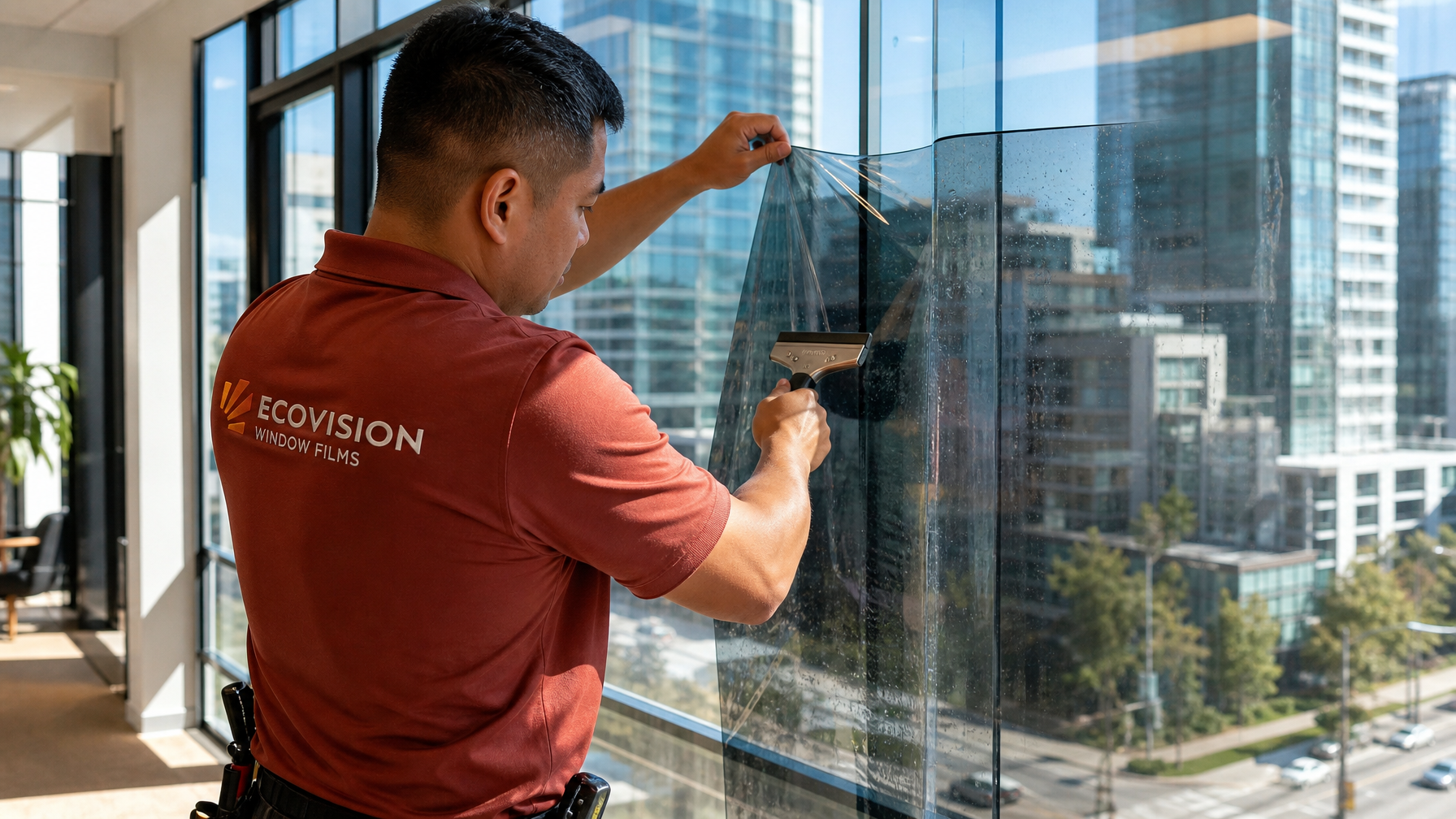
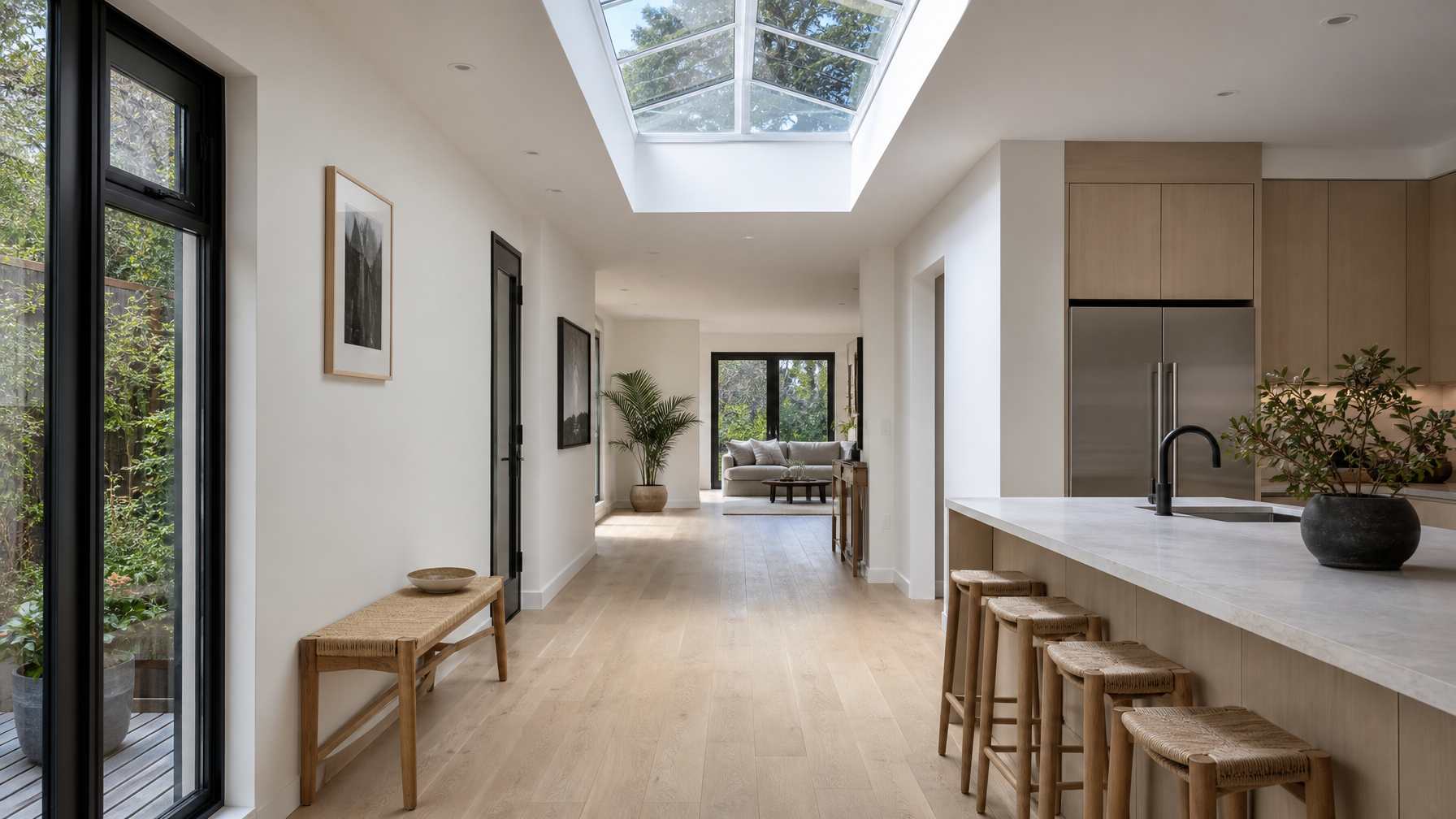
Overhead glass cooks a room from the ceiling down. A south-facing skylight in Metro Vancouver can dump more summer heat into a kitchen than a full wall of vertical windows of the same size. Window film for skylights in BC is a targeted solar layer on that glass, not a dark shade that turns the well into a cave.
This guide covers window tinting for homes and buildings. Ecovision does not tint vehicles, for architectural glass only.
Does Window Film Work on Residential Skylights?
Yes. Professionally installed solar control film on skylight glass typically rejects about 49 to 50% of total solar energy on high-VLT grades such as LLumar VS60 and VS70, while keeping about 59 to 62% visible light. Ecovision Window Films specifies those architectural grades for overhead lites across Vancouver and the Lower Mainland so the well stays bright and the floor stops acting like a hot plate.
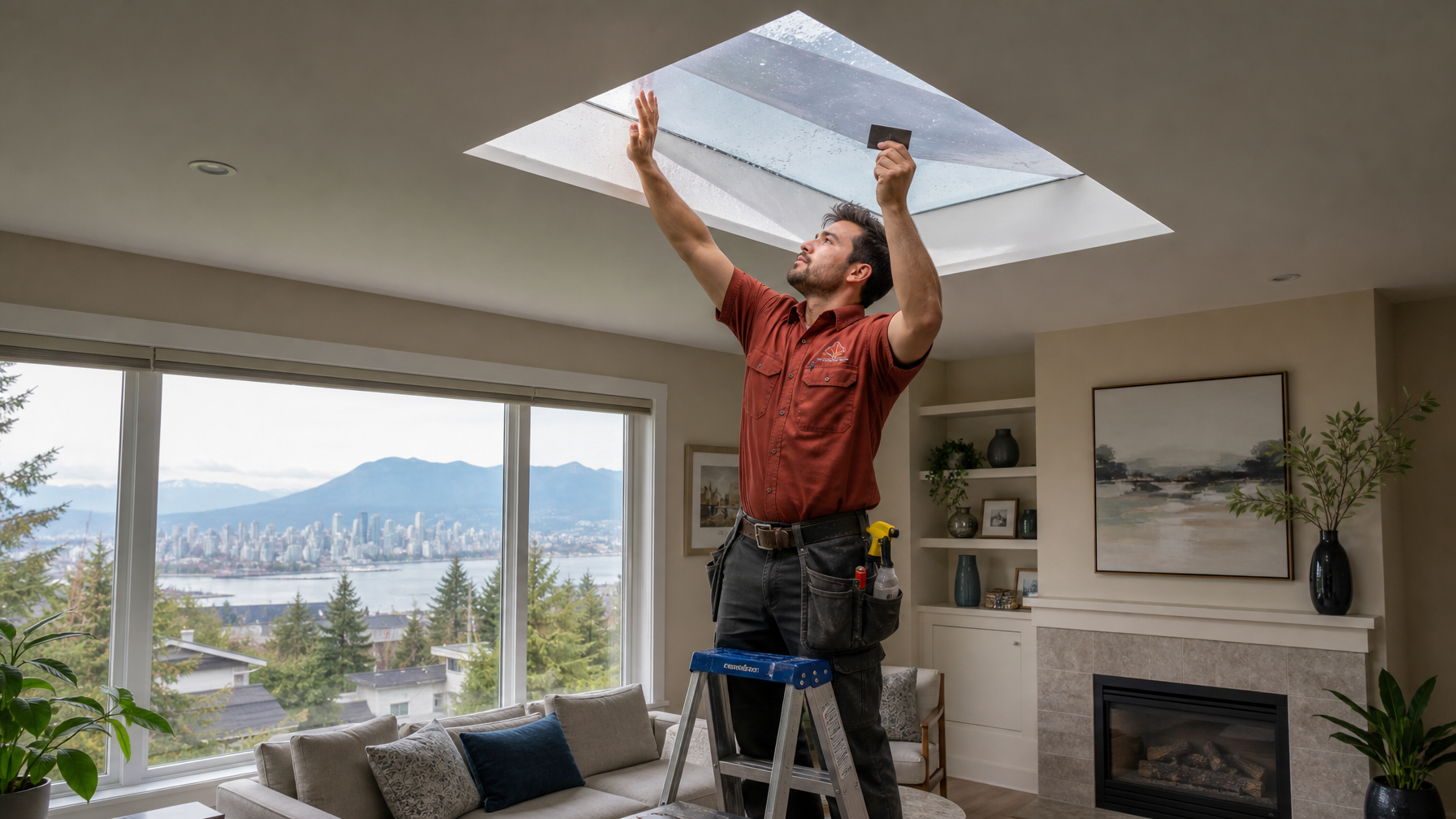
Skylights sit closer to solar noon than vertical glass. The same 1.0 square metre of dual-pane glass sees a steeper beam angle for more hours, so infrared load stacks faster. That is why a recent Ecovision residential scope split the house: a stronger solar grade on six skylights and a lighter VS-series film on six vertical windows. Mixing grades is normal when the roof glass is the heat source.
What Film Should You Use on Skylights Versus Vertical Windows?
Start with heat rejection, then check visible light. On most BC homes, LLumar VS60 (59% VLT, 50% TSER on 6 mm dual clear) or VS70 (62% VLT, 49% TSER) is the default on vertical glass. Overhead glass that still overheats after a VS sample can step to Ceramic 35 or Ceramic 45. Never specify automotive grades on building glass.
| Glass location | Typical spec | Why | Installed range |
|---|---|---|---|
| Skylights / roof glass | VS60 first, Ceramic 35/45 if still hot | Steeper sun angle, longer IR load | $10 – $18 / sq ft |
| Vertical living-room windows | VS60 or VS70 | Keep view and strata-neutral look | $10 – $18 / sq ft |
| Sunroom walls (not roof) | Ceramic or VS depending on exposure | Large vertical plus some overhead | $10 – $18 / sq ft |
| Safety hold-together on high lites | SCL SR PS series (separate from solar) | Fragment retention, not heat | $16 – $22 / sq ft |
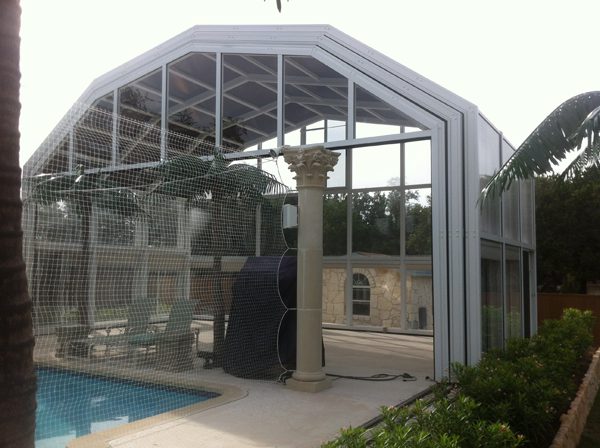
If you already read our sunroom and glass enclosure guide, treat skylights as a tighter problem: smaller area, higher intensity, harder access. Sunrooms mix wall and roof glass. A dedicated skylight job is usually six to twelve lites on a ladder or scaffold, not a full enclosure wrap.
How Much Does Skylight Window Film Cost in BC?
Professionally installed solar film on residential skylights in Metro Vancouver typically runs $10 – $18 per square foot. A set of six standard curb-mount skylights (about 8 to 12 sq ft of glass each) often lands between $480 and $2,160 for the film labour on the glass itself. Access, interior scaffolding, and tempered or Low-E units can push a job toward the top of that range. Security film, if specified on the same lites, sits at $16 – $22 per square foot.
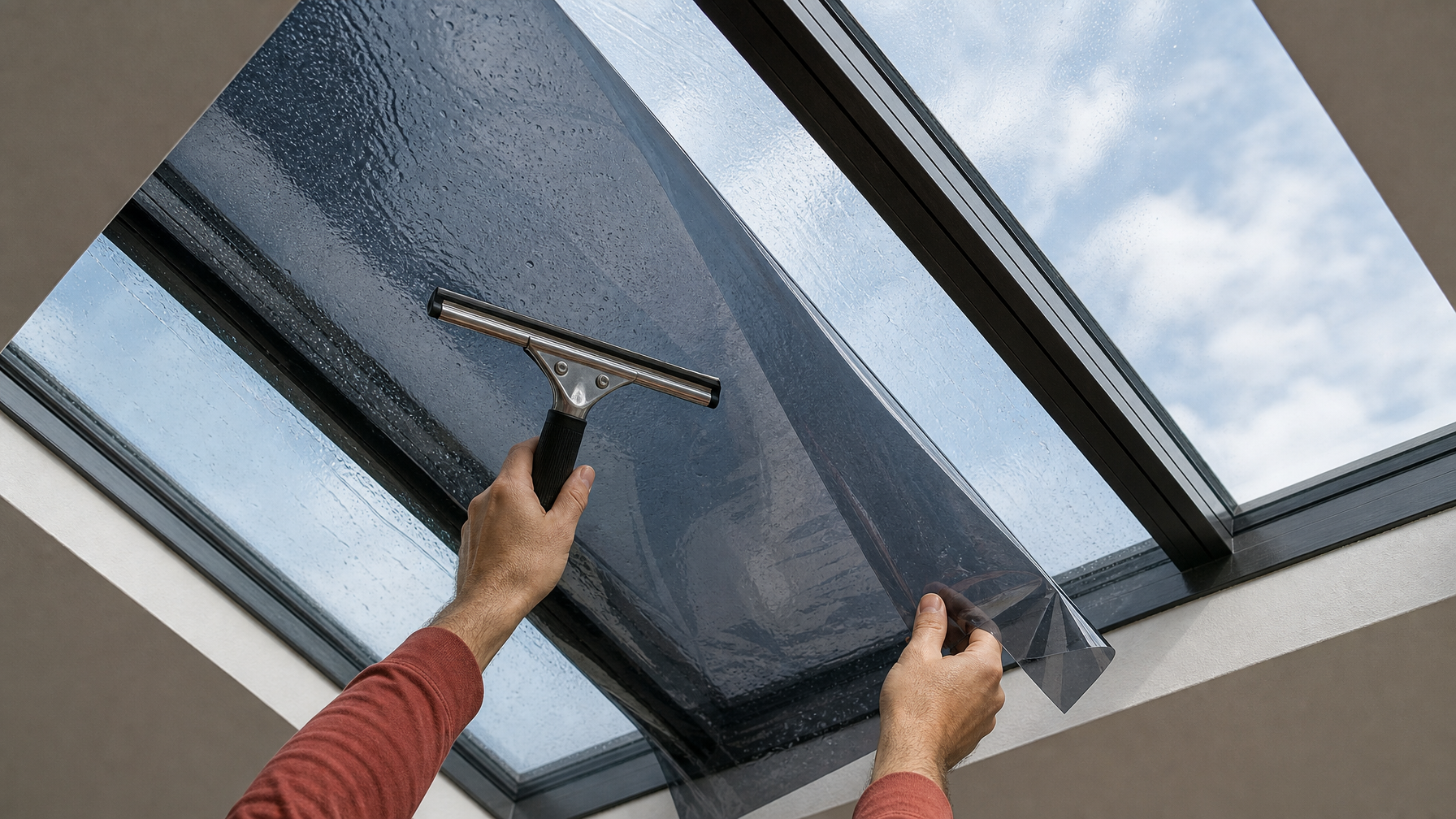
There is no municipal permit for interior architectural film in Vancouver or Surrey. The cost that surprises owners is access, not the film roll. A 4-metre well in a two-storey foyer takes more time than a kitchen skylight you can reach from a platform. Ecovision prices after a site measure, not from a photo of the roof.
Will Skylight Film Make the Room Too Dark?
Not if you stay on high-VLT solar grades. VS70 still passes about 62% of visible light. The room loses the harsh infrared spike, not the daylight well. Dark reflective films (R20-class) can drop VLT into the 20% range and are the wrong first spec for a kitchen that depends on the skylight as its only daytime light.
UV is a separate conversation. Architectural solar films from LLumar and Vista typically block about 99% of UV-A and UV-B on the treated lite. See does window film block UV rays for clear UV versus solar grades and BC pricing. That matters under a skylight because fabrics and wood floors sit in a concentrated beam. Heat rejection and UV rejection are not the same measurement: a clear UV-only film (AU85UV class) protects fade with almost no heat cut.
Can You Film Low-E or Tempered Skylight Glass?
Often yes, after a glass ID. Many factory skylights are tempered, laminated, or Low-E coated. Film still bonds to the interior pane when the surface is clean and the absorption of the chosen grade stays inside the glass manufacturer’s comfort range. Ecovision checks the unit stamp and, when needed, a Low-E detector before locking a Ceramic 35 spec. If you are unsure about Low-E compatibility on vertical glass as well, read Can You Put Window Film on Low-E Glass in BC?
Acrylic or polycarbonate domes are a different substrate. Some plastic skylights do not take standard pressure-sensitive architectural film. Say so on the quote request. Glass curb-mount units are the usual film candidate in Vancouver, Burnaby, and South Surrey.
How Is Skylight Window Film Installed?
- Measure each lite from the interior and photograph the unit stamp.
- Select VS60/VS70 or a ceramic step-up after a sample on one lite if the owner wants a daylight check.
- Protect floors, set interior access, clean the glass, and apply wet.
- Squeegee edge-to-edge. Cure time is 30 to 60 days. Small water pockets on overhead glass are common early and recede as moisture leaves the adhesive.
The same access discipline shows up on commercial roofs and on healthcare campuses such as Rosemary Heights Seniors Village, where interior comfort matters and elevations cannot look patched. Downtown towers like Bentall 4 use vertical glass, not skylights, but the spec rule is identical: match the film to the solar load, then keep the exterior look consistent.
For a written measure and sample on your skylights, call Ecovision Window Films at (236) 862-0052 or use the contact page.
Related Articles
- Window Film for Sunrooms and Glass Enclosures in BC: Beat the Heat, Block UV, and Stay Cool
- Can You Put Window Film on Low-E Glass in BC?
- Heat Blocking Window Film for Vancouver Homes and Offices
- Energy Efficient Window Film in Vancouver
- Solar Window Film for Vancouver Homes
Does window film work on skylights in BC?
Yes. Solar control film on glass skylights typically rejects about 49 to 50% of solar energy on LLumar VS60 and VS70 while keeping about 59 to 62% visible light. Ecovision Window Films installs those architectural grades on residential overhead glass across Metro Vancouver.
How much does skylight window film cost in Vancouver?
Most residential skylight solar film in Metro Vancouver runs $10 – $18 per square foot installed. Six standard skylights often total $480 to $2,160 for the glass work, before unusual access. Security film on the same lites is $16 – $22 per square foot.
Should skylights and vertical windows use the same film?
Not always. Overhead glass sees a steeper sun angle, so Ecovision often specifies a stronger solar grade on skylights and VS60 or VS70 on vertical windows. A recent Lower Mainland home used that split on six skylights and six vertical lites.
Will skylight film make my kitchen too dark?
High-VLT grades such as VS70 still pass about 62% of visible light. The well stays bright. Dark mirror films are the wrong first choice when the skylight is the room’s main daylight source.
How long does skylight film take to cure in BC?
Cure time is 30 to 60 days. Small water pockets on overhead glass are common in the first weeks and recede as moisture leaves the adhesive. Avoid scraping or harsh cleaners during that window.
About the Author: This article was written by the Ecovision Window Films team, led by Xander, Co-Founder and Director of Operations at Ecovision. Xander brings over 10 years of hands-on installation experience, backed by a family with over 50 years in the installation trades, including window film. His military background reinforces the precision and discipline Ecovision applies to every project. Ecovision is a certified installer for leading film brands with completed projects for healthcare facilities, government buildings, and commercial properties throughout the Lower Mainland. For a free site assessment, call (236) 862-0052 or visit ecovisioncanada.com/contact/.